General Mental Ability John Manning Overview History of General Mental Ability Definition, Models Measures of GMA Applications GMA and Job Performance Individual Differences Race, Gender, Age Alternatives? What is GMA? It goes by many
"General Mental Ability John Manning Overview" is the property of its rightful owner. Permission is granted to
download and print the materials on this website for personal, non-commercial use only, and to display it
on your personal computer provided you do not modify the materials and that you retain all copyright
notices contained in the materials. By downloading content from our website, you accept the terms of this
agreement.
Presentation Transcript
01
General Mental Ability John Manning<br>
02
Overview History of General Mental Ability
Definition, Models
Measures of GMA
Applications
GMA and Job Performance
Individual Differences
Race, Gender, Age
Alternatives?<br>
03
What is GMA? It goes by many names: g, general mental ability, IQ, intelligence
A general measure of cognitive functioning that should work across several different domains
First proposed by Francis Galton (1888), an English geneticist and relative of Darwin
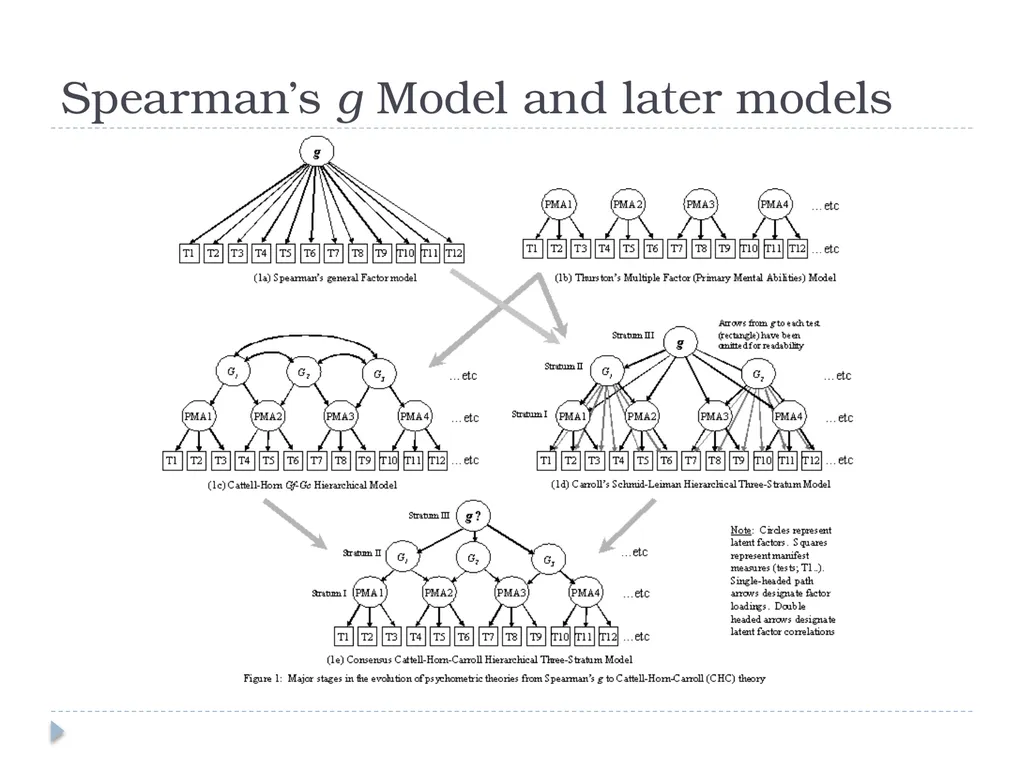
Spearman (1904) proposed “g”- a general underlying intelligence factor that accounted for correlations between different areas on measures of intelligence.
It remains one of the most studied of all human characteristics<br>
04
Spearman’s g Model and later models<br>
05
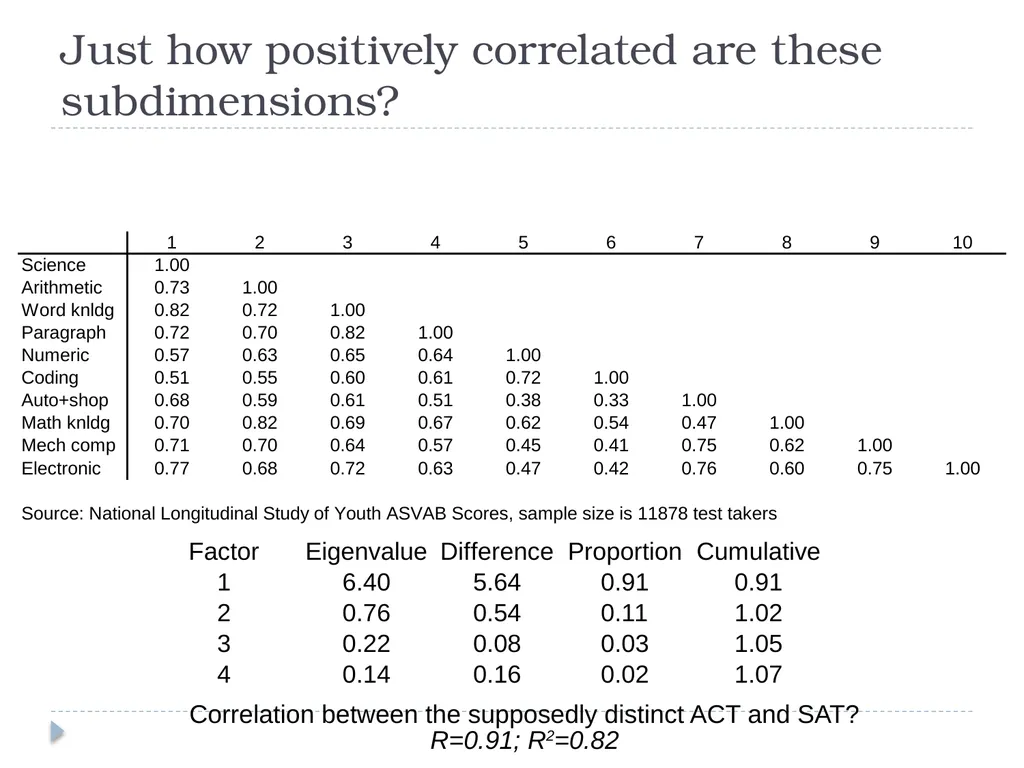
Just how positively correlated are these subdimensions? Correlation between the supposedly distinct ACT and SAT? R=0.91; R2=0.82<br>
06
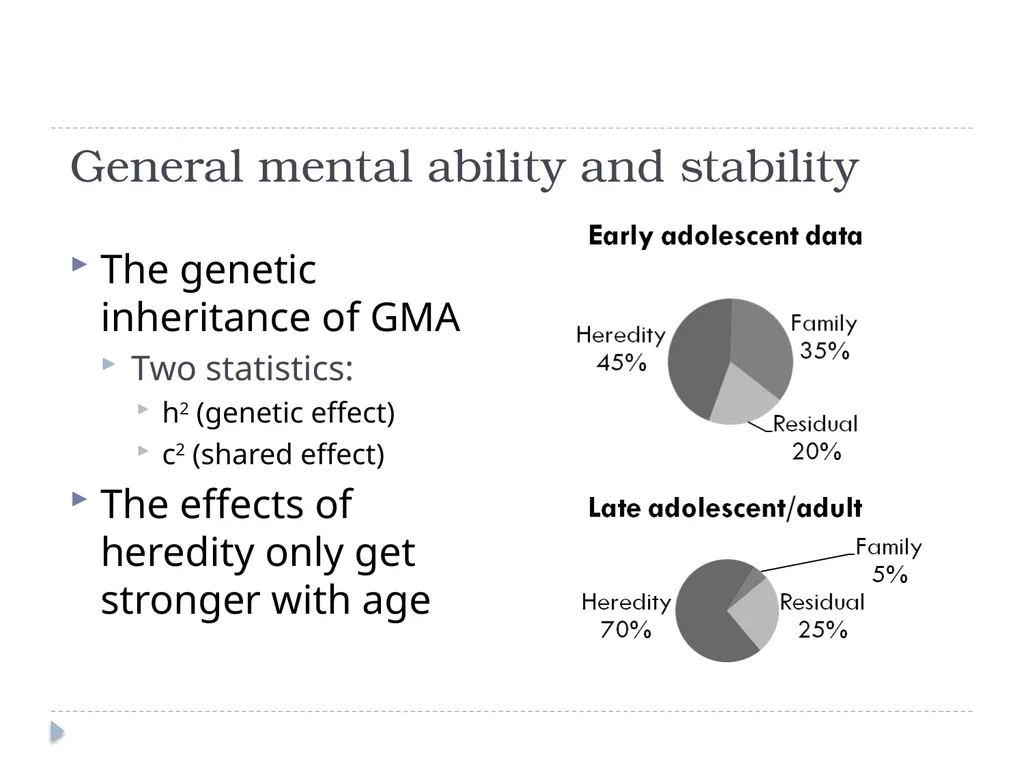
General mental ability and stability The genetic inheritance of GMA
Two statistics:
h2 (genetic effect)
c2 (shared effect)
The effects of heredity only get stronger with age<br>
07
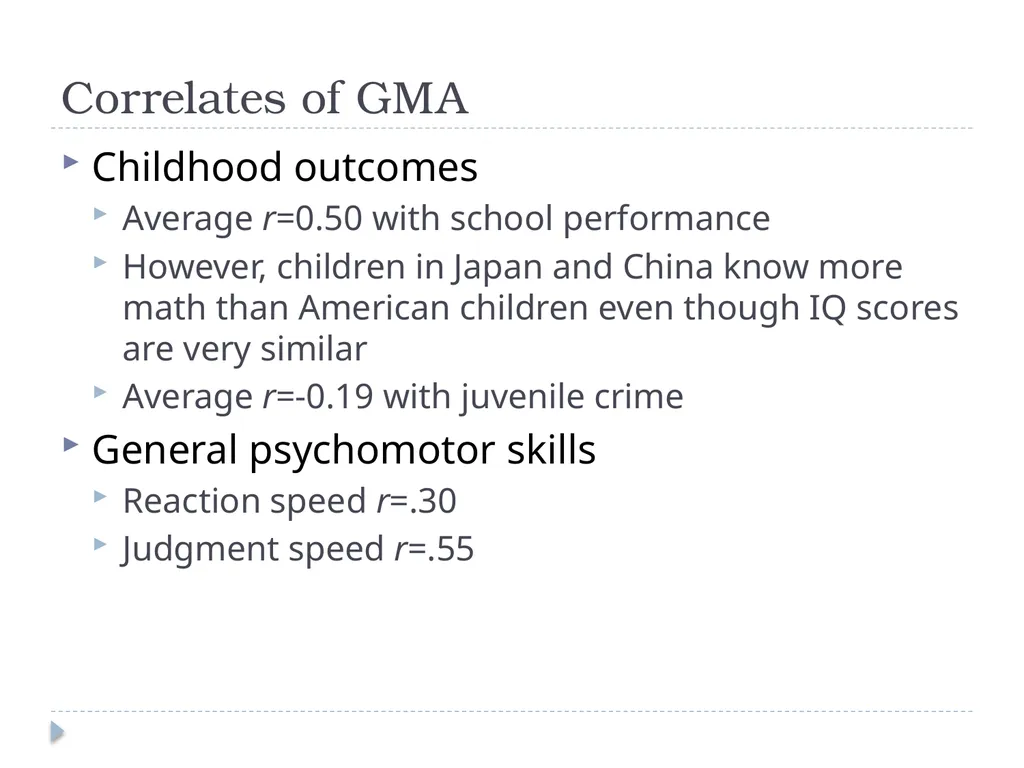
Correlates of GMA Childhood outcomes
Average r=0.50 with school performance
However, children in Japan and China know more math than American children even though IQ scores are very similar
Average r=-0.19 with juvenile crime
General psychomotor skills
Reaction speed r=.30
Judgment speed r=.55<br>
08
GMA and Stability Is it really a trait? Is it stable?
Test re-test
Age 6 to 18=0.77
Age 12 to age 18=0.89
Even higher correlations if tests are given on multiple occasions
What does this mean?
It means that rank order is very stable over time
It does not mean that an average (100 IQ) 6 year old can do what an average 18 year old can do<br>
09
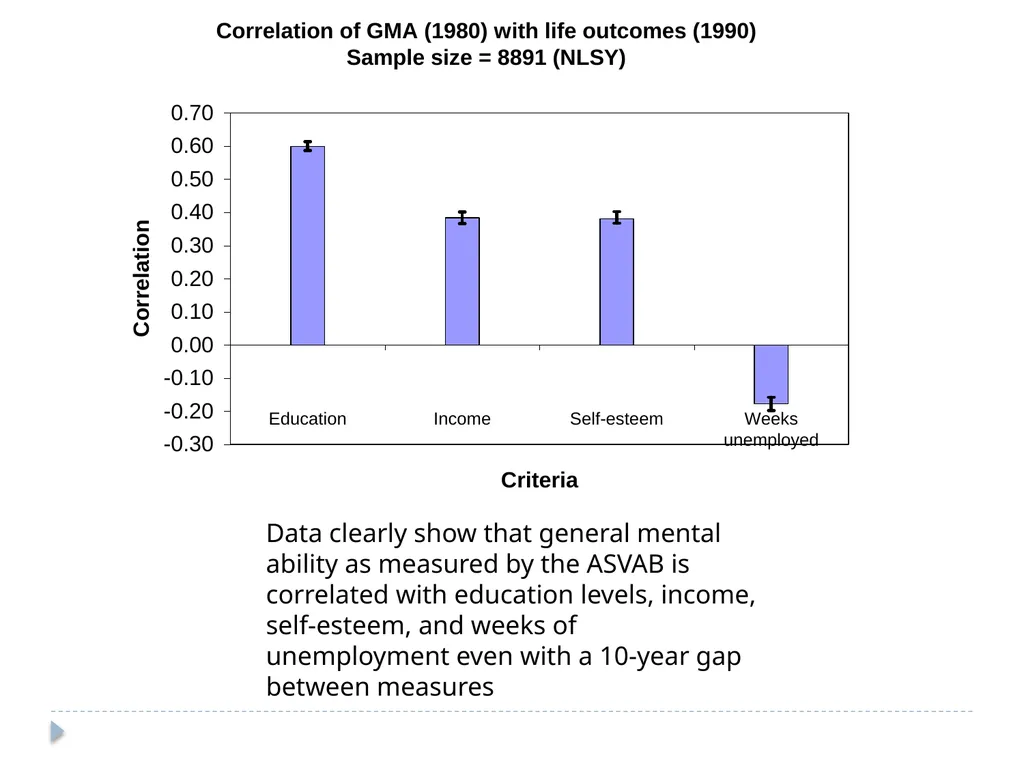
Data clearly show that general mental ability as measured by the ASVAB is correlated with education levels, income, self-esteem, and weeks of unemployment even with a 10-year gap between measures<br>
10
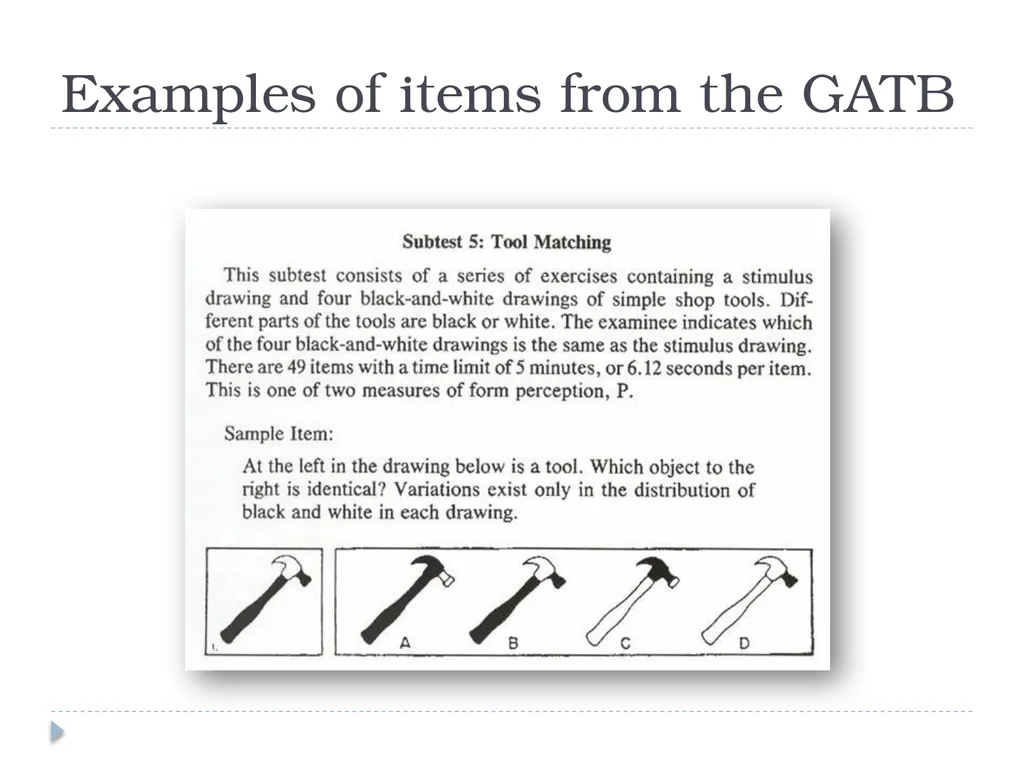
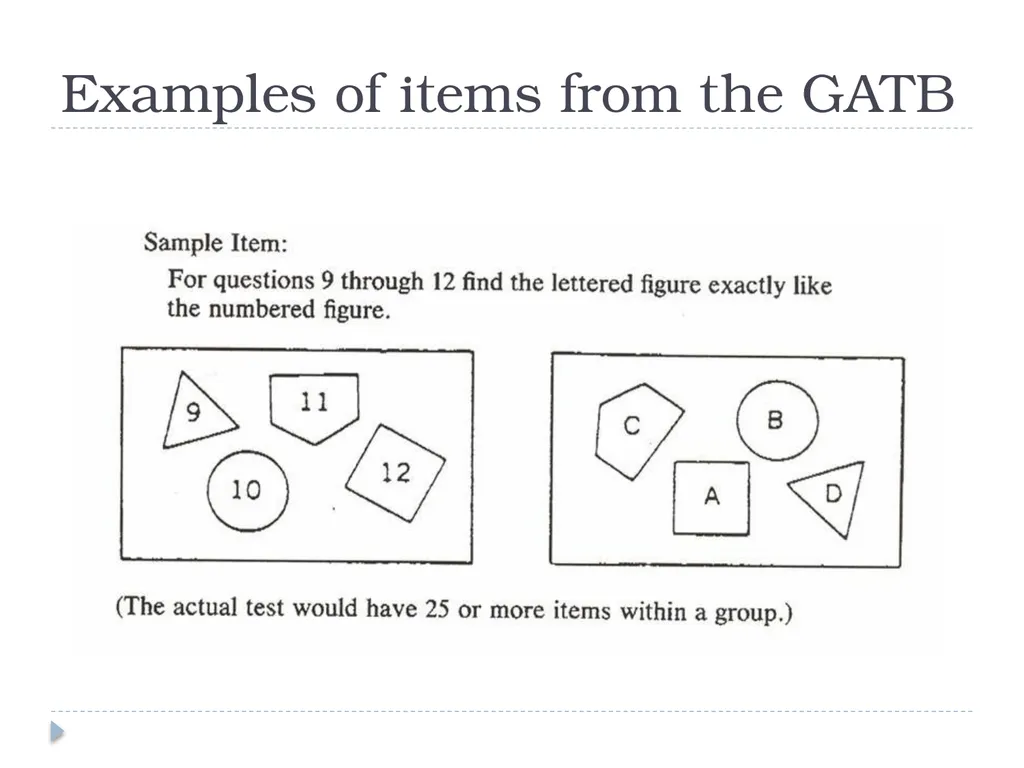
Measures of GMA General Aptitude Test Battery (GATB)
Wonderlic Personnel Test
Armed Services Vocational Aptitude Battery (ASVAB)
IQ Tests (WAIS-IV, Stanford Binet, etc.)<br>
11
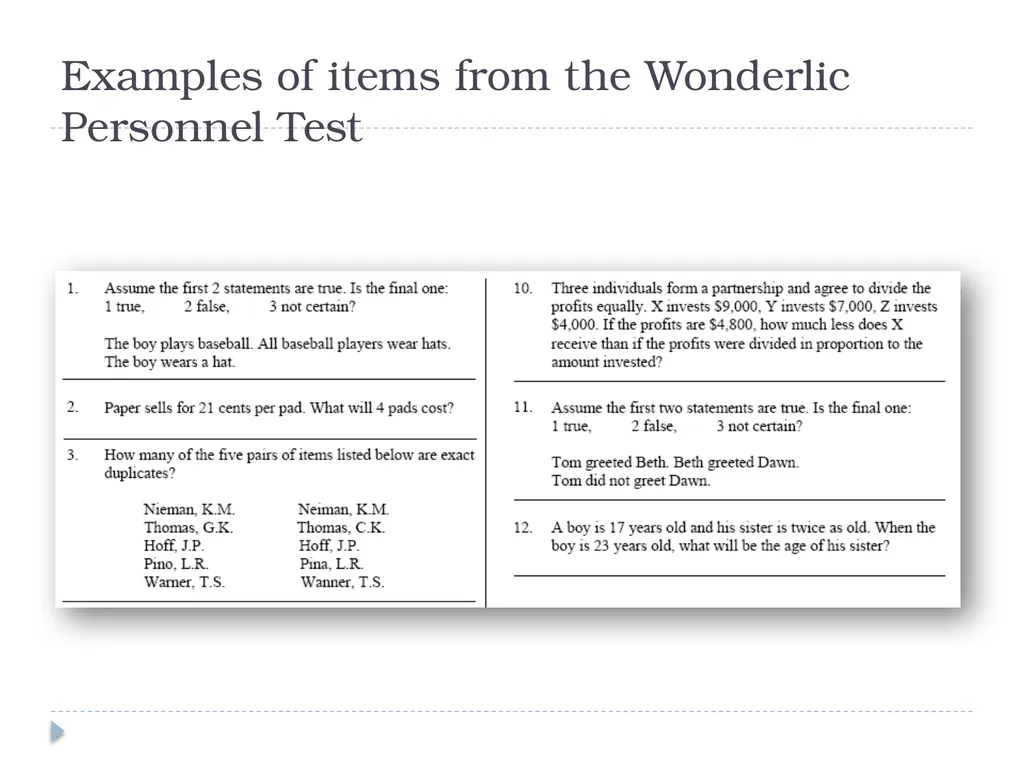
Examples of items from the Wonderlic Personnel Test<br>
12
Examples of items from the GATB<br>
13
Examples of items from the GATB<br>
14
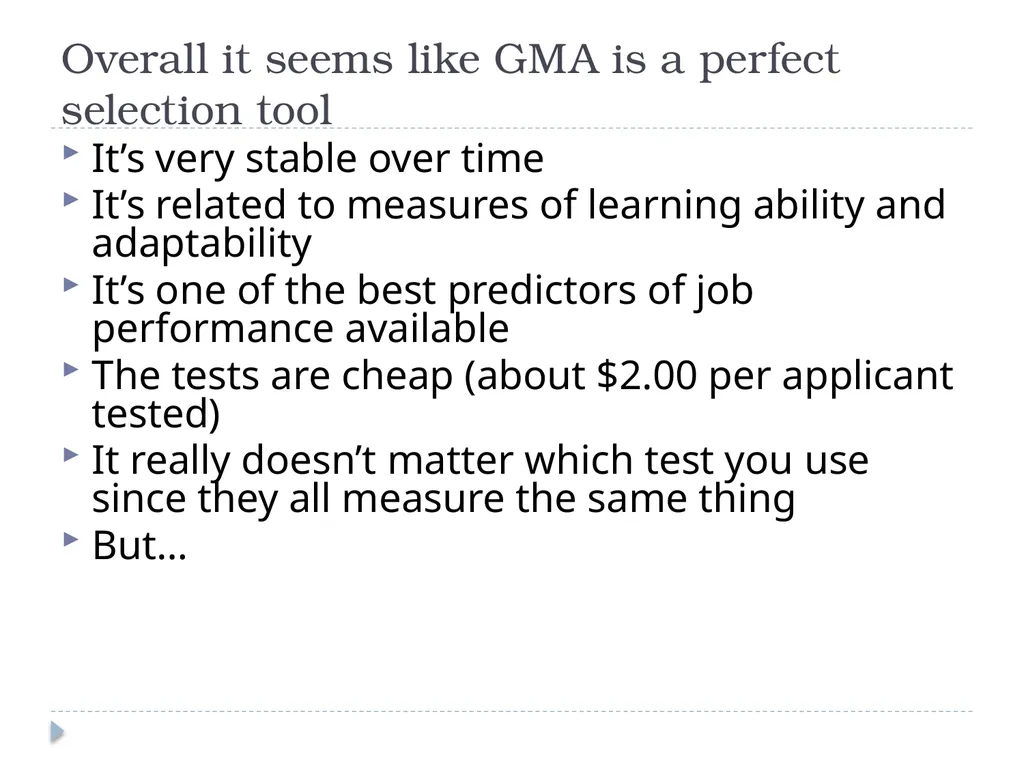
Overall it seems like GMA is a perfect selection tool It’s very stable over time
It’s related to measures of learning ability and adaptability
It’s one of the best predictors of job performance available
The tests are cheap (about $2.00 per applicant tested)
It really doesn’t matter which test you use since they all measure the same thing
But…<br>
15
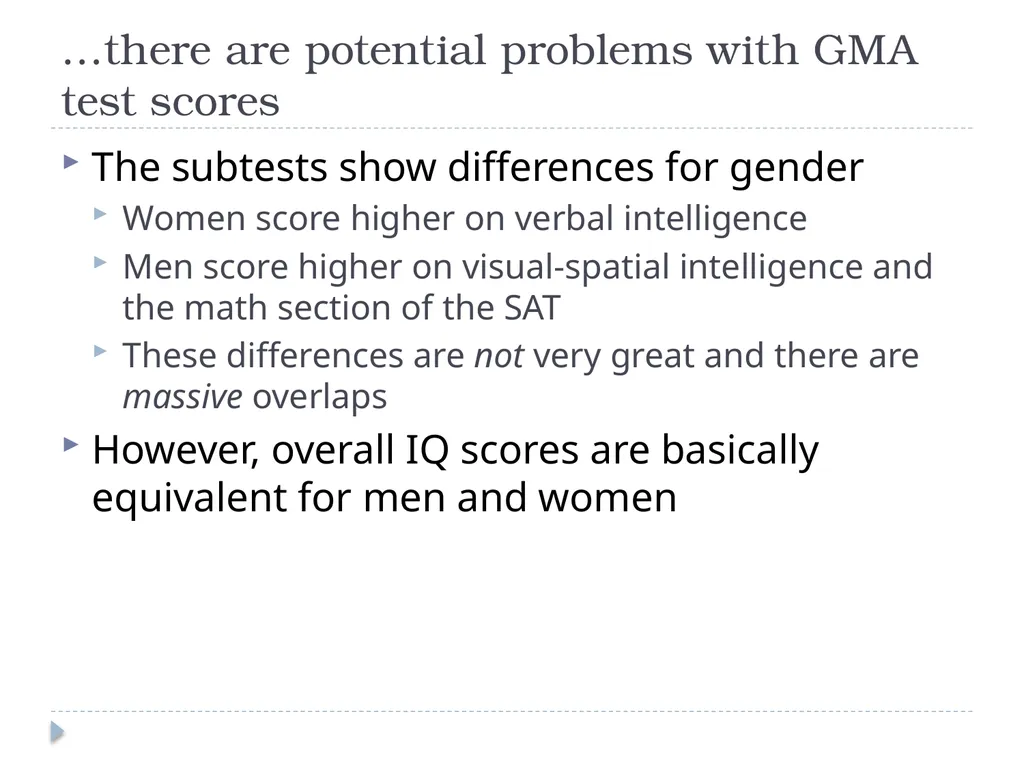
…there are potential problems with GMA test scores The subtests show differences for gender
Women score higher on verbal intelligence
Men score higher on visual-spatial intelligence and the math section of the SAT
These differences are not very great and there are massive overlaps
However, overall IQ scores are basically equivalent for men and women<br>
16
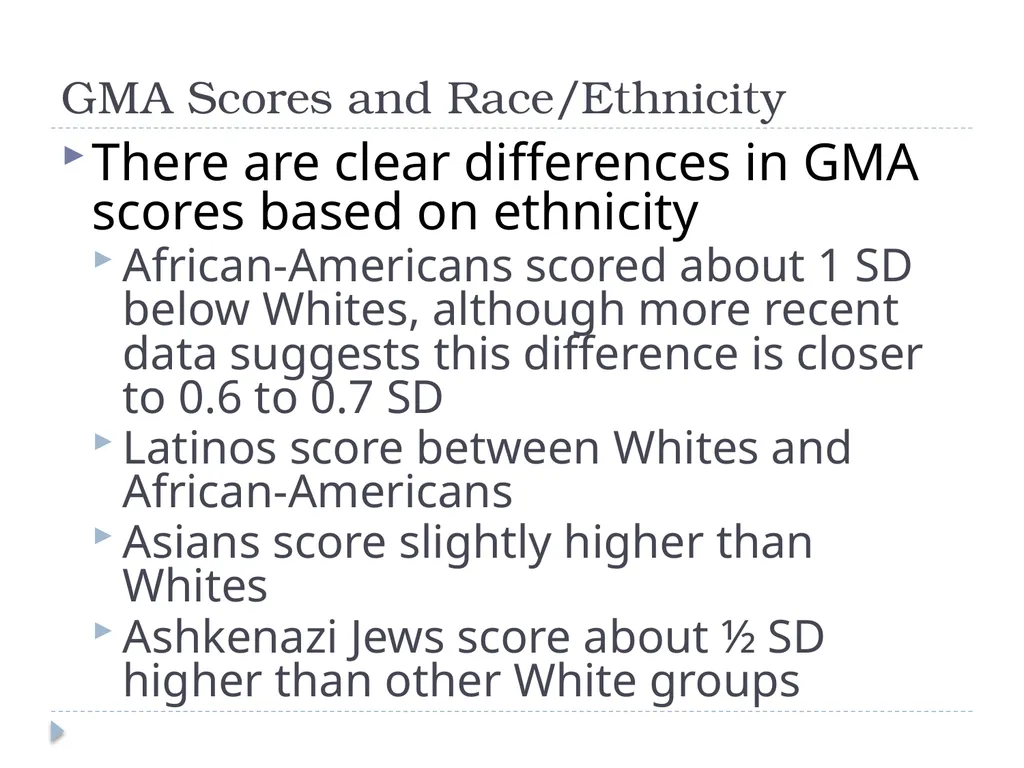
GMA Scores and Race/Ethnicity There are clear differences in GMA scores based on ethnicity
African-Americans scored about 1 SD below Whites, although more recent data suggests this difference is closer to 0.6 to 0.7 SD
Latinos score between Whites and African-Americans
Asians score slightly higher than Whites
Ashkenazi Jews score about ½ SD higher than other White groups<br>
17
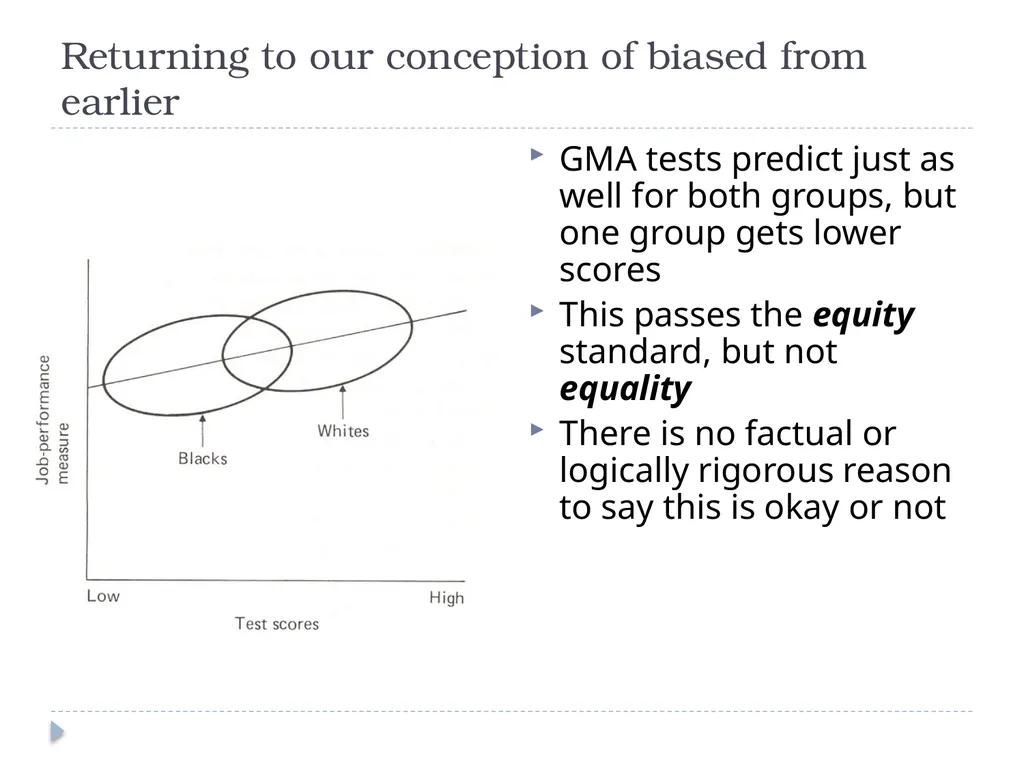
Returning to our conception of biased from earlier GMA tests predict just as well for both groups, but one group gets lower scores
This passes the equity standard, but not equality
There is no factual or logically rigorous reason to say this is okay or not<br>
18
GMA for selection<br>
19
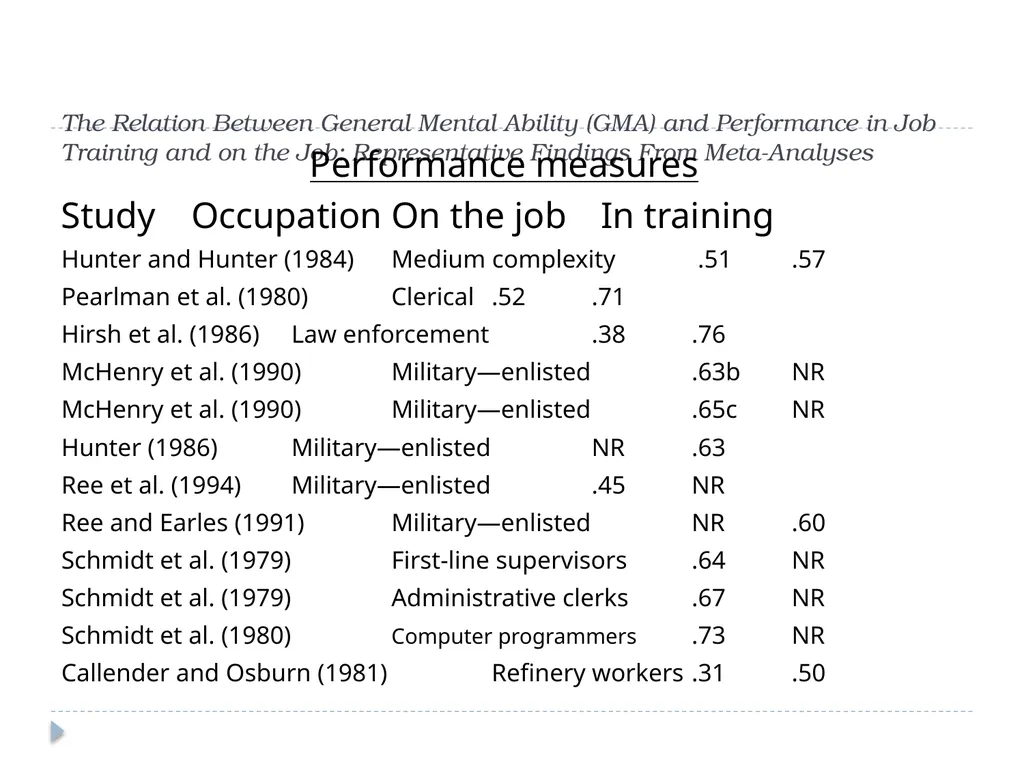
The Relation Between General Mental Ability (GMA) and Performance in Job Training and on the Job: Representative Findings From Meta-Analyses Performance measures
Study Occupation On the job In training
Hunter and Hunter (1984) Medium complexity .51 .57
Pearlman et al. (1980) Clerical .52 .71
Hirsh et al. (1986) Law enforcement .38 .76
McHenry et al. (1990) Military—enlisted .63b NR
McHenry et al. (1990) Military—enlisted .65c NR
Hunter (1986) Military—enlisted NR .63
Ree et al. (1994) Military—enlisted .45 NR
Ree and Earles (1991) Military—enlisted NR .60
Schmidt et al. (1979) First-line supervisors .64 NR
Schmidt et al. (1979) Administrative clerks .67 NR
Schmidt et al. (1980) Computer programmers .73 NR
Callender and Osburn (1981) Refinery workers .31 .50<br>
20
Applicant reactions to GMA tests In general, results suggest applicants tend to find GMA tests acceptable
They especially like tests that are called “personnel tests”
They like tests more when they are paired with individual interview information
They usually like tests of knowledge and abilities more than they like personality tests or biodata.<br>
21
Bobko, Roth, & Potosky: Cognitive Ability and Alternative Predictors Their meta-analytic matrix shows that structured interviews, conscientiousness, and biodata all have much lower d-scores than cognitive ability in terms of prediction, and many of these alternatives have good correlations with job performance<br>
22
Validity vs. Value GMA is the single strongest predictor of performance
Value of interviews, collecting biometric data, etc.?<br>
23
To wrap it up… GMA is the totality of mental processes involved in adapting to the environment.
Underlying component of all different aspects of intelligence.
Stable over time, strong genetic/heredity component
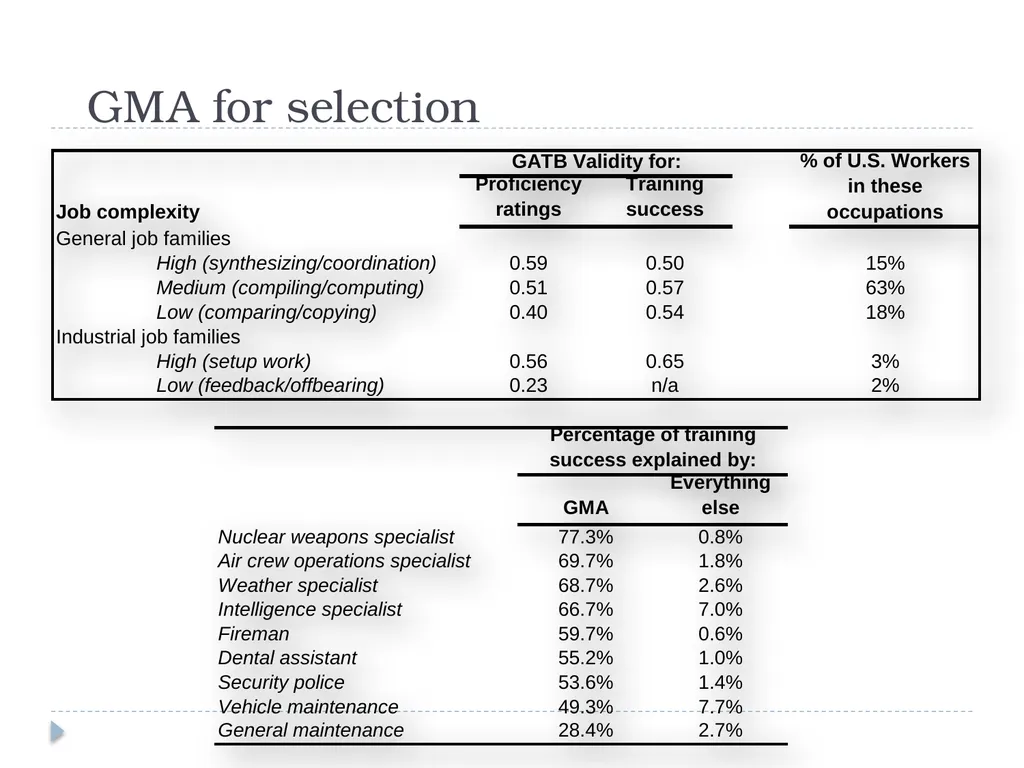
Strong predictor of future job performance, especially with complex and technical jobs.
People like GMA tests.
Value of alternatives?<br>