GENETICS Lesson 4a How Can a Model of Inheritance Explain How a Trait Can Seem to Disappear in a Family? Review: Key Words and Science Ideas Chromosomes Cell Nucleus Chromosomes come in pairs. One chromosome in each pair comes from each
"GENETICS Lesson 4a How Can a Model of Inheritance" is the property of its rightful owner. Permission is granted to
download and print the materials on this website for personal, non-commercial use only, and to display it
on your personal computer provided you do not modify the materials and that you retain all copyright
notices contained in the materials. By downloading content from our website, you accept the terms of this
agreement.
Presentation Transcript
01
GENETICS Lesson 4a How Can a Model of Inheritance Explain How a Trait Can Seem to Disappear in a Family?<br>
02
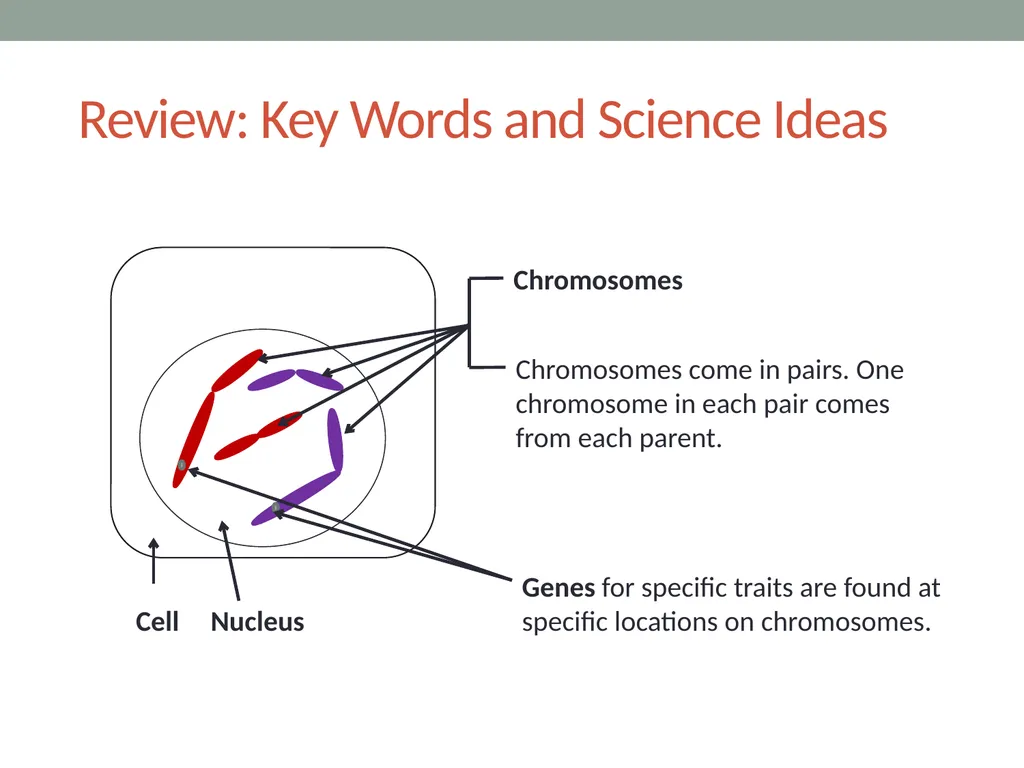
Review: Key Words and Science Ideas Chromosomes Cell Nucleus Chromosomes come in pairs. One chromosome in each pair comes from each parent. Genes for specific traits are found at specific locations on chromosomes.<br>
03
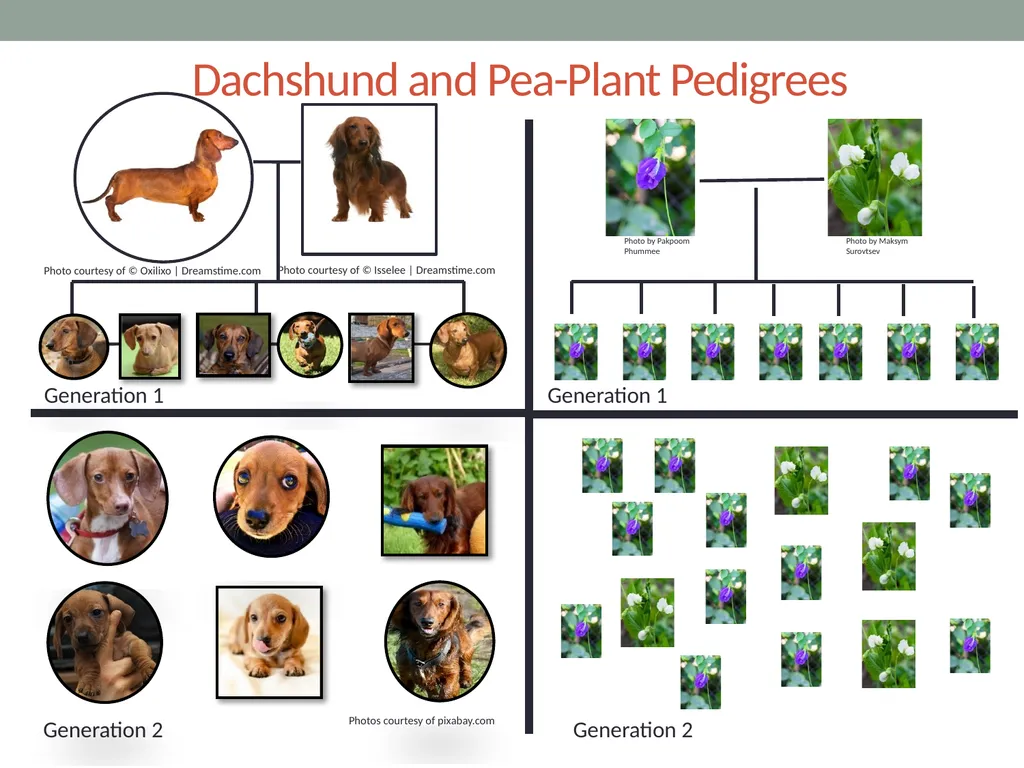
Generation 1 Generation 2 Generation 1 Generation 2 Photo by Pakpoom Phummee Photo by Maksym Surovtsev Dachshund and Pea-Plant Pedigrees Photos courtesy of pixabay.com<br>
04
Lesson Focus Question How can a model of inheritance explain how a trait may seem to disappear in a family?<br>
05
Two of Mendel’s Key Science Ideas Genes are instructions for a trait. Different forms of the same gene are called alleles. Alleles provide instructions for variations of a trait.
Some alleles are dominant, and some are recessive.<br>
06
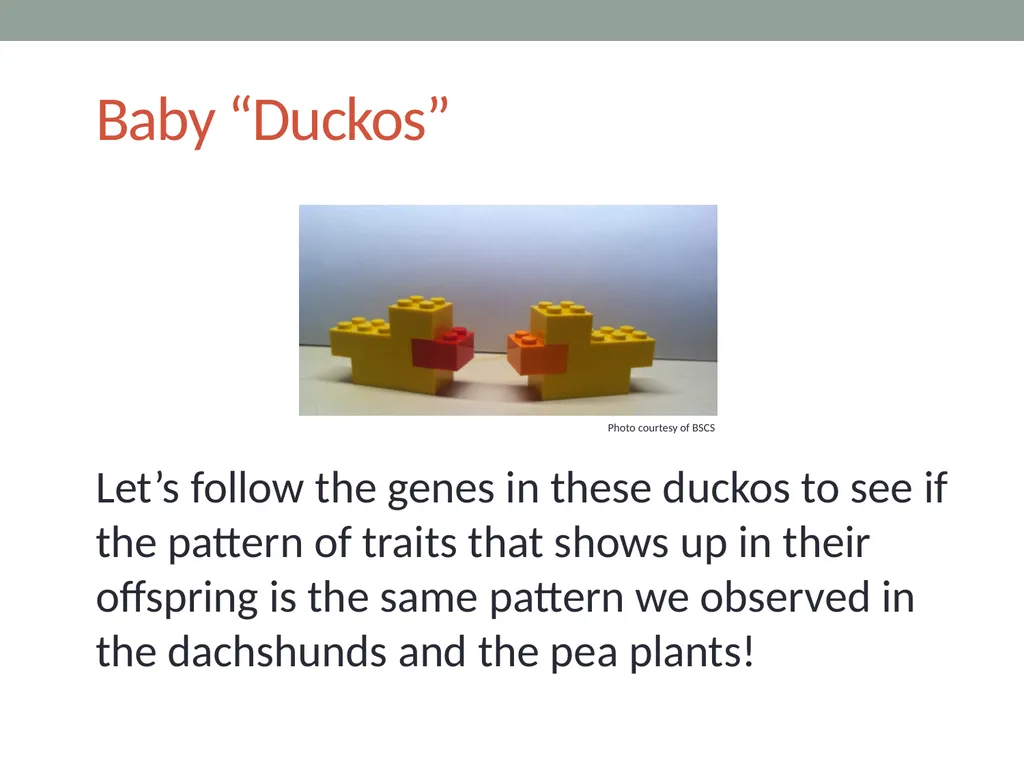
Baby “Duckos” Let’s follow the genes in these duckos to see if the pattern of traits that shows up in their offspring is the same pattern we observed in the dachshunds and the pea plants! Photo courtesy of BSCS<br>
07
Traits in Generation 1 Duckos Open the Red-billed Parent Nucleus bag representing the parent with the RED bill.
Open the Orange-billed Parent Nucleus bag representing the parent with the ORANGE bill.
What chromosomes and genes do you find in each nucleus that determine bill color?
What alleles for bill color do each of these duckos have?<br>
08
What Will Happen to the Bill Trait? If the red-billed ducko and the orange-billed ducko breed to produce Generation 1 ducko offspring, what do you think will happen to the chromosomes and genes for bill color?
Let’s show what we know!<br>
09
Bill Color in Generation 1 Duckos What bill color (red or orange) will each baby ducko have in Generation 1?
Which trait is dominant?
Which trait is recessive?
How do you know? (Where did you find the instructions for bill color?)<br>
10
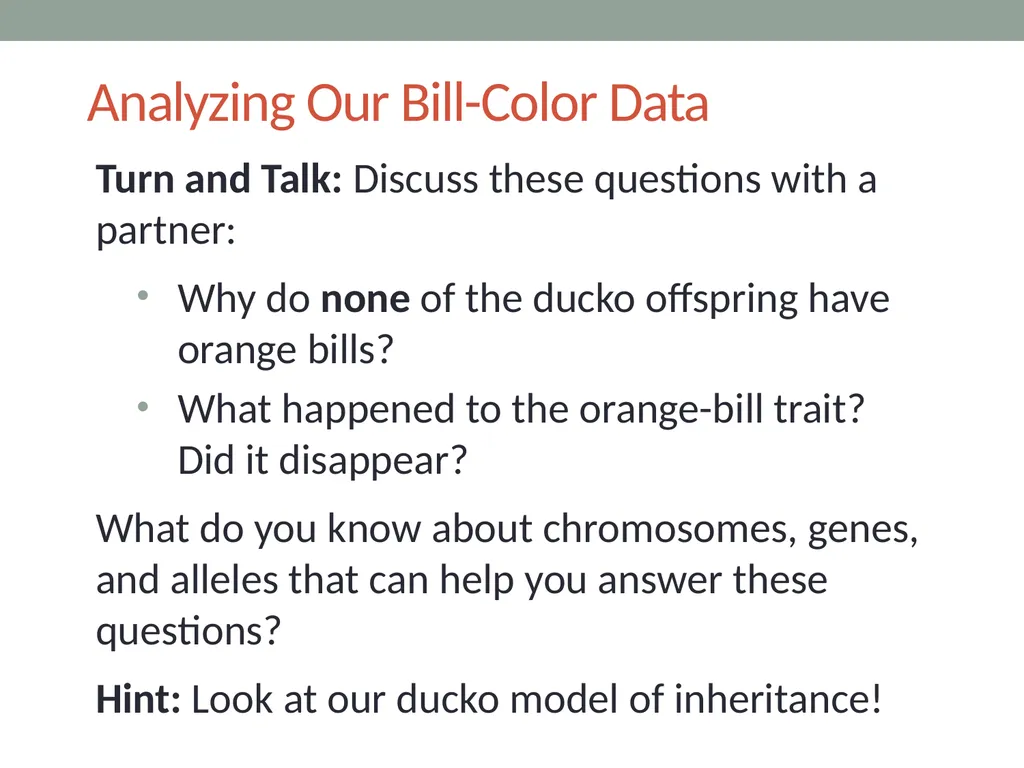
Analyzing Our Bill-Color Data Turn and Talk: Discuss these questions with a partner:
Why do none of the ducko offspring have orange bills?
What happened to the orange-bill trait? Did it disappear?
What do you know about chromosomes, genes, and alleles that can help you answer these questions?
Hint: Look at our ducko model of inheritance!<br>
11
Let’s Summarize! Today’s focus question: How can a model of inheritance explain how a trait may seem to disappear in a family?
Turn and Talk: Discuss this question with a partner and then write your answer in your science notebook. You can also draw a picture or diagram.
Make sure to include chromosomes, genes, and alleles in your explanation.<br>
12
Next Time What bill color do you think the second generation of duckos will have?
Do you think the bill-color trait will follow the same pattern we observed in the dachshunds and pea plants?
That’s what we’ll find out in the next lesson.<br>