
Getting to Know Internal Auditing The Profession
Description: Getting to Know Internal Auditing The Profession that Makes a Difference Presenter: Organization Date Presentation is complements of The IIA Academic Relations Whats Internal Auditing? Internal auditing is an independent, objective
Related Topics
Download Presentation
"Getting to Know Internal Auditing The Profession" is the property of its rightful owner. Permission is granted to download and print the materials on this website for personal, non-commercial use only, and to display it on your personal computer provided you do not modify the materials and that you retain all copyright notices contained in the materials. By downloading content from our website, you accept the terms of this agreement.
Presentation Transcript
slide1. Getting to Know
Internal Auditing The Profession that Makes a Difference Presenter:
Organization
Date Presentation is complements of The IIA Academic Relations<br>
slide2. What’s Internal Auditing? “Internal auditing is an independent, objective assurance and consulting activity designed to add value and improve an organization's operations. It helps an organization accomplish its objectives by bringing a systematic, disciplined approach to evaluate and improve the effectiveness of risk management, control, and governance processes.”<br>
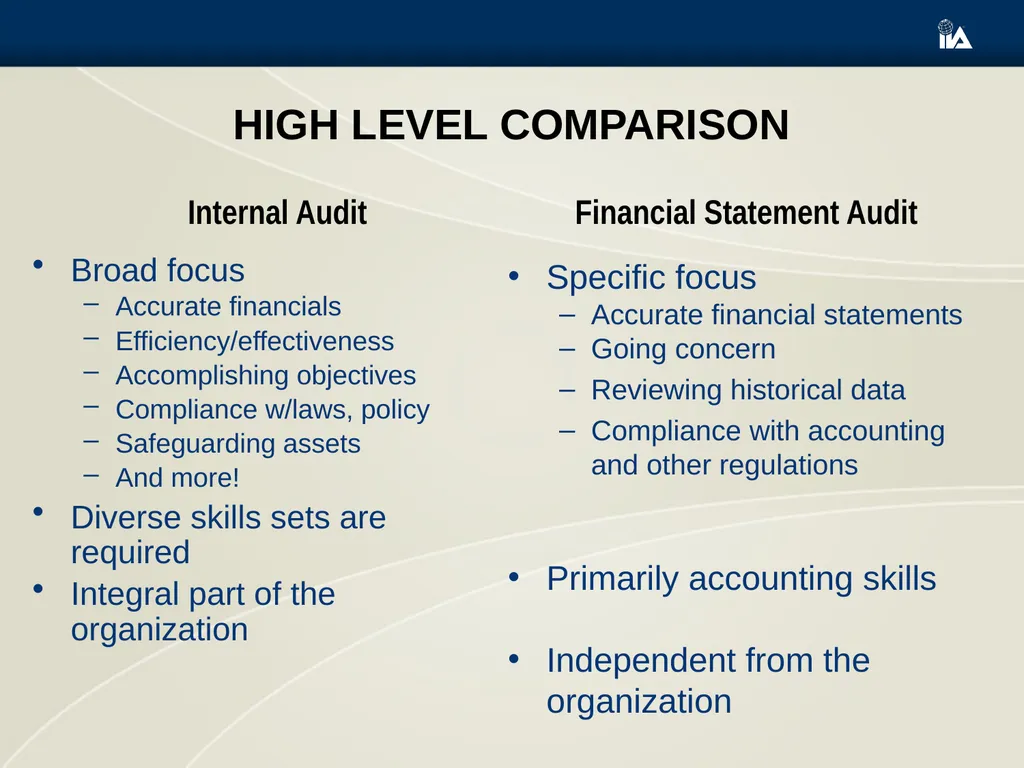
slide3. High level comparison Internal Audit Broad focus
Accurate financials
Efficiency/effectiveness
Accomplishing objectives
Compliance w/laws, policy
Safeguarding assets
And more!
Diverse skills sets are required
Integral part of the organization Financial Statement Audit Specific focus
Accurate financial statements
Going concern
Reviewing historical data
Compliance with accounting and other regulations
Primarily accounting skills
Independent from the organization<br>
slide4. Internal Auditors Assess Risks… To help keep bad things from happening
To help assure good things can happen
To help management understand
Where their risks are
Whether the risks are under control
Whether the risks are worth taking<br>
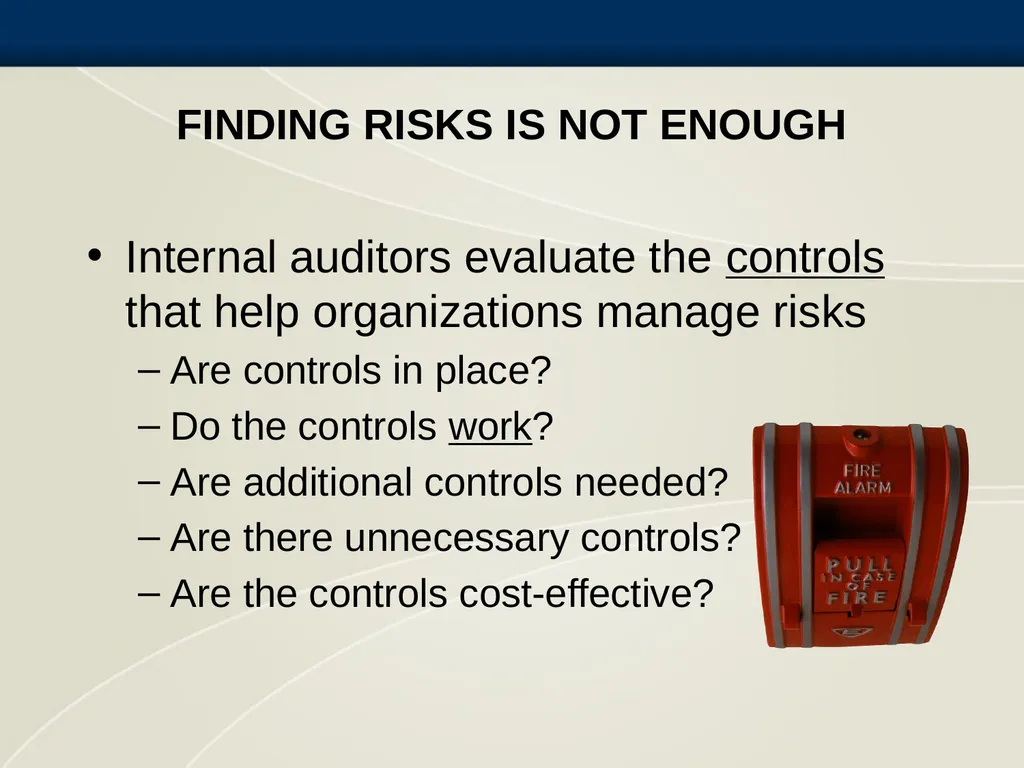
slide5. Finding Risks is Not Enough Internal auditors evaluate the controls that help organizations manage risks
Are controls in place?
Do the controls work?
Are additional controls needed?
Are there unnecessary controls?
Are the controls cost-effective?<br>
slide6. Five Critical Tasks Determine whether controls are adequate
Suggest improvements to increase efficiency and effectiveness or to lower operating costs
Determine whether policies and procedures are followed
Determine whether laws and regulations are being obeyed
Detect fraud or manipulation of records<br>
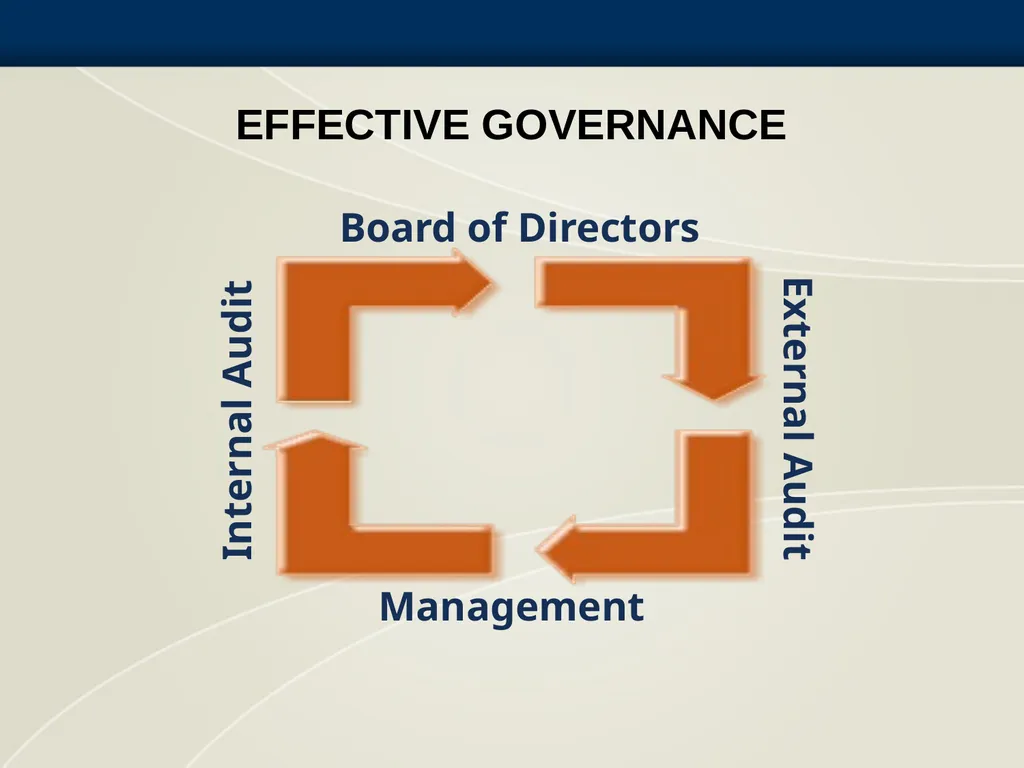
slide7. Effective Governance Board of Directors Management External Audit Internal Audit<br>
slide8. Maintaining Independence: Dual Reporting Relationships About 80 percent of Chief Audit Executives (CAEs) report functionally to the Audit Committee/Board of Directors
Independent from audited activities
Wide authority
Most common administrative reporting relationship is to the President/CEO<br>
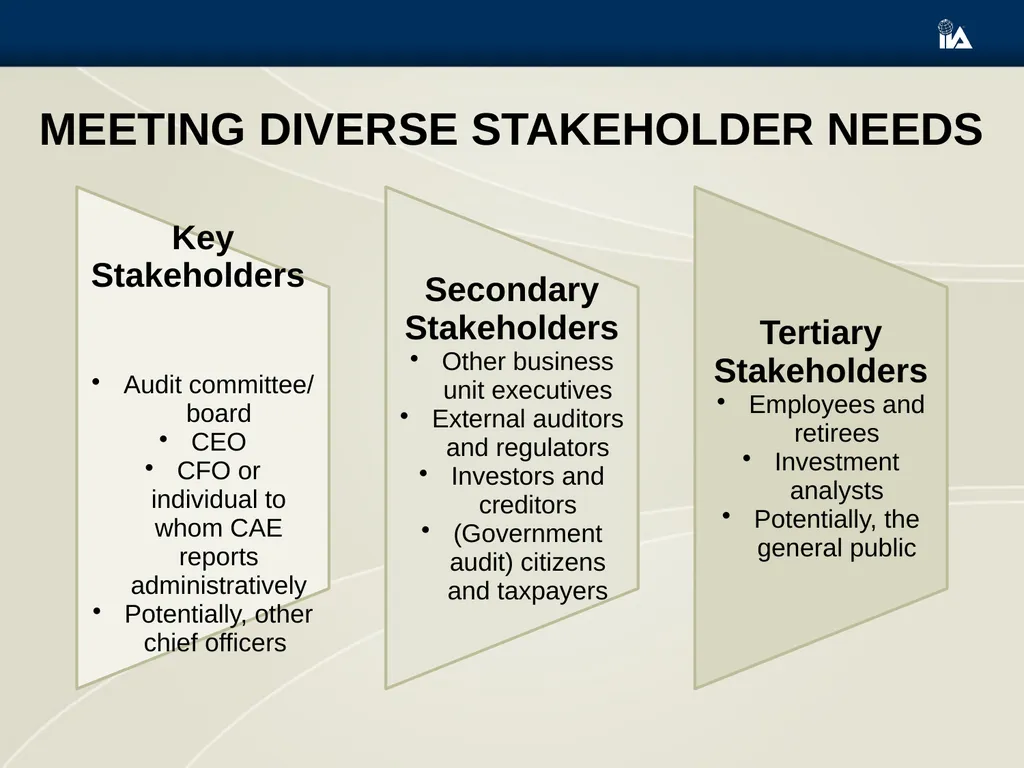
slide9. Meeting Diverse Stakeholder Needs<br>
slide10. Internal Auditors Find out what’s working and what’s not
Keep an eye on the corporate climate
Look at the organization with fresh eyes
Look beyond the financial statements
Advocate improvements
Raise red flags
Tell it like it is<br>
slide11. Auditors Tell It Like It Is Keep senior management aware of critical issues
Ensure factual communications of financial, operational and compliance data
Make suggestions based on knowledge of operations throughout the organization<br>
slide12. What would you say… If someone asked you whether or not their organization needed internal auditors?<br>
slide13. When Does a Company Need an Internal Audit Function? Internal audit is not legally required in the U.S.
Exceptions: NYSE-listed corporations and a few specific industry/government requirements
Required in some countries
Every organization, regardless of its size, should have some type of internal control system/process
The IIA believes that an organization is best served by a fully resourced and professionally competent internal auditing function<br>
slide14. What will an Internal Audit Function accomplish? Will it reduce liability or help control risks?
Will it free management to focus on core mission?
Will it improve the accuracy of financial and operational information?
Do we need a second opinion?
Can we improve service delivery?
Will it improve financial results?<br>
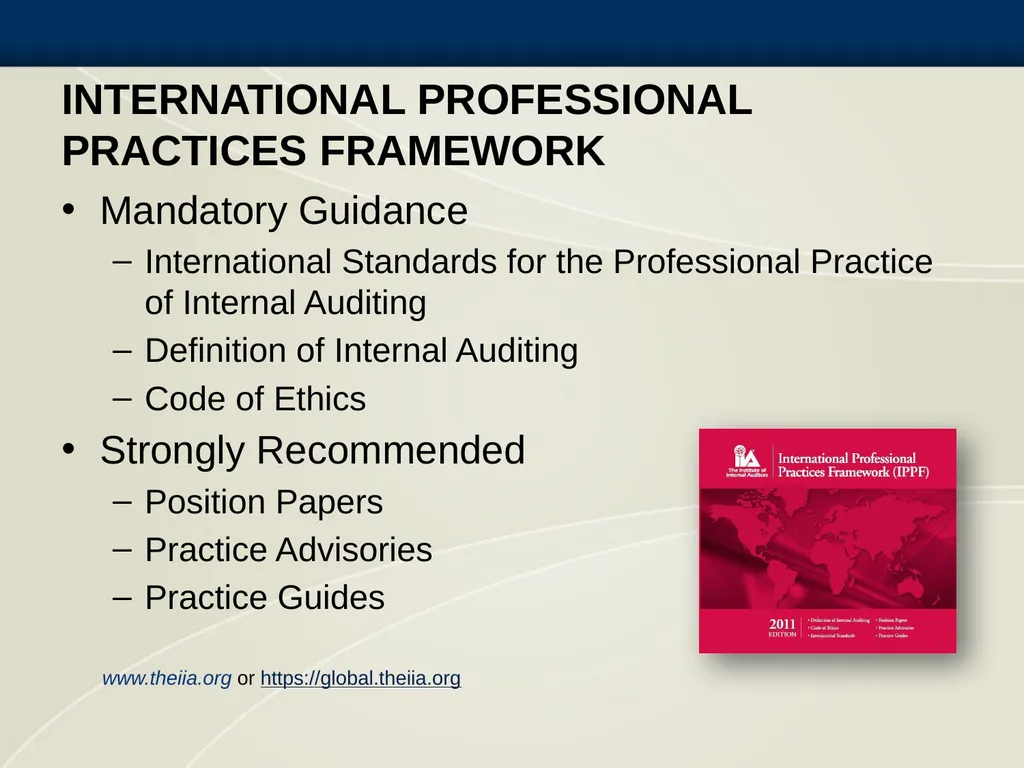
slide15. International Professional Practices Framework Mandatory Guidance
International Standards for the Professional Practice of Internal Auditing
Definition of Internal Auditing
Code of Ethics
Strongly Recommended
Position Papers
Practice Advisories
Practice Guides www.theiia.org or https://global.theiia.org<br>
slide16. Questions?<br>
Organization
Date Presentation is complements of The IIA Academic Relations<br>
slide2. What’s Internal Auditing? “Internal auditing is an independent, objective assurance and consulting activity designed to add value and improve an organization's operations. It helps an organization accomplish its objectives by bringing a systematic, disciplined approach to evaluate and improve the effectiveness of risk management, control, and governance processes.”<br>
slide3. High level comparison Internal Audit Broad focus
Accurate financials
Efficiency/effectiveness
Accomplishing objectives
Compliance w/laws, policy
Safeguarding assets
And more!
Diverse skills sets are required
Integral part of the organization Financial Statement Audit Specific focus
Accurate financial statements
Going concern
Reviewing historical data
Compliance with accounting and other regulations
Primarily accounting skills
Independent from the organization<br>
slide4. Internal Auditors Assess Risks… To help keep bad things from happening
To help assure good things can happen
To help management understand
Where their risks are
Whether the risks are under control
Whether the risks are worth taking<br>
slide5. Finding Risks is Not Enough Internal auditors evaluate the controls that help organizations manage risks
Are controls in place?
Do the controls work?
Are additional controls needed?
Are there unnecessary controls?
Are the controls cost-effective?<br>
slide6. Five Critical Tasks Determine whether controls are adequate
Suggest improvements to increase efficiency and effectiveness or to lower operating costs
Determine whether policies and procedures are followed
Determine whether laws and regulations are being obeyed
Detect fraud or manipulation of records<br>
slide7. Effective Governance Board of Directors Management External Audit Internal Audit<br>
slide8. Maintaining Independence: Dual Reporting Relationships About 80 percent of Chief Audit Executives (CAEs) report functionally to the Audit Committee/Board of Directors
Independent from audited activities
Wide authority
Most common administrative reporting relationship is to the President/CEO<br>
slide9. Meeting Diverse Stakeholder Needs<br>
slide10. Internal Auditors Find out what’s working and what’s not
Keep an eye on the corporate climate
Look at the organization with fresh eyes
Look beyond the financial statements
Advocate improvements
Raise red flags
Tell it like it is<br>
slide11. Auditors Tell It Like It Is Keep senior management aware of critical issues
Ensure factual communications of financial, operational and compliance data
Make suggestions based on knowledge of operations throughout the organization<br>
slide12. What would you say… If someone asked you whether or not their organization needed internal auditors?<br>
slide13. When Does a Company Need an Internal Audit Function? Internal audit is not legally required in the U.S.
Exceptions: NYSE-listed corporations and a few specific industry/government requirements
Required in some countries
Every organization, regardless of its size, should have some type of internal control system/process
The IIA believes that an organization is best served by a fully resourced and professionally competent internal auditing function<br>
slide14. What will an Internal Audit Function accomplish? Will it reduce liability or help control risks?
Will it free management to focus on core mission?
Will it improve the accuracy of financial and operational information?
Do we need a second opinion?
Can we improve service delivery?
Will it improve financial results?<br>
slide15. International Professional Practices Framework Mandatory Guidance
International Standards for the Professional Practice of Internal Auditing
Definition of Internal Auditing
Code of Ethics
Strongly Recommended
Position Papers
Practice Advisories
Practice Guides www.theiia.org or https://global.theiia.org<br>
slide16. Questions?<br>