
Global Shared Service Center Query /Issue
Description: Global Shared Service Center Query Issue Management Process and Tools Walkthrough for Stakeholders November 2013 Agenda Introduction3 Guiding Principles..4 Process
Related Topics
Download Presentation
"Global Shared Service Center Query /Issue" is the property of its rightful owner. Permission is granted to download and print the materials on this website for personal, non-commercial use only, and to display it on your personal computer provided you do not modify the materials and that you retain all copyright notices contained in the materials. By downloading content from our website, you accept the terms of this agreement.
Presentation Transcript
slide1. Global Shared Service Center
Query /Issue Management
Process and Tools Walkthrough for Stakeholders November 2013<br>
slide2. Agenda Introduction……………………………………………………………………………………3
Guiding Principles…………………………………………………………………………..4
Process Overview……………………………………………………………………………5
Auto -creation of a Query in Service-now……………………………………….7
Self Service………………………………………………………………………………………….8
Standard Email Addresses ………………..…………………………………………13
Conclusion………………………………………………………………………………………14
Appendix…………………………………………………………………………………………15<br>
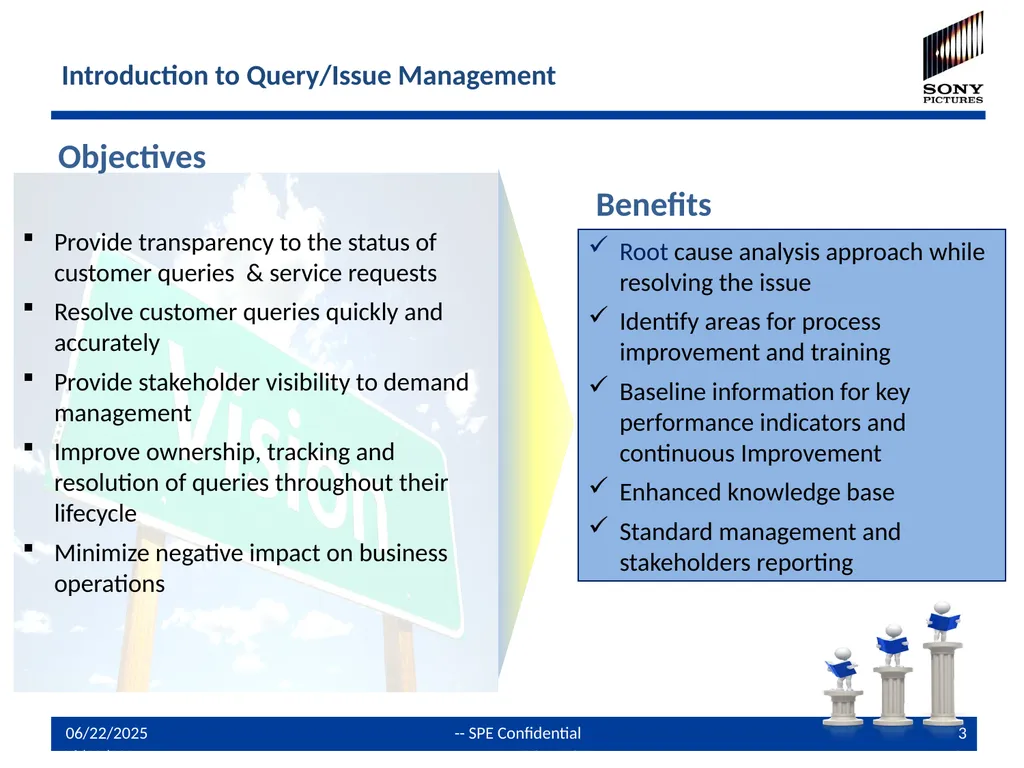
slide3. Benefits Introduction to Query/Issue Management Provide transparency to the status of customer queries & service requests
Resolve customer queries quickly and accurately
Provide stakeholder visibility to demand management
Improve ownership, tracking and resolution of queries throughout their lifecycle
Minimize negative impact on business operations 11/13/2013 -- SPE Confidential 3 Root cause analysis approach while resolving the issue
Identify areas for process improvement and training
Baseline information for key performance indicators and continuous Improvement
Enhanced knowledge base
Standard management and stakeholders reporting Objectives<br>
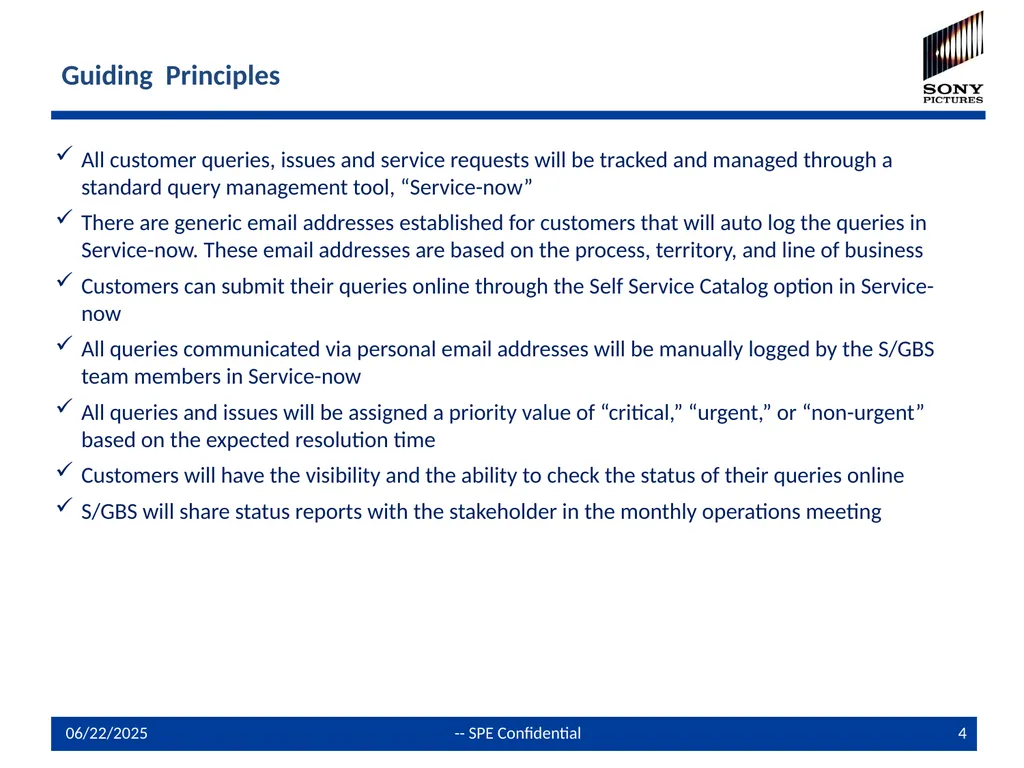
slide4. Guiding Principles All customer queries, issues and service requests will be tracked and managed through a standard query management tool, “Service-now”
There are generic email addresses established for customers that will auto log the queries in Service-now. These email addresses are based on the process, territory, and line of business
Customers can submit their queries online through the Self Service Catalog option in Service-now
All queries communicated via personal email addresses will be manually logged by the S/GBS team members in Service-now
All queries and issues will be assigned a priority value of “critical,” “urgent,” or “non-urgent” based on the expected resolution time
Customers will have the visibility and the ability to check the status of their queries online
S/GBS will share status reports with the stakeholder in the monthly operations meeting<br>
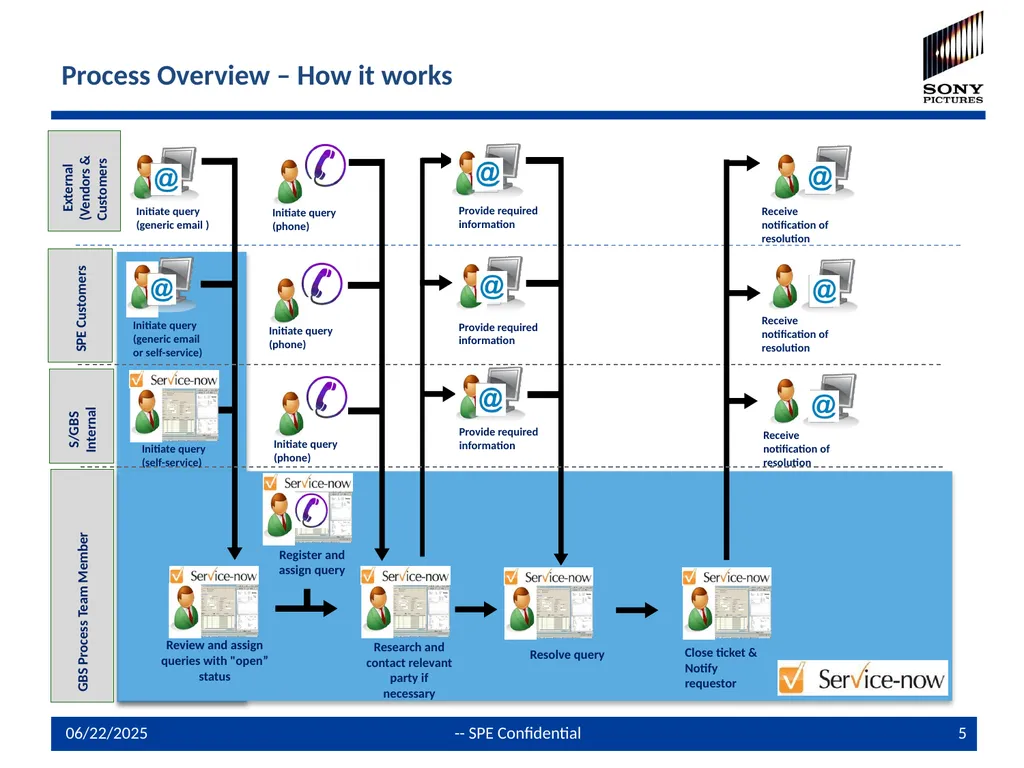
slide5. Process Overview – How it works<br>
slide6. Service-now Demo<br>
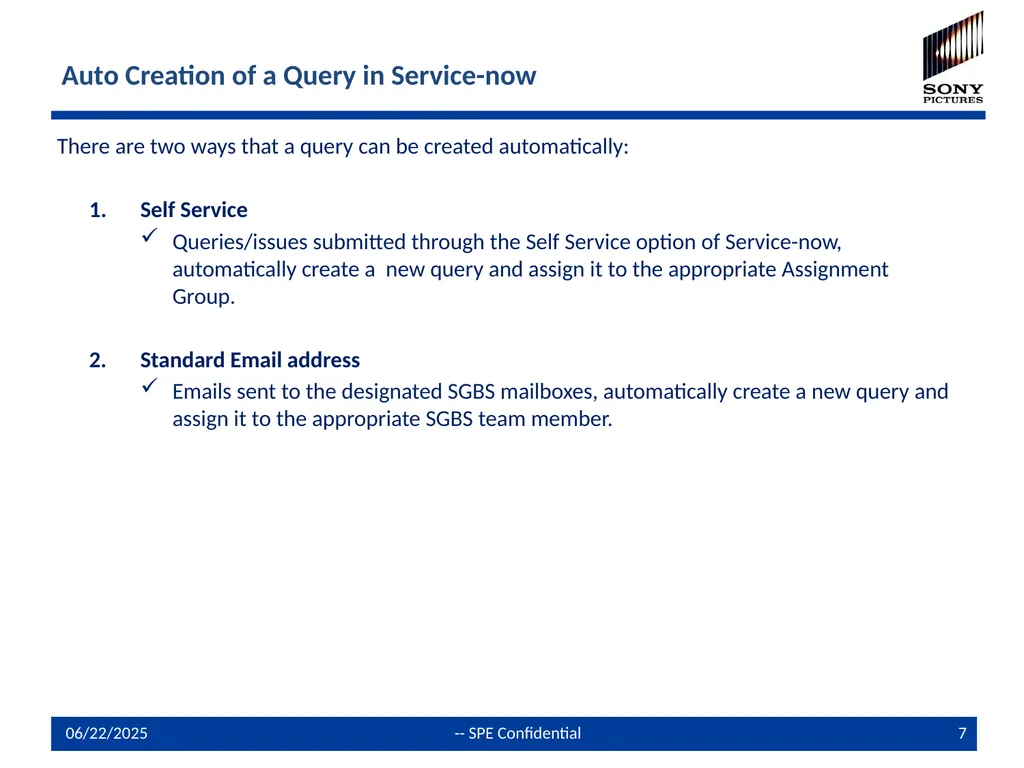
slide7. Auto Creation of a Query in Service-now There are two ways that a query can be created automatically:
Self Service
Queries/issues submitted through the Self Service option of Service-now, automatically create a new query and assign it to the appropriate Assignment Group.
2. Standard Email address
Emails sent to the designated SGBS mailboxes, automatically create a new query and assign it to the appropriate SGBS team member.<br>
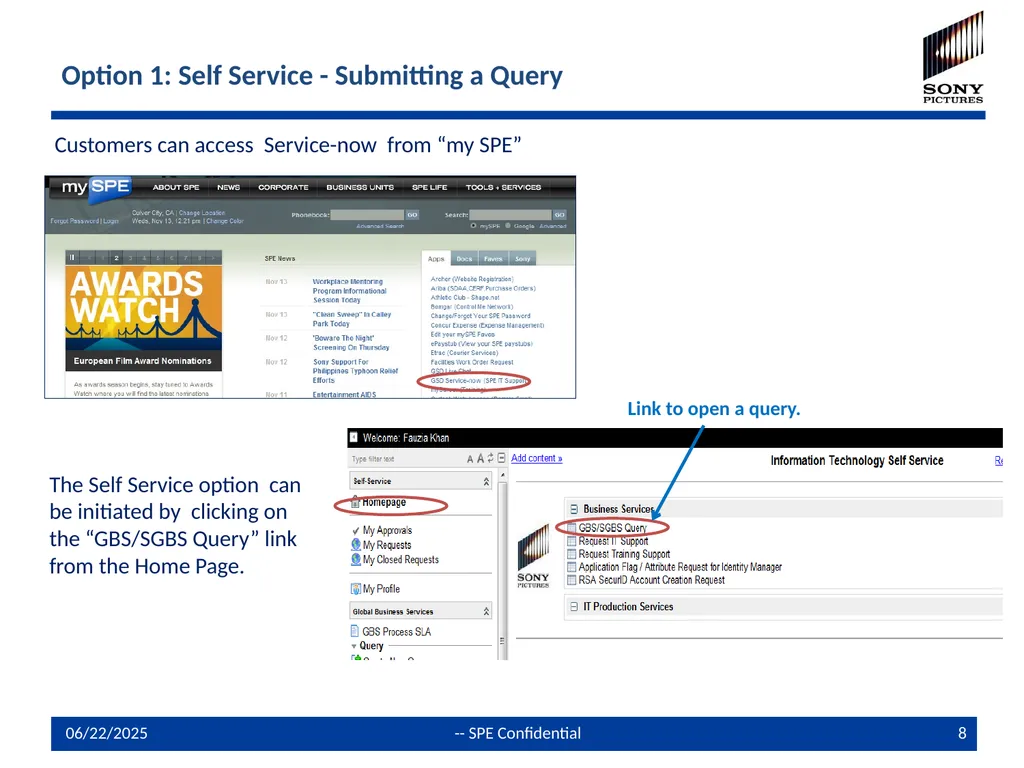
slide8. Option 1: Self Service - Submitting a Query Customers can access Service-now from “my SPE” The Self Service option can be initiated by clicking on the “GBS/SGBS Query” link from the Home Page. Link to open a query.<br>
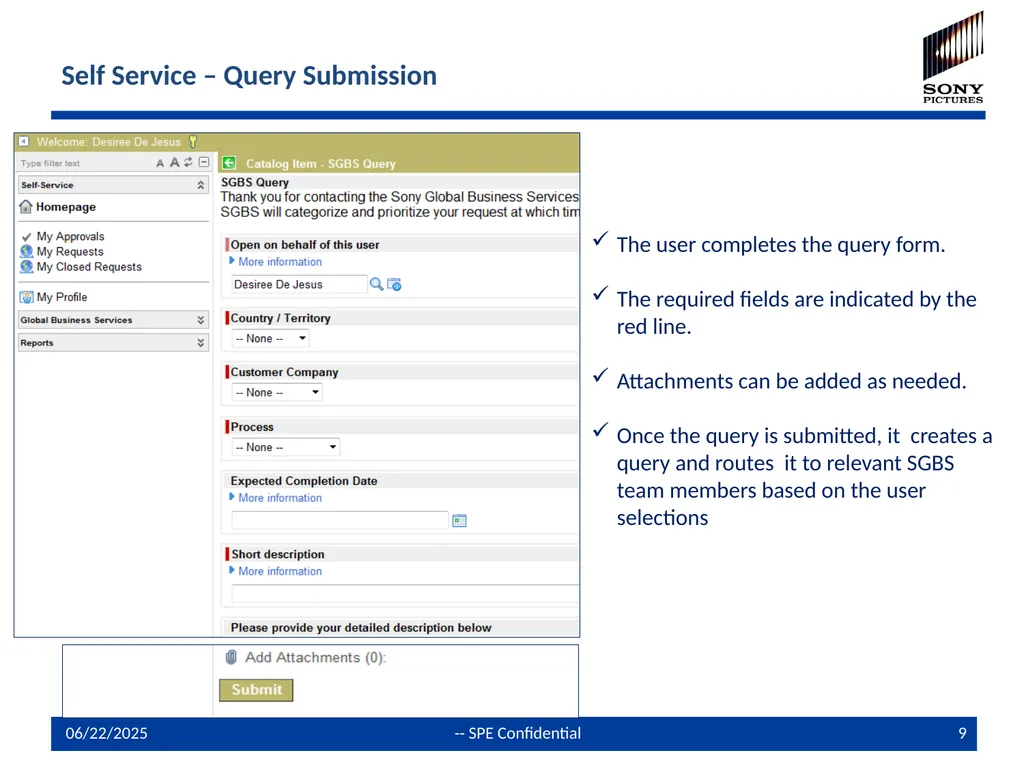
slide9. Self Service – Query Submission The user completes the query form.
The required fields are indicated by the red line.
Attachments can be added as needed.
Once the query is submitted, it creates a query and routes it to relevant SGBS team members based on the user selections<br>
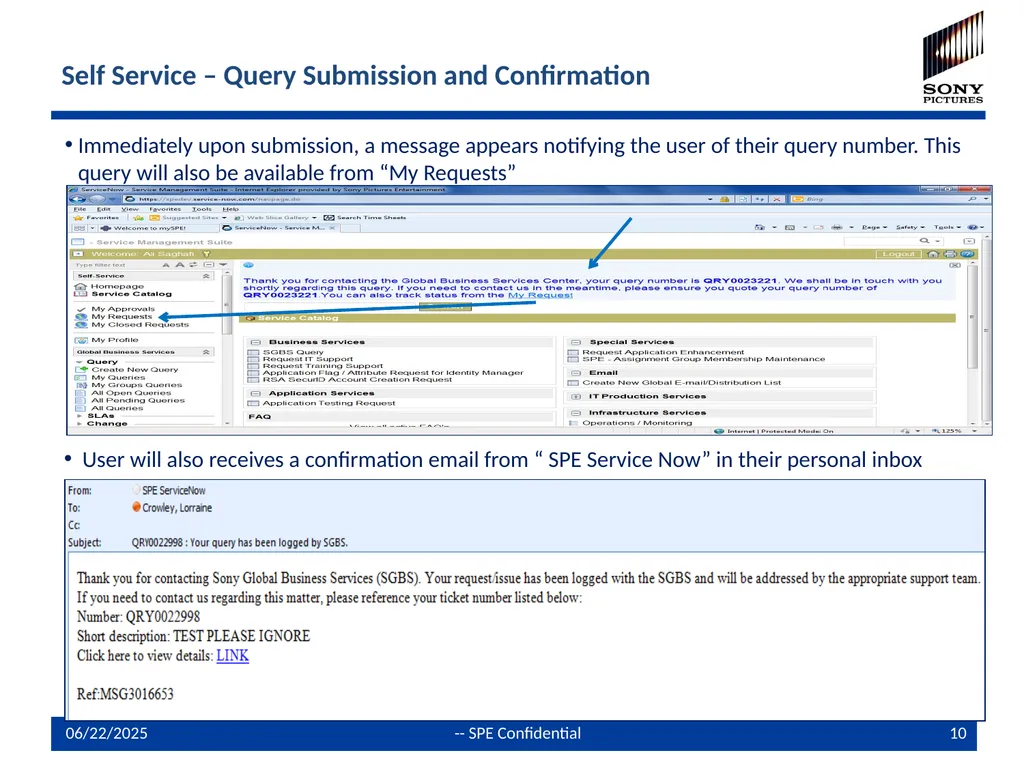
slide10. Self Service – Query Submission and Confirmation Immediately upon submission, a message appears notifying the user of their query number. This query will also be available from “My Requests” User will also receives a confirmation email from “ SPE Service Now” in their personal inbox<br>
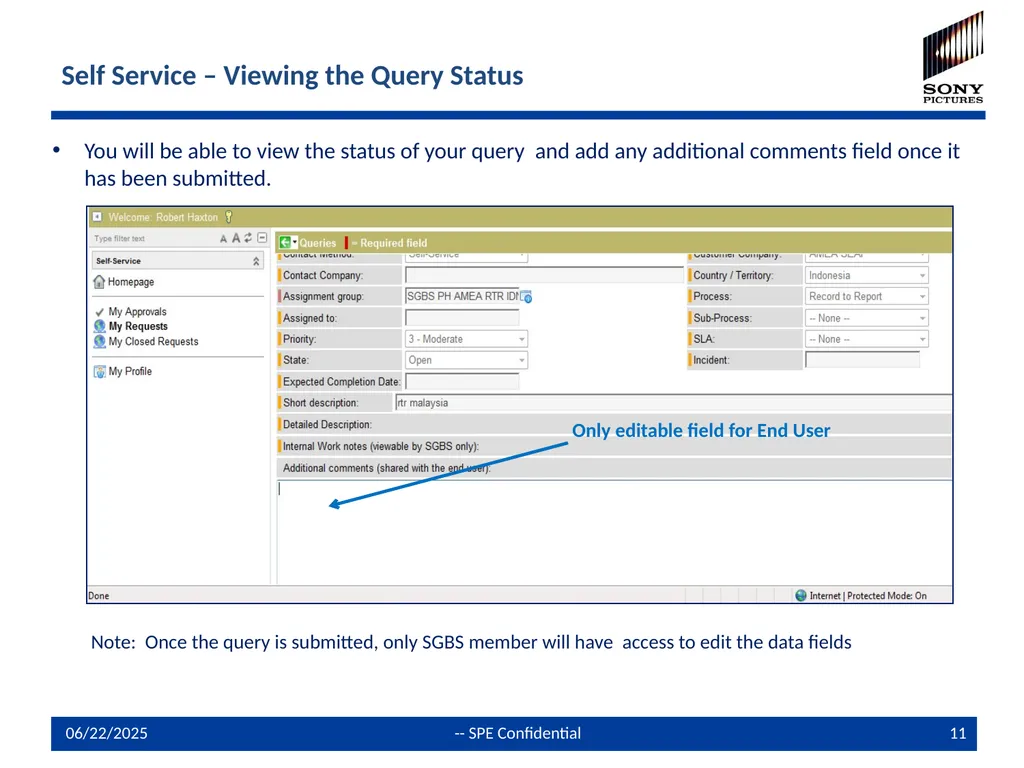
slide11. Self Service – Viewing the Query Status You will be able to view the status of your query and add any additional comments field once it has been submitted. Only editable field for End User Note: Once the query is submitted, only SGBS member will have access to edit the data fields<br>
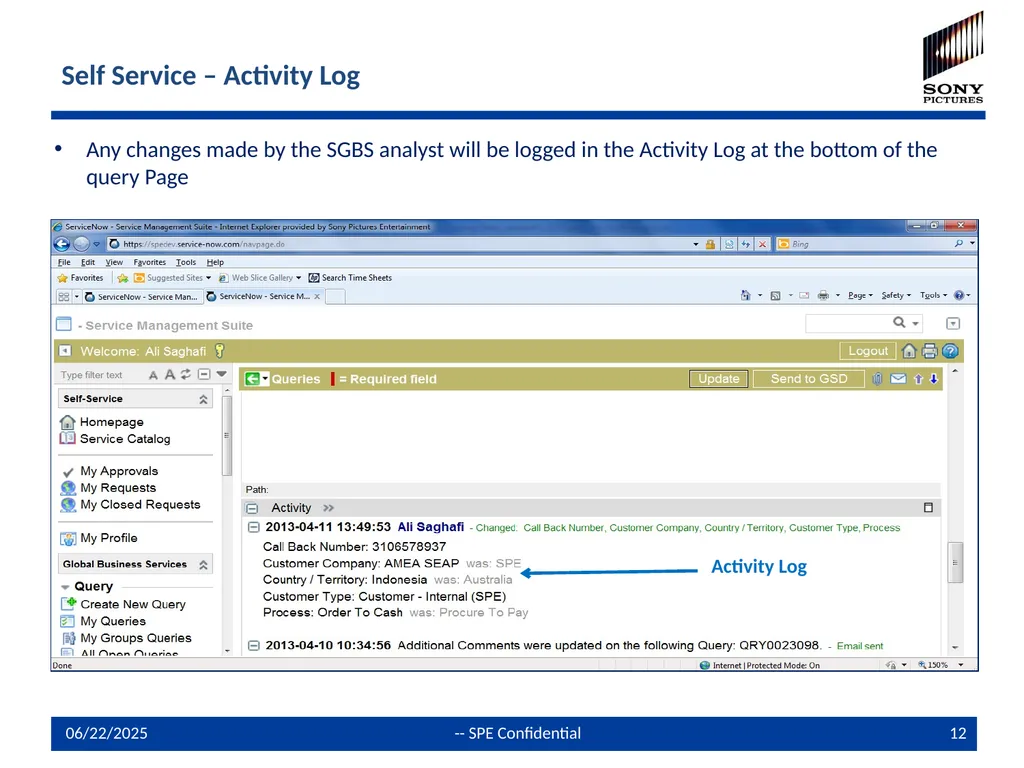
slide12. Self Service – Activity Log Any changes made by the SGBS analyst will be logged in the Activity Log at the bottom of the query Page Only editable field for End User Activity Log<br>
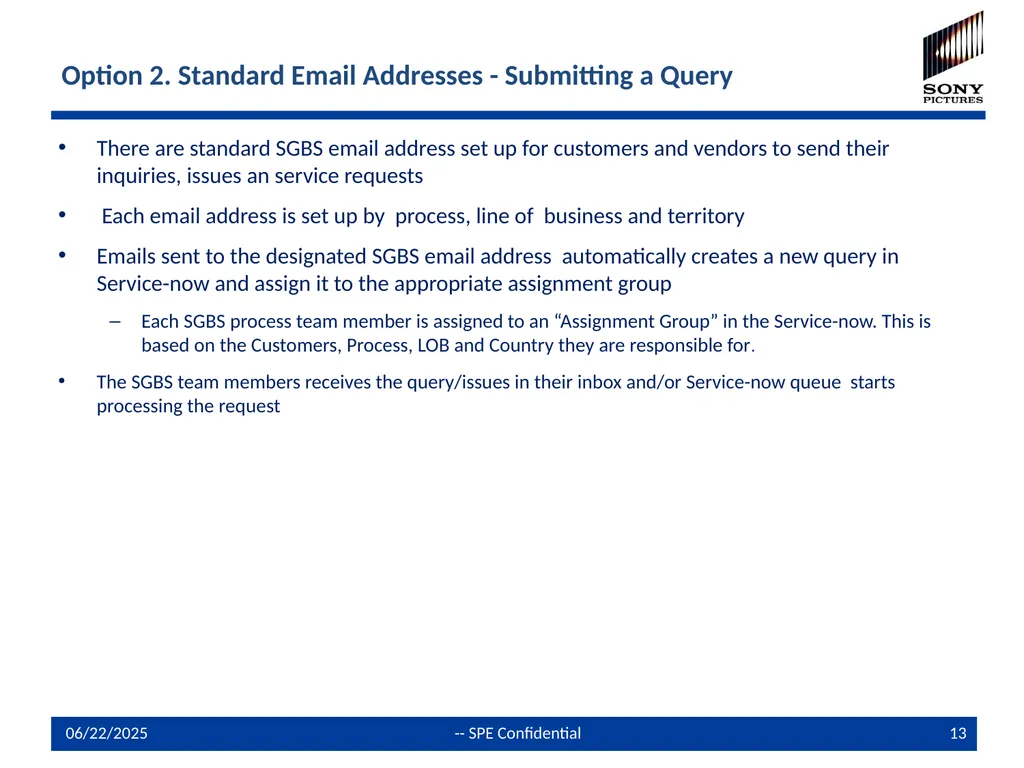
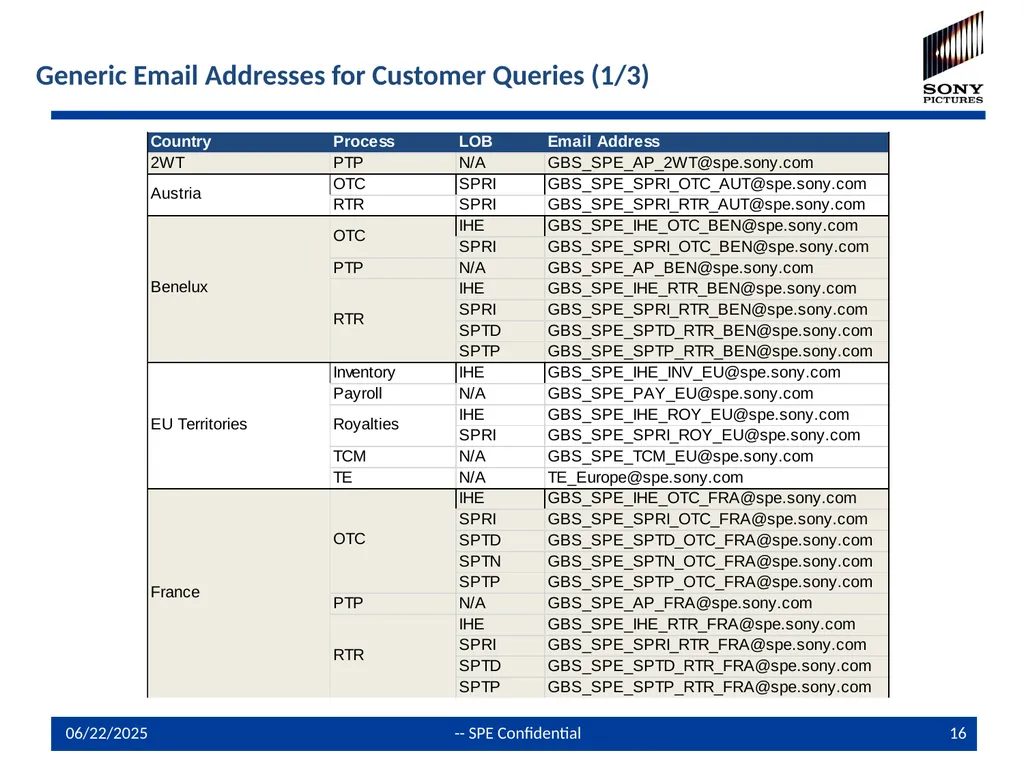
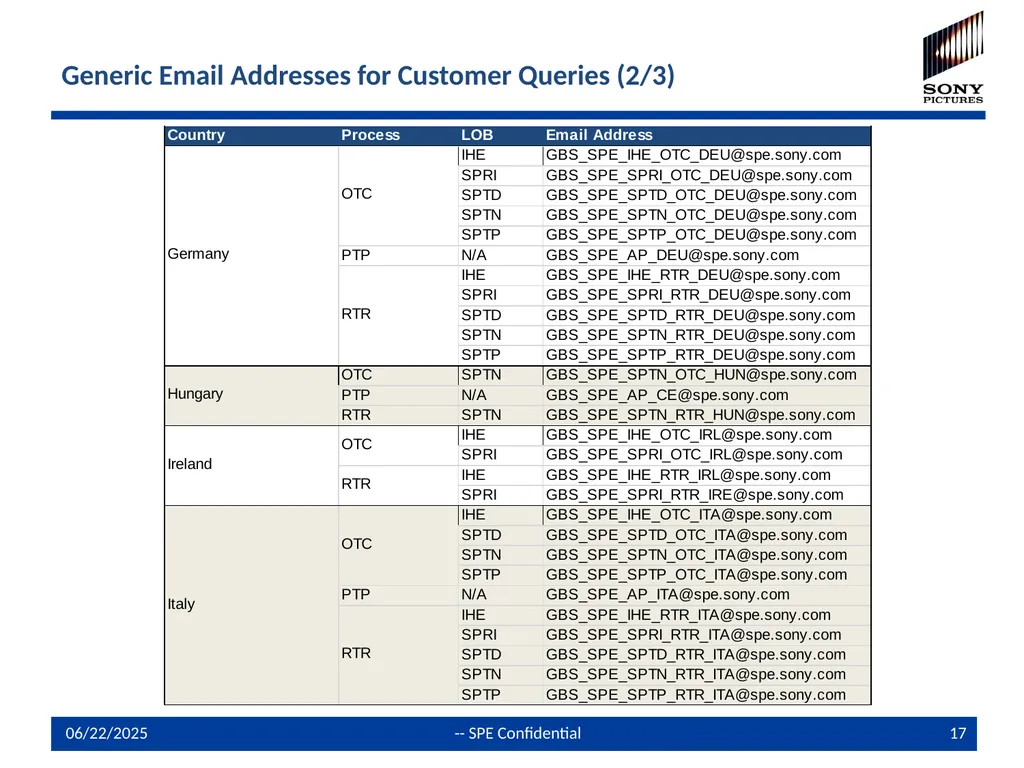
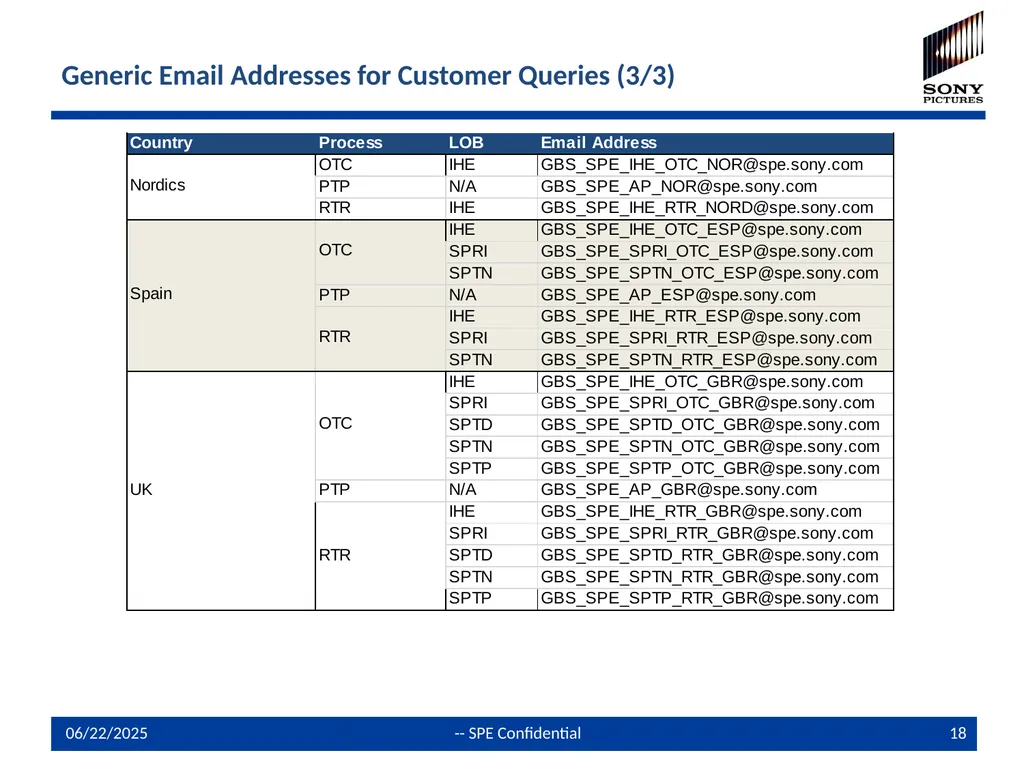
slide13. Option 2. Standard Email Addresses - Submitting a Query There are standard SGBS email address set up for customers and vendors to send their inquiries, issues an service requests
Each email address is set up by process, line of business and territory
Emails sent to the designated SGBS email address automatically creates a new query in Service-now and assign it to the appropriate assignment group
Each SGBS process team member is assigned to an “Assignment Group” in the Service-now. This is based on the Customers, Process, LOB and Country they are responsible for.
The SGBS team members receives the query/issues in their inbox and/or Service-now queue starts processing the request<br>
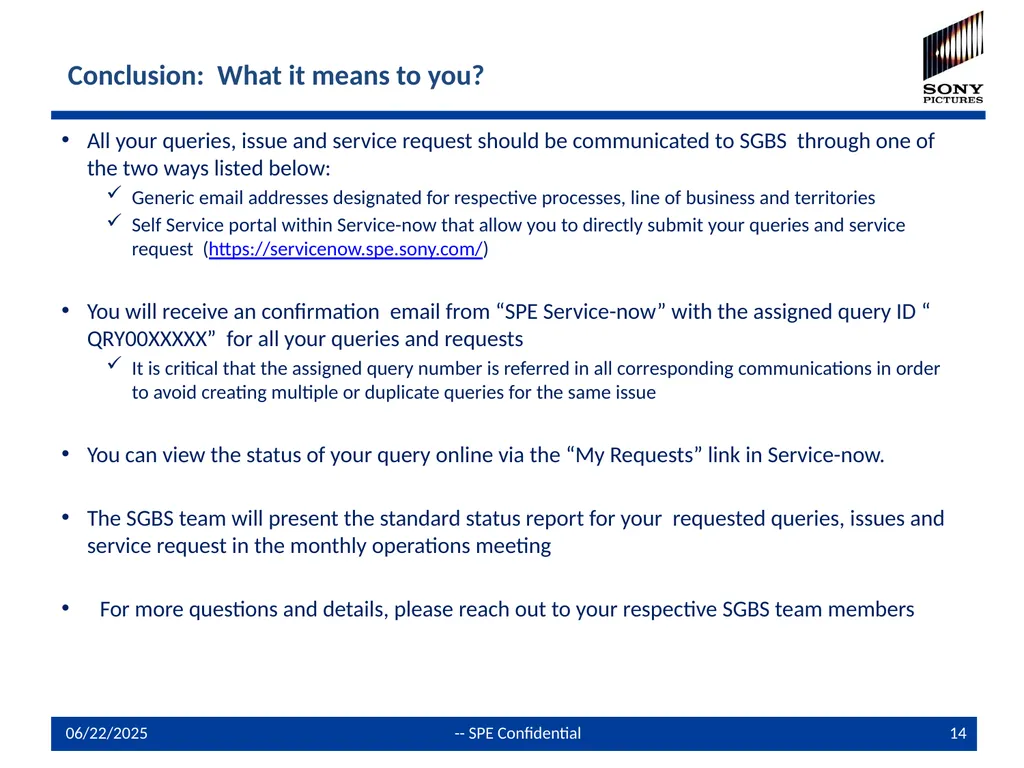
slide14. Conclusion: What it means to you? All your queries, issue and service request should be communicated to SGBS through one of the two ways listed below:
Generic email addresses designated for respective processes, line of business and territories
Self Service portal within Service-now that allow you to directly submit your queries and service request (https://servicenow.spe.sony.com/)
You will receive an confirmation email from “SPE Service-now” with the assigned query ID “ QRY00XXXXX” for all your queries and requests
It is critical that the assigned query number is referred in all corresponding communications in order to avoid creating multiple or duplicate queries for the same issue
You can view the status of your query online via the “My Requests” link in Service-now.
The SGBS team will present the standard status report for your requested queries, issues and service request in the monthly operations meeting
For more questions and details, please reach out to your respective SGBS team members<br>
slide15. Appendix<br>
slide16. Generic Email Addresses for Customer Queries (1/3)<br>
slide17. Generic Email Addresses for Customer Queries (2/3)<br>
slide18. Generic Email Addresses for Customer Queries (3/3)<br>
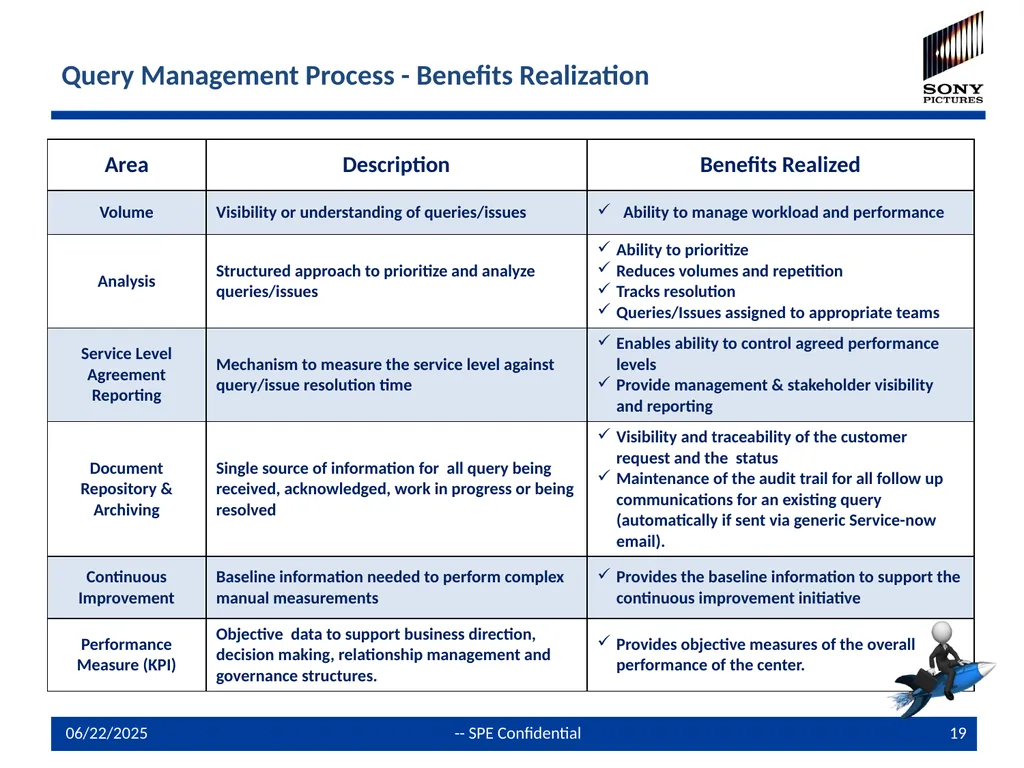
slide19. Query Management Process - Benefits Realization<br>
slide2. Agenda Introduction……………………………………………………………………………………3
Guiding Principles…………………………………………………………………………..4
Process Overview……………………………………………………………………………5
Auto -creation of a Query in Service-now……………………………………….7
Self Service………………………………………………………………………………………….8
Standard Email Addresses ………………..…………………………………………13
Conclusion………………………………………………………………………………………14
Appendix…………………………………………………………………………………………15<br>
slide3. Benefits Introduction to Query/Issue Management Provide transparency to the status of customer queries & service requests
Resolve customer queries quickly and accurately
Provide stakeholder visibility to demand management
Improve ownership, tracking and resolution of queries throughout their lifecycle
Minimize negative impact on business operations 11/13/2013 -- SPE Confidential 3 Root cause analysis approach while resolving the issue
Identify areas for process improvement and training
Baseline information for key performance indicators and continuous Improvement
Enhanced knowledge base
Standard management and stakeholders reporting Objectives<br>
slide4. Guiding Principles All customer queries, issues and service requests will be tracked and managed through a standard query management tool, “Service-now”
There are generic email addresses established for customers that will auto log the queries in Service-now. These email addresses are based on the process, territory, and line of business
Customers can submit their queries online through the Self Service Catalog option in Service-now
All queries communicated via personal email addresses will be manually logged by the S/GBS team members in Service-now
All queries and issues will be assigned a priority value of “critical,” “urgent,” or “non-urgent” based on the expected resolution time
Customers will have the visibility and the ability to check the status of their queries online
S/GBS will share status reports with the stakeholder in the monthly operations meeting<br>
slide5. Process Overview – How it works<br>
slide6. Service-now Demo<br>
slide7. Auto Creation of a Query in Service-now There are two ways that a query can be created automatically:
Self Service
Queries/issues submitted through the Self Service option of Service-now, automatically create a new query and assign it to the appropriate Assignment Group.
2. Standard Email address
Emails sent to the designated SGBS mailboxes, automatically create a new query and assign it to the appropriate SGBS team member.<br>
slide8. Option 1: Self Service - Submitting a Query Customers can access Service-now from “my SPE” The Self Service option can be initiated by clicking on the “GBS/SGBS Query” link from the Home Page. Link to open a query.<br>
slide9. Self Service – Query Submission The user completes the query form.
The required fields are indicated by the red line.
Attachments can be added as needed.
Once the query is submitted, it creates a query and routes it to relevant SGBS team members based on the user selections<br>
slide10. Self Service – Query Submission and Confirmation Immediately upon submission, a message appears notifying the user of their query number. This query will also be available from “My Requests” User will also receives a confirmation email from “ SPE Service Now” in their personal inbox<br>
slide11. Self Service – Viewing the Query Status You will be able to view the status of your query and add any additional comments field once it has been submitted. Only editable field for End User Note: Once the query is submitted, only SGBS member will have access to edit the data fields<br>
slide12. Self Service – Activity Log Any changes made by the SGBS analyst will be logged in the Activity Log at the bottom of the query Page Only editable field for End User Activity Log<br>
slide13. Option 2. Standard Email Addresses - Submitting a Query There are standard SGBS email address set up for customers and vendors to send their inquiries, issues an service requests
Each email address is set up by process, line of business and territory
Emails sent to the designated SGBS email address automatically creates a new query in Service-now and assign it to the appropriate assignment group
Each SGBS process team member is assigned to an “Assignment Group” in the Service-now. This is based on the Customers, Process, LOB and Country they are responsible for.
The SGBS team members receives the query/issues in their inbox and/or Service-now queue starts processing the request<br>
slide14. Conclusion: What it means to you? All your queries, issue and service request should be communicated to SGBS through one of the two ways listed below:
Generic email addresses designated for respective processes, line of business and territories
Self Service portal within Service-now that allow you to directly submit your queries and service request (https://servicenow.spe.sony.com/)
You will receive an confirmation email from “SPE Service-now” with the assigned query ID “ QRY00XXXXX” for all your queries and requests
It is critical that the assigned query number is referred in all corresponding communications in order to avoid creating multiple or duplicate queries for the same issue
You can view the status of your query online via the “My Requests” link in Service-now.
The SGBS team will present the standard status report for your requested queries, issues and service request in the monthly operations meeting
For more questions and details, please reach out to your respective SGBS team members<br>
slide15. Appendix<br>
slide16. Generic Email Addresses for Customer Queries (1/3)<br>
slide17. Generic Email Addresses for Customer Queries (2/3)<br>
slide18. Generic Email Addresses for Customer Queries (3/3)<br>
slide19. Query Management Process - Benefits Realization<br>