Go-Learn-Grow A Toolkit for Improving Attendance in Pre-Kindergarten and Kindergarten Agenda Describe chronic absenteeism, causes, and the relationship between attendance in the early grades and student outcomes Discuss the New Jersey
"Go-Learn-Grow A Toolkit for Improving Attendance" is the property of its rightful owner. Permission is granted to
download and print the materials on this website for personal, non-commercial use only, and to display it
on your personal computer provided you do not modify the materials and that you retain all copyright
notices contained in the materials. By downloading content from our website, you accept the terms of this
agreement.
Presentation Transcript
01
Go-Learn-Grow A Toolkit for Improving Attendance in
Pre-Kindergarten and Kindergarten<br>
02
Agenda Describe chronic absenteeism, causes, and the relationship between attendance in the early grades and student outcomes
Discuss the New Jersey context and background
Provide an overview of New Jersey’s attendance toolkit and how you can use it
Q&A<br>
03
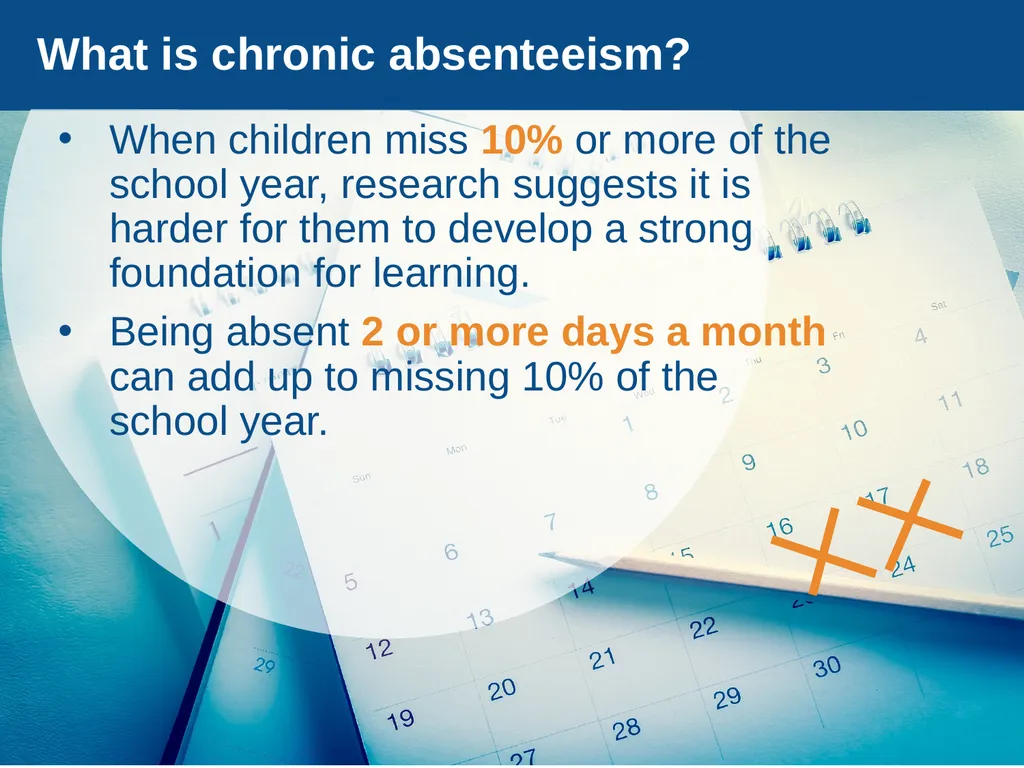
What is chronic absenteeism? When children miss 10% or more of the school year, research suggests it is harder for them to develop a strong foundation for learning.
Being absent 2 or more days a month can add up to missing 10% of the school year.<br>
04
Factors that contribute to absenteeism in the early years Lack of value placed on early learning, compared to the upper grades
Student health conditions
Family obligations or schedules
Transportation challenges
Unstable housing
Stressful life events
Once schools identify students who need support, they can gather information about root causes and identify interventions to increase attendance.<br>
05
Missing school in the early years matters Chronic absenteeism in the early grades is associated with:
Attendance issues in later grades
Lack of school readiness skills
Missing critical academic milestones
Future social-emotional and behavior problems
Grade repetition<br>
06
New Jersey is aware of the need to address chronic absenteeism Legislation
Data reporting
ESSA indicator
Guidance for tracking and addressing chronic absenteeism K-12<br>
07
New Jersey’s growing need to address chronic absenteeism in early childhood programs The state made a major commitment and investment in expanding our preschool programs. We want our 3, 4, and 5-year-old children to have opportunities to attend and flourish in high-quality early childhood education programs.
However, they must be at the program to benefit from the program. High rates of chronic absenteeism in pre-K and kindergarten suggest that some problems—and perhaps some solutions—are unique for our youngest students.
NJDOE has issued guidance on tracking and addressing chronic absenteeism in K-12.
Now we have developed a toolkit of resources to highlight the attendance issue in preschool and kindergarten.<br>
08
Go-Learn-Grow Toolkit Toolkit’s objectives:
Help educators and families understand the importance of attendance in early grades
Encourage schools to gather and include data on preschool students when reporting chronic absenteeism rates on school report cards
Help schools identify reasons for absenteeism
Provide guidance on selecting and implementing research-based strategies to improve attendance<br>
09
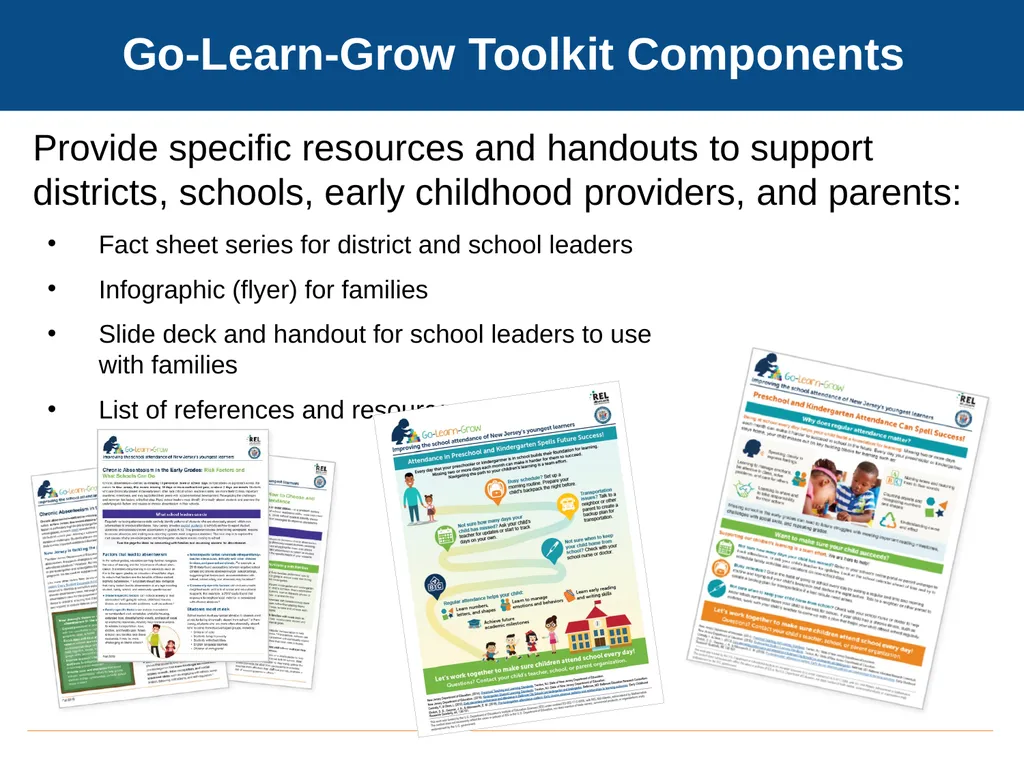
Go-Learn-Grow Toolkit Components Provide specific resources and handouts to support districts, schools, early childhood providers, and parents: Fact sheet series for district and school leaders
Infographic (flyer) for families
Slide deck and handout for school leaders to use with families
List of references and resources<br>
10
Resources for Districts, Schools, and Early Childhood Providers<br>
11
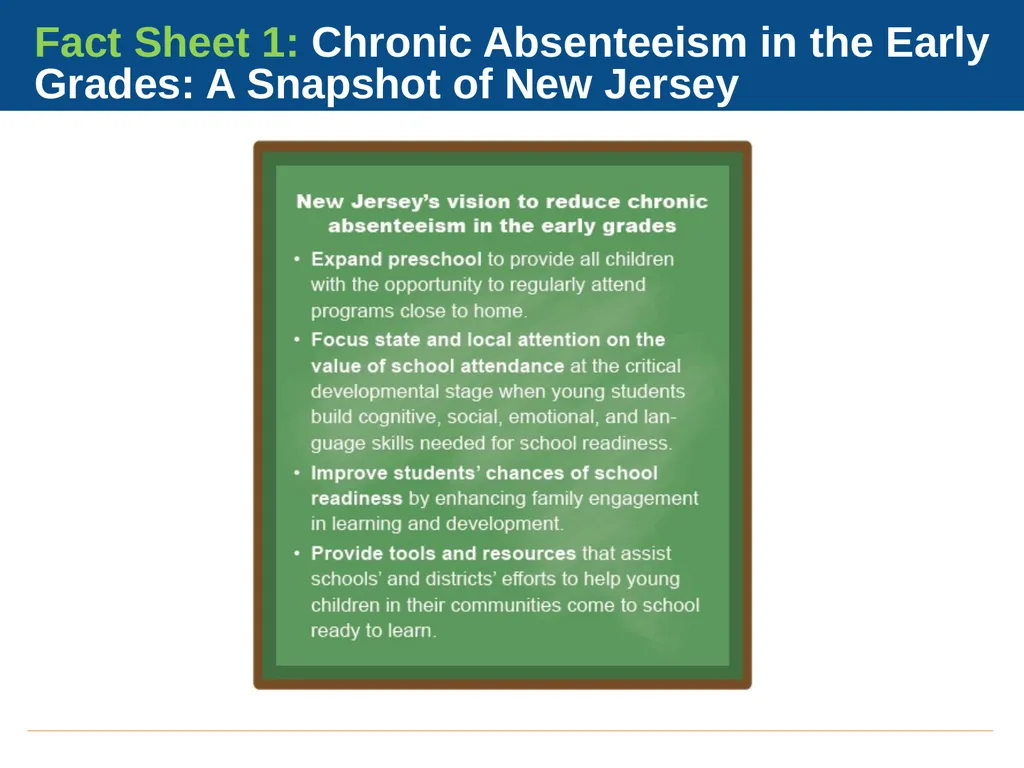
Fact Sheet 1: Chronic Absenteeism in the Early Grades: A Snapshot of New Jersey Intended audience:
District and school staff, early childhood education providers
Aims:
Define chronic absenteeism and provide information about the importance of addressing the issue during the early years
Describe steps New Jersey has taken and its vision moving forward<br>
12
Fact Sheet 1: Chronic Absenteeism in the Early Grades: A Snapshot of New Jersey<br>
13
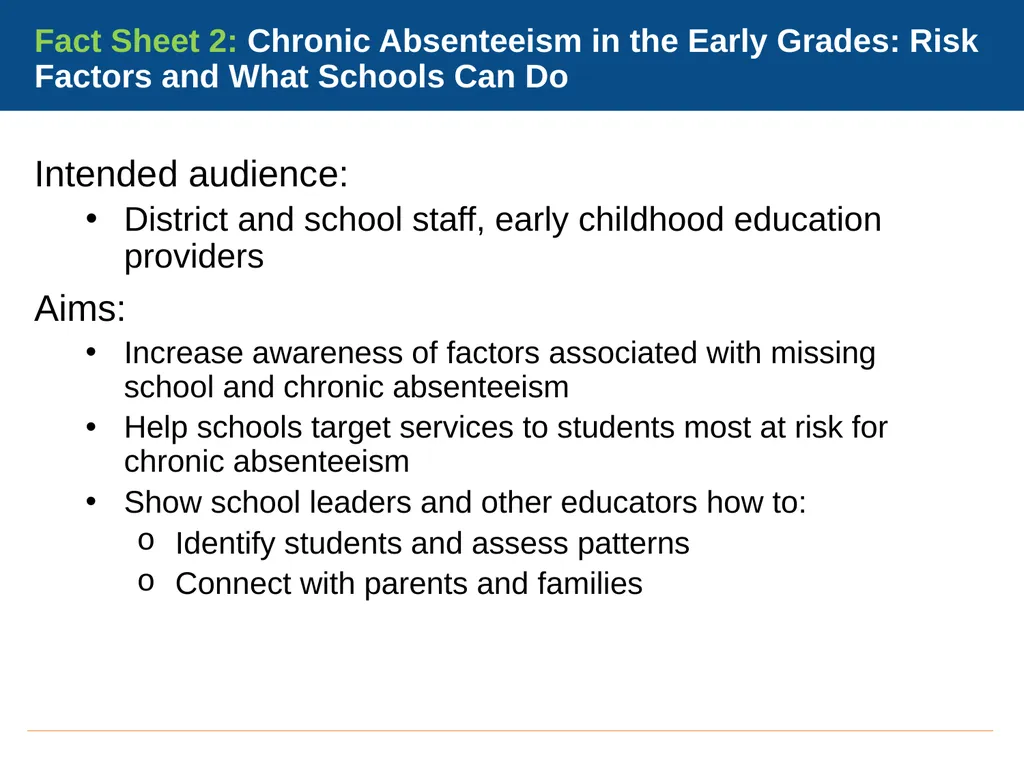
Fact Sheet 2: Chronic Absenteeism in the Early Grades: Risk Factors and What Schools Can Do Intended audience:
District and school staff, early childhood education providers
Aims:
Increase awareness of factors associated with missing school and chronic absenteeism
Help schools target services to students most at risk for chronic absenteeism
Show school leaders and other educators how to:
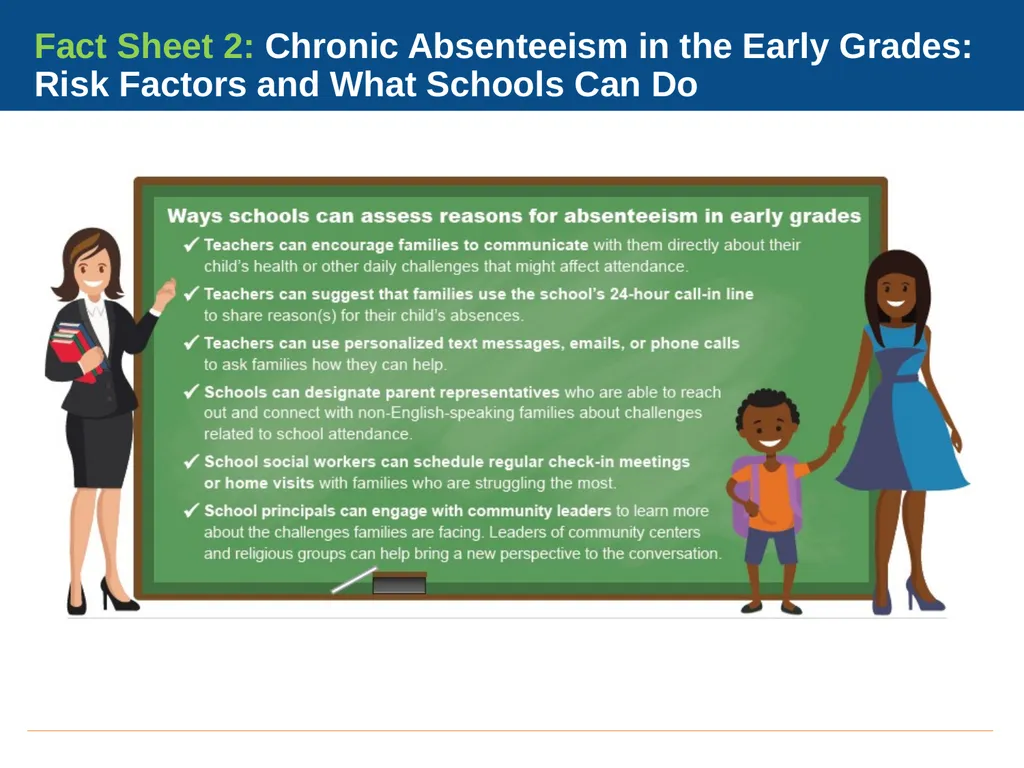
Identify students and assess patterns
Connect with parents and families<br>
14
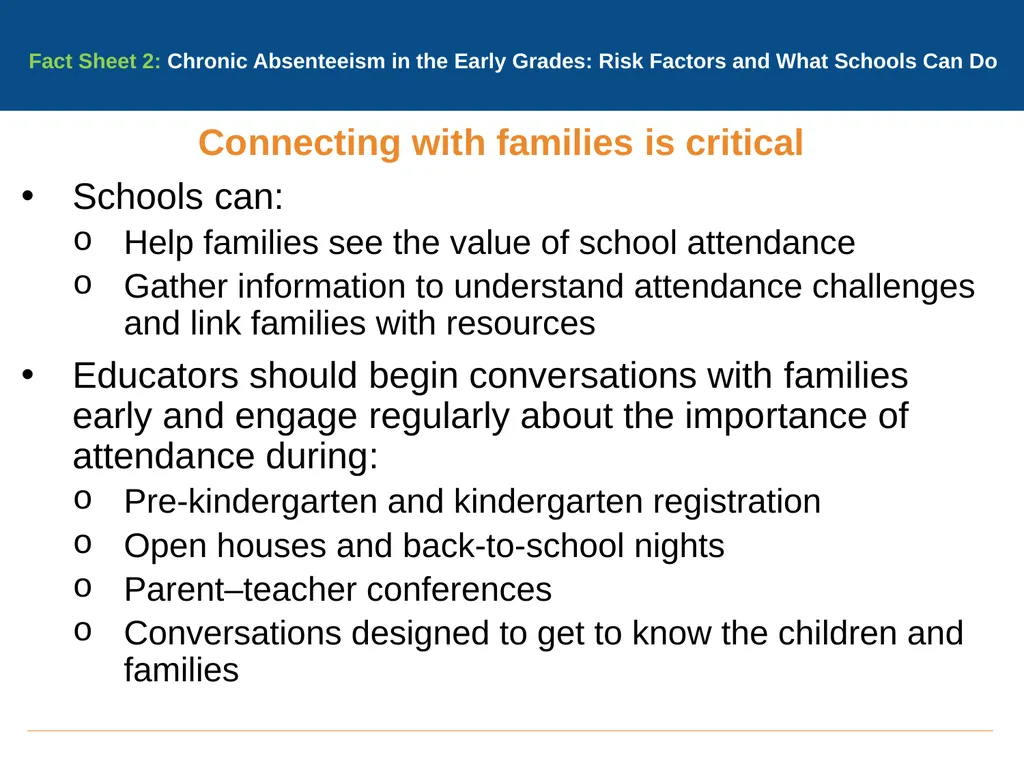
Fact Sheet 2: Chronic Absenteeism in the Early Grades: Risk Factors and What Schools Can Do Connecting with families is critical
Schools can:
Help families see the value of school attendance
Gather information to understand attendance challenges and link families with resources
Educators should begin conversations with families early and engage regularly about the importance of attendance during:
Pre-kindergarten and kindergarten registration
Open houses and back-to-school nights
Parent–teacher conferences
Conversations designed to get to know the children and families<br>
15
Fact Sheet 2: Chronic Absenteeism in the Early Grades: Risk Factors and What Schools Can Do<br>
16
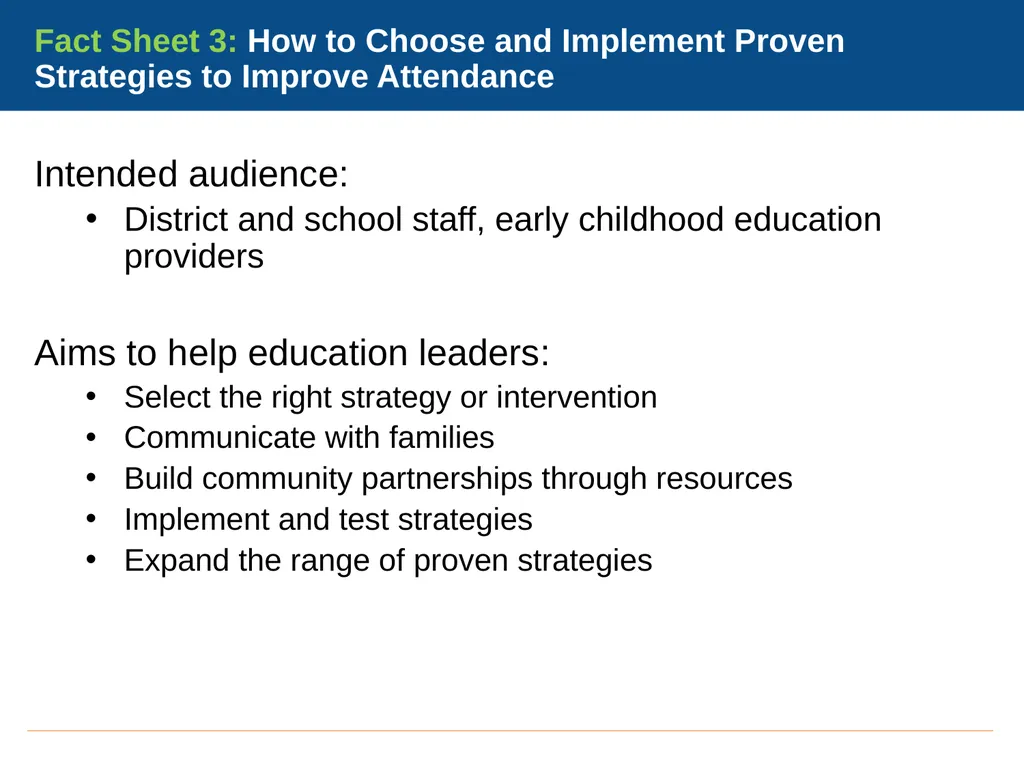
Fact Sheet 3: How to Choose and Implement Proven Strategies to Improve Attendance Intended audience:
District and school staff, early childhood education providers
Aims to help education leaders:
Select the right strategy or intervention
Communicate with families
Build community partnerships through resources
Implement and test strategies
Expand the range of proven strategies<br>
17
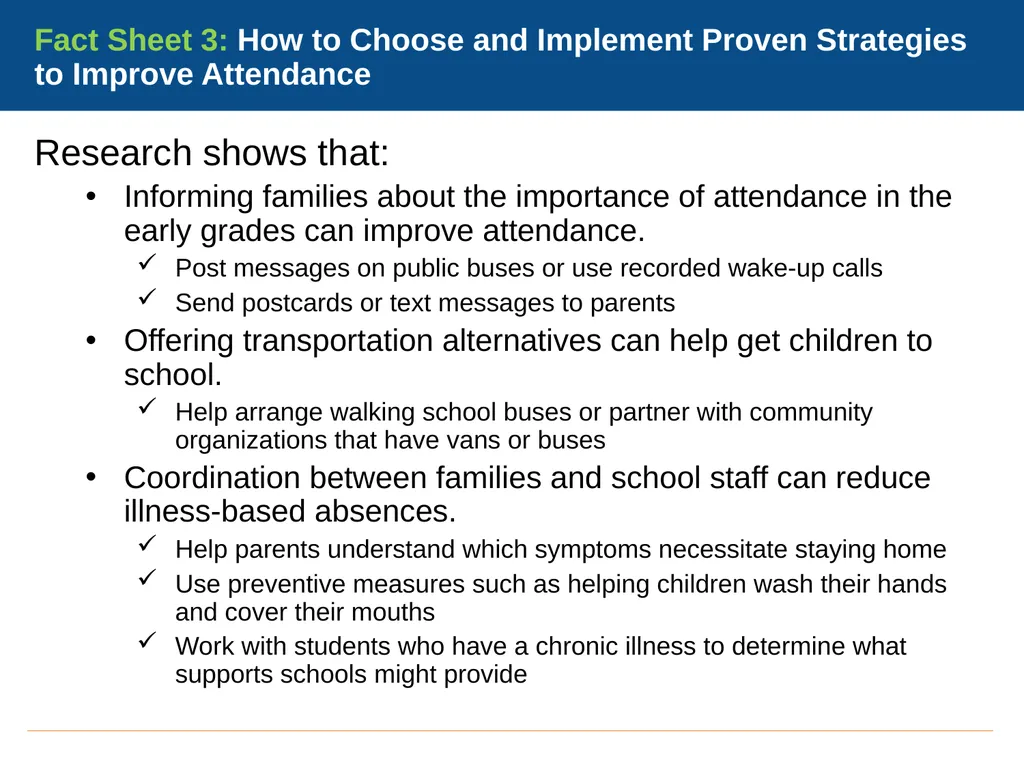
Fact Sheet 3: How to Choose and Implement Proven Strategies to Improve Attendance Research shows that:
Informing families about the importance of attendance in the early grades can improve attendance.
Post messages on public buses or use recorded wake-up calls
Send postcards or text messages to parents
Offering transportation alternatives can help get children to school.
Help arrange walking school buses or partner with community organizations that have vans or buses
Coordination between families and school staff can reduce illness-based absences.
Help parents understand which symptoms necessitate staying home
Use preventive measures such as helping children wash their hands and cover their mouths
Work with students who have a chronic illness to determine what supports schools might provide<br>
18
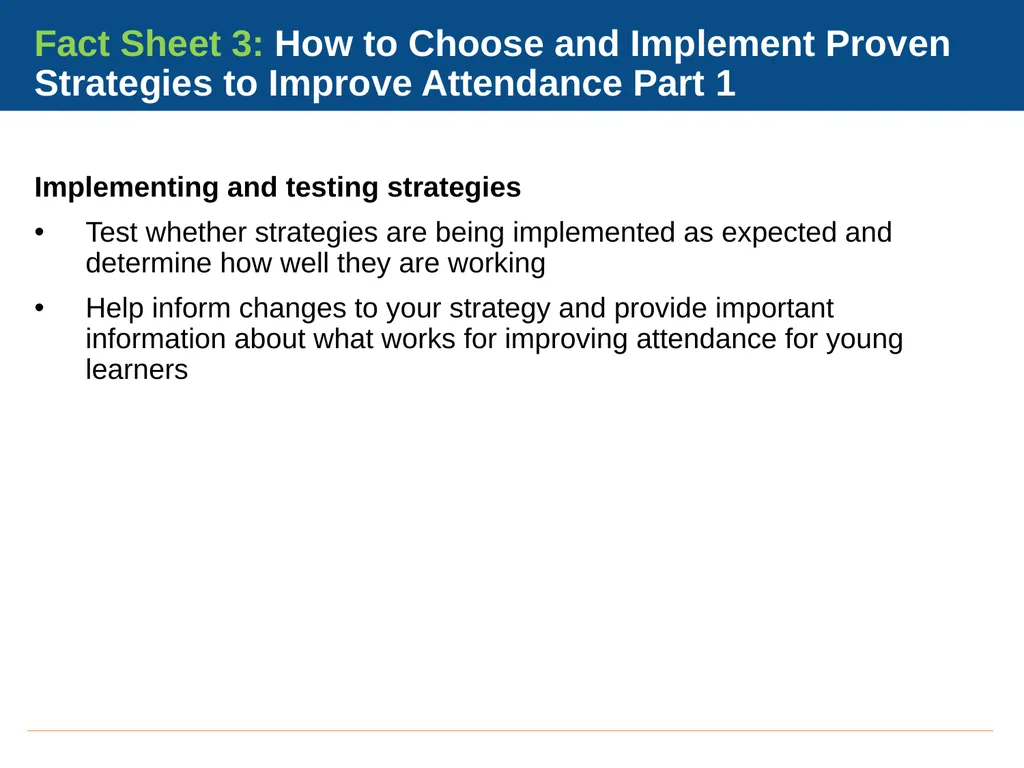
Fact Sheet 3: How to Choose and Implement Proven Strategies to Improve Attendance Part 1 Implementing and testing strategies
Test whether strategies are being implemented as expected and determine how well they are working
Help inform changes to your strategy and provide important information about what works for improving attendance for young learners<br>
19
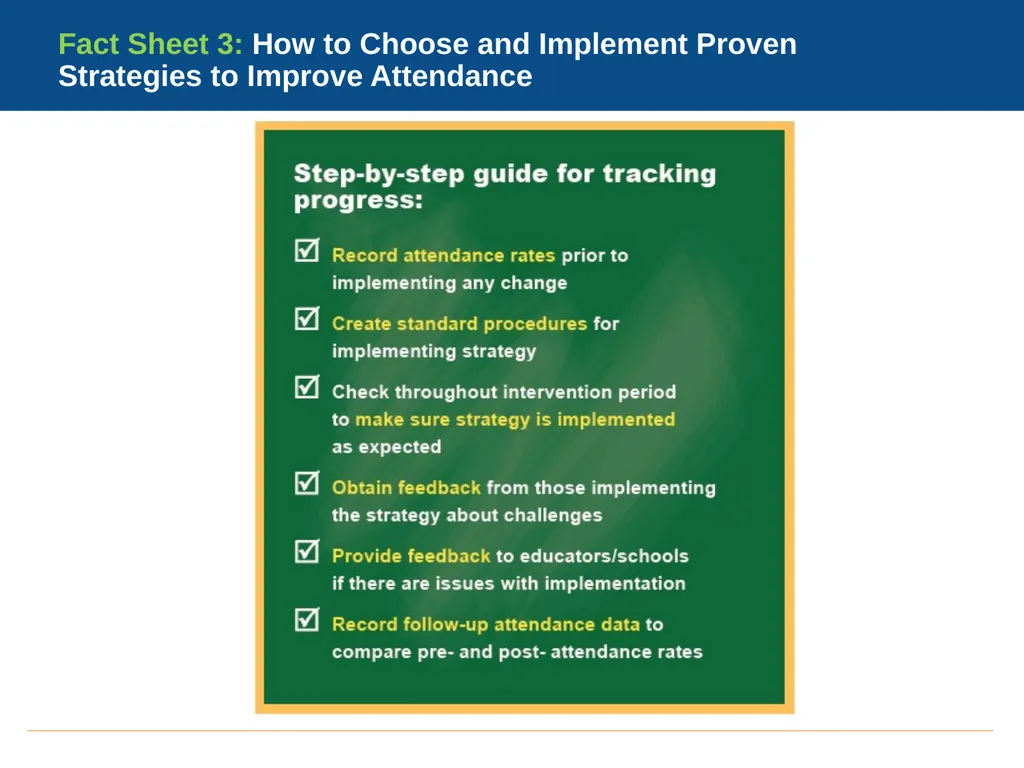
Fact Sheet 3: How to Choose and Implement Proven Strategies to Improve Attendance<br>
20
Resources for Parents and Families<br>
21
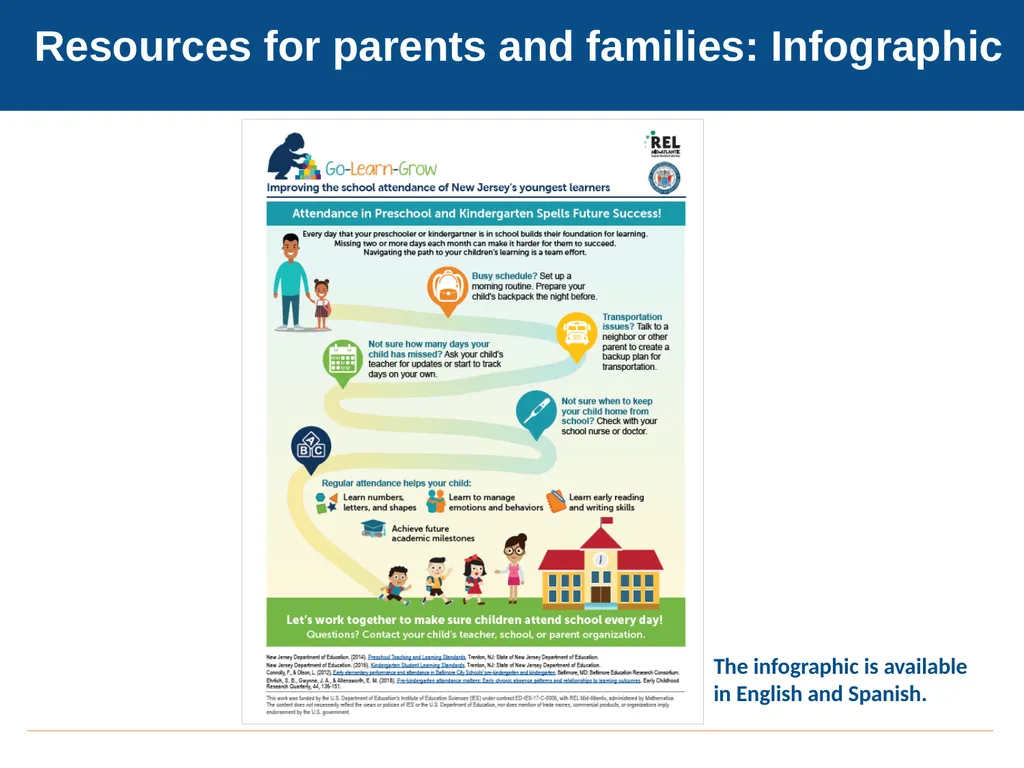
Resources for parents and families: Infographic The infographic is available in English and Spanish.<br>
22
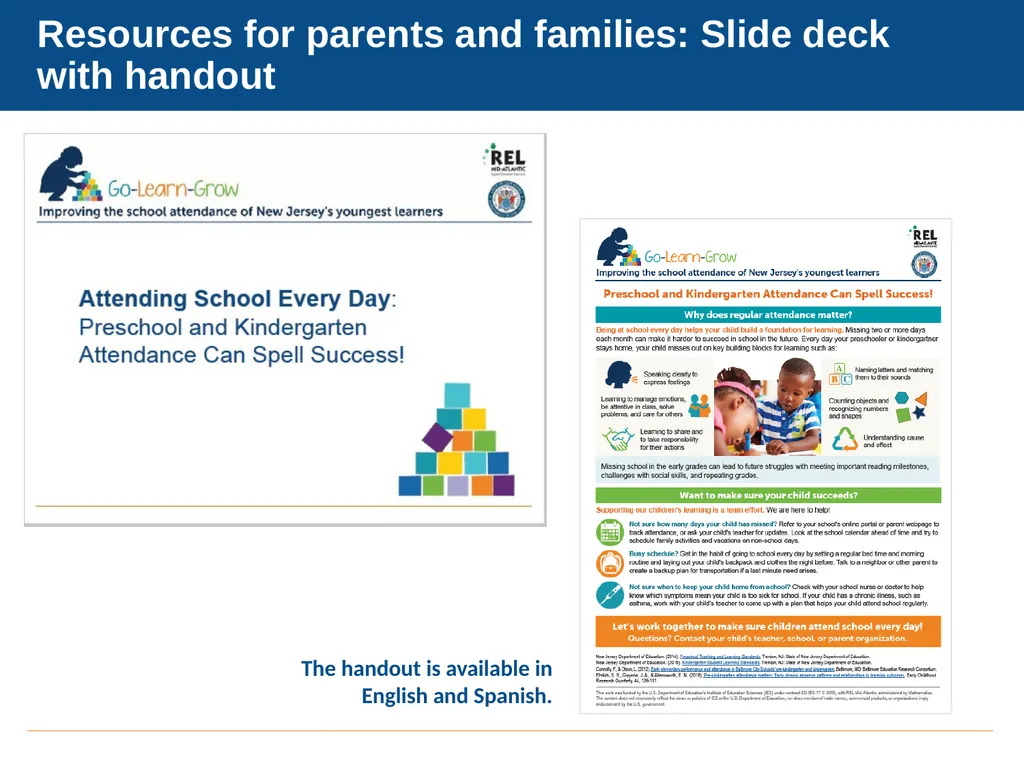
Resources for parents and families: Slide deck with handout The handout is available in English and Spanish.<br>
23
Conclusions and next steps NJDOE and REL Mid-Atlantic have partnered to create this toolkit as a companion resource to New Jersey’s existing K-12 guidance.
The toolkit can support districts, schools, and early childhood providers in improving school attendance in pre-K and kindergarten in New Jersey and beyond.
Now it’s your turn! Help us put these materials to use with district leaders, school staff, early childhood education professionals, and families.<br>
24
Questions and Answers<br>
25
Questions? Reach out! New Jersey Department of Education, Division of Early Childhood Education
doeearlychild@doe.nj.us