
green algae( Division: chlorophyta ) Class:
Description: green algae( Division: chlorophyta ) Class: chlorophyceae order: chlorococcales : Genus: Scendusmus 2. order: volvocales Genus: Chlamydomonas, Volvox 3. order: zygnematales Family: desmideaceae Genus: Closterium Genus: Cosmarium General
Related Topics
Download Presentation
"green algae( Division: chlorophyta ) Class:" is the property of its rightful owner. Permission is granted to download and print the materials on this website for personal, non-commercial use only, and to display it on your personal computer provided you do not modify the materials and that you retain all copyright notices contained in the materials. By downloading content from our website, you accept the terms of this agreement.
Presentation Transcript
slide1. green algae( Division: chlorophyta ) Class: chlorophyceae
order: chlorococcales :
Genus: Scendusmus
2. order: volvocales
Genus: Chlamydomonas, Volvox
3. order: zygnematales
Family: desmideaceae
Genus: Closterium Genus: Cosmarium<br>
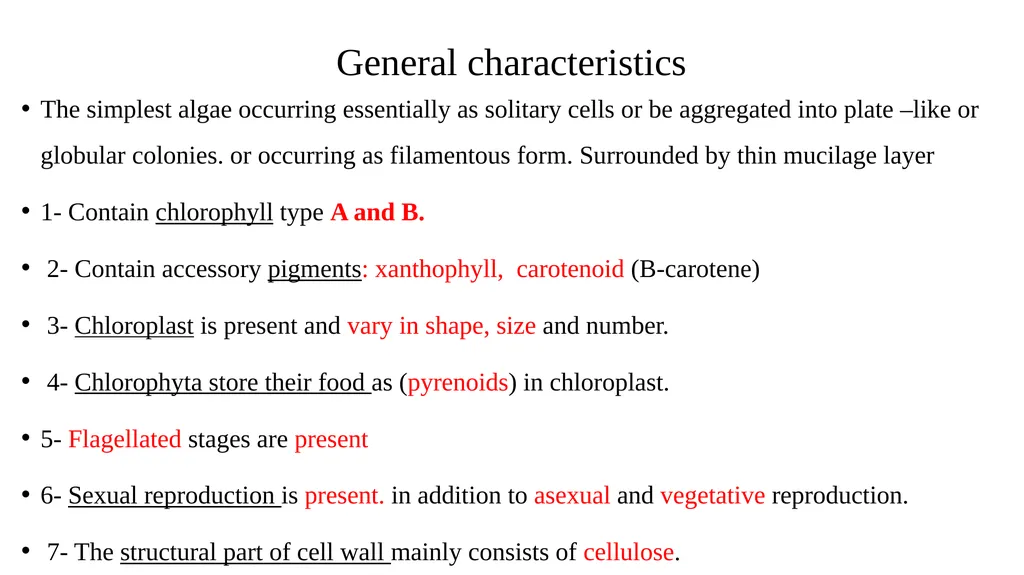
slide2. General characteristics The simplest algae occurring essentially as solitary cells or be aggregated into plate –like or globular colonies. or occurring as filamentous form. Surrounded by thin mucilage layer
1- Contain chlorophyll type A and B.
2- Contain accessory pigments: xanthophyll, carotenoid (B-carotene)
3- Chloroplast is present and vary in shape, size and number.
4- Chlorophyta store their food as (pyrenoids) in chloroplast.
5- Flagellated stages are present
6- Sexual reproduction is present. in addition to asexual and vegetative reproduction.
7- The structural part of cell wall mainly consists of cellulose.<br>
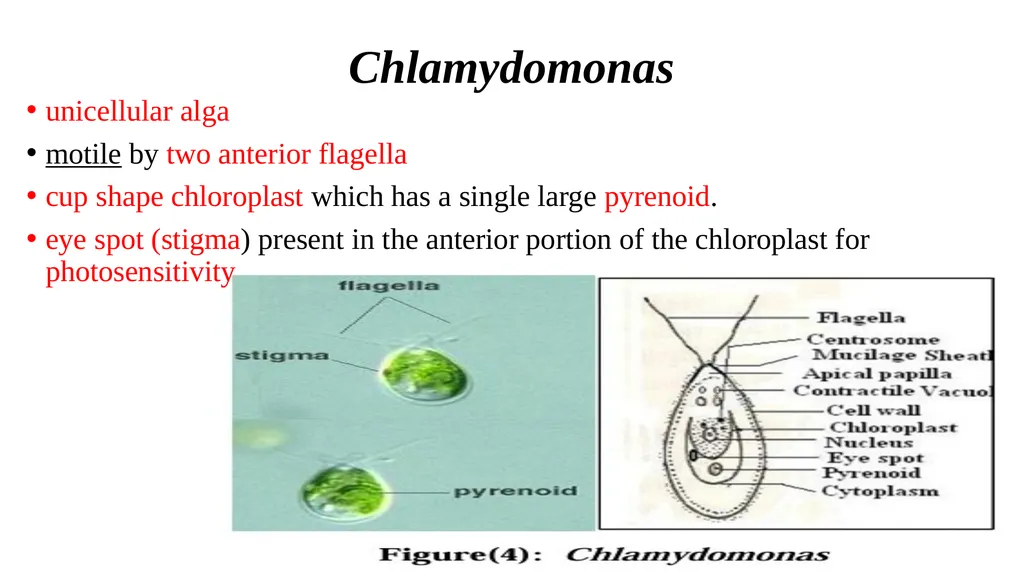
slide3. Chlamydomonas unicellular alga
motile by two anterior flagella
cup shape chloroplast which has a single large pyrenoid.
eye spot (stigma) present in the anterior portion of the chloroplast for photosensitivity<br>
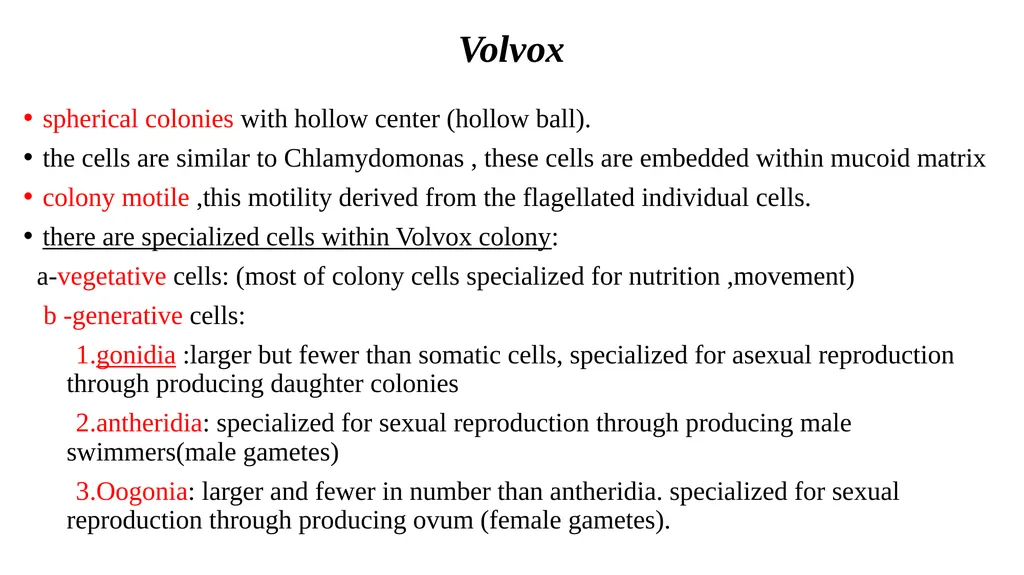
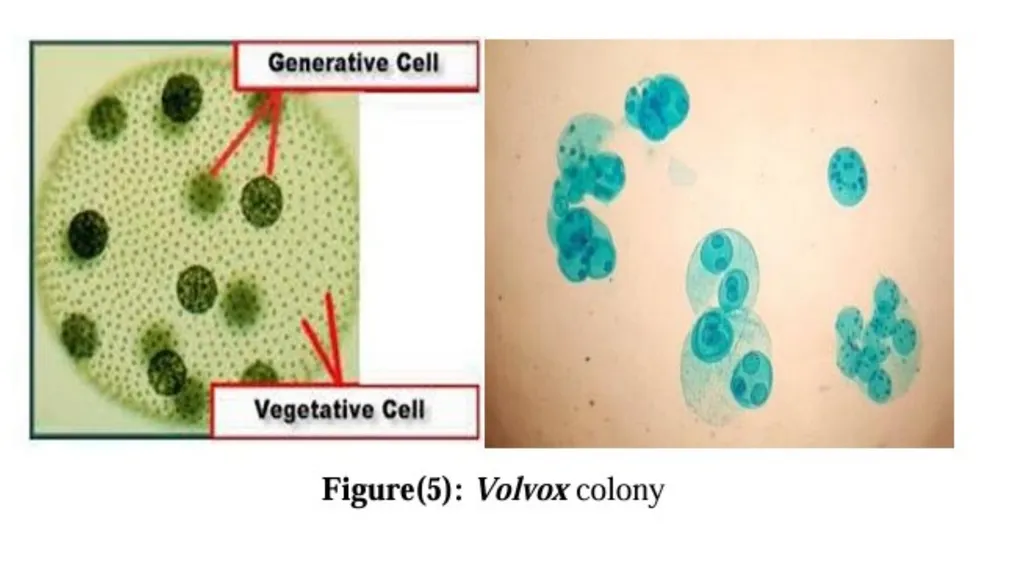
slide4. Volvox spherical colonies with hollow center (hollow ball).
the cells are similar to Chlamydomonas , these cells are embedded within mucoid matrix
colony motile ,this motility derived from the flagellated individual cells.
there are specialized cells within Volvox colony:
a-vegetative cells: (most of colony cells specialized for nutrition ,movement)
b -generative cells:
gonidia :larger but fewer than somatic cells, specialized for asexual reproduction through producing daughter colonies
antheridia: specialized for sexual reproduction through producing male swimmers(male gametes)
Oogonia: larger and fewer in number than antheridia. specialized for sexual reproduction through producing ovum (female gametes).<br>
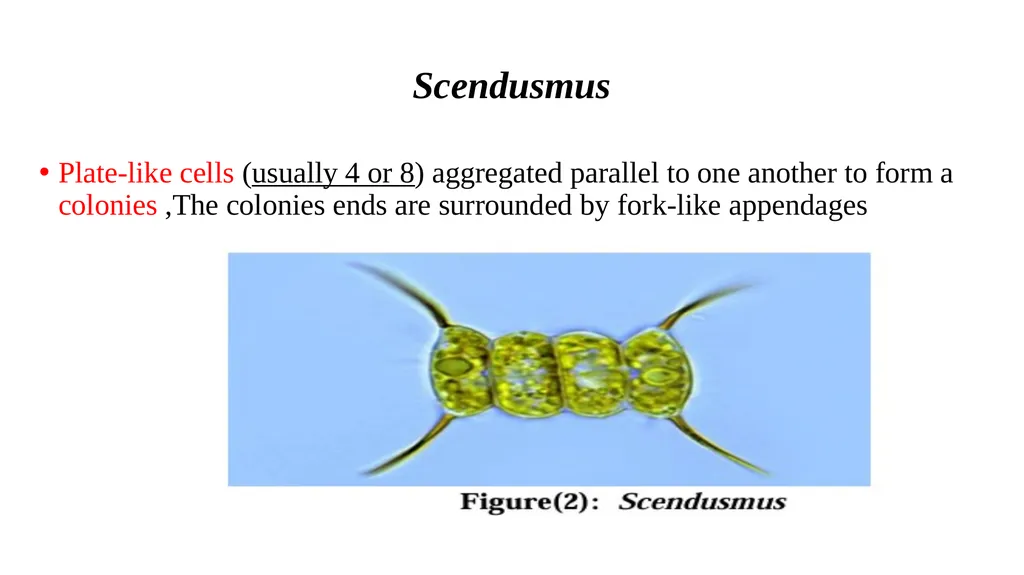
slide6. Scendusmus Plate-like cells (usually 4 or 8) aggregated parallel to one another to form a colonies ,The colonies ends are surrounded by fork-like appendages<br>
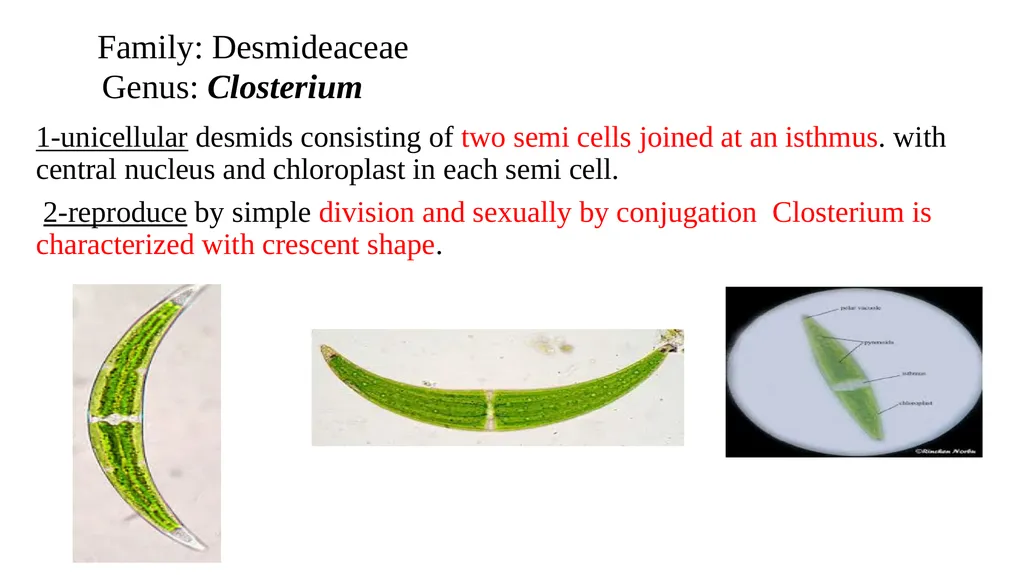
slide7. Family: Desmideaceae Genus: Closterium 1-unicellular desmids consisting of two semi cells joined at an isthmus. with central nucleus and chloroplast in each semi cell.
2-reproduce by simple division and sexually by conjugation Closterium is characterized with crescent shape.<br>
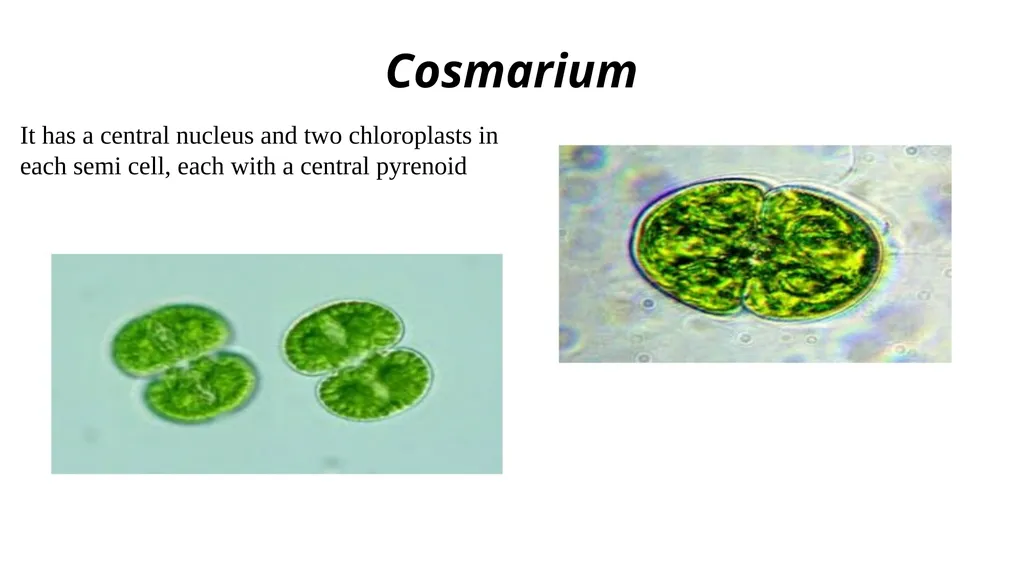
slide8. Cosmarium It has a central nucleus and two chloroplasts in each semi cell, each with a central pyrenoid<br>
order: chlorococcales :
Genus: Scendusmus
2. order: volvocales
Genus: Chlamydomonas, Volvox
3. order: zygnematales
Family: desmideaceae
Genus: Closterium Genus: Cosmarium<br>
slide2. General characteristics The simplest algae occurring essentially as solitary cells or be aggregated into plate –like or globular colonies. or occurring as filamentous form. Surrounded by thin mucilage layer
1- Contain chlorophyll type A and B.
2- Contain accessory pigments: xanthophyll, carotenoid (B-carotene)
3- Chloroplast is present and vary in shape, size and number.
4- Chlorophyta store their food as (pyrenoids) in chloroplast.
5- Flagellated stages are present
6- Sexual reproduction is present. in addition to asexual and vegetative reproduction.
7- The structural part of cell wall mainly consists of cellulose.<br>
slide3. Chlamydomonas unicellular alga
motile by two anterior flagella
cup shape chloroplast which has a single large pyrenoid.
eye spot (stigma) present in the anterior portion of the chloroplast for photosensitivity<br>
slide4. Volvox spherical colonies with hollow center (hollow ball).
the cells are similar to Chlamydomonas , these cells are embedded within mucoid matrix
colony motile ,this motility derived from the flagellated individual cells.
there are specialized cells within Volvox colony:
a-vegetative cells: (most of colony cells specialized for nutrition ,movement)
b -generative cells:
gonidia :larger but fewer than somatic cells, specialized for asexual reproduction through producing daughter colonies
antheridia: specialized for sexual reproduction through producing male swimmers(male gametes)
Oogonia: larger and fewer in number than antheridia. specialized for sexual reproduction through producing ovum (female gametes).<br>
slide6. Scendusmus Plate-like cells (usually 4 or 8) aggregated parallel to one another to form a colonies ,The colonies ends are surrounded by fork-like appendages<br>
slide7. Family: Desmideaceae Genus: Closterium 1-unicellular desmids consisting of two semi cells joined at an isthmus. with central nucleus and chloroplast in each semi cell.
2-reproduce by simple division and sexually by conjugation Closterium is characterized with crescent shape.<br>
slide8. Cosmarium It has a central nucleus and two chloroplasts in each semi cell, each with a central pyrenoid<br>