Grief and Bereavement Palliative Care Education for Front-Line Workers in First Nations Communities Grief is a total human experience impacts the following aspects of life: social physical cognitive emotional spiritual part of a normal
"Grief and Bereavement Palliative Care Education" is the property of its rightful owner. Permission is granted to
download and print the materials on this website for personal, non-commercial use only, and to display it
on your personal computer provided you do not modify the materials and that you retain all copyright
notices contained in the materials. By downloading content from our website, you accept the terms of this
agreement.
Presentation Transcript
01
Grief and Bereavement Palliative Care Education
for Front-Line Workers
in First Nations
Communities<br>
02
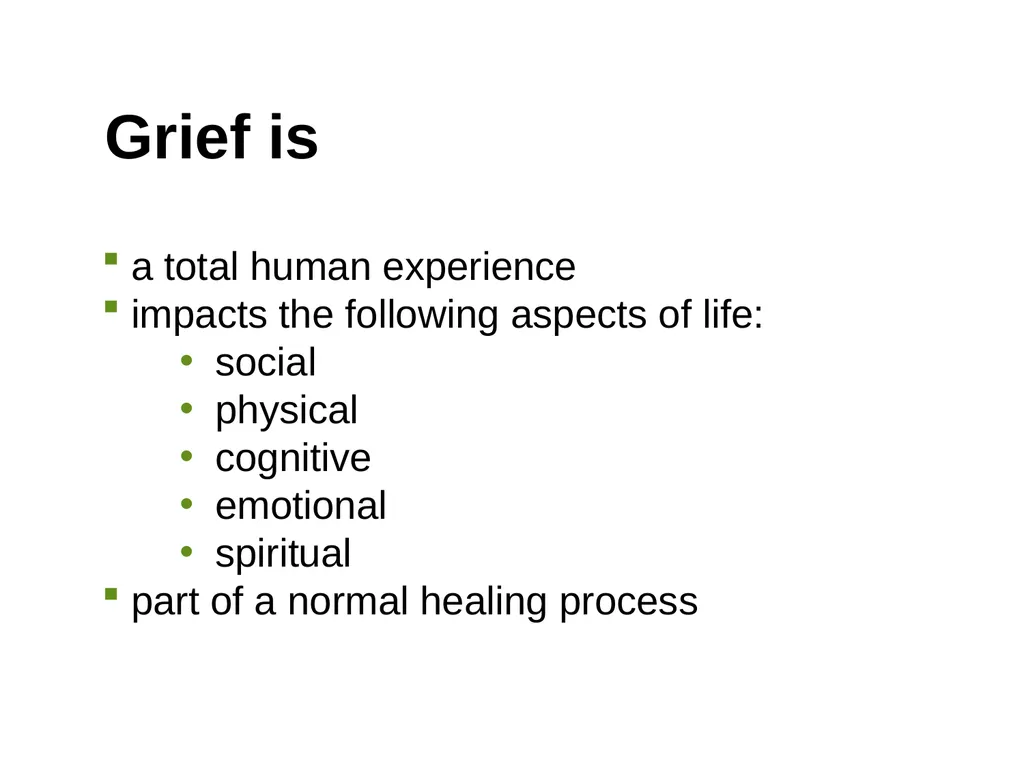
Grief is a total human experience
impacts the following aspects of life:
social
physical
cognitive
emotional
spiritual
part of a normal healing process<br>
03
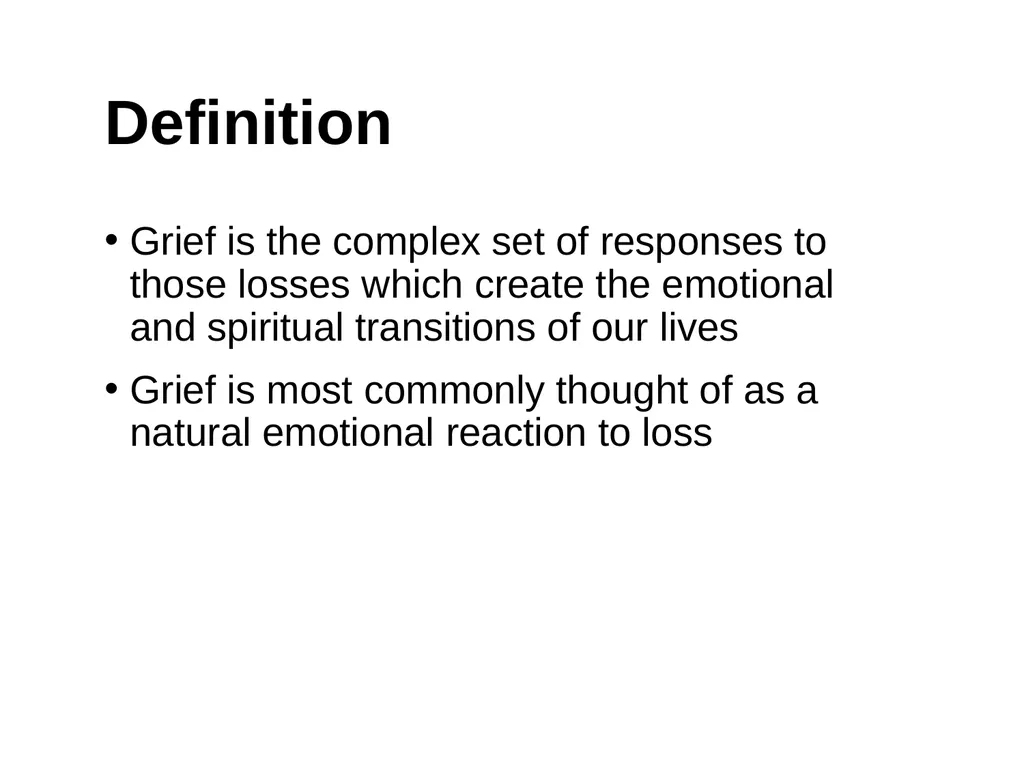
Definition Grief is the complex set of responses to those losses which create the emotional and spiritual transitions of our lives
Grief is most commonly thought of as a natural emotional reaction to loss<br>
04
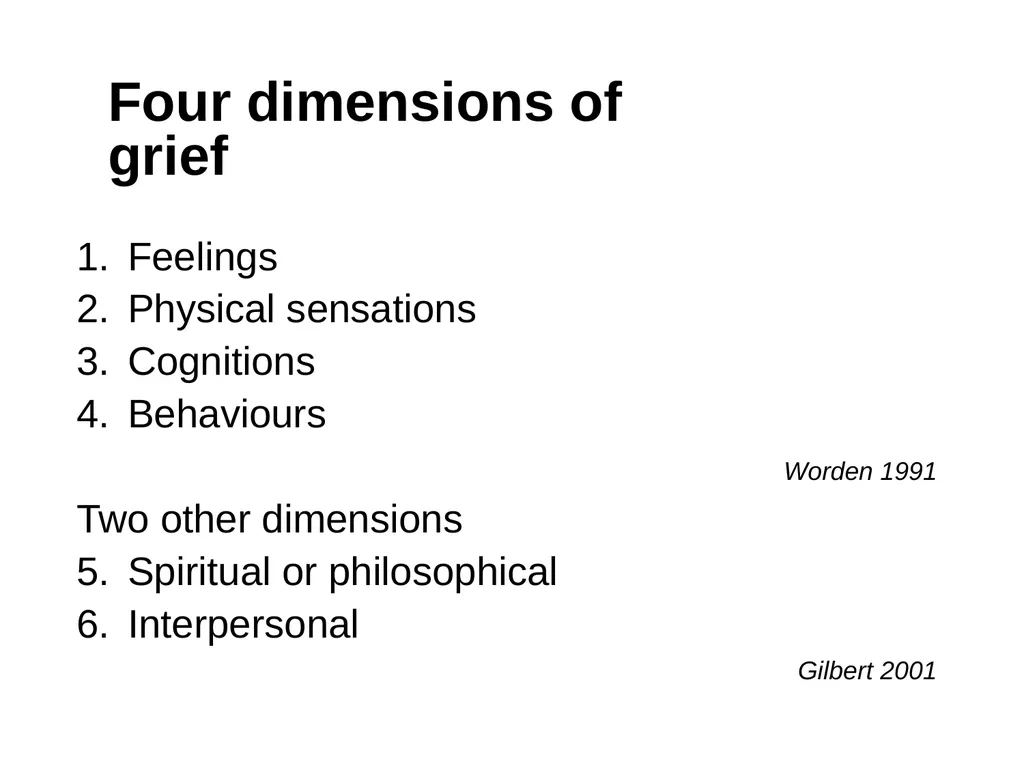
Four dimensions of grief Feelings
Physical sensations
Cognitions
Behaviours
Worden 1991
Two other dimensions
Spiritual or philosophical
Interpersonal
Gilbert 2001<br>
05
Grief Sometimes there is so much pain associated with grief people believe that grief is something that needs to be “fixed” or “overcome.”
People often think that there is a “right” and “wrong” way to grieve.<br>
06
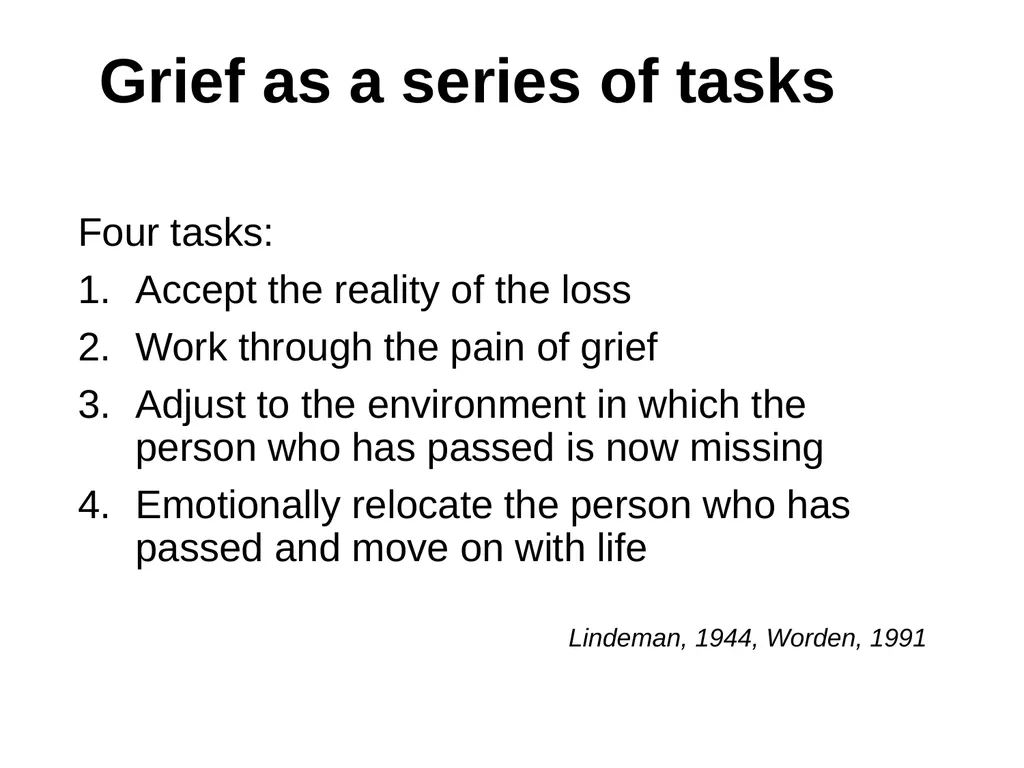
Grief as a series of tasks Four tasks:
Accept the reality of the loss
Work through the pain of grief
Adjust to the environment in which the person who has passed is now missing
Emotionally relocate the person who has passed and move on with life
Lindeman, 1944, Worden, 1991<br>
07
Grief as an active process of coping directed at remaking reality “Time in itself does not heal. It’s what you do with the time that makes it meaningful.”<br>
08
Grief Grief may be viewed as a spiritual journey
Grief is a uniquely personal experience<br>
09
“…to lose someone you love is not like losing your car keys. It’s like the laws of gravity have been repealed. We need to reclaim the law of gravity to survive…”
- Peter Marris<br>
10
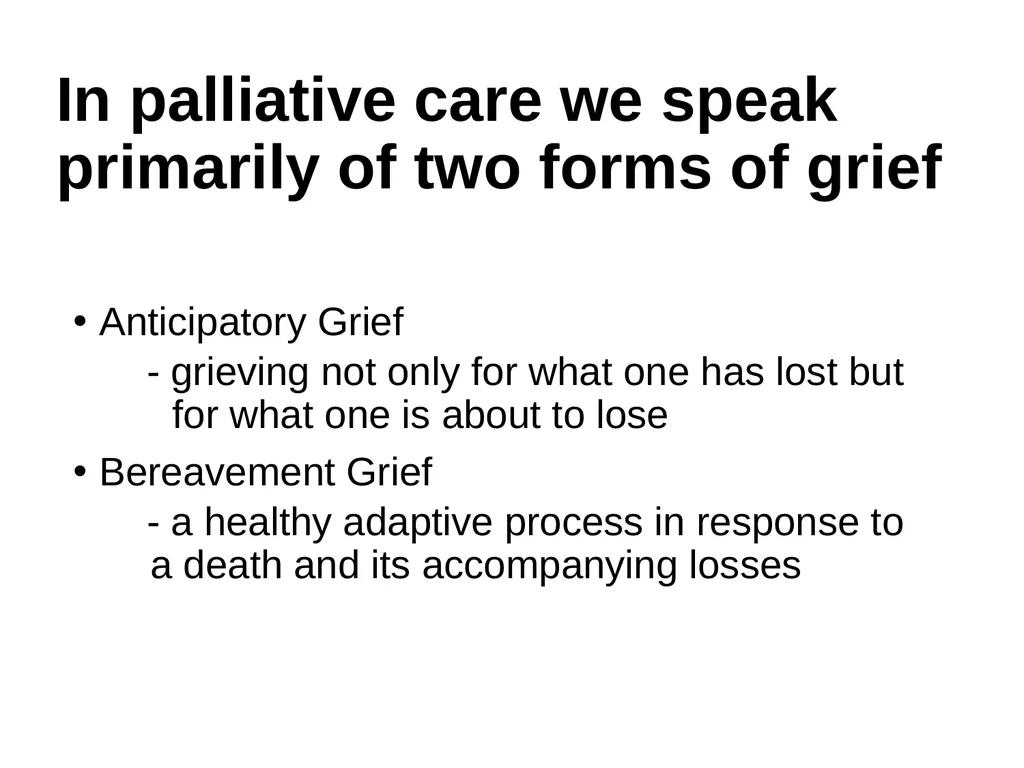
In palliative care we speak primarily of two forms of grief Anticipatory Grief
- grieving not only for what one has lost but for what one is about to lose
Bereavement Grief
- a healthy adaptive process in response to a death and its accompanying losses<br>
11
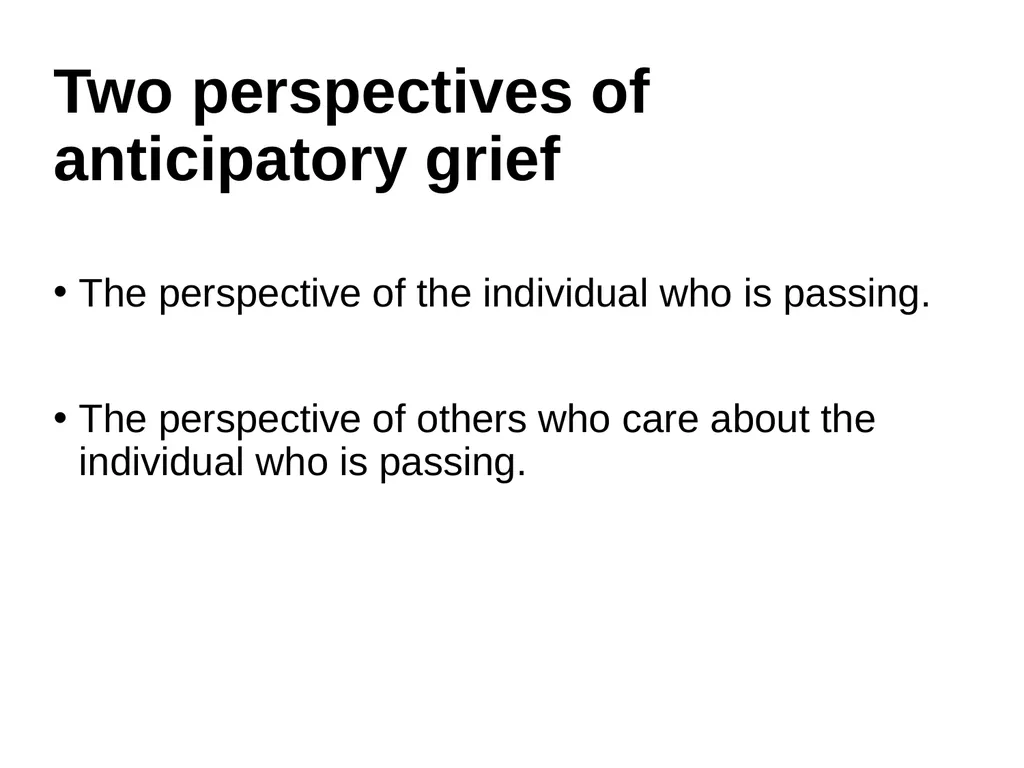
Two perspectives of anticipatory grief The perspective of the individual who is passing.
The perspective of others who care about the individual who is passing.<br>
12
Anticipatory grief mourns for: Past – the past that was shared and can never be regained
Present – the losses that occur and are experienced as a diminution, or end, of capabilities; the ongoing experience of erosion
Future – the losses of the anticipated death and such related losses as loneliness and events that will not be shared<br>
13
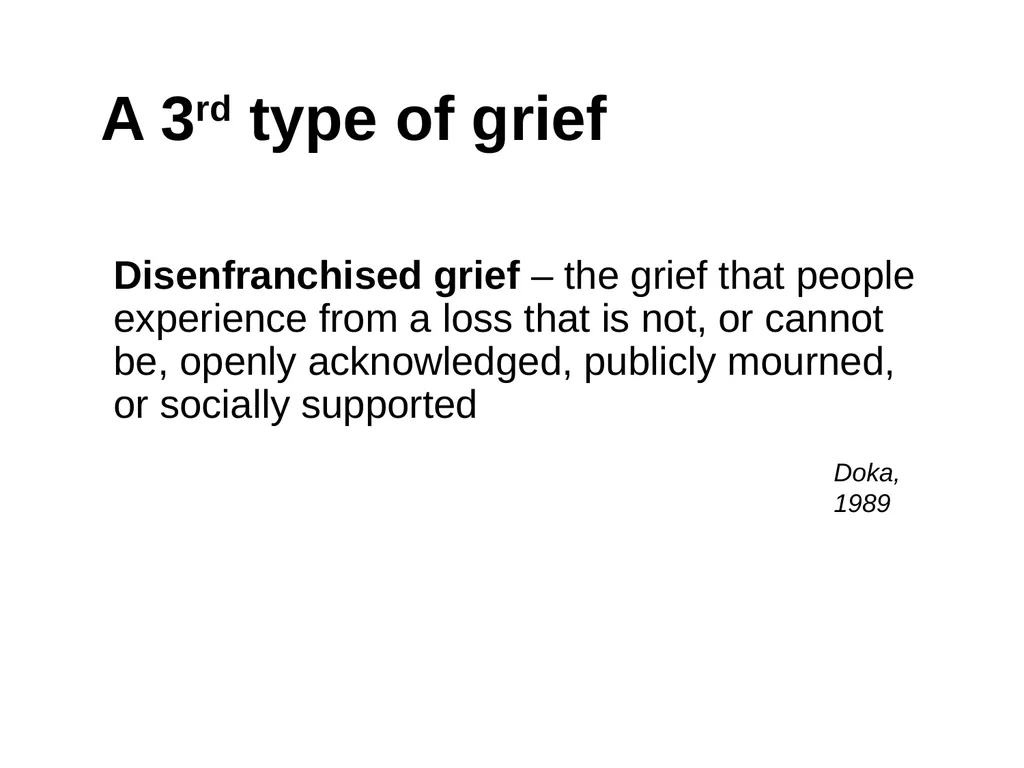
A 3rd type of grief Disenfranchised grief – the grief that people experience from a loss that is not, or cannot be, openly acknowledged, publicly mourned, or socially supported Doka, 1989<br>
14
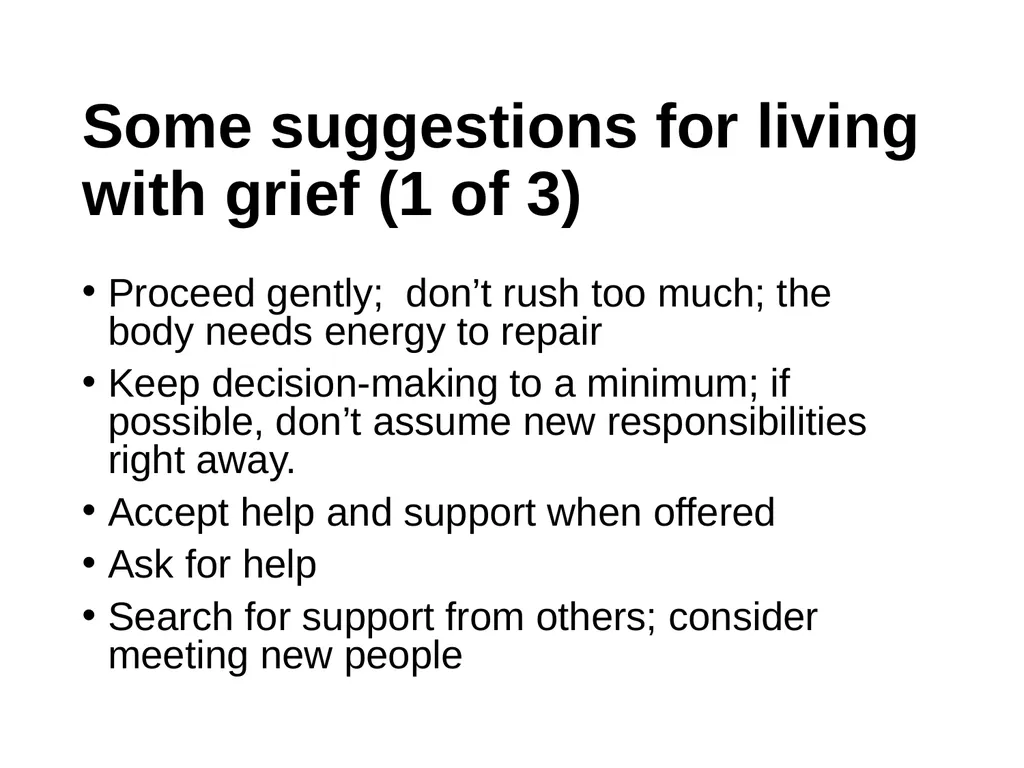
Some suggestions for living with grief (1 of 3) Proceed gently; don’t rush too much; the body needs energy to repair
Keep decision-making to a minimum; if possible, don’t assume new responsibilities right away.
Accept help and support when offered
Ask for help
Search for support from others; consider meeting new people<br>
15
Some suggestions for living with grief (2 of 3) Be patient; healing takes time
Lean into the pain; it cannot be ignored, it must run its course
Crying does help
Try to find (or schedule) comforting activities during the holiday times
Look for help from a spiritual advisor or counsellor.<br>
16
Some suggestions for living with grief (3 of 3) Get enough rest
Try to eat balanced meals; good nutrition is important in the healing process
Keep a journal
Read
Moderate exercise helps “work off” frustration and promotes sleep
Don’t feel guilty when enjoying good times with family and friends<br>
17
Attitudes toward grief support Your behaviour and attitude are more important than your words
Be aware of your own feelings and how you deal with loss and passing.<br>
18
Ways to offer support (1 of 3 ) Be comfortable with expressions of emotion; remember emotions are NOT rational, they just are
Be patient; your willingness to spend the time to listen is what counts most
Support their pain; don’t overprotect or hurry people
Encourage active participation in the
care of the person who is very sick.<br>
19
Ways to offer support (2 of 3) Accept and do not judge family members who cannot bring themselves to be present
Help people find their own answers to problems
Listen without judging, and allow family members to voice concerns or tell stories<br>
20
Ways to offer support (3 of 3) Remember you are not responsible for making it better
Be clear on what you can offer; follow through on commitments
Be aware that culture, religion and family background will affect people’s grief process
Learn to recognize grieving difficulties<br>
21
Grief only becomes a tolerable and creative experience when love enables it to be shared with someone who really understands Simon Stephens<br>