GROWING ALL STUDENTS THROUGH HIGH-QUALITY ASSIGNMENTS Supporting Assignment Analysis in Your School, District, or State July 2017 Be open and present Take advantage of the expertise in the room-share your work Enjoy the professional
"GROWING ALL STUDENTS THROUGH HIGH-QUALITY" is the property of its rightful owner. Permission is granted to
download and print the materials on this website for personal, non-commercial use only, and to display it
on your personal computer provided you do not modify the materials and that you retain all copyright
notices contained in the materials. By downloading content from our website, you accept the terms of this
agreement.
Presentation Transcript
01
GROWING ALL STUDENTS THROUGH HIGH-QUALITY ASSIGNMENTS Supporting Assignment Analysis in Your School, District, or State July 2017<br>
02
Be open and present
Take advantage of the expertise in the room-share your work
Enjoy the professional learning Norms<br>
03
Objectives Participants Will:
Considering critical implementation questions in order to implement assignment analysis work in classrooms, schools, districts or states
Share and Learn from Each Other
Learn some of the critical components needed, both at the district and school level, to support teachers in crafting high quality assignments<br>
04
Disclosure… You are the front-line experts!<br>
05
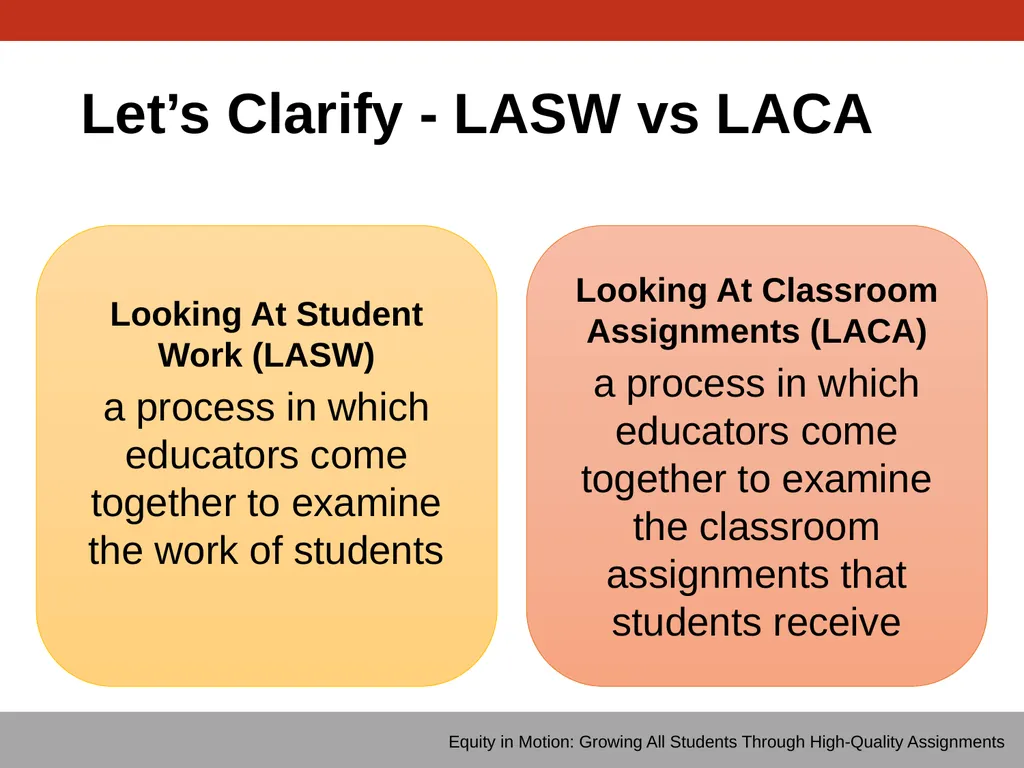
Let’s Clarify - LASW vs LACA Looking At Student Work (LASW)
a process in which educators come together to examine the work of students Looking At Classroom Assignments (LACA)
a process in which educators come together to examine the classroom assignments that students receive<br>
06
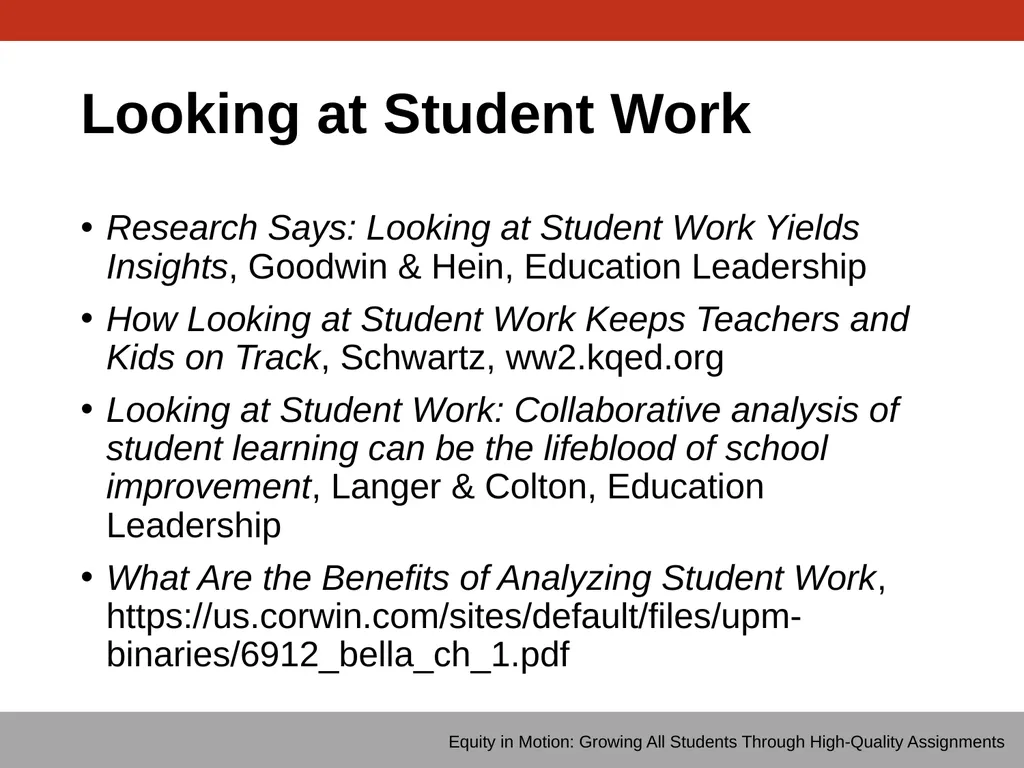
Looking at Student Work Research Says: Looking at Student Work Yields Insights, Goodwin & Hein, Education Leadership
How Looking at Student Work Keeps Teachers and Kids on Track, Schwartz, ww2.kqed.org
Looking at Student Work: Collaborative analysis of student learning can be the lifeblood of school improvement, Langer & Colton, Education Leadership
What Are the Benefits of Analyzing Student Work, https://us.corwin.com/sites/default/files/upm-binaries/6912_bella_ch_1.pdf<br>
07
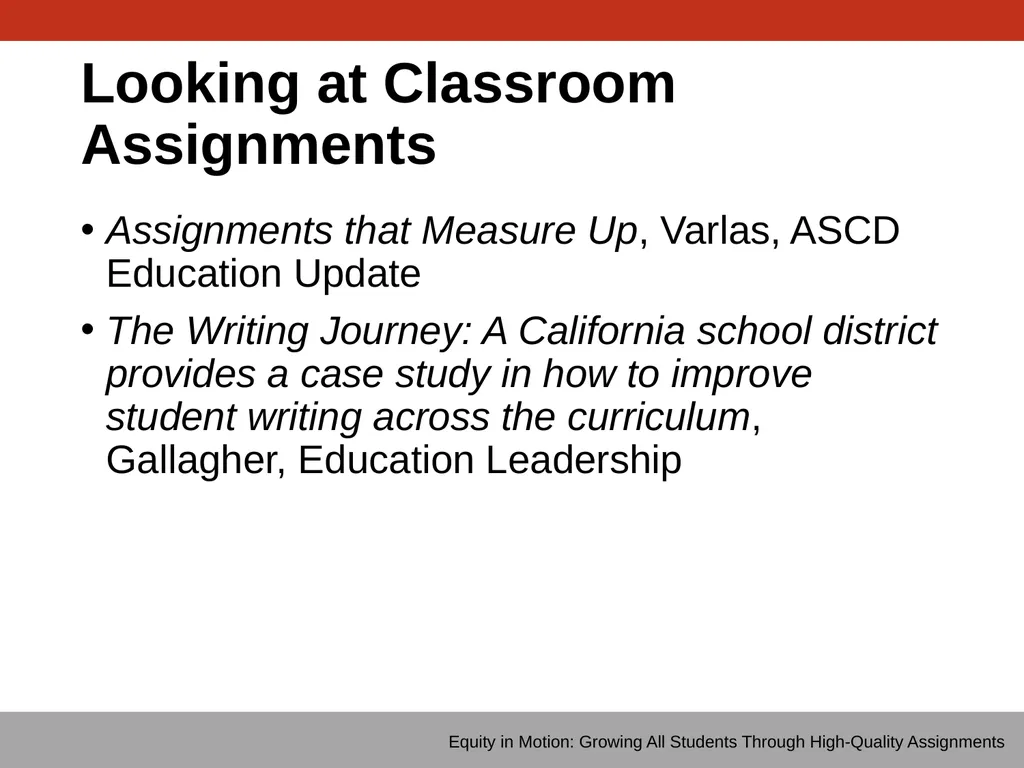
Looking at Classroom Assignments Assignments that Measure Up, Varlas, ASCD Education Update
The Writing Journey: A California school district provides a case study in how to improve student writing across the curriculum, Gallagher, Education Leadership<br>
08
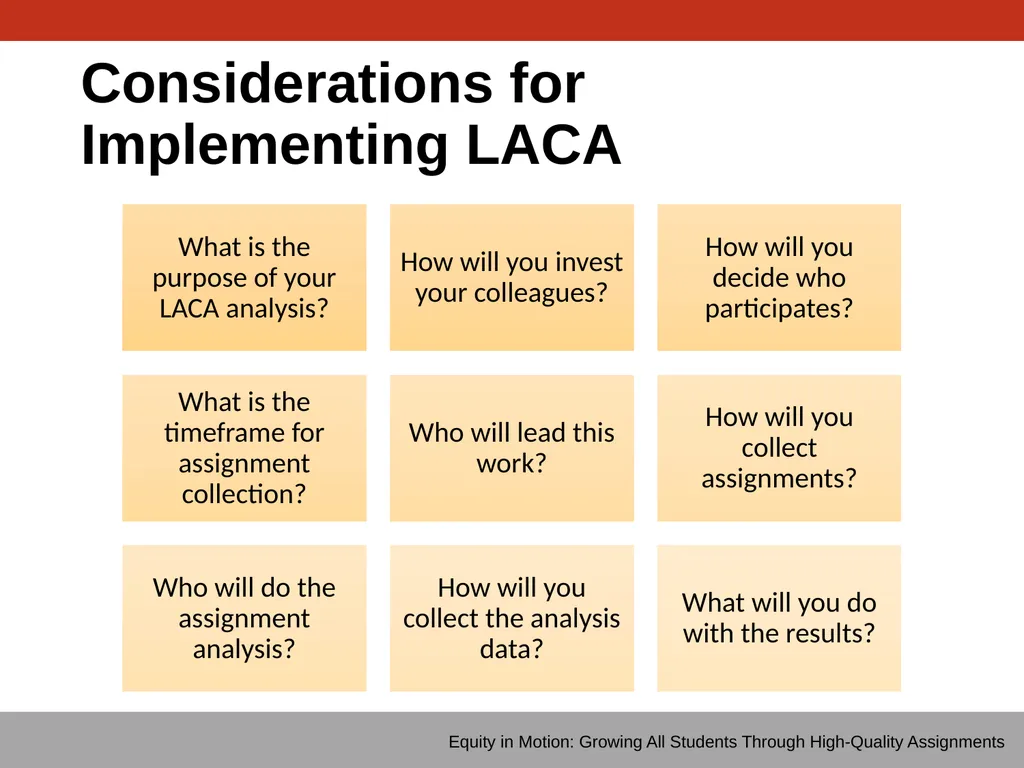
Considerations for Implementing LACA<br>
09
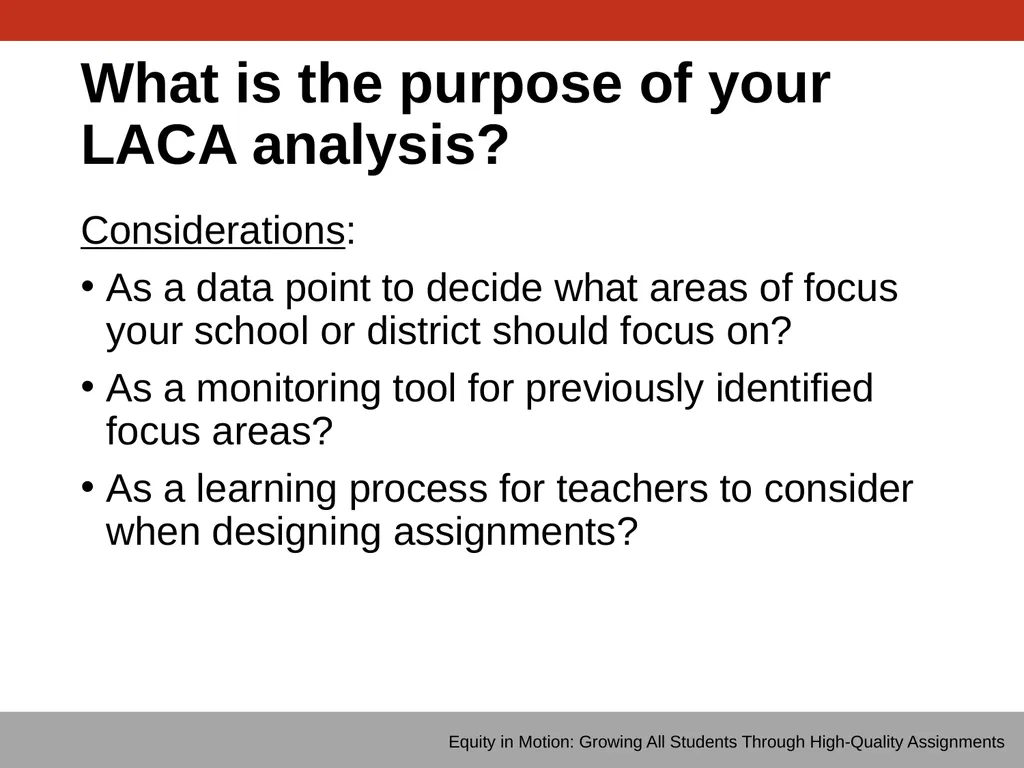
What is the purpose of your LACA analysis? Considerations:
As a data point to decide what areas of focus your school or district should focus on?
As a monitoring tool for previously identified focus areas?
As a learning process for teachers to consider when designing assignments?<br>
10
How will you invest your colleagues? Considerations:
How can you prevent this from being “just another initiative?
What is your 30 second compelling speech?<br>
11
How will you decide who participates? Considerations:
Are there early adopters that you can onboard for a successful first run?
Who is your ”guiding coalition”?<br>
12
What is the timeframe for assignment collection? Considerations:
What time during the year will you do your analysis?
Will all participants start at the same time?
How long will you collect assignments for?<br>
13
Who will lead this work? Considerations:
Who is the person on the ground that can lead this day-to-day?
Who will coordinate the collection of assignments? (collection manager)<br>
14
How will you collect assignments? Considerations:
How will teachers submit their assignments?
Electronically?
Hard copies?
What is the teachers role in this process? (i.e. what is their burden)<br>
15
Who will do the assignment analysis? Considerations:
WHO WILL DO THE ANALYSIS???<br>
16
How will you collect the analysis data? Considerations:
Is there a data collection mechanism that teachers feel comfortable using?<br>
17
What will you do with the results? Considerations:
How will the results be presented/discussed with your participating teachers?
How will you use the results to drive student achievement?<br>
18
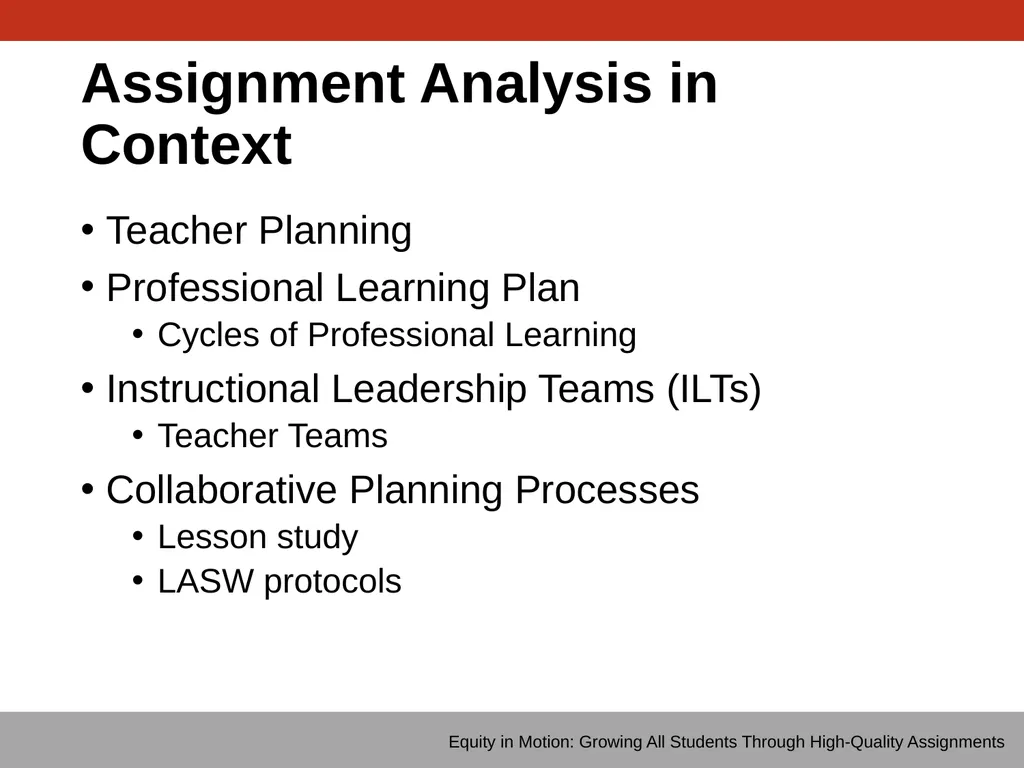
Assignment Analysis in Context Teacher Planning
Professional Learning Plan
Cycles of Professional Learning
Instructional Leadership Teams (ILTs)
Teacher Teams
Collaborative Planning Processes
Lesson study
LASW protocols<br>
19
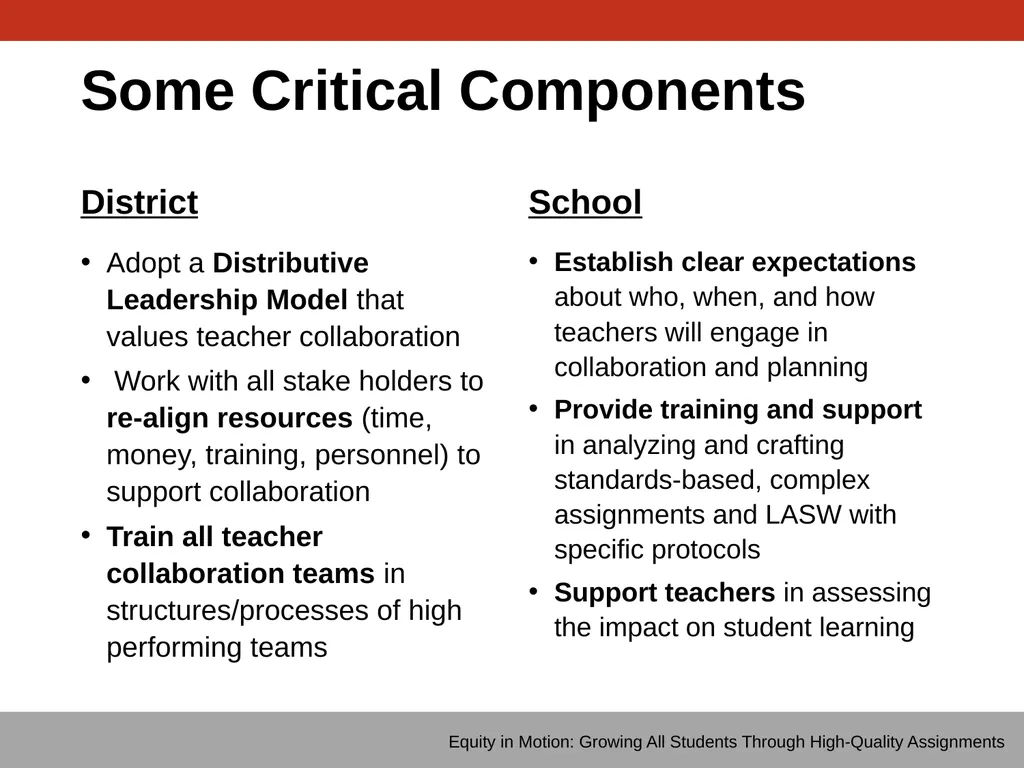
District School Adopt a Distributive Leadership Model that values teacher collaboration
Work with all stake holders to re-align resources (time, money, training, personnel) to support collaboration
Train all teacher collaboration teams in structures/processes of high performing teams Establish clear expectations about who, when, and how teachers will engage in collaboration and planning
Provide training and support in analyzing and crafting standards-based, complex assignments and LASW with specific protocols
Support teachers in assessing the impact on student learning Some Critical Components<br>
20
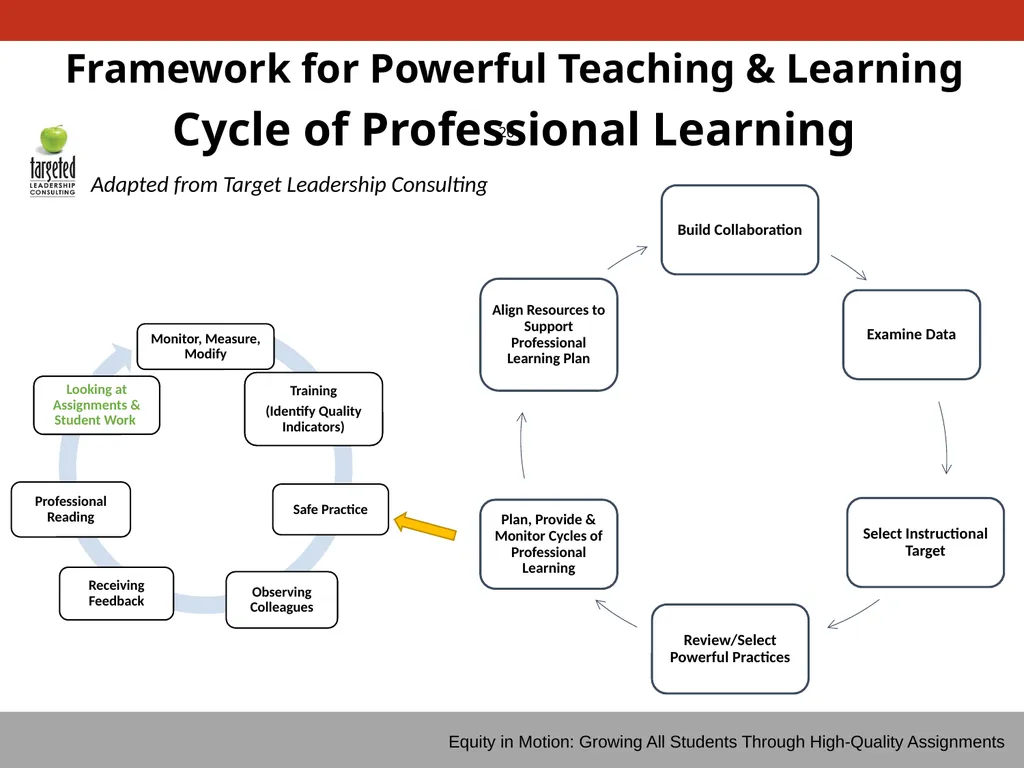
20 Framework for Powerful Teaching & Learning
Cycle of Professional Learning Adapted from Target Leadership Consulting<br>
21
GIVE ONE-GET ONE Individually
Complete top half of page 2-Give One Note-taker– write examples in the boxes # 1-4. (10 min.)
Share with Colleagues
Pair with another participant in the room
The first participant should share ONE example from the “Give One” section of their note-taker while the second participant writes the idea in their Get-One section.
There will be 4 rotations and each will be 4 minutes long (2 minutes for each Give-Get. 21<br>