
Head-to-Toe Assessment Nursing Introduction This







Description: Head-to-Toe Assessment Nursing Introduction This lesson will explain how to conduct a nursing head-to-toe health assessment. This assessment is similar to what you may be required to perform in nursing care assessment Head-to-Toe Nursing
Related Topics
Download Presentation
"Head-to-Toe Assessment Nursing Introduction This" is the property of its rightful owner. Permission is granted to download and print the materials on this website for personal, non-commercial use only, and to display it on your personal computer provided you do not modify the materials and that you retain all copyright notices contained in the materials. By downloading content from our website, you accept the terms of this agreement.
Presentation Transcript
slide1. Head-to-Toe Assessment Nursing<br>
slide2. Introduction This lesson will explain how to conduct a nursing head-to-toe health assessment.
This assessment is similar to what you may be required to perform in nursing care assessment<br>
slide3. Head-to-Toe Nursing Assessment
The sequence for performing a head-to-toe assessment is:
Inspection
Palpation
Percussion
Auscultation<br>
slide4. However, with the abdomen it is changed where auscultation is performed second instead of last. The order for the abdomen would be:
Inspection
Auscultation
Percussion
Palpation (palpation and percussion are done last to prevent from altering bowel sounds)<br>
slide5. Provide privacy, perform hand hygiene, introduce yourself to the patient, and explain to the patient that you need to conduct a head-to-toe assessment
Ask the patient to confirm their name and date of birth by looking at the patient’s wrist band (this helps assess orientation to person and confirms you have the right patient).
In addition, ask the patient where they are, the current date, and current events (who is the president and vice president) etc<br>
slide6. Collect vital signs: heart rate, blood pressure, temperature, oxygen saturation, respiratory rate, pain level
NOTE: Before even assessing a body system, you are already collecting important information about the patient. For example, you should already be collecting the following information :<br>
slide7. Looking at the overall appearance of your patient: do they look their age, are they alert and able to answer your questions promptly or is there a delay?
Does their skin color match their ethnicity; does the skin appear dry or sweaty?
Is their speech clear (not slurred)?
Do they easily get out of breath while talking to you (coughing etc.)?<br>
slide8. Any noted abnormalities?
How is their emotion status (calm, agitated, stressed, crying, flat affect, drowsy)?
Can they hear you well (or do you have to repeat questions a lot)?
Normal posture?
Abnormal smells?
How is their hygiene?<br>
slide9. Assess height and weight and calculate the patient’s BMI (body mass index).
Below 18.5 = Underweight
18.5-24.9 = Normal weight
25.0-29.9 = Overweight
30.0 or Higher = Obese<br>
slide10. Then start with the hair and move down to the toes:
Head:
Inspect the face and hair:
Inspect the overall appearance of the face (are the eyes and ears at the same level)?
Is the head an appropriate size for the body?
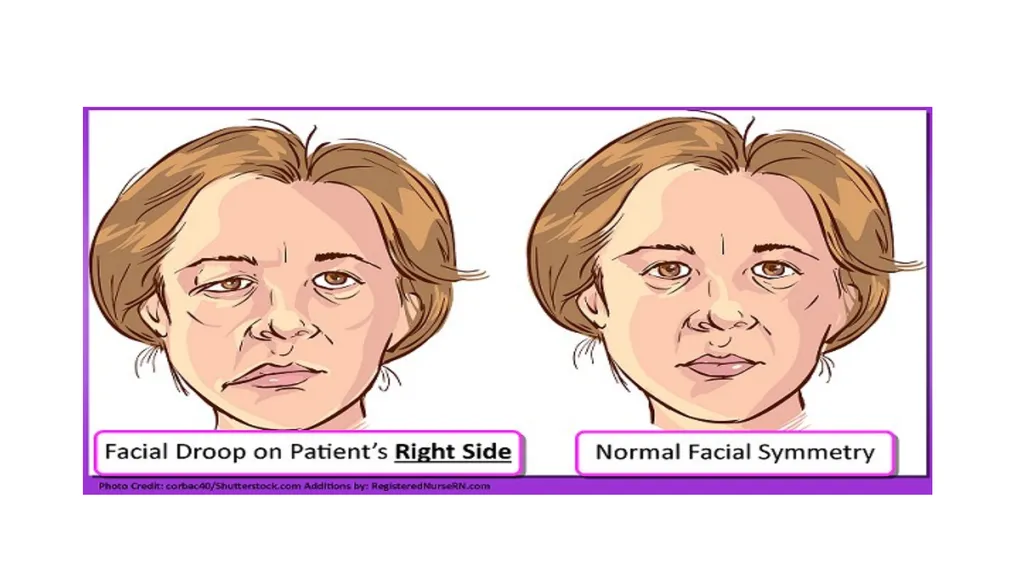
Is the face symmetrical…. no drooping of the face on one side (eyes or lips). This can happen in Bell’s palsy or stroke<br>
slide12. Are the facial expressions symmetrical (no involuntary movements)?
Any lesions?
Test cranial nerve VII…facial nerve: have the patient close their eyes tightly, smile, frown, puff out cheek. Can they do this will ease?<br>
slide13. Palpate the cranium and inspect the hair for infestations, hair loss, skin breakdown or abnormalities:
Palpate for any masses or indentations
Skin breakdown (especially on the back of the head in immobile patients)?
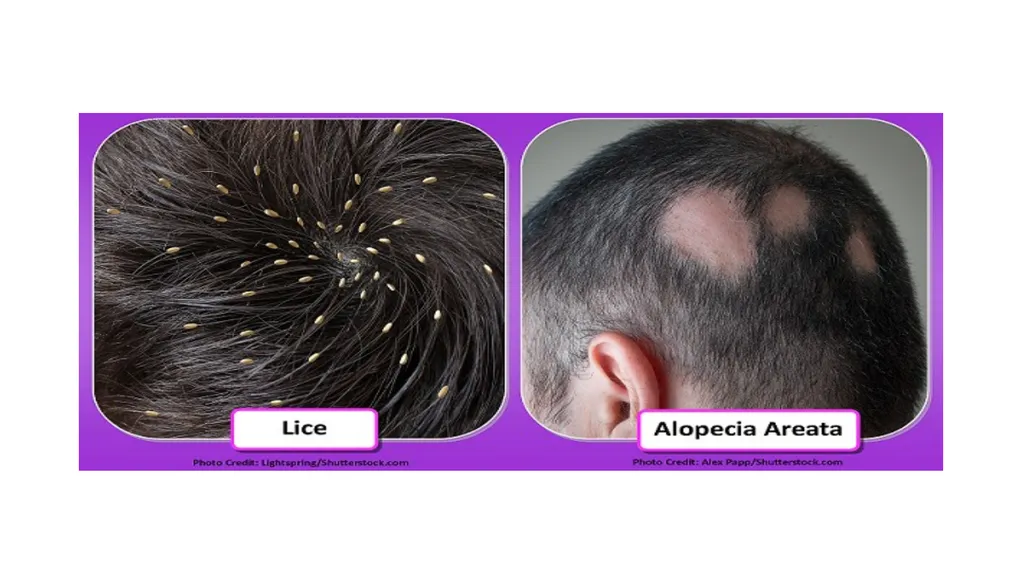
Inspect the hair for any infestations: lice, alopecia areata (round abrupt balding in patches), nevus on the scalp etc.<br>
slide15. Palpate the temporal artery bilaterally
Test Cranial Nerve V…..trigeminal nerve: This nerve is responsible for many functions and mastication is one of them.
Have the patient bite down and feel the masseter muscle and temporal muscle
Then have the patient try to open the mouth against resistance<br>
slide16. Palpate the temporomandibular joint for grating or clicking: Have the patient open and close the mouth and feel for any grating sensation or clicking.
Palpate the frontal and maxillary sinuses for tenderness: patient will pressure but should not feel pain<br>
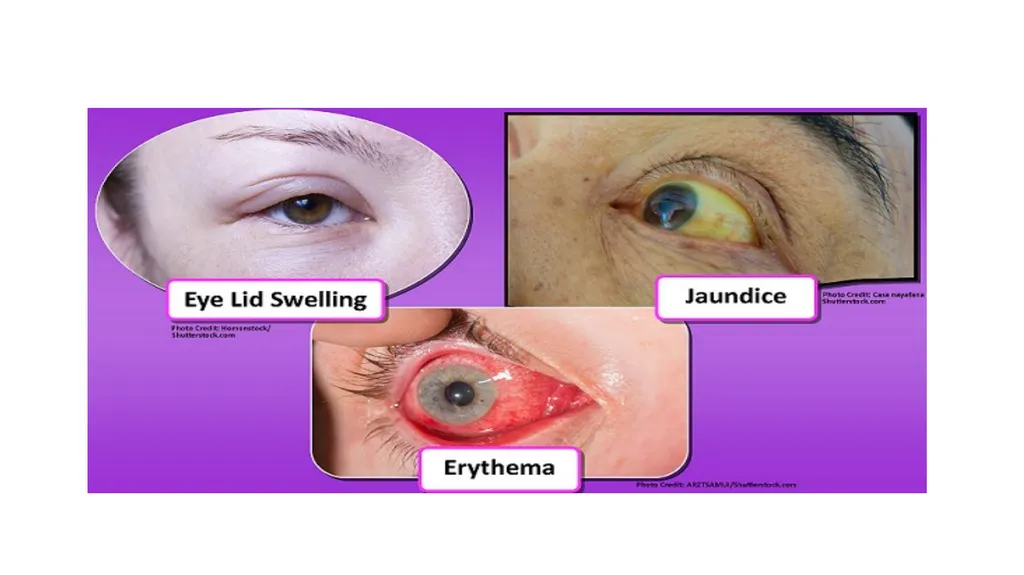
slide17. Eyes: Inspect the eyes, eye lids, pupils, sclera, and conjunctiva
Is there swelling of the eye lids?
Is the sclera white and shiny?…not yellow as in jaundiceIs the conjunctiva pink NOT red and swollen?
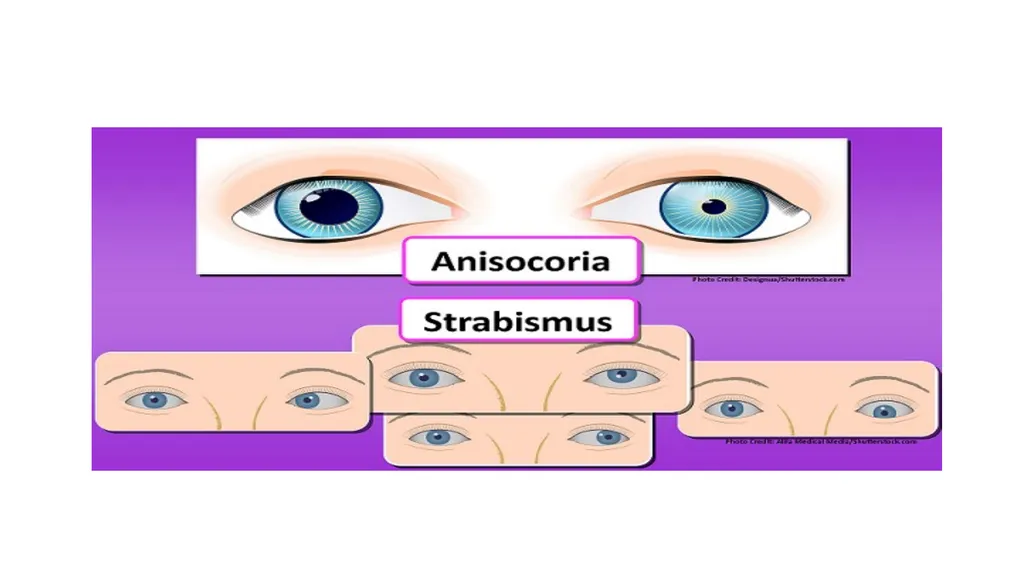
Look for Strabismus and Aniscoria:
Strabismus: Do the eyes line up with another?
Aniscoria : Are the pupils equal in size…or is one pupil larger than the other? Are the pupils clear…not cloudy?Normal pupil size should be 3 to 5 mm and equal<br>
slide20. Test cranial nerves III ( oculomotor ), IV (trochlear), VI
( abducens )
Have the patient follow your pen light by moving it 12-14 inches from the patient’s face in the six cardinal fields of gaze (start in the midline)
Watch for any nystagmus (involuntary movements of the eye)<br>
slide21. Accommodation ?
Make the lights normal and have patient look at a distant object to dilate pupils, and then have patient stare at pen light and slowly move it closer to the patient’s nose.
Watch the pupil response: The pupils should constrict and equally move to cross<br>
slide22. Ears: Inspect the ears for:
Drainage (ear wax) or abnormalities
Ask the patient if they are experiencing any tenderness and palpate the pinna and Targus .
Palpate the mastoid process for swelling or tenderness<br>
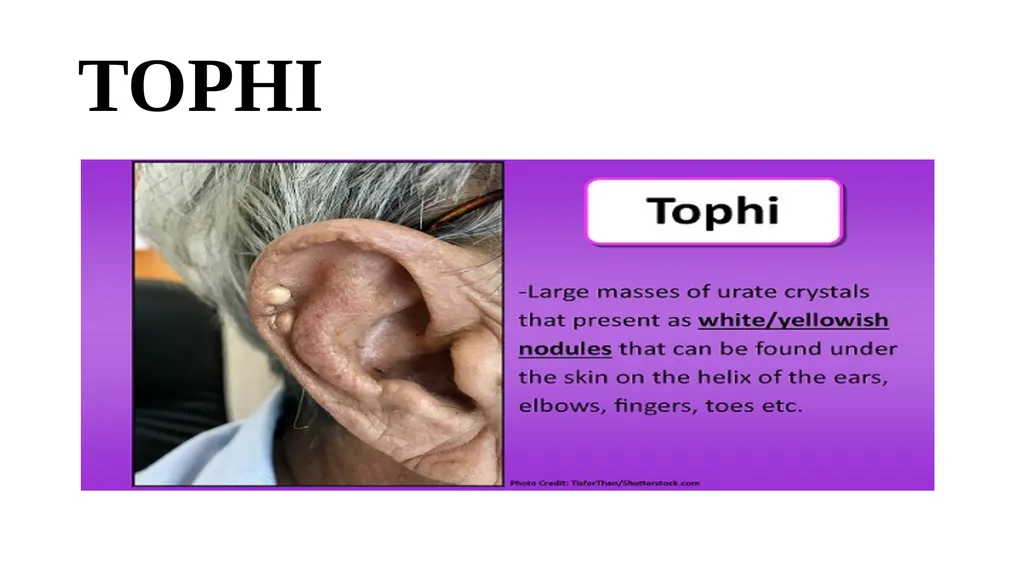
slide23. TOPHI<br>
slide24. Tests cranial nerve 8 VIII…vestibule cochlear nerve: Tests cranial nerve 8 VIII…vestibule cochlear nerve:
Test the hearing by occluding one ear and whispering two words and have the patient repeat them back. Repeat this for the other ear<br>
slide25. Inspect the tympanic membrane: Inspect the tympanic membrane:
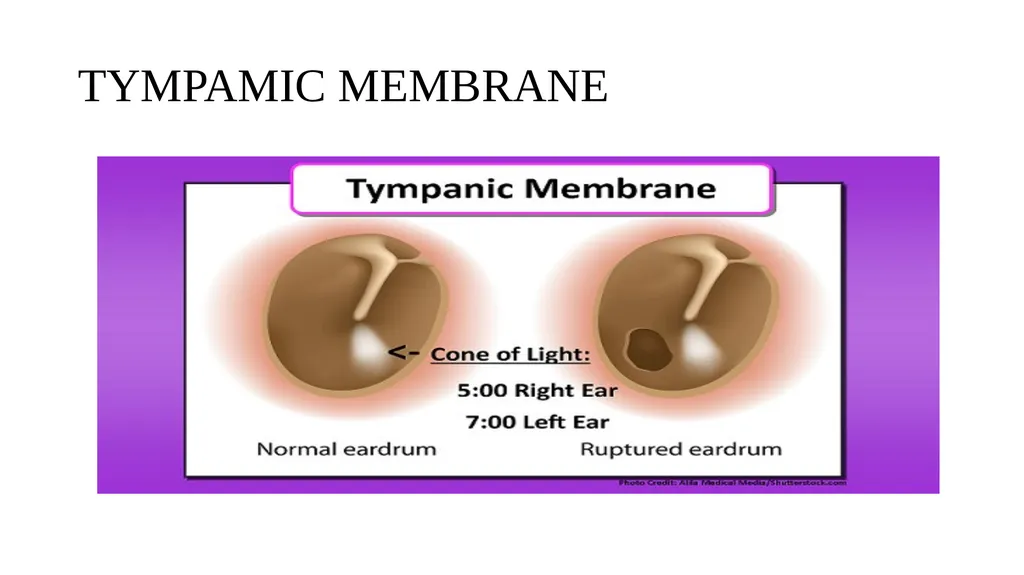
Use an otoscope to look at the tympanic membrane. It should appear as a pearly gray, translucent color and be shiny. Remember for an adult: pull up and back and for a child down and back on the pinna.
Also, the cone of light should be at the 5:00 position in the right ear and 7:00 position in the left ear<br>
slide26. TYMPAMIC MEMBRANE<br>
slide27. Nose: Inspect nose
Symmetrical (midline, look at septum for any deviation)
Drainage (ask patient if they are having any discharge)
Use a penlight to shine inside the nose and look for any lesions, redness, or polyps
Then have the patient close one nostril and have the patient breathe out of it and do the same for the other…are they patent?<br>
slide28. Test cranial nerve I..….olfactory nerve: Have the patient close their eyes and place something with a pleasant smell under the nose and have them identify it<br>
slide29. Mouth: Inspect lips (lip should be pink NOT dusky or blue/cyanotic or cracked, and free from lesions)
Inspect the inside of the mouth:
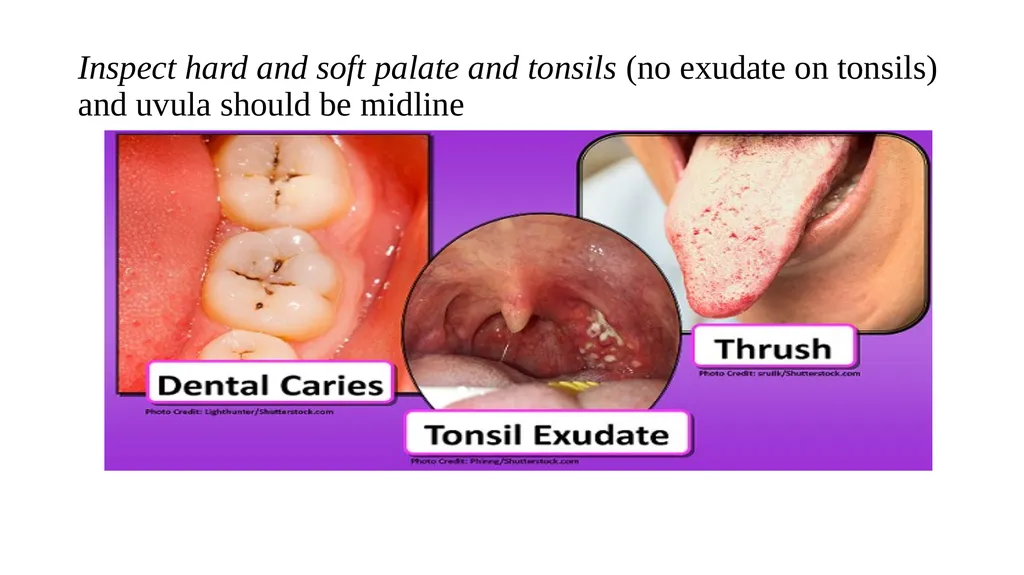
Color of mucous membranes and gums should be pink and shiny. The teeth should be white and free from cavities. Note: any broken or loose teeth too.
Inspect tongue:
Should be moist and pink (NOT dry or cracked or beefy red (pernicious anemia) Underneath the tongue should be no lesions or sores<br>
slide30. Inspect hard and soft palate and tonsils (no exudate on tonsils) and uvula should be midline<br>
slide31. Test cranial nerve XII….hypoglossal: Test cranial nerve XII….hypoglossal: have patient stick tongue out and move it side to side
Test cranial nerve IX (glossopharyngeal) and X ( vagus ) have patient say “ah”…the uvula will move up (cranial nerve IX intact) and if the patient can swallow with ease and has no hoarseness when talking, cranial nerve X is intact<br>
slide32. Neck: Neck:
Inspect the trachea
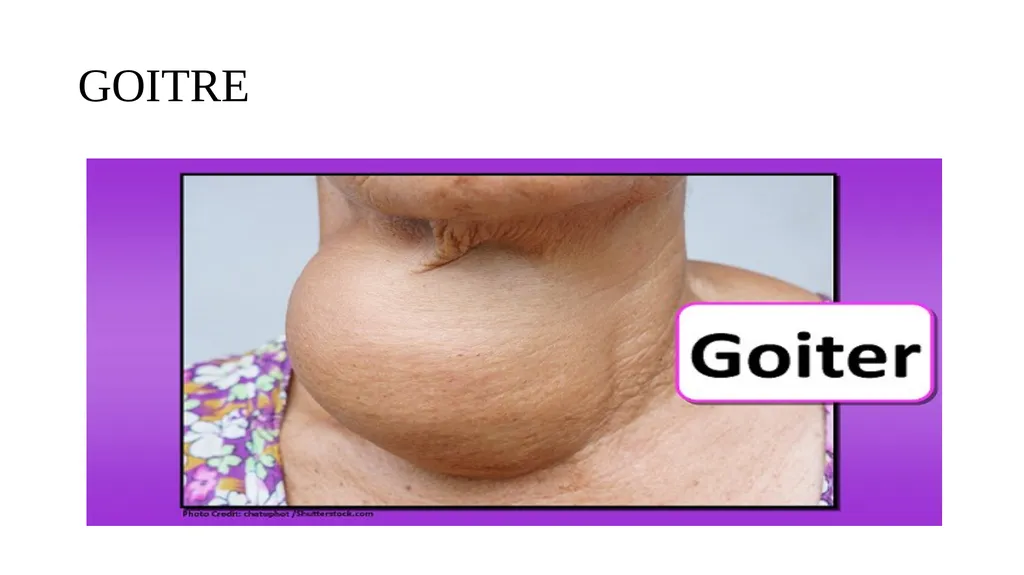
Is it midline, are there any lesions, lumps (goiter), or enlarged lymph nodes (have patient extend the neck up so you can access it better)?<br>
slide33. GOITRE<br>
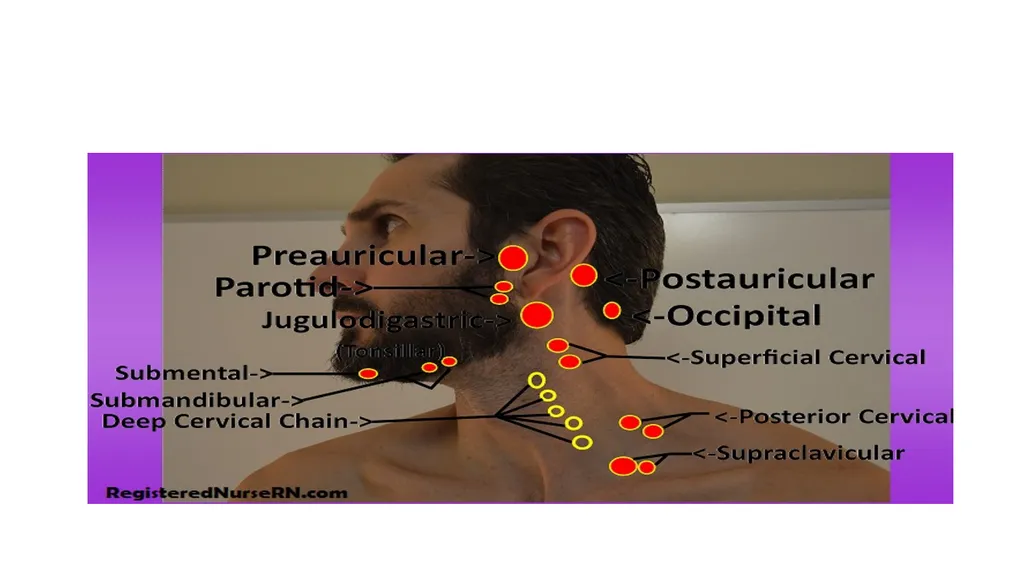
slide34. Palpate the lymph nodes Palpate the lymph nodes with the pads of fingers and feel for lumps, hard nodules, or tenderness:
Preauricular , postauricular, occipital, parotid, jugulodiagastric (tonsillar), submandibular, submental, superficial cervical, deep cervical chain, posterior cervical, supravclavicular<br>
slide36. Palpate the trachea and confirm it is midline
Palpate thyroid gland from the back: note for nodules, tenderness or enlargement…normally can’t palpate it.
Palpate the carotid artery (one side at a time) and grade it (0 to 4+….2+ is normal)
Auscultate for bruits at the carotid artery with BELL of stethoscope (listen for a swooshing sound which is a bruit)…have patient breathe in and out and hold it while listening<br>
slide37. Upper extremities: Inspect arms and hands
Deformities? ( Heberden or Bouchard nodes as in osteoarthritis on fingers
Any wounds or IVs or central lines? (Assess for redness or drainage, expiration date etc.)
Hand and fingernails for color: they should be pink and capillary refill should be less than 2 seconds<br>
slide38. Inspect joints for swelling or redness (rheumatoid arthritis or gout)
Skin turgor (tenting)
Palpate joints (elbows, wrist, and hands) for redness and move the joints (note any decreased range of motion or crepitus<br>
slide39. Palpate skin temperature Palpate skin temperature
Palpate radial artery BILATERALLY and grade it. If the patient receives dialysis and has an AV fistula, confirm it has a thrill present.
Have the patient extend their arms and move the arms against resistance and flex against resistance (grade strengthen 0-5) along with having the patient squeeze your fingers (note the grip).<br>
slide40. Chest: Chest:
Inspect the chest
Is the respiratory effort easy? Is the patient using the abdominal or accessory muscles for breathing?
Does the patient have a barreled chest (some patients with COPD do)?
Assess the skin for wounds, pacemaker present, subcutaneous port etc.?<br>
slide41. Heart Sounds: Heart Sounds:
Auscultate heart sounds at 5 locations, specifically valve locations:
Remember the mnemonic: “All Patients Effectively (Erb’s Point…halfway point between the base and apex of the heart) Take Medicine”<br>
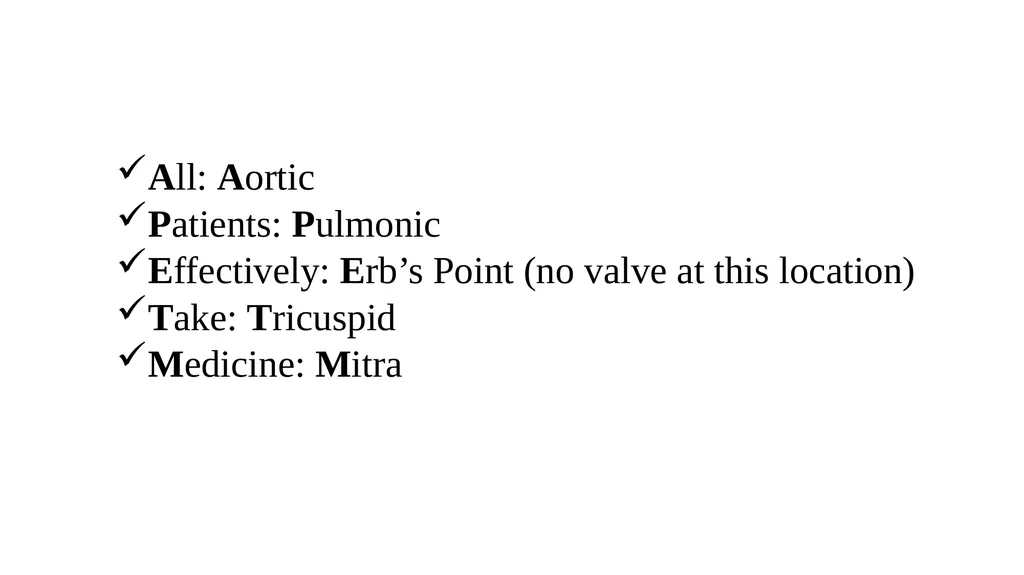
slide42. All: Aortic
Patients: Pulmonic
Effectively: Erb’s Point (no valve at this location)
Take: Tricuspid
Medicine: Mitra<br>
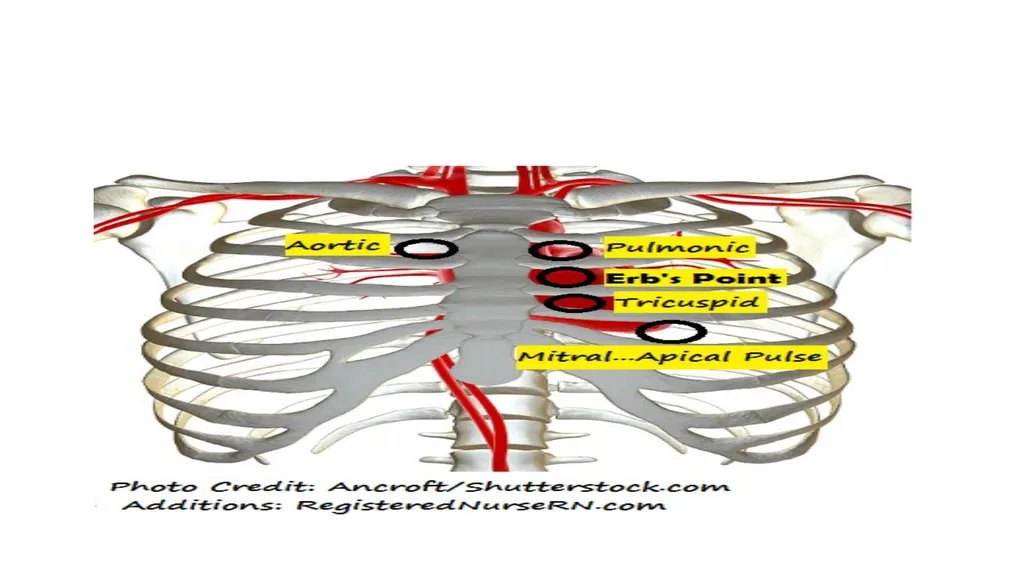
slide44. Use diaphragm of stethoscope: listening for lub dub (S1 and S2…any splits) and the rhythm: is it regular (if on cardiac monitor…note heart rhythm)
Aortic: found right of the sternal border in the 2nd intercostal space REPRESENTS S2 “dub” which is the loudest.
Pulmonic: found left of the sternal border in the 2nd intercostal space REPRESENTS S2 “dub” which is the loudest<br>
slide45. Erb’s Point: found left of the sternal border in the 3rd intercostal space…no valve here just the halfway point.
Tricuspid: found left of the sternal border in the 4th intercostal space REPRESENTS S1 “lub”.<br>
slide46. Mitral: found midclavicular in the 5th intercostal space REPRESENTS S1 “lub” (also the site of point of maximal impulse) APICAL PULSE….count pulse for 1 full minute.
Then listen with the BELL of the stethoscope at the same locations: for a blowing or swooshing noise…heart murmur<br>
slide47. Lung Sounds: Lung Sounds:
If you would like to hear some abnormal lung sounds, please watch our video called “abnormal lung sounds”.
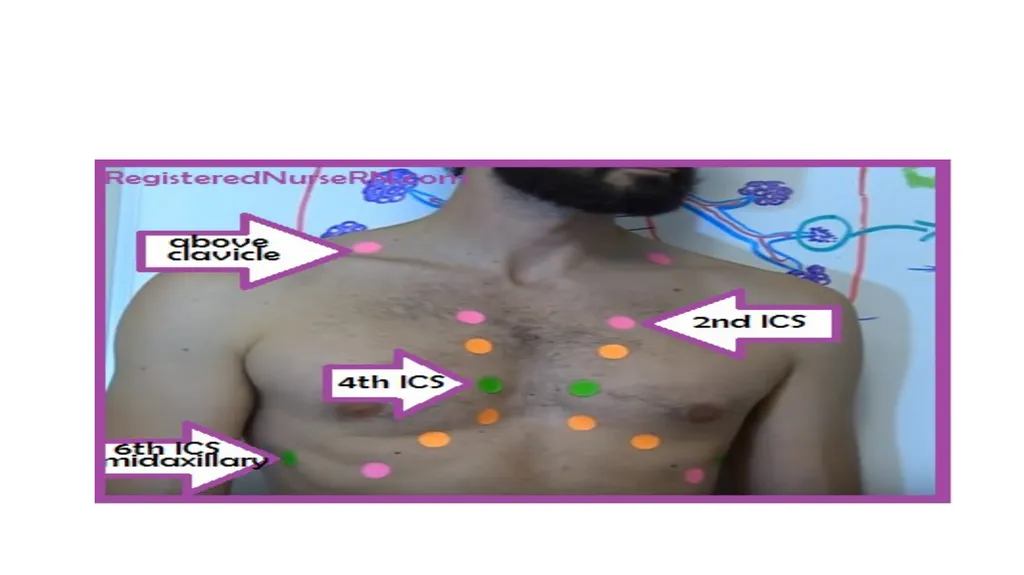
Auscultate anteriorly:
Start at: the apex of the lung which is right above the clavicle
Then move to the 2nd intercostal space to assess the right and left upper lobes<br>
slide48. Move to the 4th intercostal space, you will be assessing the right middle lobe and the left upper lobe.
Lastly move to the mid-axillary are at the 6th intercostal space and you will be assessing the right and left lower lobes<br>
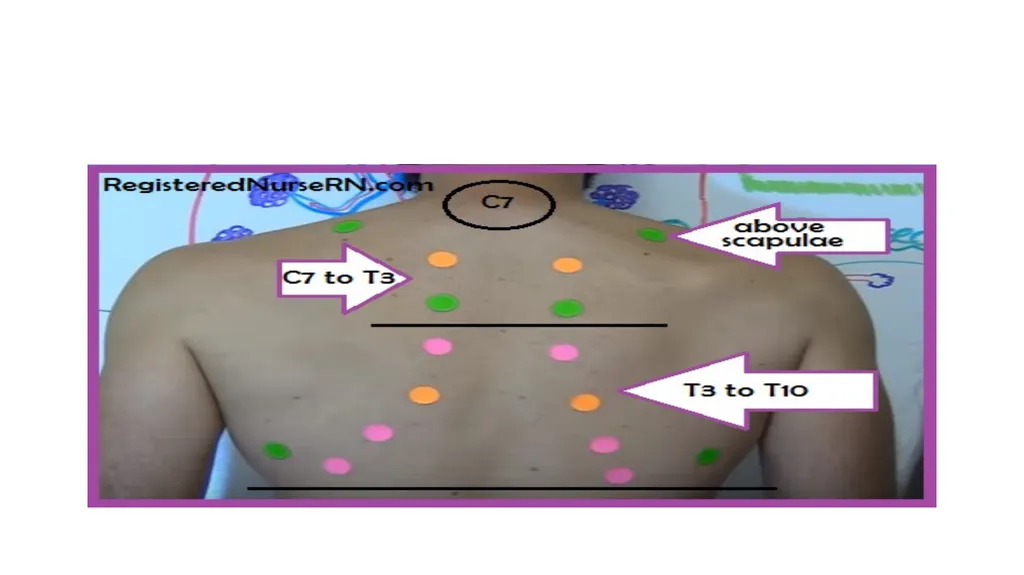
slide50. Auscultate posteriorly: Start right above the scapulae to listen to the apex of the lungs.
Then find C7 (which is the vertebral prominence) and go to T3…in between the shoulder blades and spine. This will assess the right and left upper lobes.
Then from T3 to T10 you will be able to assess the right and left lower lobes<br>
slide52. Abdomen: Switching to Inspection, Auscultation, Percussion, and Palpation
Have patient lay supine
Ask patient about their last about bowel movement and if they have any problems with urination. If a female patient, ask when their last menstrual period was.
If an ostomy is present note the type of ostomy , stoma color (should be pink and shiny), consistency and color of stool?<br>
slide53. Inspect: Stomach contour scaphoid, flat, rounded, protuberant?
Noted pulsations at the aorta (noted in thin patients): The aortic pulsation can be noted above the umbilicus.
Characteristics of the navel (invert or everted )
Masses (check for hernia after auscultation), ?<br>
slide54. Auscultate with the diaphragm for bowel sounds: Auscultate with the diaphragm for bowel sounds:
Start in the RIGHT LOWER QUADRANT and go clockwise in all the 4 quadrants
Should hear 5 to 30 sounds per minute…if no, bowel sounds are noted listen for 5 full minutes
Documents as: normal, hyperactive, or hypoactive<br>
slide55. Auscultate for bruits (vascular sounds) At the following locations using the BELL of the stethoscope:
Aorta: slightly below the xiphoid process midline with the umbilicus
Renal Arteries: go slightly down to the right and left at the aortic site
Iliac arteries: go few a inches down from the belly button at the right and left sides to listen
Femoral arteries: found in the right and left groin.<br>
slide56. Check for hernia: Check for hernia: have patient raise up a bit and look for hernia (at stomach area or navel area)
Palpation of the abdomen:
Light palpation (2 cm): should feel soft with no pain or rigidity
Deep palpation (4-5 cm): feel for any masses, lumps, tenderness<br>
slide57. Lower extremities: Inspect:
Color from legs to toes?
Normal hair growth? (peripheral vascular disease: leg may be hairless, shiny, thin)
Warm (good blood flow)?
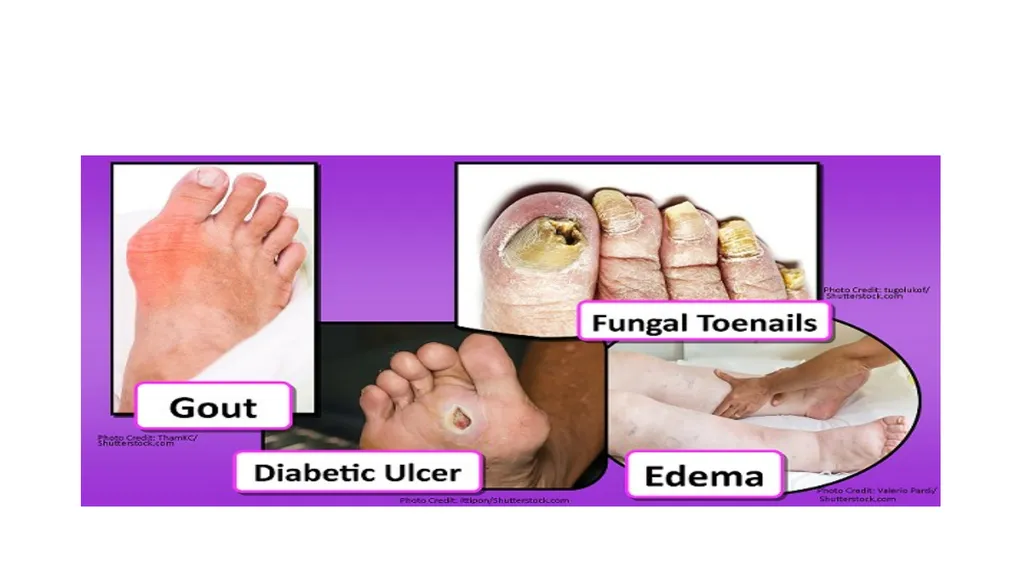
Swelling (press down firmly over the tibia…does it pit?)<br>
slide58. Any redness, swelling DVT (deep vein thrombosis)?
Capillary refill less than 2 seconds in toes?
How do the toe nails look (fungal or normal)?
Sores on the feet (Note: with diabetics, foot care is important. They don’t have good sensation on their feet. Therefore, inspect the feet for damage because they may not be aware of it.)
Is there any breakdown on the heels?
Assess joints of the toes and knees (any crepitus, redness, swelling, pain<br>
slide60. Palpate pulses bilaterally: popliteal (behind the knee), dorsalis pedis (top of foot), posterior tibial (at the ankle) and grade them
Palpate muscle strength: have patient push against resistance with feet and lift legs
Test Babinski reflex: curling toes is a negative normal response
Turn patient over and look at back (could listen to lung sounds if haven’t already) look for skin breakdown on back and bottom and abnormal moles<br>
slide2. Introduction This lesson will explain how to conduct a nursing head-to-toe health assessment.
This assessment is similar to what you may be required to perform in nursing care assessment<br>
slide3. Head-to-Toe Nursing Assessment
The sequence for performing a head-to-toe assessment is:
Inspection
Palpation
Percussion
Auscultation<br>
slide4. However, with the abdomen it is changed where auscultation is performed second instead of last. The order for the abdomen would be:
Inspection
Auscultation
Percussion
Palpation (palpation and percussion are done last to prevent from altering bowel sounds)<br>
slide5. Provide privacy, perform hand hygiene, introduce yourself to the patient, and explain to the patient that you need to conduct a head-to-toe assessment
Ask the patient to confirm their name and date of birth by looking at the patient’s wrist band (this helps assess orientation to person and confirms you have the right patient).
In addition, ask the patient where they are, the current date, and current events (who is the president and vice president) etc<br>
slide6. Collect vital signs: heart rate, blood pressure, temperature, oxygen saturation, respiratory rate, pain level
NOTE: Before even assessing a body system, you are already collecting important information about the patient. For example, you should already be collecting the following information :<br>
slide7. Looking at the overall appearance of your patient: do they look their age, are they alert and able to answer your questions promptly or is there a delay?
Does their skin color match their ethnicity; does the skin appear dry or sweaty?
Is their speech clear (not slurred)?
Do they easily get out of breath while talking to you (coughing etc.)?<br>
slide8. Any noted abnormalities?
How is their emotion status (calm, agitated, stressed, crying, flat affect, drowsy)?
Can they hear you well (or do you have to repeat questions a lot)?
Normal posture?
Abnormal smells?
How is their hygiene?<br>
slide9. Assess height and weight and calculate the patient’s BMI (body mass index).
Below 18.5 = Underweight
18.5-24.9 = Normal weight
25.0-29.9 = Overweight
30.0 or Higher = Obese<br>
slide10. Then start with the hair and move down to the toes:
Head:
Inspect the face and hair:
Inspect the overall appearance of the face (are the eyes and ears at the same level)?
Is the head an appropriate size for the body?
Is the face symmetrical…. no drooping of the face on one side (eyes or lips). This can happen in Bell’s palsy or stroke<br>
slide12. Are the facial expressions symmetrical (no involuntary movements)?
Any lesions?
Test cranial nerve VII…facial nerve: have the patient close their eyes tightly, smile, frown, puff out cheek. Can they do this will ease?<br>
slide13. Palpate the cranium and inspect the hair for infestations, hair loss, skin breakdown or abnormalities:
Palpate for any masses or indentations
Skin breakdown (especially on the back of the head in immobile patients)?
Inspect the hair for any infestations: lice, alopecia areata (round abrupt balding in patches), nevus on the scalp etc.<br>
slide15. Palpate the temporal artery bilaterally
Test Cranial Nerve V…..trigeminal nerve: This nerve is responsible for many functions and mastication is one of them.
Have the patient bite down and feel the masseter muscle and temporal muscle
Then have the patient try to open the mouth against resistance<br>
slide16. Palpate the temporomandibular joint for grating or clicking: Have the patient open and close the mouth and feel for any grating sensation or clicking.
Palpate the frontal and maxillary sinuses for tenderness: patient will pressure but should not feel pain<br>
slide17. Eyes: Inspect the eyes, eye lids, pupils, sclera, and conjunctiva
Is there swelling of the eye lids?
Is the sclera white and shiny?…not yellow as in jaundiceIs the conjunctiva pink NOT red and swollen?
Look for Strabismus and Aniscoria:
Strabismus: Do the eyes line up with another?
Aniscoria : Are the pupils equal in size…or is one pupil larger than the other? Are the pupils clear…not cloudy?Normal pupil size should be 3 to 5 mm and equal<br>
slide20. Test cranial nerves III ( oculomotor ), IV (trochlear), VI
( abducens )
Have the patient follow your pen light by moving it 12-14 inches from the patient’s face in the six cardinal fields of gaze (start in the midline)
Watch for any nystagmus (involuntary movements of the eye)<br>
slide21. Accommodation ?
Make the lights normal and have patient look at a distant object to dilate pupils, and then have patient stare at pen light and slowly move it closer to the patient’s nose.
Watch the pupil response: The pupils should constrict and equally move to cross<br>
slide22. Ears: Inspect the ears for:
Drainage (ear wax) or abnormalities
Ask the patient if they are experiencing any tenderness and palpate the pinna and Targus .
Palpate the mastoid process for swelling or tenderness<br>
slide23. TOPHI<br>
slide24. Tests cranial nerve 8 VIII…vestibule cochlear nerve: Tests cranial nerve 8 VIII…vestibule cochlear nerve:
Test the hearing by occluding one ear and whispering two words and have the patient repeat them back. Repeat this for the other ear<br>
slide25. Inspect the tympanic membrane: Inspect the tympanic membrane:
Use an otoscope to look at the tympanic membrane. It should appear as a pearly gray, translucent color and be shiny. Remember for an adult: pull up and back and for a child down and back on the pinna.
Also, the cone of light should be at the 5:00 position in the right ear and 7:00 position in the left ear<br>
slide26. TYMPAMIC MEMBRANE<br>
slide27. Nose: Inspect nose
Symmetrical (midline, look at septum for any deviation)
Drainage (ask patient if they are having any discharge)
Use a penlight to shine inside the nose and look for any lesions, redness, or polyps
Then have the patient close one nostril and have the patient breathe out of it and do the same for the other…are they patent?<br>
slide28. Test cranial nerve I..….olfactory nerve: Have the patient close their eyes and place something with a pleasant smell under the nose and have them identify it<br>
slide29. Mouth: Inspect lips (lip should be pink NOT dusky or blue/cyanotic or cracked, and free from lesions)
Inspect the inside of the mouth:
Color of mucous membranes and gums should be pink and shiny. The teeth should be white and free from cavities. Note: any broken or loose teeth too.
Inspect tongue:
Should be moist and pink (NOT dry or cracked or beefy red (pernicious anemia) Underneath the tongue should be no lesions or sores<br>
slide30. Inspect hard and soft palate and tonsils (no exudate on tonsils) and uvula should be midline<br>
slide31. Test cranial nerve XII….hypoglossal: Test cranial nerve XII….hypoglossal: have patient stick tongue out and move it side to side
Test cranial nerve IX (glossopharyngeal) and X ( vagus ) have patient say “ah”…the uvula will move up (cranial nerve IX intact) and if the patient can swallow with ease and has no hoarseness when talking, cranial nerve X is intact<br>
slide32. Neck: Neck:
Inspect the trachea
Is it midline, are there any lesions, lumps (goiter), or enlarged lymph nodes (have patient extend the neck up so you can access it better)?<br>
slide33. GOITRE<br>
slide34. Palpate the lymph nodes Palpate the lymph nodes with the pads of fingers and feel for lumps, hard nodules, or tenderness:
Preauricular , postauricular, occipital, parotid, jugulodiagastric (tonsillar), submandibular, submental, superficial cervical, deep cervical chain, posterior cervical, supravclavicular<br>
slide36. Palpate the trachea and confirm it is midline
Palpate thyroid gland from the back: note for nodules, tenderness or enlargement…normally can’t palpate it.
Palpate the carotid artery (one side at a time) and grade it (0 to 4+….2+ is normal)
Auscultate for bruits at the carotid artery with BELL of stethoscope (listen for a swooshing sound which is a bruit)…have patient breathe in and out and hold it while listening<br>
slide37. Upper extremities: Inspect arms and hands
Deformities? ( Heberden or Bouchard nodes as in osteoarthritis on fingers
Any wounds or IVs or central lines? (Assess for redness or drainage, expiration date etc.)
Hand and fingernails for color: they should be pink and capillary refill should be less than 2 seconds<br>
slide38. Inspect joints for swelling or redness (rheumatoid arthritis or gout)
Skin turgor (tenting)
Palpate joints (elbows, wrist, and hands) for redness and move the joints (note any decreased range of motion or crepitus<br>
slide39. Palpate skin temperature Palpate skin temperature
Palpate radial artery BILATERALLY and grade it. If the patient receives dialysis and has an AV fistula, confirm it has a thrill present.
Have the patient extend their arms and move the arms against resistance and flex against resistance (grade strengthen 0-5) along with having the patient squeeze your fingers (note the grip).<br>
slide40. Chest: Chest:
Inspect the chest
Is the respiratory effort easy? Is the patient using the abdominal or accessory muscles for breathing?
Does the patient have a barreled chest (some patients with COPD do)?
Assess the skin for wounds, pacemaker present, subcutaneous port etc.?<br>
slide41. Heart Sounds: Heart Sounds:
Auscultate heart sounds at 5 locations, specifically valve locations:
Remember the mnemonic: “All Patients Effectively (Erb’s Point…halfway point between the base and apex of the heart) Take Medicine”<br>
slide42. All: Aortic
Patients: Pulmonic
Effectively: Erb’s Point (no valve at this location)
Take: Tricuspid
Medicine: Mitra<br>
slide44. Use diaphragm of stethoscope: listening for lub dub (S1 and S2…any splits) and the rhythm: is it regular (if on cardiac monitor…note heart rhythm)
Aortic: found right of the sternal border in the 2nd intercostal space REPRESENTS S2 “dub” which is the loudest.
Pulmonic: found left of the sternal border in the 2nd intercostal space REPRESENTS S2 “dub” which is the loudest<br>
slide45. Erb’s Point: found left of the sternal border in the 3rd intercostal space…no valve here just the halfway point.
Tricuspid: found left of the sternal border in the 4th intercostal space REPRESENTS S1 “lub”.<br>
slide46. Mitral: found midclavicular in the 5th intercostal space REPRESENTS S1 “lub” (also the site of point of maximal impulse) APICAL PULSE….count pulse for 1 full minute.
Then listen with the BELL of the stethoscope at the same locations: for a blowing or swooshing noise…heart murmur<br>
slide47. Lung Sounds: Lung Sounds:
If you would like to hear some abnormal lung sounds, please watch our video called “abnormal lung sounds”.
Auscultate anteriorly:
Start at: the apex of the lung which is right above the clavicle
Then move to the 2nd intercostal space to assess the right and left upper lobes<br>
slide48. Move to the 4th intercostal space, you will be assessing the right middle lobe and the left upper lobe.
Lastly move to the mid-axillary are at the 6th intercostal space and you will be assessing the right and left lower lobes<br>
slide50. Auscultate posteriorly: Start right above the scapulae to listen to the apex of the lungs.
Then find C7 (which is the vertebral prominence) and go to T3…in between the shoulder blades and spine. This will assess the right and left upper lobes.
Then from T3 to T10 you will be able to assess the right and left lower lobes<br>
slide52. Abdomen: Switching to Inspection, Auscultation, Percussion, and Palpation
Have patient lay supine
Ask patient about their last about bowel movement and if they have any problems with urination. If a female patient, ask when their last menstrual period was.
If an ostomy is present note the type of ostomy , stoma color (should be pink and shiny), consistency and color of stool?<br>
slide53. Inspect: Stomach contour scaphoid, flat, rounded, protuberant?
Noted pulsations at the aorta (noted in thin patients): The aortic pulsation can be noted above the umbilicus.
Characteristics of the navel (invert or everted )
Masses (check for hernia after auscultation), ?<br>
slide54. Auscultate with the diaphragm for bowel sounds: Auscultate with the diaphragm for bowel sounds:
Start in the RIGHT LOWER QUADRANT and go clockwise in all the 4 quadrants
Should hear 5 to 30 sounds per minute…if no, bowel sounds are noted listen for 5 full minutes
Documents as: normal, hyperactive, or hypoactive<br>
slide55. Auscultate for bruits (vascular sounds) At the following locations using the BELL of the stethoscope:
Aorta: slightly below the xiphoid process midline with the umbilicus
Renal Arteries: go slightly down to the right and left at the aortic site
Iliac arteries: go few a inches down from the belly button at the right and left sides to listen
Femoral arteries: found in the right and left groin.<br>
slide56. Check for hernia: Check for hernia: have patient raise up a bit and look for hernia (at stomach area or navel area)
Palpation of the abdomen:
Light palpation (2 cm): should feel soft with no pain or rigidity
Deep palpation (4-5 cm): feel for any masses, lumps, tenderness<br>
slide57. Lower extremities: Inspect:
Color from legs to toes?
Normal hair growth? (peripheral vascular disease: leg may be hairless, shiny, thin)
Warm (good blood flow)?
Swelling (press down firmly over the tibia…does it pit?)<br>
slide58. Any redness, swelling DVT (deep vein thrombosis)?
Capillary refill less than 2 seconds in toes?
How do the toe nails look (fungal or normal)?
Sores on the feet (Note: with diabetics, foot care is important. They don’t have good sensation on their feet. Therefore, inspect the feet for damage because they may not be aware of it.)
Is there any breakdown on the heels?
Assess joints of the toes and knees (any crepitus, redness, swelling, pain<br>
slide60. Palpate pulses bilaterally: popliteal (behind the knee), dorsalis pedis (top of foot), posterior tibial (at the ankle) and grade them
Palpate muscle strength: have patient push against resistance with feet and lift legs
Test Babinski reflex: curling toes is a negative normal response
Turn patient over and look at back (could listen to lung sounds if haven’t already) look for skin breakdown on back and bottom and abnormal moles<br>