
Hepatitis viruses Learning objectives: Identify







Description: Hepatitis viruses Learning objectives: Identify hepatitis viruses regarding their structure , epidemiology and pathogenesis of the disease and prevention methods. Recognize the important serological makers during various stages of Hepatitis
Related Topics
Download Presentation
"Hepatitis viruses Learning objectives: Identify" is the property of its rightful owner. Permission is granted to download and print the materials on this website for personal, non-commercial use only, and to display it on your personal computer provided you do not modify the materials and that you retain all copyright notices contained in the materials. By downloading content from our website, you accept the terms of this agreement.
Presentation Transcript
slide1. Hepatitis viruses<br>
slide2. Learning objectives:
Identify hepatitis viruses regarding their structure , epidemiology and pathogenesis of the disease and prevention methods.
Recognize the important serological makers during various stages of Hepatitis B.<br>
slide3. Viral hepatitis
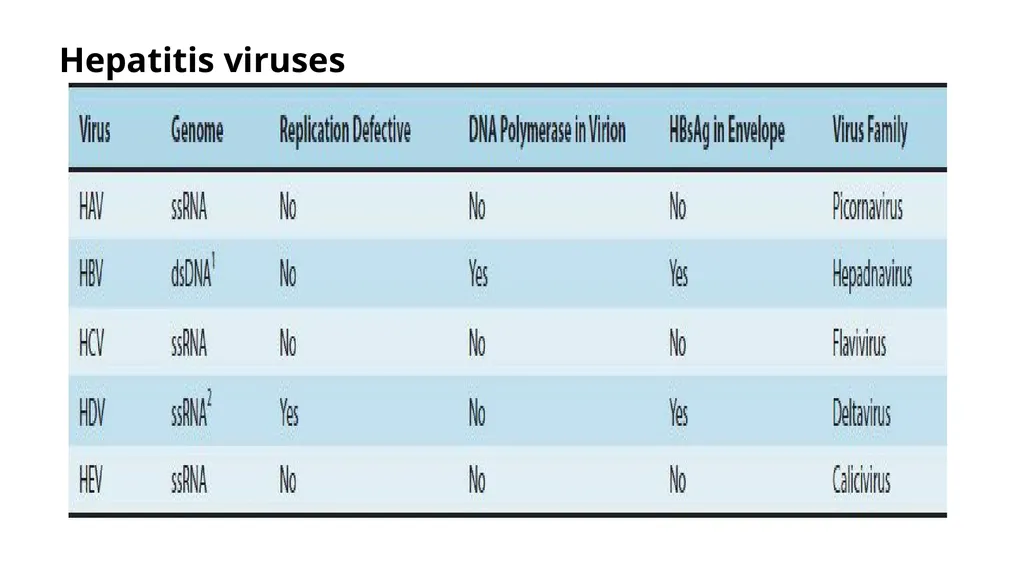
“Hepatitis viruses” the main site of infection is the liver. These are hepatitis A virus (HAV), hepatitis B virus (HBV), hepatitis C virus (HCV), hepatitis D virus (HDV, delta virus), and hepatitis E virus (HEV).
Other viruses, such as Epstein–Barr virus (the cause of infectious mononucleosis), cytomegalovirus, and yellow fever virus, infect the liver but also infect other sites in the body and therefore are not exclusively hepatitis viruses.<br>
slide4. Hepatitis viruses<br>
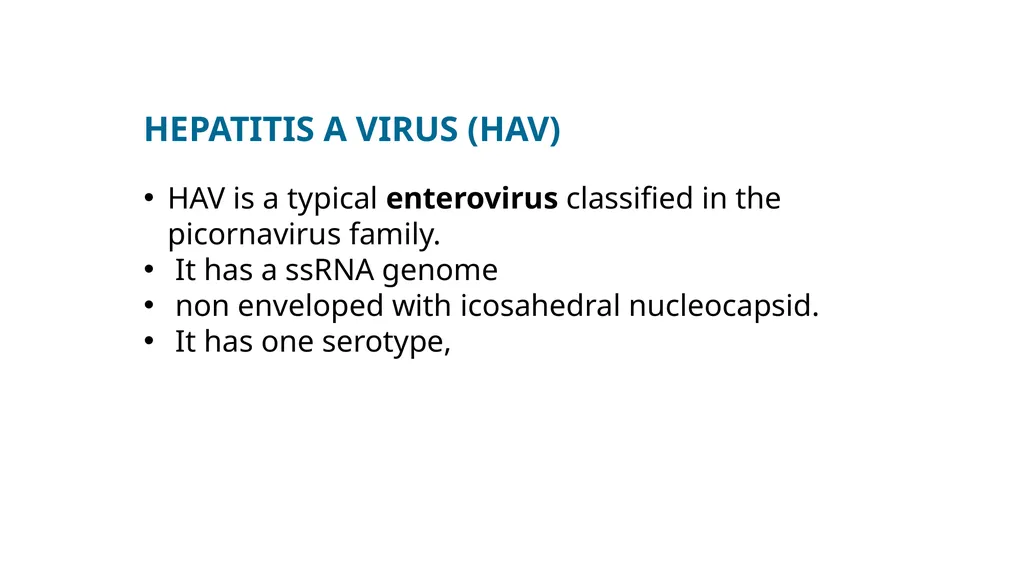
slide5. HEPATITIS A VIRUS (HAV)
HAV is a typical enterovirus classified in the picornavirus family.
It has a ssRNA genome
non enveloped with icosahedral nucleocapsid.
It has one serotype,<br>
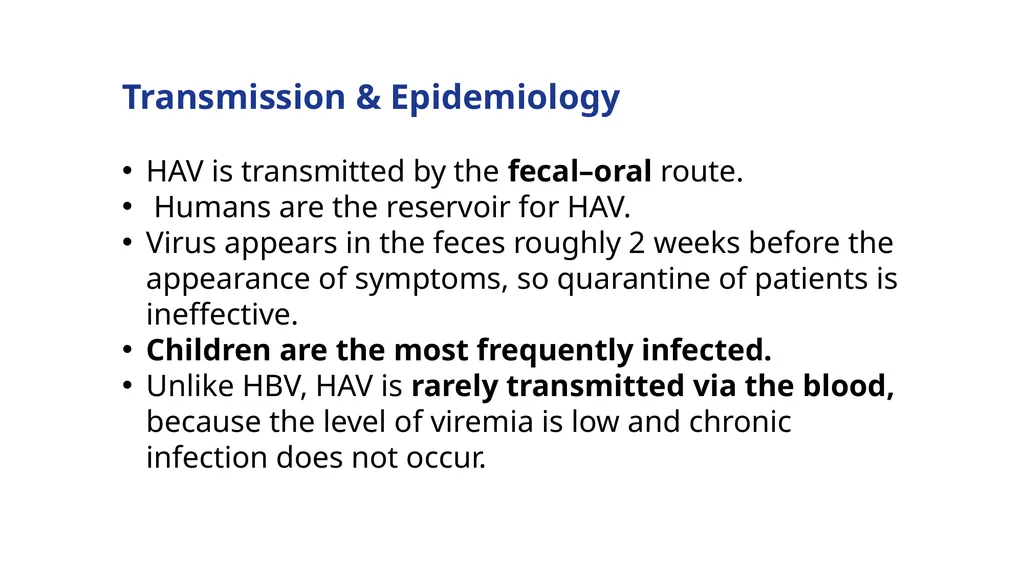
slide6. Transmission & Epidemiology
HAV is transmitted by the fecal–oral route.
Humans are the reservoir for HAV.
Virus appears in the feces roughly 2 weeks before the appearance of symptoms, so quarantine of patients is ineffective.
Children are the most frequently infected.
Unlike HBV, HAV is rarely transmitted via the blood, because the level of viremia is low and chronic infection does not occur.<br>
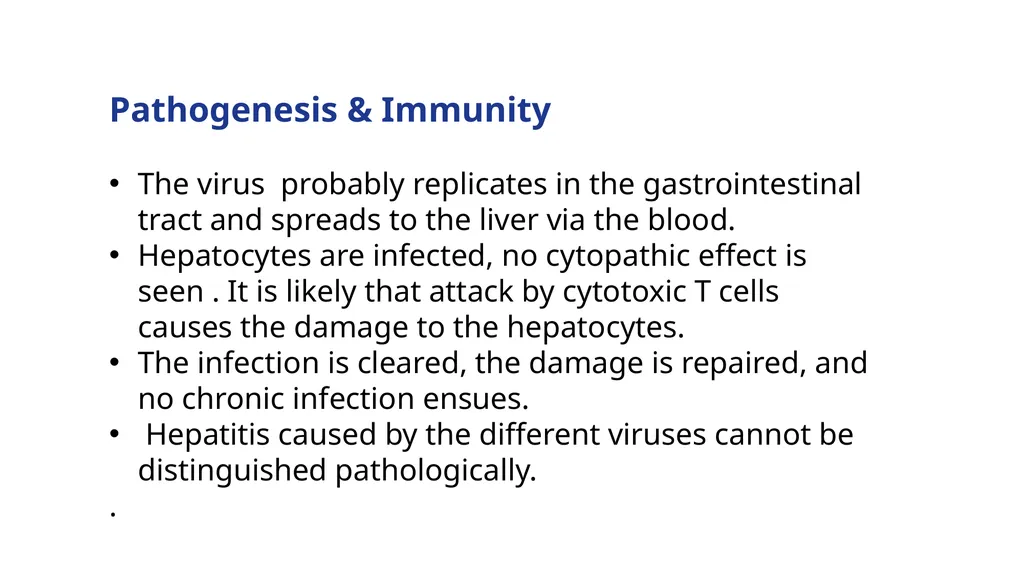
slide7. Pathogenesis & Immunity
The virus probably replicates in the gastrointestinal tract and spreads to the liver via the blood.
Hepatocytes are infected, no cytopathic effect is seen . It is likely that attack by cytotoxic T cells causes the damage to the hepatocytes.
The infection is cleared, the damage is repaired, and no chronic infection ensues.
Hepatitis caused by the different viruses cannot be distinguished pathologically.
.<br>
slide8. Clinical Findings
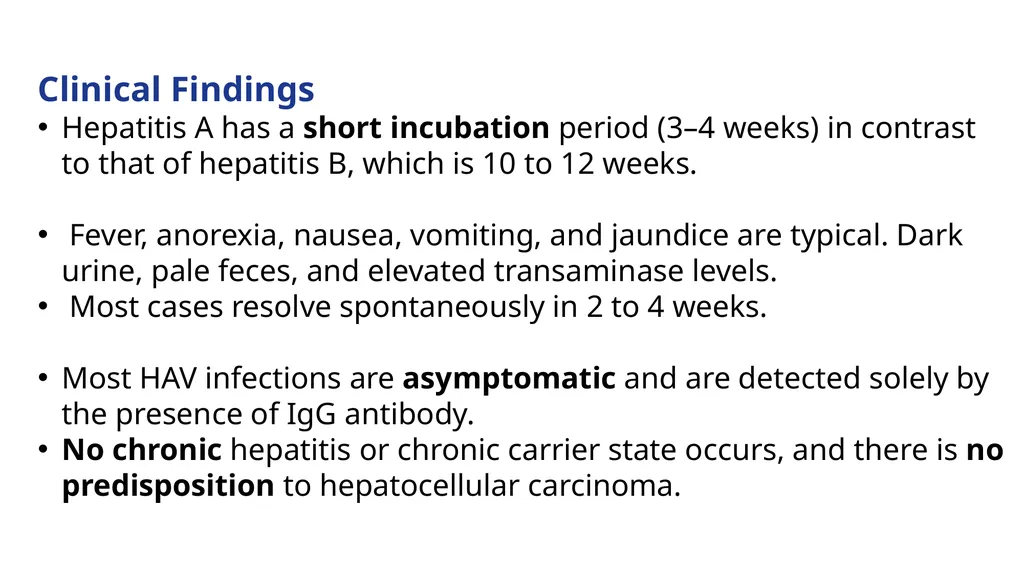
Hepatitis A has a short incubation period (3–4 weeks) in contrast to that of hepatitis B, which is 10 to 12 weeks.
Fever, anorexia, nausea, vomiting, and jaundice are typical. Dark urine, pale feces, and elevated transaminase levels.
Most cases resolve spontaneously in 2 to 4 weeks.
Most HAV infections are asymptomatic and are detected solely by the presence of IgG antibody.
No chronic hepatitis or chronic carrier state occurs, and there is no predisposition to hepatocellular carcinoma.<br>
slide9. Laboratory Diagnosis
The detection of IgM antibody is the most important test. A fourfold rise in IgG antibody titer can also be used..
Isolation of the virus in cell culture is possible but not available in the clinical laboratory.<br>
slide10. Treatment & Prevention
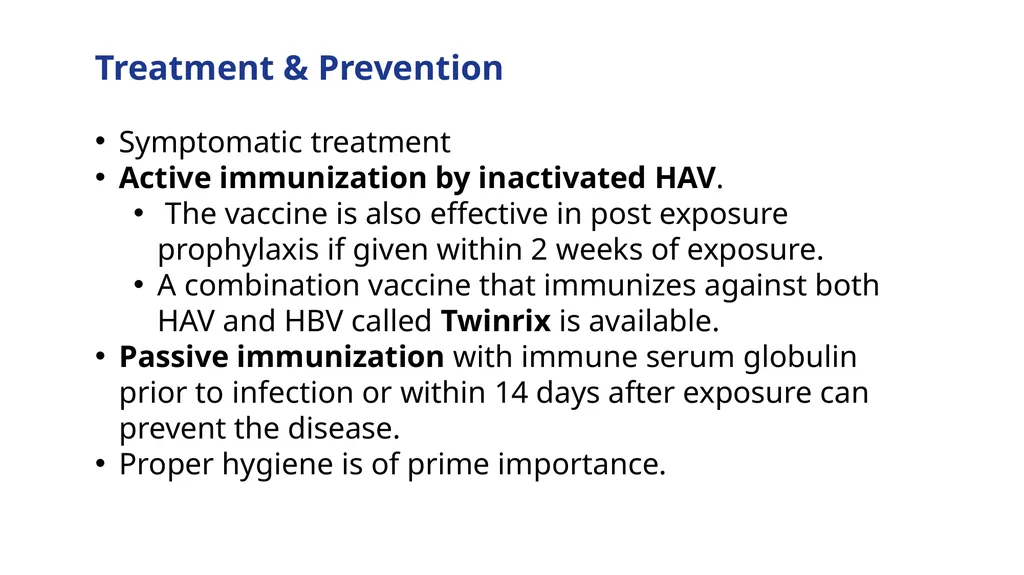
Symptomatic treatment
Active immunization by inactivated HAV.
The vaccine is also effective in post exposure prophylaxis if given within 2 weeks of exposure.
A combination vaccine that immunizes against both HAV and HBV called Twinrix is available.
Passive immunization with immune serum globulin prior to infection or within 14 days after exposure can prevent the disease.
Proper hygiene is of prime importance.<br>
slide11. HEPATITIS B VIRUS (HBV)
Serum hepatitis<br>
slide12. HEPATITIS B VIRUS (HBV)
Important Properties
HBV is a member of the hepadnavirus family.
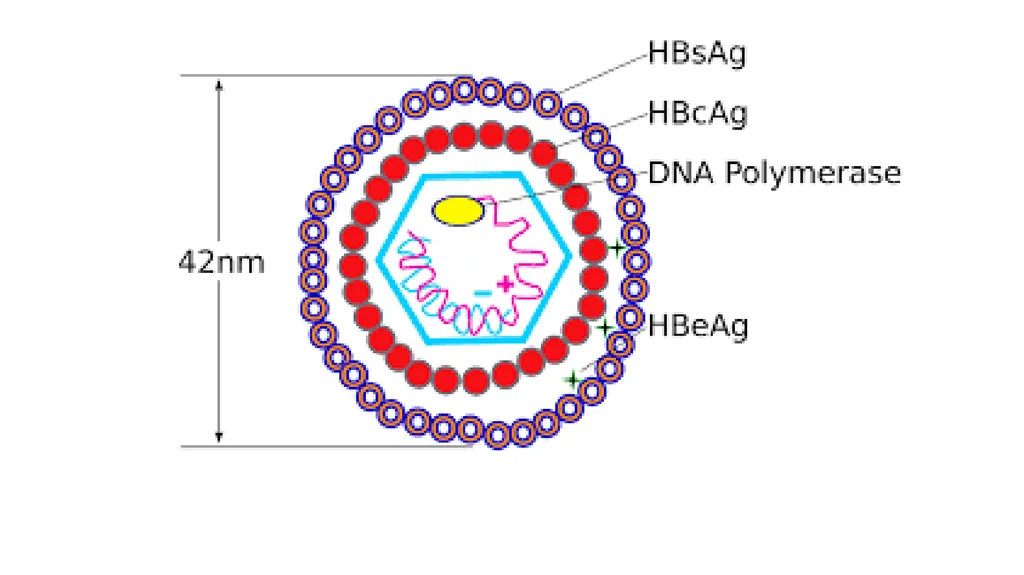
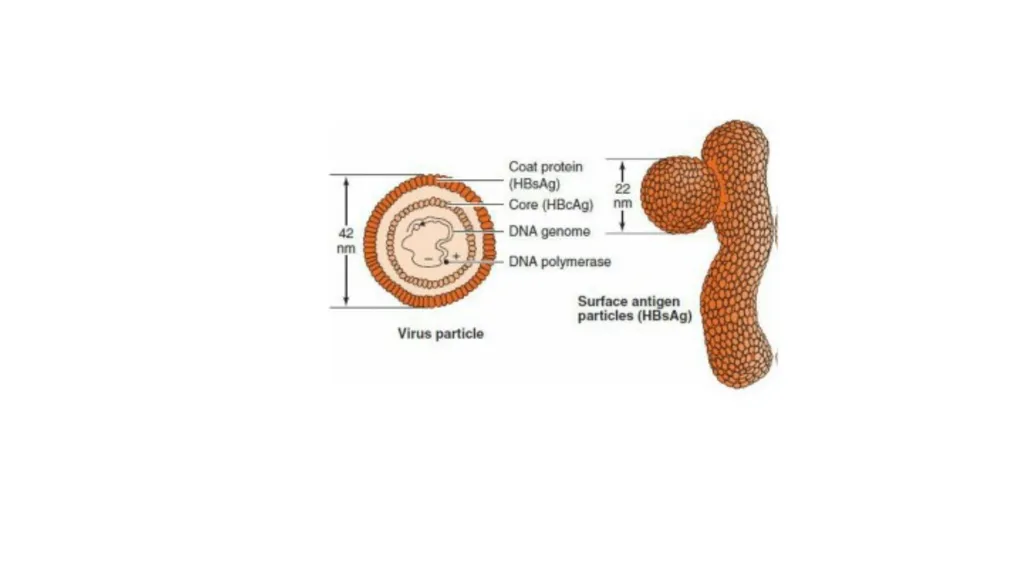
It is a 42-nm enveloped virion,
The envelope contains a protein called the surface antigen (HBsAg),
an icosahedral nucleocapsid core containing a partially double-stranded circular DNA genome
Within the core is a DNA-dependent DNA polymerase. has both RNA-dependent (reverse transcriptase) and DNA dependent activity.<br>
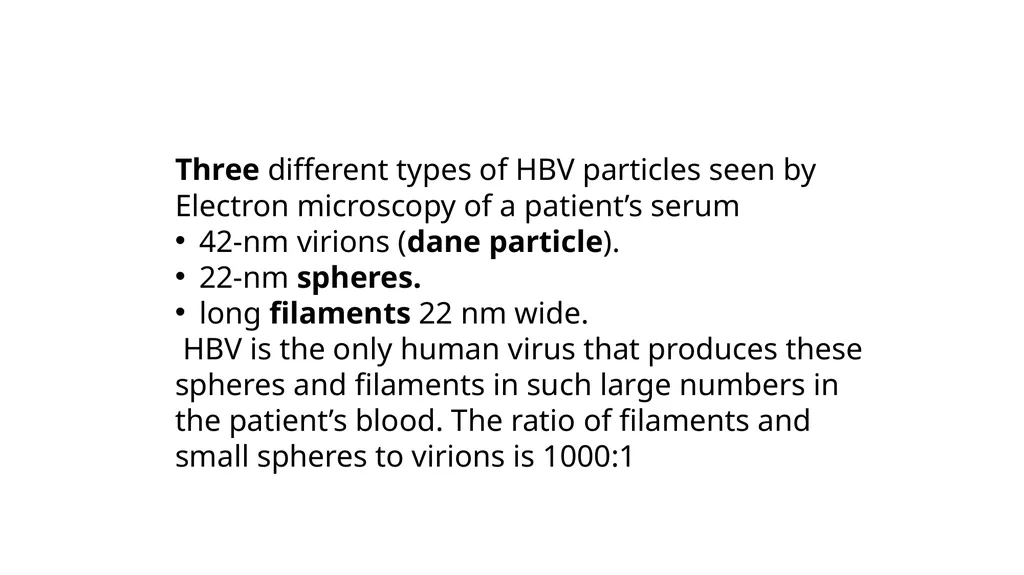
slide14. Three different types of HBV particles seen by Electron microscopy of a patient’s serum
42-nm virions (dane particle).
22-nm spheres.
long filaments 22 nm wide.
HBV is the only human virus that produces these spheres and filaments in such large numbers in the patient’s blood. The ratio of filaments and small spheres to virions is 1000:1<br>
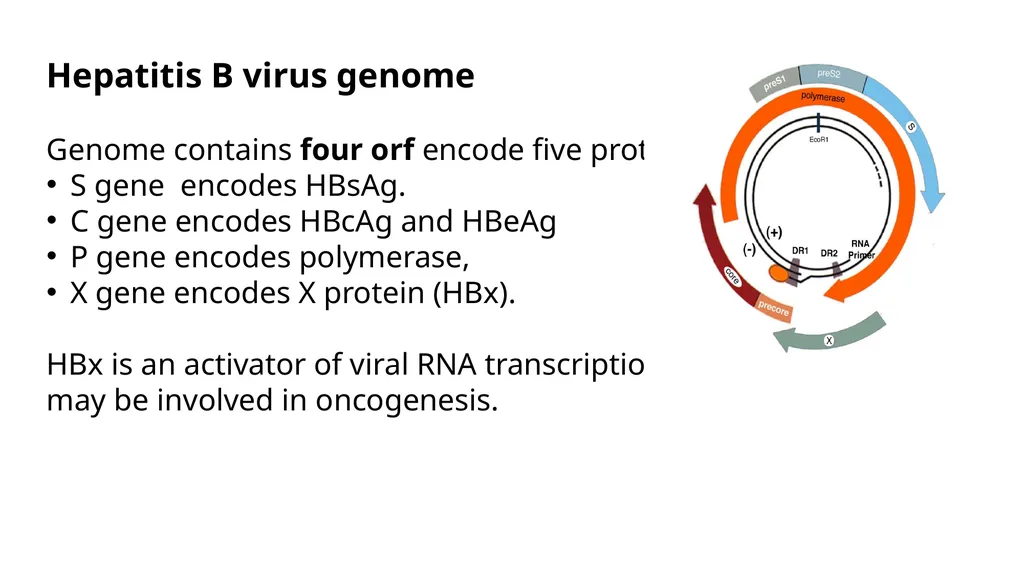
slide16. Hepatitis B virus genome
Genome contains four orf encode five proteins;
S gene encodes HBsAg.
C gene encodes HBcAg and HBeAg
P gene encodes polymerase,
X gene encodes X protein (HBx).
HBx is an activator of viral RNA transcription and may be involved in oncogenesis.<br>
slide17. HBV antigens
HBsAg
HBcAg located on the nucleocapsid
HBeAg soluble & released from infected cells into the blood and indicate transmissibility.<br>
slide18. Transmission & Epidemiology
The three main modes of transmission are:
Blood including needle stick injury.
Sexual contact.
Perinatally from mother to newborn.<br>
slide19. Pathogenesis
HBV is not directly cytopathic instead liver injury is immune mediated especially T-lymphocyte mediated cell injury
Antigen–antibody complexes cause some of the early symptoms (e.g., arthralgias, arthritis, and urticaria)
About 5% of adult patients with HBV infection become chronic carriers. Approximately 90% of infected neonates become chronic carriers.
Chronic carriage resulting from neonatal infection is associated with a high risk of hepatocellular carcinoma.<br>
slide20. Clinical Findings
Many HBV infections are asymptomatic and are detected only by the presence of antibody to HBsAg.
The mean incubation period for hepatitis B is 10 to 12 weeks,
The clinical appearance of acute hepatitis B is similar to that of hepatitis A. However, with hepatitis B,symptoms tend to be more severe, and life-threatening hepatitis can occur.
Most chronic carriers are asymptomatic, but some have chronic active hepatitis, which can lead to cirrhosis and death.<br>
slide21. Laboratory Diagnosis
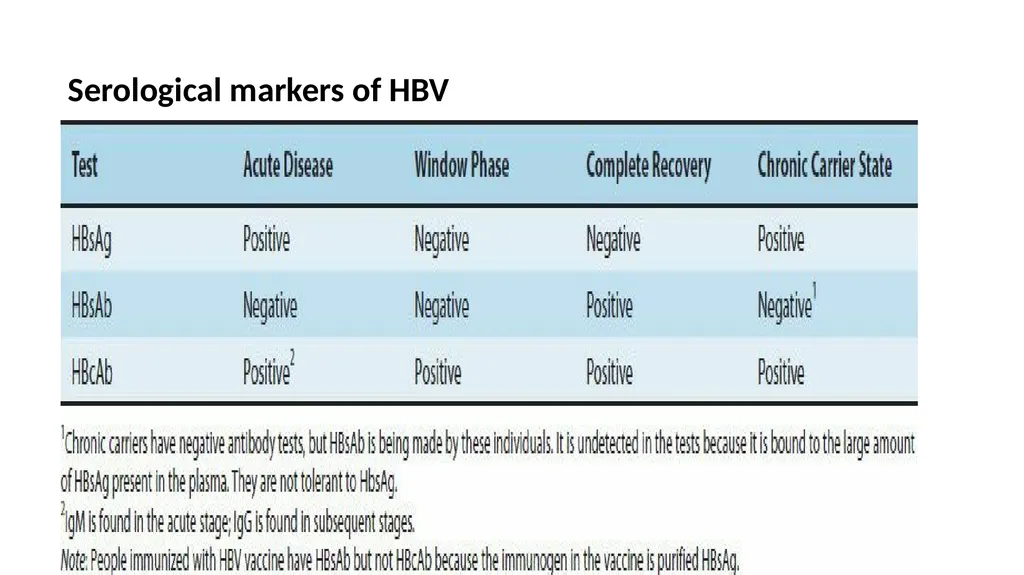
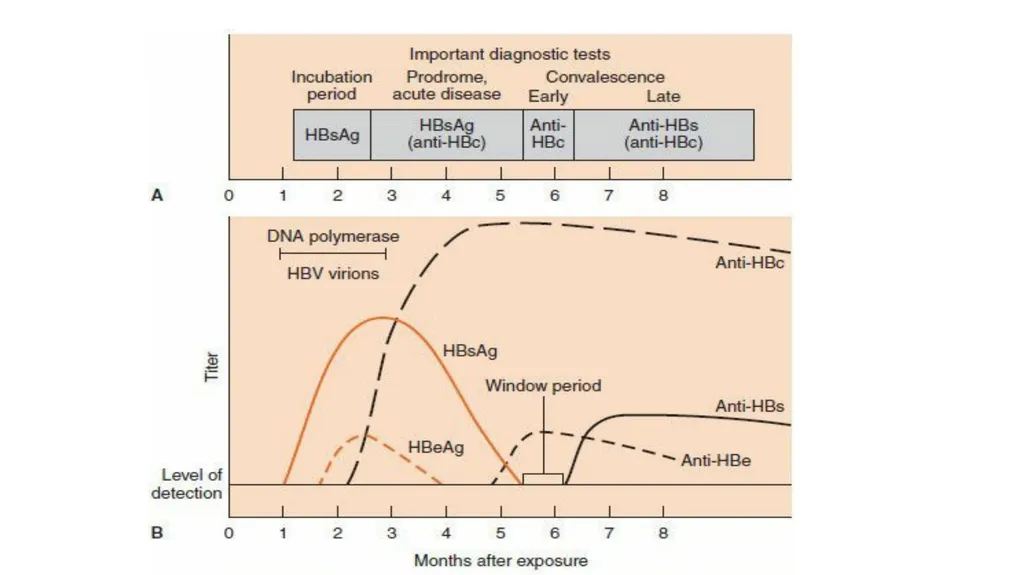
The two most important serologic tests for the diagnosis of early hepatitis B are HBsAg and for IgM antibody to the core antigen. Both appear in the serum early in the disease.
HBsAg appears during the incubation period and is detectable in most patients during the prodrome and acute disease.
It falls to undetectable levels during convalescence in most cases;
Its prolonged presence (at least 6 months) indicates the carrier state and the risk of chronic hepatitis and hepatic carcinoma.<br>
slide22. Serological markers of hepatitis(cont.)
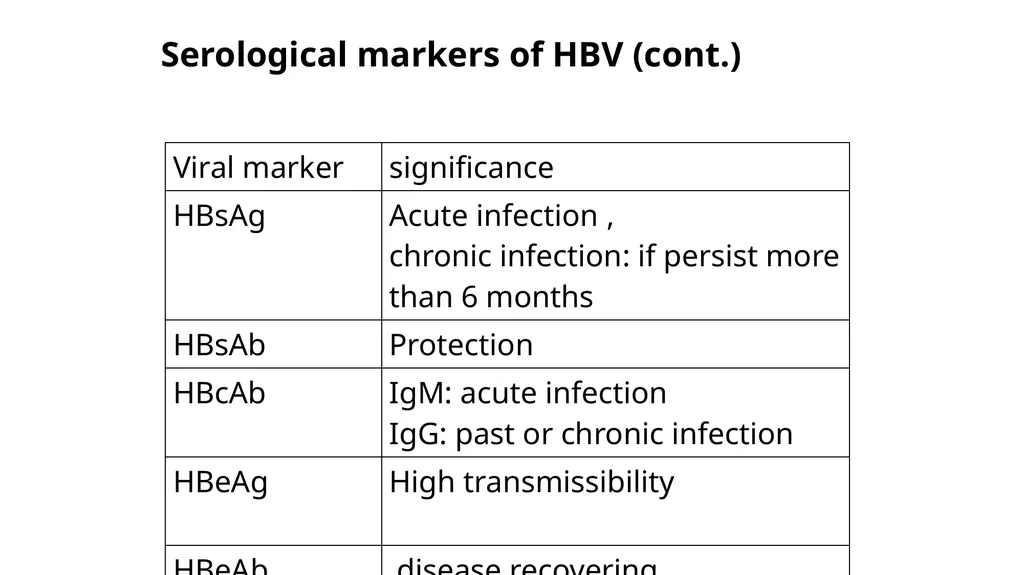
HBsAb neutralizes the infectivity of HBV and lifelong immunity occurs.
HBcAb is not protective because the core antigen is inside the virion and the antibody cannot interact with it.<br>
slide23. Serological markers of hepatitis(cont.)
The window phase a period of several weeks when HBsAg has disappeared but HBsAb is not yet detectable. At this time, the HBcAb is always positive and can be used to make the diagnosis.
HBcAb is present in those with acute infection and chronic infection, as well as in those who have recovered from acute infection. Therefore, it cannot be used to distinguish between acute and chronic infection. The IgM form of HBcAb is present during acute infection and disappears approximately 6 months after infection.<br>
slide24. Serological markers of hepatitis(cont.)
HBeAg arises during the incubation period and is present during the prodrome and early acute disease and in certain chronic carriers. Its presence indicates a high likelihood of transmissibility, and, conversely, the finding of HBeAb indicates a lower likelihood, but transmission can still occur..<br>
slide25. Serological markers of HBV (cont.)<br>
slide26. Serological markers of HBV<br>
slide28. Treatment
No antiviral therapy is typically used in acute hepatitis B.
For chronic hepatitis B
nucleoside analogues that inhibit the reverse transcriptase of HBV are used.
Interferon is also used.<br>
slide29. Prevention
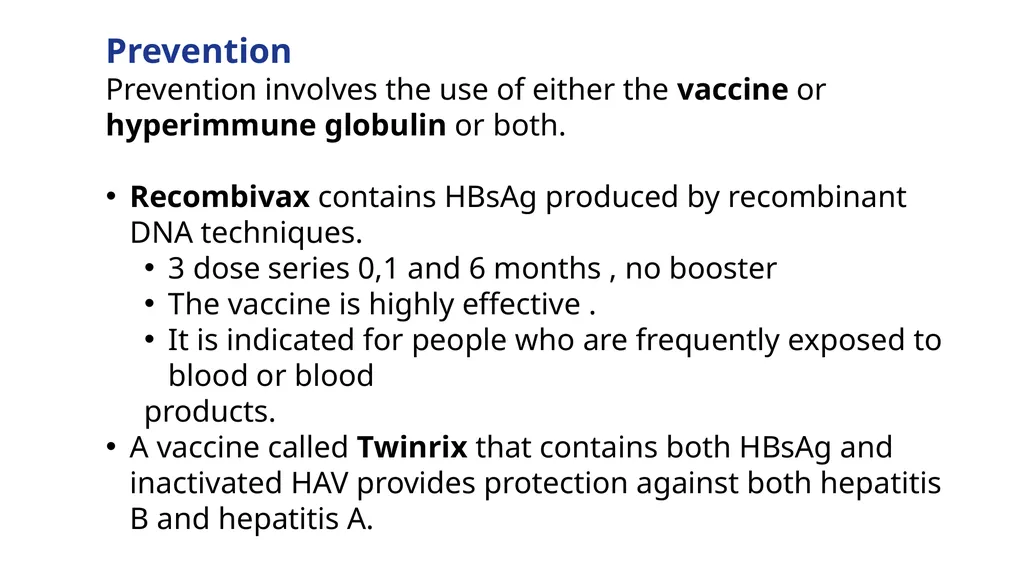
Prevention involves the use of either the vaccine or hyperimmune globulin or both.
Recombivax contains HBsAg produced by recombinant DNA techniques.
3 dose series 0,1 and 6 months , no booster
The vaccine is highly effective .
It is indicated for people who are frequently exposed to blood or blood
products.
A vaccine called Twinrix that contains both HBsAg and inactivated HAV provides protection against both hepatitis B and hepatitis A.<br>
slide30. Hepatitis B immune globulin (HBIG) contains a high titer of HBsAb.
It is used to provide immediate, passive protection to individuals known to be exposed to HBsAg-positive blood (e.g., after an accidental needle-stick injury).
Both the vaccine and HBIG should also be given to a newborn whose mother is HBsAg-positive ( passive–active) immunization, in which both immediate protection and long-term protection are provided.<br>
slide31. Thanks<br>
slide2. Learning objectives:
Identify hepatitis viruses regarding their structure , epidemiology and pathogenesis of the disease and prevention methods.
Recognize the important serological makers during various stages of Hepatitis B.<br>
slide3. Viral hepatitis
“Hepatitis viruses” the main site of infection is the liver. These are hepatitis A virus (HAV), hepatitis B virus (HBV), hepatitis C virus (HCV), hepatitis D virus (HDV, delta virus), and hepatitis E virus (HEV).
Other viruses, such as Epstein–Barr virus (the cause of infectious mononucleosis), cytomegalovirus, and yellow fever virus, infect the liver but also infect other sites in the body and therefore are not exclusively hepatitis viruses.<br>
slide4. Hepatitis viruses<br>
slide5. HEPATITIS A VIRUS (HAV)
HAV is a typical enterovirus classified in the picornavirus family.
It has a ssRNA genome
non enveloped with icosahedral nucleocapsid.
It has one serotype,<br>
slide6. Transmission & Epidemiology
HAV is transmitted by the fecal–oral route.
Humans are the reservoir for HAV.
Virus appears in the feces roughly 2 weeks before the appearance of symptoms, so quarantine of patients is ineffective.
Children are the most frequently infected.
Unlike HBV, HAV is rarely transmitted via the blood, because the level of viremia is low and chronic infection does not occur.<br>
slide7. Pathogenesis & Immunity
The virus probably replicates in the gastrointestinal tract and spreads to the liver via the blood.
Hepatocytes are infected, no cytopathic effect is seen . It is likely that attack by cytotoxic T cells causes the damage to the hepatocytes.
The infection is cleared, the damage is repaired, and no chronic infection ensues.
Hepatitis caused by the different viruses cannot be distinguished pathologically.
.<br>
slide8. Clinical Findings
Hepatitis A has a short incubation period (3–4 weeks) in contrast to that of hepatitis B, which is 10 to 12 weeks.
Fever, anorexia, nausea, vomiting, and jaundice are typical. Dark urine, pale feces, and elevated transaminase levels.
Most cases resolve spontaneously in 2 to 4 weeks.
Most HAV infections are asymptomatic and are detected solely by the presence of IgG antibody.
No chronic hepatitis or chronic carrier state occurs, and there is no predisposition to hepatocellular carcinoma.<br>
slide9. Laboratory Diagnosis
The detection of IgM antibody is the most important test. A fourfold rise in IgG antibody titer can also be used..
Isolation of the virus in cell culture is possible but not available in the clinical laboratory.<br>
slide10. Treatment & Prevention
Symptomatic treatment
Active immunization by inactivated HAV.
The vaccine is also effective in post exposure prophylaxis if given within 2 weeks of exposure.
A combination vaccine that immunizes against both HAV and HBV called Twinrix is available.
Passive immunization with immune serum globulin prior to infection or within 14 days after exposure can prevent the disease.
Proper hygiene is of prime importance.<br>
slide11. HEPATITIS B VIRUS (HBV)
Serum hepatitis<br>
slide12. HEPATITIS B VIRUS (HBV)
Important Properties
HBV is a member of the hepadnavirus family.
It is a 42-nm enveloped virion,
The envelope contains a protein called the surface antigen (HBsAg),
an icosahedral nucleocapsid core containing a partially double-stranded circular DNA genome
Within the core is a DNA-dependent DNA polymerase. has both RNA-dependent (reverse transcriptase) and DNA dependent activity.<br>
slide14. Three different types of HBV particles seen by Electron microscopy of a patient’s serum
42-nm virions (dane particle).
22-nm spheres.
long filaments 22 nm wide.
HBV is the only human virus that produces these spheres and filaments in such large numbers in the patient’s blood. The ratio of filaments and small spheres to virions is 1000:1<br>
slide16. Hepatitis B virus genome
Genome contains four orf encode five proteins;
S gene encodes HBsAg.
C gene encodes HBcAg and HBeAg
P gene encodes polymerase,
X gene encodes X protein (HBx).
HBx is an activator of viral RNA transcription and may be involved in oncogenesis.<br>
slide17. HBV antigens
HBsAg
HBcAg located on the nucleocapsid
HBeAg soluble & released from infected cells into the blood and indicate transmissibility.<br>
slide18. Transmission & Epidemiology
The three main modes of transmission are:
Blood including needle stick injury.
Sexual contact.
Perinatally from mother to newborn.<br>
slide19. Pathogenesis
HBV is not directly cytopathic instead liver injury is immune mediated especially T-lymphocyte mediated cell injury
Antigen–antibody complexes cause some of the early symptoms (e.g., arthralgias, arthritis, and urticaria)
About 5% of adult patients with HBV infection become chronic carriers. Approximately 90% of infected neonates become chronic carriers.
Chronic carriage resulting from neonatal infection is associated with a high risk of hepatocellular carcinoma.<br>
slide20. Clinical Findings
Many HBV infections are asymptomatic and are detected only by the presence of antibody to HBsAg.
The mean incubation period for hepatitis B is 10 to 12 weeks,
The clinical appearance of acute hepatitis B is similar to that of hepatitis A. However, with hepatitis B,symptoms tend to be more severe, and life-threatening hepatitis can occur.
Most chronic carriers are asymptomatic, but some have chronic active hepatitis, which can lead to cirrhosis and death.<br>
slide21. Laboratory Diagnosis
The two most important serologic tests for the diagnosis of early hepatitis B are HBsAg and for IgM antibody to the core antigen. Both appear in the serum early in the disease.
HBsAg appears during the incubation period and is detectable in most patients during the prodrome and acute disease.
It falls to undetectable levels during convalescence in most cases;
Its prolonged presence (at least 6 months) indicates the carrier state and the risk of chronic hepatitis and hepatic carcinoma.<br>
slide22. Serological markers of hepatitis(cont.)
HBsAb neutralizes the infectivity of HBV and lifelong immunity occurs.
HBcAb is not protective because the core antigen is inside the virion and the antibody cannot interact with it.<br>
slide23. Serological markers of hepatitis(cont.)
The window phase a period of several weeks when HBsAg has disappeared but HBsAb is not yet detectable. At this time, the HBcAb is always positive and can be used to make the diagnosis.
HBcAb is present in those with acute infection and chronic infection, as well as in those who have recovered from acute infection. Therefore, it cannot be used to distinguish between acute and chronic infection. The IgM form of HBcAb is present during acute infection and disappears approximately 6 months after infection.<br>
slide24. Serological markers of hepatitis(cont.)
HBeAg arises during the incubation period and is present during the prodrome and early acute disease and in certain chronic carriers. Its presence indicates a high likelihood of transmissibility, and, conversely, the finding of HBeAb indicates a lower likelihood, but transmission can still occur..<br>
slide25. Serological markers of HBV (cont.)<br>
slide26. Serological markers of HBV<br>
slide28. Treatment
No antiviral therapy is typically used in acute hepatitis B.
For chronic hepatitis B
nucleoside analogues that inhibit the reverse transcriptase of HBV are used.
Interferon is also used.<br>
slide29. Prevention
Prevention involves the use of either the vaccine or hyperimmune globulin or both.
Recombivax contains HBsAg produced by recombinant DNA techniques.
3 dose series 0,1 and 6 months , no booster
The vaccine is highly effective .
It is indicated for people who are frequently exposed to blood or blood
products.
A vaccine called Twinrix that contains both HBsAg and inactivated HAV provides protection against both hepatitis B and hepatitis A.<br>
slide30. Hepatitis B immune globulin (HBIG) contains a high titer of HBsAb.
It is used to provide immediate, passive protection to individuals known to be exposed to HBsAg-positive blood (e.g., after an accidental needle-stick injury).
Both the vaccine and HBIG should also be given to a newborn whose mother is HBsAg-positive ( passive–active) immunization, in which both immediate protection and long-term protection are provided.<br>
slide31. Thanks<br>