
HIPAA Privacy and Security Summit 2018 HIPAA
Description: HIPAA Privacy and Security Summit 2018 HIPAA Privacy Rule: Compliance Plans, Training, Internal Audits and Patient Rights Widener University Delaware Law School 1st Healthcare Compliance Wilmington, Delaware November 8, 2018 Catherine E.
Related Topics
Download Presentation
"HIPAA Privacy and Security Summit 2018 HIPAA" is the property of its rightful owner. Permission is granted to download and print the materials on this website for personal, non-commercial use only, and to display it on your personal computer provided you do not modify the materials and that you retain all copyright notices contained in the materials. By downloading content from our website, you accept the terms of this agreement.
Presentation Transcript
slide1. HIPAA Privacy and Security Summit 2018
HIPAA Privacy Rule: Compliance Plans, Training, Internal Audits and Patient Rights Widener University Delaware Law School
1st Healthcare Compliance
Wilmington, Delaware
November 8, 2018
Catherine E. Walters, Esquire Ann Waldo, JD, CIPP
Bybel Rutledge LLP Waldo Law Offices, PLLC
Lemoyne, PA Washington, D.C.
George W. Bodenger, Esquire
Law Offices of George W. Bodenger LLC
Radnor, PA<br>
slide2. Today’s Agenda More on the HIPAA Privacy Rule and compliance
Compliance strategies
Compliance programs
Employee training and education
Self audits
Patient and provider rights
Panel discussion and questions 2<br>
slide3. Compliance Strategies Goals
Comply with HIPAA privacy standards
Protect patient privacy
Minimize costs of protecting privacy and compliance
Considerations
Organization size
Treatment relationship
Organizational structure 3<br>
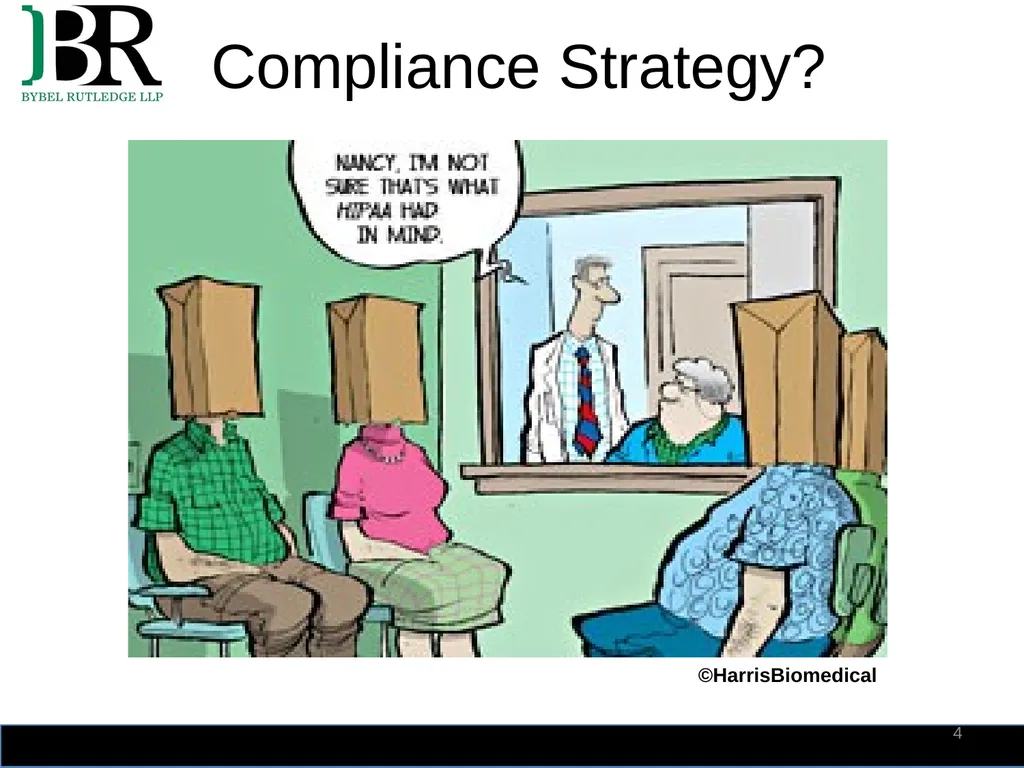
slide4. Compliance Strategy? ©HarrisBiomedical 4<br>
slide5. Compliance Programs The 7 elements of a compliance program:
Standards and procedures
Oversight by appropriate official
Education and training
Auditing and monitoring
Open lines of communication
Enforcement and discipline
Response and prevention 5<br>
slide6. Compliance Programs HIPAA privacy standards and protocols require coverage of broad territory, for example:
Privacy policies and procedures
Notice and authorization forms
“Minimum Necessary” standard
Business associate contracts
Access to and amendment of PHI
Complaint procedures
Documentation procedures and systems
Privacy training
Privacy auditing and monitoring 6<br>
slide7. Policies and Procedures Privacy and Security policies and procedures
HIPAA handbooks for office staff and for clinical staff that explain:
The privacy and security standards
How to protect privacy, confidentiality and security of PHI, including working with patients, patient information, use of health information, safeguarding PHI and following protocols
How to report suspected privacy and security incidents
Consequences of noncompliance 7<br>
slide8. Privacy Policies & Procedures Privacy official designation
Staff responsibilities
Training and education
Reporting of suspected violations
Investigation of potential staff violations
Sanctions and penalties
Business associates
Development and maintenance of policies and procedures
Documentation and record keeping 8<br>
slide9. Privacy Policies & Procedures PHI use and disclosure for numerous different purposes
Communications and media relations
Notice of privacy practices
Authorization of use or disclosure
Patient requests to restrict uses/disclosures
Personal representatives
Parental access to PHI of children
Disclosure of PHI to family members 9<br>
slide10. Privacy Policies & Procedures Patient access to PHI
Amendment of health information
Accounting to patients for disclosures
Complaints
Complaint resolution procedures
Mitigation
Nonretaliation and protection for whistleblowers 10<br>
slide11. Security Policies & Procedures Assigning security responsibility
Security management process
Risk analysis
Risk management
Sanction policy
Information system activity review
Workforce security:
Authorization/supervision
Workforce clearance
Termination procedures 11<br>
slide12. Security Policies & Procedures Information access management:
Access authorization
Access establishment and modification
Security awareness and training
Security reminders
Protection from malicious software
Log-in monitoring
Password management
Security incident procedures 12<br>
slide13. Security Policies & Procedures Contingency planning
Business associate contracts
Facility access controls
Workstation security
Device and media controls
Access, audit and integrity controls
Person or entity authentication
Transmission security 13<br>
slide14. Compliance Training HIPAA includes multiple different workforce training requirements
Privacy (45 CFR §164.530(b))
Security (45 CFR §164.308(a)(5))
Training of all staff is required
Office staff
Clinical staff
State laws may also apply – if more stringent than HIPAA, state law controls 14<br>
slide15. Privacy Training Policies and procedures
Employee handbooks
Privacy training
Increase awareness of privacy issues
Educate on specific privacy requirements
Educate on policies and procedures adopted to meet HIPAA requirements
Examine day-to-day activities and review impact on how people do their jobs 15<br>
slide16. Privacy Training Interaction with patients during office visits and subsequent uses of the patient’s information:
Collection of PHI
Use and disclosure of PHI
Claims and bookkeeping
Accounting for disclosures
Patient right to review information
Patient right to correct information 16<br>
slide17. Privacy Training Using and sharing information
Use and disclosure without authorization
Sharing information with family/friends involved in patient’s care
Incidental disclosures
Notice of privacy practices
Purpose and content of notice
Procedures for documenting that notice has been provided to patients 17<br>
slide18. Privacy Training Authorization
When authorization is required
Content of authorization
Procedures to obtain authorization
Accounting for disclosures
Records of accountings
Procedures for requesting accountings
Content of accountings 18<br>
slide19. Privacy Training Patient access to information
Procedures for patients to obtain PHI
Procedures to request changes or corrections
Privacy training should be refreshed on a regular basis – some states require annual training
New employees and employees who change jobs should receive training
When policies and procedures change, training should be provided to affected employees 19<br>
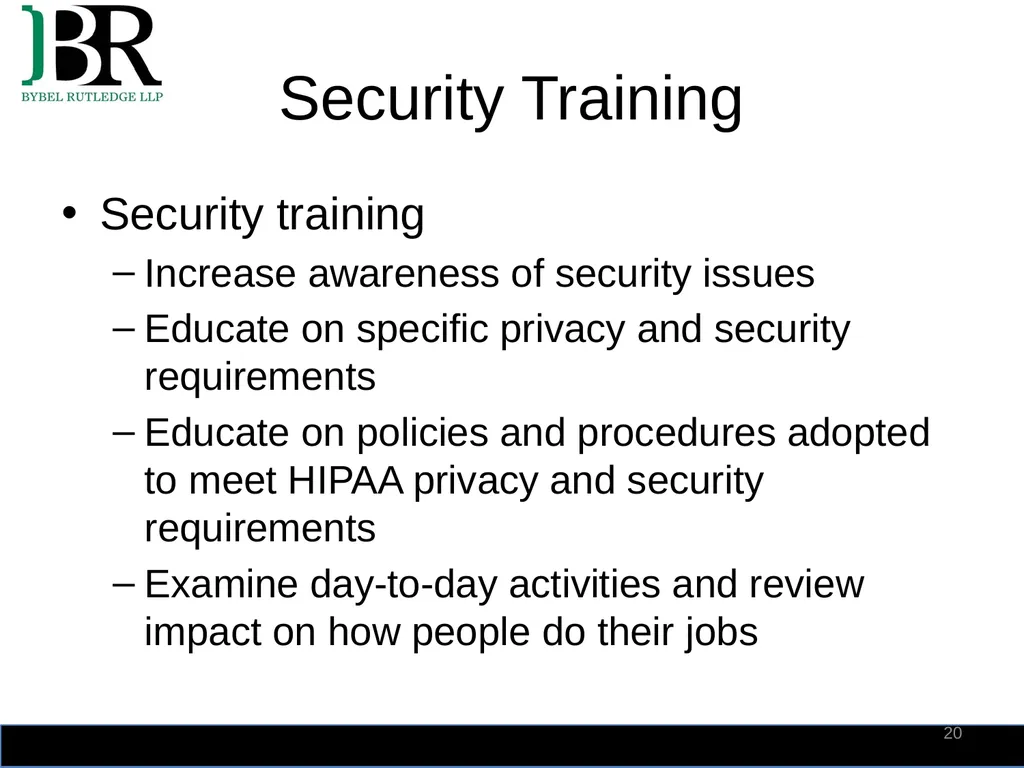
slide20. Security Training Security training
Increase awareness of security issues
Educate on specific privacy and security requirements
Educate on policies and procedures adopted to meet HIPAA privacy and security requirements
Examine day-to-day activities and review impact on how people do their jobs 20<br>
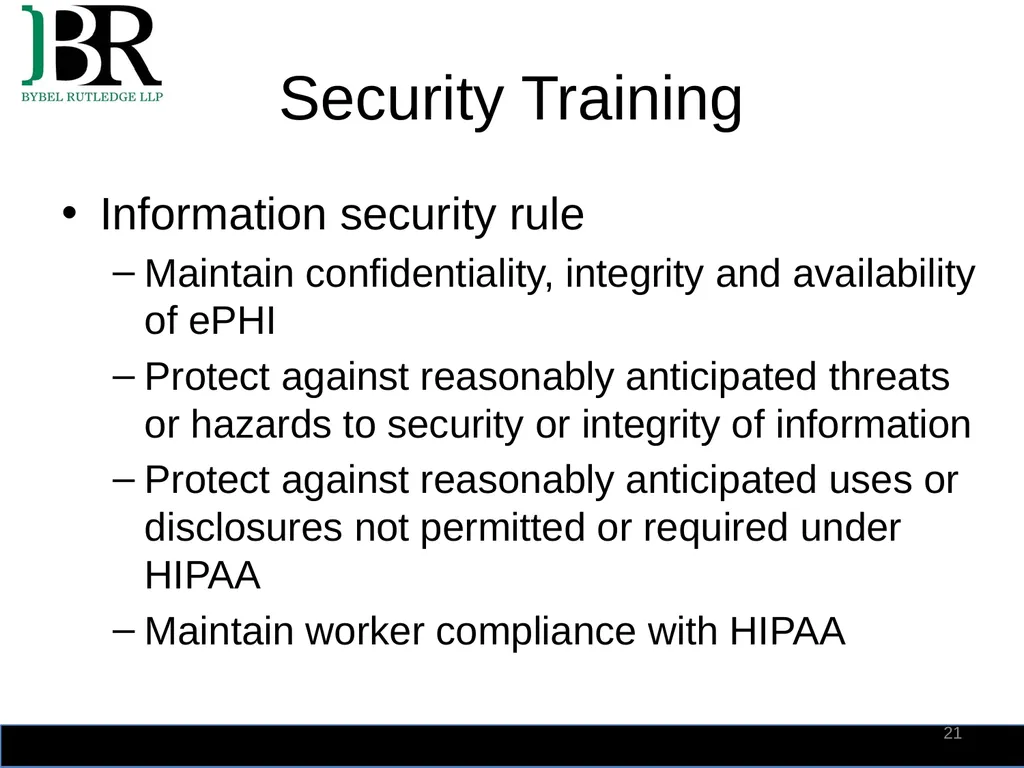
slide21. Security Training Information security rule
Maintain confidentiality, integrity and availability of ePHI
Protect against reasonably anticipated threats or hazards to security or integrity of information
Protect against reasonably anticipated uses or disclosures not permitted or required under HIPAA
Maintain worker compliance with HIPAA 21<br>
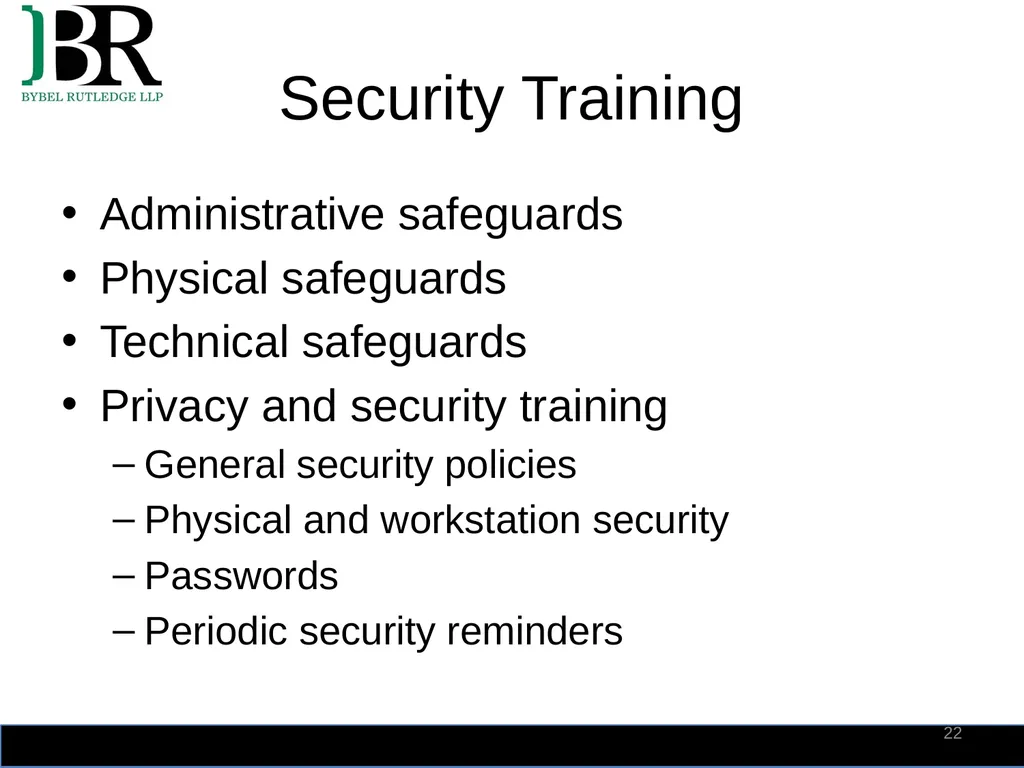
slide22. Security Training Administrative safeguards
Physical safeguards
Technical safeguards
Privacy and security training
General security policies
Physical and workstation security
Passwords
Periodic security reminders 22<br>
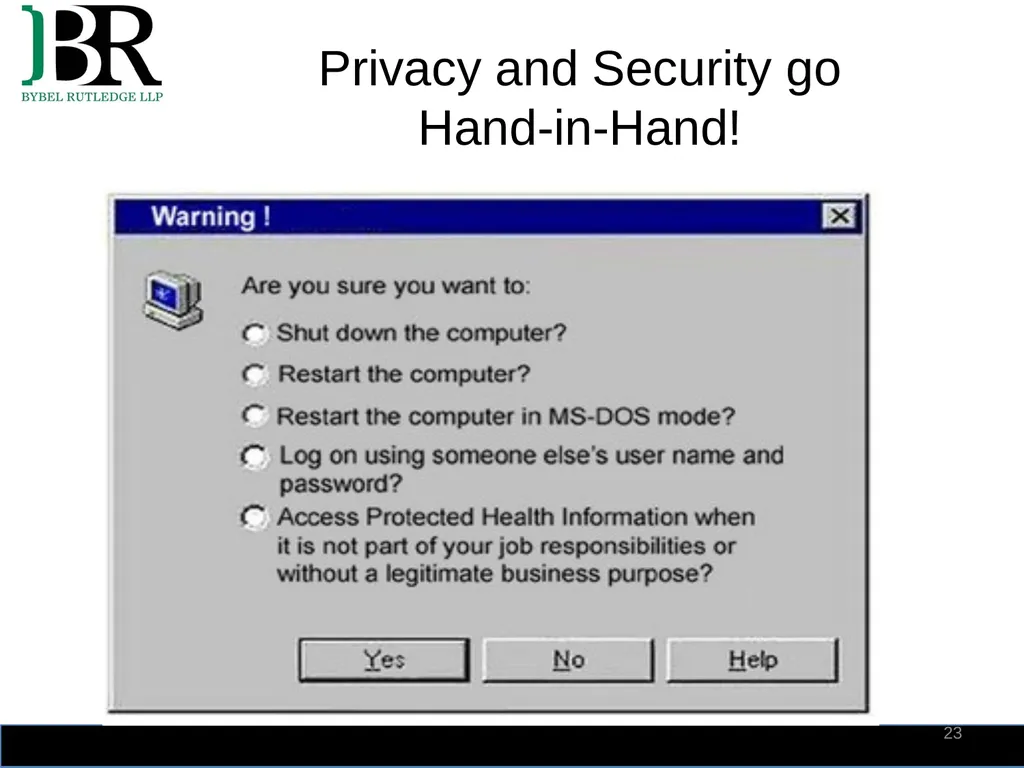
slide23. Privacy and Security go Hand-in-Hand! 23<br>
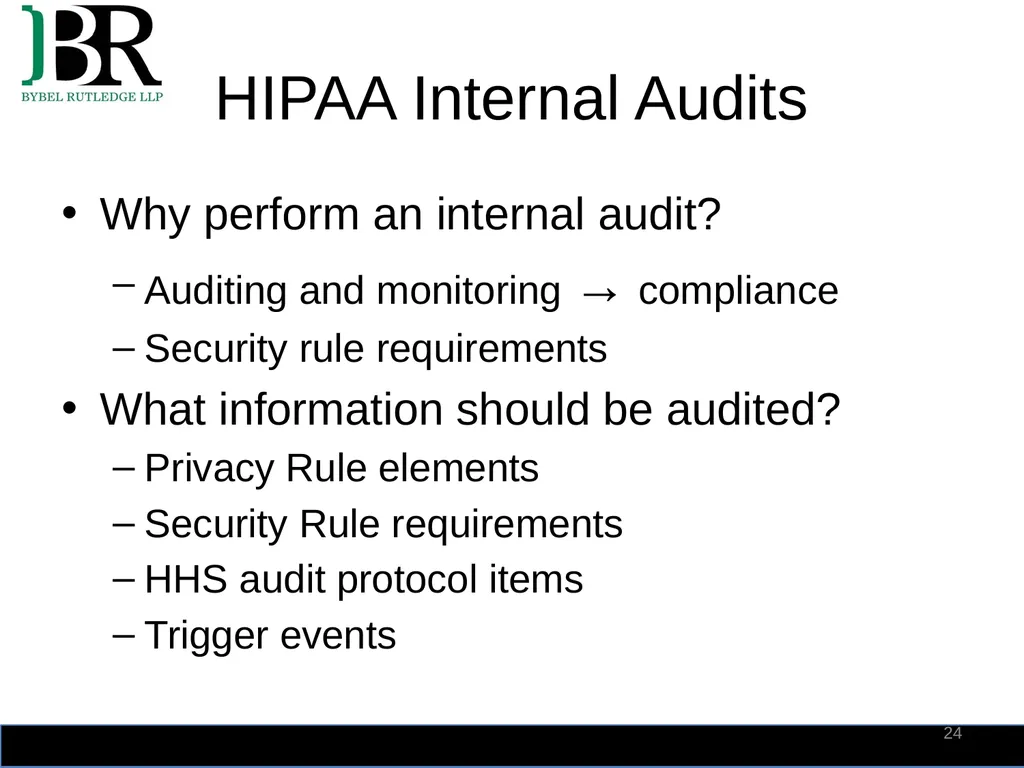
slide24. HIPAA Internal Audits Why perform an internal audit?
Auditing and monitoring → compliance
Security rule requirements
What information should be audited?
Privacy Rule elements
Security Rule requirements
HHS audit protocol items
Trigger events 24<br>
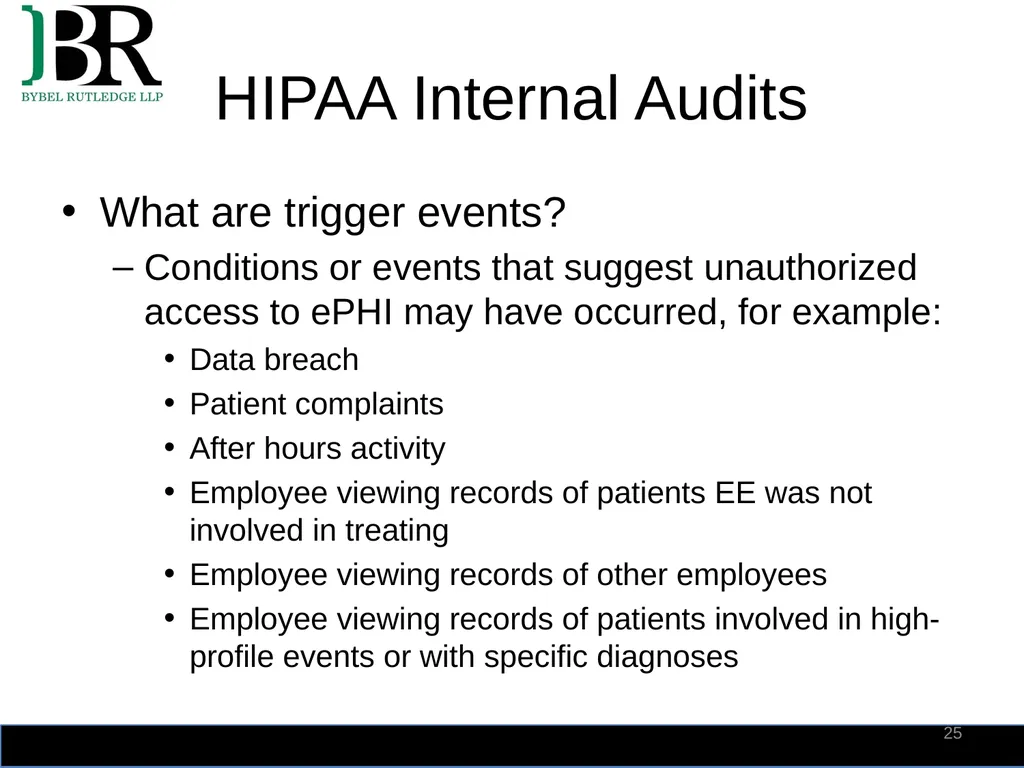
slide25. HIPAA Internal Audits What are trigger events?
Conditions or events that suggest unauthorized access to ePHI may have occurred, for example:
Data breach
Patient complaints
After hours activity
Employee viewing records of patients EE was not involved in treating
Employee viewing records of other employees
Employee viewing records of patients involved in high-profile events or with specific diagnoses 25<br>
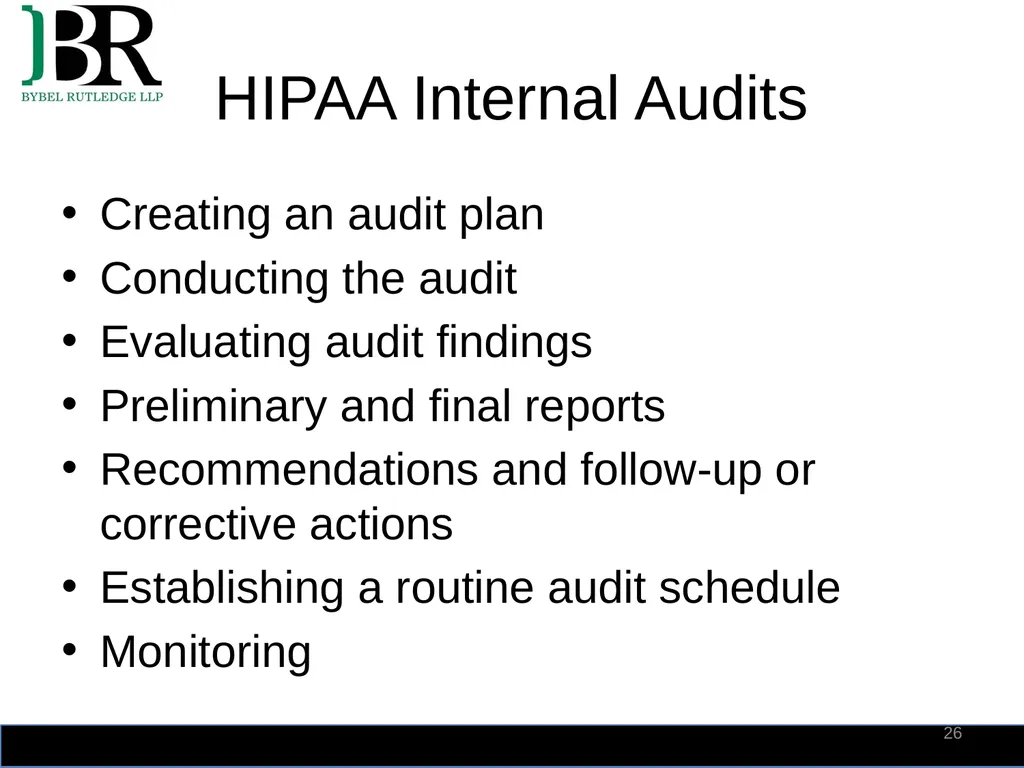
slide26. HIPAA Internal Audits Creating an audit plan
Conducting the audit
Evaluating audit findings
Preliminary and final reports
Recommendations and follow-up or corrective actions
Establishing a routine audit schedule
Monitoring 26<br>
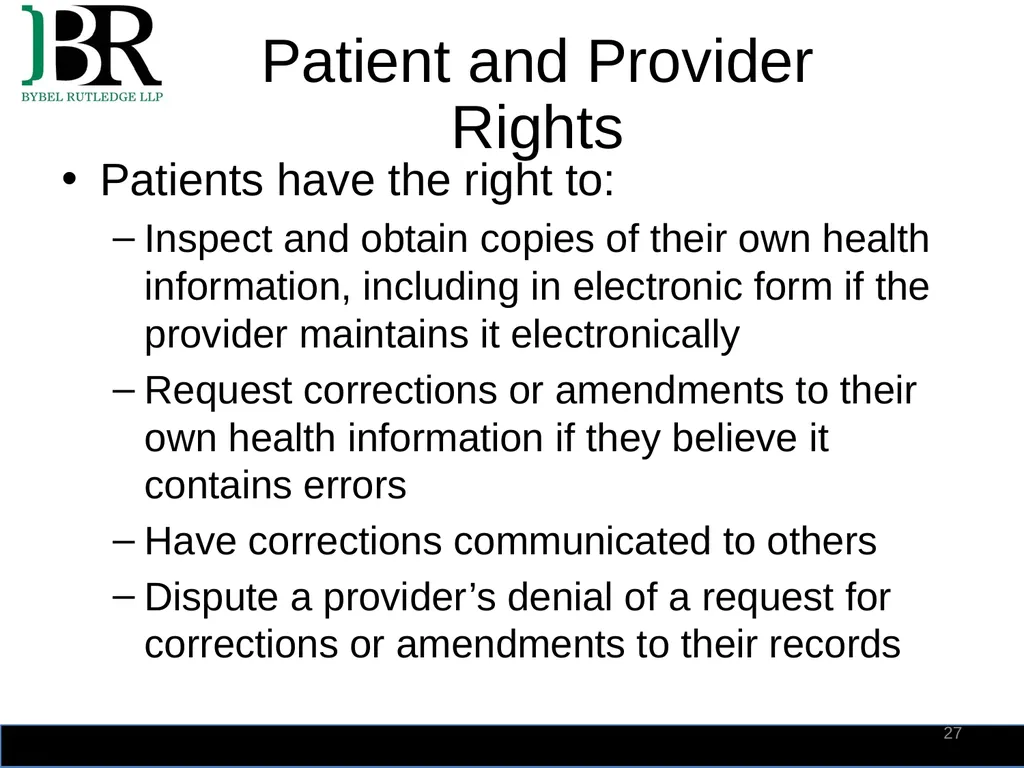
slide27. Patient and Provider Rights Patients have the right to:
Inspect and obtain copies of their own health information, including in electronic form if the provider maintains it electronically
Request corrections or amendments to their own health information if they believe it contains errors
Have corrections communicated to others
Dispute a provider’s denial of a request for corrections or amendments to their records 27<br>
slide28. Patient and Provider Rights Providers have the right to:
Deny access to certain types of information
Charge reasonable fees for copies, including copies provided in electronic format
Deny requests for correction or amendments within specific parameters
Must provide written notice to patient with reasons for denial and procedures for disputing the denial
Provider must maintain records of all such correspondence 28<br>
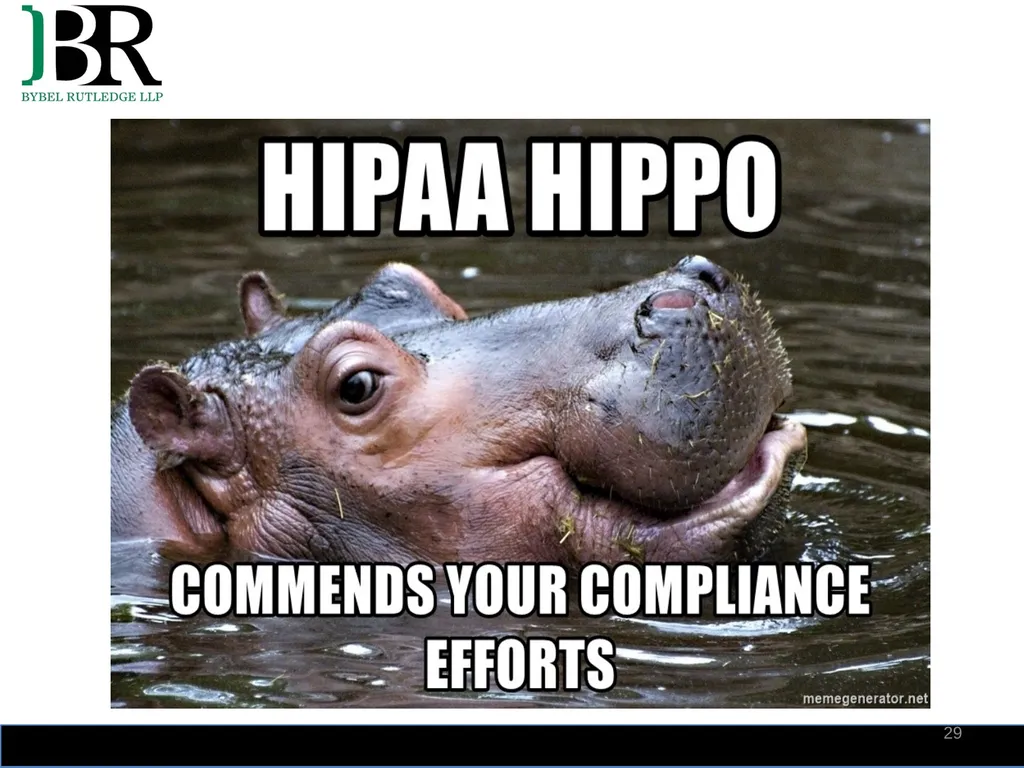
slide29. 29<br>
slide30. Panel Discussion Identifying trigger events
Real life scenarios (truth is stranger than fiction!)
Implementing change and getting it right
Questions and answers 30<br>
1st Healthcare Compliance
Wilmington, Delaware
November 8, 2018
Catherine E. Walters, Esquire Ann Waldo, JD, CIPP
Bybel Rutledge LLP Waldo Law Offices, PLLC
Lemoyne, PA Washington, D.C.
George W. Bodenger, Esquire
Law Offices of George W. Bodenger LLC
Radnor, PA<br>
slide2. Today’s Agenda More on the HIPAA Privacy Rule and compliance
Compliance strategies
Compliance programs
Employee training and education
Self audits
Patient and provider rights
Panel discussion and questions 2<br>
slide3. Compliance Strategies Goals
Comply with HIPAA privacy standards
Protect patient privacy
Minimize costs of protecting privacy and compliance
Considerations
Organization size
Treatment relationship
Organizational structure 3<br>
slide4. Compliance Strategy? ©HarrisBiomedical 4<br>
slide5. Compliance Programs The 7 elements of a compliance program:
Standards and procedures
Oversight by appropriate official
Education and training
Auditing and monitoring
Open lines of communication
Enforcement and discipline
Response and prevention 5<br>
slide6. Compliance Programs HIPAA privacy standards and protocols require coverage of broad territory, for example:
Privacy policies and procedures
Notice and authorization forms
“Minimum Necessary” standard
Business associate contracts
Access to and amendment of PHI
Complaint procedures
Documentation procedures and systems
Privacy training
Privacy auditing and monitoring 6<br>
slide7. Policies and Procedures Privacy and Security policies and procedures
HIPAA handbooks for office staff and for clinical staff that explain:
The privacy and security standards
How to protect privacy, confidentiality and security of PHI, including working with patients, patient information, use of health information, safeguarding PHI and following protocols
How to report suspected privacy and security incidents
Consequences of noncompliance 7<br>
slide8. Privacy Policies & Procedures Privacy official designation
Staff responsibilities
Training and education
Reporting of suspected violations
Investigation of potential staff violations
Sanctions and penalties
Business associates
Development and maintenance of policies and procedures
Documentation and record keeping 8<br>
slide9. Privacy Policies & Procedures PHI use and disclosure for numerous different purposes
Communications and media relations
Notice of privacy practices
Authorization of use or disclosure
Patient requests to restrict uses/disclosures
Personal representatives
Parental access to PHI of children
Disclosure of PHI to family members 9<br>
slide10. Privacy Policies & Procedures Patient access to PHI
Amendment of health information
Accounting to patients for disclosures
Complaints
Complaint resolution procedures
Mitigation
Nonretaliation and protection for whistleblowers 10<br>
slide11. Security Policies & Procedures Assigning security responsibility
Security management process
Risk analysis
Risk management
Sanction policy
Information system activity review
Workforce security:
Authorization/supervision
Workforce clearance
Termination procedures 11<br>
slide12. Security Policies & Procedures Information access management:
Access authorization
Access establishment and modification
Security awareness and training
Security reminders
Protection from malicious software
Log-in monitoring
Password management
Security incident procedures 12<br>
slide13. Security Policies & Procedures Contingency planning
Business associate contracts
Facility access controls
Workstation security
Device and media controls
Access, audit and integrity controls
Person or entity authentication
Transmission security 13<br>
slide14. Compliance Training HIPAA includes multiple different workforce training requirements
Privacy (45 CFR §164.530(b))
Security (45 CFR §164.308(a)(5))
Training of all staff is required
Office staff
Clinical staff
State laws may also apply – if more stringent than HIPAA, state law controls 14<br>
slide15. Privacy Training Policies and procedures
Employee handbooks
Privacy training
Increase awareness of privacy issues
Educate on specific privacy requirements
Educate on policies and procedures adopted to meet HIPAA requirements
Examine day-to-day activities and review impact on how people do their jobs 15<br>
slide16. Privacy Training Interaction with patients during office visits and subsequent uses of the patient’s information:
Collection of PHI
Use and disclosure of PHI
Claims and bookkeeping
Accounting for disclosures
Patient right to review information
Patient right to correct information 16<br>
slide17. Privacy Training Using and sharing information
Use and disclosure without authorization
Sharing information with family/friends involved in patient’s care
Incidental disclosures
Notice of privacy practices
Purpose and content of notice
Procedures for documenting that notice has been provided to patients 17<br>
slide18. Privacy Training Authorization
When authorization is required
Content of authorization
Procedures to obtain authorization
Accounting for disclosures
Records of accountings
Procedures for requesting accountings
Content of accountings 18<br>
slide19. Privacy Training Patient access to information
Procedures for patients to obtain PHI
Procedures to request changes or corrections
Privacy training should be refreshed on a regular basis – some states require annual training
New employees and employees who change jobs should receive training
When policies and procedures change, training should be provided to affected employees 19<br>
slide20. Security Training Security training
Increase awareness of security issues
Educate on specific privacy and security requirements
Educate on policies and procedures adopted to meet HIPAA privacy and security requirements
Examine day-to-day activities and review impact on how people do their jobs 20<br>
slide21. Security Training Information security rule
Maintain confidentiality, integrity and availability of ePHI
Protect against reasonably anticipated threats or hazards to security or integrity of information
Protect against reasonably anticipated uses or disclosures not permitted or required under HIPAA
Maintain worker compliance with HIPAA 21<br>
slide22. Security Training Administrative safeguards
Physical safeguards
Technical safeguards
Privacy and security training
General security policies
Physical and workstation security
Passwords
Periodic security reminders 22<br>
slide23. Privacy and Security go Hand-in-Hand! 23<br>
slide24. HIPAA Internal Audits Why perform an internal audit?
Auditing and monitoring → compliance
Security rule requirements
What information should be audited?
Privacy Rule elements
Security Rule requirements
HHS audit protocol items
Trigger events 24<br>
slide25. HIPAA Internal Audits What are trigger events?
Conditions or events that suggest unauthorized access to ePHI may have occurred, for example:
Data breach
Patient complaints
After hours activity
Employee viewing records of patients EE was not involved in treating
Employee viewing records of other employees
Employee viewing records of patients involved in high-profile events or with specific diagnoses 25<br>
slide26. HIPAA Internal Audits Creating an audit plan
Conducting the audit
Evaluating audit findings
Preliminary and final reports
Recommendations and follow-up or corrective actions
Establishing a routine audit schedule
Monitoring 26<br>
slide27. Patient and Provider Rights Patients have the right to:
Inspect and obtain copies of their own health information, including in electronic form if the provider maintains it electronically
Request corrections or amendments to their own health information if they believe it contains errors
Have corrections communicated to others
Dispute a provider’s denial of a request for corrections or amendments to their records 27<br>
slide28. Patient and Provider Rights Providers have the right to:
Deny access to certain types of information
Charge reasonable fees for copies, including copies provided in electronic format
Deny requests for correction or amendments within specific parameters
Must provide written notice to patient with reasons for denial and procedures for disputing the denial
Provider must maintain records of all such correspondence 28<br>
slide29. 29<br>
slide30. Panel Discussion Identifying trigger events
Real life scenarios (truth is stranger than fiction!)
Implementing change and getting it right
Questions and answers 30<br>