How can we adapt our teaching practices and training programmes for an increasing number of international trainee physics teachers? Dan Cottle University of Birmingham d.cottlebham.ac.uk Rob Campbell St Marys University
Related Topics
Download this presentation From Below
"How can we adapt our teaching practices and" is the property of its rightful owner. Permission is granted to
download and print the materials on this website for personal, non-commercial use only, and to display it
on your personal computer provided you do not modify the materials and that you retain all copyright
notices contained in the materials. By downloading content from our website, you accept the terms of this
agreement.
Share
Embed code
Presentation Transcript
01
How can we adapt our teaching practices and training programmes for an increasing number of international trainee physics teachers? Dan Cottle
University of Birmingham
d.cottle@bham.ac.uk Rob Campbell
St Mary’s University
robert.campbell@stmarys.ac.uk<br>
02
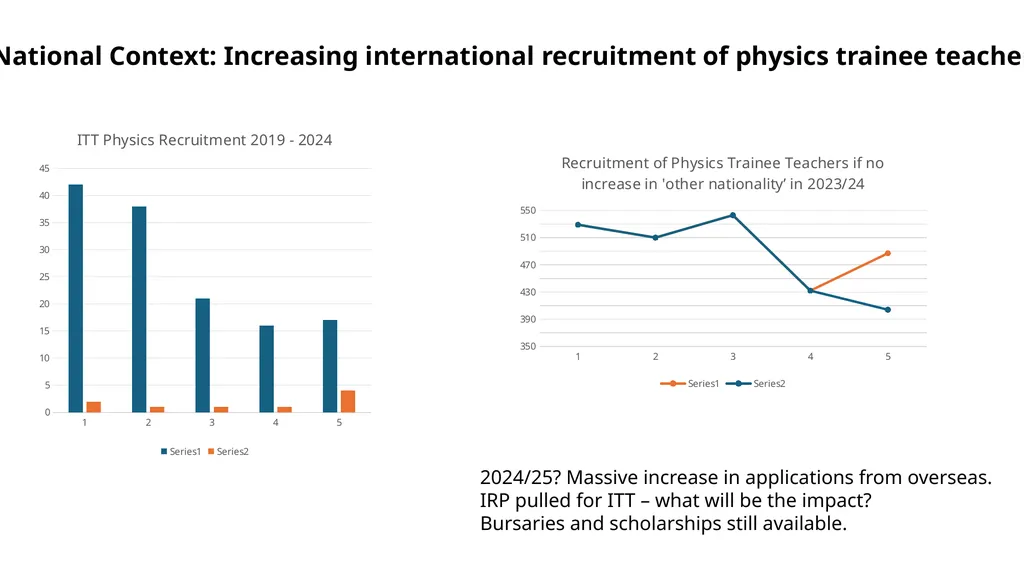
National Context: Increasing international recruitment of physics trainee teachers 2024/25? Massive increase in applications from overseas.
IRP pulled for ITT – what will be the impact?
Bursaries and scholarships still available.<br>
03
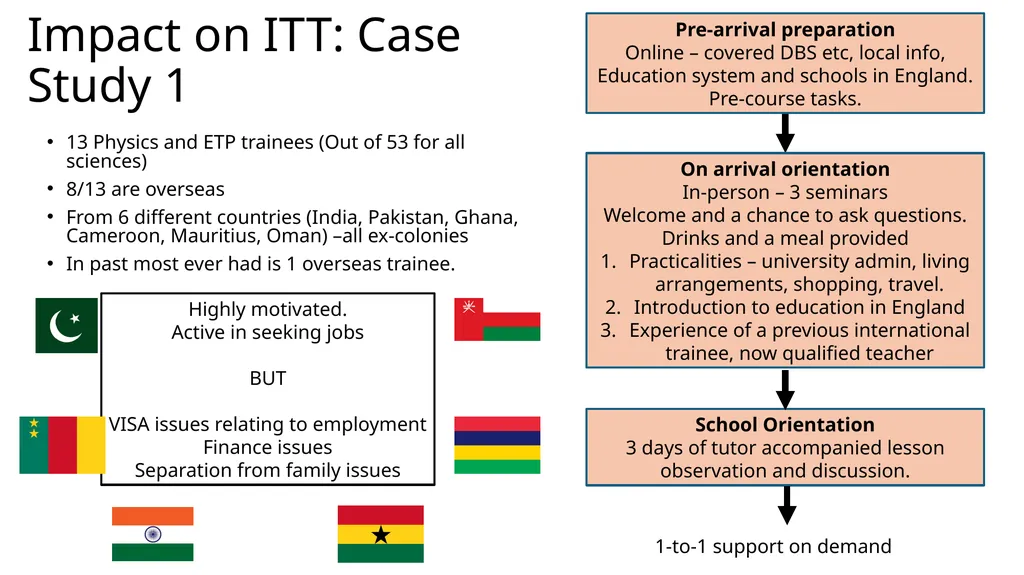
Impact on ITT: Case Study 1 13 Physics and ETP trainees (Out of 53 for all sciences)
8/13 are overseas
From 6 different countries (India, Pakistan, Ghana, Cameroon, Mauritius, Oman) –all ex-colonies
In past most ever had is 1 overseas trainee. School Orientation
3 days of tutor accompanied lesson observation and discussion. 1-to-1 support on demand Highly motivated.
Active in seeking jobs
BUT
VISA issues relating to employment
Finance issues
Separation from family issues Pre-arrival preparation
Online – covered DBS etc, local info, Education system and schools in England. Pre-course tasks. On arrival orientation
In-person – 3 seminars
Welcome and a chance to ask questions. Drinks and a meal provided
Practicalities – university admin, living arrangements, shopping, travel.
Introduction to education in England
Experience of a previous international trainee, now qualified teacher<br>
04
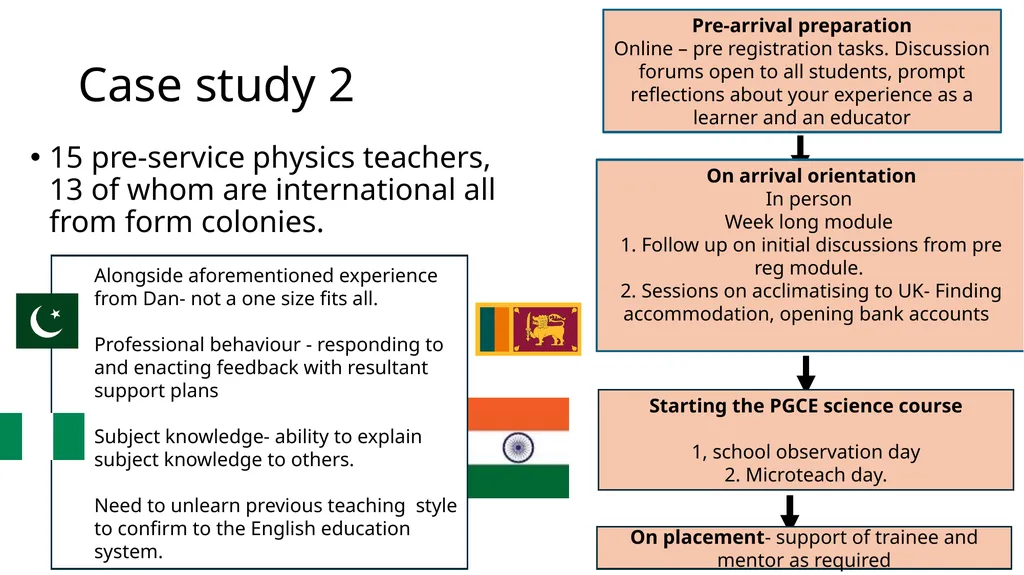
Case study 2 15 pre-service physics teachers, 13 of whom are international all from form colonies. Alongside aforementioned experience from Dan- not a one size fits all.
Professional behaviour - responding to and enacting feedback with resultant support plans
Subject knowledge- ability to explain subject knowledge to others.
Need to unlearn previous teaching style to confirm to the English education system. Pre-arrival preparation
Online – pre registration tasks. Discussion forums open to all students, prompt reflections about your experience as a learner and an educator On arrival orientation
In person
Week long module
1. Follow up on initial discussions from pre reg module.
2. Sessions on acclimatising to UK- Finding accommodation, opening bank accounts Starting the PGCE science course
1, school observation day
2. Microteach day. On placement- support of trainee and mentor as required<br>
05
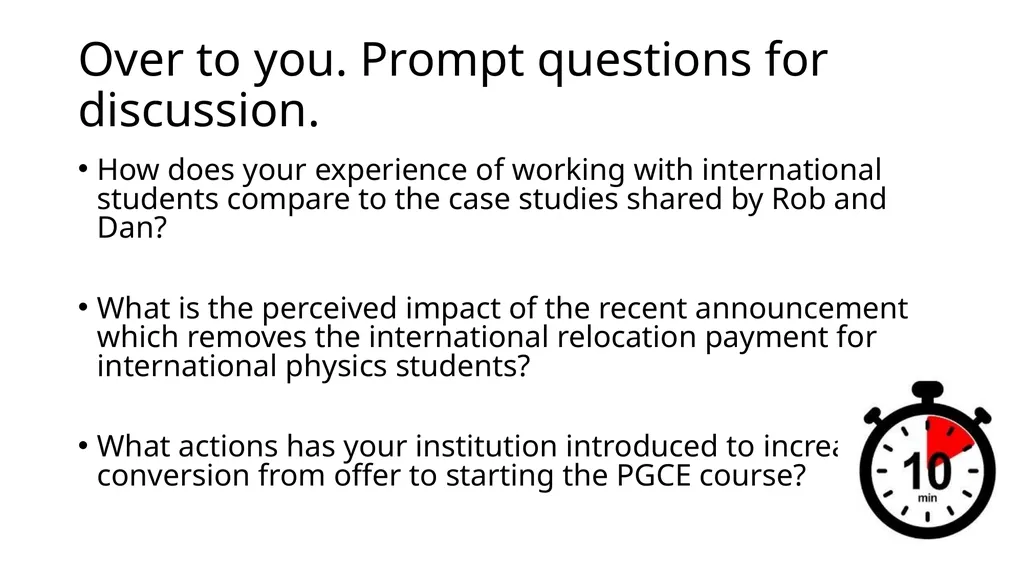
Over to you. Prompt questions for discussion. How does your experience of working with international students compare to the case studies shared by Rob and Dan?
What is the perceived impact of the recent announcement which removes the international relocation payment for international physics students?
What actions has your institution introduced to increase conversion from offer to starting the PGCE course?<br>
06
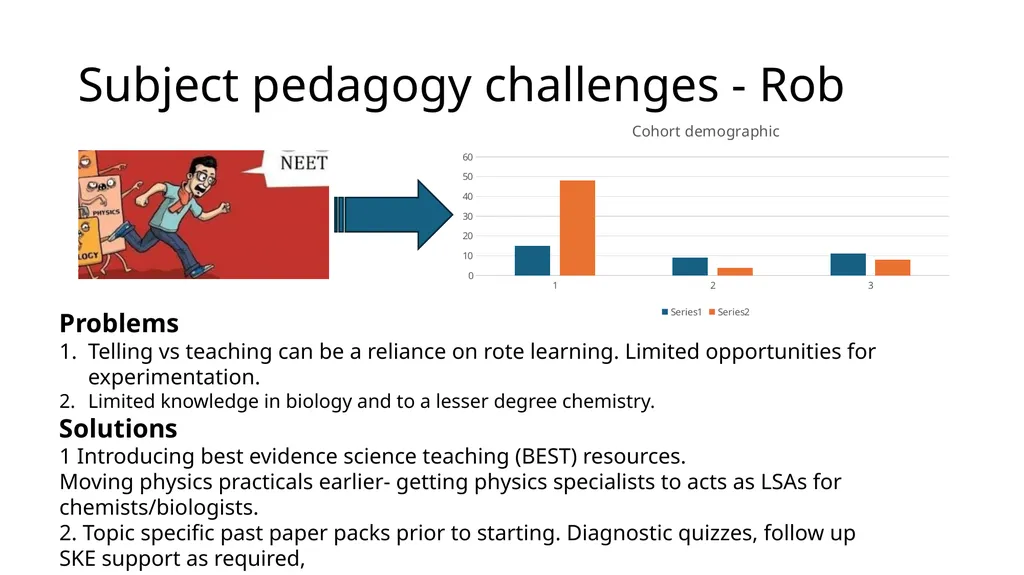
Subject pedagogy challenges - Rob Problems
Telling vs teaching can be a reliance on rote learning. Limited opportunities for experimentation.
Limited knowledge in biology and to a lesser degree chemistry.
Solutions
1 Introducing best evidence science teaching (BEST) resources.
Moving physics practicals earlier- getting physics specialists to acts as LSAs for chemists/biologists.
2. Topic specific past paper packs prior to starting. Diagnostic quizzes, follow up SKE support as required,<br>
07
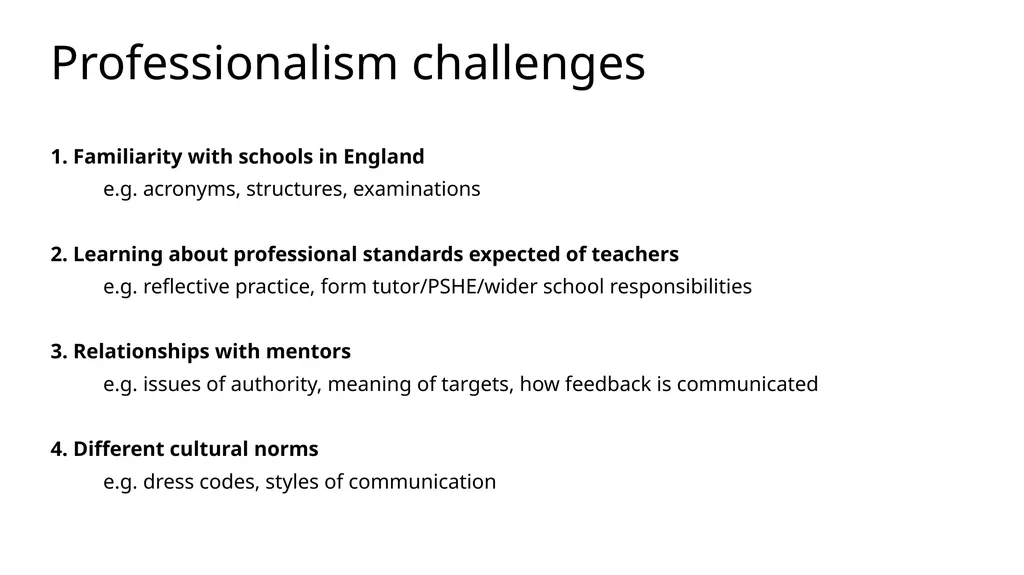
Professionalism challenges 1. Familiarity with schools in England
e.g. acronyms, structures, examinations
2. Learning about professional standards expected of teachers
e.g. reflective practice, form tutor/PSHE/wider school responsibilities
3. Relationships with mentors
e.g. issues of authority, meaning of targets, how feedback is communicated
4. Different cultural norms
e.g. dress codes, styles of communication<br>
08
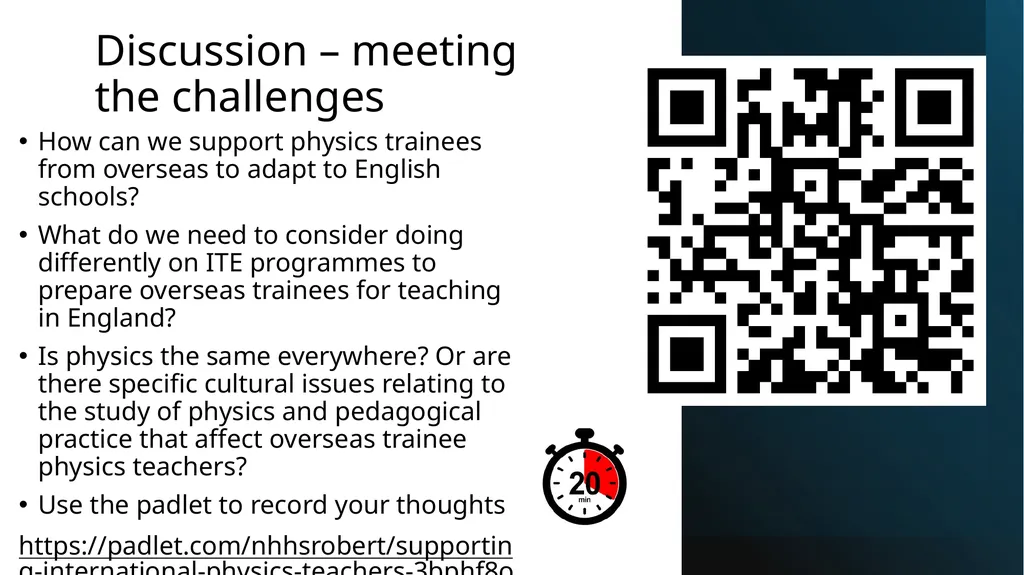
Discussion – meeting the challenges How can we support physics trainees from overseas to adapt to English schools?
What do we need to consider doing differently on ITE programmes to prepare overseas trainees for teaching in England?
Is physics the same everywhere? Or are there specific cultural issues relating to the study of physics and pedagogical practice that affect overseas trainee physics teachers?
Use the padlet to record your thoughts
https://padlet.com/nhhsrobert/supporting-international-physics-teachers-3bphf8ooxm0k3ewc<br>