How to complete a Business Personal Property Rendition Form Step 1: Go to victoriacad.org Step 2: Under the information tab, select Forms Step 3: Use the Renditions drop down menu to select Personal Property Rendition Name of business (DBA)
Related Topics
Share
Embed code
Download this presentation From Below
"How to complete a Business Personal Property" is the property of its rightful owner. Permission is granted to
download and print the materials on this website for personal, non-commercial use only, and to display it
on your personal computer provided you do not modify the materials and that you retain all copyright
notices contained in the materials. By downloading content from our website, you accept the terms of this
agreement.
Presentation Transcript
01
How to complete a Business Personal Property Rendition Form<br>
02
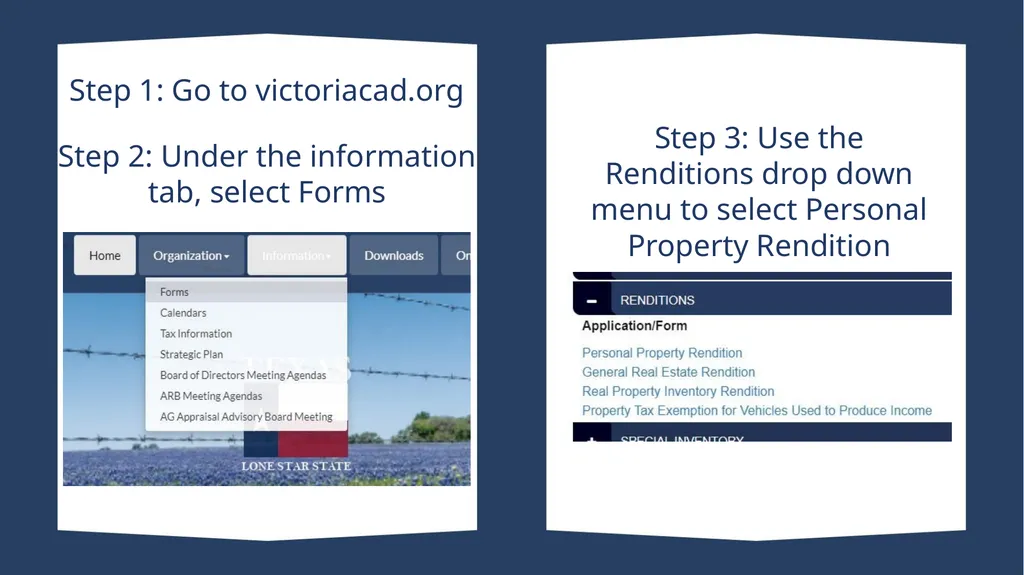
Step 1: Go to victoriacad.org Step 2: Under the information tab, select Forms Step 3: Use the Renditions drop down menu to select Personal Property Rendition<br>
03
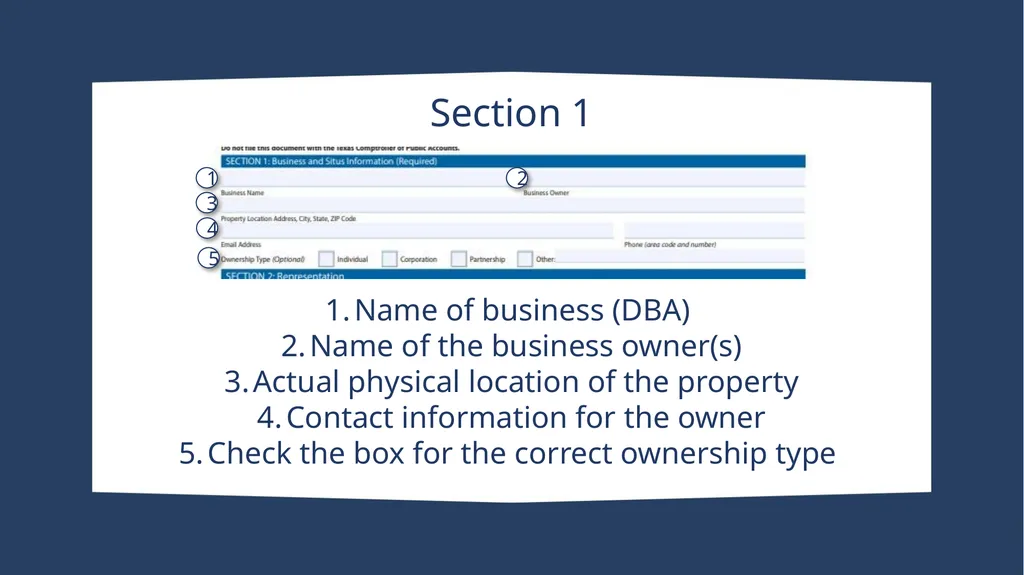
Name of business (DBA)
Name of the business owner(s)
Actual physical location of the property
Contact information for the owner
Check the box for the correct ownership type Section 1 1 2 3 4 5<br>
04
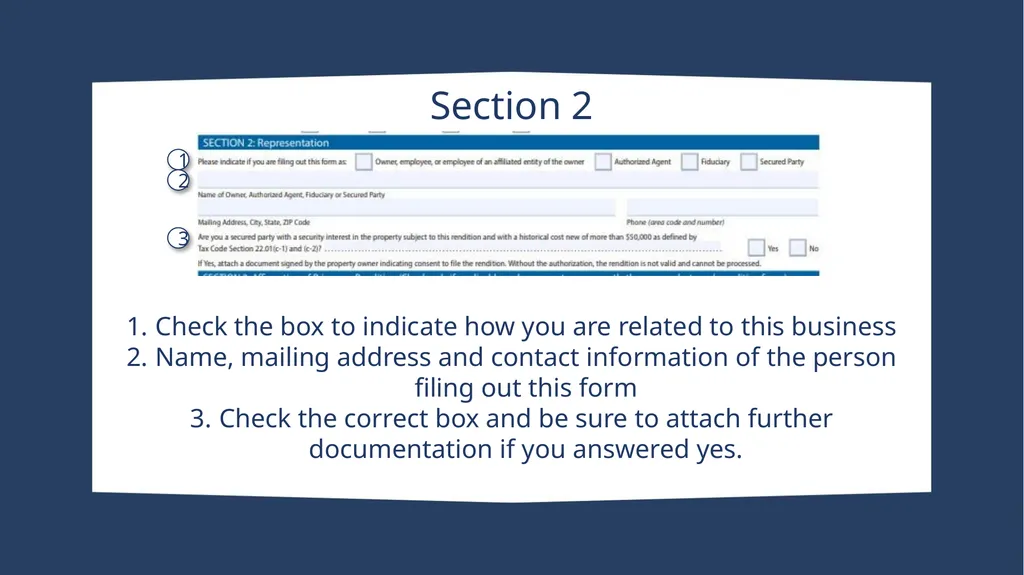
Section 2 Check the box to indicate how you are related to this business
Name, mailing address and contact information of the person filing out this form
Check the correct box and be sure to attach further documentation if you answered yes. 1 2 3<br>
05
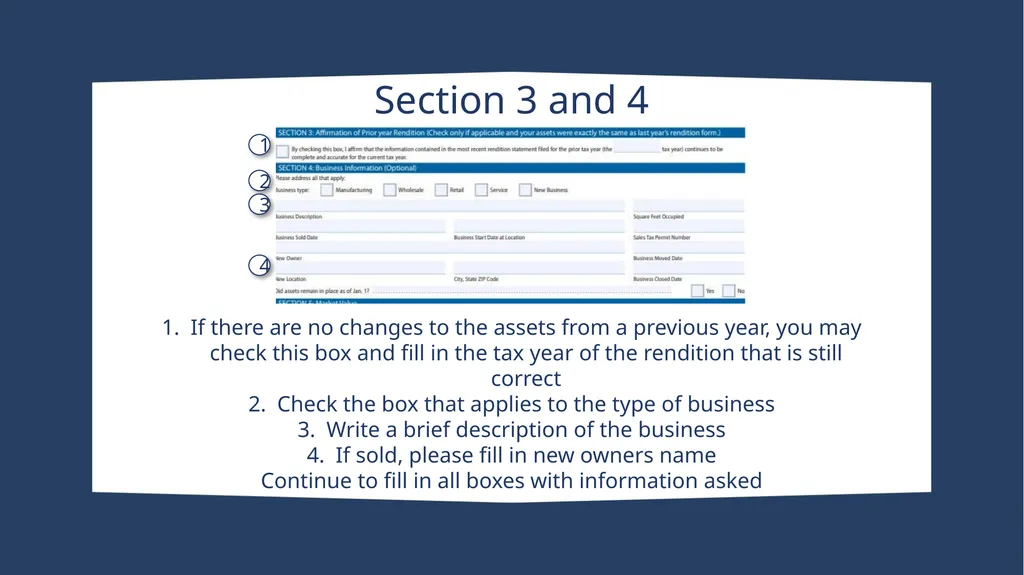
Section 3 and 4 If there are no changes to the assets from a previous year, you may check this box and fill in the tax year of the rendition that is still correct
Check the box that applies to the type of business
Write a brief description of the business
If sold, please fill in new owners name
Continue to fill in all boxes with information asked 1 2 3 4<br>
06
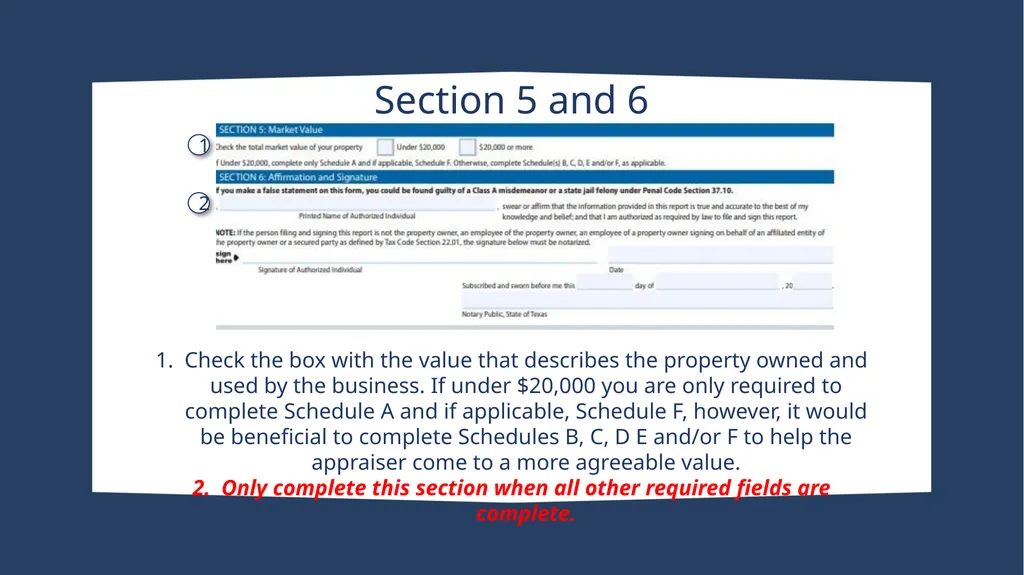
Section 5 and 6 Check the box with the value that describes the property owned and used by the business. If under $20,000 you are only required to complete Schedule A and if applicable, Schedule F, however, it would be beneficial to complete Schedules B, C, D E and/or F to help the appraiser come to a more agreeable value.
Only complete this section when all other required fields are complete. 1 2<br>
07
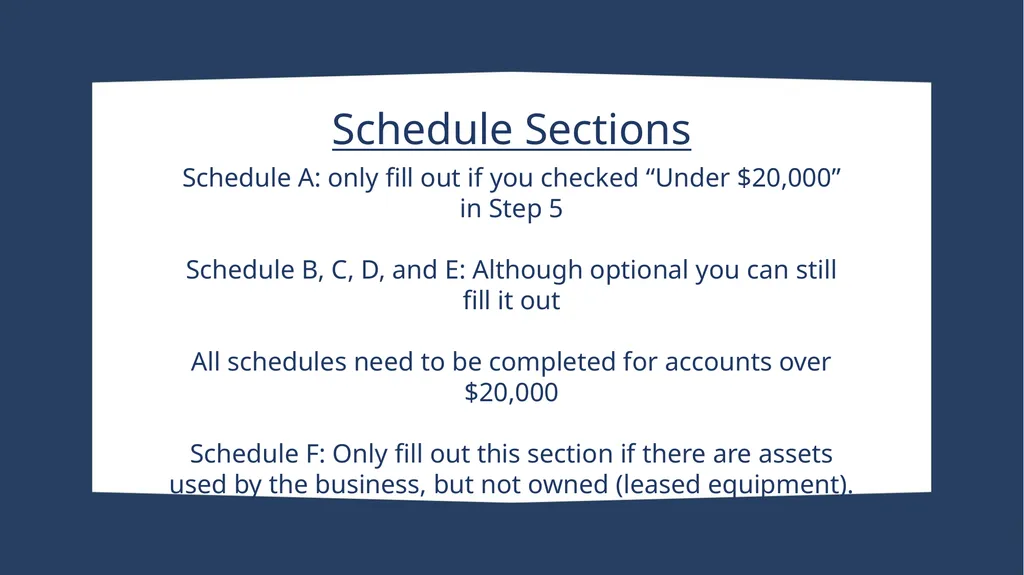
Schedule Sections Schedule A: only fill out if you checked “Under $20,000” in Step 5
Schedule B, C, D, and E: Although optional you can still fill it out
All schedules need to be completed for accounts over $20,000
Schedule F: Only fill out this section if there are assets used by the business, but not owned (leased equipment).<br>
08
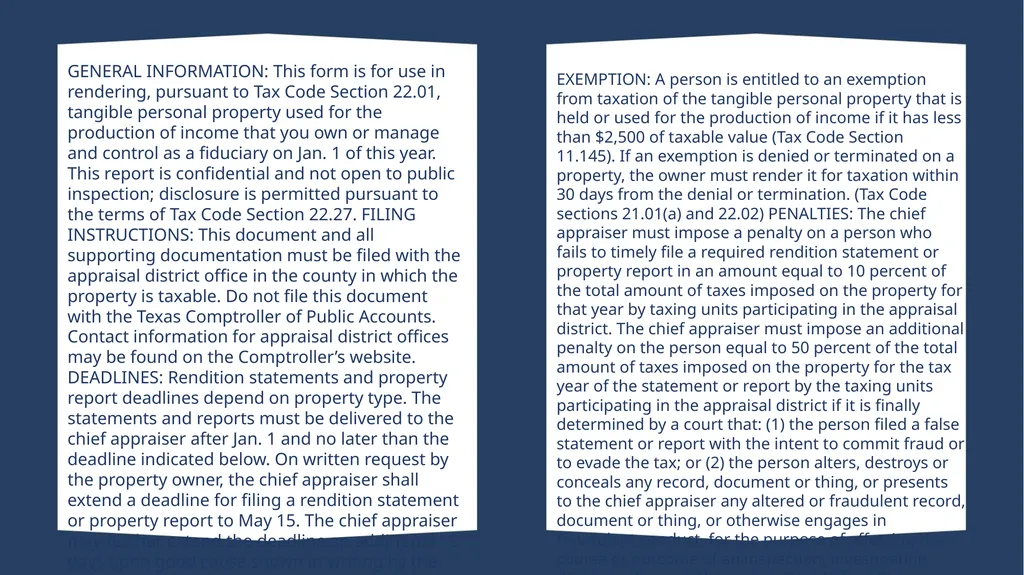
GENERAL INFORMATION: This form is for use in rendering, pursuant to Tax Code Section 22.01, tangible personal property used for the production of income that you own or manage and control as a fiduciary on Jan. 1 of this year. This report is confidential and not open to public inspection; disclosure is permitted pursuant to the terms of Tax Code Section 22.27. FILING INSTRUCTIONS: This document and all supporting documentation must be filed with the appraisal district office in the county in which the property is taxable. Do not file this document with the Texas Comptroller of Public Accounts. Contact information for appraisal district offices may be found on the Comptroller’s website. DEADLINES: Rendition statements and property report deadlines depend on property type. The statements and reports must be delivered to the chief appraiser after Jan. 1 and no later than the deadline indicated below. On written request by the property owner, the chief appraiser shall extend a deadline for filing a rendition statement or property report to May 15. The chief appraiser may further extend the deadline an additional 15 days upon good cause shown in writing by the property owner EXEMPTION: A person is entitled to an exemption from taxation of the tangible personal property that is held or used for the production of income if it has less than $2,500 of taxable value (Tax Code Section 11.145). If an exemption is denied or terminated on a property, the owner must render it for taxation within 30 days from the denial or termination. (Tax Code sections 21.01(a) and 22.02) PENALTIES: The chief appraiser must impose a penalty on a person who fails to timely file a required rendition statement or property report in an amount equal to 10 percent of the total amount of taxes imposed on the property for that year by taxing units participating in the appraisal district. The chief appraiser must impose an additional penalty on the person equal to 50 percent of the total amount of taxes imposed on the property for the tax year of the statement or report by the taxing units participating in the appraisal district if it is finally determined by a court that: (1) the person filed a false statement or report with the intent to commit fraud or to evade the tax; or (2) the person alters, destroys or conceals any record, document or thing, or presents to the chief appraiser any altered or fraudulent record, document or thing, or otherwise engages in fraudulent conduct, for the purpose of affecting the course or outcome of an inspection, investigation, determination or other proceeding before the appraisal district.<br>
09
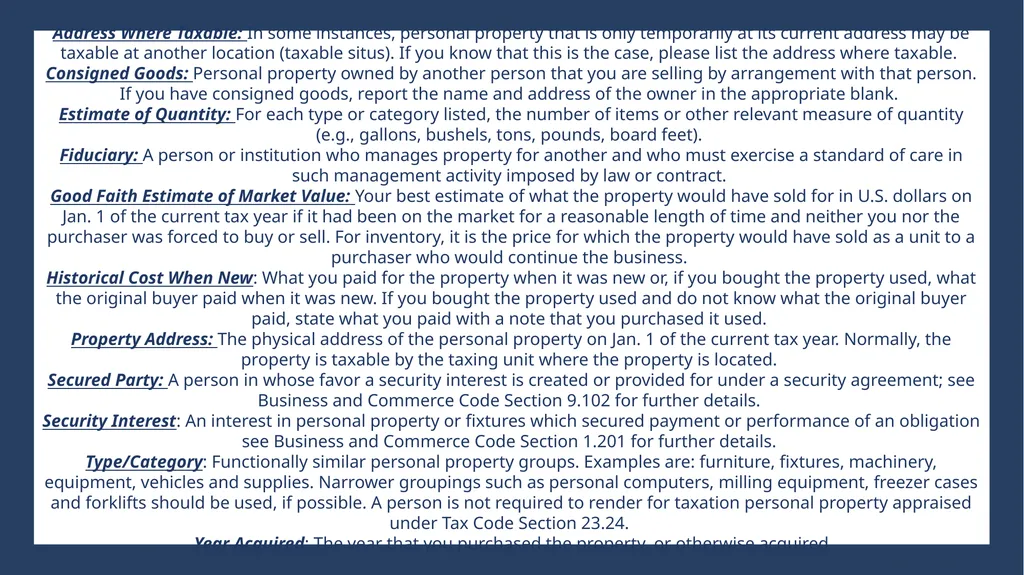
Address Where Taxable: In some instances, personal property that is only temporarily at its current address may be taxable at another location (taxable situs). If you know that this is the case, please list the address where taxable.
Consigned Goods: Personal property owned by another person that you are selling by arrangement with that person. If you have consigned goods, report the name and address of the owner in the appropriate blank.
Estimate of Quantity: For each type or category listed, the number of items or other relevant measure of quantity (e.g., gallons, bushels, tons, pounds, board feet).
Fiduciary: A person or institution who manages property for another and who must exercise a standard of care in such management activity imposed by law or contract.
Good Faith Estimate of Market Value: Your best estimate of what the property would have sold for in U.S. dollars on Jan. 1 of the current tax year if it had been on the market for a reasonable length of time and neither you nor the purchaser was forced to buy or sell. For inventory, it is the price for which the property would have sold as a unit to a purchaser who would continue the business.
Historical Cost When New: What you paid for the property when it was new or, if you bought the property used, what the original buyer paid when it was new. If you bought the property used and do not know what the original buyer paid, state what you paid with a note that you purchased it used.
Property Address: The physical address of the personal property on Jan. 1 of the current tax year. Normally, the property is taxable by the taxing unit where the property is located.
Secured Party: A person in whose favor a security interest is created or provided for under a security agreement; see Business and Commerce Code Section 9.102 for further details.
Security Interest: An interest in personal property or fixtures which secured payment or performance of an obligation see Business and Commerce Code Section 1.201 for further details.
Type/Category: Functionally similar personal property groups. Examples are: furniture, fixtures, machinery, equipment, vehicles and supplies. Narrower groupings such as personal computers, milling equipment, freezer cases and forklifts should be used, if possible. A person is not required to render for taxation personal property appraised under Tax Code Section 23.24.
Year Acquired: The year that you purchased the property, or otherwise acquired<br>