
How to draw a base pair (with ChemDraw)

Published  . 0 views
↓ Download
How to draw a base pair (with ChemDraw)
1 / 1
How to draw a base pair (with ChemDraw) - slide 1 of 44 How to draw a base pair (with ChemDraw) - slide 2 of 44 How to draw a base pair (with ChemDraw) - slide 3 of 44 How to draw a base pair (with ChemDraw) - slide 4 of 44 How to draw a base pair (with ChemDraw) - slide 5 of 44 How to draw a base pair (with ChemDraw) - slide 6 of 44 How to draw a base pair (with ChemDraw) - slide 7 of 44 How to draw a base pair (with ChemDraw) - slide 8 of 44 How to draw a base pair (with ChemDraw) - slide 9 of 44 How to draw a base pair (with ChemDraw) - slide 10 of 44 How to draw a base pair (with ChemDraw) - slide 11 of 44 How to draw a base pair (with ChemDraw) - slide 12 of 44 How to draw a base pair (with ChemDraw) - slide 13 of 44 How to draw a base pair (with ChemDraw) - slide 14 of 44 How to draw a base pair (with ChemDraw) - slide 15 of 44 How to draw a base pair (with ChemDraw) - slide 16 of 44 How to draw a base pair (with ChemDraw) - slide 17 of 44 How to draw a base pair (with ChemDraw) - slide 18 of 44 How to draw a base pair (with ChemDraw) - slide 19 of 44 How to draw a base pair (with ChemDraw) - slide 20 of 44 How to draw a base pair (with ChemDraw) - slide 21 of 44 How to draw a base pair (with ChemDraw) - slide 22 of 44 How to draw a base pair (with ChemDraw) - slide 23 of 44 How to draw a base pair (with ChemDraw) - slide 24 of 44 How to draw a base pair (with ChemDraw) - slide 25 of 44 How to draw a base pair (with ChemDraw) - slide 26 of 44 How to draw a base pair (with ChemDraw) - slide 27 of 44 How to draw a base pair (with ChemDraw) - slide 28 of 44 How to draw a base pair (with ChemDraw) - slide 29 of 44 How to draw a base pair (with ChemDraw) - slide 30 of 44 How to draw a base pair (with ChemDraw) - slide 31 of 44 How to draw a base pair (with ChemDraw) - slide 32 of 44 How to draw a base pair (with ChemDraw) - slide 33 of 44 How to draw a base pair (with ChemDraw) - slide 34 of 44 How to draw a base pair (with ChemDraw) - slide 35 of 44 How to draw a base pair (with ChemDraw) - slide 36 of 44 How to draw a base pair (with ChemDraw) - slide 37 of 44 How to draw a base pair (with ChemDraw) - slide 38 of 44 How to draw a base pair (with ChemDraw) - slide 39 of 44 How to draw a base pair (with ChemDraw) - slide 40 of 44 How to draw a base pair (with ChemDraw) - slide 41 of 44 How to draw a base pair (with ChemDraw) - slide 42 of 44 How to draw a base pair (with ChemDraw) - slide 43 of 44 How to draw a base pair (with ChemDraw) - slide 44 of 44
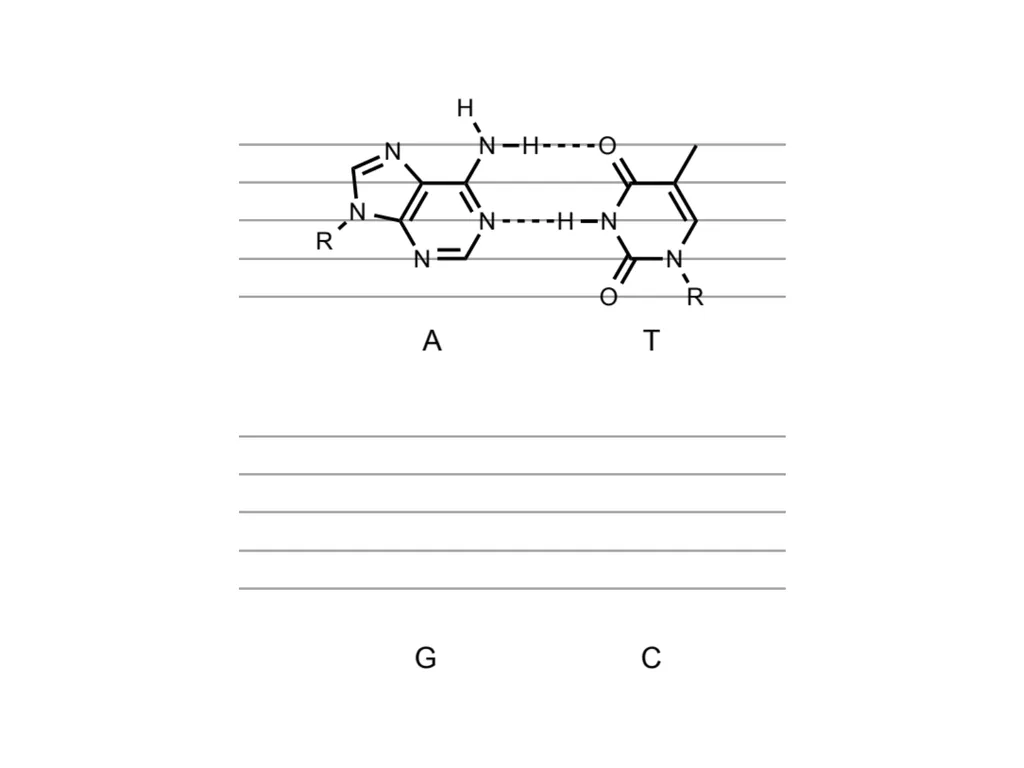
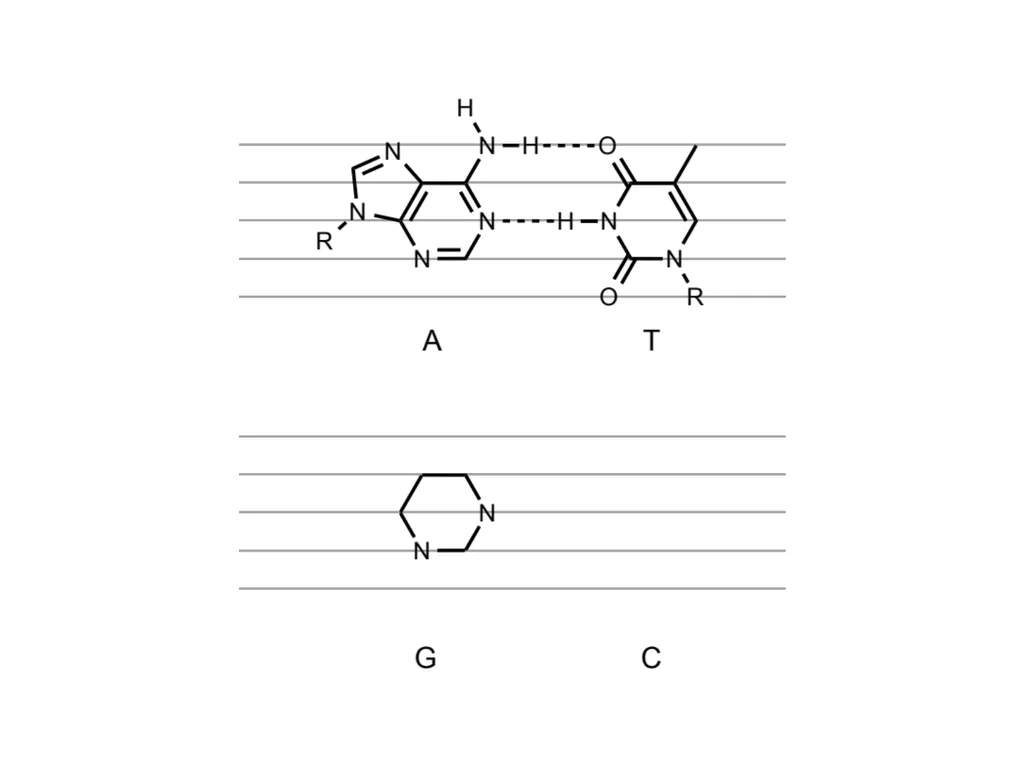
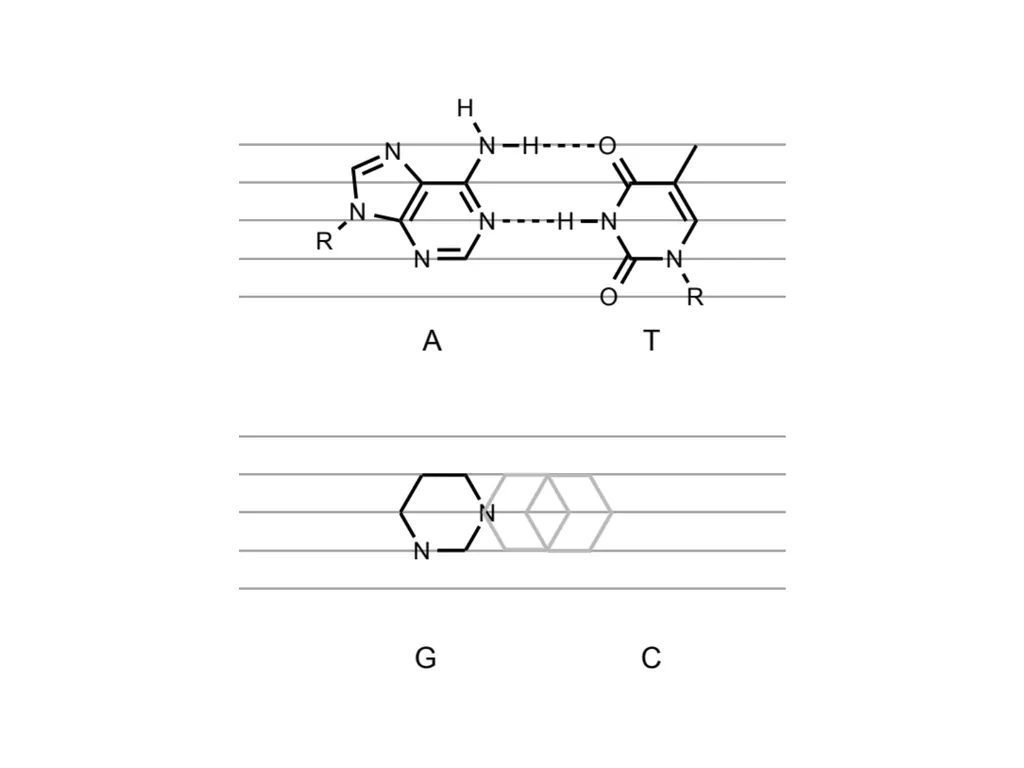
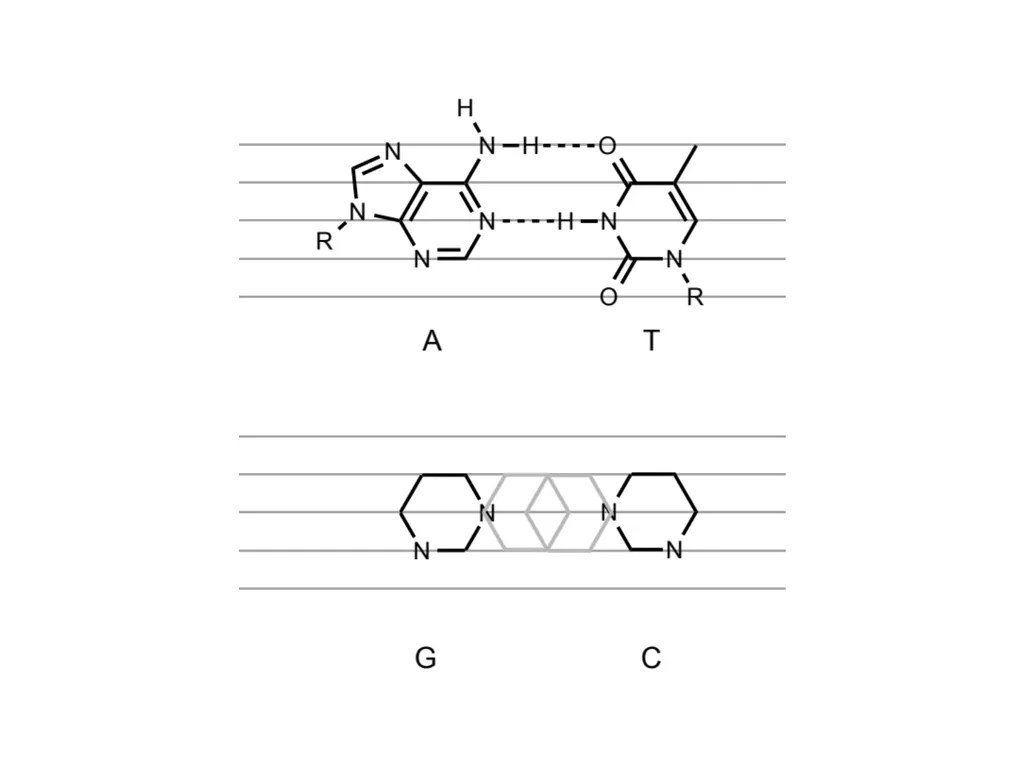
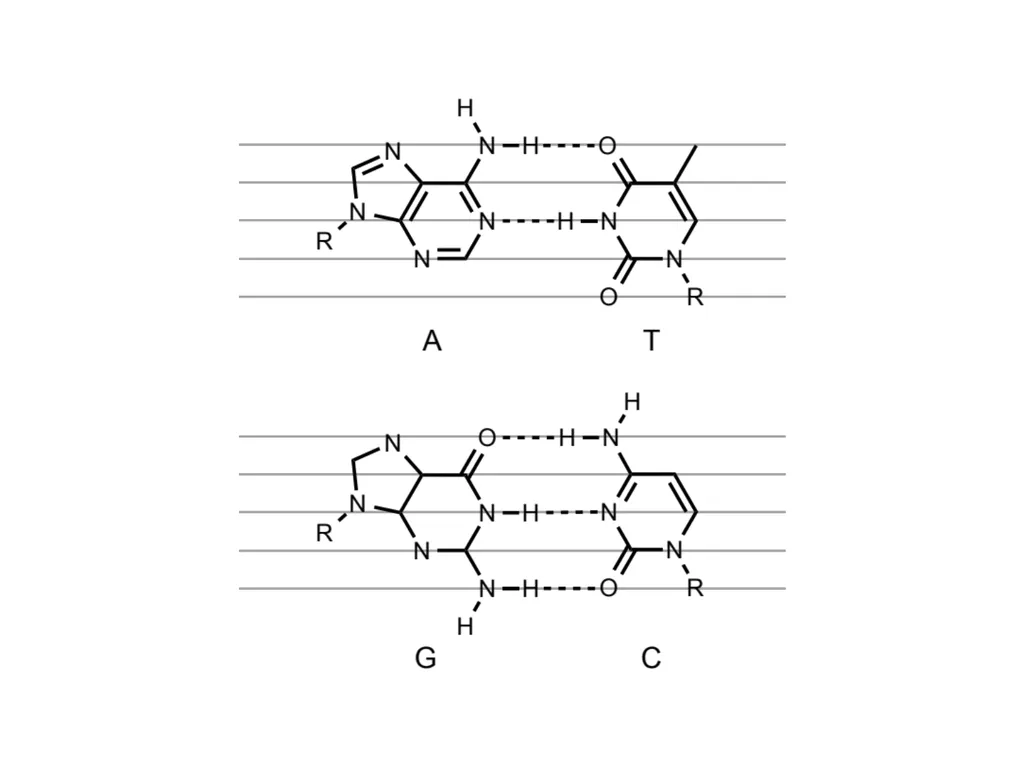
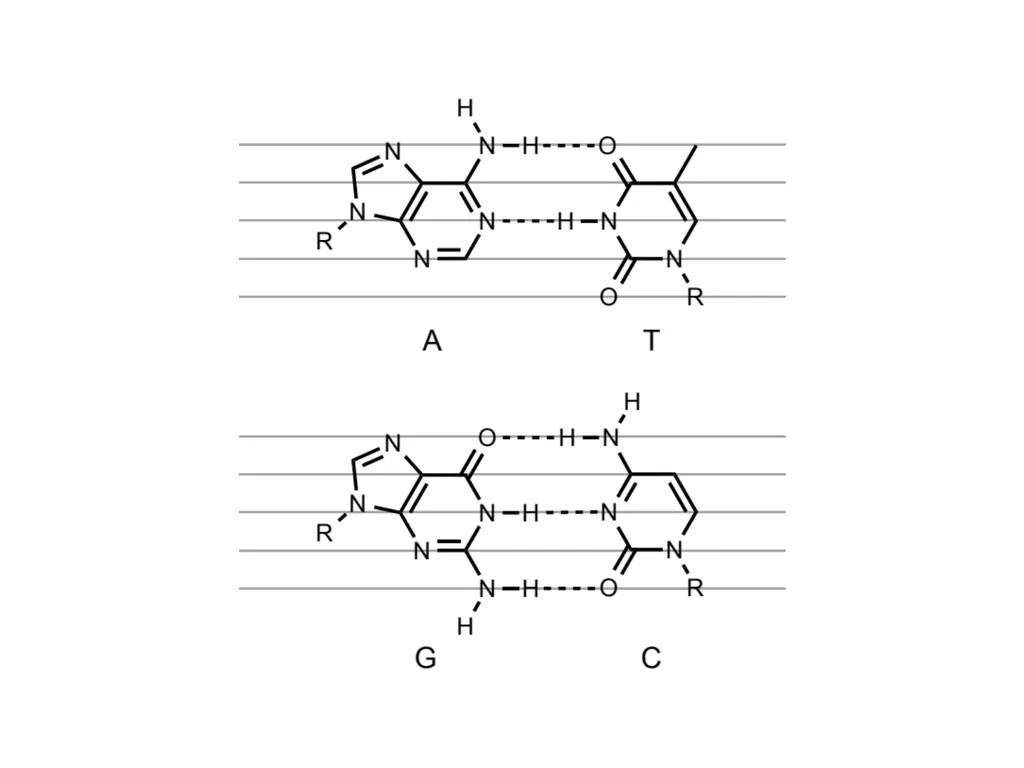
Description: How to draw a base pair (with ChemDraw) (correctly) But first: How not to draw a base pair Draw two parallel lines that are spaced vertically about the size you intend to draw the Watson-Crick base pair. Draw a third line parallel to, and

Related Topics

Download Presentation

"How to draw a base pair (with ChemDraw)" is the property of its rightful owner. Permission is granted to download and print the materials on this website for personal, non-commercial use only, and to display it on your personal computer provided you do not modify the materials and that you retain all copyright notices contained in the materials. By downloading content from our website, you accept the terms of this agreement.

Presentation Transcript

slide1. How to draw a base pair (with ChemDraw) (correctly)<br>
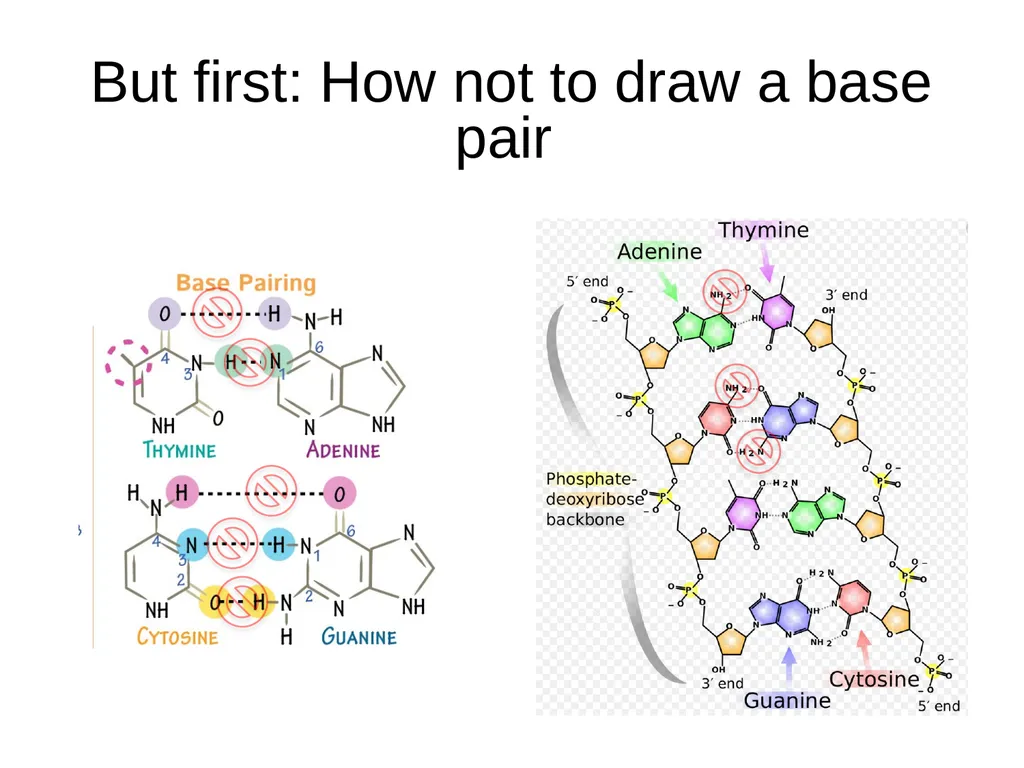
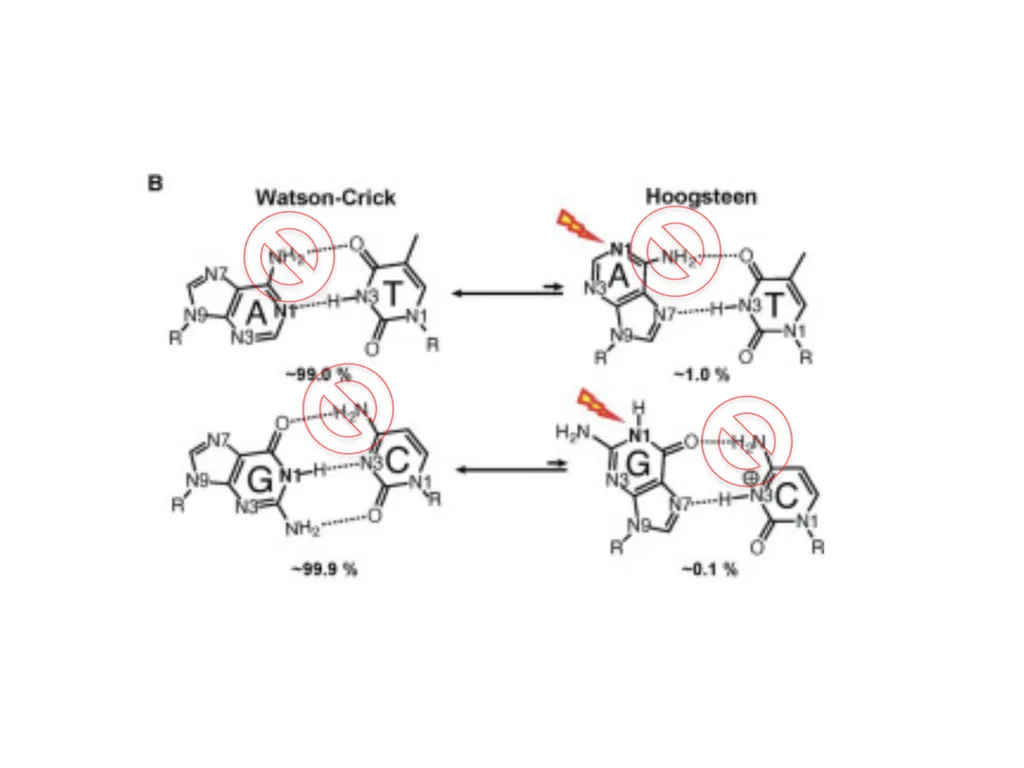
slide2. But first: How not to draw a base pair<br>
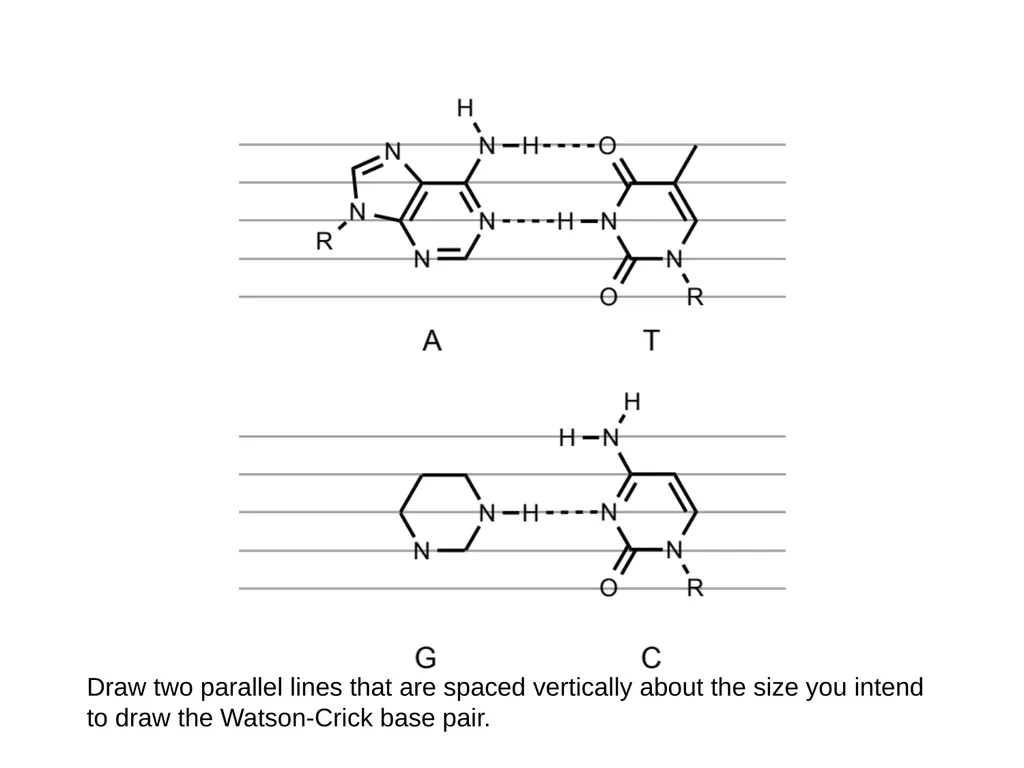
slide4. Draw two parallel lines that are spaced vertically about the size you intend to draw the Watson-Crick base pair.<br>
slide5. Draw a third line parallel to, and equidistant between, the first two lines.<br>
slide6. Draw a two more lines parallel to the three lines so that you now have five equally spaced lines.<br>
slide7. Decide which base pair you will draw, and on which side you will have the purine base and on which side you will have the pyrimidine base.<br>
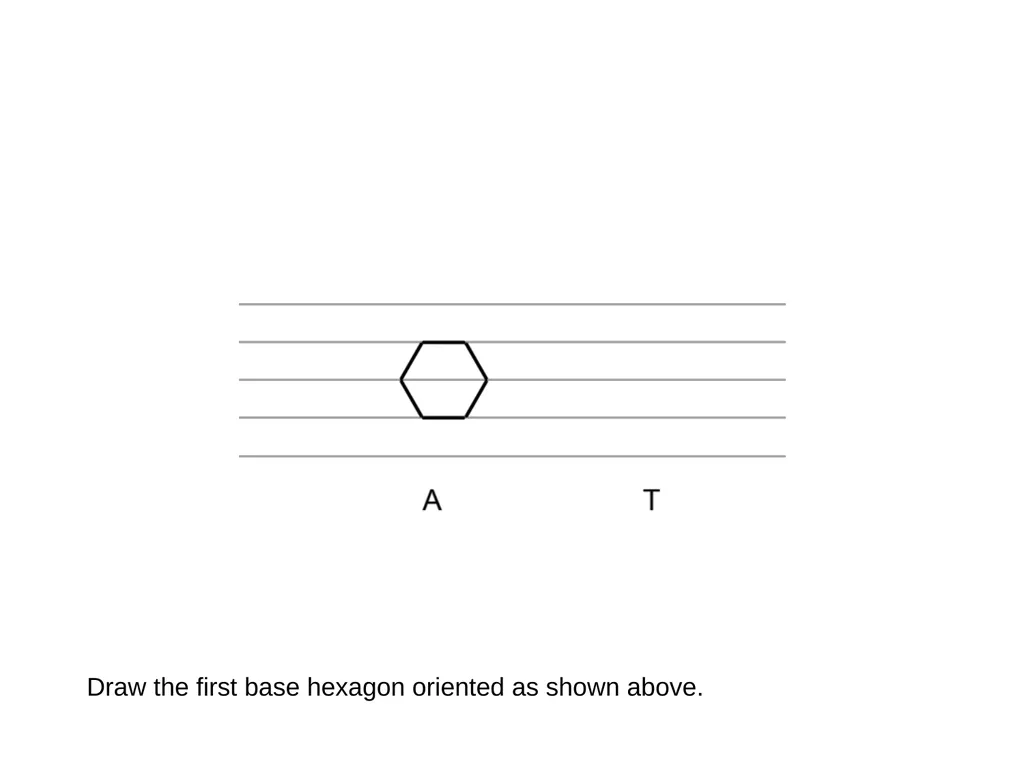
slide8. Draw the first base hexagon oriented as shown above.<br>
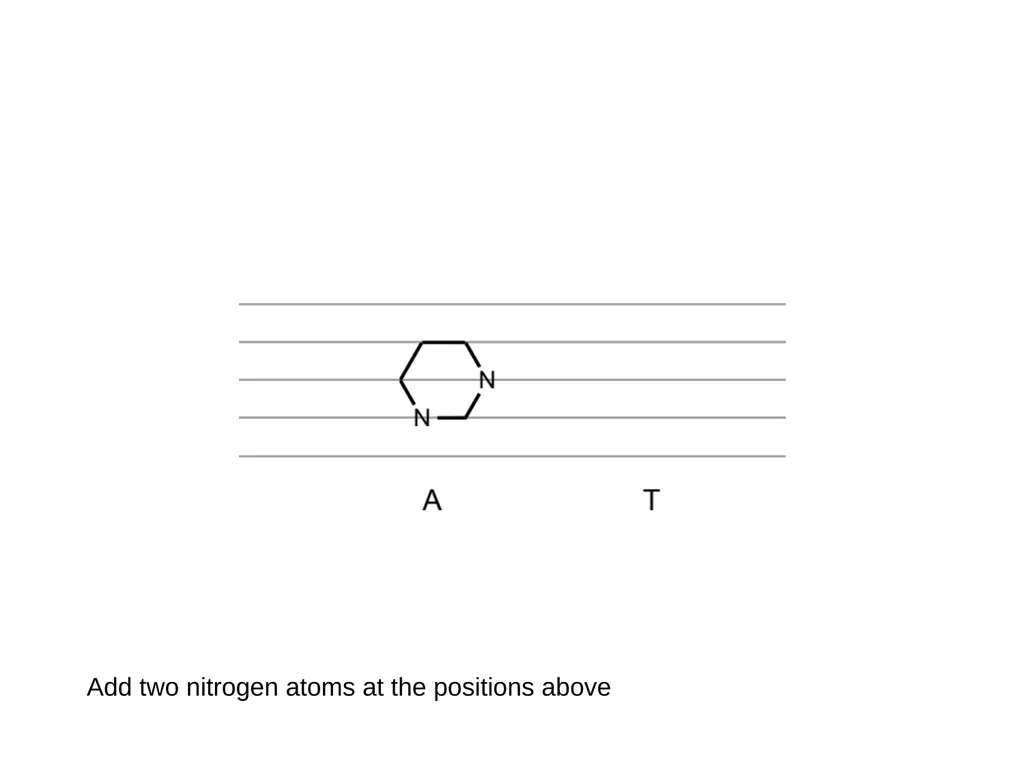
slide9. Add two nitrogen atoms at the positions above<br>
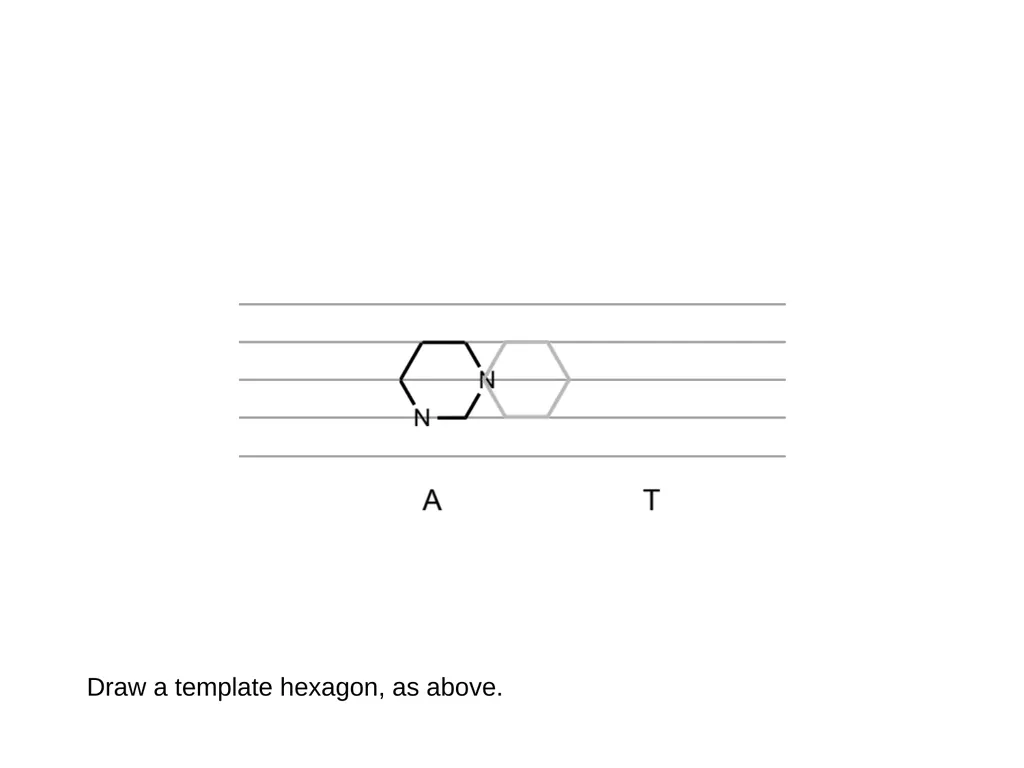
slide10. Draw a template hexagon, as above.<br>
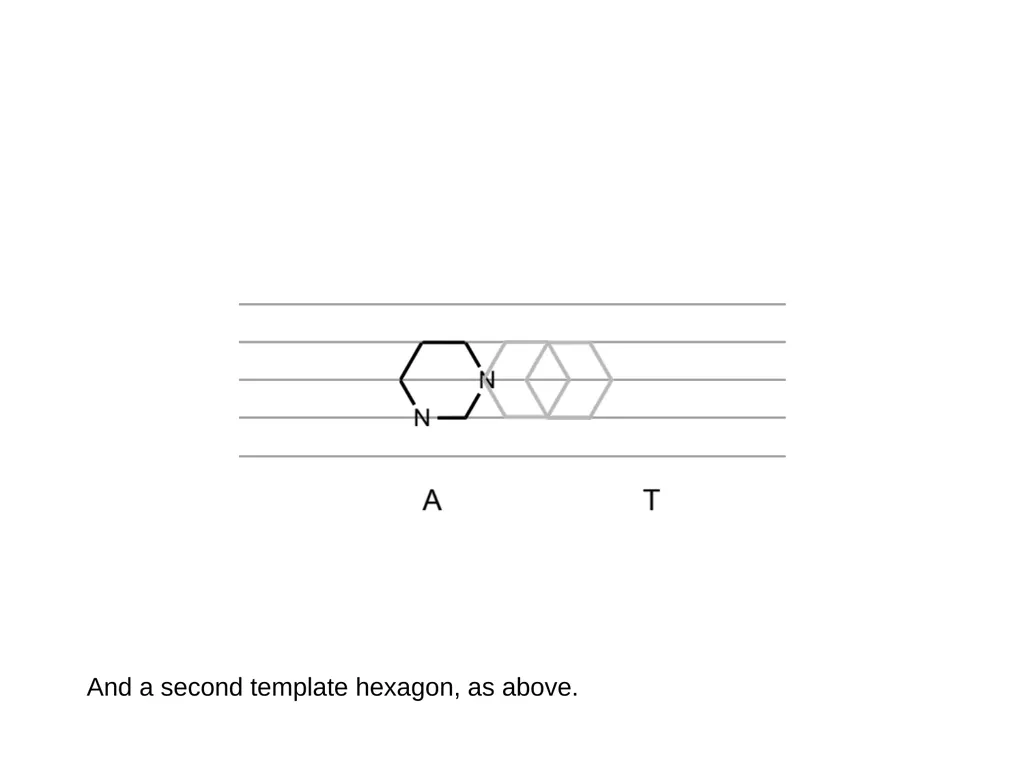
slide11. And a second template hexagon, as above.<br>
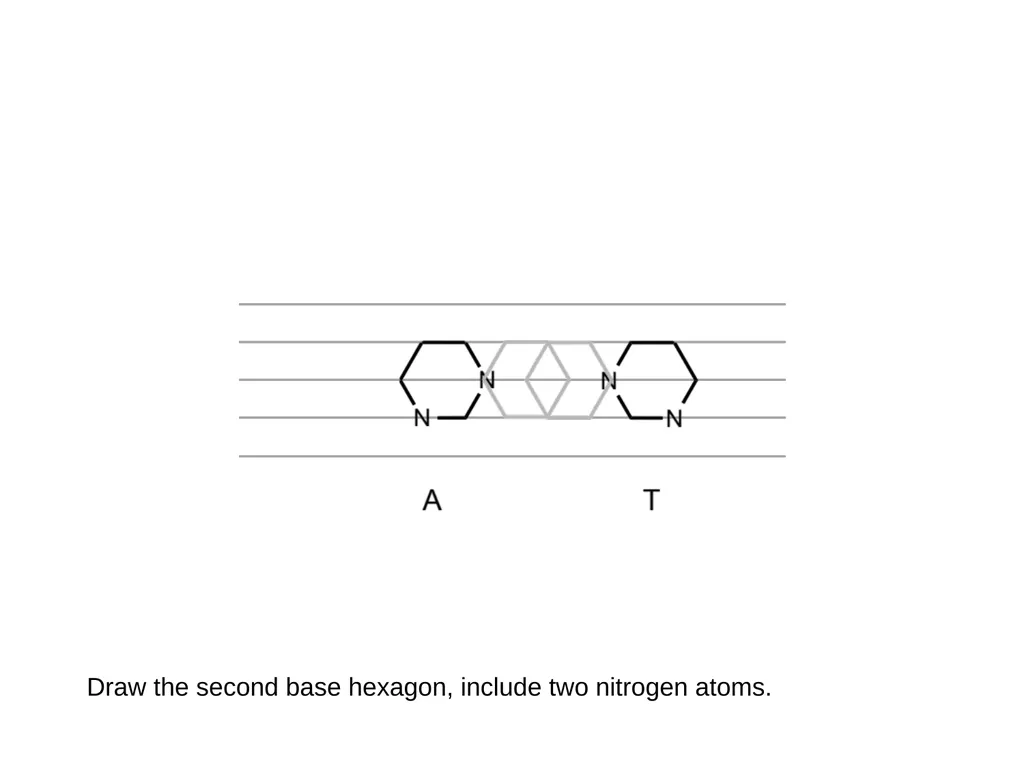
slide12. Draw the second base hexagon, include two nitrogen atoms.<br>
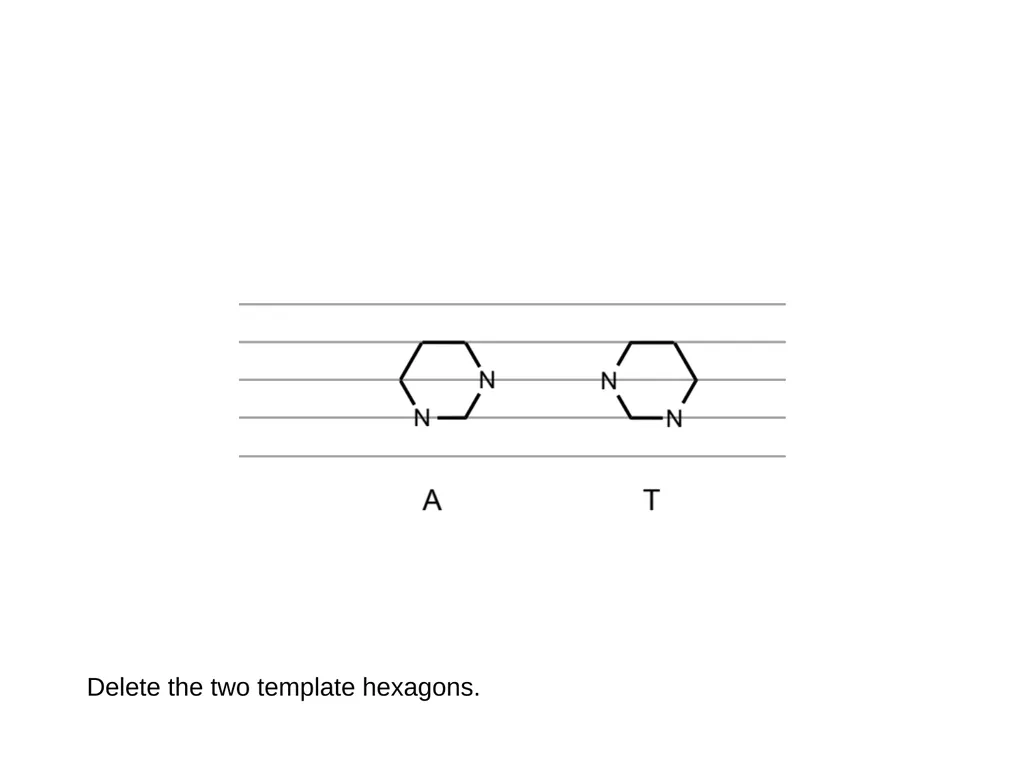
slide13. Delete the two template hexagons.<br>
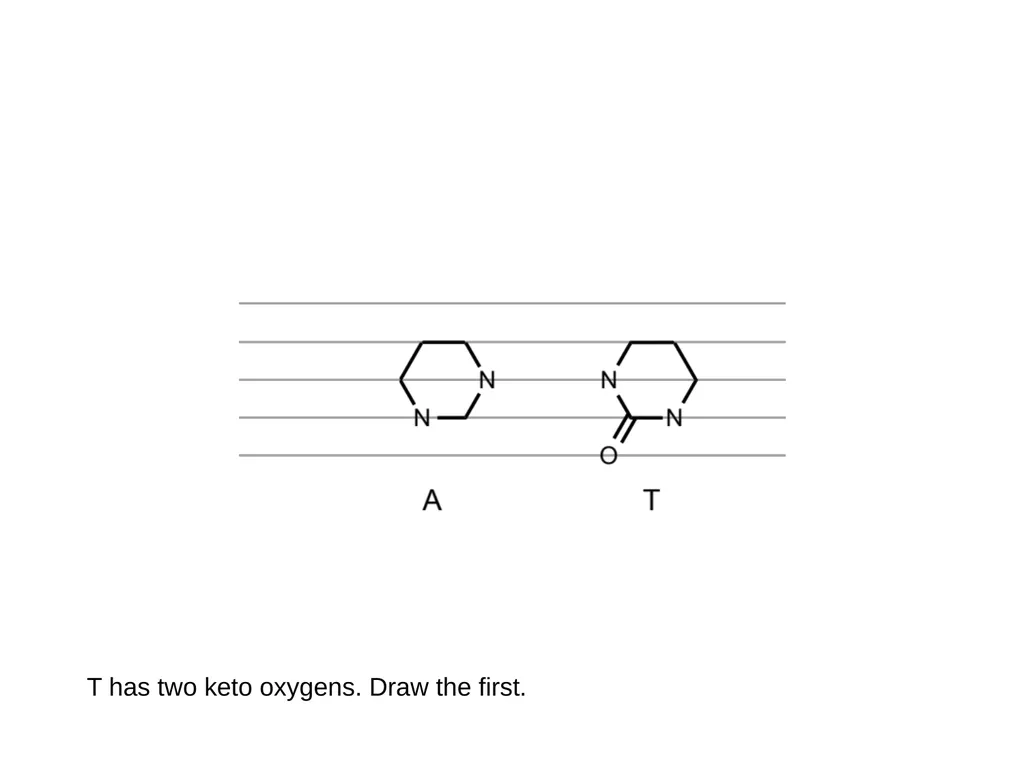
slide14. T has two keto oxygens. Draw the first.<br>
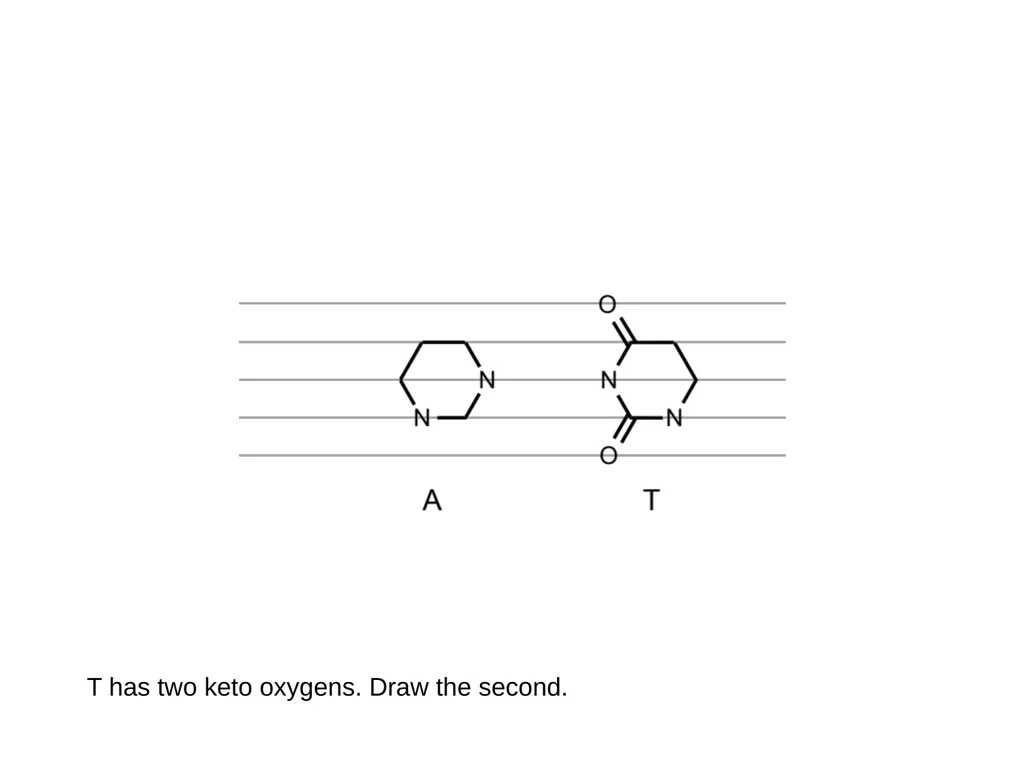
slide15. T has two keto oxygens. Draw the second.<br>
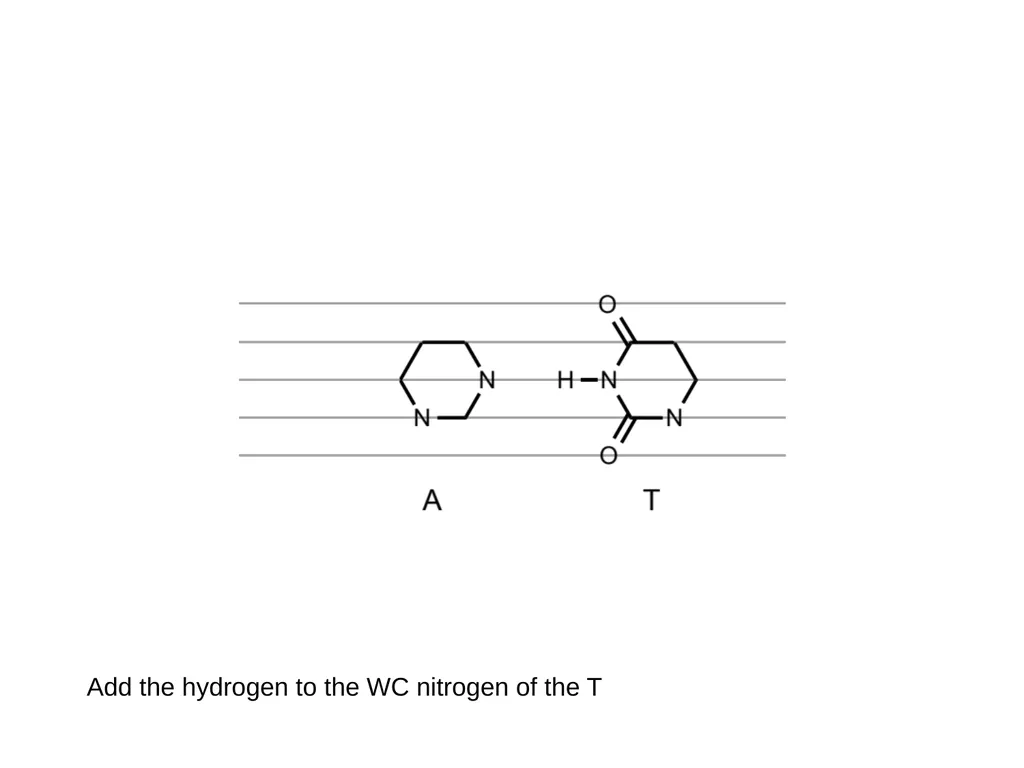
slide16. Add the hydrogen to the WC nitrogen of the T<br>
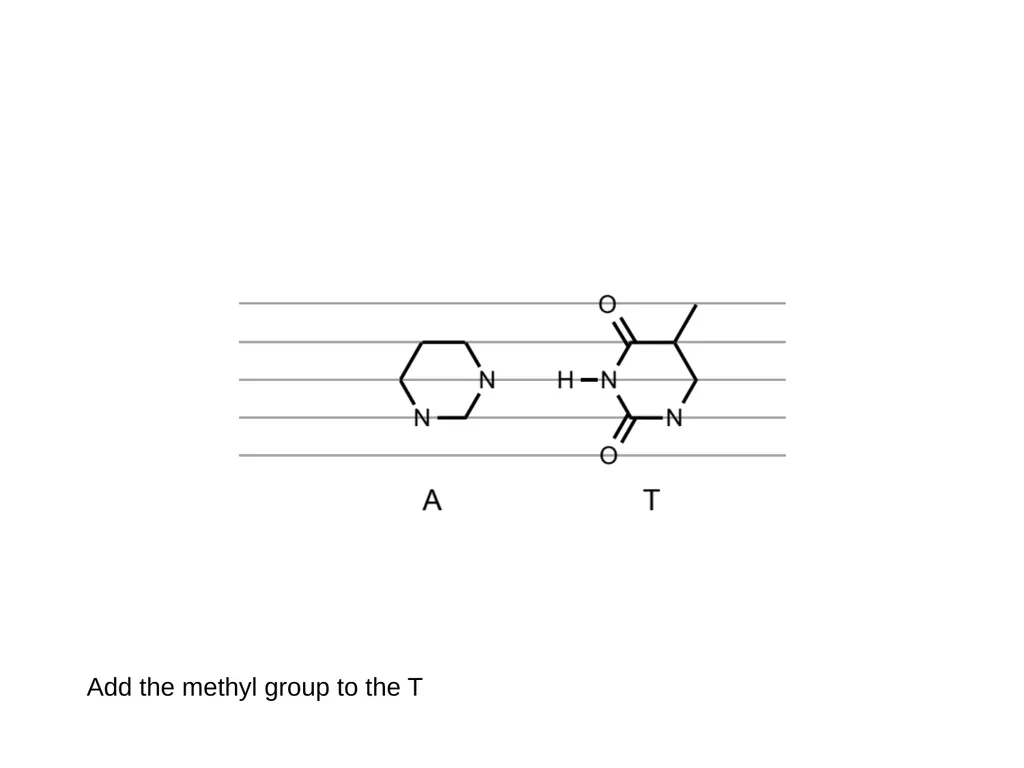
slide17. Add the methyl group to the T<br>
slide18. Add the glycosidic bond, and the deoxyribose.<br>
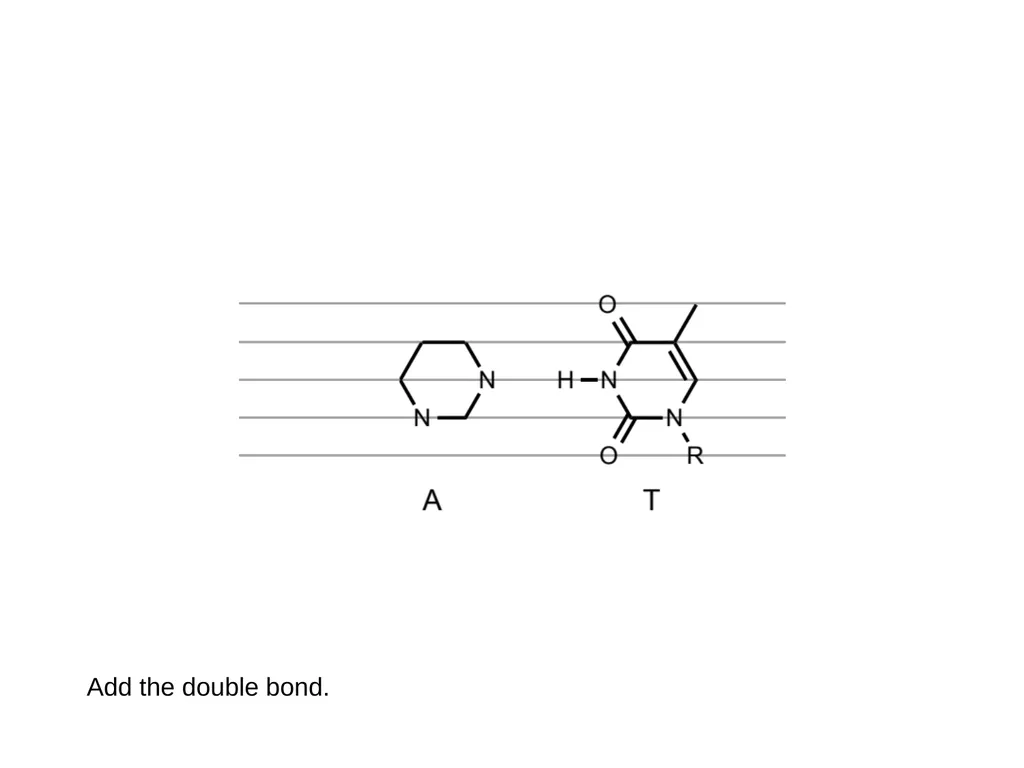
slide19. Add the double bond.<br>
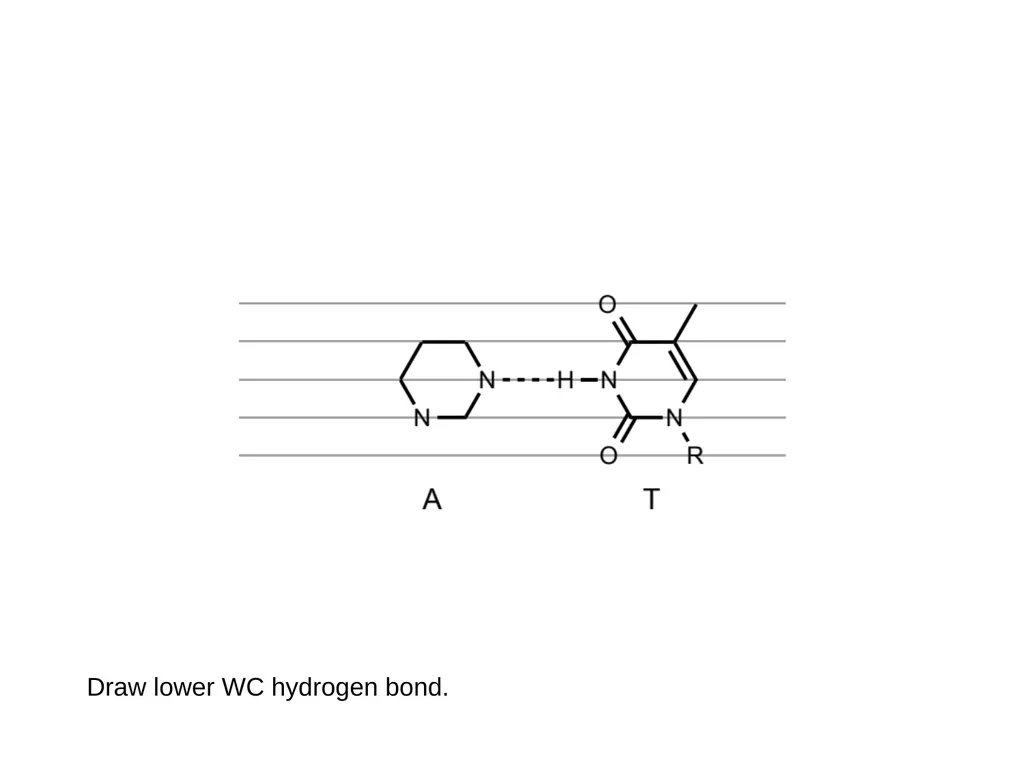
slide20. Draw lower WC hydrogen bond.<br>
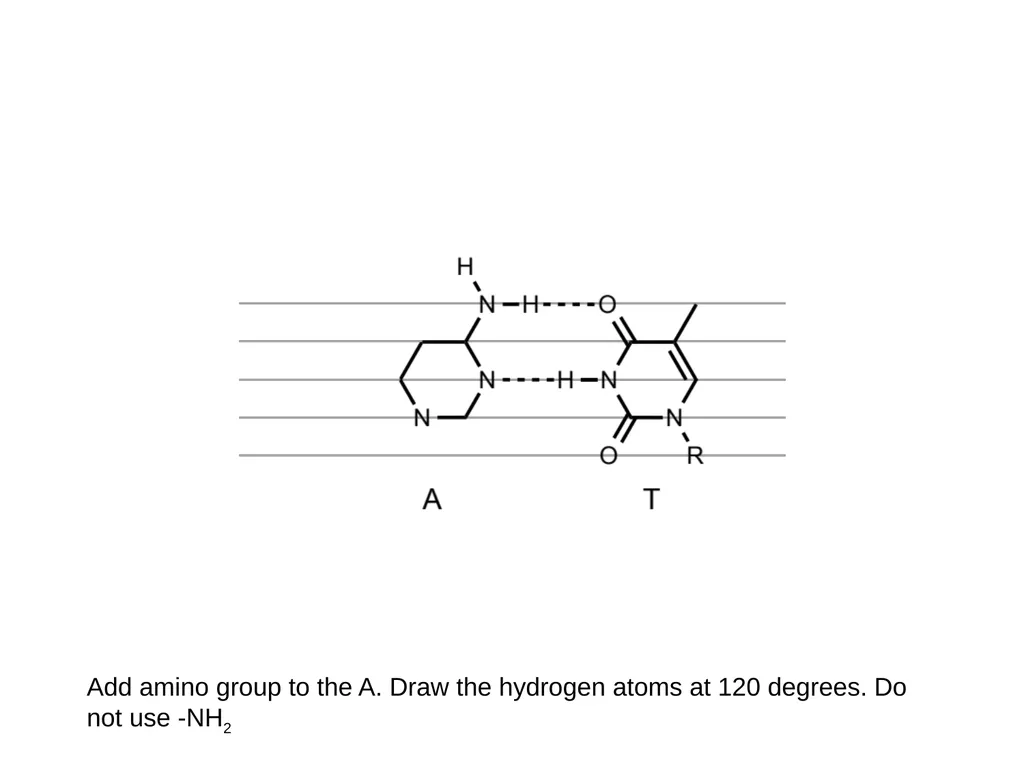
slide21. Add amino group to the A. Draw the hydrogen atoms at 120 degrees. Do not use -NH2<br>
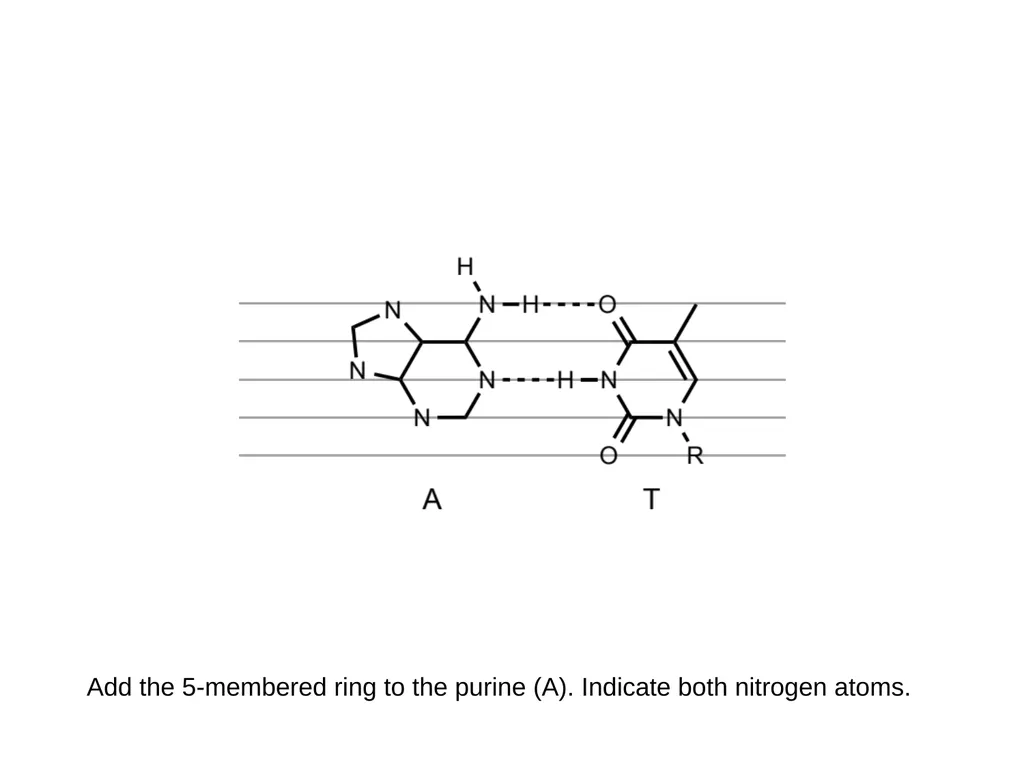
slide22. Add the 5-membered ring to the purine (A). Indicate both nitrogen atoms.<br>
slide23. Add the glycosidic bond and the deoxyribose.<br>
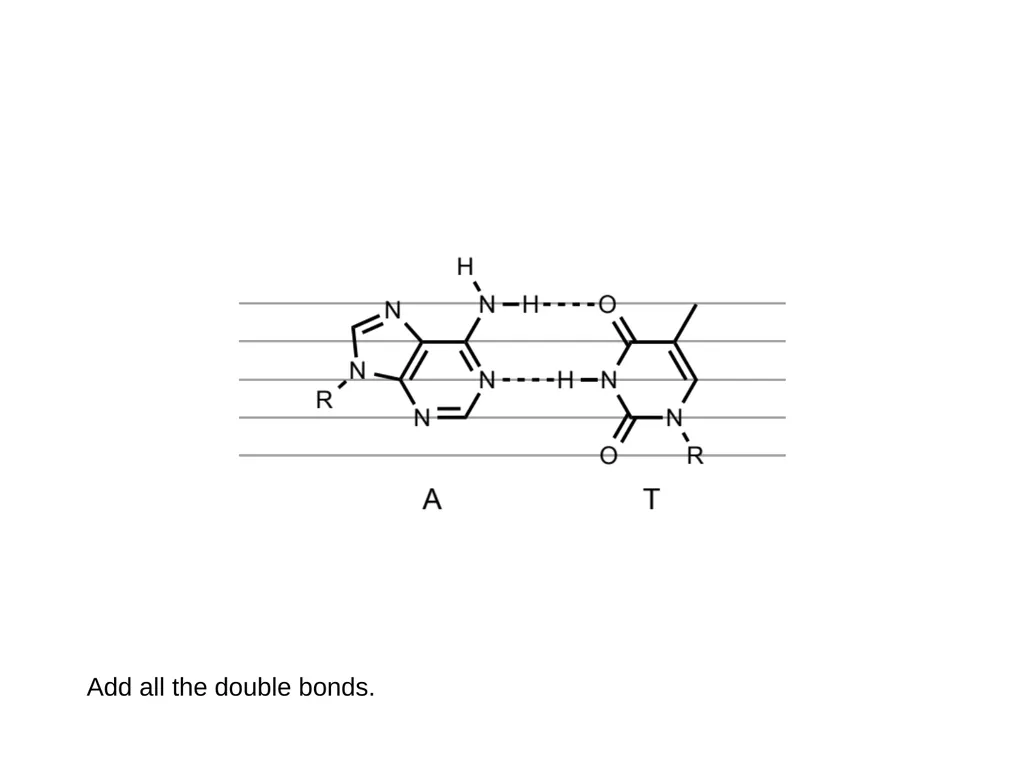
slide24. Add all the double bonds.<br>
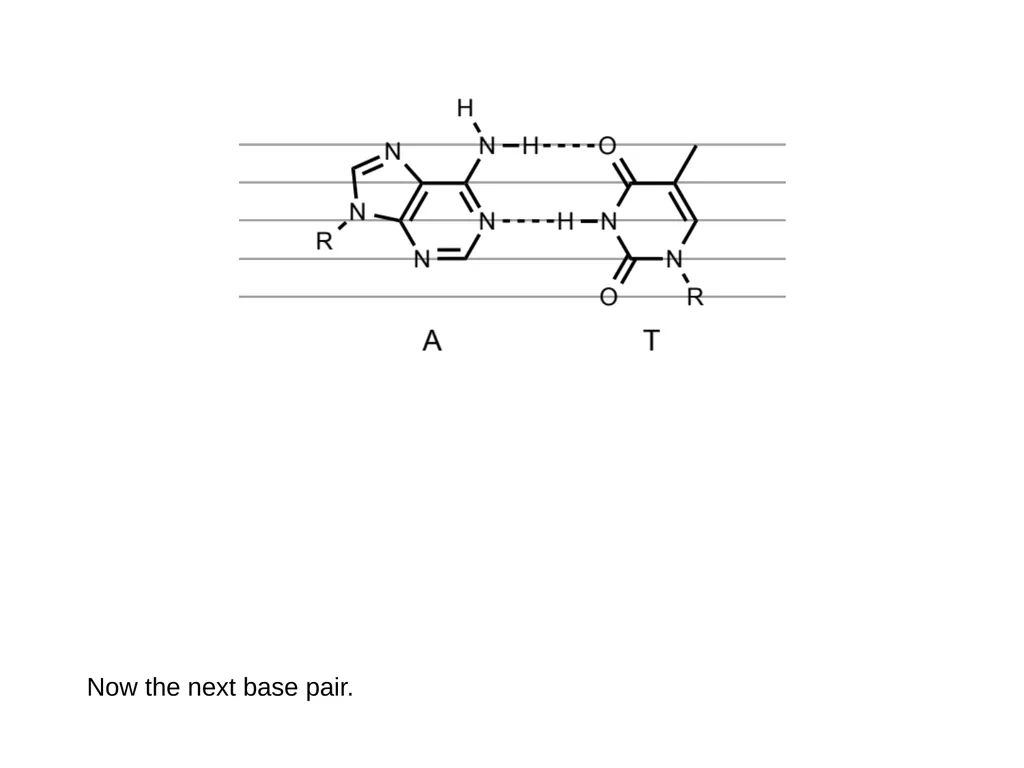
slide25. Now the next base pair.<br>
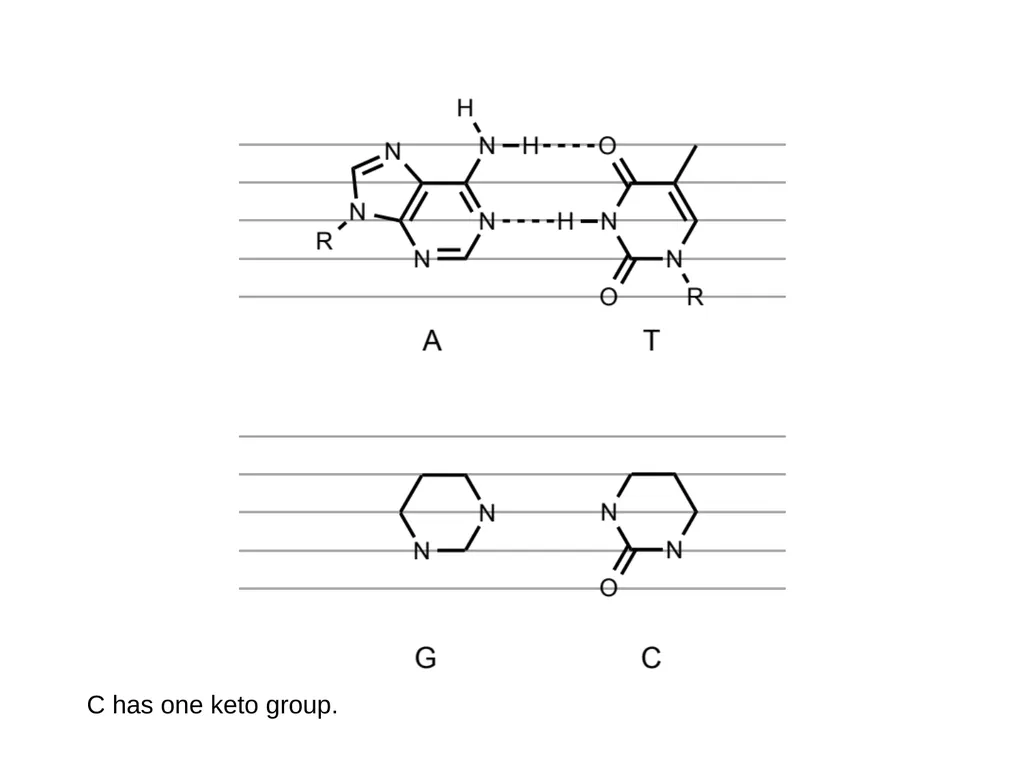
slide30. C has one keto group.<br>
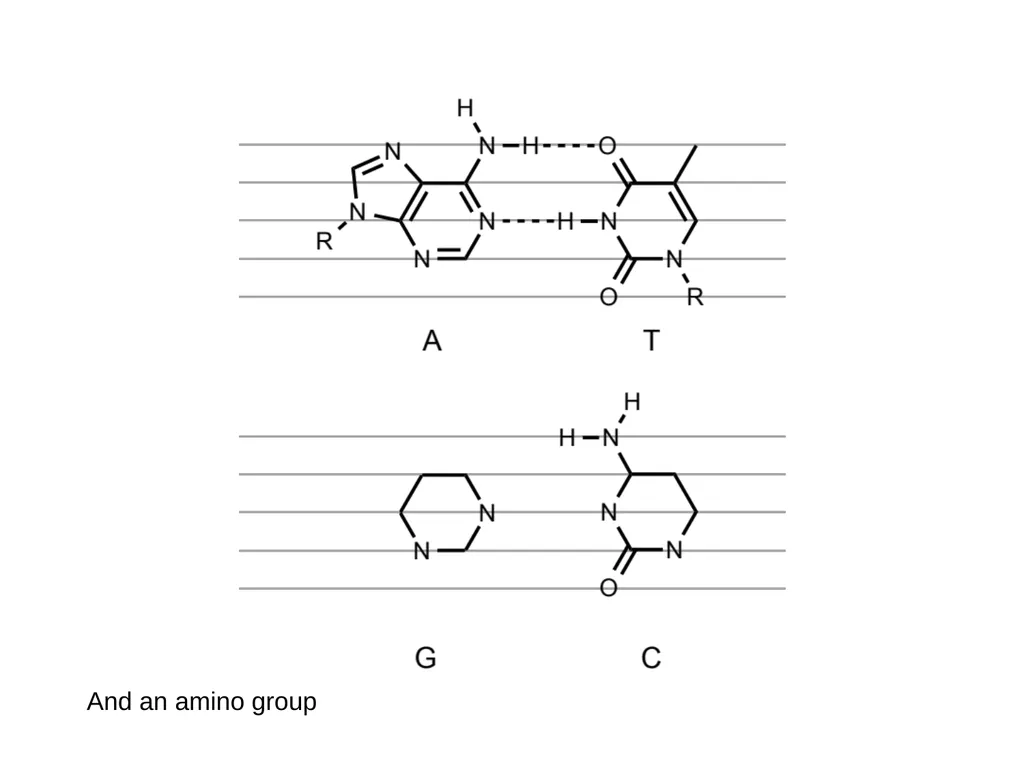
slide31. And an amino group<br>
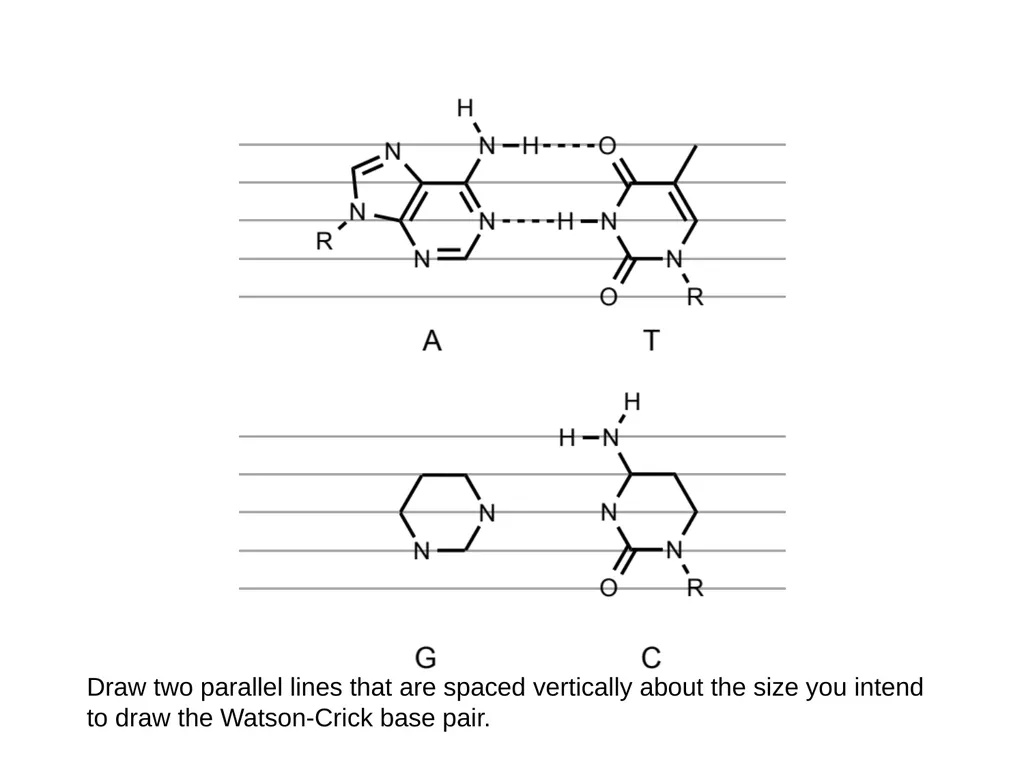
slide32. Draw two parallel lines that are spaced vertically about the size you intend to draw the Watson-Crick base pair.<br>
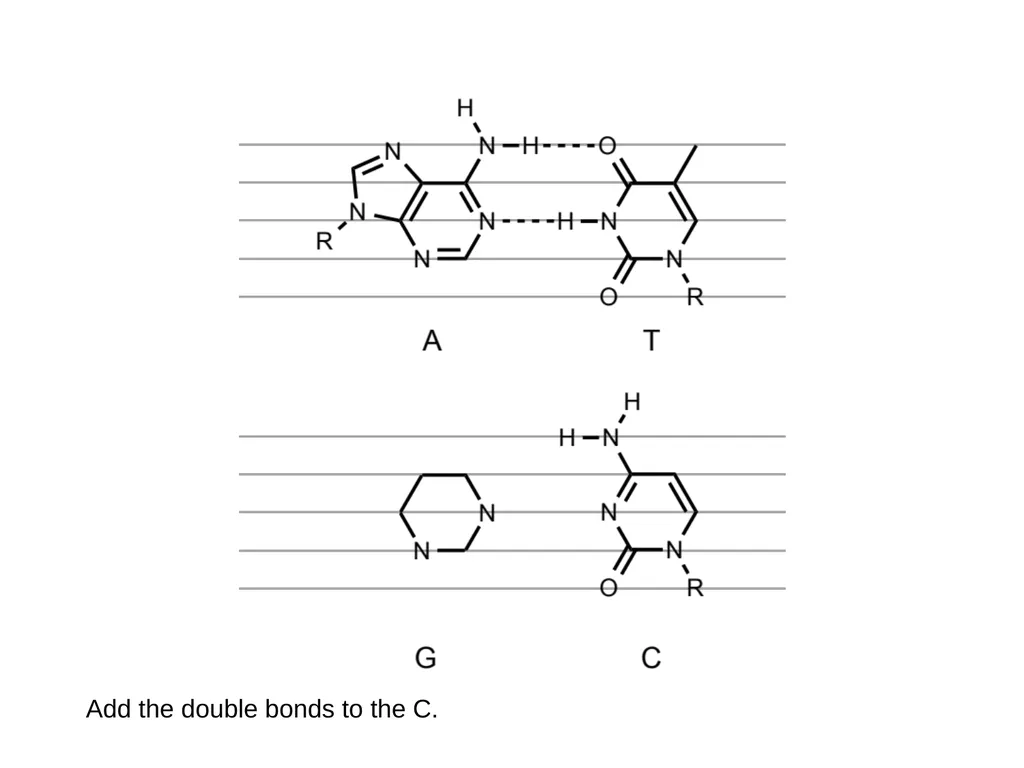
slide33. Add the double bonds to the C.<br>
slide34. Draw two parallel lines that are spaced vertically about the size you intend to draw the Watson-Crick base pair.<br>
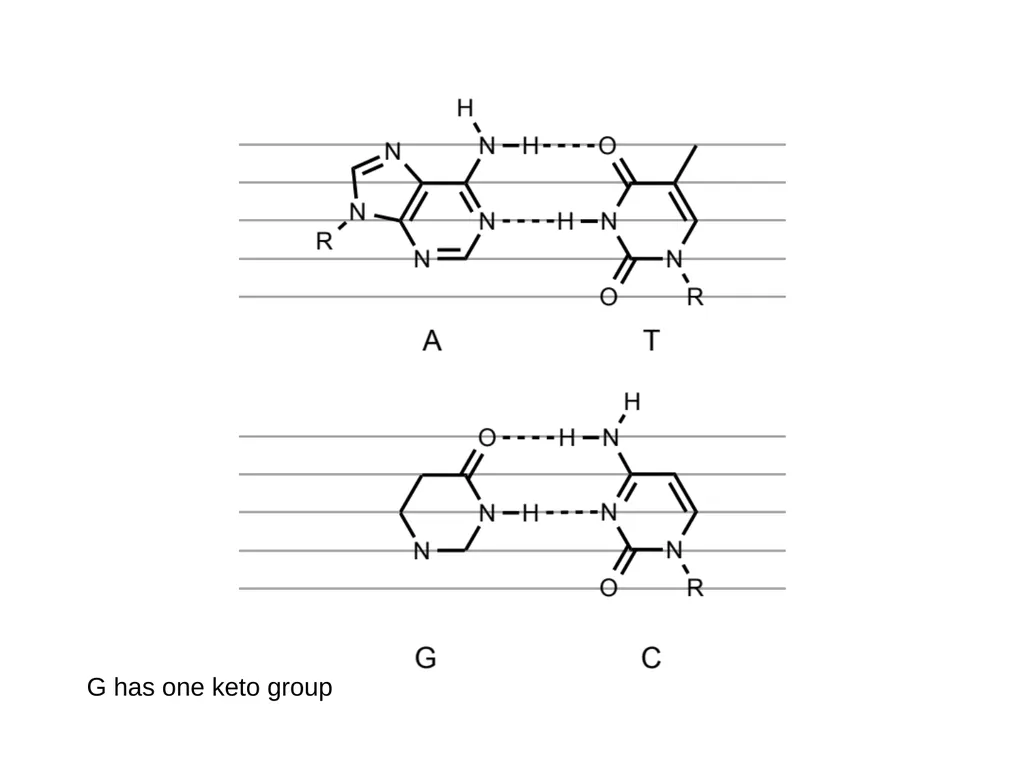
slide35. G has one keto group<br>
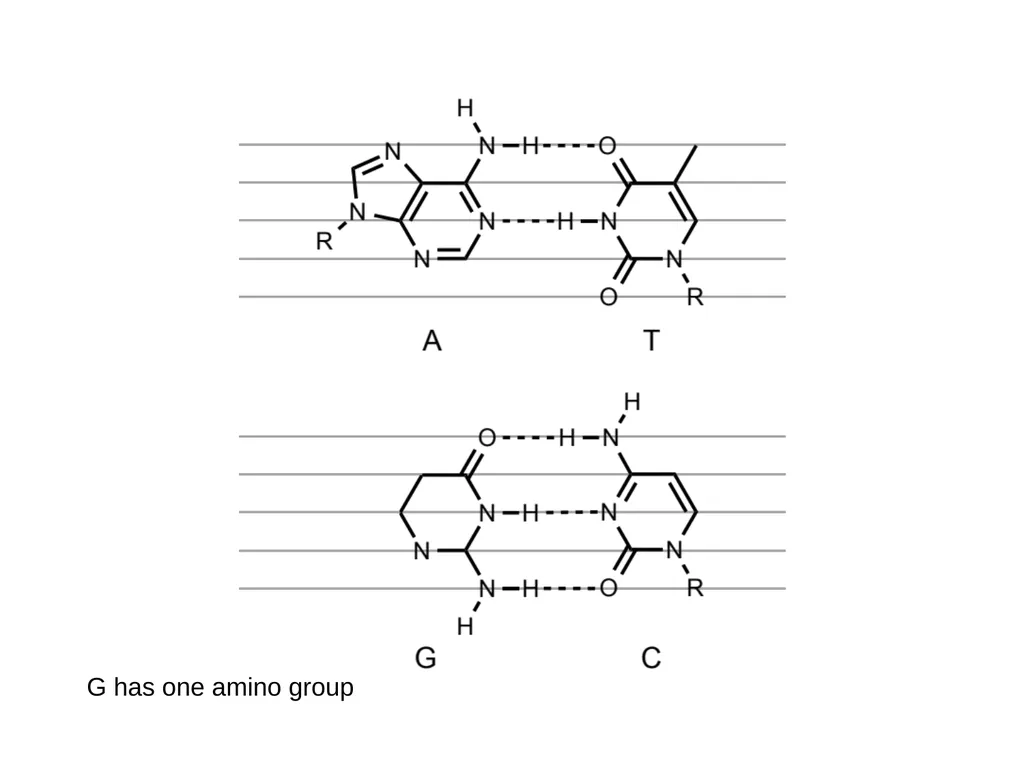
slide36. G has one amino group<br>
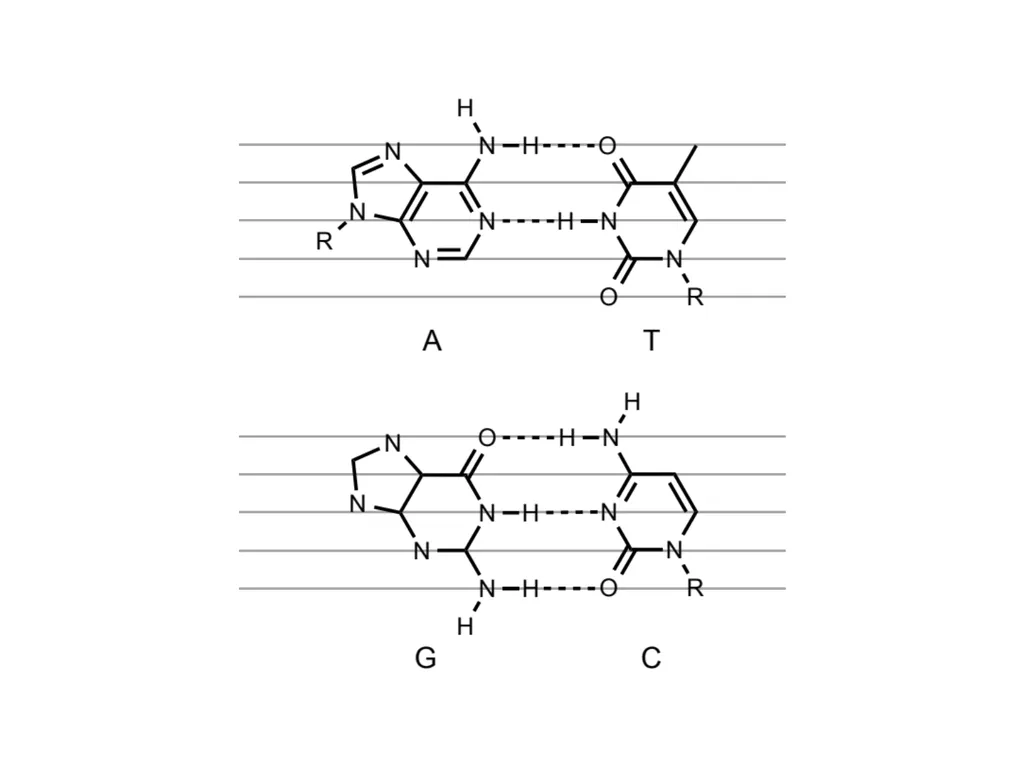
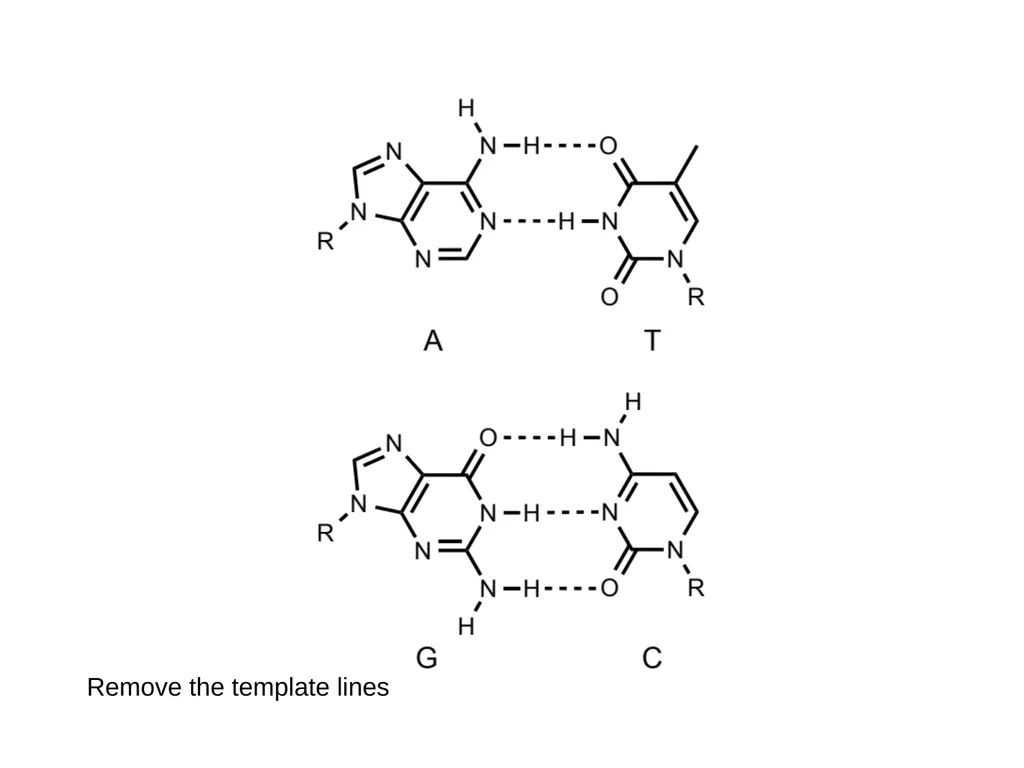
slide40. Remove the template lines<br>
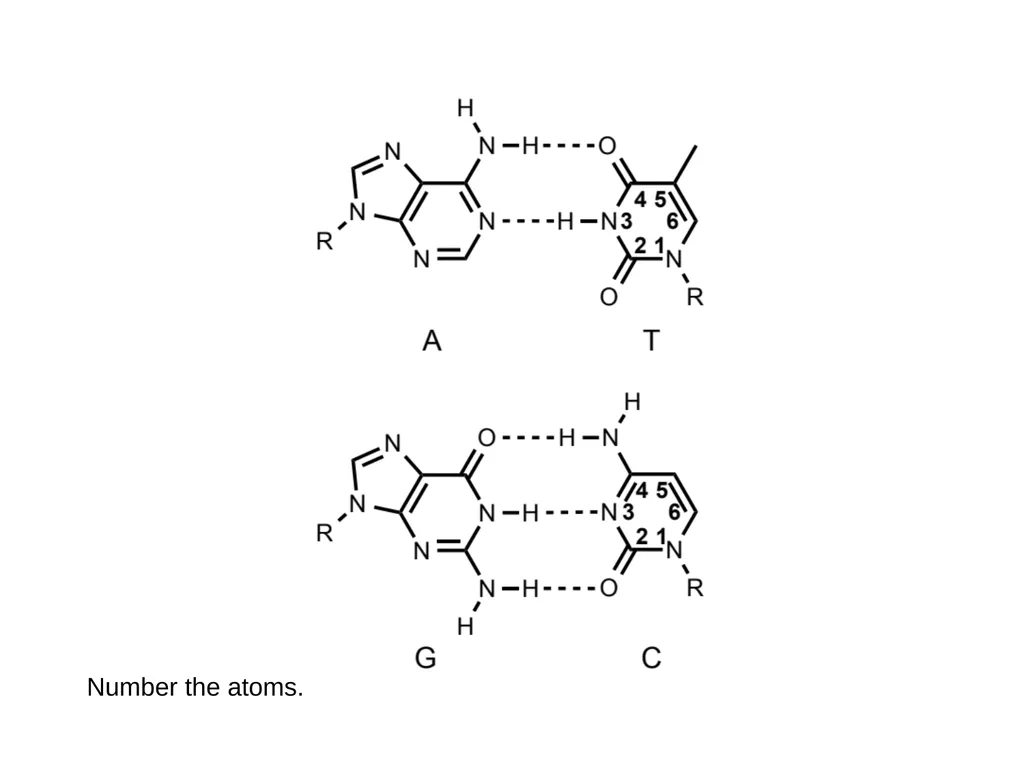
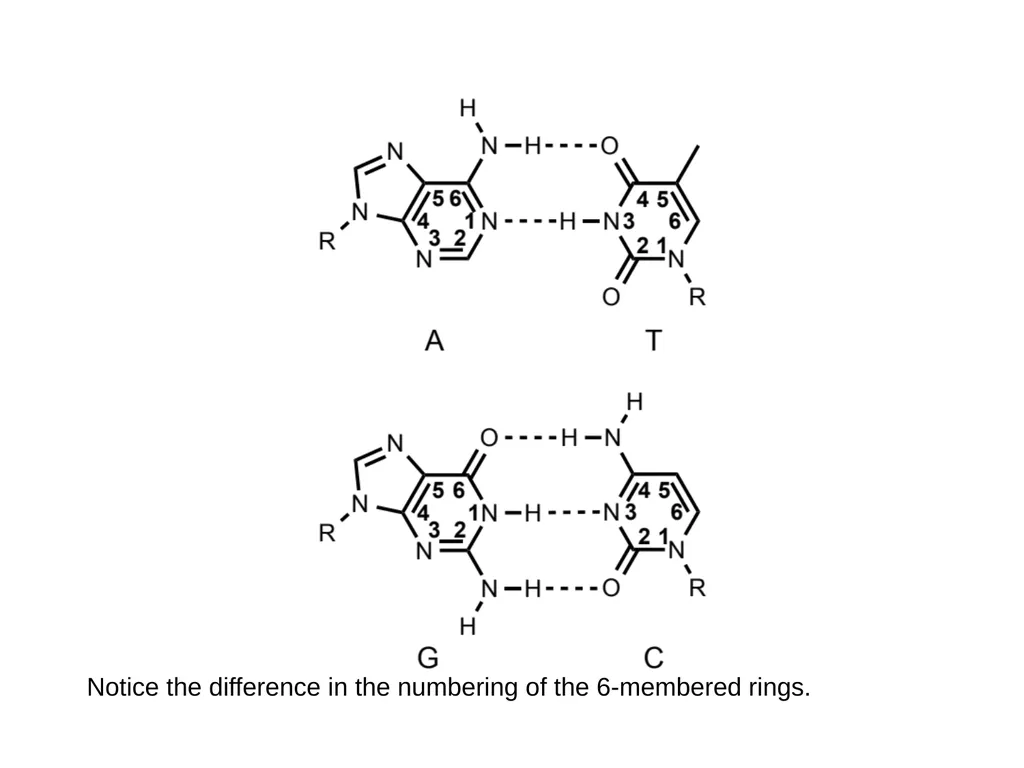
slide41. Number the atoms.<br>
slide42. Notice the difference in the numbering of the 6-membered rings.<br>
slide43. The glycosidic bond is at the N1 of the pyrimidines.
The glycoside bond is at the N9 of the purines<br>
slide44. The N7, O6/N6 and O4/N4 are in the major groove. Major Groove Major Groove Minor Groove Minor Groove The N3 and O2 are in the minor groove - and so is the N2 if it is a GC base pair.<br>