How to write a research paper Planning, research,
Description: How to write a research paper Planning, research, and writing What is a research paper? In-depth consideration of a topic or research question Presents an original thesis statement Engages with primary and secondary sources Contributes
Related Topics
Download Presentation
"How to write a research paper Planning, research," is the property of its rightful owner. Permission is granted to download and print the materials on this website for personal, non-commercial use only, and to display it on your personal computer provided you do not modify the materials and that you retain all copyright notices contained in the materials. By downloading content from our website, you accept the terms of this agreement.
Presentation Transcript
slide1. How to write a research paper Planning, research, and writing<br>
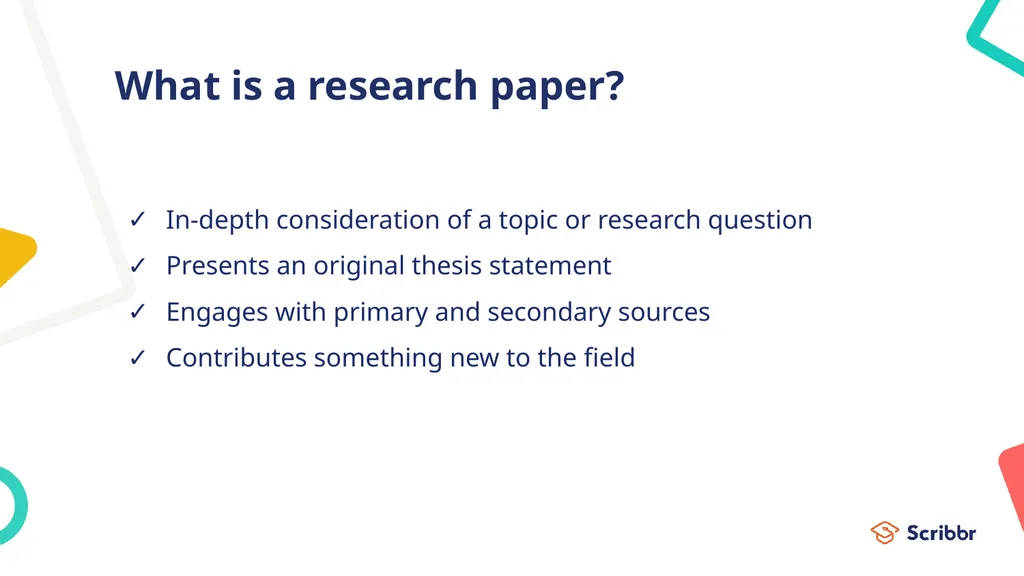
slide2. What is a research paper? In-depth consideration of a topic or research question
Presents an original thesis statement
Engages with primary and secondary sources
Contributes something new to the field<br>
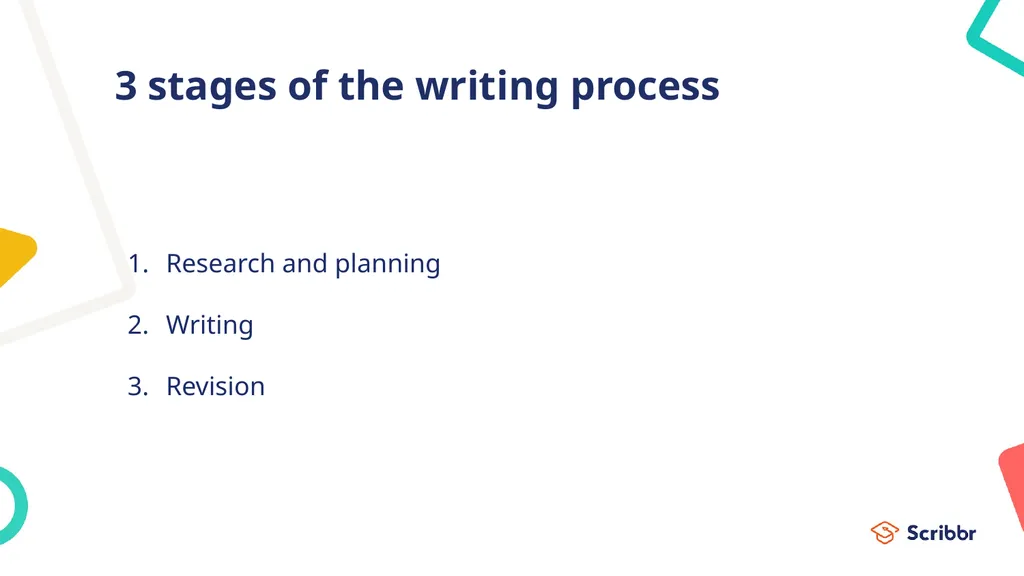
slide3. 3 stages of the writing process Research and planning
Writing
Revision<br>
slide4. Research and planning<br>
slide5. Understanding your assignment When is your deadline?
What word count are you aiming for?
What is the goal of the assignment?
What topics can you write about?<br>
slide6. Choosing a topic Clearly define and narrow down your topic
Sometimes you’re given a list of choices
Sometimes you have freedom to choose your own
Consider what was covered on the course
Follow your curiosity<br>
slide7. Doing the research Start exploring the literature on your topic
Use books, journals, and other reliable sources
Consider a variety of perspectives
Use your reading to inform your arguments
Keep notes of source details and useful quotations<br>
slide8. Primary vs secondary sources Primary sources provide direct first-hand evidence
Secondary sources provide commentary or analysis<br>
slide9. Primary or secondary? The Cambridge Companion to the Victorian Novel
Jane Eyre, by Charlotte Bronte
“Ode to a Nightingale,” by John Keats
A journal article about 19th-century literature<br>
slide10. Primary or secondary? Primary sources:
Jane Eyre, by Charlotte Bronte
“Ode to a Nightingale,” by John Keats
Secondary sources:
The Cambridge Companion to the Victorian Novel
A journal article about 19th-century literature<br>
slide11. Examples of primary sources Interview transcripts
Works of art or literature
Historical documents
Statistical data<br>
slide12. Examples of secondary sources Journal articles
Scholarly books
Reviews<br>
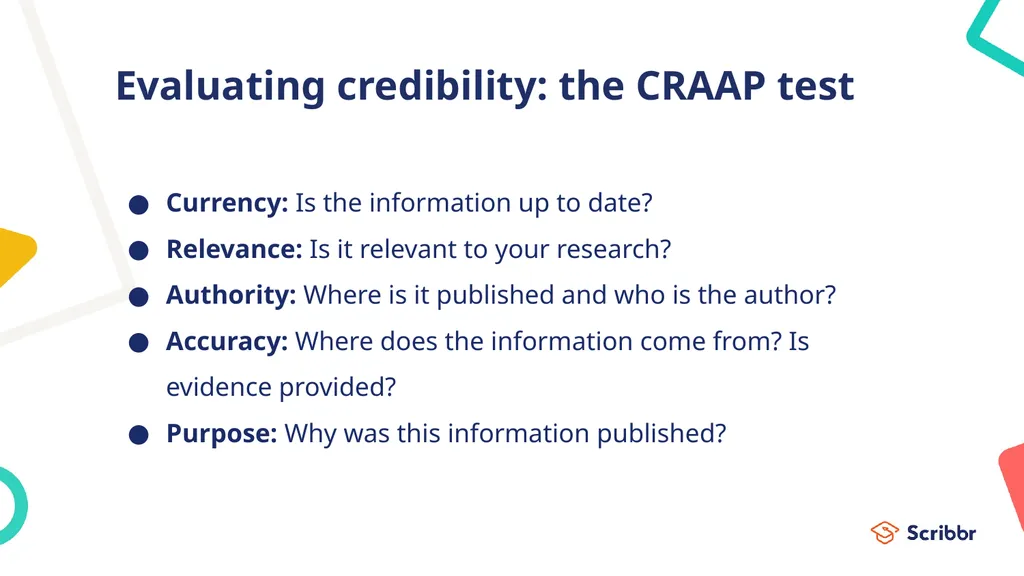
slide13. Evaluating credibility: the CRAAP test Currency: Is the information up to date?
Relevance: Is it relevant to your research?
Authority: Where is it published and who is the author?
Accuracy: Where does the information come from? Is evidence provided?
Purpose: Why was this information published?<br>
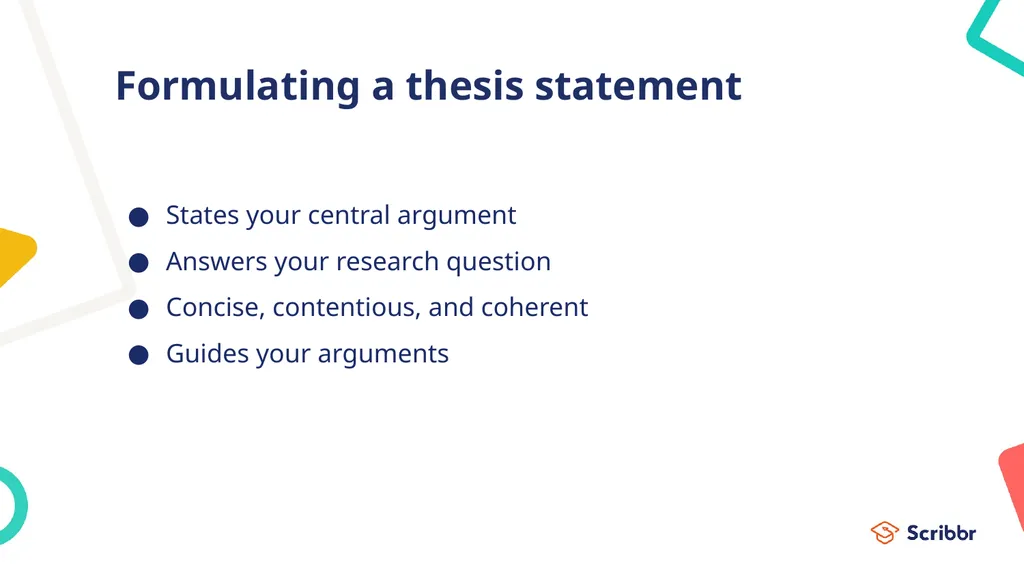
slide14. Formulating a thesis statement States your central argument
Answers your research question
Concise, contentious, and coherent
Guides your arguments<br>
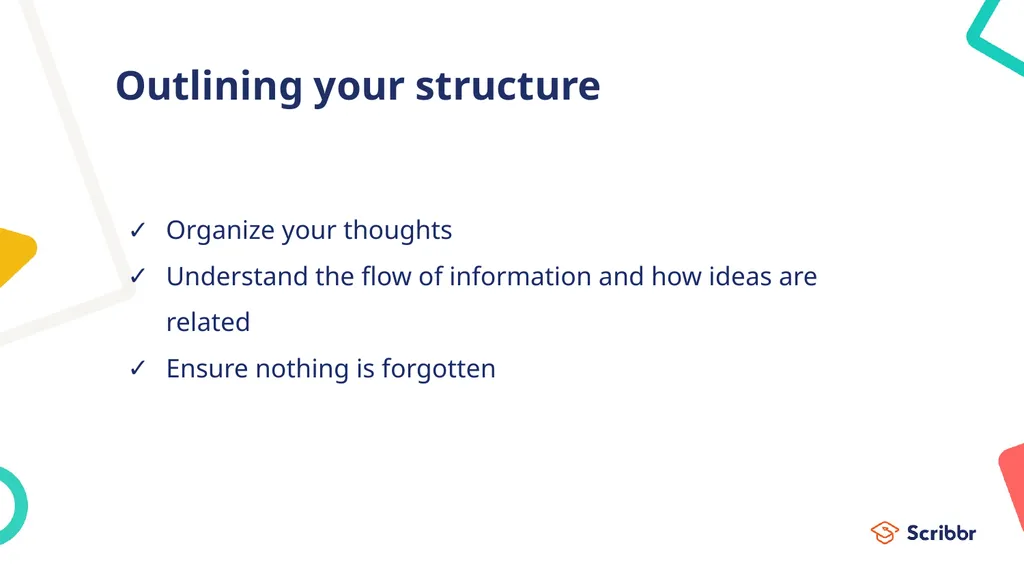
slide15. Outlining your structure Organize your thoughts
Understand the flow of information and how ideas are related
Ensure nothing is forgotten<br>
slide16. Writing<br>
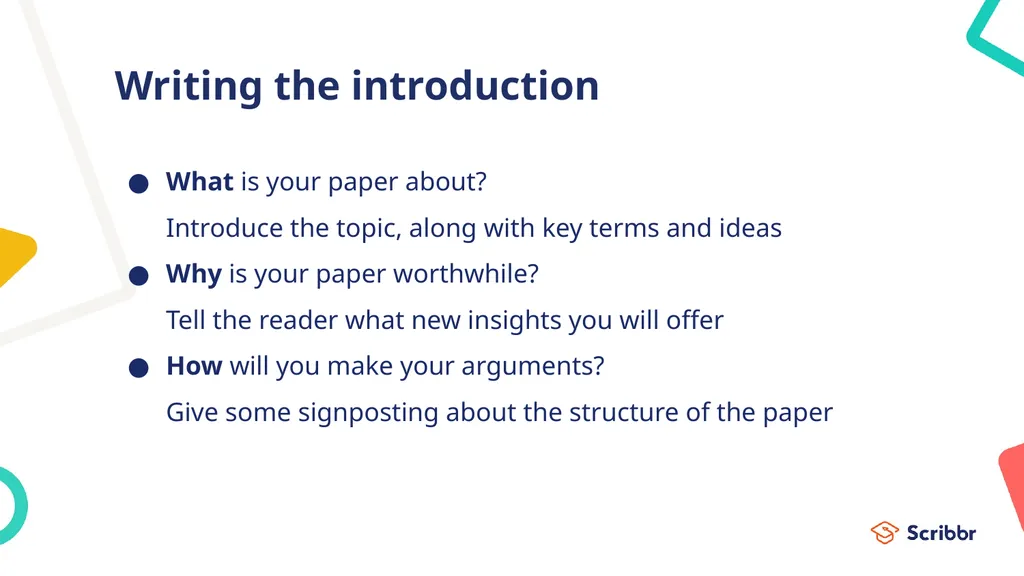
slide17. Writing the introduction What is your paper about?Introduce the topic, along with key terms and ideas
Why is your paper worthwhile?Tell the reader what new insights you will offer
How will you make your arguments?Give some signposting about the structure of the paper<br>
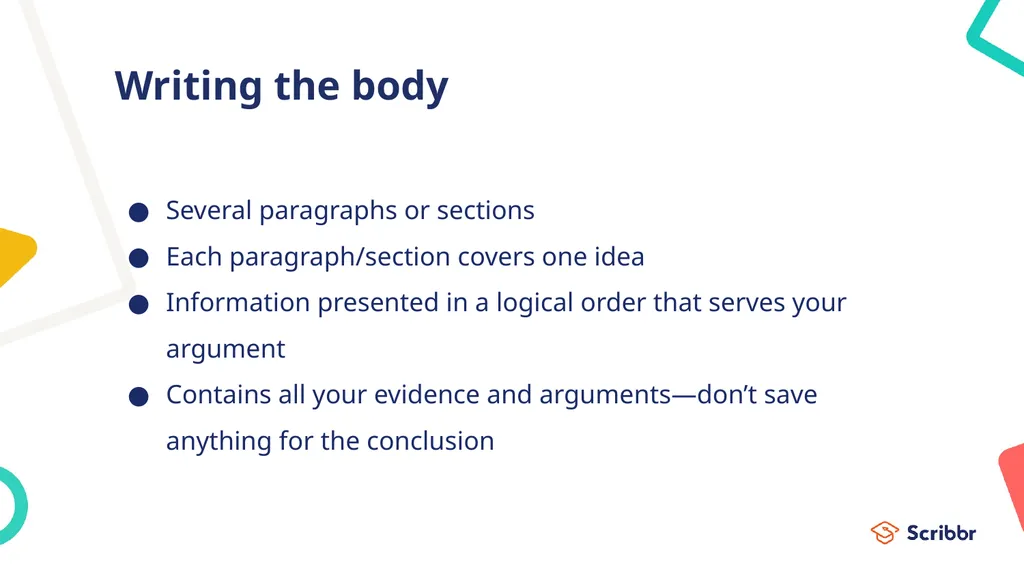
slide18. Writing the body Several paragraphs or sections
Each paragraph/section covers one idea
Information presented in a logical order that serves your argument
Contains all your evidence and arguments—don’t save anything for the conclusion<br>
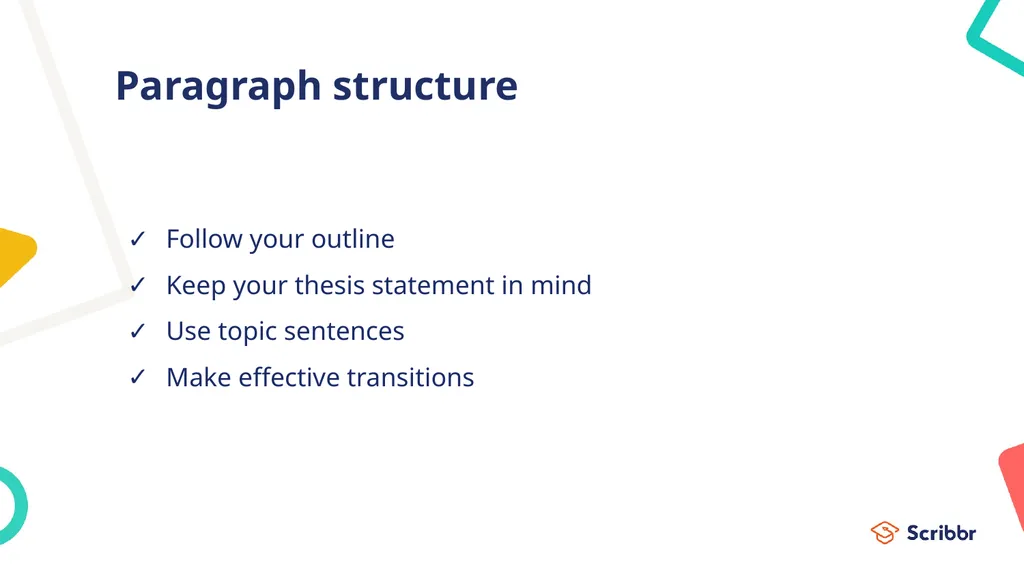
slide19. Paragraph structure Follow your outline
Keep your thesis statement in mind
Use topic sentences
Make effective transitions<br>
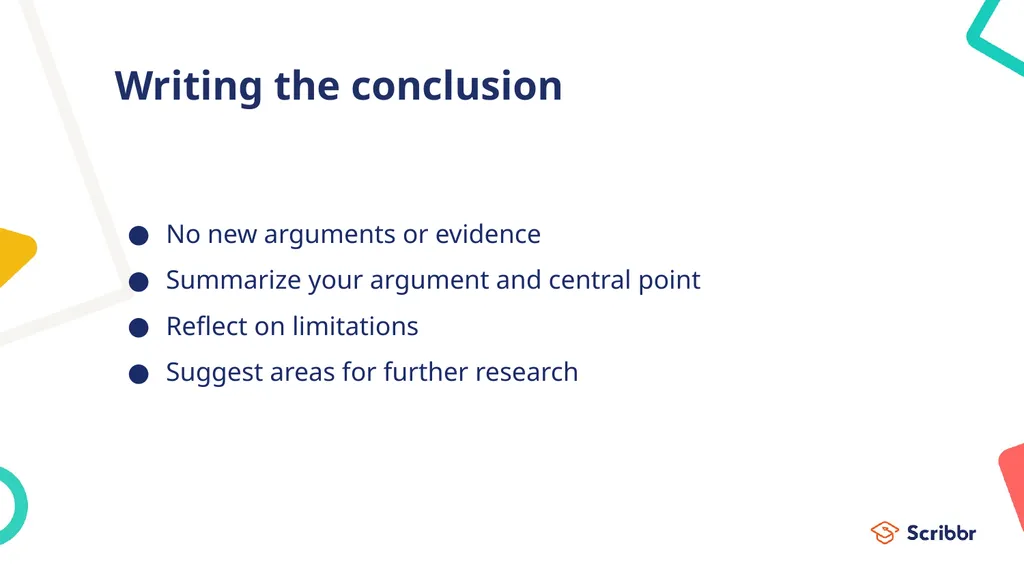
slide20. Writing the conclusion No new arguments or evidence
Summarize your argument and central point
Reflect on limitations
Suggest areas for further research<br>
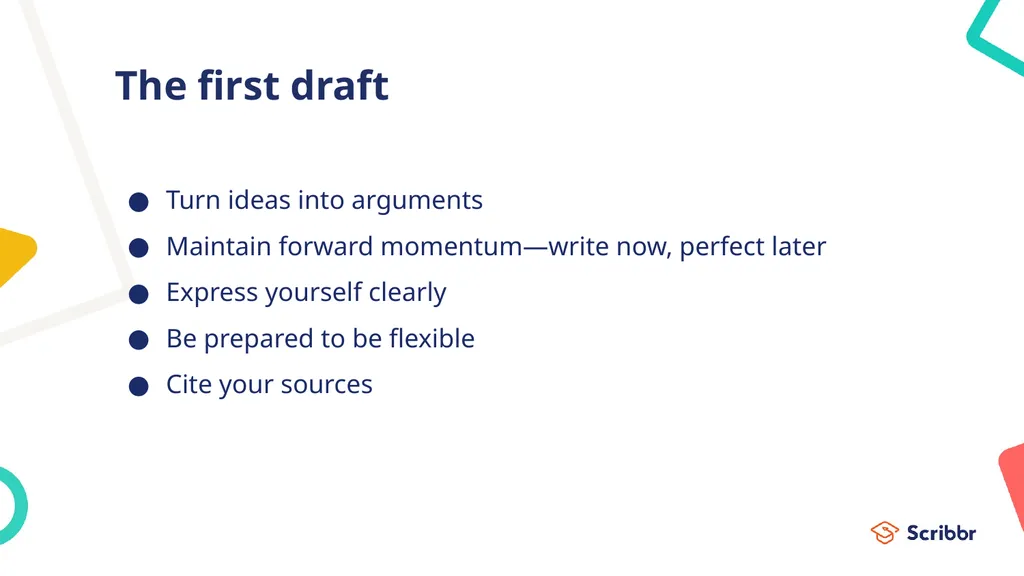
slide21. The first draft Turn ideas into arguments
Maintain forward momentum—write now, perfect later
Express yourself clearly
Be prepared to be flexible
Cite your sources<br>
slide22. Revision<br>
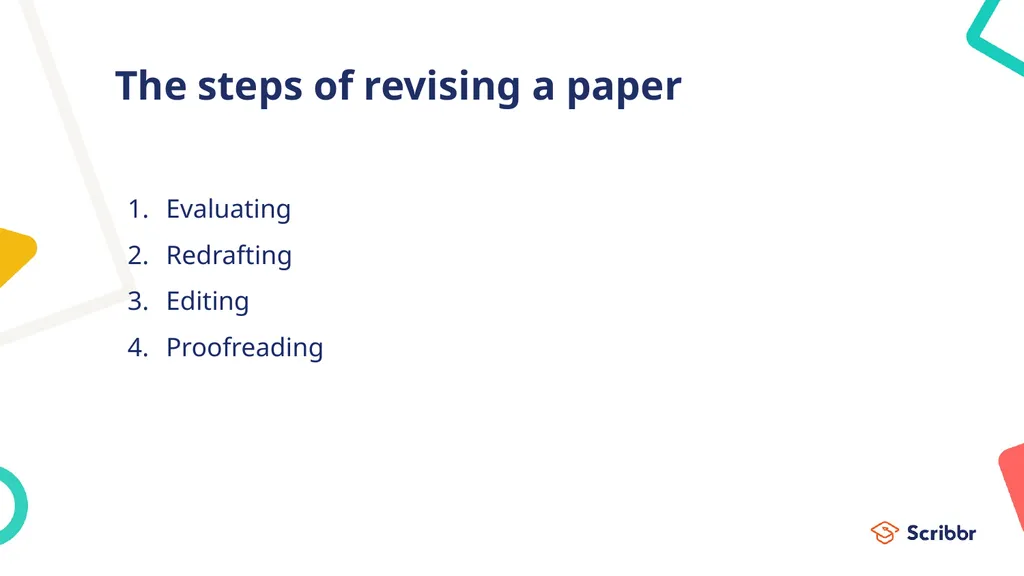
slide23. The steps of revising a paper Evaluating
Redrafting
Editing
Proofreading<br>
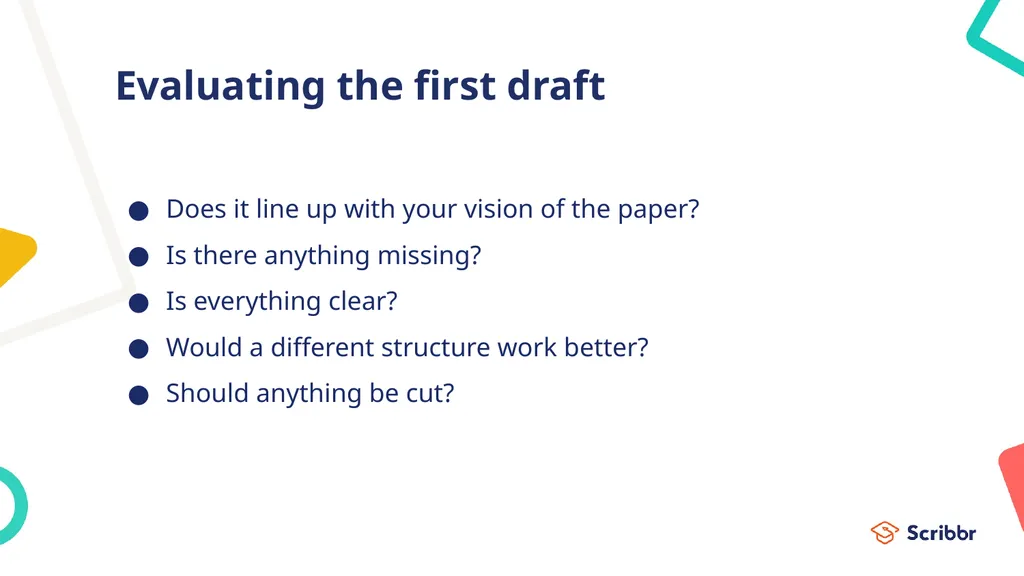
slide24. Evaluating the first draft Does it line up with your vision of the paper?
Is there anything missing?
Is everything clear?
Would a different structure work better?
Should anything be cut?<br>
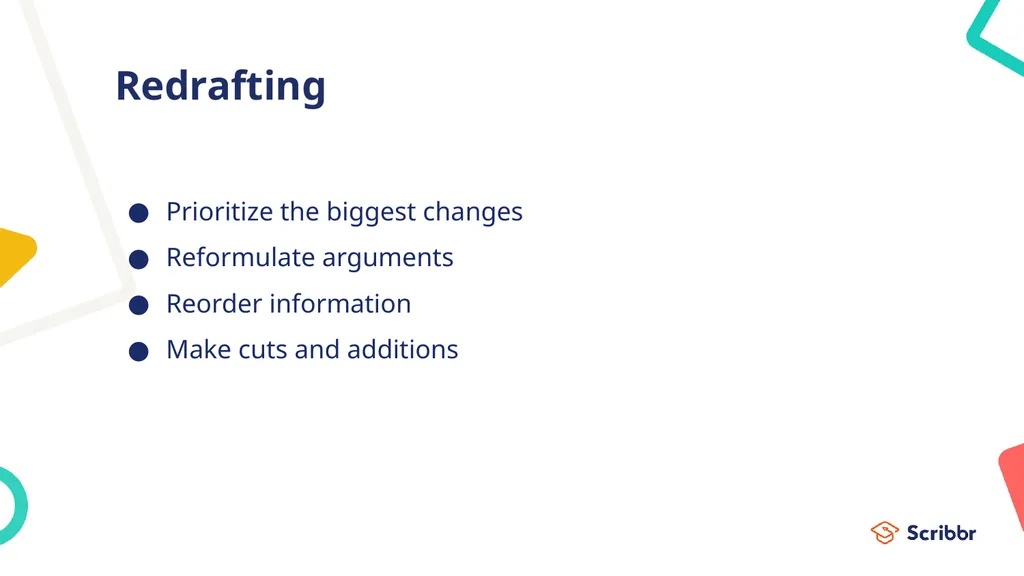
slide25. Redrafting Prioritize the biggest changes
Reformulate arguments
Reorder information
Make cuts and additions<br>
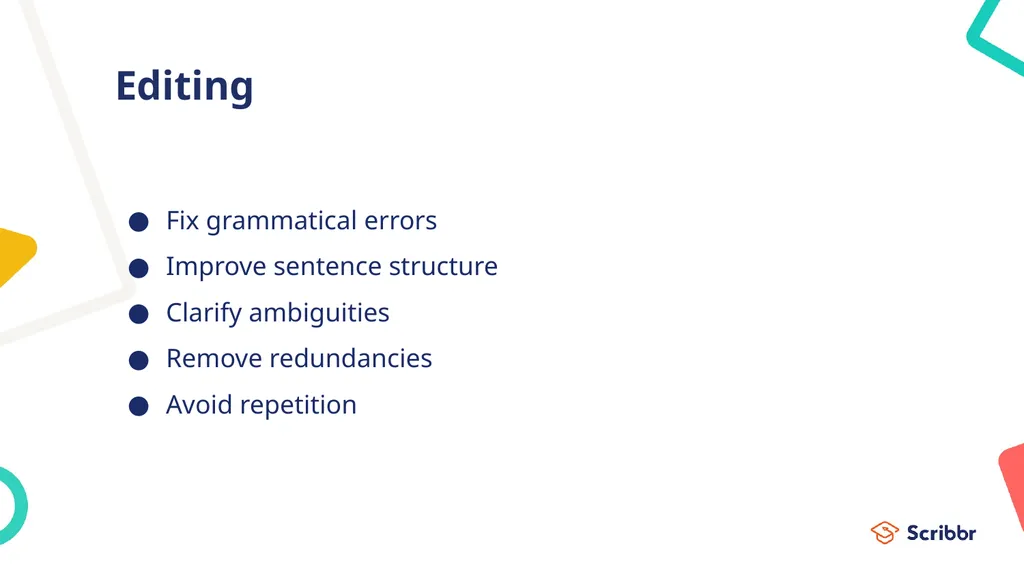
slide26. Editing Fix grammatical errors
Improve sentence structure
Clarify ambiguities
Remove redundancies
Avoid repetition<br>
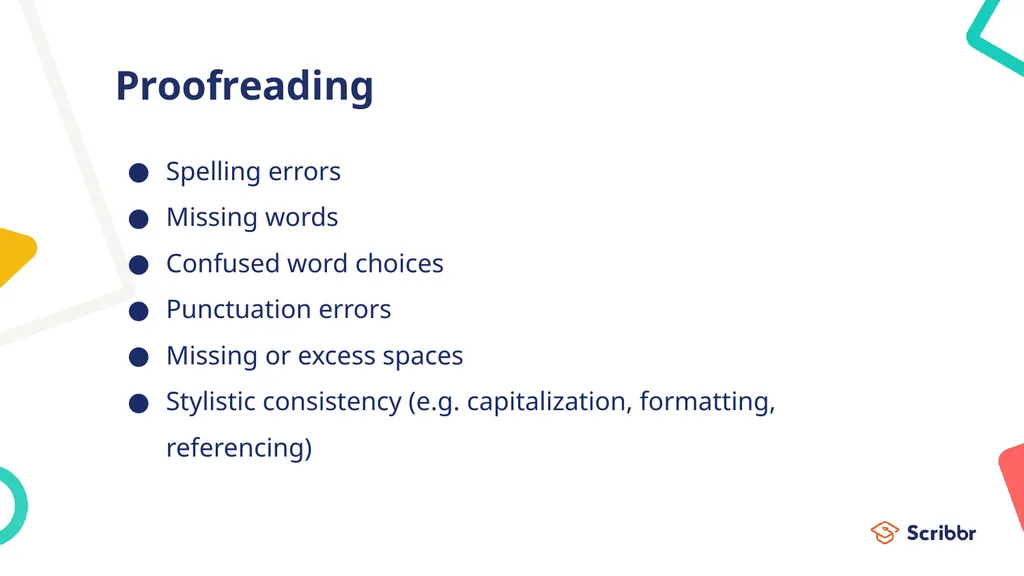
slide27. Proofreading Spelling errors
Missing words
Confused word choices
Punctuation errors
Missing or excess spaces
Stylistic consistency (e.g. capitalization, formatting, referencing)<br>
slide28. Recommended resources<br>
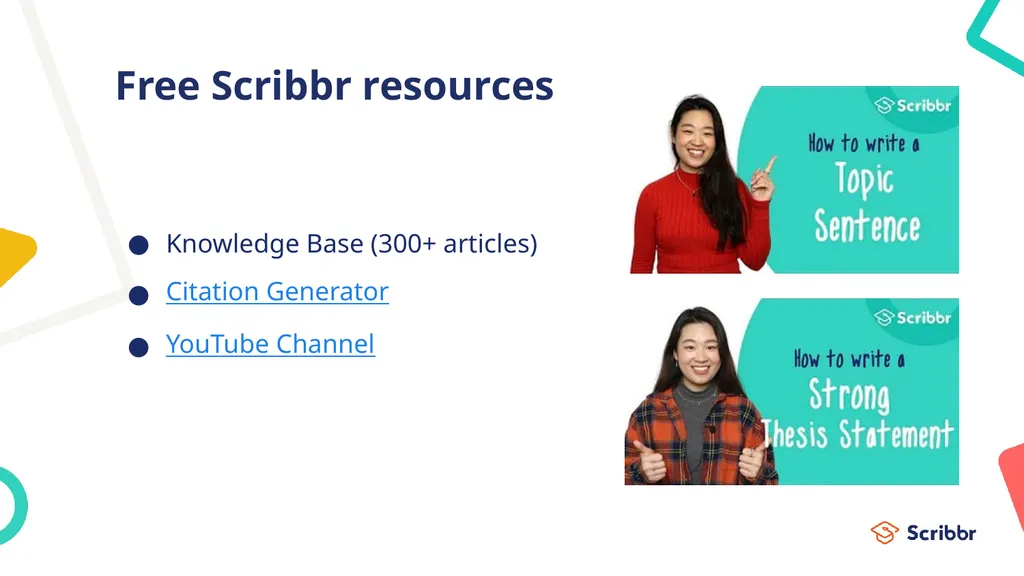
slide29. Free Scribbr resources Knowledge Base (300+ articles)
Citation Generator
YouTube Channel<br>
slide30. Hi, we’re Scribbr 👋 We are a team of 60 people in Amsterdam, and we partner with more than 500 freelance editors across the globe to help students graduate and become better academic writers.
Every day, we work hard on our Proofreading & Editing service, Plagiarism Checker, Citation Generator, Knowledge Base and educational YouTube channel.<br>
slide31. Guidelines for using this presentation This presentation can be freely used and modified for educational purposes. You may:
Display this presentation in a classroom environment
Modify or delete slides
Distribute this presentation in print or in private student environments (e.g. Moodle, BlackBoard, Google Classroom)
Please do give credit to Scribbr for creating this resource.
Questions or feedback? Email shona@scribbr.com and we’ll be in touch!<br>

slide2. What is a research paper? In-depth consideration of a topic or research question
Presents an original thesis statement
Engages with primary and secondary sources
Contributes something new to the field<br>
slide3. 3 stages of the writing process Research and planning
Writing
Revision<br>
slide4. Research and planning<br>
slide5. Understanding your assignment When is your deadline?
What word count are you aiming for?
What is the goal of the assignment?
What topics can you write about?<br>
slide6. Choosing a topic Clearly define and narrow down your topic
Sometimes you’re given a list of choices
Sometimes you have freedom to choose your own
Consider what was covered on the course
Follow your curiosity<br>
slide7. Doing the research Start exploring the literature on your topic
Use books, journals, and other reliable sources
Consider a variety of perspectives
Use your reading to inform your arguments
Keep notes of source details and useful quotations<br>
slide8. Primary vs secondary sources Primary sources provide direct first-hand evidence
Secondary sources provide commentary or analysis<br>
slide9. Primary or secondary? The Cambridge Companion to the Victorian Novel
Jane Eyre, by Charlotte Bronte
“Ode to a Nightingale,” by John Keats
A journal article about 19th-century literature<br>
slide10. Primary or secondary? Primary sources:
Jane Eyre, by Charlotte Bronte
“Ode to a Nightingale,” by John Keats
Secondary sources:
The Cambridge Companion to the Victorian Novel
A journal article about 19th-century literature<br>
slide11. Examples of primary sources Interview transcripts
Works of art or literature
Historical documents
Statistical data<br>
slide12. Examples of secondary sources Journal articles
Scholarly books
Reviews<br>
slide13. Evaluating credibility: the CRAAP test Currency: Is the information up to date?
Relevance: Is it relevant to your research?
Authority: Where is it published and who is the author?
Accuracy: Where does the information come from? Is evidence provided?
Purpose: Why was this information published?<br>
slide14. Formulating a thesis statement States your central argument
Answers your research question
Concise, contentious, and coherent
Guides your arguments<br>
slide15. Outlining your structure Organize your thoughts
Understand the flow of information and how ideas are related
Ensure nothing is forgotten<br>
slide16. Writing<br>
slide17. Writing the introduction What is your paper about?Introduce the topic, along with key terms and ideas
Why is your paper worthwhile?Tell the reader what new insights you will offer
How will you make your arguments?Give some signposting about the structure of the paper<br>
slide18. Writing the body Several paragraphs or sections
Each paragraph/section covers one idea
Information presented in a logical order that serves your argument
Contains all your evidence and arguments—don’t save anything for the conclusion<br>
slide19. Paragraph structure Follow your outline
Keep your thesis statement in mind
Use topic sentences
Make effective transitions<br>
slide20. Writing the conclusion No new arguments or evidence
Summarize your argument and central point
Reflect on limitations
Suggest areas for further research<br>
slide21. The first draft Turn ideas into arguments
Maintain forward momentum—write now, perfect later
Express yourself clearly
Be prepared to be flexible
Cite your sources<br>
slide22. Revision<br>
slide23. The steps of revising a paper Evaluating
Redrafting
Editing
Proofreading<br>
slide24. Evaluating the first draft Does it line up with your vision of the paper?
Is there anything missing?
Is everything clear?
Would a different structure work better?
Should anything be cut?<br>
slide25. Redrafting Prioritize the biggest changes
Reformulate arguments
Reorder information
Make cuts and additions<br>
slide26. Editing Fix grammatical errors
Improve sentence structure
Clarify ambiguities
Remove redundancies
Avoid repetition<br>
slide27. Proofreading Spelling errors
Missing words
Confused word choices
Punctuation errors
Missing or excess spaces
Stylistic consistency (e.g. capitalization, formatting, referencing)<br>
slide28. Recommended resources<br>
slide29. Free Scribbr resources Knowledge Base (300+ articles)
Citation Generator
YouTube Channel<br>
slide30. Hi, we’re Scribbr 👋 We are a team of 60 people in Amsterdam, and we partner with more than 500 freelance editors across the globe to help students graduate and become better academic writers.
Every day, we work hard on our Proofreading & Editing service, Plagiarism Checker, Citation Generator, Knowledge Base and educational YouTube channel.<br>
slide31. Guidelines for using this presentation This presentation can be freely used and modified for educational purposes. You may:
Display this presentation in a classroom environment
Modify or delete slides
Distribute this presentation in print or in private student environments (e.g. Moodle, BlackBoard, Google Classroom)
Please do give credit to Scribbr for creating this resource.
Questions or feedback? Email shona@scribbr.com and we’ll be in touch!<br>