
Human Body Systems On-Level Biology Book: Chapters
LD
Published · 53 slides · 0 views

1 / 1
Description
Human Body Systems On-Level Biology Book: Chapters 34 39 Pre-AP Biology Book: Chapters 35 - 40 Digestive System On-Level Biology Book: Pages 917 928 Pre-AP Biology Book: Pages 970 - 984 Purpose The Digestive System converts food into
Related Topics
Share
Embed code
Download this presentation From Below
"Human Body Systems On-Level Biology Book: Chapters" is the property of its rightful owner. Permission is granted to download and print the materials on this website for personal, non-commercial use only, and to display it on your personal computer provided you do not modify the materials and that you retain all copyright notices contained in the materials. By downloading content from our website, you accept the terms of this agreement.
Presentation Transcript
01
Human Body Systems On-Level Biology Book: Chapters 34 – 39
Pre-AP Biology Book: Chapters 35 - 40<br>
Pre-AP Biology Book: Chapters 35 - 40<br>
02
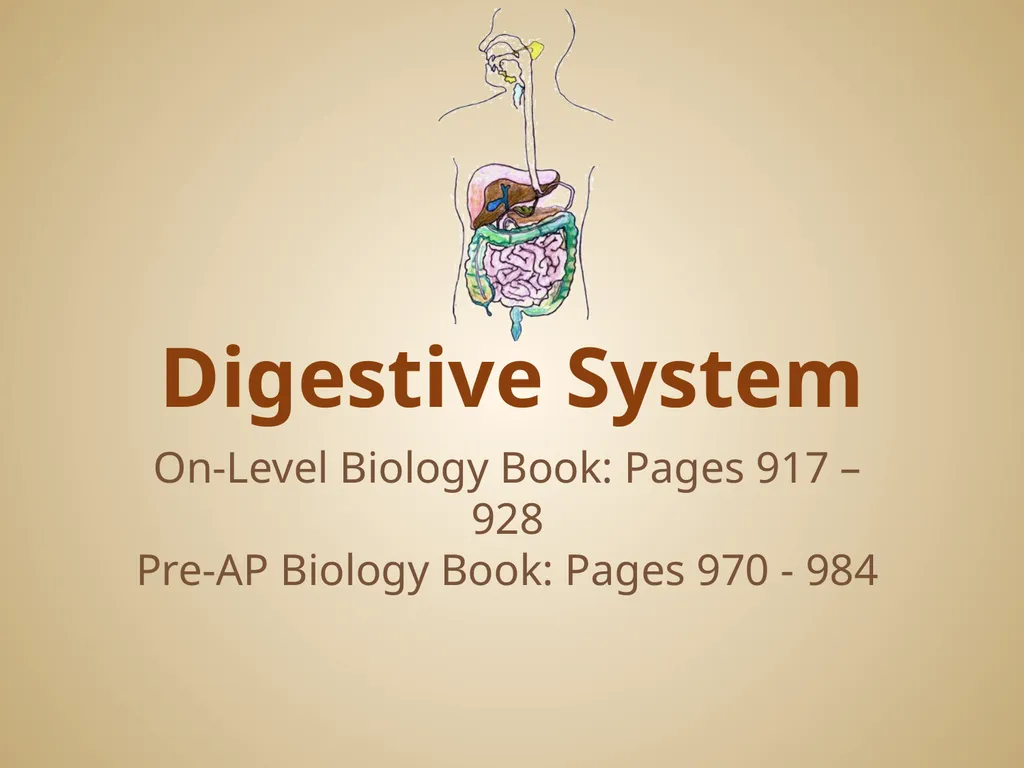
Digestive System On-Level Biology Book: Pages 917 – 928
Pre-AP Biology Book: Pages 970 - 984<br>
Pre-AP Biology Book: Pages 970 - 984<br>
03
Purpose The Digestive System converts food into simpler molecules that can be used by cells; absorbs food; eliminates waste
The entire digestive process takes between 24 and 33 hours<br>
The entire digestive process takes between 24 and 33 hours<br>
04
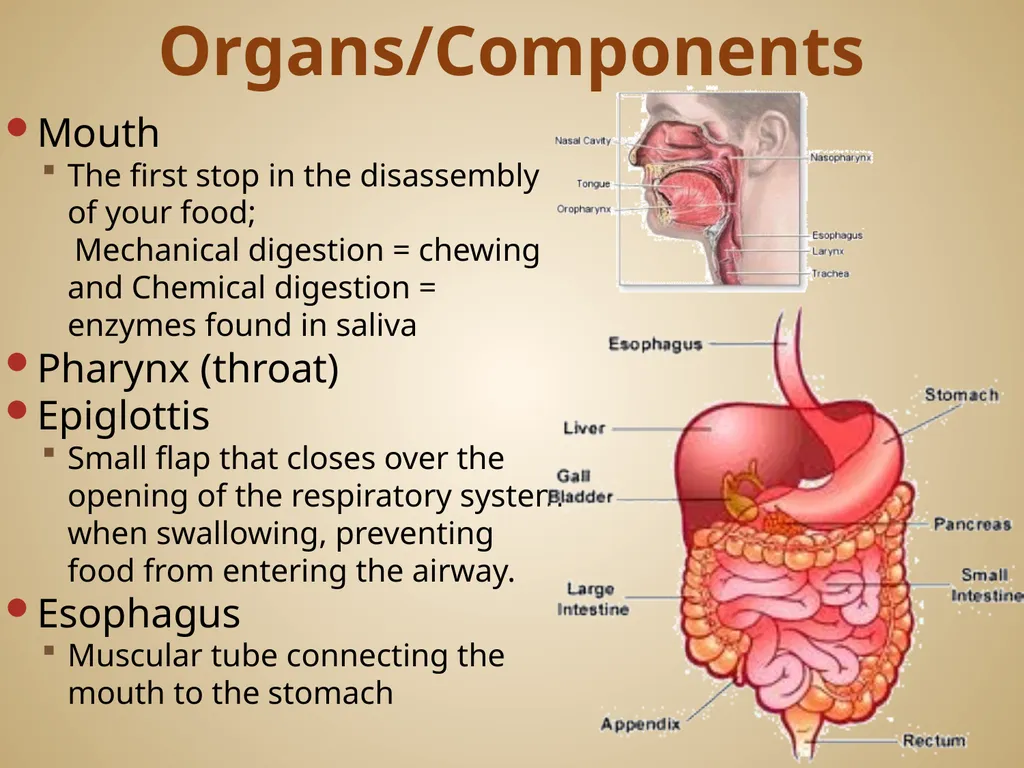
Organs/Components Mouth
The first stop in the disassembly of your food;
Mechanical digestion = chewing and Chemical digestion = enzymes found in saliva
Pharynx (throat)
Epiglottis
Small flap that closes over the opening of the respiratory system when swallowing, preventing food from entering the airway.
Esophagus
Muscular tube connecting the mouth to the stomach<br>
The first stop in the disassembly of your food;
Mechanical digestion = chewing and Chemical digestion = enzymes found in saliva
Pharynx (throat)
Epiglottis
Small flap that closes over the opening of the respiratory system when swallowing, preventing food from entering the airway.
Esophagus
Muscular tube connecting the mouth to the stomach<br>
05
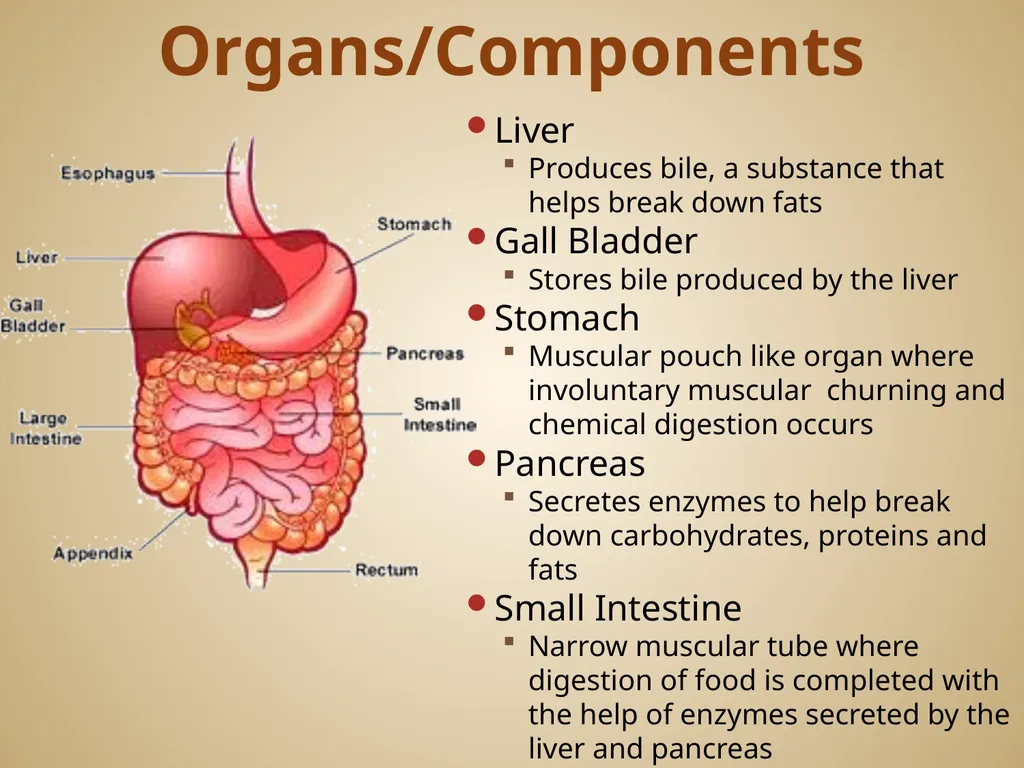
Organs/Components Liver
Produces bile, a substance that helps break down fats
Gall Bladder
Stores bile produced by the liver
Stomach
Muscular pouch like organ where involuntary muscular churning and chemical digestion occurs
Pancreas
Secretes enzymes to help break down carbohydrates, proteins and fats
Small Intestine
Narrow muscular tube where digestion of food is completed with the help of enzymes secreted by the liver and pancreas<br>
Produces bile, a substance that helps break down fats
Gall Bladder
Stores bile produced by the liver
Stomach
Muscular pouch like organ where involuntary muscular churning and chemical digestion occurs
Pancreas
Secretes enzymes to help break down carbohydrates, proteins and fats
Small Intestine
Narrow muscular tube where digestion of food is completed with the help of enzymes secreted by the liver and pancreas<br>
06
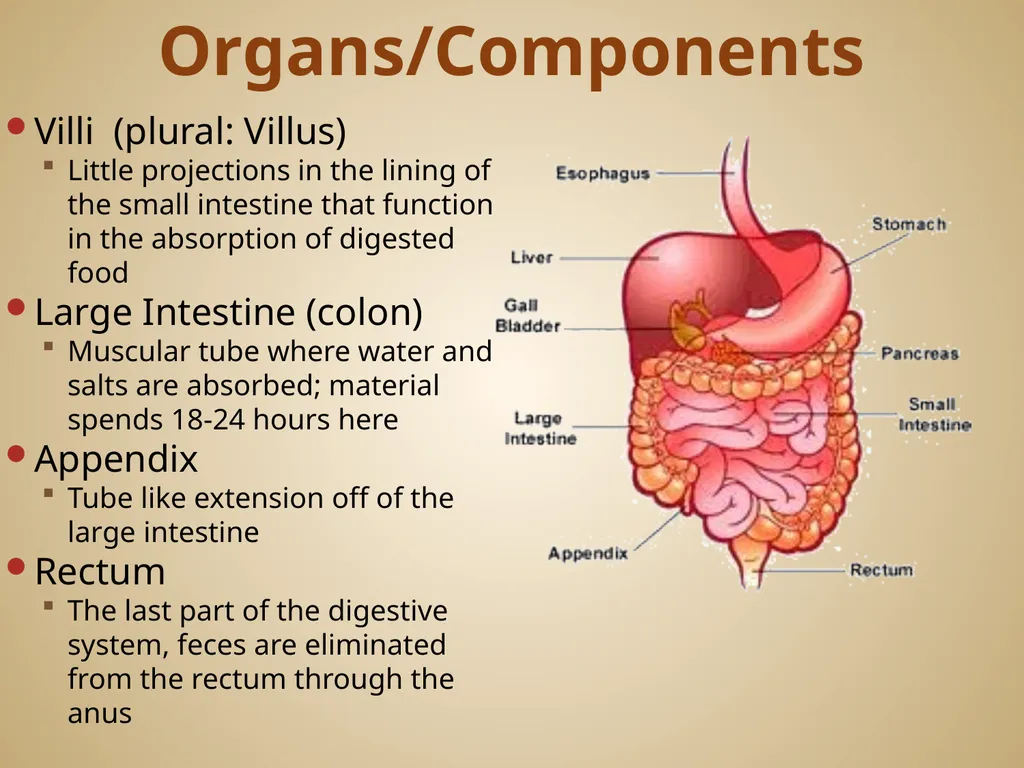
Organs/Components Villi (plural: Villus)
Little projections in the lining of the small intestine that function in the absorption of digested food
Large Intestine (colon)
Muscular tube where water and salts are absorbed; material spends 18-24 hours here
Appendix
Tube like extension off of the large intestine
Rectum
The last part of the digestive system, feces are eliminated from the rectum through the anus<br>
Little projections in the lining of the small intestine that function in the absorption of digested food
Large Intestine (colon)
Muscular tube where water and salts are absorbed; material spends 18-24 hours here
Appendix
Tube like extension off of the large intestine
Rectum
The last part of the digestive system, feces are eliminated from the rectum through the anus<br>
07
How Does this System Relate to others? Muscular – contains smooth muscle
Nervous – gets signals that control the rate of digestion
Circulatory – broken down food travels through blood vessels to cells
Endocrine – hormones (ex. Insulin) control blood sugar levels<br>
Nervous – gets signals that control the rate of digestion
Circulatory – broken down food travels through blood vessels to cells
Endocrine – hormones (ex. Insulin) control blood sugar levels<br>
08
Excretory System On-Level Biology Book: Pages 985 – 991
Pre-AP Biology Book: Pages 985 - 995<br>
Pre-AP Biology Book: Pages 985 - 995<br>
09
Purpose The Excretory System eliminates waste products from the body<br>
10
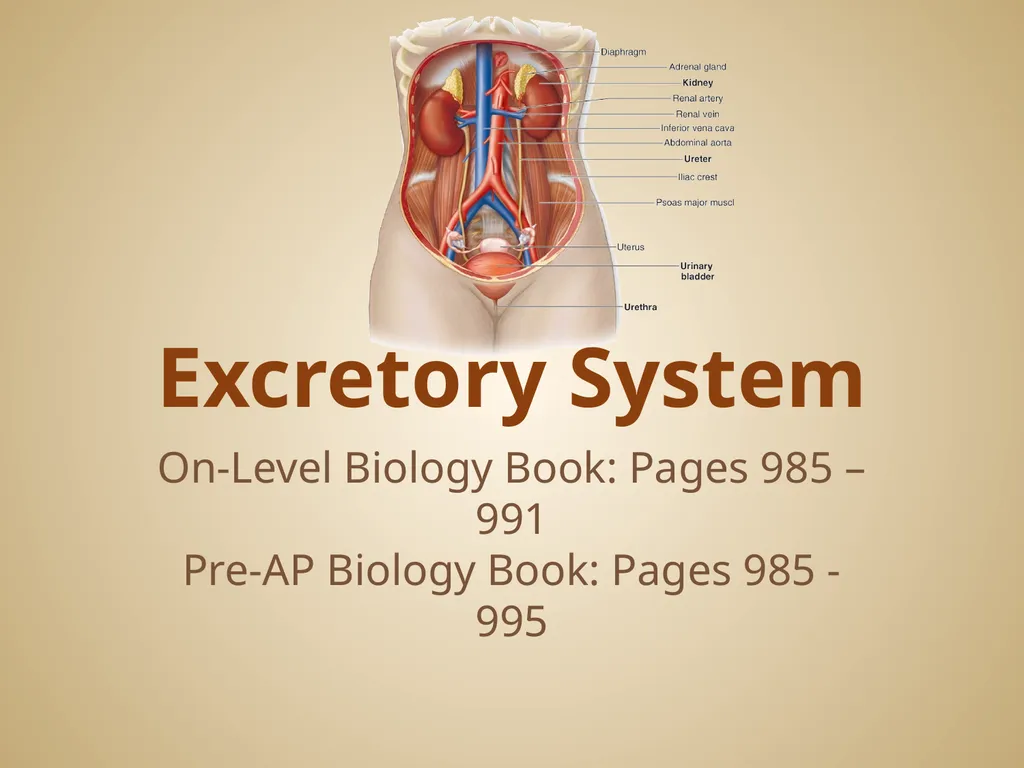
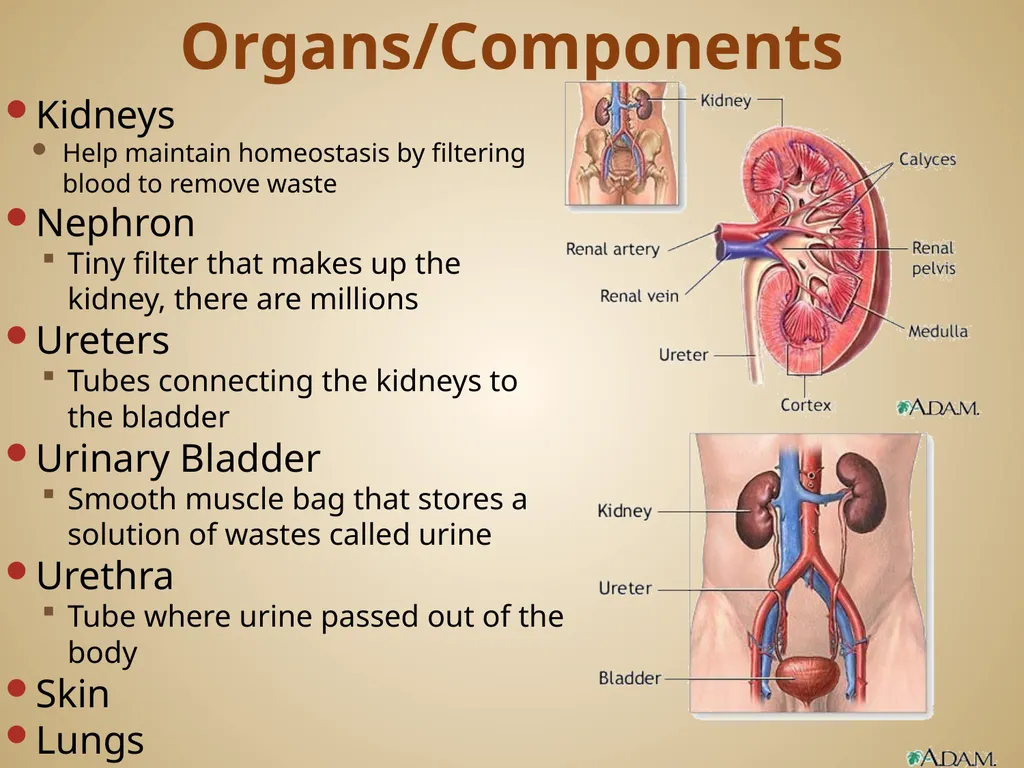
Organs/Components Kidneys
Help maintain homeostasis by filtering blood to remove waste
Nephron
Tiny filter that makes up the kidney, there are millions
Ureters
Tubes connecting the kidneys to the bladder
Urinary Bladder
Smooth muscle bag that stores a solution of wastes called urine
Urethra
Tube where urine passed out of the body
Skin
Lungs<br>
Help maintain homeostasis by filtering blood to remove waste
Nephron
Tiny filter that makes up the kidney, there are millions
Ureters
Tubes connecting the kidneys to the bladder
Urinary Bladder
Smooth muscle bag that stores a solution of wastes called urine
Urethra
Tube where urine passed out of the body
Skin
Lungs<br>
11
How Does this System Relate to others? Circulatory – waste products are carried from the cells to the kidney through blood vessels
Endocrine – hormones are sent that control water levels and homeostasis
Respiratory – expels toxic CO2 out of body<br>
Endocrine – hormones are sent that control water levels and homeostasis
Respiratory – expels toxic CO2 out of body<br>
12
Respiratory System On-Level Biology Book: Pages 971 – 974
Pre-AP Biology Book: Pages 956 - 969<br>
Pre-AP Biology Book: Pages 956 - 969<br>
13
Purpose The Respiratory System provides oxygen needed for cellular respiration and removes carbon dioxide from the body<br>
14
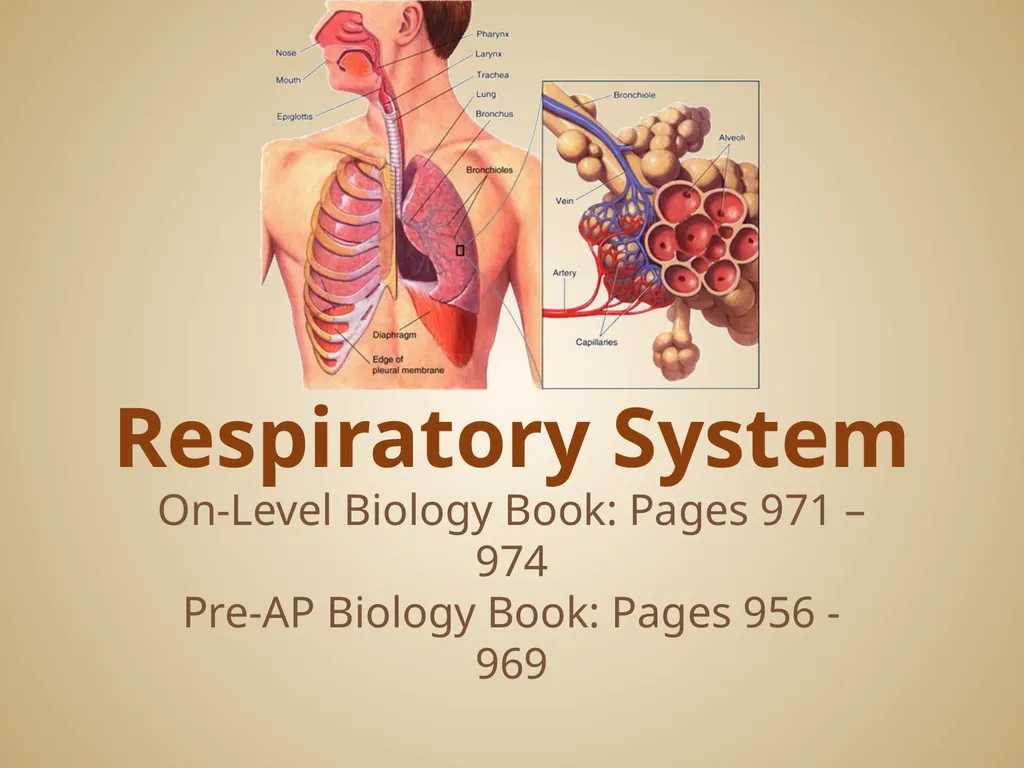
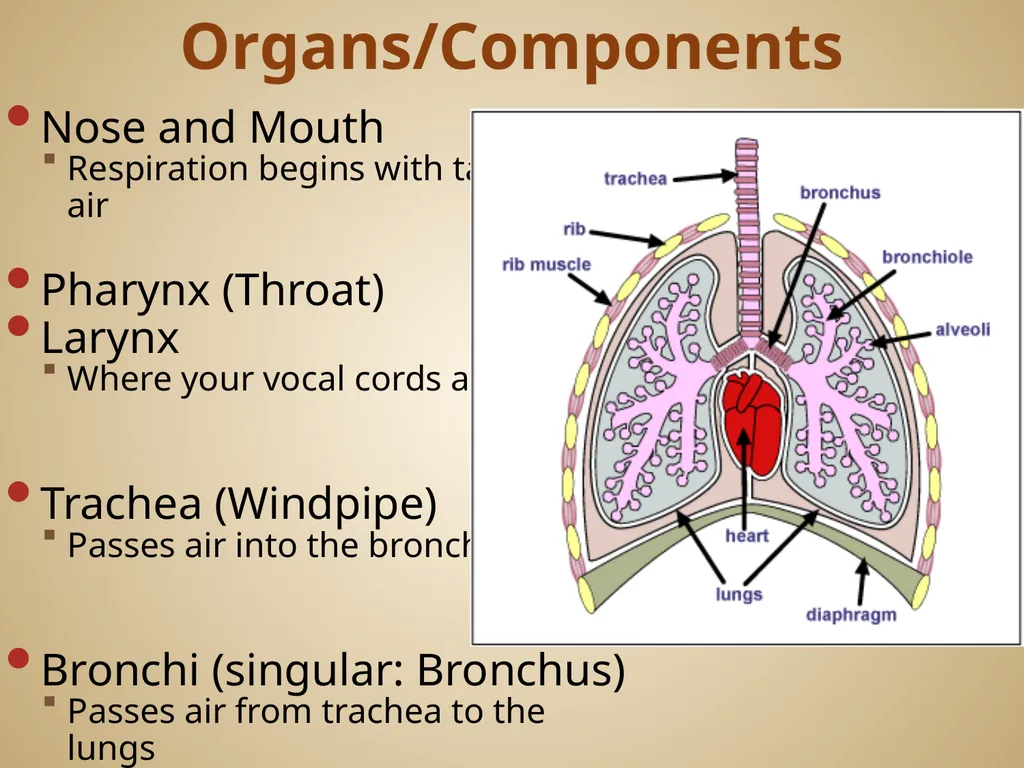
Organs/Components Nose and Mouth
Respiration begins with taking in air
Pharynx (Throat)
Larynx
Where your vocal cords are
Trachea (Windpipe)
Passes air into the bronchi
Bronchi (singular: Bronchus)
Passes air from trachea to the lungs<br>
Respiration begins with taking in air
Pharynx (Throat)
Larynx
Where your vocal cords are
Trachea (Windpipe)
Passes air into the bronchi
Bronchi (singular: Bronchus)
Passes air from trachea to the lungs<br>
15
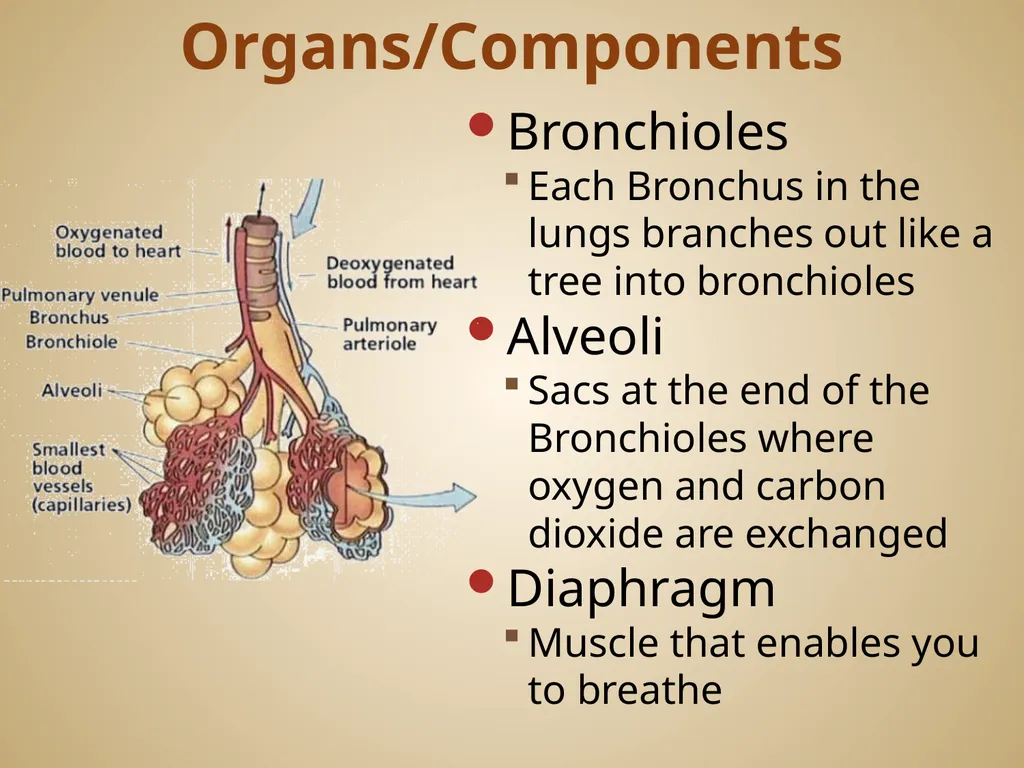
Organs/Components Bronchioles
Each Bronchus in the lungs branches out like a tree into bronchioles
Alveoli
Sacs at the end of the Bronchioles where oxygen and carbon dioxide are exchanged
Diaphragm
Muscle that enables you to breathe<br>
Each Bronchus in the lungs branches out like a tree into bronchioles
Alveoli
Sacs at the end of the Bronchioles where oxygen and carbon dioxide are exchanged
Diaphragm
Muscle that enables you to breathe<br>
16
How Does this System Relate to others? Circulatory – brings O2 to the cells and CO2 back to the lungs
Excretory – part of the excretory system to get rid of toxic CO2 from the body<br>
Excretory – part of the excretory system to get rid of toxic CO2 from the body<br>
17
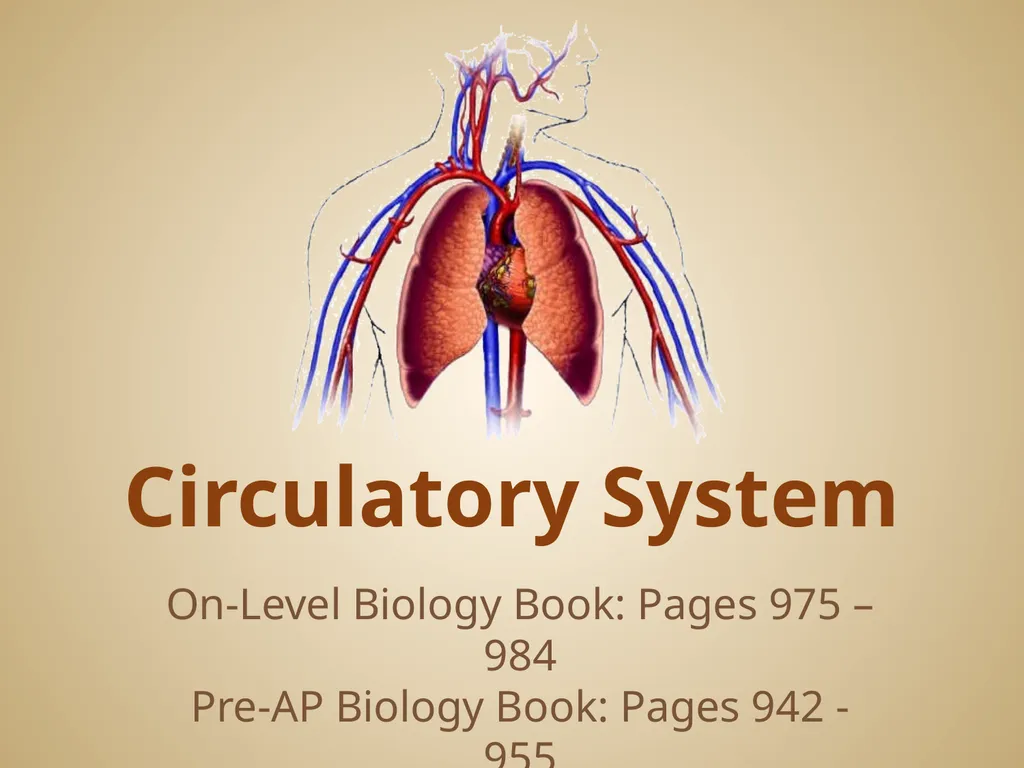
Circulatory System On-Level Biology Book: Pages 975 – 984
Pre-AP Biology Book: Pages 942 - 955<br>
Pre-AP Biology Book: Pages 942 - 955<br>
18
Purpose The Circulatory Systems brings oxygen, nutrients and hormones to cells; fights infections; removes cell wastes; regulates body temperature<br>
19
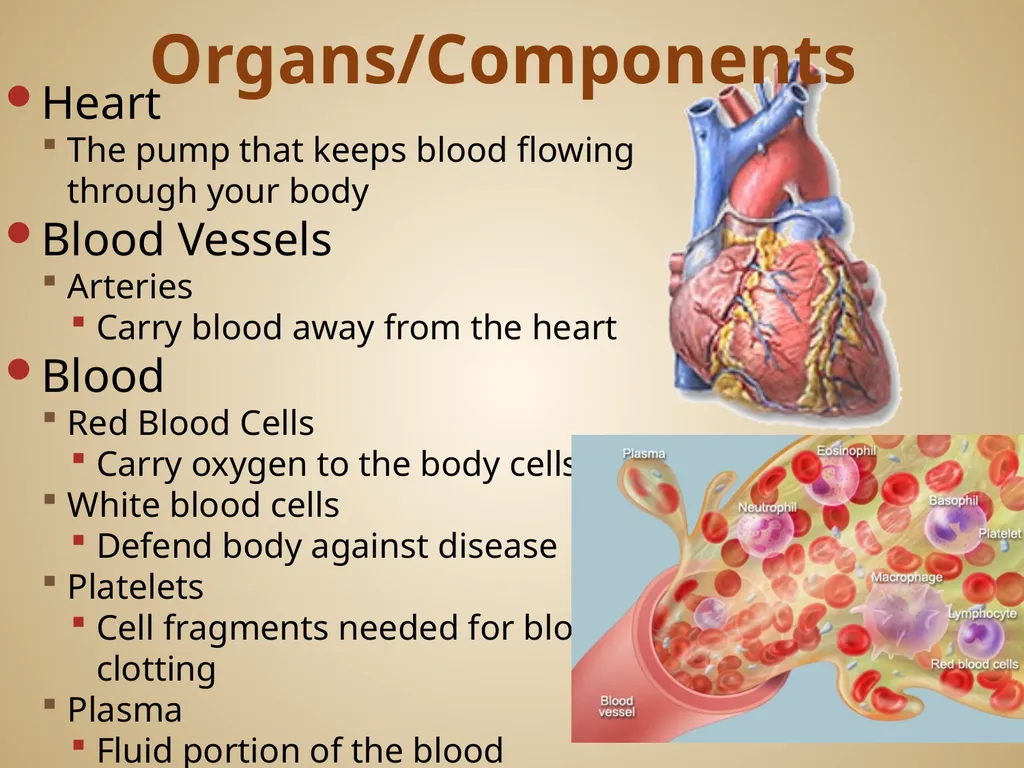
Organs/Components Heart
The pump that keeps blood flowing through your body
Blood Vessels
Arteries
Carry blood away from the heart
Blood
Red Blood Cells
Carry oxygen to the body cells
White blood cells
Defend body against disease
Platelets
Cell fragments needed for blood clotting
Plasma
Fluid portion of the blood<br>
The pump that keeps blood flowing through your body
Blood Vessels
Arteries
Carry blood away from the heart
Blood
Red Blood Cells
Carry oxygen to the body cells
White blood cells
Defend body against disease
Platelets
Cell fragments needed for blood clotting
Plasma
Fluid portion of the blood<br>
20
How Does this System Relate to others? Connected to almost all other systems since the circulatory system carries oxygen to all cells<br>
21
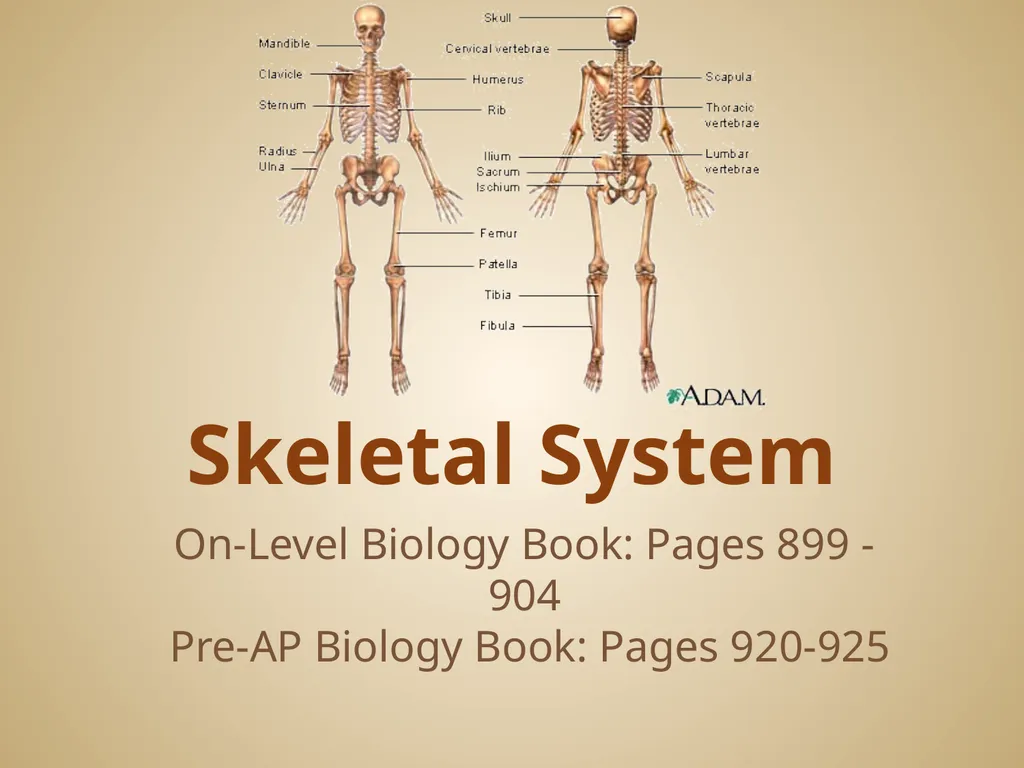
Skeletal System On-Level Biology Book: Pages 899 -904
Pre-AP Biology Book: Pages 920-925<br>
Pre-AP Biology Book: Pages 920-925<br>
22
Purpose The Skeletal System supports the body; protects internal organs; allows movement; stores mineral reserves; provides blood cell formation<br>
23
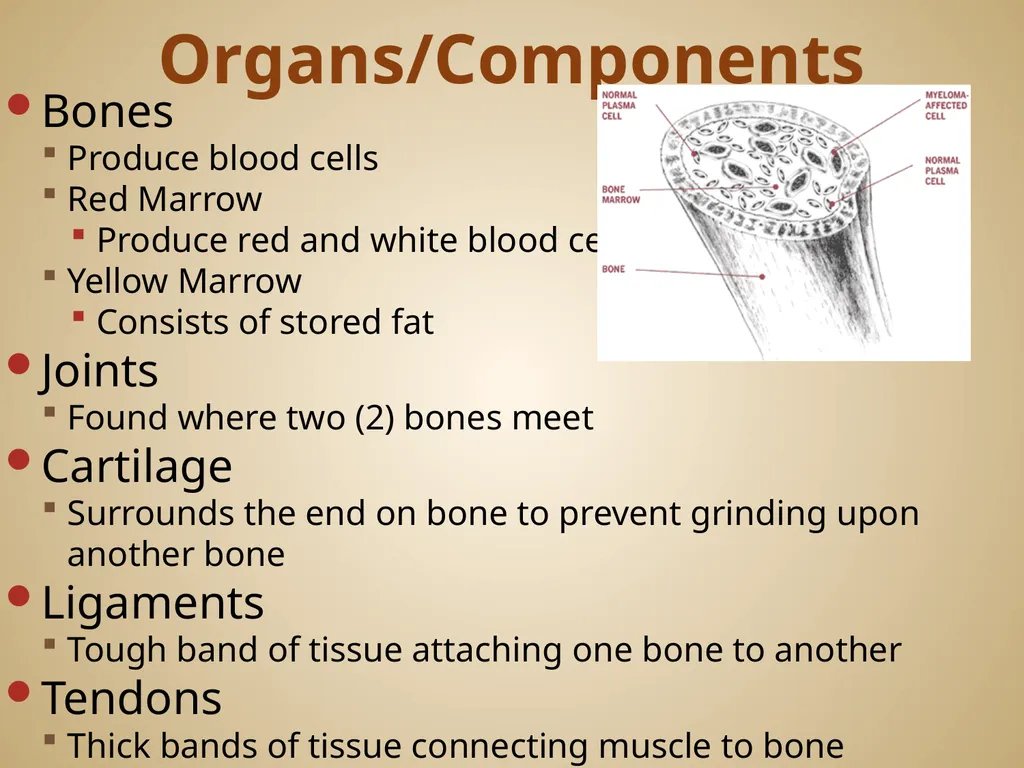
Organs/Components Bones
Produce blood cells
Red Marrow
Produce red and white blood cells
Yellow Marrow
Consists of stored fat
Joints
Found where two (2) bones meet
Cartilage
Surrounds the end on bone to prevent grinding upon another bone
Ligaments
Tough band of tissue attaching one bone to another
Tendons
Thick bands of tissue connecting muscle to bone<br>
Produce blood cells
Red Marrow
Produce red and white blood cells
Yellow Marrow
Consists of stored fat
Joints
Found where two (2) bones meet
Cartilage
Surrounds the end on bone to prevent grinding upon another bone
Ligaments
Tough band of tissue attaching one bone to another
Tendons
Thick bands of tissue connecting muscle to bone<br>
24
How Does this System Relate to others? Muscular system – bones and muscles work together for movement
Circulatory system and immune system – all blood cells (red and white) are made in the bone marrow<br>
Circulatory system and immune system – all blood cells (red and white) are made in the bone marrow<br>
25
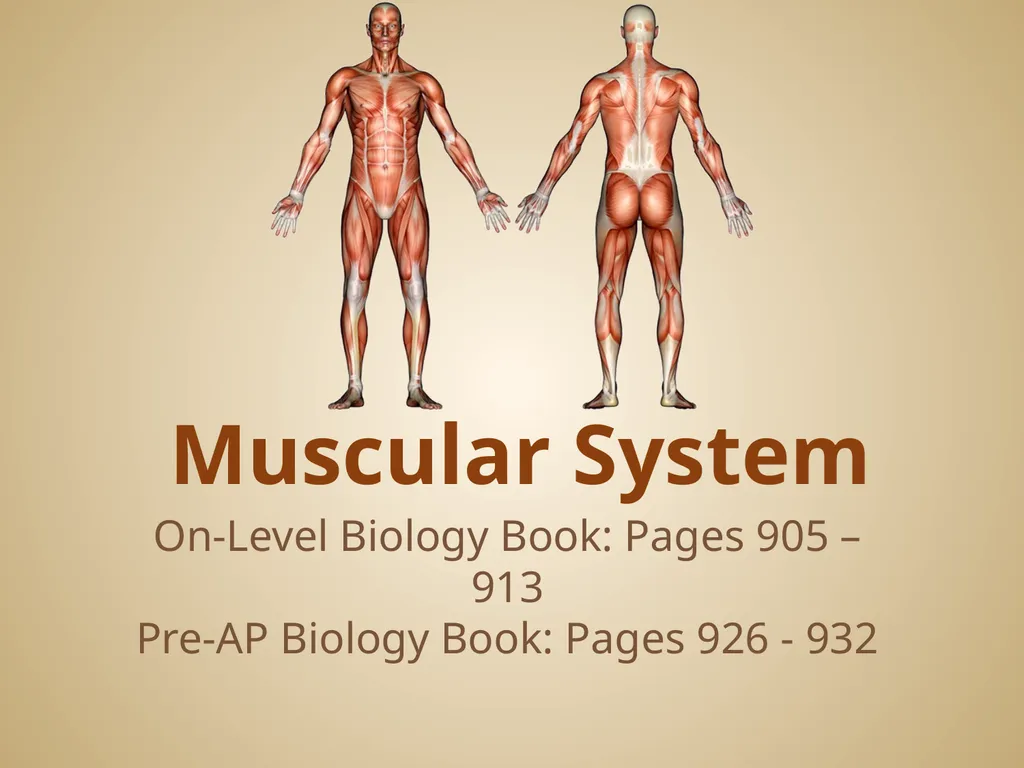
Muscular System On-Level Biology Book: Pages 905 – 913
Pre-AP Biology Book: Pages 926 - 932<br>
Pre-AP Biology Book: Pages 926 - 932<br>
26
Purpose The Muscular System produces voluntary movement; circulates blood, moves food through digestive system<br>
27
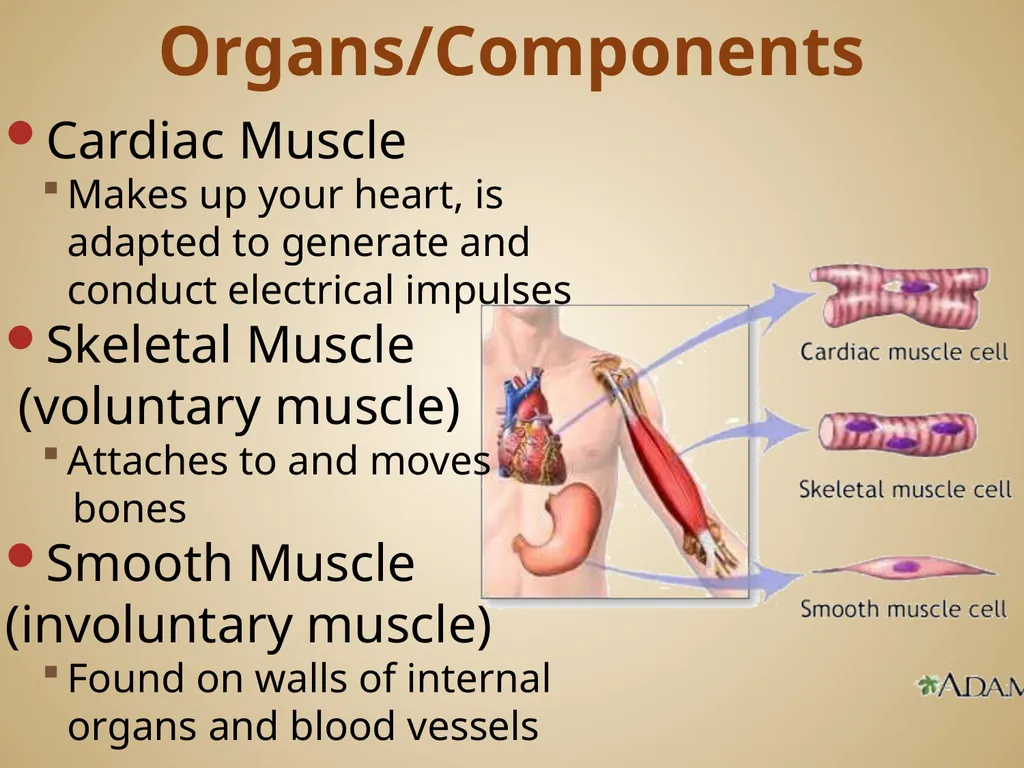
Organs/Components Cardiac Muscle
Makes up your heart, is adapted to generate and conduct electrical impulses
Skeletal Muscle
(voluntary muscle)
Attaches to and moves
bones
Smooth Muscle
(involuntary muscle)
Found on walls of internal organs and blood vessels<br>
Makes up your heart, is adapted to generate and conduct electrical impulses
Skeletal Muscle
(voluntary muscle)
Attaches to and moves
bones
Smooth Muscle
(involuntary muscle)
Found on walls of internal organs and blood vessels<br>
28
How Does this System Relate to others? Works closely with the:
skeletal system
Circulatory – brings O2 to muscles and waste products such as lactic acid away
Nervous – how muscles contract<br>
skeletal system
Circulatory – brings O2 to muscles and waste products such as lactic acid away
Nervous – how muscles contract<br>
29
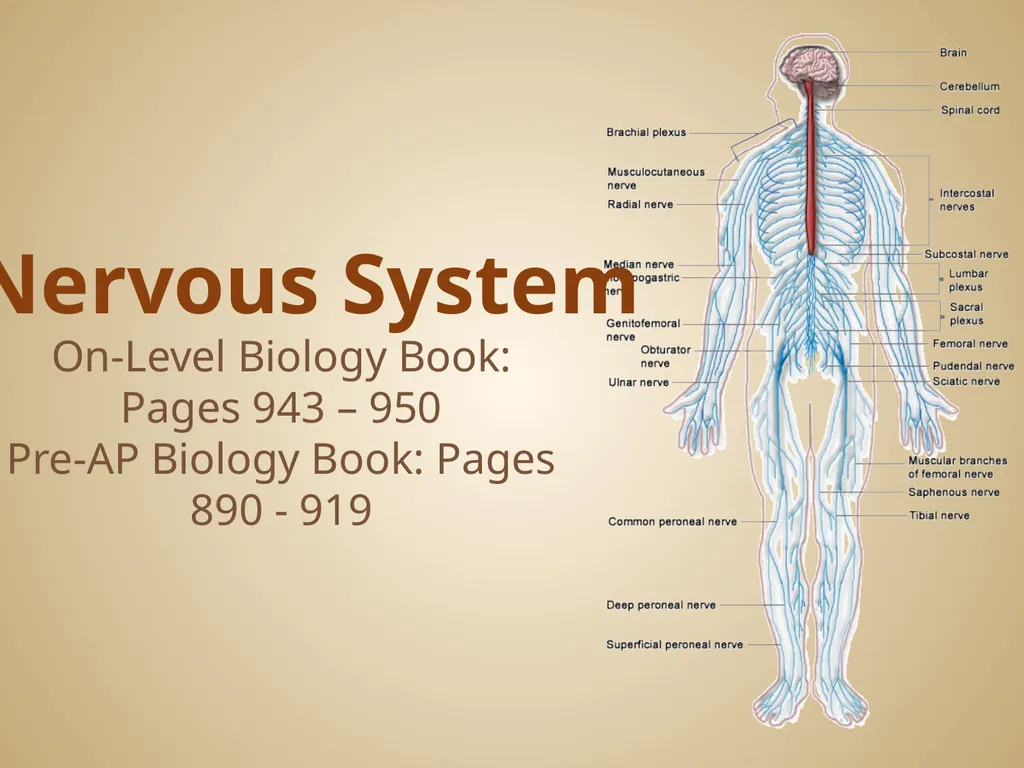
Nervous System On-Level Biology Book: Pages 943 – 950
Pre-AP Biology Book: Pages 890 - 919<br>
Pre-AP Biology Book: Pages 890 - 919<br>
30
Purpose The Nervous System recognizes and coordinates the body's response to changes in its internal and external environments<br>
31
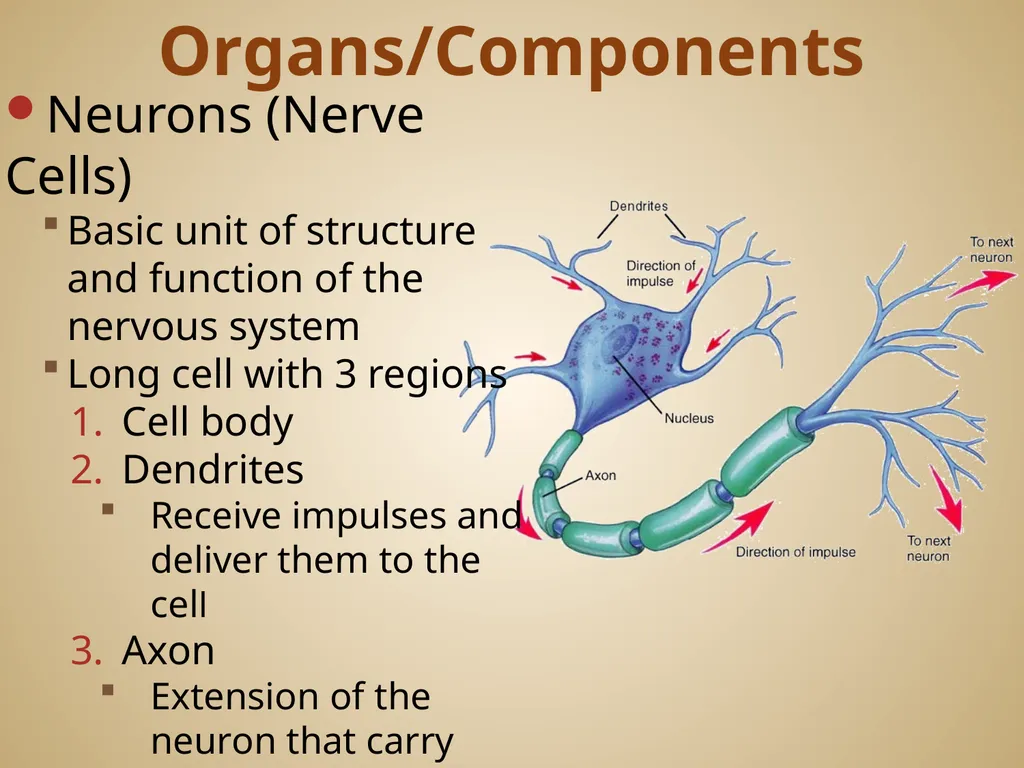
Organs/Components Neurons (Nerve Cells)
Basic unit of structure and function of the nervous system
Long cell with 3 regions
Cell body
Dendrites
Receive impulses and deliver them to the cell
Axon
Extension of the neuron that carry impulses away from the cell<br>
Basic unit of structure and function of the nervous system
Long cell with 3 regions
Cell body
Dendrites
Receive impulses and deliver them to the cell
Axon
Extension of the neuron that carry impulses away from the cell<br>
32
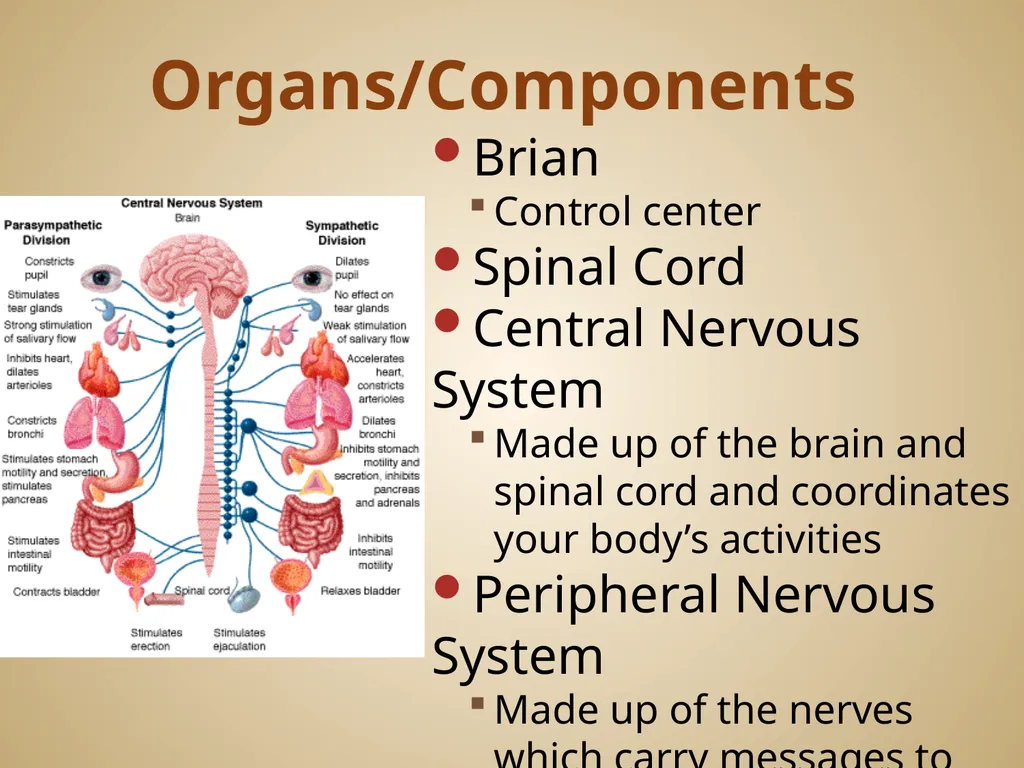
Organs/Components Brian
Control center
Spinal Cord
Central Nervous System
Made up of the brain and spinal cord and coordinates your body’s activities
Peripheral Nervous System
Made up of the nerves which carry messages to and from the central nervous system<br>
Control center
Spinal Cord
Central Nervous System
Made up of the brain and spinal cord and coordinates your body’s activities
Peripheral Nervous System
Made up of the nerves which carry messages to and from the central nervous system<br>
33
How Does this System Relate to others? The nervous system works with many other systems, but works closely with the:
Digestive system
Muscular system<br>
Digestive system
Muscular system<br>
34
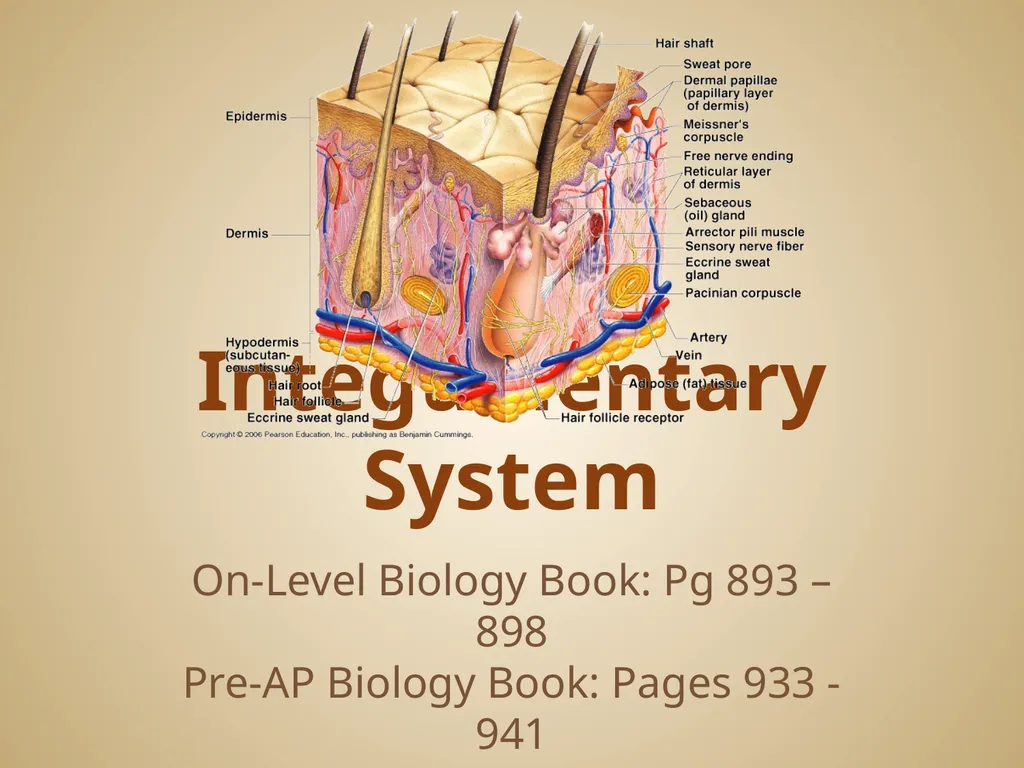
Integumentary System On-Level Biology Book: Pg 893 – 898
Pre-AP Biology Book: Pages 933 - 941<br>
Pre-AP Biology Book: Pages 933 - 941<br>
35
Purpose The Integumentary System is the barrier against infections and injury; regulates body temperature; protects against ultraviolet radiation<br>
36
Organs/Components Skin
Epidermis: outermost layer of skin
covers the surfaces of the body
Dermis: inner layer of skin
Contains blood vessels, nerve cells, hair follicles, sweat and oil glands
Hair, Skin and Nails
Made up of Keratin
Pigment of skin and hair
Controlled by melanin
Sweat
Produced to help maintain homeostasis
Oil Glands<br>
Epidermis: outermost layer of skin
covers the surfaces of the body
Dermis: inner layer of skin
Contains blood vessels, nerve cells, hair follicles, sweat and oil glands
Hair, Skin and Nails
Made up of Keratin
Pigment of skin and hair
Controlled by melanin
Sweat
Produced to help maintain homeostasis
Oil Glands<br>
37
How Does this System Relate to others? The integumentary contains blood vessels and nerves<br>
38
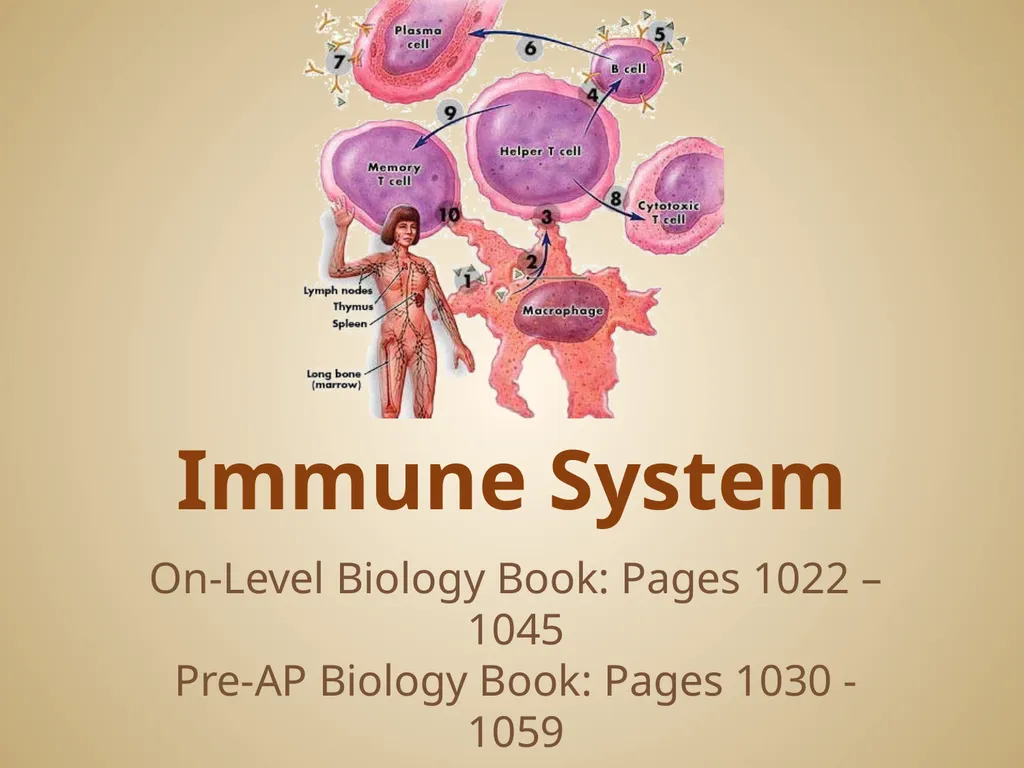
Immune System On-Level Biology Book: Pages 1022 – 1045
Pre-AP Biology Book: Pages 1030 - 1059<br>
Pre-AP Biology Book: Pages 1030 - 1059<br>
39
Purpose The Immune System helps protect the body from disease; collects fluid lost from blood vessels and return it to the circulatory system<br>
40
Organs/Components White Blood Cells
Thymus
Spleen
Lymph Vessels
Lymph Nodes<br>
Thymus
Spleen
Lymph Vessels
Lymph Nodes<br>
41
How Does this System Relate to others? The immune system works closely with the circulatory system<br>
42
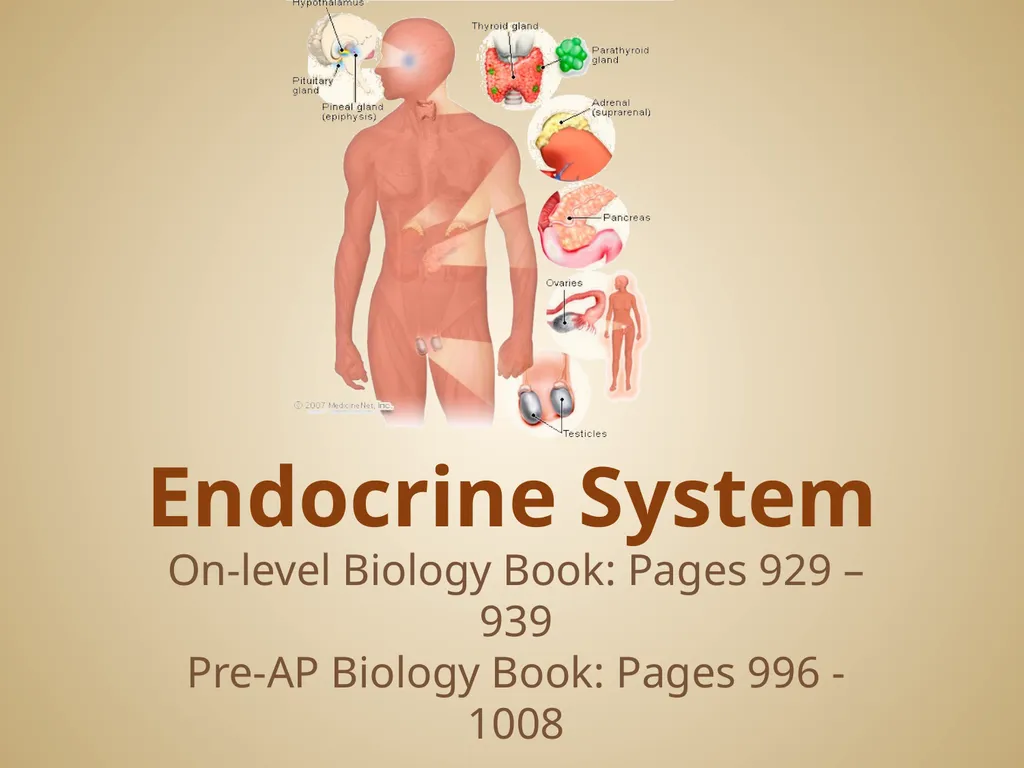
Endocrine System On-level Biology Book: Pages 929 – 939
Pre-AP Biology Book: Pages 996 - 1008<br>
Pre-AP Biology Book: Pages 996 - 1008<br>
43
Purpose The Endocrine System controls growth, development, and metabolism; maintains homeostasis<br>
44
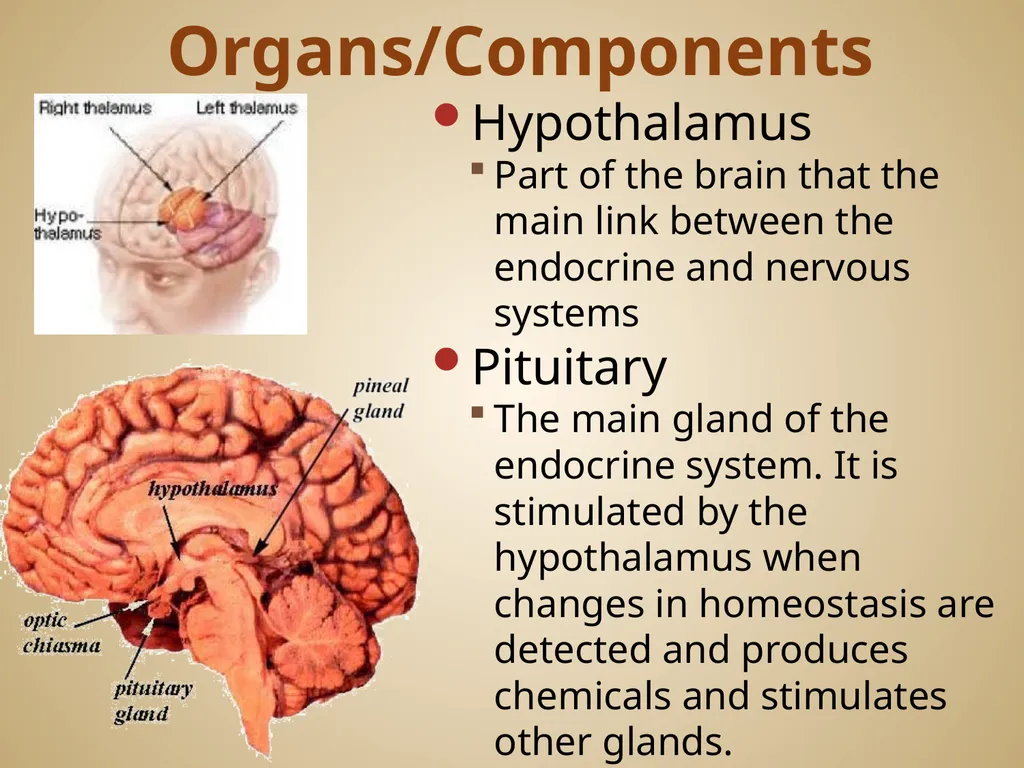
Organs/Components Hypothalamus
Part of the brain that the main link between the endocrine and nervous systems
Pituitary
The main gland of the endocrine system. It is stimulated by the hypothalamus when changes in homeostasis are detected and produces chemicals and stimulates other glands.<br>
Part of the brain that the main link between the endocrine and nervous systems
Pituitary
The main gland of the endocrine system. It is stimulated by the hypothalamus when changes in homeostasis are detected and produces chemicals and stimulates other glands.<br>
45
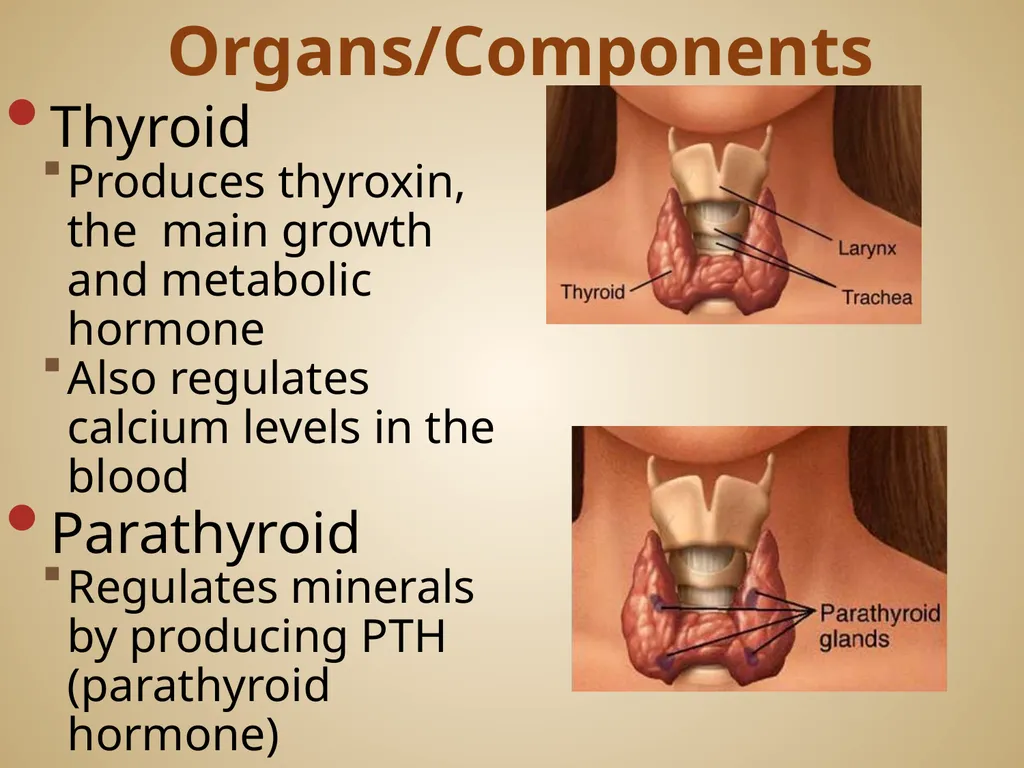
Organs/Components Thyroid
Produces thyroxin, the main growth and metabolic hormone
Also regulates calcium levels in the blood
Parathyroid
Regulates minerals by producing PTH (parathyroid hormone)<br>
Produces thyroxin, the main growth and metabolic hormone
Also regulates calcium levels in the blood
Parathyroid
Regulates minerals by producing PTH (parathyroid hormone)<br>
46
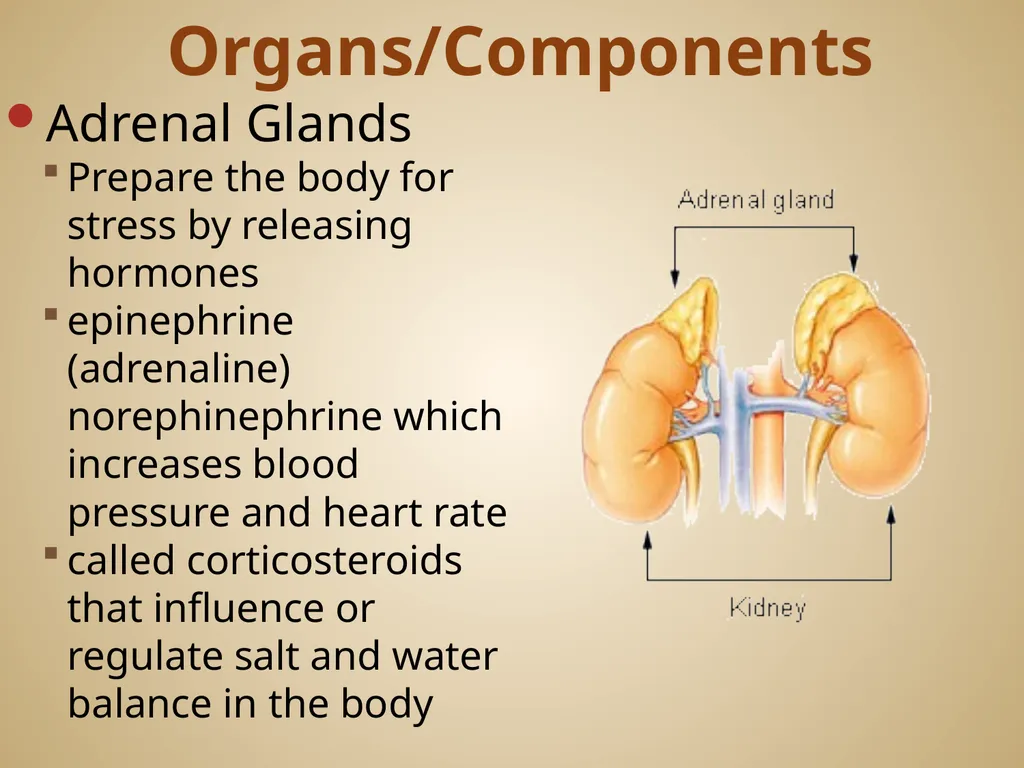
Organs/Components Adrenal Glands
Prepare the body for stress by releasing hormones
epinephrine (adrenaline) norephinephrine which increases blood pressure and heart rate
called corticosteroids that influence or regulate salt and water balance in the body<br>
Prepare the body for stress by releasing hormones
epinephrine (adrenaline) norephinephrine which increases blood pressure and heart rate
called corticosteroids that influence or regulate salt and water balance in the body<br>
47
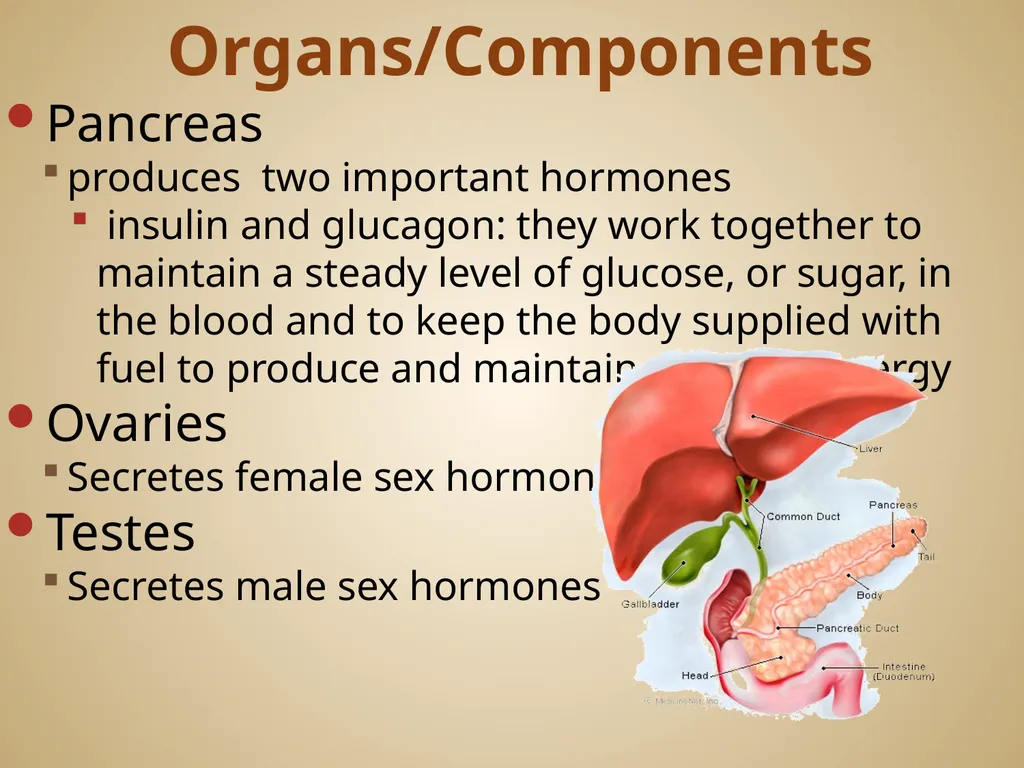
Organs/Components Pancreas
produces two important hormones
insulin and glucagon: they work together to maintain a steady level of glucose, or sugar, in the blood and to keep the body supplied with fuel to produce and maintain stores of energy
Ovaries
Secretes female sex hormones
Testes
Secretes male sex hormones<br>
produces two important hormones
insulin and glucagon: they work together to maintain a steady level of glucose, or sugar, in the blood and to keep the body supplied with fuel to produce and maintain stores of energy
Ovaries
Secretes female sex hormones
Testes
Secretes male sex hormones<br>
48
How Does this System Relate to others? The endocrine system works closely with the reproductive system and the digestive system. Several hormones originate in the brain, part of the nervous system.<br>
49
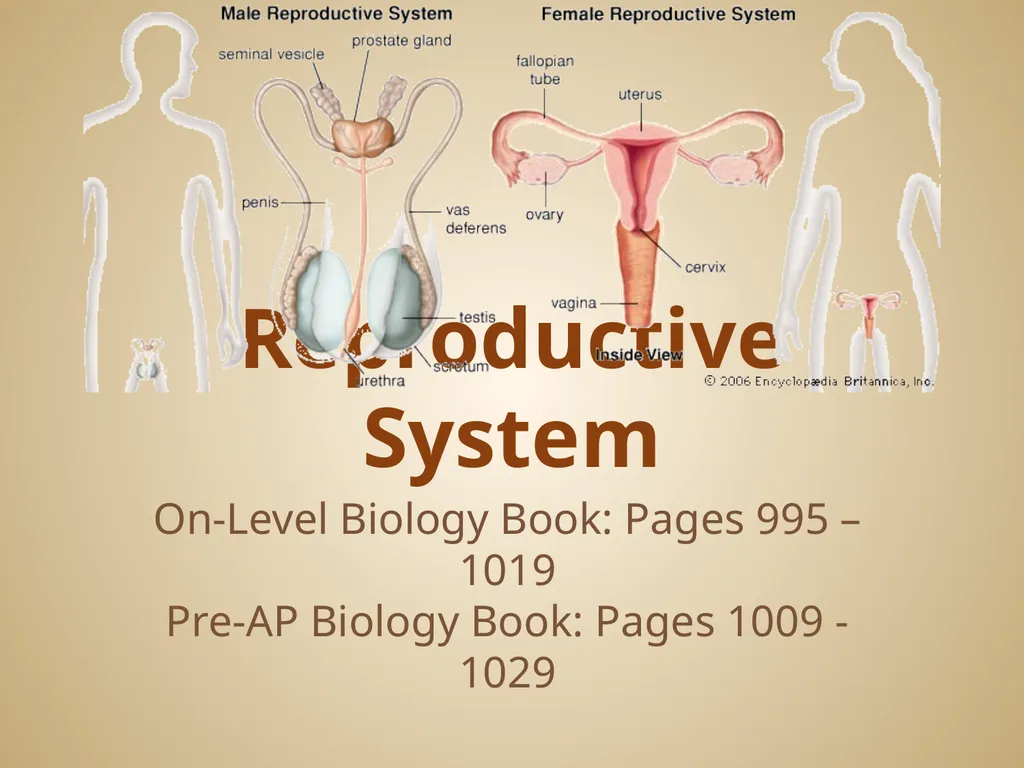
Reproductive System On-Level Biology Book: Pages 995 – 1019
Pre-AP Biology Book: Pages 1009 - 1029<br>
Pre-AP Biology Book: Pages 1009 - 1029<br>
50
Purpose The Reproductive System produces reproductive cells; in females nurtures and protects developing embryo<br>
51
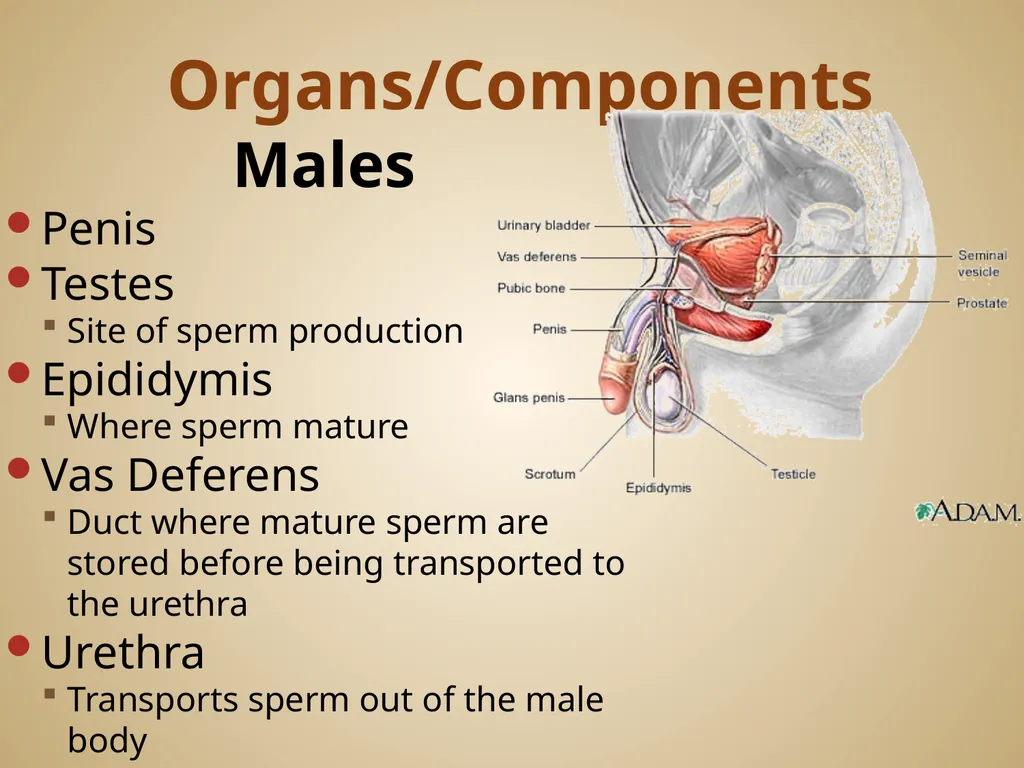
Organs/Components Males
Penis
Testes
Site of sperm production
Epididymis
Where sperm mature
Vas Deferens
Duct where mature sperm are stored before being transported to the urethra
Urethra
Transports sperm out of the male body<br>
Penis
Testes
Site of sperm production
Epididymis
Where sperm mature
Vas Deferens
Duct where mature sperm are stored before being transported to the urethra
Urethra
Transports sperm out of the male body<br>
52
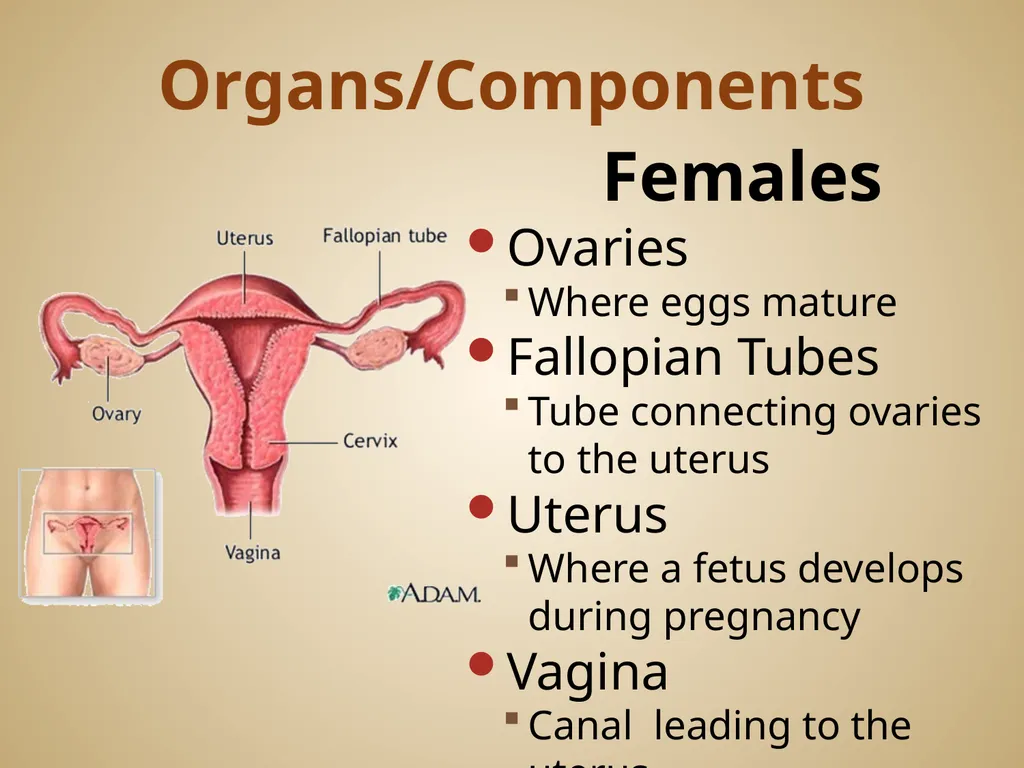
Organs/Components Females
Ovaries
Where eggs mature
Fallopian Tubes
Tube connecting ovaries to the uterus
Uterus
Where a fetus develops during pregnancy
Vagina
Canal leading to the uterus<br>
Ovaries
Where eggs mature
Fallopian Tubes
Tube connecting ovaries to the uterus
Uterus
Where a fetus develops during pregnancy
Vagina
Canal leading to the uterus<br>
53
How Does this System Relate to others? The reproductive system works most closely with the endocrine system (hormones)<br>