
Human Induced Pluripotent Stem Cells (hiPS Cells)

Description: Human Induced Pluripotent Stem Cells (hiPS Cells) Paul Andrew Cassar The many ways to make an iPS Cell Future goal is eliminate as many of the K,O,S,M factors as possible and replace them with small molecules Summary of the Process
Related Topics
Download Presentation
"Human Induced Pluripotent Stem Cells (hiPS Cells)" is the property of its rightful owner. Permission is granted to download and print the materials on this website for personal, non-commercial use only, and to display it on your personal computer provided you do not modify the materials and that you retain all copyright notices contained in the materials. By downloading content from our website, you accept the terms of this agreement.
Presentation Transcript
slide1. Human Induced Pluripotent Stem Cells
(hiPS Cells) Paul Andrew Cassar<br>
slide3. The many ways to make an iPS Cell Future goal is eliminate as many of the K,O,S,M factors as possible and replace them with
small molecules<br>
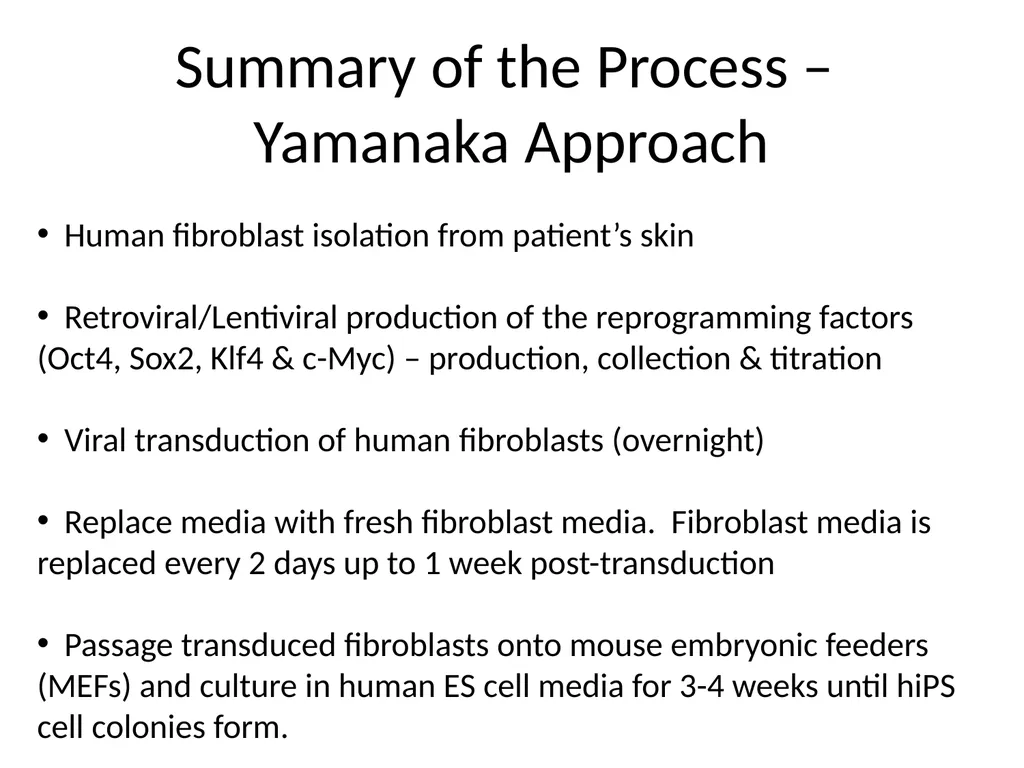
slide4. Summary of the Process – Yamanaka Approach Human fibroblast isolation from patient’s skin
Retroviral/Lentiviral production of the reprogramming factors (Oct4, Sox2, Klf4 & c-Myc) – production, collection & titration
Viral transduction of human fibroblasts (overnight)
Replace media with fresh fibroblast media. Fibroblast media is replaced every 2 days up to 1 week post-transduction
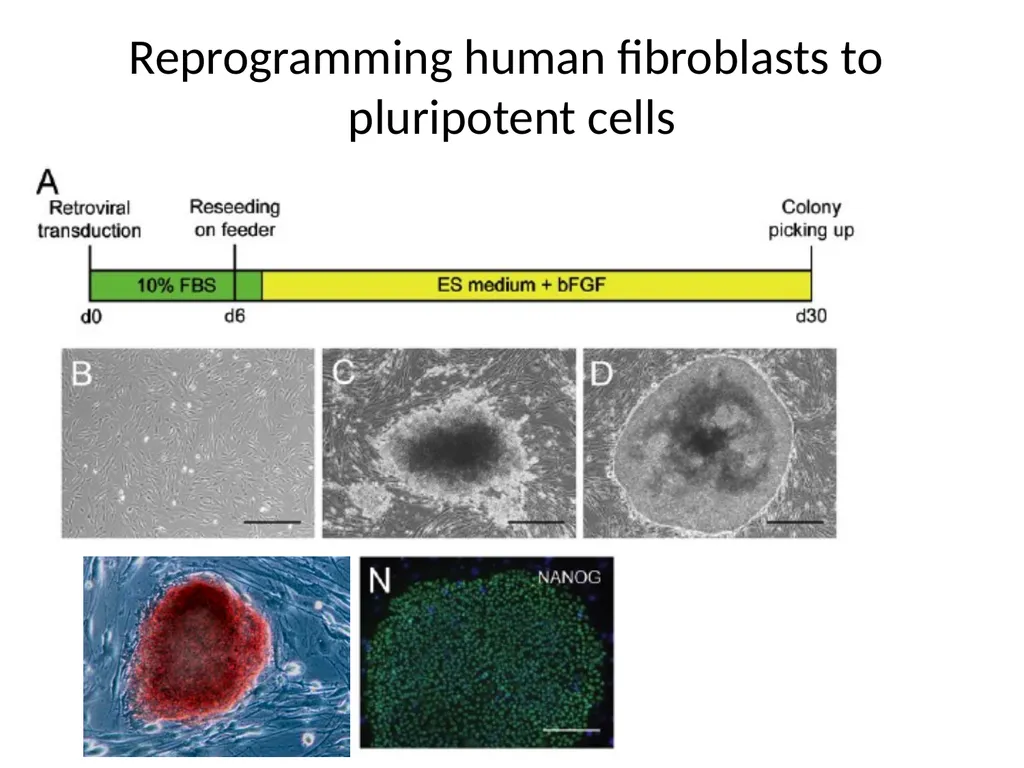
Passage transduced fibroblasts onto mouse embryonic feeders (MEFs) and culture in human ES cell media for 3-4 weeks until hiPS cell colonies form.<br>
slide5. Reprogramming human fibroblasts to pluripotent cells<br>
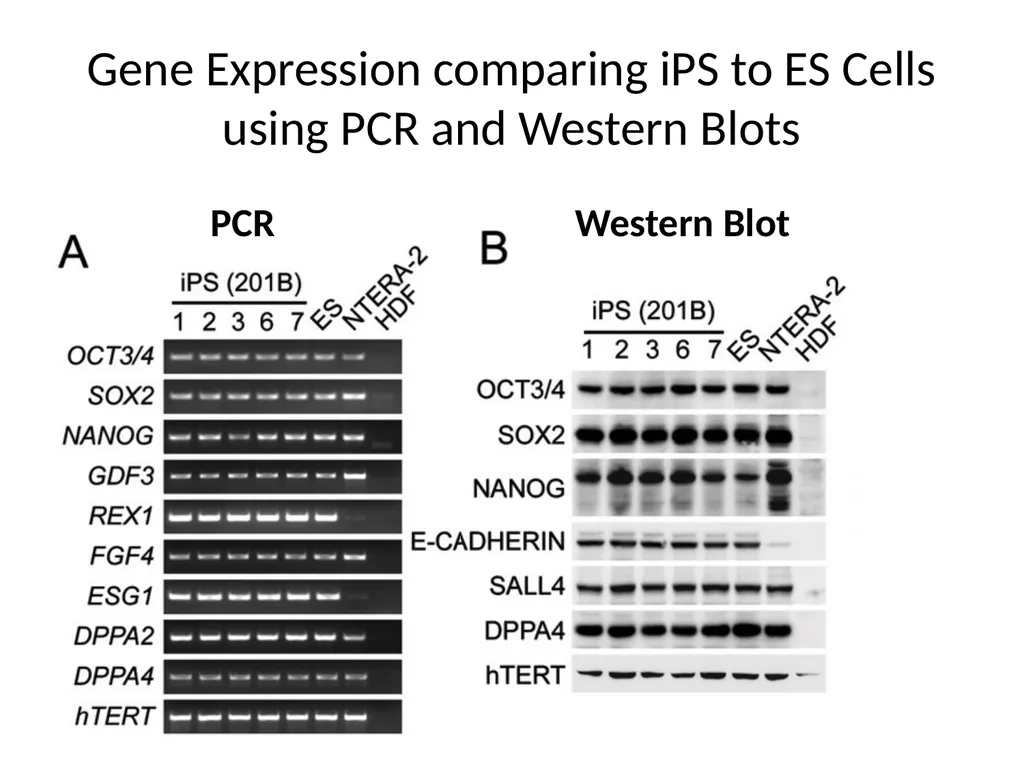
slide6. Gene Expression comparing iPS to ES Cells using PCR and Western Blots PCR Western Blot<br>
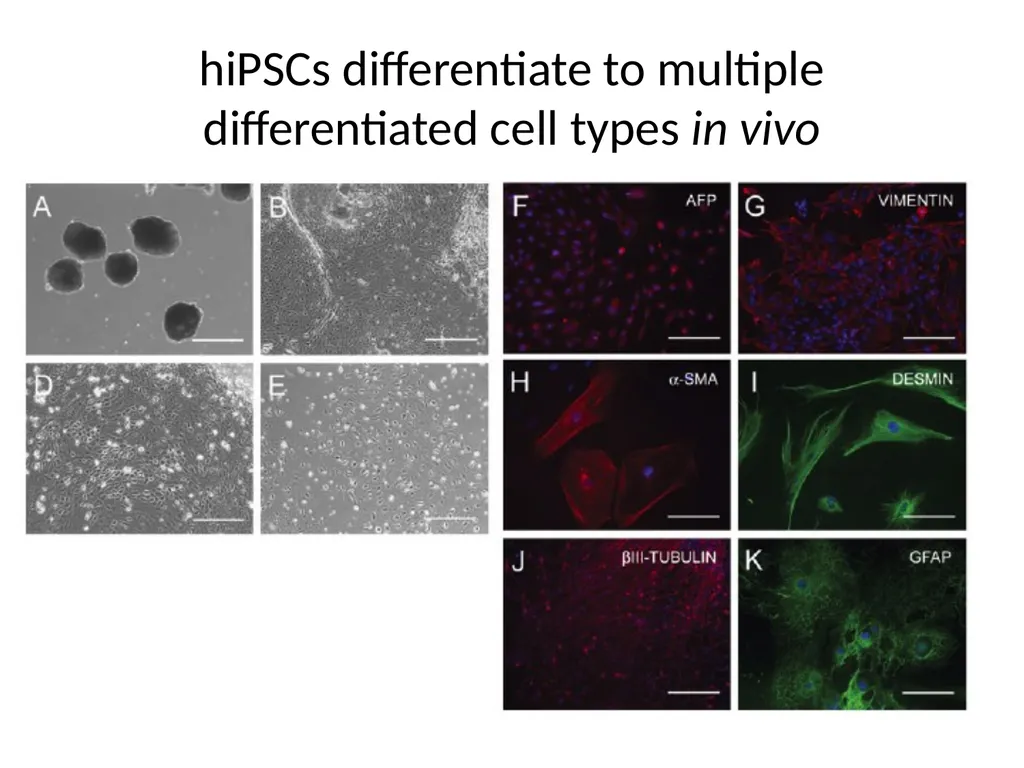
slide7. hiPSCs differentiate to multiple differentiated cell types in vivo<br>
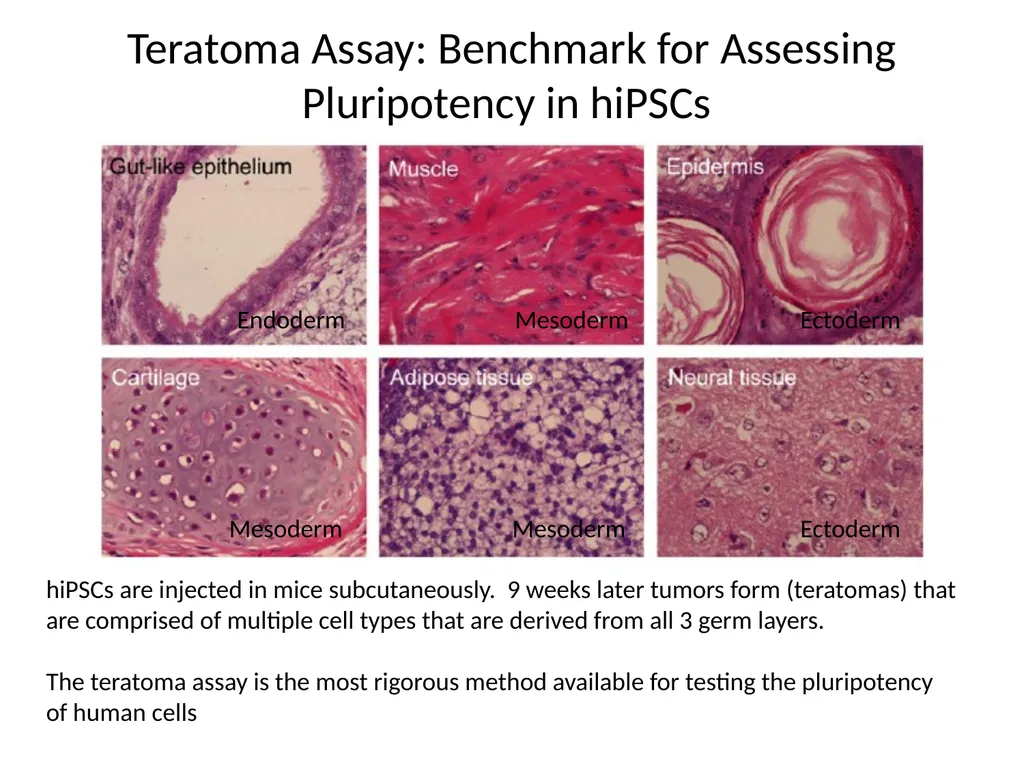
slide8. Teratoma Assay: Benchmark for Assessing Pluripotency in hiPSCs hiPSCs are injected in mice subcutaneously. 9 weeks later tumors form (teratomas) that
are comprised of multiple cell types that are derived from all 3 germ layers.
The teratoma assay is the most rigorous method available for testing the pluripotency
of human cells Endoderm Mesoderm Mesoderm Mesoderm Ectoderm Ectoderm<br>
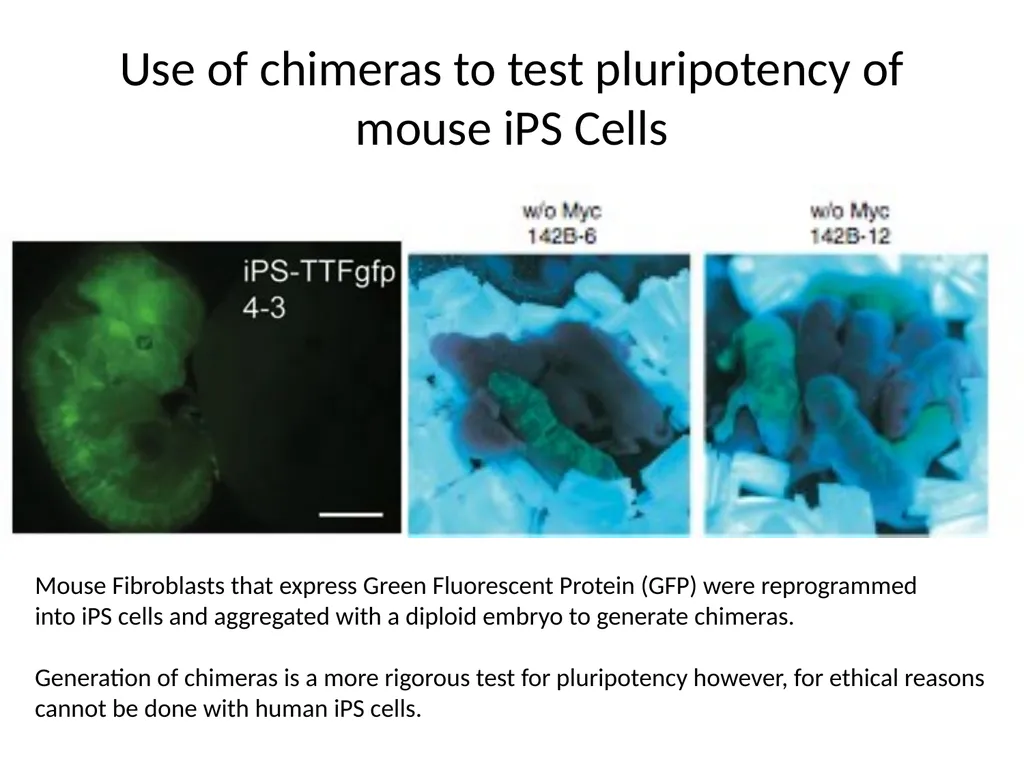
slide9. Use of chimeras to test pluripotency of mouse iPS Cells Mouse Fibroblasts that express Green Fluorescent Protein (GFP) were reprogrammed
into iPS cells and aggregated with a diploid embryo to generate chimeras.
Generation of chimeras is a more rigorous test for pluripotency however, for ethical reasons
cannot be done with human iPS cells.<br>
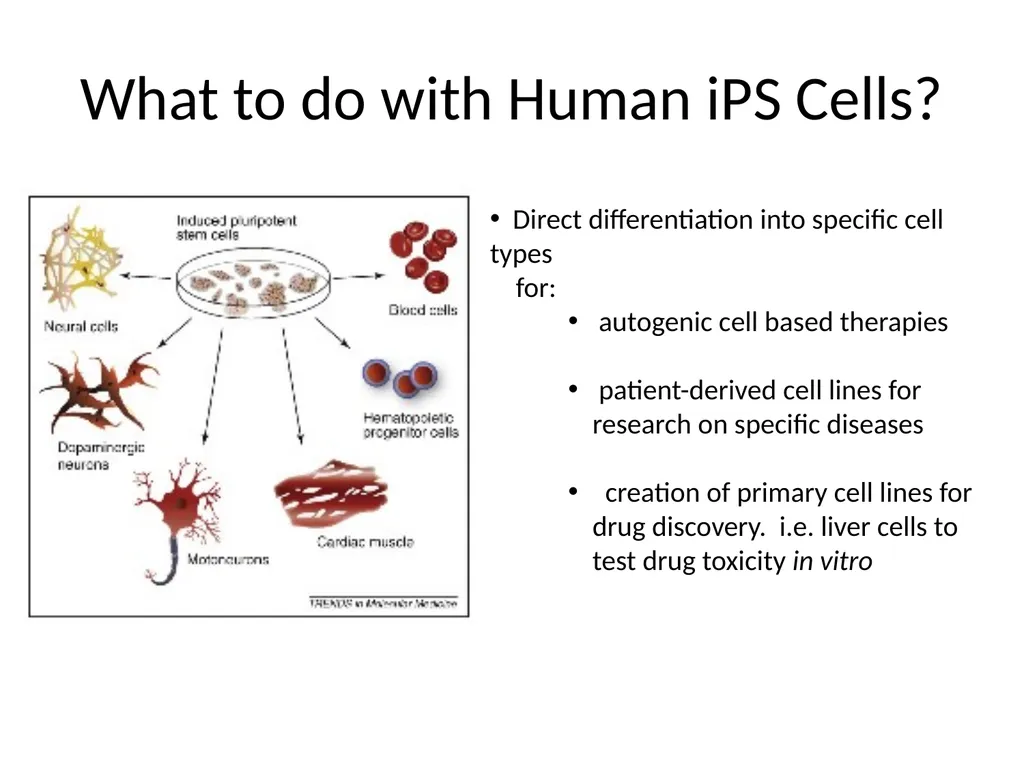
slide10. What to do with Human iPS Cells? Direct differentiation into specific cell types
for:
autogenic cell based therapies
patient-derived cell lines for research on specific diseases
creation of primary cell lines for drug discovery. i.e. liver cells to test drug toxicity in vitro<br>
slide11. Advantages & Disadvantages Advantages
Generation of iPS cells does not require embryonic tissue
Can generate an autogenic (patient-specific) pluripotent stem cells
Reduces the potential for rejection when implanted into patients
Creation of disease-specific lines allows for generation of primary cell lines for drug discovery & basic research Disadvantages
Safety concerns due to use of virus to reprogram the cells
Safety concerns due to the use of transgenes to reprogram cells
High costs associated with generation and characterization of each iPS cell line<br>
slide3. The many ways to make an iPS Cell Future goal is eliminate as many of the K,O,S,M factors as possible and replace them with
small molecules<br>
slide4. Summary of the Process – Yamanaka Approach Human fibroblast isolation from patient’s skin
Retroviral/Lentiviral production of the reprogramming factors (Oct4, Sox2, Klf4 & c-Myc) – production, collection & titration
Viral transduction of human fibroblasts (overnight)
Replace media with fresh fibroblast media. Fibroblast media is replaced every 2 days up to 1 week post-transduction
Passage transduced fibroblasts onto mouse embryonic feeders (MEFs) and culture in human ES cell media for 3-4 weeks until hiPS cell colonies form.<br>
slide5. Reprogramming human fibroblasts to pluripotent cells<br>
slide6. Gene Expression comparing iPS to ES Cells using PCR and Western Blots PCR Western Blot<br>
slide7. hiPSCs differentiate to multiple differentiated cell types in vivo<br>
slide8. Teratoma Assay: Benchmark for Assessing Pluripotency in hiPSCs hiPSCs are injected in mice subcutaneously. 9 weeks later tumors form (teratomas) that
are comprised of multiple cell types that are derived from all 3 germ layers.
The teratoma assay is the most rigorous method available for testing the pluripotency
of human cells Endoderm Mesoderm Mesoderm Mesoderm Ectoderm Ectoderm<br>
slide9. Use of chimeras to test pluripotency of mouse iPS Cells Mouse Fibroblasts that express Green Fluorescent Protein (GFP) were reprogrammed
into iPS cells and aggregated with a diploid embryo to generate chimeras.
Generation of chimeras is a more rigorous test for pluripotency however, for ethical reasons
cannot be done with human iPS cells.<br>
slide10. What to do with Human iPS Cells? Direct differentiation into specific cell types
for:
autogenic cell based therapies
patient-derived cell lines for research on specific diseases
creation of primary cell lines for drug discovery. i.e. liver cells to test drug toxicity in vitro<br>
slide11. Advantages & Disadvantages Advantages
Generation of iPS cells does not require embryonic tissue
Can generate an autogenic (patient-specific) pluripotent stem cells
Reduces the potential for rejection when implanted into patients
Creation of disease-specific lines allows for generation of primary cell lines for drug discovery & basic research Disadvantages
Safety concerns due to use of virus to reprogram the cells
Safety concerns due to the use of transgenes to reprogram cells
High costs associated with generation and characterization of each iPS cell line<br>