Hydration Water Our body is nearly two-thirds water, so drinking enough fluid to stay hydrated is important. Water is essential for life and it is important to get the right amount of fluid to be healthy. Did you know? Humans can survive
"Hydration Water Our body is nearly two-thirds" is the property of its rightful owner. Permission is granted to
download and print the materials on this website for personal, non-commercial use only, and to display it
on your personal computer provided you do not modify the materials and that you retain all copyright
notices contained in the materials. By downloading content from our website, you accept the terms of this
agreement.
Presentation Transcript
01
Hydration<br>
02
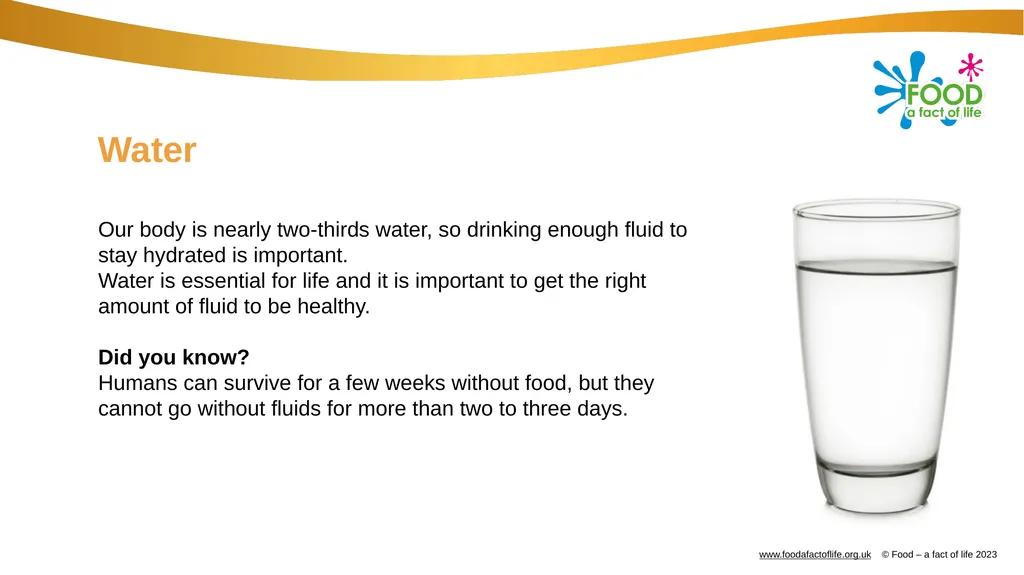
Water Our body is nearly two-thirds water, so drinking enough fluid to stay hydrated is important.
Water is essential for life and it is important to get the right amount of fluid to be healthy.
Did you know?
Humans can survive for a few weeks without food, but they cannot go without fluids for more than two to three days.<br>
03
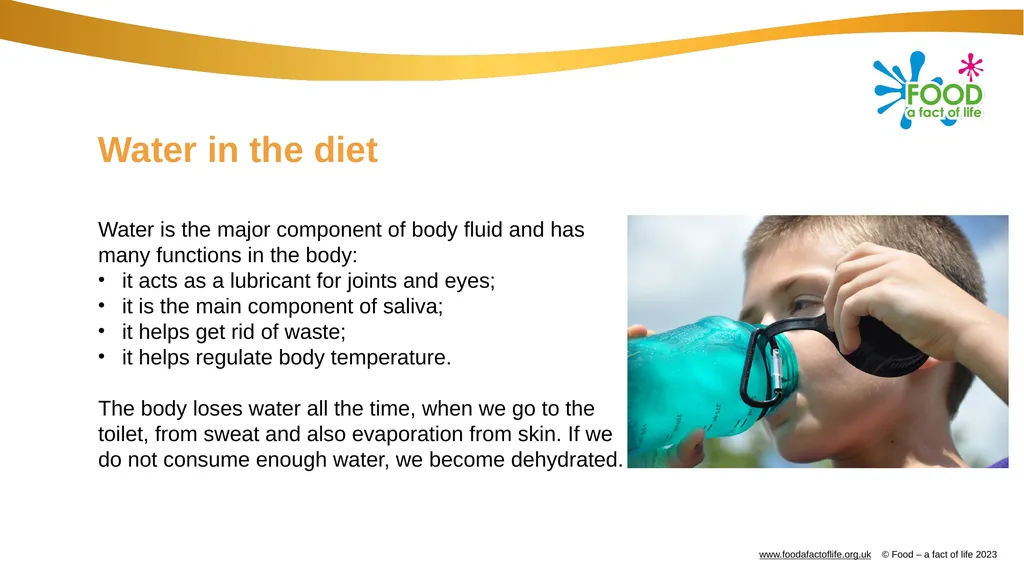
Water in the diet Water is the major component of body fluid and has many functions in the body:
it acts as a lubricant for joints and eyes;
it is the main component of saliva;
it helps get rid of waste;
it helps regulate body temperature.
The body loses water all the time, when we go to the toilet, from sweat and also evaporation from skin. If we do not consume enough water, we become dehydrated.<br>
04
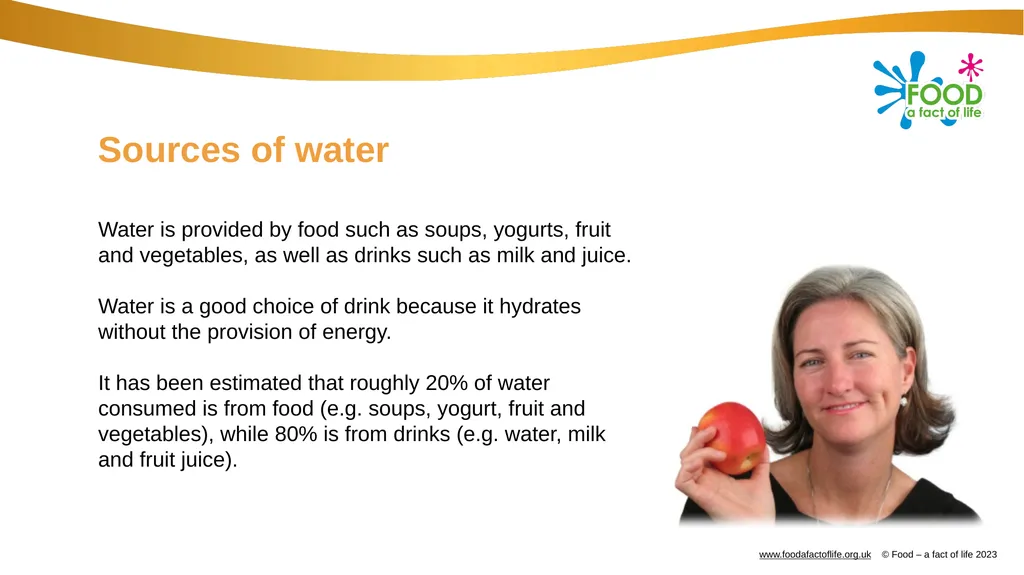
Sources of water Water is provided by food such as soups, yogurts, fruit and vegetables, as well as drinks such as milk and juice.
Water is a good choice of drink because it hydrates without the provision of energy.
It has been estimated that roughly 20% of water consumed is from food (e.g. soups, yogurt, fruit and vegetables), while 80% is from drinks (e.g. water, milk and fruit juice).<br>
05
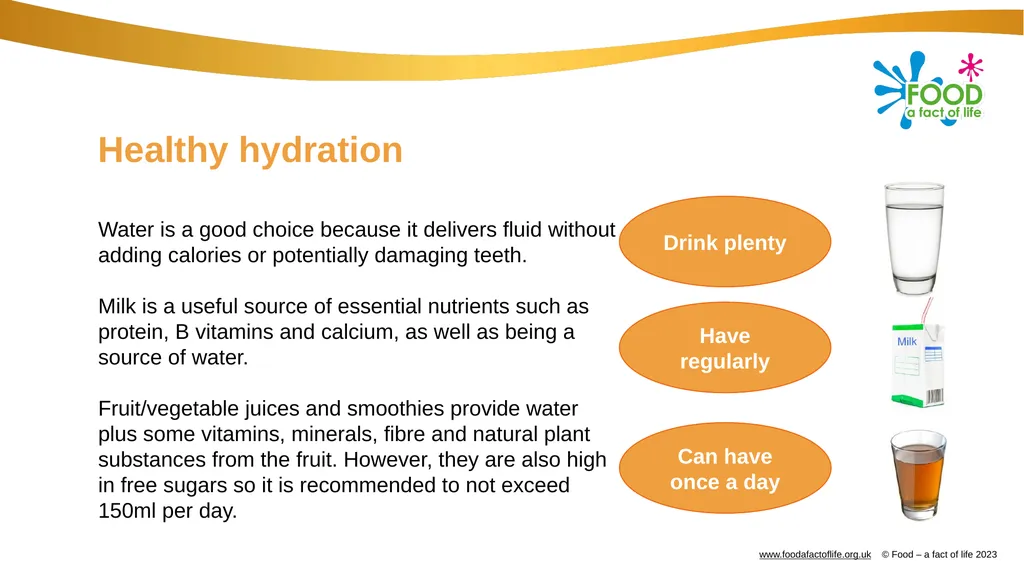
Healthy hydration Water is a good choice because it delivers fluid without adding calories or potentially damaging teeth.
Milk is a useful source of essential nutrients such as protein, B vitamins and calcium, as well as being a source of water.
Fruit/vegetable juices and smoothies provide water plus some vitamins, minerals, fibre and natural plant substances from the fruit. However, they are also high in free sugars so it is recommended to not exceed 150ml per day. Drink plenty Have regularly Can have once a day<br>
06
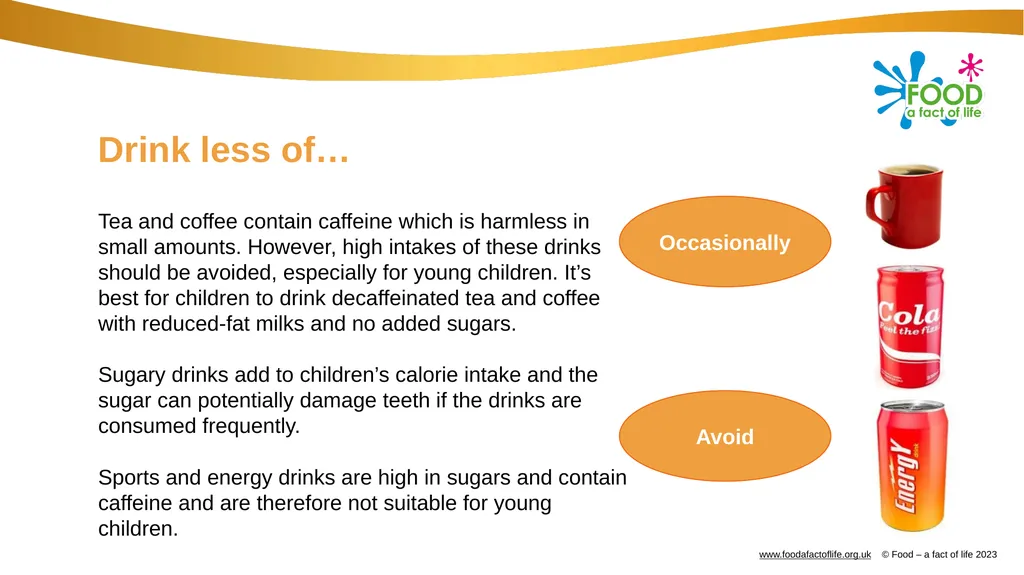
Drink less of… Tea and coffee contain caffeine which is harmless in small amounts. However, high intakes of these drinks should be avoided, especially for young children. It’s best for children to drink decaffeinated tea and coffee with reduced-fat milks and no added sugars.
Sugary drinks add to children’s calorie intake and the sugar can potentially damage teeth if the drinks are consumed frequently.
Sports and energy drinks are high in sugars and contain caffeine and are therefore not suitable for young children. Occasionally Avoid<br>
07
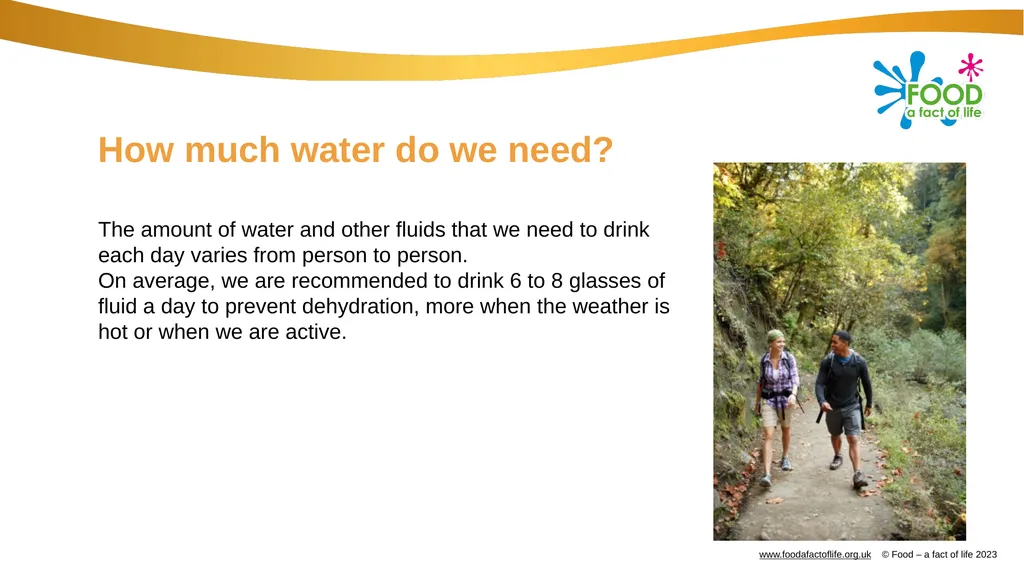
How much water do we need? The amount of water and other fluids that we need to drink each day varies from person to person.
On average, we are recommended to drink 6 to 8 glasses of fluid a day to prevent dehydration, more when the weather is hot or when we are active.<br>
08
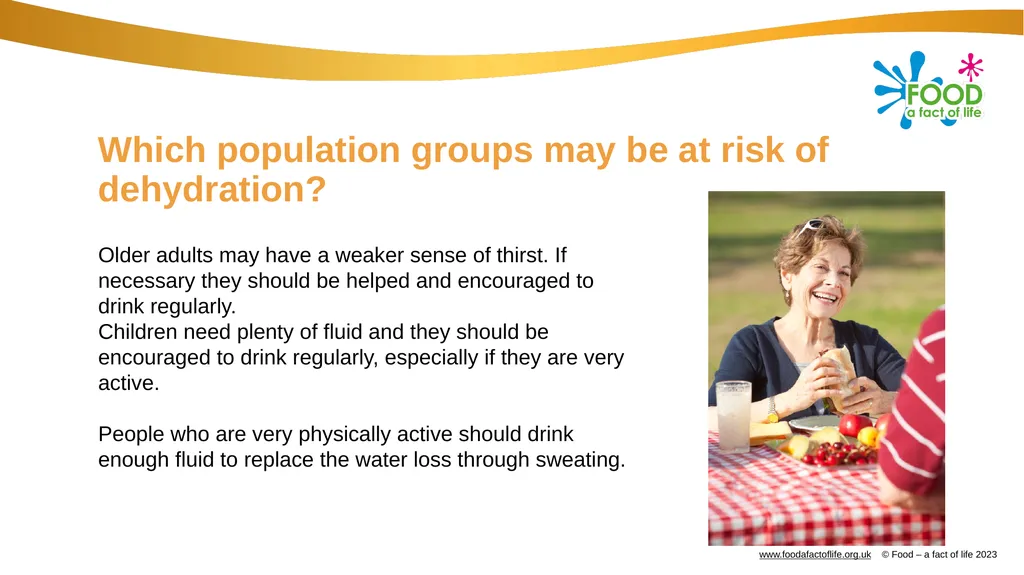
Which population groups may be at risk of dehydration? Older adults may have a weaker sense of thirst. If necessary they should be helped and encouraged to drink regularly.
Children need plenty of fluid and they should be encouraged to drink regularly, especially if they are very active.
People who are very physically active should drink enough fluid to replace the water loss through sweating.<br>
09
Kahoot quiz Open the link below on the main screen and get students to log onto kahoot.it on their tablets or smartphones.
They can then enter the code (that will come up on the main screen when you start the game) and their own nickname.
They can then play along with the quiz choosing the multiple choice answers that correspond with the questions on the main screen. There will then be a leader board of the scores after each question and at the end.
Hydration For further information, go to:
www.foodafactoflife.org.uk This resource meets the Guidelines for producers and users of school education resources about food.<br>