HYPOTHYROIDISM Dr. Vivek Kr. Singh Assistant Professor Department of Veterinary Clinical Complex UNIT-3 It is an endocrine disorder due to hypothalmic pituitary-thyroid axis dysfunction resulting in impaired (reduced) secretion of thyriod
"HYPOTHYROIDISM Dr. Vivek Kr. Singh Assistant" is the property of its rightful owner. Permission is granted to
download and print the materials on this website for personal, non-commercial use only, and to display it
on your personal computer provided you do not modify the materials and that you retain all copyright
notices contained in the materials. By downloading content from our website, you accept the terms of this
agreement.
Presentation Transcript
01
HYPOTHYROIDISM Dr. Vivek Kr. Singh
Assistant Professor
Department of Veterinary Clinical Complex UNIT-3<br>
02
It is an endocrine disorder due to hypothalmic pituitary-thyroid axis dysfunction resulting in impaired (reduced) secretion of thyriod hormones and related classical cascade of clinical signs<br>
03
The disorder is most common in dogs and rare in other domestic animals
Medium to large sized breeds of 4-10 years of age are most commonly affected
Golden Retriver, Doberman, Irish Setter etc.<br>
04
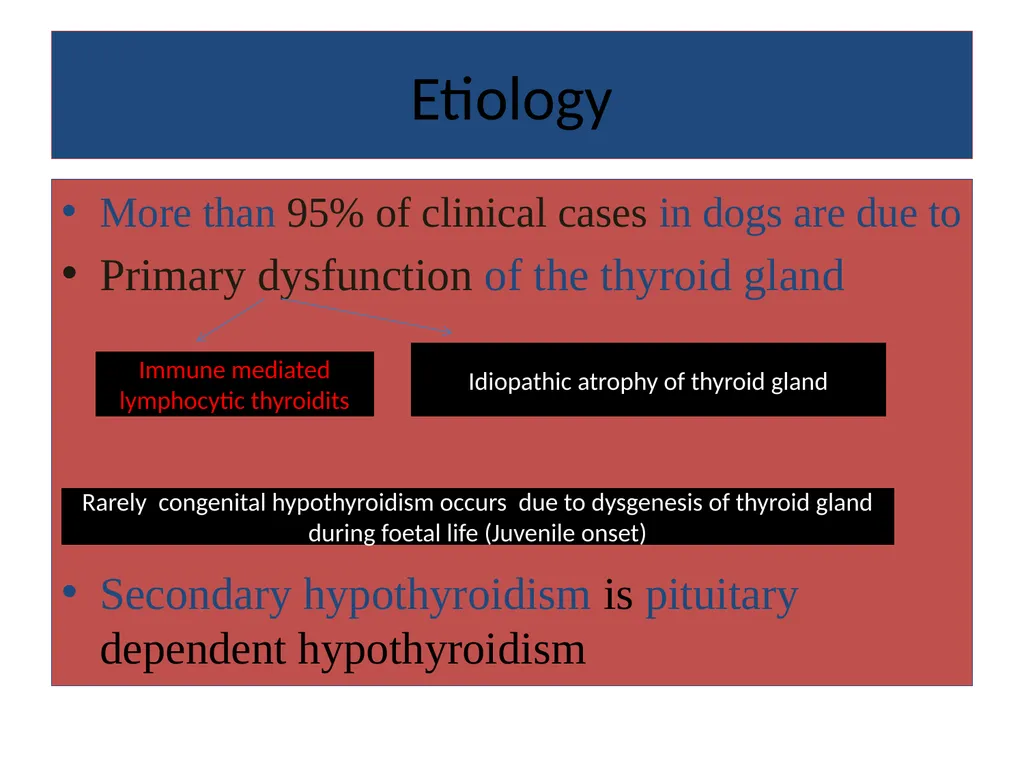
Etiology More than 95% of clinical cases in dogs are due to
Primary dysfunction of the thyroid gland
Secondary hypothyroidism is pituitary dependent hypothyroidism Immune mediated lymphocytic thyroidits Idiopathic atrophy of thyroid gland Rarely congenital hypothyroidism occurs due to dysgenesis of thyroid gland during foetal life (Juvenile onset)<br>
05
Clinical findings The deficiency of thyroid hormone affects functions of all organs and systems, therefore results in variable clinical signs
Dullness
Lethargy
Exercise intolerance
Weight gain (without a corresponding increase in diet)<br>
06
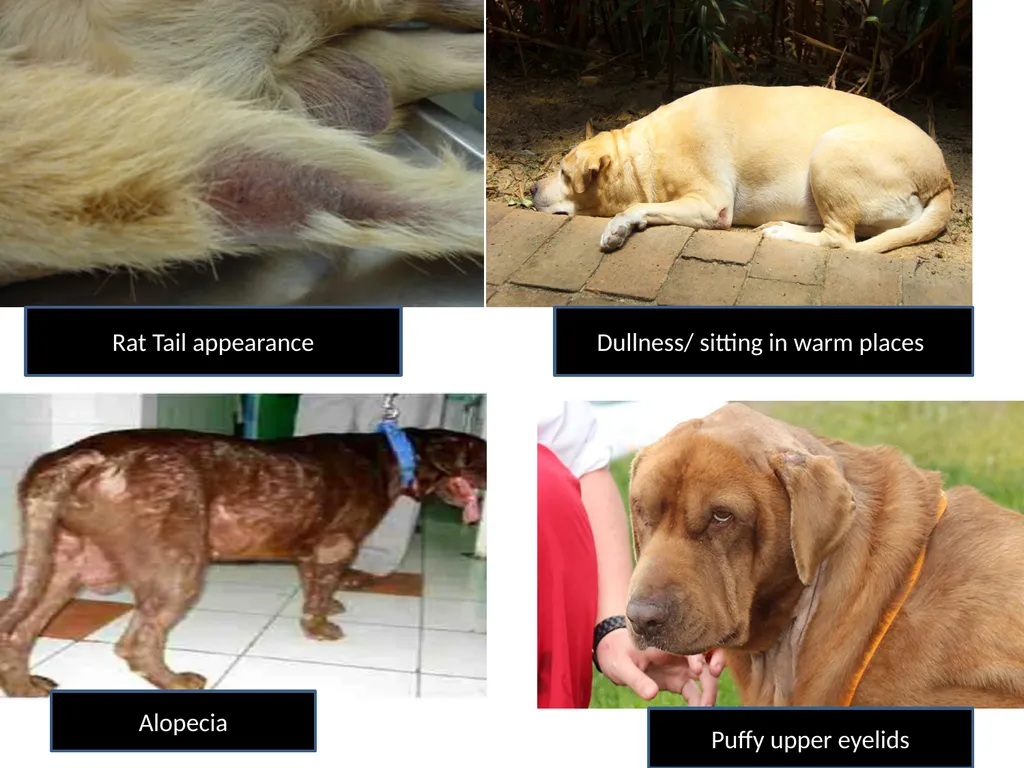
Cont… Hypothermic (Seek warm places)
Dry skin
Puffiness of upper eye lid
Excessive shedding of hair
Non- pruritic bilaterally symmetrical alopecia
Alopecia involves ventral/ lateral trunk, thighs and dorsum of the tail
Rat tail appearance is common<br>
Rat Tail appearance Dullness/ sitting in warm places Alopecia Puffy upper eyelids<br>
09
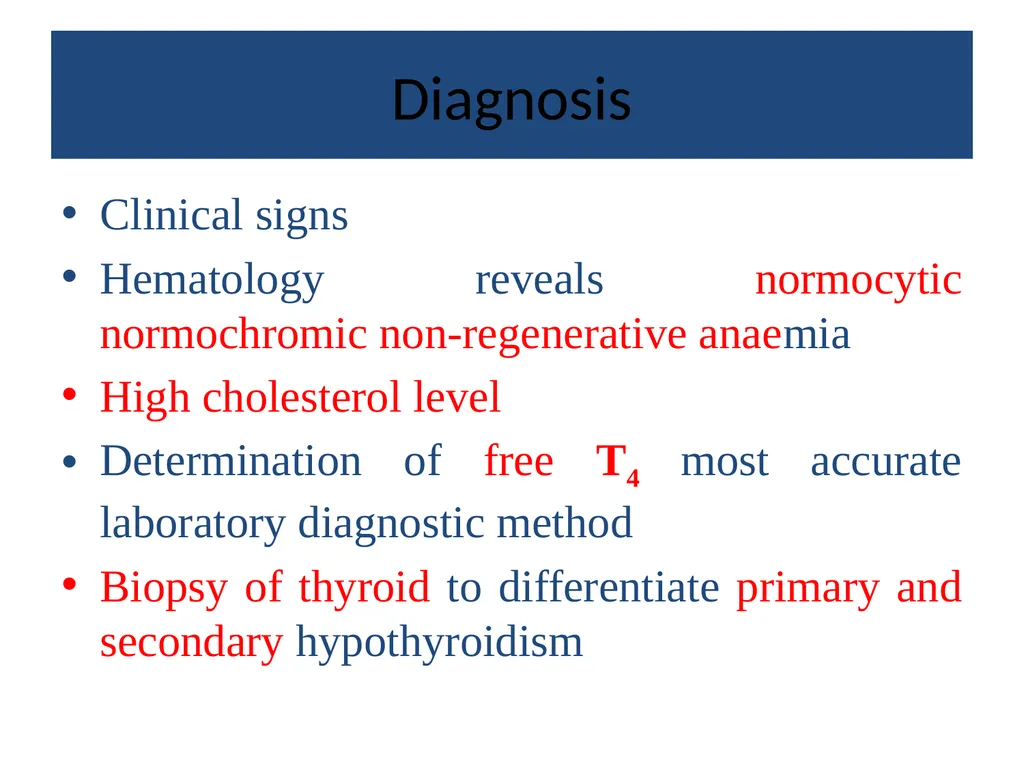
Diagnosis Clinical signs
Hematology reveals normocytic normochromic non-regenerative anaemia
High cholesterol level
Determination of free T4 most accurate laboratory diagnostic method
Biopsy of thyroid to differentiate primary and secondary hypothyroidism<br>
10
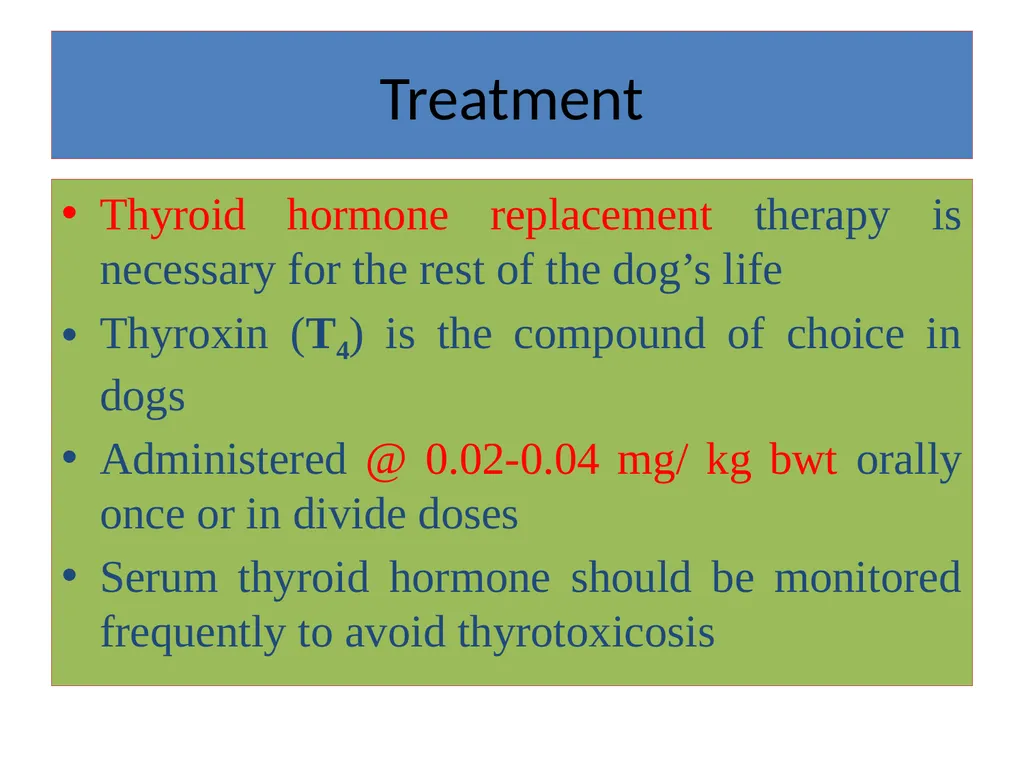
Treatment Thyroid hormone replacement therapy is necessary for the rest of the dog’s life
Thyroxin (T4) is the compound of choice in dogs
Administered @ 0.02-0.04 mg/ kg bwt orally once or in divide doses
Serum thyroid hormone should be monitored frequently to avoid thyrotoxicosis<br>