
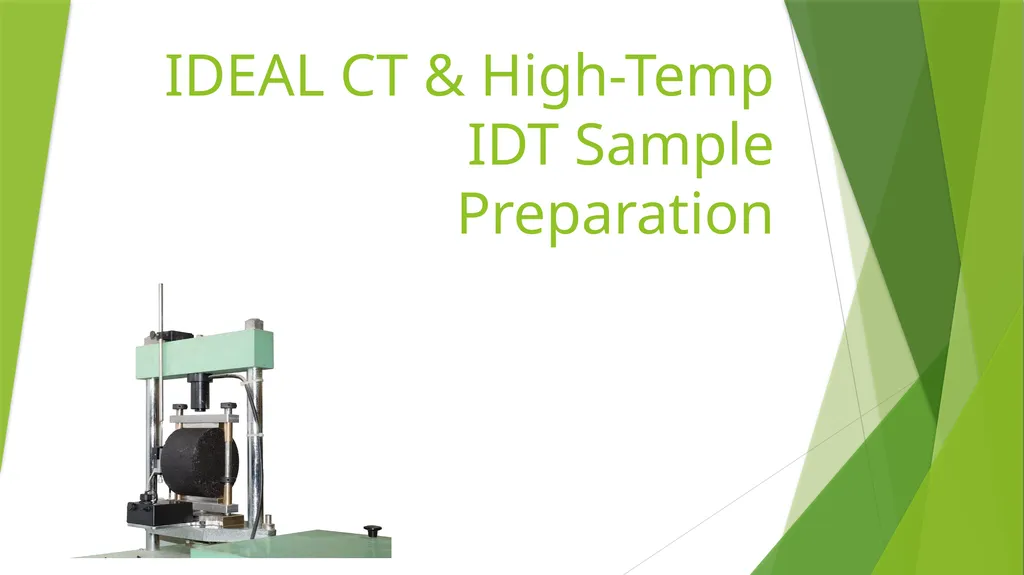
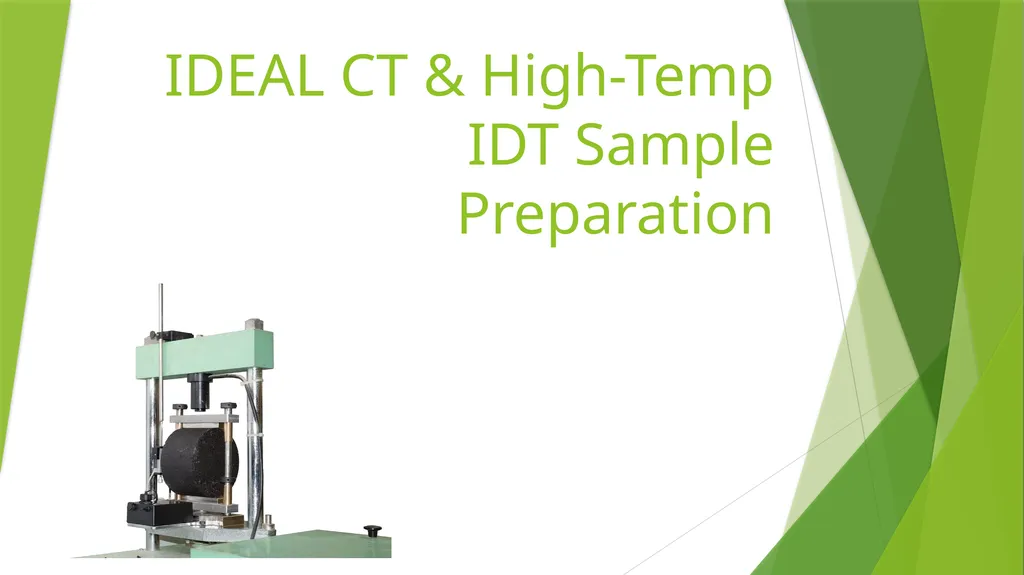
IDEAL CT & High-Temp IDT Sample Preparation
Description: IDEAL CT High-Temp IDT Sample Preparation Specimen Preparation Overview IDEAL-CT SGC SpecimensPrepare five laboratory SGC specimens according to T 312 in the SGC with a compaction height of 62 2 mm and a diameter of 150 mm. The target
Related Topics
Download Presentation
"IDEAL CT & High-Temp IDT Sample Preparation" is the property of its rightful owner. Permission is granted to download and print the materials on this website for personal, non-commercial use only, and to display it on your personal computer provided you do not modify the materials and that you retain all copyright notices contained in the materials. By downloading content from our website, you accept the terms of this agreement.
Presentation Transcript
slide1. IDEAL CT & High-Temp IDT Sample Preparation<br>
slide2. Specimen Preparation Overview IDEAL-CT SGC Specimens—Prepare five laboratory SGC specimens according to T 312 in the SGC with a compaction height of 62 ± 2 mm and a diameter of 150 mm. The target air voids for each specimen is 7.0 ± 0.5 percent. Note that the laboratory-mixed and laboratory-compacted (LMLC) loose asphalt mixture shall be conditioned for 4 hours at 135ºC following AASHTO R 30. Plant-mixed and laboratory-compacted mixes (PMLC), materials should only be reheated to the proper compaction temperature. No more than 2.5 hours for reheating (includes reheating the box). Prior to testing the compacted gyratory sample should be submerged in 25°C water for two hours.<br>
slide3. Specimen Preparation Overview HT-IDT SGC Specimens—Prepare five laboratory SGC specimens according to T 312 in the SGC with a compaction height of 95 ± 2 mm and a diameter of 150 mm. The target air voids for each specimen is 7.0 ± 0.5 percent. Note that the laboratory-mixed and laboratory-compacted (LMLC) loose asphalt mixture shall be conditioned for 4 hours at 135ºC following AASHTO R 30. Plant-mixed and laboratory-compacted mixes (PMLC), materials should only be reheated to the proper compaction temperature. No more than 2.5 hours for reheating (includes reheating the box). Prior to testing the compacted gyratory sample should be submerged in 43°C water for two hours.<br>
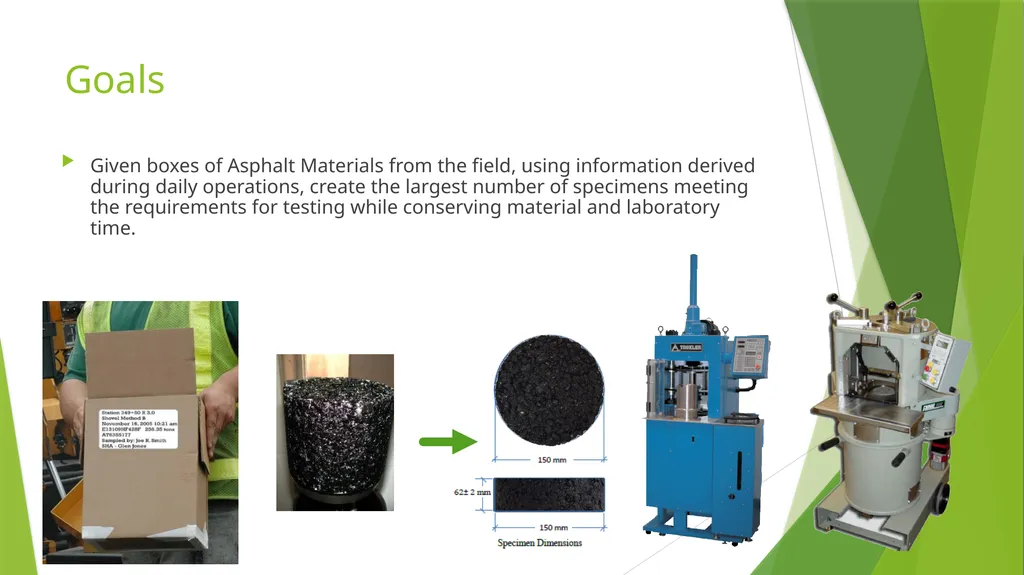
slide4. Goals Given boxes of Asphalt Materials from the field, using information derived during daily operations, create the largest number of specimens meeting the requirements for testing while conserving material and laboratory time.<br>
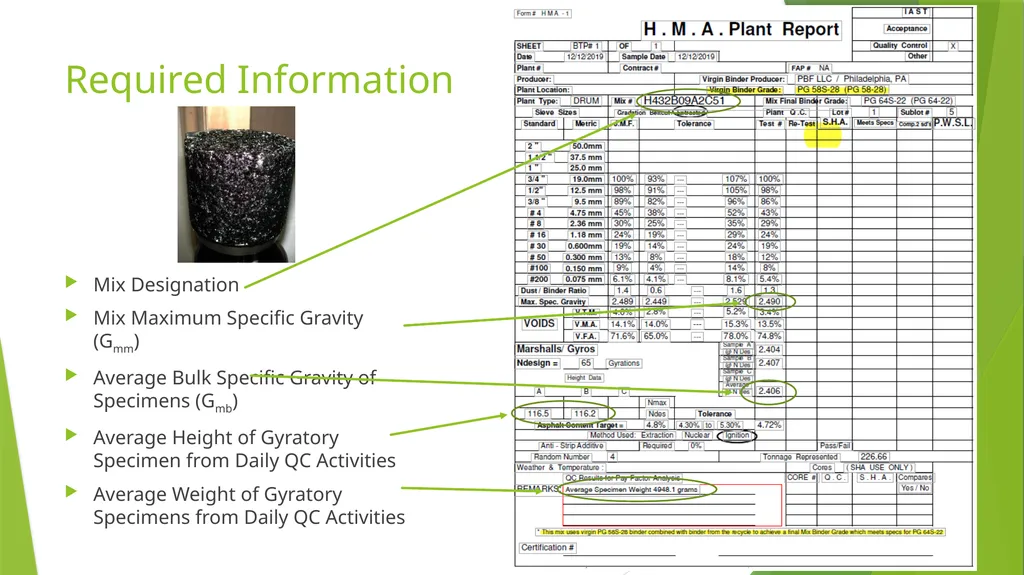
slide5. Required Information Mix Designation
Mix Maximum Specific Gravity (Gmm)
Average Bulk Specific Gravity of Specimens (Gmb)
Average Height of Gyratory Specimen from Daily QC Activities
Average Weight of Gyratory Specimens from Daily QC Activities<br>
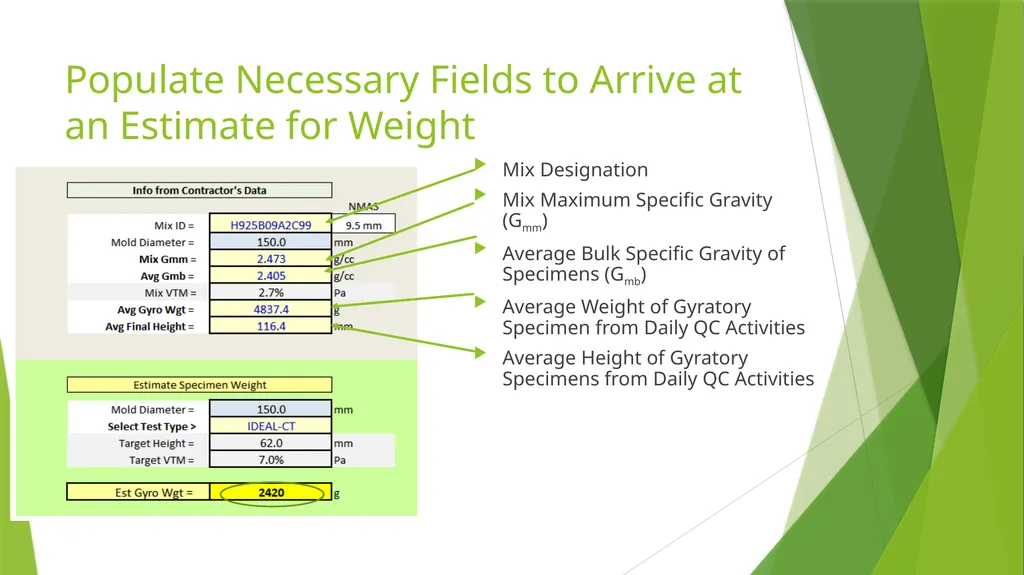
slide6. Populate Necessary Fields to Arrive at an Estimate for Weight Mix Designation
Mix Maximum Specific Gravity (Gmm)
Average Bulk Specific Gravity of Specimens (Gmb)
Average Weight of Gyratory Specimen from Daily QC Activities
Average Height of Gyratory Specimens from Daily QC Activities<br>
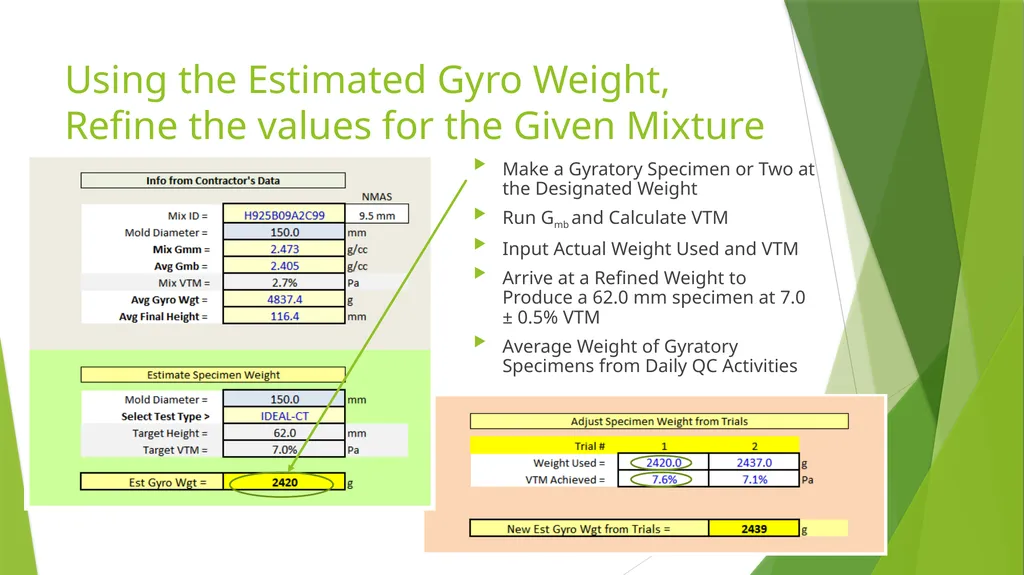
slide7. Using the Estimated Gyro Weight, Refine the values for the Given Mixture Make a Gyratory Specimen or Two at the Designated Weight
Run Gmb and Calculate VTM
Input Actual Weight Used and VTM
Arrive at a Refined Weight to Produce a 62.0 mm specimen at 7.0 ± 0.5% VTM
Average Weight of Gyratory Specimens from Daily QC Activities<br>
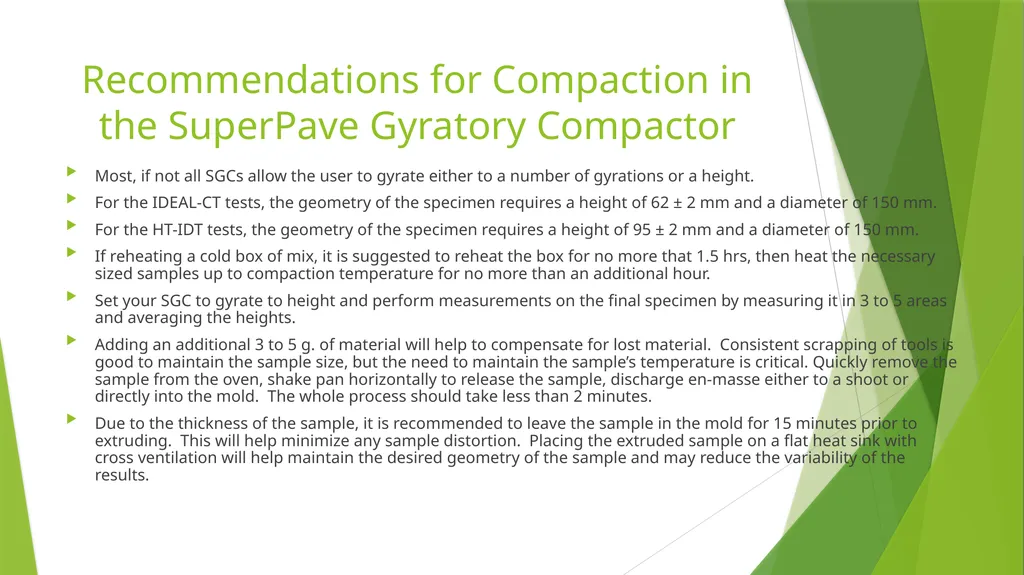
slide8. Recommendations for Compaction in the SuperPave Gyratory Compactor Most, if not all SGCs allow the user to gyrate either to a number of gyrations or a height.
For the IDEAL-CT tests, the geometry of the specimen requires a height of 62 ± 2 mm and a diameter of 150 mm.
For the HT-IDT tests, the geometry of the specimen requires a height of 95 ± 2 mm and a diameter of 150 mm.
If reheating a cold box of mix, it is suggested to reheat the box for no more that 1.5 hrs, then heat the necessary sized samples up to compaction temperature for no more than an additional hour.
Set your SGC to gyrate to height and perform measurements on the final specimen by measuring it in 3 to 5 areas and averaging the heights.
Adding an additional 3 to 5 g. of material will help to compensate for lost material. Consistent scrapping of tools is good to maintain the sample size, but the need to maintain the sample’s temperature is critical. Quickly remove the sample from the oven, shake pan horizontally to release the sample, discharge en-masse either to a shoot or directly into the mold. The whole process should take less than 2 minutes.
Due to the thickness of the sample, it is recommended to leave the sample in the mold for 15 minutes prior to extruding. This will help minimize any sample distortion. Placing the extruded sample on a flat heat sink with cross ventilation will help maintain the desired geometry of the sample and may reduce the variability of the results.<br>
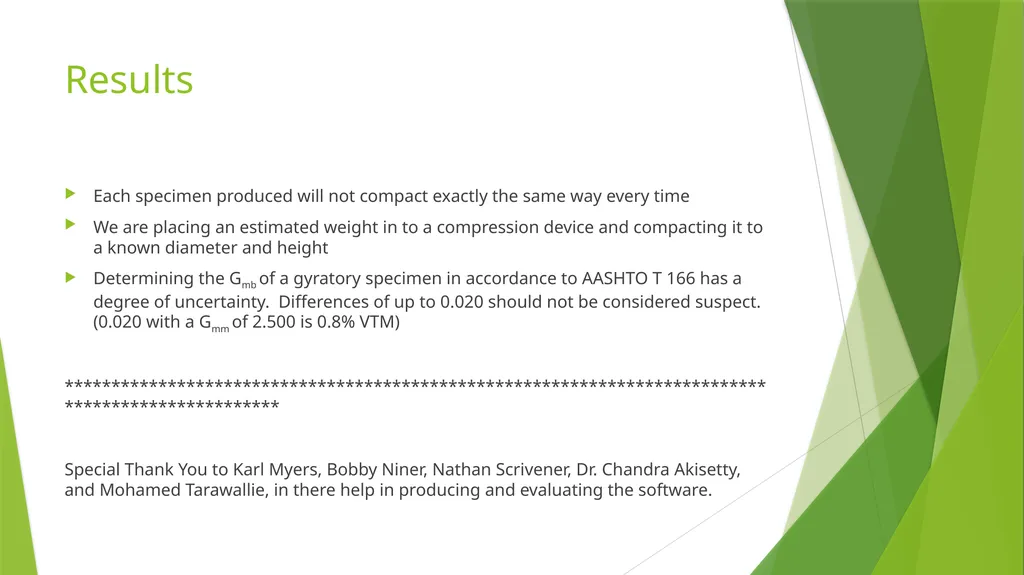
slide9. Results Each specimen produced will not compact exactly the same way every time
We are placing an estimated weight in to a compression device and compacting it to a known diameter and height
Determining the Gmb of a gyratory specimen in accordance to AASHTO T 166 has a degree of uncertainty. Differences of up to 0.020 should not be considered suspect. (0.020 with a Gmm of 2.500 is 0.8% VTM)
**************************************************************************************************
Special Thank You to Karl Myers, Bobby Niner, Nathan Scrivener, Dr. Chandra Akisetty, and Mohamed Tarawallie, in there help in producing and evaluating the software.<br>
slide2. Specimen Preparation Overview IDEAL-CT SGC Specimens—Prepare five laboratory SGC specimens according to T 312 in the SGC with a compaction height of 62 ± 2 mm and a diameter of 150 mm. The target air voids for each specimen is 7.0 ± 0.5 percent. Note that the laboratory-mixed and laboratory-compacted (LMLC) loose asphalt mixture shall be conditioned for 4 hours at 135ºC following AASHTO R 30. Plant-mixed and laboratory-compacted mixes (PMLC), materials should only be reheated to the proper compaction temperature. No more than 2.5 hours for reheating (includes reheating the box). Prior to testing the compacted gyratory sample should be submerged in 25°C water for two hours.<br>
slide3. Specimen Preparation Overview HT-IDT SGC Specimens—Prepare five laboratory SGC specimens according to T 312 in the SGC with a compaction height of 95 ± 2 mm and a diameter of 150 mm. The target air voids for each specimen is 7.0 ± 0.5 percent. Note that the laboratory-mixed and laboratory-compacted (LMLC) loose asphalt mixture shall be conditioned for 4 hours at 135ºC following AASHTO R 30. Plant-mixed and laboratory-compacted mixes (PMLC), materials should only be reheated to the proper compaction temperature. No more than 2.5 hours for reheating (includes reheating the box). Prior to testing the compacted gyratory sample should be submerged in 43°C water for two hours.<br>
slide4. Goals Given boxes of Asphalt Materials from the field, using information derived during daily operations, create the largest number of specimens meeting the requirements for testing while conserving material and laboratory time.<br>
slide5. Required Information Mix Designation
Mix Maximum Specific Gravity (Gmm)
Average Bulk Specific Gravity of Specimens (Gmb)
Average Height of Gyratory Specimen from Daily QC Activities
Average Weight of Gyratory Specimens from Daily QC Activities<br>
slide6. Populate Necessary Fields to Arrive at an Estimate for Weight Mix Designation
Mix Maximum Specific Gravity (Gmm)
Average Bulk Specific Gravity of Specimens (Gmb)
Average Weight of Gyratory Specimen from Daily QC Activities
Average Height of Gyratory Specimens from Daily QC Activities<br>
slide7. Using the Estimated Gyro Weight, Refine the values for the Given Mixture Make a Gyratory Specimen or Two at the Designated Weight
Run Gmb and Calculate VTM
Input Actual Weight Used and VTM
Arrive at a Refined Weight to Produce a 62.0 mm specimen at 7.0 ± 0.5% VTM
Average Weight of Gyratory Specimens from Daily QC Activities<br>
slide8. Recommendations for Compaction in the SuperPave Gyratory Compactor Most, if not all SGCs allow the user to gyrate either to a number of gyrations or a height.
For the IDEAL-CT tests, the geometry of the specimen requires a height of 62 ± 2 mm and a diameter of 150 mm.
For the HT-IDT tests, the geometry of the specimen requires a height of 95 ± 2 mm and a diameter of 150 mm.
If reheating a cold box of mix, it is suggested to reheat the box for no more that 1.5 hrs, then heat the necessary sized samples up to compaction temperature for no more than an additional hour.
Set your SGC to gyrate to height and perform measurements on the final specimen by measuring it in 3 to 5 areas and averaging the heights.
Adding an additional 3 to 5 g. of material will help to compensate for lost material. Consistent scrapping of tools is good to maintain the sample size, but the need to maintain the sample’s temperature is critical. Quickly remove the sample from the oven, shake pan horizontally to release the sample, discharge en-masse either to a shoot or directly into the mold. The whole process should take less than 2 minutes.
Due to the thickness of the sample, it is recommended to leave the sample in the mold for 15 minutes prior to extruding. This will help minimize any sample distortion. Placing the extruded sample on a flat heat sink with cross ventilation will help maintain the desired geometry of the sample and may reduce the variability of the results.<br>
slide9. Results Each specimen produced will not compact exactly the same way every time
We are placing an estimated weight in to a compression device and compacting it to a known diameter and height
Determining the Gmb of a gyratory specimen in accordance to AASHTO T 166 has a degree of uncertainty. Differences of up to 0.020 should not be considered suspect. (0.020 with a Gmm of 2.500 is 0.8% VTM)
**************************************************************************************************
Special Thank You to Karl Myers, Bobby Niner, Nathan Scrivener, Dr. Chandra Akisetty, and Mohamed Tarawallie, in there help in producing and evaluating the software.<br>