
IETF OAuth WG Virtual Interims (2024/5) Area
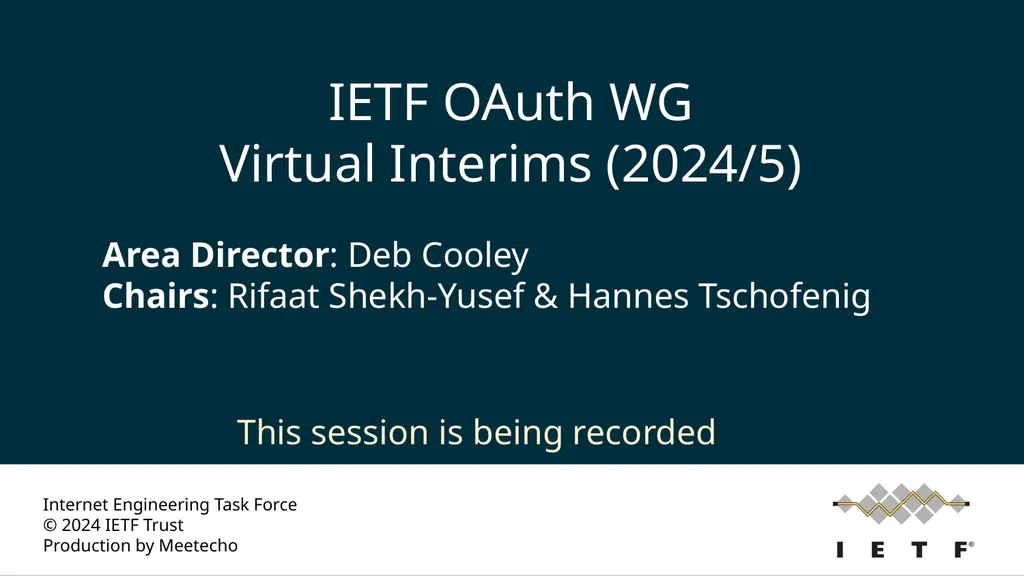
Description: IETF OAuth WG Virtual Interims (20245) Area Director: Deb Cooley Chairs: Rifaat Shekh-Yusef Hannes Tschofenig Internet Engineering Task Force 2024 IETF Trust Production by Meetecho This session is being recorded Note Well This is a
Related Topics
Download Presentation
"IETF OAuth WG Virtual Interims (2024/5) Area" is the property of its rightful owner. Permission is granted to download and print the materials on this website for personal, non-commercial use only, and to display it on your personal computer provided you do not modify the materials and that you retain all copyright notices contained in the materials. By downloading content from our website, you accept the terms of this agreement.
Presentation Transcript
slide1. IETF OAuth WGVirtual Interims (2024/5) Area Director: Deb Cooley
Chairs: Rifaat Shekh-Yusef & Hannes Tschofenig Internet Engineering Task Force
© 2024 IETF Trust
Production by Meetecho This session is being recorded<br>
slide2. Note Well This is a reminder of IETF policies in effect on various topics such as patents or code of conduct. It is only meant to point you in the right direction. Exceptions may apply. The IETF's patent policy and the definition of an IETF "contribution" and "participation" are set forth in BCP 79; please read it carefully.
As a reminder:
By participating in the IETF, you agree to follow IETF processes and policies.
If you are aware that any IETF contribution is covered by patents or patent applications that are owned or controlled by you or your sponsor, you must disclose that fact, or not participate in the discussion.
As a participant in or attendee to any IETF activity you acknowledge that written, audio, video, and photographic records of meetings may be made public.
Personal information that you provide to IETF will be handled in accordance with the IETF Privacy Statement.
As a participant or attendee, you agree to work respectfully with other participants; please contact the ombudsteam (https://www.ietf.org/contact/ombudsteam/) if you have questions or concerns about this.
Definitive information is in the documents listed below and other IETF BCPs. For advice, please talk to WG chairs or ADs:
BCP 9 (Internet Standards Process)
BCP 25 (Working Group processes)
BCP 25 (Anti-Harassment Procedures)
BCP 54 (Code of Conduct)
BCP 78 (Copyright)
BCP 79 (Patents, Participation)
https://www.ietf.org/privacy-policy/(Privacy Policy)<br>
slide3. Note Really Well IETF meetings, virtual meetings, and mailing lists are intended for professional collaboration and networking, as defined in the IETF Guidelines for Conduct (RFC 7154), the IETF Anti-Harassment Policy, and the IETF Anti-Harassment Procedures (RFC 7776). If you have any concerns about observed behavior, please talk to the Ombudsteam, who are available if you need confidentiality to raise concerns confident about harassment or other conduct in the IETF.
The IETF strives to create and maintain an environment in which people of many different backgrounds and identities are treated with dignity, decency, and respect. Those who participate in the IETF are expected to behave according to professional standards and demonstrate appropriate workplace behavior.
IETF participants must not engage in harassment while at IETF meetings, virtual meetings, social events, or on mailing lists. Harassment is unwelcome hostile or intimidating behavior—in particular, speech or behavior that is aggressive or intimidates.
If you believe you have been harassed, notice that someone else is being harassed, or have any other concerns, you are encouraged to raise your concern in confidence with one of the Ombudspersons.<br>
slide4. Interims Dec 9th – SD-JWT VC
Dec 16th – Transaction Token & Identity Chaining
Jan 6th – Client ID Scheme
Jan 13th – Token Status List
Jan 20th – One Time Token
Jan 27th – Private Key JWT Issue<br>
Chairs: Rifaat Shekh-Yusef & Hannes Tschofenig Internet Engineering Task Force
© 2024 IETF Trust
Production by Meetecho This session is being recorded<br>
slide2. Note Well This is a reminder of IETF policies in effect on various topics such as patents or code of conduct. It is only meant to point you in the right direction. Exceptions may apply. The IETF's patent policy and the definition of an IETF "contribution" and "participation" are set forth in BCP 79; please read it carefully.
As a reminder:
By participating in the IETF, you agree to follow IETF processes and policies.
If you are aware that any IETF contribution is covered by patents or patent applications that are owned or controlled by you or your sponsor, you must disclose that fact, or not participate in the discussion.
As a participant in or attendee to any IETF activity you acknowledge that written, audio, video, and photographic records of meetings may be made public.
Personal information that you provide to IETF will be handled in accordance with the IETF Privacy Statement.
As a participant or attendee, you agree to work respectfully with other participants; please contact the ombudsteam (https://www.ietf.org/contact/ombudsteam/) if you have questions or concerns about this.
Definitive information is in the documents listed below and other IETF BCPs. For advice, please talk to WG chairs or ADs:
BCP 9 (Internet Standards Process)
BCP 25 (Working Group processes)
BCP 25 (Anti-Harassment Procedures)
BCP 54 (Code of Conduct)
BCP 78 (Copyright)
BCP 79 (Patents, Participation)
https://www.ietf.org/privacy-policy/(Privacy Policy)<br>
slide3. Note Really Well IETF meetings, virtual meetings, and mailing lists are intended for professional collaboration and networking, as defined in the IETF Guidelines for Conduct (RFC 7154), the IETF Anti-Harassment Policy, and the IETF Anti-Harassment Procedures (RFC 7776). If you have any concerns about observed behavior, please talk to the Ombudsteam, who are available if you need confidentiality to raise concerns confident about harassment or other conduct in the IETF.
The IETF strives to create and maintain an environment in which people of many different backgrounds and identities are treated with dignity, decency, and respect. Those who participate in the IETF are expected to behave according to professional standards and demonstrate appropriate workplace behavior.
IETF participants must not engage in harassment while at IETF meetings, virtual meetings, social events, or on mailing lists. Harassment is unwelcome hostile or intimidating behavior—in particular, speech or behavior that is aggressive or intimidates.
If you believe you have been harassed, notice that someone else is being harassed, or have any other concerns, you are encouraged to raise your concern in confidence with one of the Ombudspersons.<br>
slide4. Interims Dec 9th – SD-JWT VC
Dec 16th – Transaction Token & Identity Chaining
Jan 6th – Client ID Scheme
Jan 13th – Token Status List
Jan 20th – One Time Token
Jan 27th – Private Key JWT Issue<br>