If....else statements in c lang. Dr. Vibha Dubey Assistant Professor(H.O.D) Dept. Of Computer Durga College(Raipur C.G.) Generally C program statement is executed in a order in which they appear in the program. But sometimes we use decision
"If....else statements in c lang. Dr. Vibha Dubey" is the property of its rightful owner. Permission is granted to
download and print the materials on this website for personal, non-commercial use only, and to display it
on your personal computer provided you do not modify the materials and that you retain all copyright
notices contained in the materials. By downloading content from our website, you accept the terms of this
agreement.
Presentation Transcript
01
If....else statements in c lang. Dr. Vibha Dubey
Assistant Professor(H.O.D)
Dept. Of Computer
Durga College(Raipur C.G.)<br>
02
Generally C program statement is executed in a order in which they appear in the program. But sometimes we use decision making condition for execution only a part of program, that is called control statement. Control statement defined how the control is transferred from one part to the other part of the program. There are several control statement like if...else, switch, while, do....while, for loop, break, continue, goto etc. Introduction<br>
03
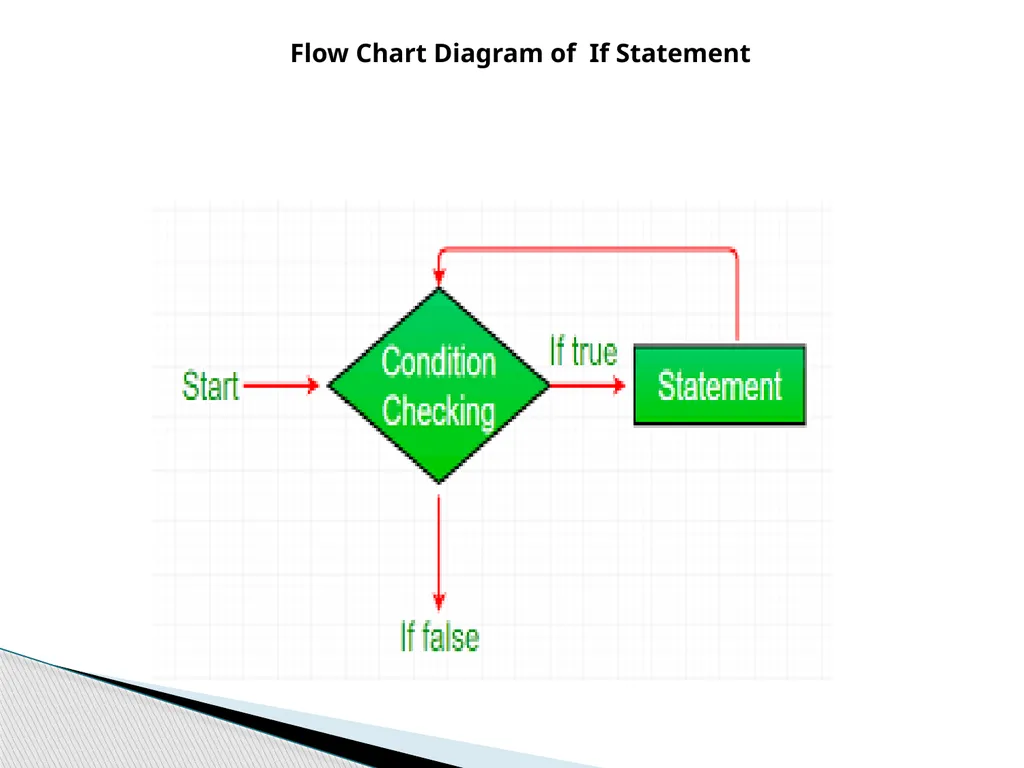
Statement execute set of command like when condition is true and its syntax is
If (condition)
Statement;
The statement is executed only when condition is true. If the if statement body is consists of several statement then better to use pair of curly braces. Here in case condition is false then compiler skip the line within the if block. if statement<br>
04
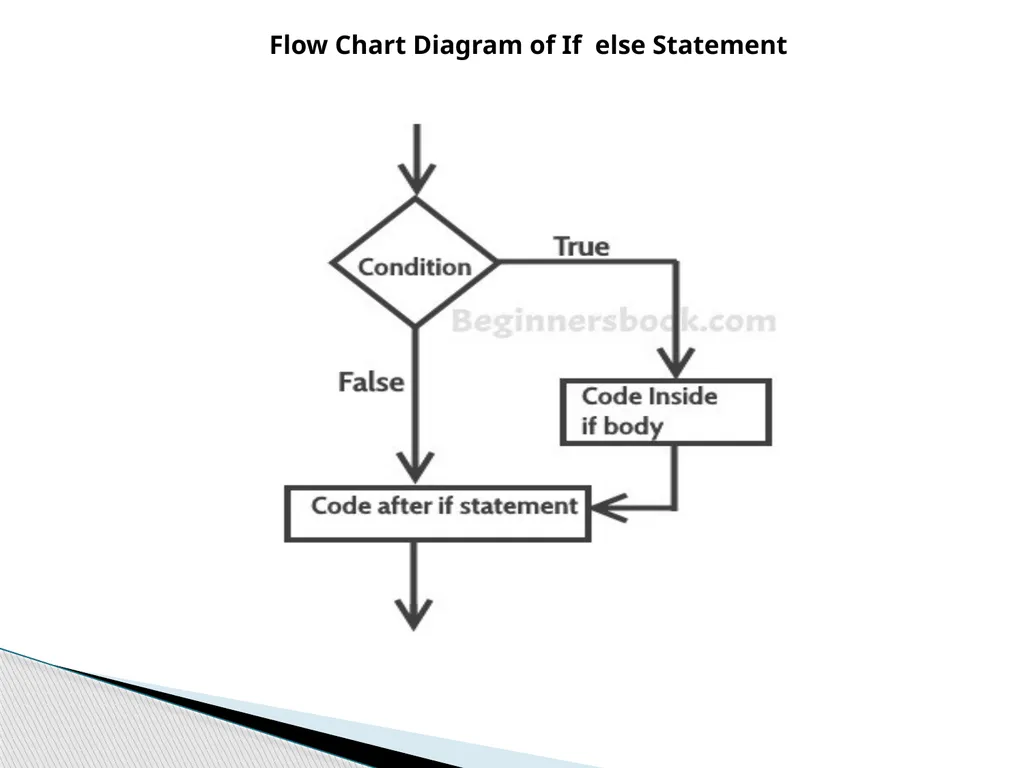
Flow Chart Diagram of If Statement<br>
05
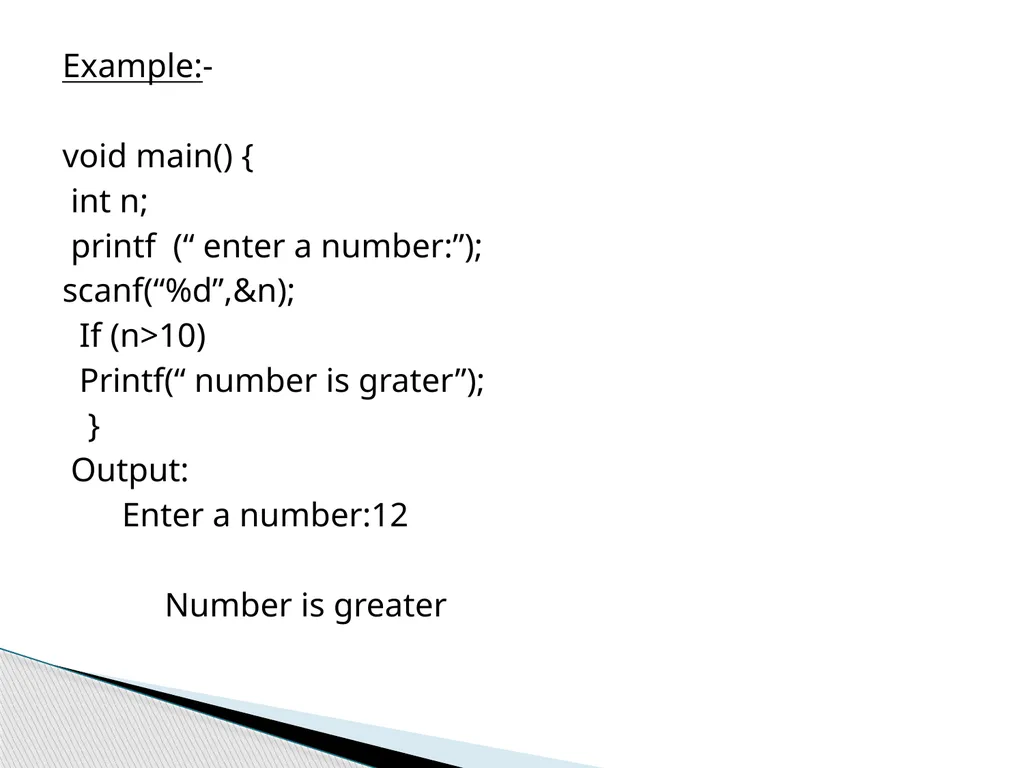
Example:-
void main() {
int n;
printf (“ enter a number:”);
scanf(“%d”,&n);
If (n>10)
Printf(“ number is grater”);
}
Output:
Enter a number:12
Number is greater<br>
06
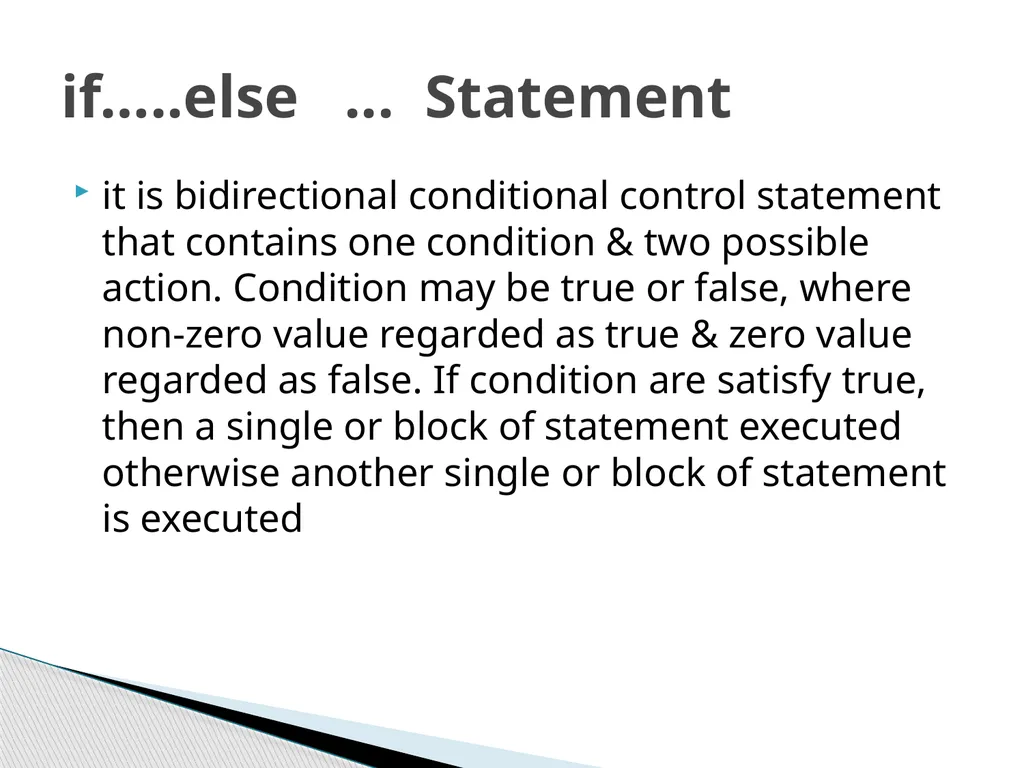
it is bidirectional conditional control statement that contains one condition & two possible action. Condition may be true or false, where non-zero value regarded as true & zero value regarded as false. If condition are satisfy true, then a single or block of statement executed otherwise another single or block of statement is executed if…..else ... Statement<br>
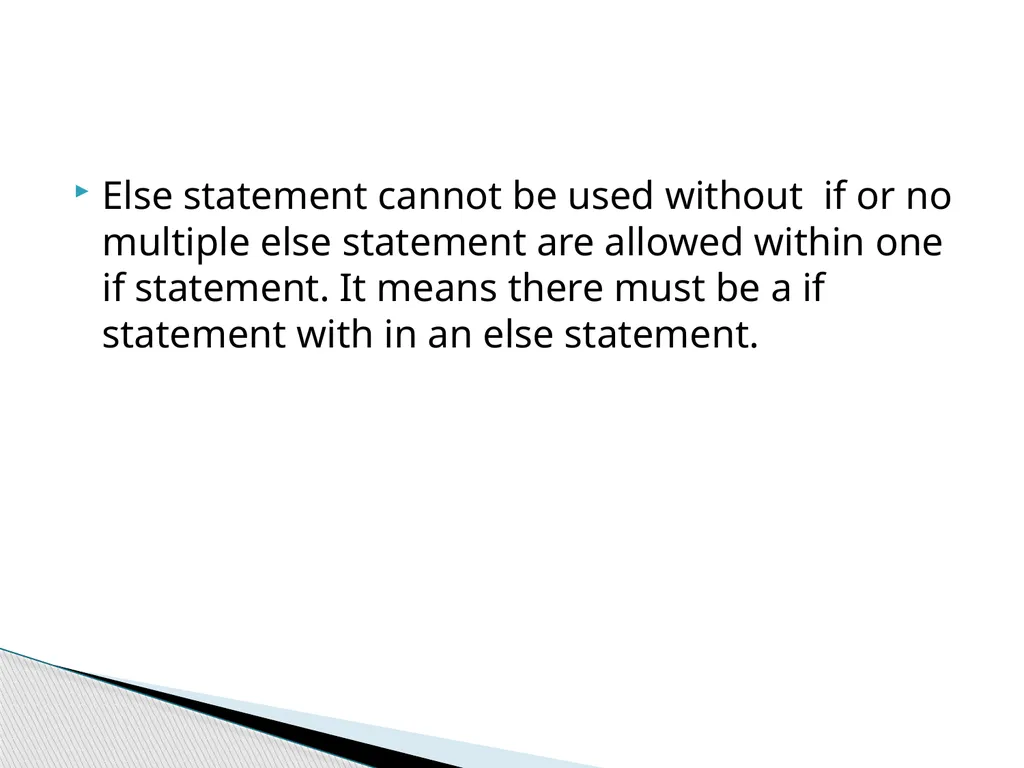
Else statement cannot be used without if or no multiple else statement are allowed within one if statement. It means there must be a if statement with in an else statement.<br>
10
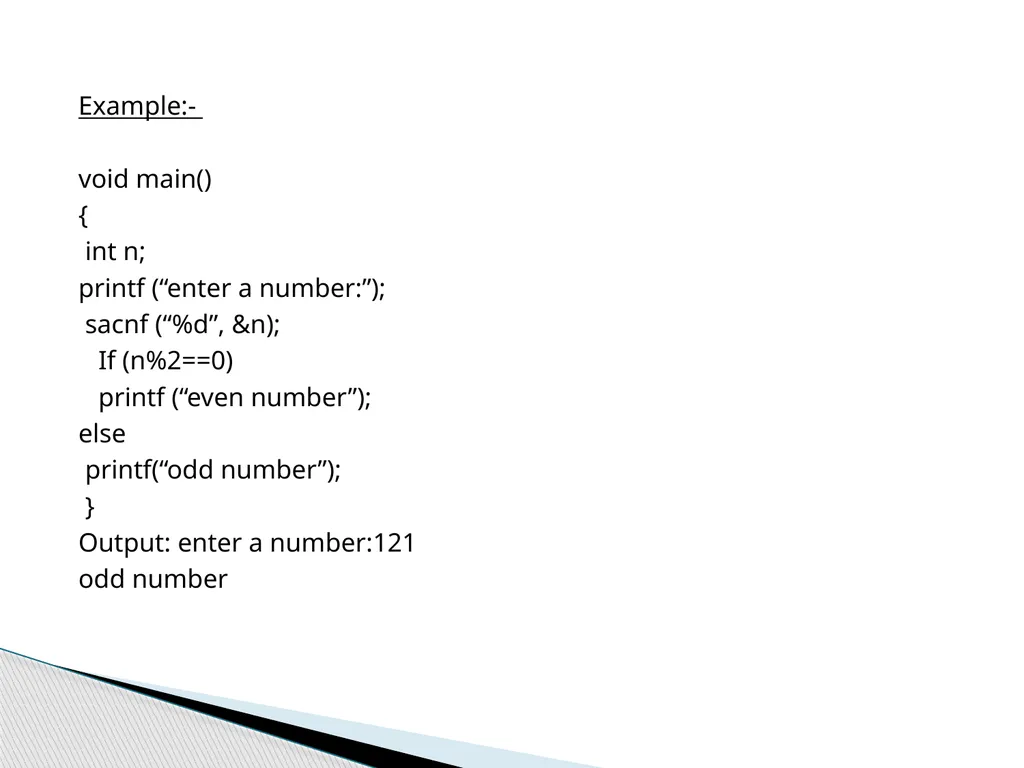
Example:-
void main()
{
int n;
printf (“enter a number:”);
sacnf (“%d”, &n);
If (n%2==0)
printf (“even number”);
else
printf(“odd number”);
}
Output: enter a number:121
odd number<br>
11
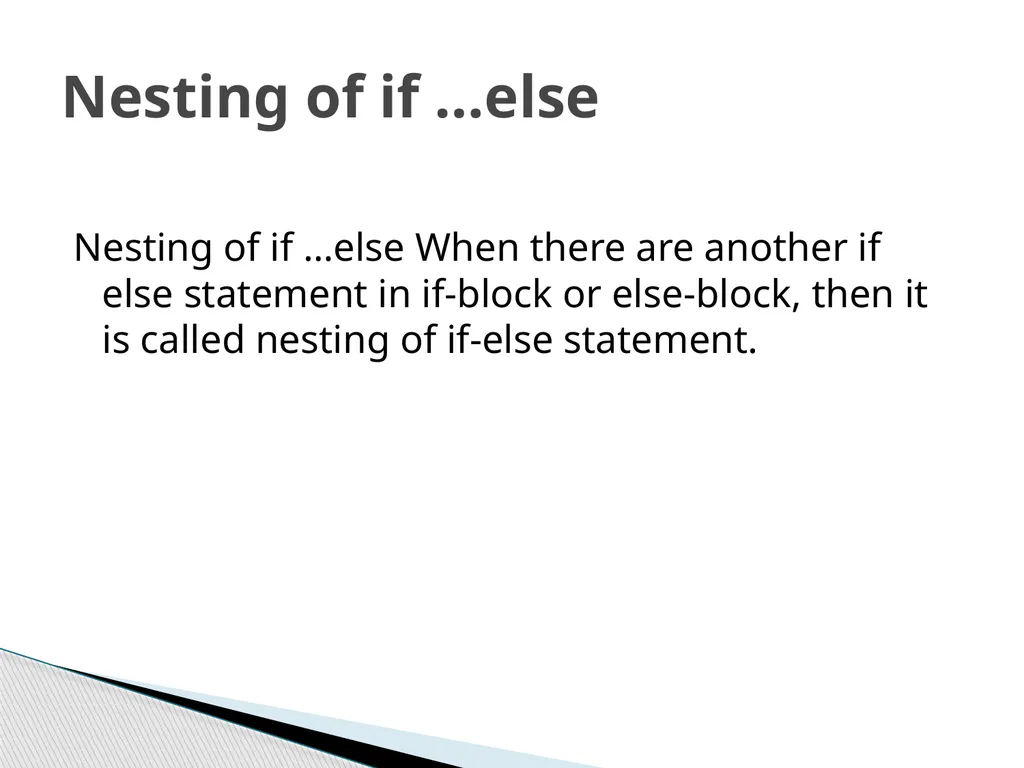
Nesting of if …else When there are another if else statement in if-block or else-block, then it is called nesting of if-else statement. Nesting of if …else<br>
12
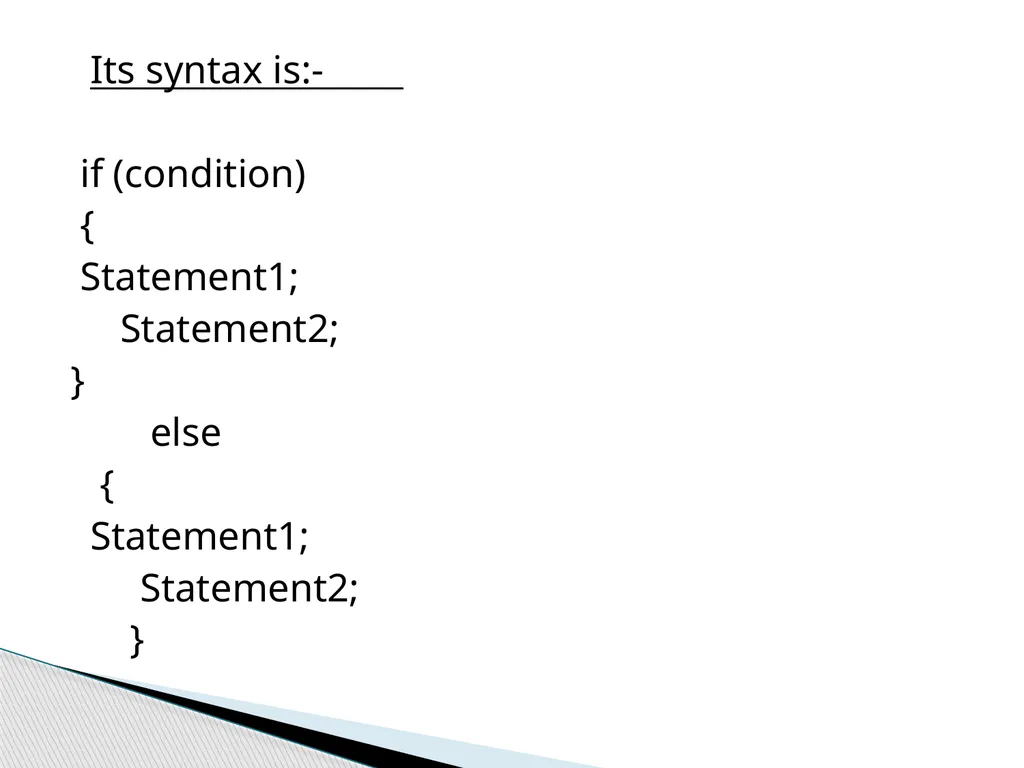
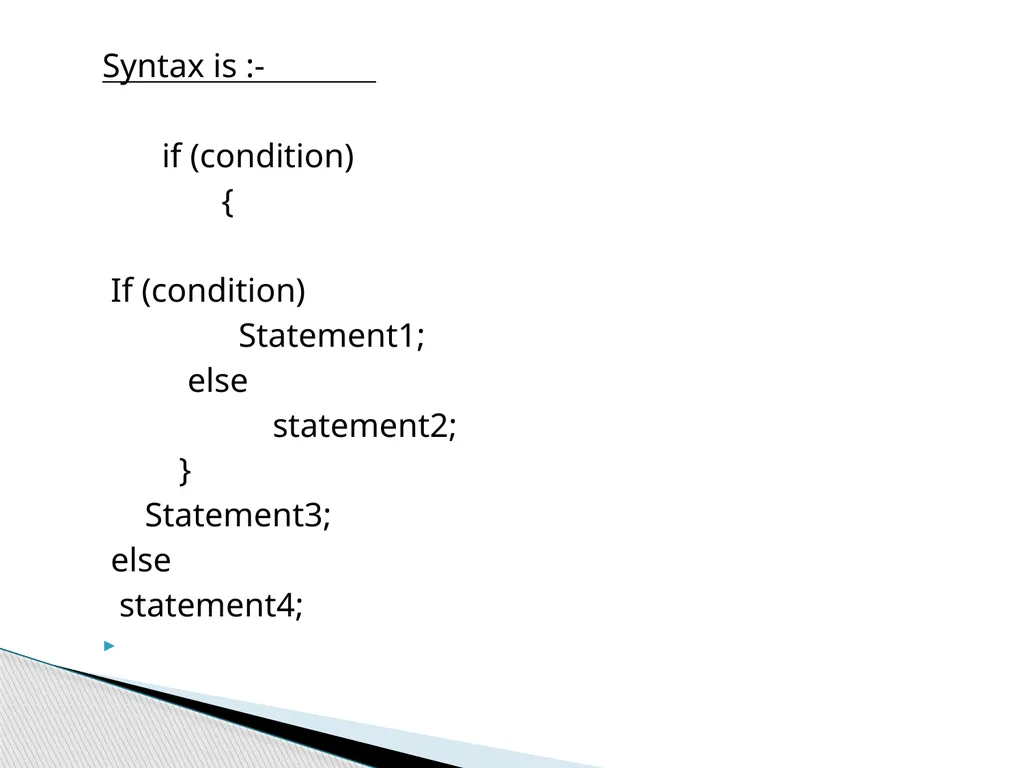
Syntax is :-
if (condition)
{
If (condition)
Statement1;
else
statement2;
}
Statement3;
else
statement4;<br>
13
If….else LADDER In this type of nesting there is an if else statement in every else part except the last part. If condition is false control pass to block where condition is again checked with its if statement. If….else LADDER<br>
14
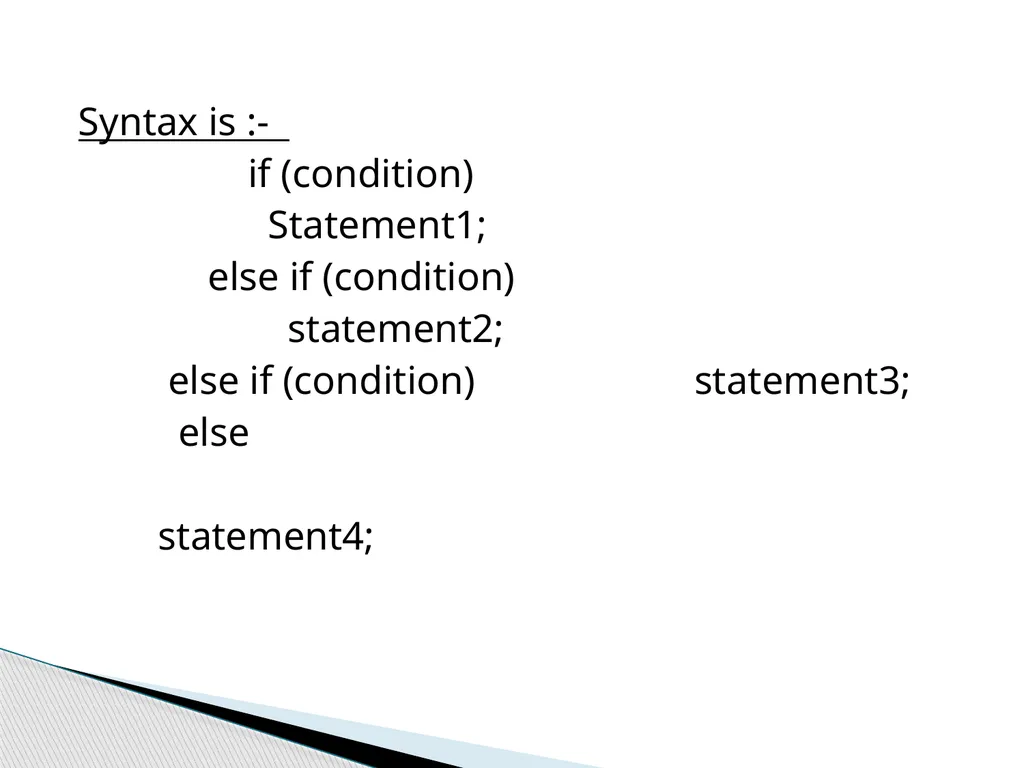
Syntax is :-
if (condition)
Statement1;
else if (condition)
statement2;
else if (condition) statement3;
else