IMPLEMENTATION OF RTI ON INDIAN RAILWAYS R.SUBRAMANIAM, DY.SECRETARY, CENTRAL RAILWAY, MUMBAI. METHODOLOGY A research was conducted involving around 100 Railway Officers. The questionnaire comprised of 25 questions covering different
"IMPLEMENTATION OF RTI ON INDIAN RAILWAYS" is the property of its rightful owner. Permission is granted to
download and print the materials on this website for personal, non-commercial use only, and to display it
on your personal computer provided you do not modify the materials and that you retain all copyright
notices contained in the materials. By downloading content from our website, you accept the terms of this
agreement.
Share
Embed code
Presentation Transcript
01
IMPLEMENTATION OF RTI ON INDIAN RAILWAYS
R.SUBRAMANIAM,
DY.SECRETARY,
CENTRAL RAILWAY, MUMBAI.<br>
02
METHODOLOGY A research was conducted involving around 100 Railway Officers.
The questionnaire comprised of 25 questions covering different aspects of the RTI Act.
Respondents were all senior Railway Officers working in different departments of the Indian Railways representing various Zonal Railways, Production Units and Divisions:
Questionnaire method was followed for the collection of data.<br>
03
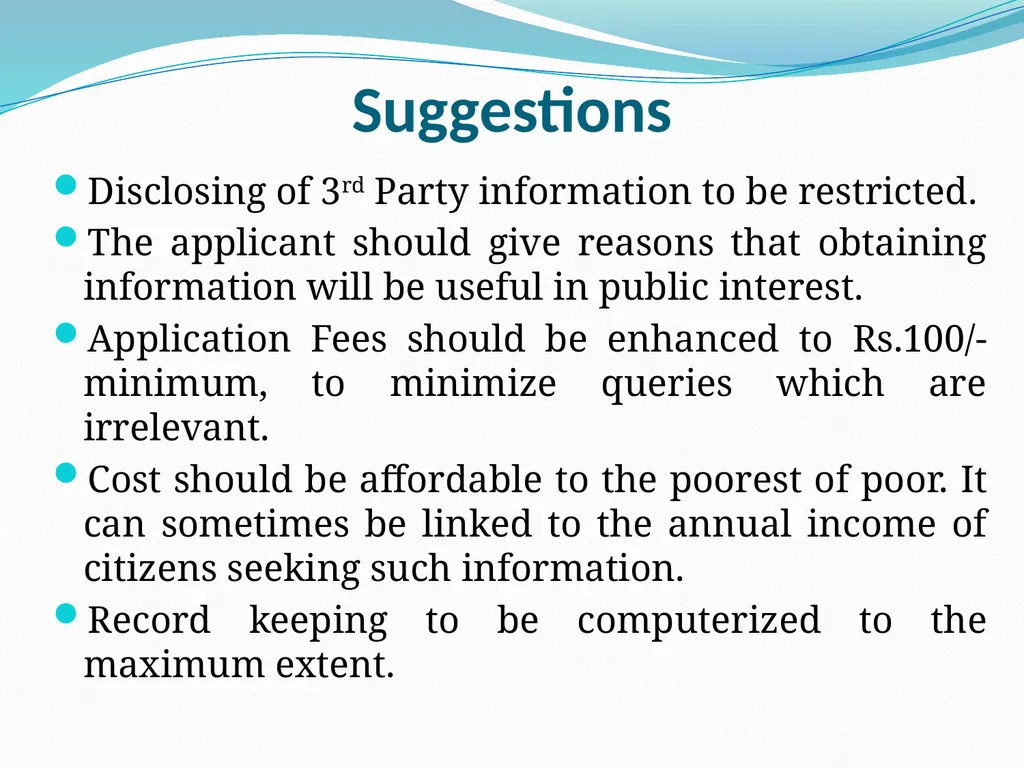
Suggestions Disclosing of 3rd Party information to be restricted.
The applicant should give reasons that obtaining information will be useful in public interest.
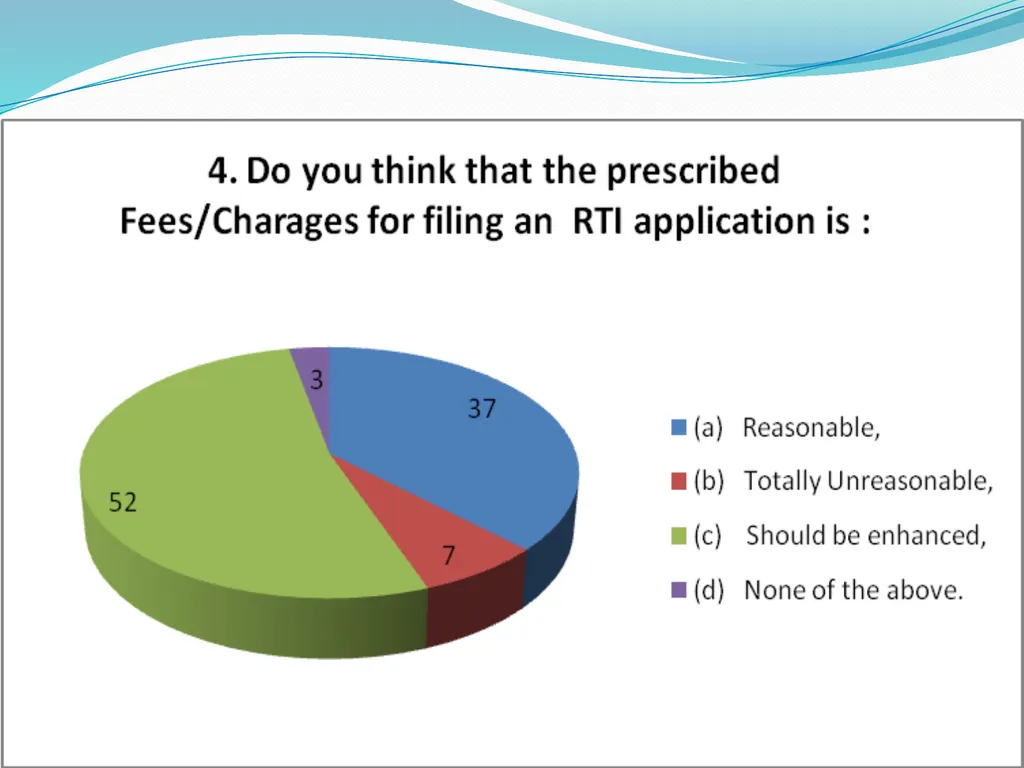
Application Fees should be enhanced to Rs.100/- minimum, to minimize queries which are irrelevant.
Cost should be affordable to the poorest of poor. It can sometimes be linked to the annual income of citizens seeking such information.
Record keeping to be computerized to the maximum extent.<br>
04
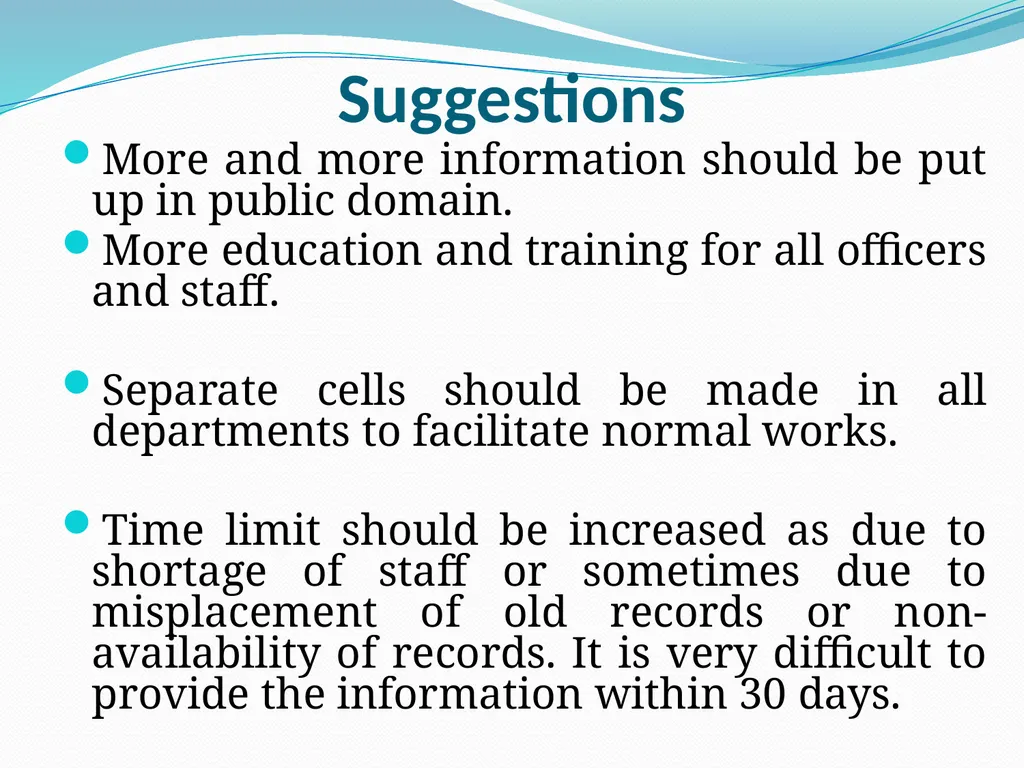
Suggestions More and more information should be put up in public domain.
More education and training for all officers and staff.
Separate cells should be made in all departments to facilitate normal works.
Time limit should be increased as due to shortage of staff or sometimes due to misplacement of old records or non-availability of records. It is very difficult to provide the information within 30 days.<br>
05
Suggestions The questions asked by the person (if found) with malafide intentions should be punished and hefty fine levied.
Information giving activity should be brought under the ambit of service tax, which would increase the cost of seeking information.
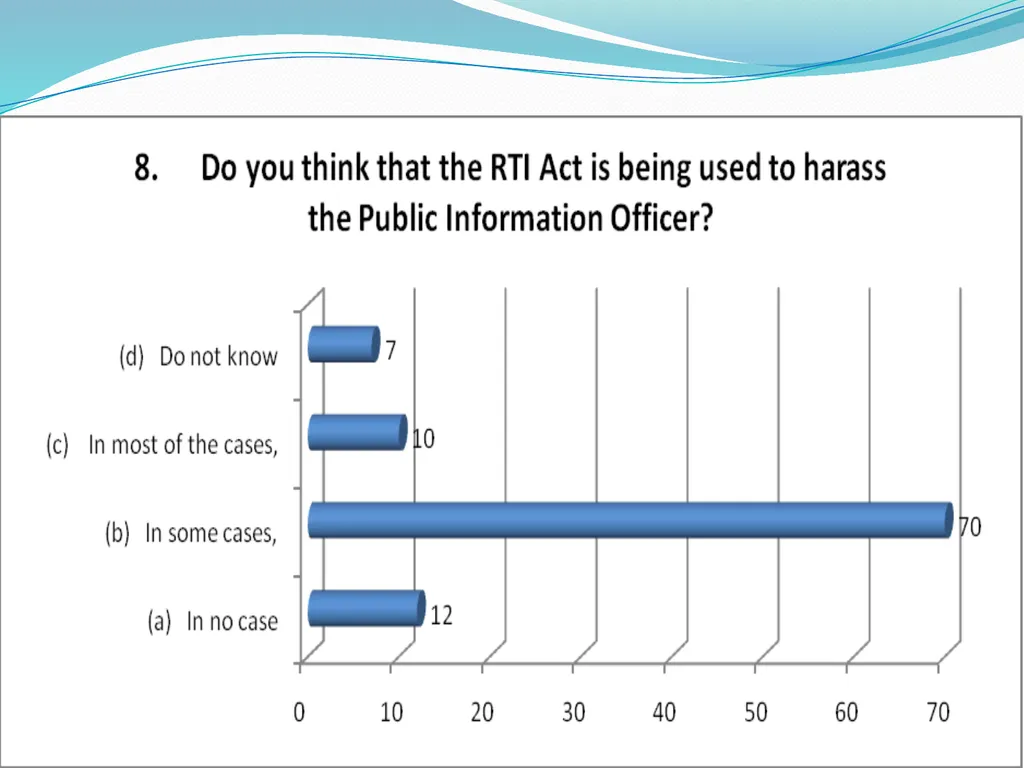
There should be some mechanism to deny information sought for mischievous reasons and for harassing concerned officials.<br>
06
Suggestions Credential / background of the person seeking information should be assessed first and its purpose should also be clearly spelt out.
There should be some limitation on the quantum of information sought. Some realistic cap is needed for the total amount of information that needs to be given.
RTI applications should be filtered by an RTI Cell with regard to their relevance.
The information which is not in public interest should be denied, if required, by passing an amendment.
Use of Information Technology and office automation in Government working be encouraged.<br>
07
Conclusions It can be concluded that the PIOs nominated by the Department are facilitating the furnishing of the information under the RTI Act, even though there is a strong case for enhancing the fee from the present of Rs.10/-
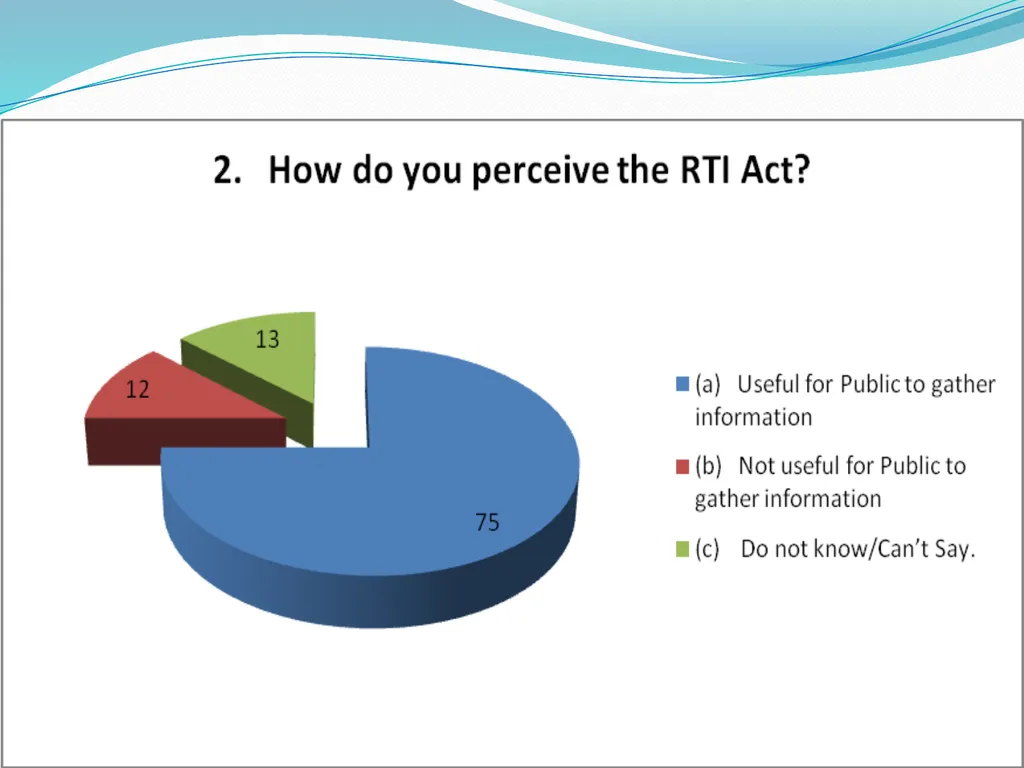
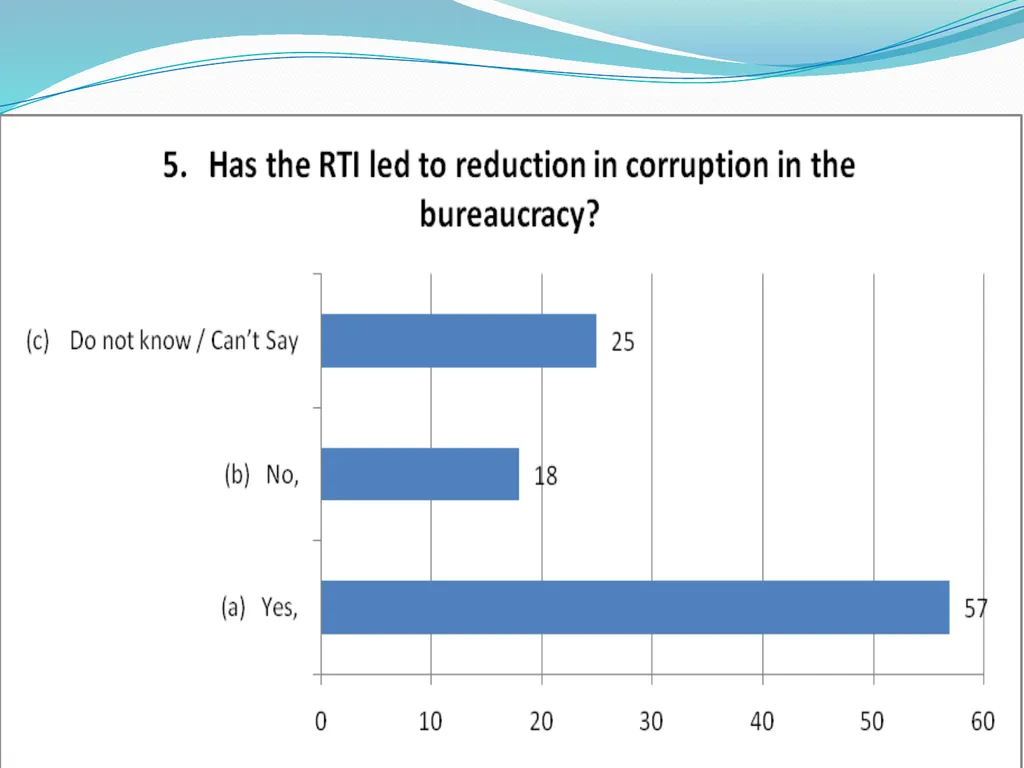
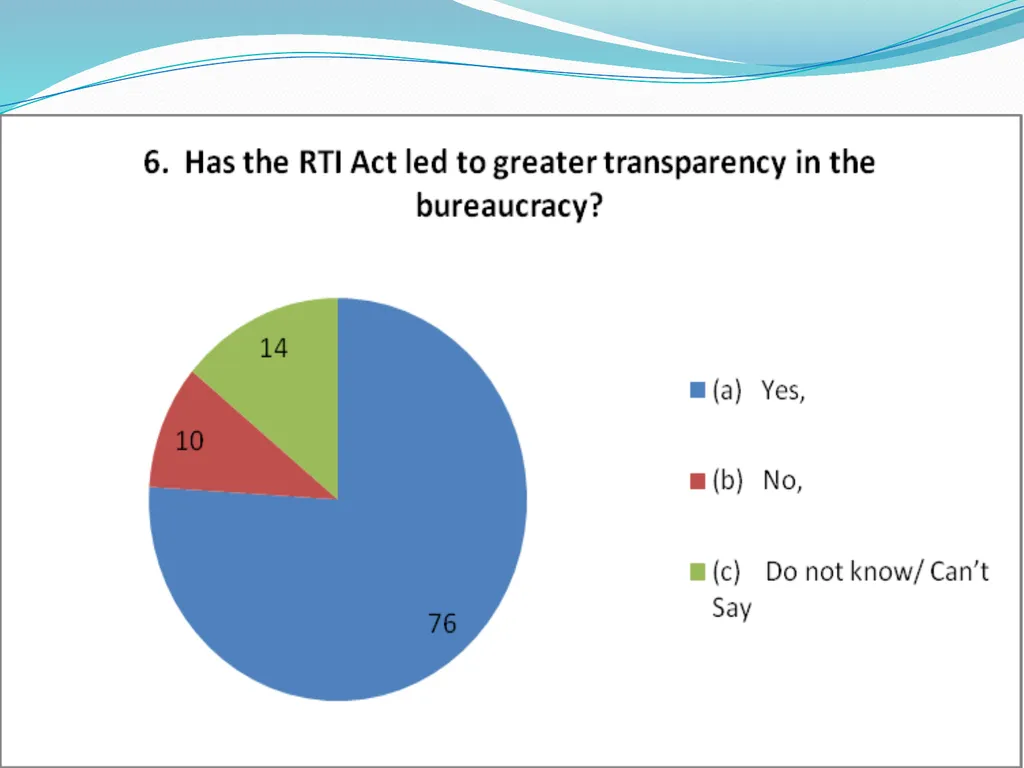
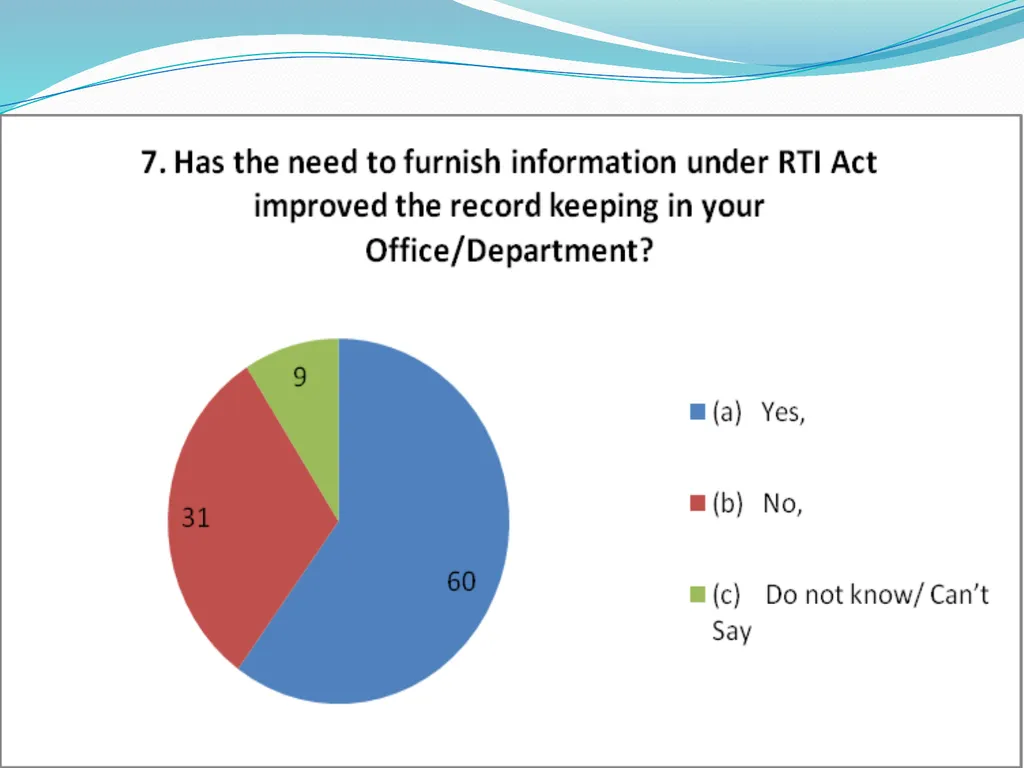
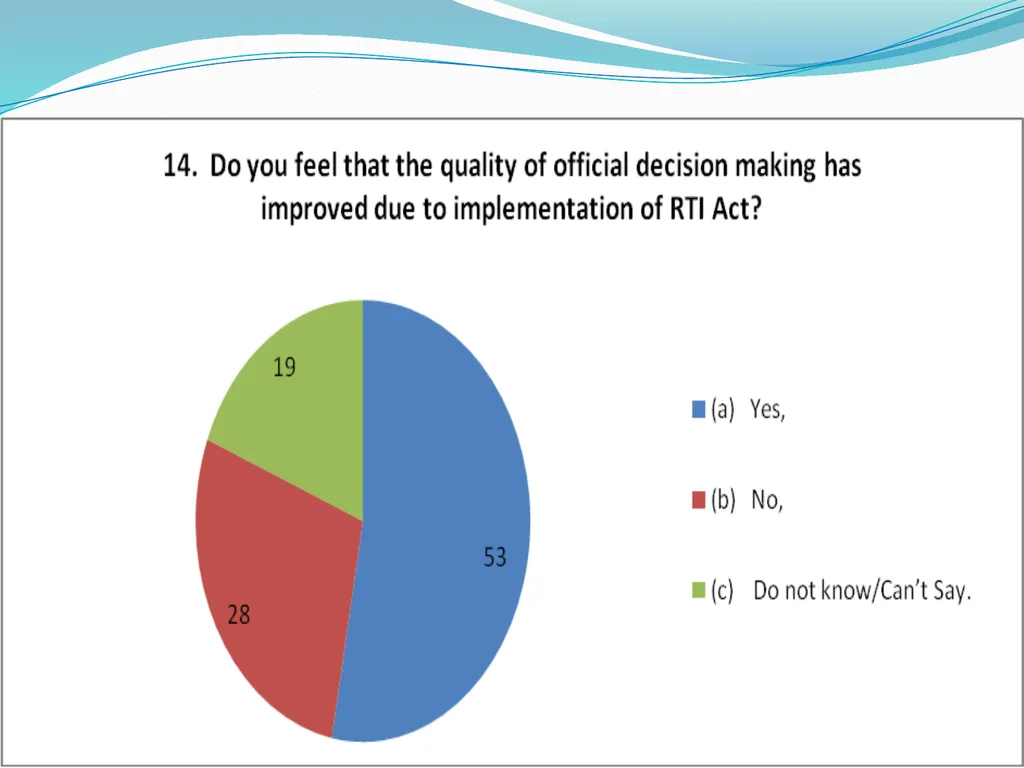
This research categorically reveals that the RTI Act has resulted in reduction in corruption, greater transparency in bureaucracy and the decision making had improved. Several respondents had also opined that the record keeping in their offices have drastically improved.<br>
08
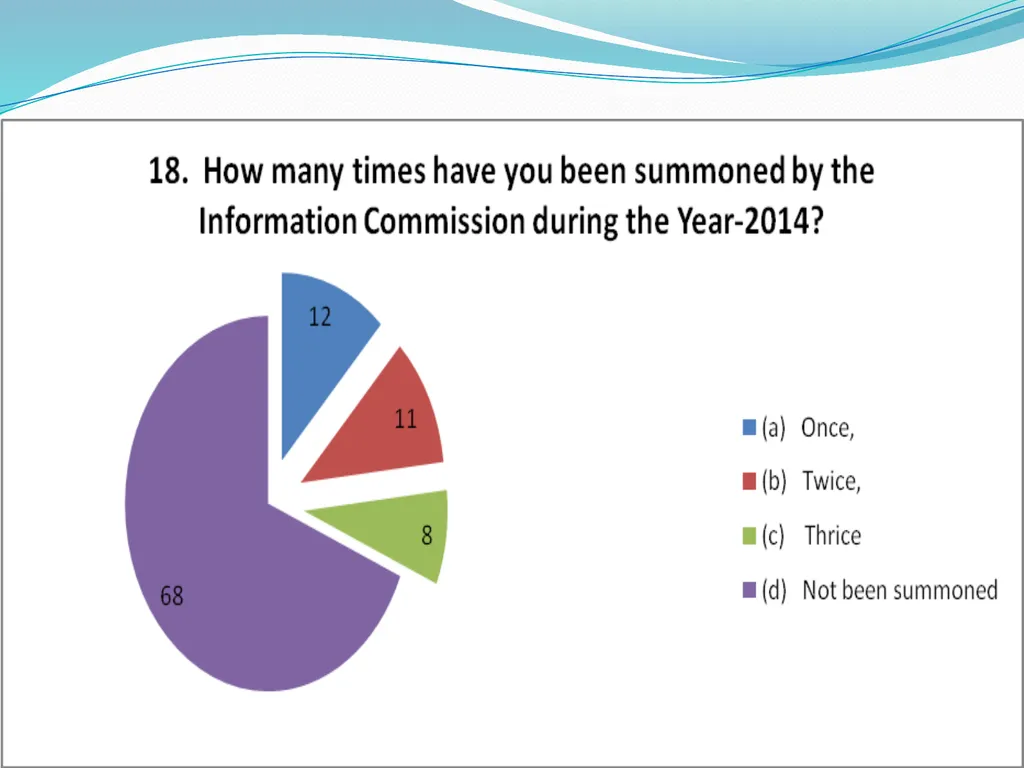
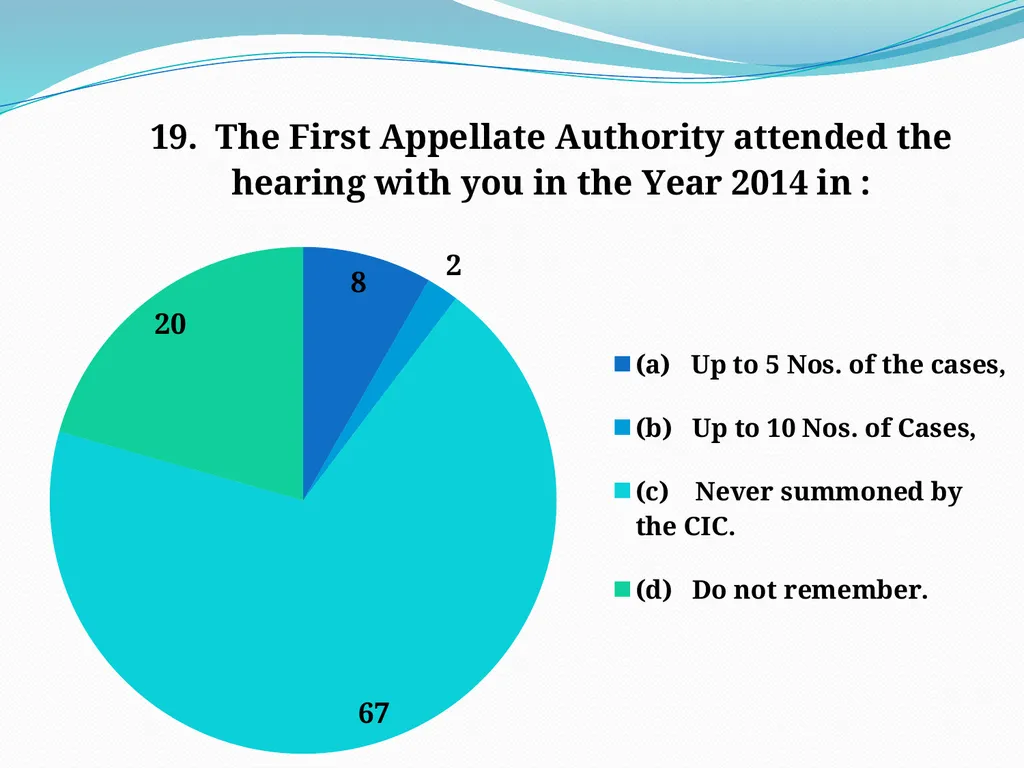
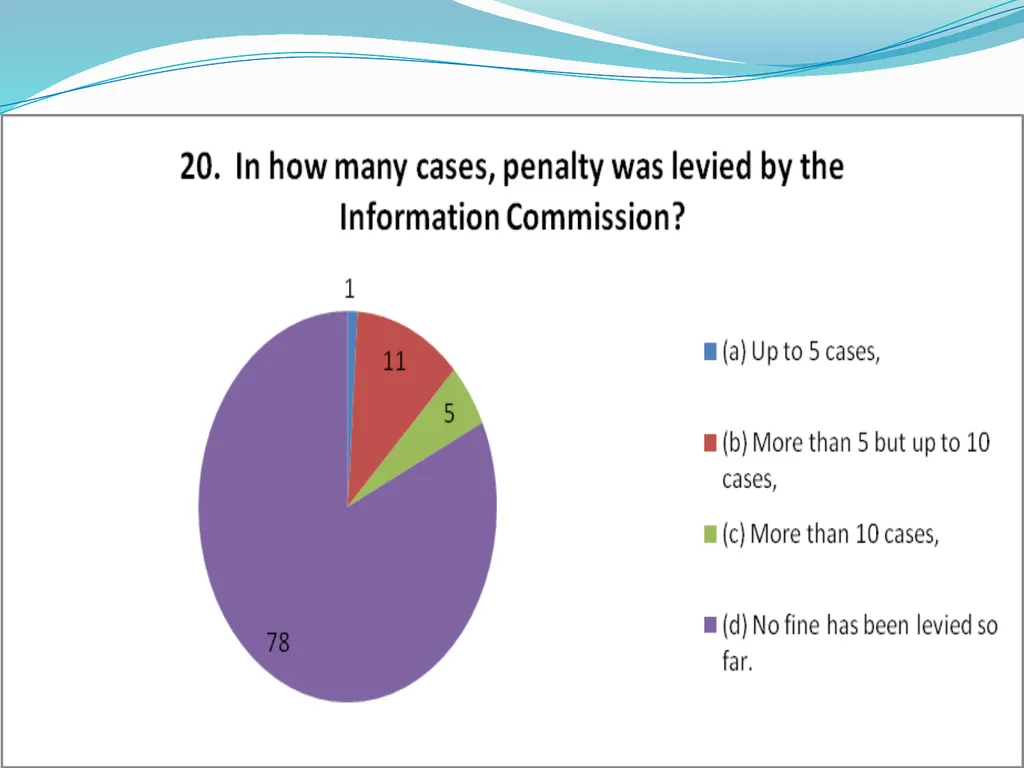
Conclusions Another important and an interesting outcome of this research reveals that the CIC and the ICs are discharging their duties diligently. Almost 70% of the respondents interviewed were categorical in stating that they were neither summoned by the CIC/IC nor any pecuniary penalty was levied upon them which is a very encouraging response, which can only strengthen the perception of the citizens regarding judicious approach of the CIC.<br>
09
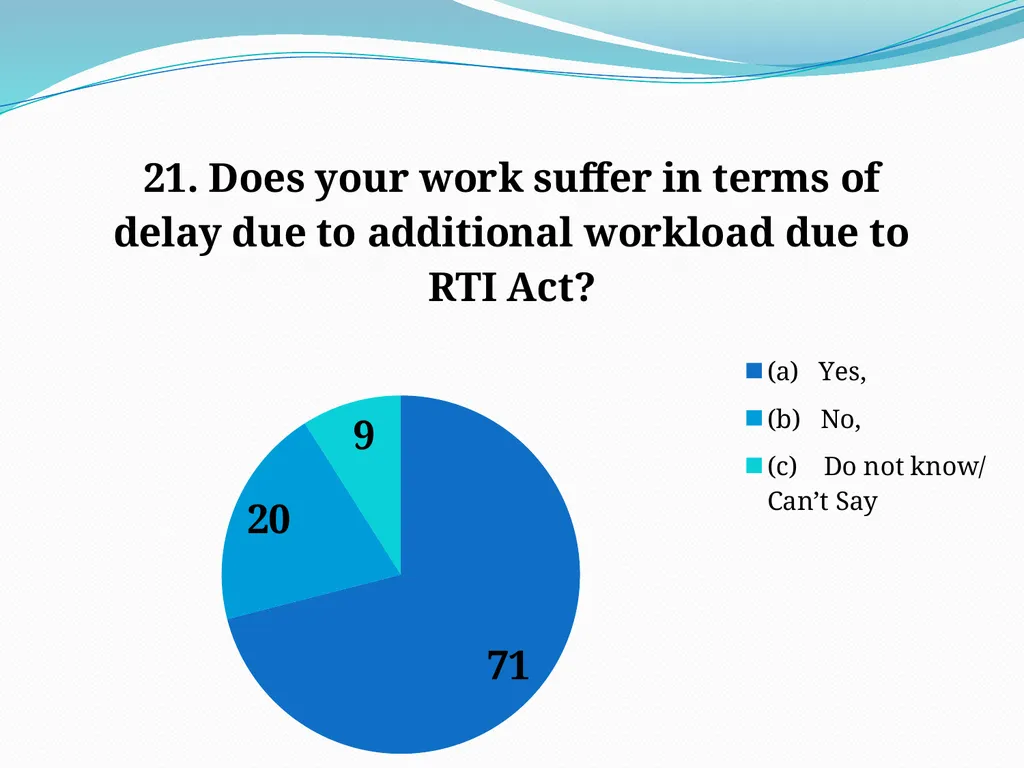
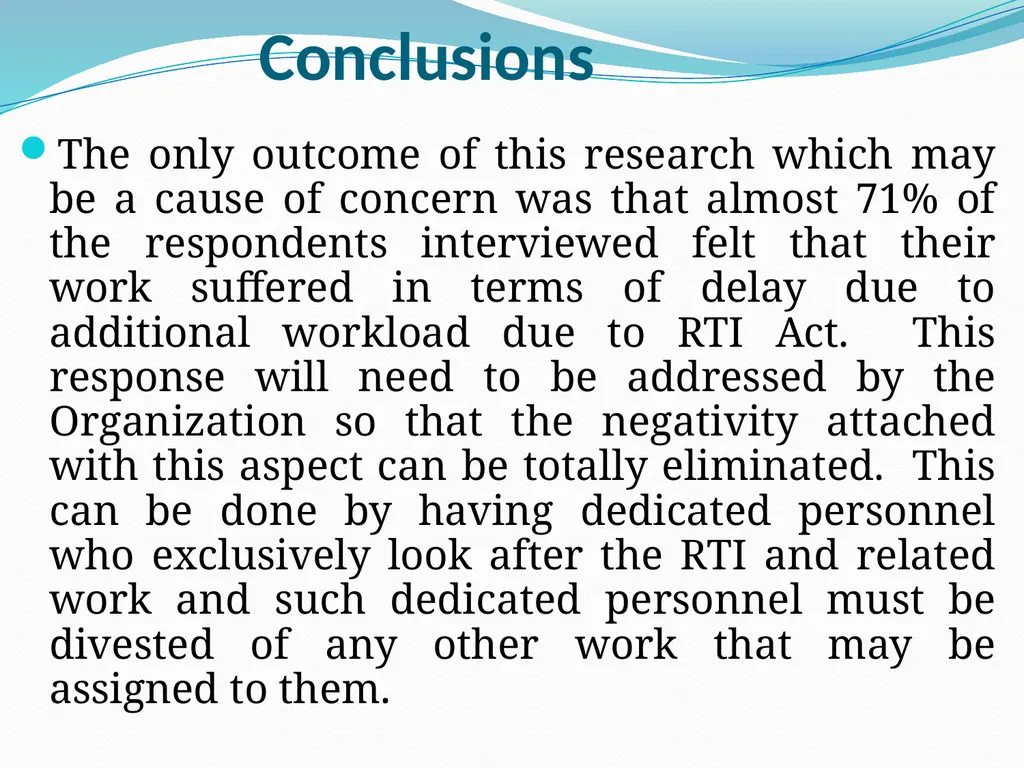
Conclusions The only outcome of this research which may be a cause of concern was that almost 71% of the respondents interviewed felt that their work suffered in terms of delay due to additional workload due to RTI Act. This response will need to be addressed by the Organization so that the negativity attached with this aspect can be totally eliminated. This can be done by having dedicated personnel who exclusively look after the RTI and related work and such dedicated personnel must be divested of any other work that may be assigned to them.<br>