
in Introduction to Dubbing: Exploring the Art and

Description: in Introduction to Dubbing: Exploring the Art and Science of Audio-visual Translation WHAT IS DUBBING? Dubbing is the process of replacing the original dialogue from a video or film with new audio in a different language. It involves
Related Topics
Download Presentation
"in Introduction to Dubbing: Exploring the Art and" is the property of its rightful owner. Permission is granted to download and print the materials on this website for personal, non-commercial use only, and to display it on your personal computer provided you do not modify the materials and that you retain all copyright notices contained in the materials. By downloading content from our website, you accept the terms of this agreement.
Presentation Transcript
slide1. in Introduction to Dubbing: Exploring the Art and Science of Audio-visual Translation<br>
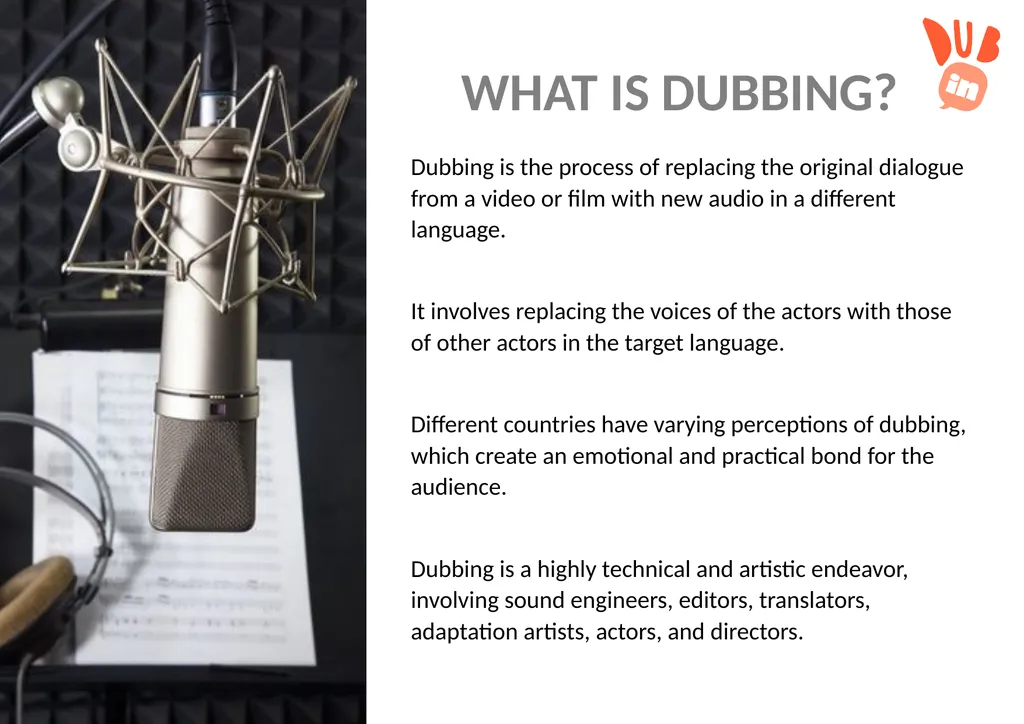
slide2. WHAT IS DUBBING? Dubbing is the process of replacing the original dialogue from a video or film with new audio in a different language.
It involves replacing the voices of the actors with those of other actors in the target language.
Different countries have varying perceptions of dubbing, which create an emotional and practical bond for the audience.
Dubbing is a highly technical and artistic endeavor, involving sound engineers, editors, translators, adaptation artists, actors, and directors.<br>
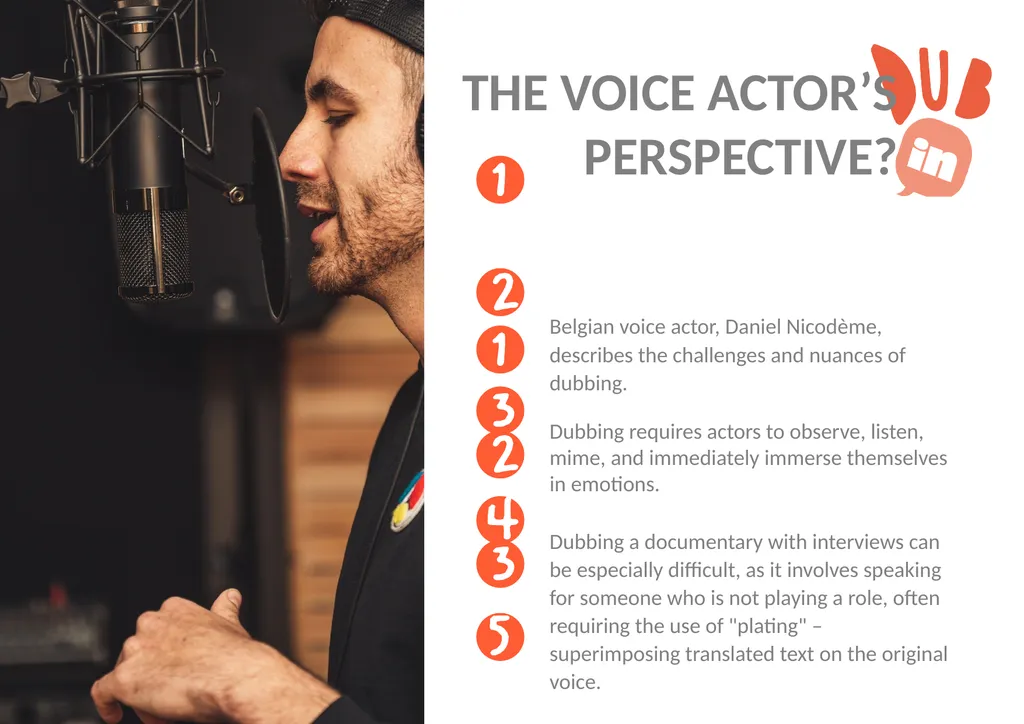
slide3. Belgian voice actor, Daniel Nicodème, describes the challenges and nuances of dubbing. Dubbing requires actors to observe, listen, mime, and immediately immerse themselves in emotions. Dubbing a documentary with interviews can be especially difficult, as it involves speaking for someone who is not playing a role, often requiring the use of "plating" – superimposing translated text on the original voice. THE VOICE ACTOR’S PERSPECTIVE?<br>
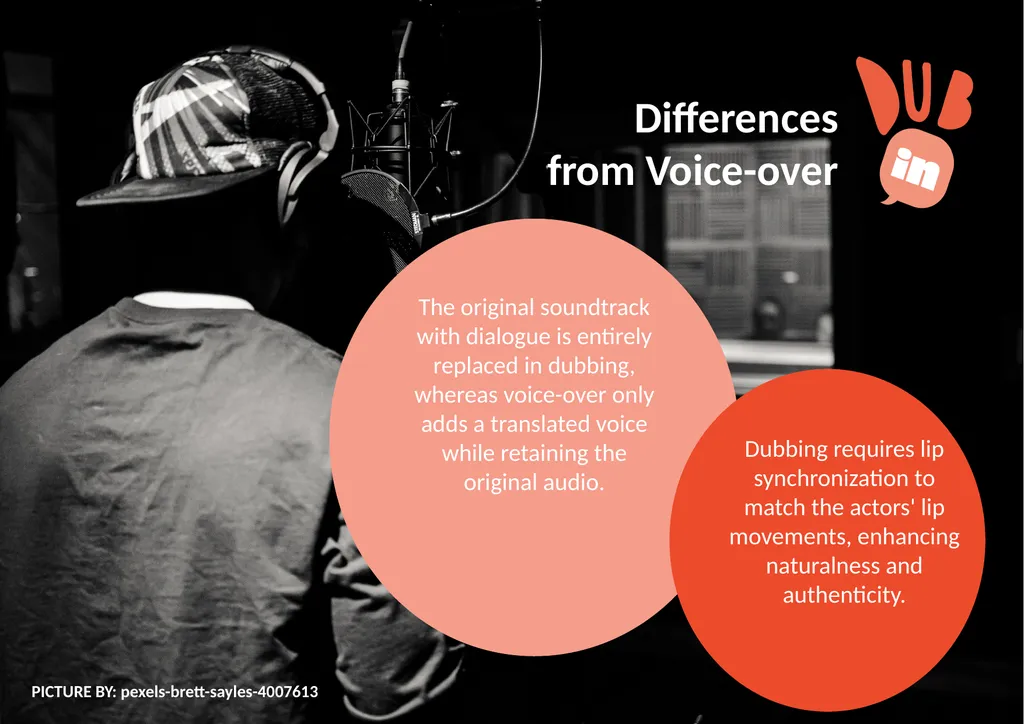
slide4. Differences from Voice-over PICTURE BY: pexels-brett-sayles-4007613 The original soundtrack with dialogue is entirely replaced in dubbing, whereas voice-over only adds a translated voice while retaining the original audio. Dubbing requires lip synchronization to match the actors' lip movements, enhancing naturalness and authenticity.<br>
slide5. Dubbing falls under Audio-visual Translation (AVT) and is concerned with translating and adapting content for new audiences.
Dubbing aims to reproduce the goals and essence of the original dialogue, making it acceptable to the new target audience. DUBBING AS A TRANSLATION MODALITY<br>
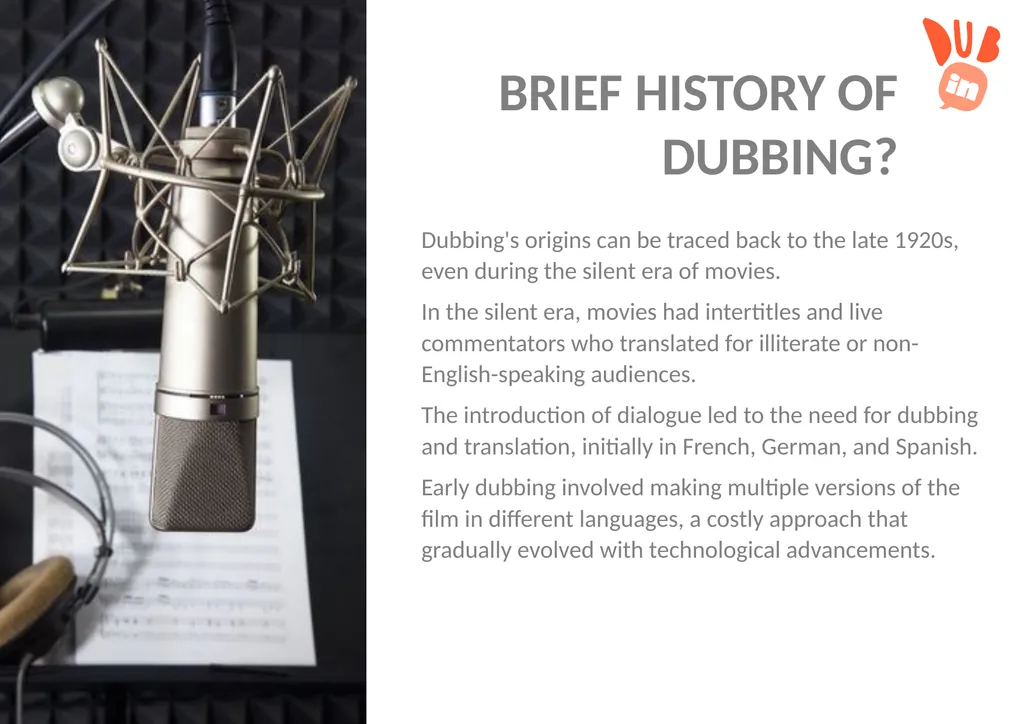
slide6. BRIEF HISTORY OF DUBBING? Dubbing's origins can be traced back to the late 1920s, even during the silent era of movies.
In the silent era, movies had intertitles and live commentators who translated for illiterate or non-English-speaking audiences.
The introduction of dialogue led to the need for dubbing and translation, initially in French, German, and Spanish.
Early dubbing involved making multiple versions of the film in different languages, a costly approach that gradually evolved with technological advancements.<br>
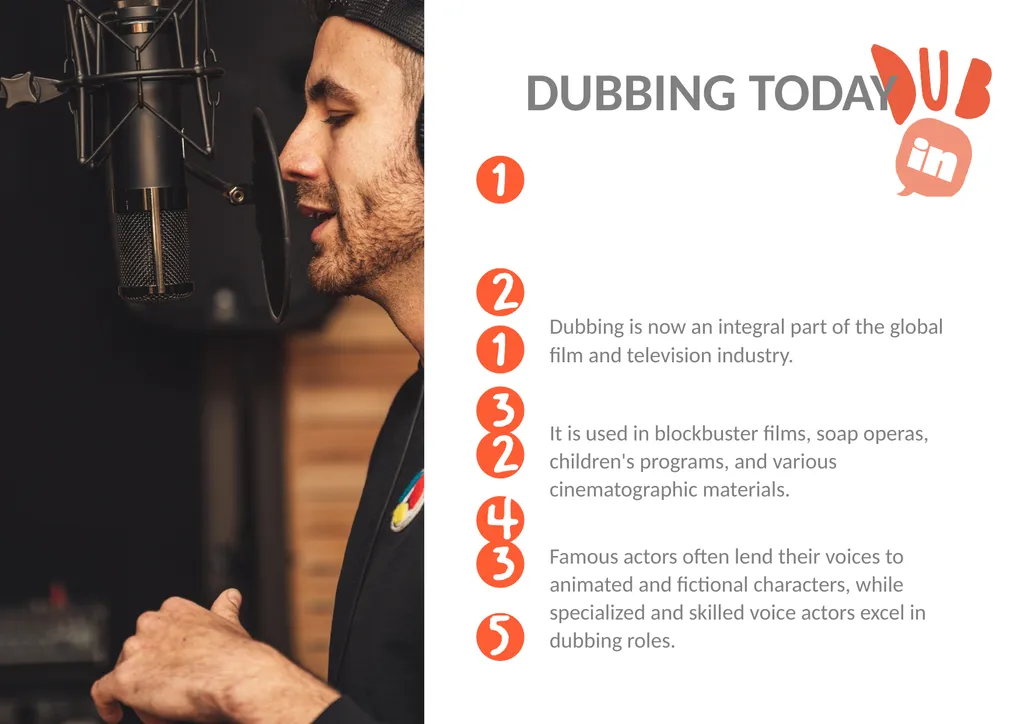
slide7. Dubbing is now an integral part of the global film and television industry. It is used in blockbuster films, soap operas, children's programs, and various cinematographic materials. Famous actors often lend their voices to animated and fictional characters, while specialized and skilled voice actors excel in dubbing roles. DUBBING TODAY<br>
slide8. CONCLUSION PICTURE BY: pexels-brett-sayles-4007613 Dubbing is a complex and fascinating field that blends technical expertise and artistic creativity. Each country has its own approach and policy regarding dubbing, impacting how audiences experience films and television series. In this training, we will explore the intricacies of dubbing, the challenges it poses, and the techniques used to achieve seamless audio-visual translation.<br>
slide9. in<br>
slide2. WHAT IS DUBBING? Dubbing is the process of replacing the original dialogue from a video or film with new audio in a different language.
It involves replacing the voices of the actors with those of other actors in the target language.
Different countries have varying perceptions of dubbing, which create an emotional and practical bond for the audience.
Dubbing is a highly technical and artistic endeavor, involving sound engineers, editors, translators, adaptation artists, actors, and directors.<br>
slide3. Belgian voice actor, Daniel Nicodème, describes the challenges and nuances of dubbing. Dubbing requires actors to observe, listen, mime, and immediately immerse themselves in emotions. Dubbing a documentary with interviews can be especially difficult, as it involves speaking for someone who is not playing a role, often requiring the use of "plating" – superimposing translated text on the original voice. THE VOICE ACTOR’S PERSPECTIVE?<br>
slide4. Differences from Voice-over PICTURE BY: pexels-brett-sayles-4007613 The original soundtrack with dialogue is entirely replaced in dubbing, whereas voice-over only adds a translated voice while retaining the original audio. Dubbing requires lip synchronization to match the actors' lip movements, enhancing naturalness and authenticity.<br>
slide5. Dubbing falls under Audio-visual Translation (AVT) and is concerned with translating and adapting content for new audiences.
Dubbing aims to reproduce the goals and essence of the original dialogue, making it acceptable to the new target audience. DUBBING AS A TRANSLATION MODALITY<br>
slide6. BRIEF HISTORY OF DUBBING? Dubbing's origins can be traced back to the late 1920s, even during the silent era of movies.
In the silent era, movies had intertitles and live commentators who translated for illiterate or non-English-speaking audiences.
The introduction of dialogue led to the need for dubbing and translation, initially in French, German, and Spanish.
Early dubbing involved making multiple versions of the film in different languages, a costly approach that gradually evolved with technological advancements.<br>
slide7. Dubbing is now an integral part of the global film and television industry. It is used in blockbuster films, soap operas, children's programs, and various cinematographic materials. Famous actors often lend their voices to animated and fictional characters, while specialized and skilled voice actors excel in dubbing roles. DUBBING TODAY<br>
slide8. CONCLUSION PICTURE BY: pexels-brett-sayles-4007613 Dubbing is a complex and fascinating field that blends technical expertise and artistic creativity. Each country has its own approach and policy regarding dubbing, impacting how audiences experience films and television series. In this training, we will explore the intricacies of dubbing, the challenges it poses, and the techniques used to achieve seamless audio-visual translation.<br>
slide9. in<br>