IN5020 - Distributed Systems Group Session Topic 2 System Models Truong-Thanh Le truonglifi.uio.no August 28, 2025 Literatures reading for these exercises Lecture slides System Models for Distributed Systems Coulouris et al p49-51,
"IN5020 - Distributed Systems Group Session Topic 2" is the property of its rightful owner. Permission is granted to
download and print the materials on this website for personal, non-commercial use only, and to display it
on your personal computer provided you do not modify the materials and that you retain all copyright
notices contained in the materials. By downloading content from our website, you accept the terms of this
agreement.
Presentation Transcript
01
IN5020 - Distributed Systems Group Session Topic 2 – System Models Truong-Thanh Le
truongl@ifi.uio.no
August 28, 2025<br>
02
Literatures reading for these exercises Lecture slides – System Models for Distributed Systems
Coulouris et al p49-51, p64-65, p67-71 2 IN5020 - Group Session - Topic 2 - System Model<br>
03
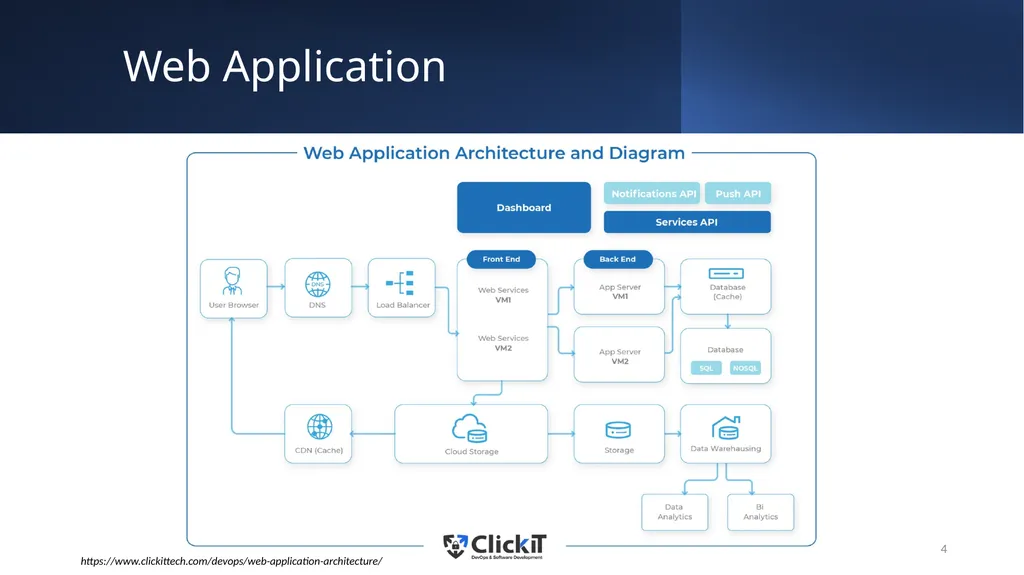
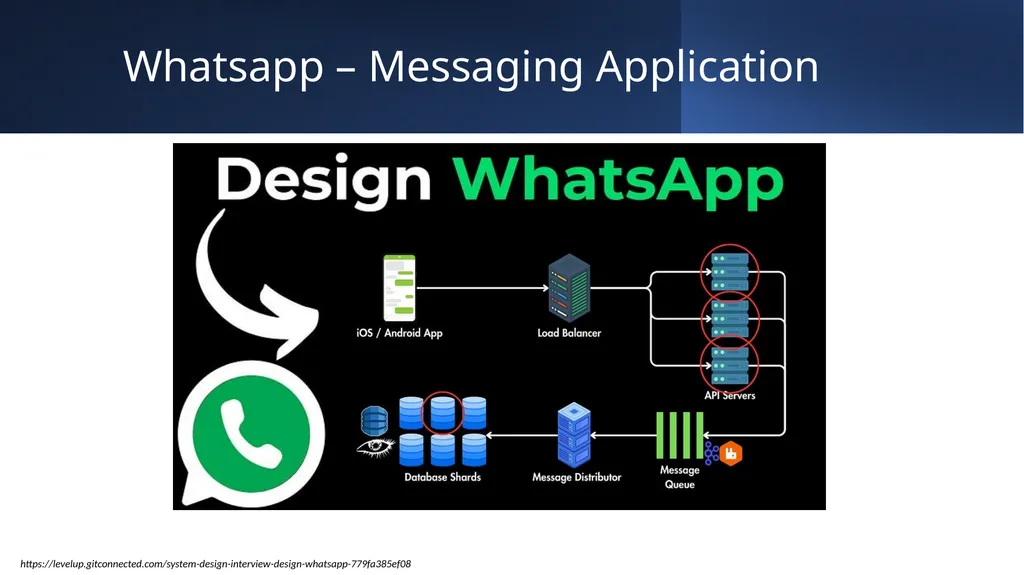
Question 1 - Describe and illustrate the client-server architecture of one or more major Internet applications (for example, the web, email, etc.) Coulouris ch 2 ex 2.1<br>
04
Web Application 4 IN5020 - Group Session - Topic 2 - System Model https://www.clickittech.com/devops/web-application-architecture/<br>
05
Whatsapp – Messaging Application 5 IN5020 - Group Session - Topic 2 - System Model https://levelup.gitconnected.com/system-design-interview-design-whatsapp-779fa385ef08<br>
06
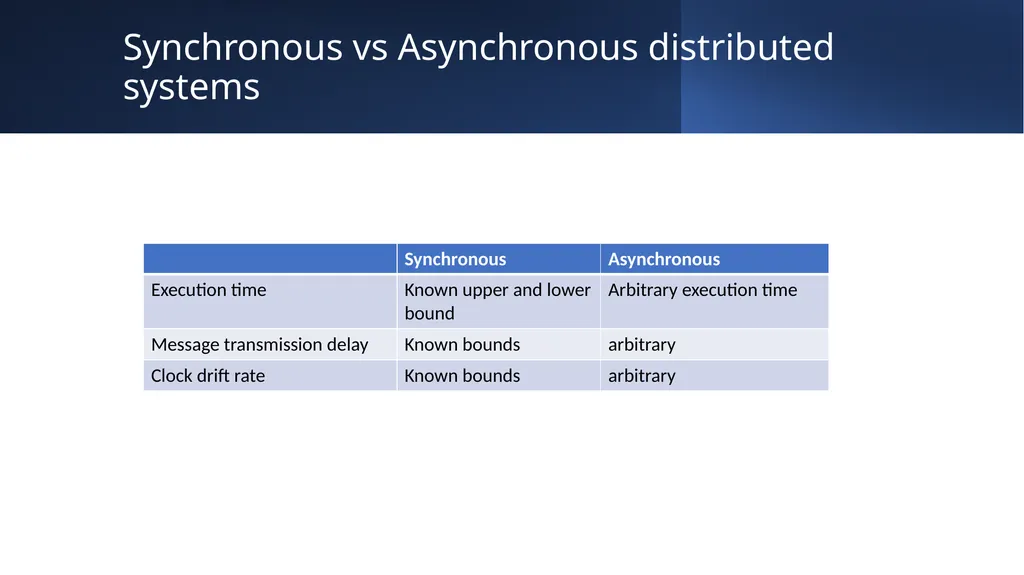
Question 2 - What are the two variants of the Interaction model in distributed systems?<br>
07
Synchronous vs Asynchronous distributed systems 7 IN5020 - Group Session - Topic 2 - System Model<br>
08
Question 3 - Distinguish between buffering and caching Coulouris ch 2 ex 2.9<br>
09
Buffering Technique for storing data transmitted from a sending process to a receiving process in local memory or secondary (disk) storage until the receiving process is ready to consume it.
For example, when reading data from a file or transmitting messages through a network, it is beneficial to handle it in large blocks. The blocks are held in buffer storage in the receiving process’ memory space. The buffer is released when the data has been consumed by the process. 9 IN5020 - Group Session - Topic 2 - System Model<br>
10
Caching A technique for optimizing access to remote data objects by holding a copy of them in local memory or secondary (disk) storage.
Accesses to parts of the remote object are translated into accesses to the corresponding parts of the local copy.
Unlike buffering, the local copy may be retained as long as there is local memory available to hold it.
A cache management algorithm and a release strategy are needed to manage the use of the memory allocated to the cache. 10 IN5020 - Group Session - Topic 2 - System Model<br>
11
Question 4 - How is caching useful in placement strategies? What are its disadvantages?<br>
12
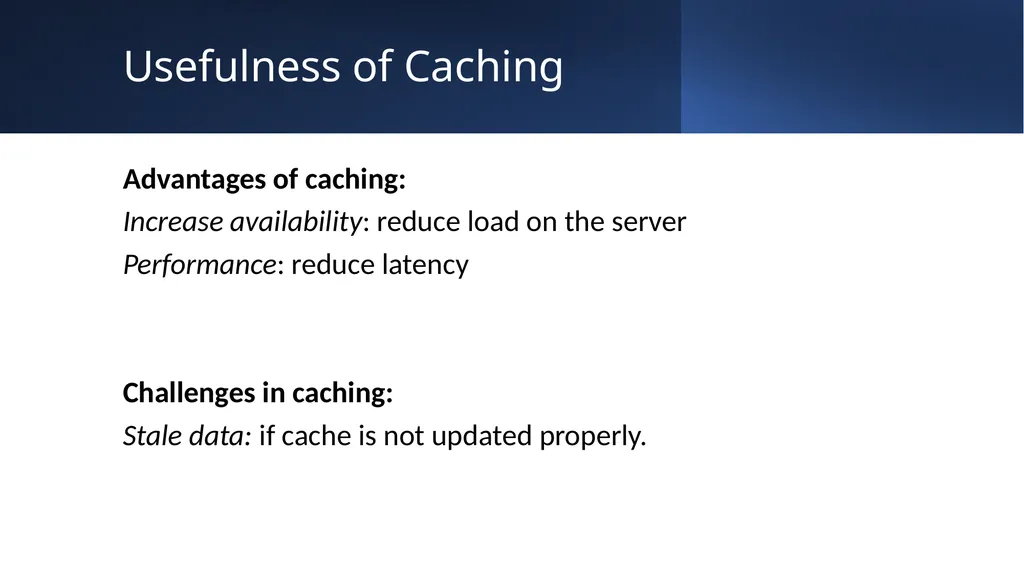
Usefulness of Caching Advantages of caching:
Increase availability: reduce load on the server
Performance: reduce latency
Challenges in caching:
Stale data: if cache is not updated properly. 12 IN5020 - Group Session - Topic 2 - System Model<br>
13
Question 5 - Why do we use logical clocks in distributed systems?<br>
14
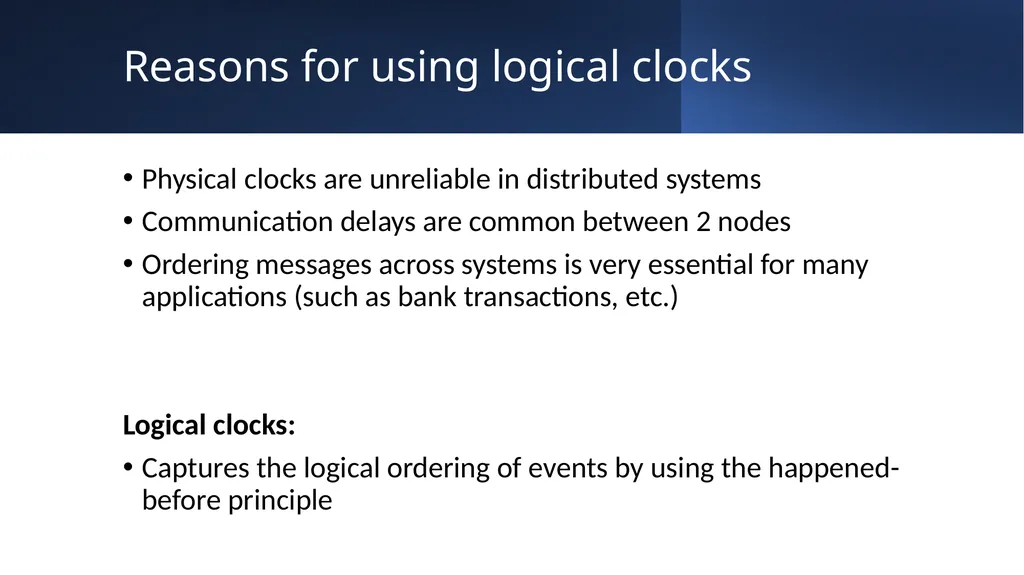
Reasons for using logical clocks Physical clocks are unreliable in distributed systems
Communication delays are common between 2 nodes
Ordering messages across systems is very essential for many applications (such as bank transactions, etc.)
Logical clocks:
Captures the logical ordering of events by using the happened-before principle 14 IN5020 - Group Session - Topic 2 - System Model<br>
15
Question 6 - Modem cars are stuffed with electronic devices. Give some examples of feedback control systems in cars (Coulouris ch. 2)<br>
16
Feedback control systems in cars Cruise Control / Adaptive Cruise Control
Feedback loop: Monitors vehicle speed and adjusts throttle to maintain a set speed.
Adaptive version: Uses radar or cameras to maintain a safe distance from the car ahead.
Engine Control Unit (ECU)
Feedback loop: Continuously monitors engine parameters (e.g., air-fuel ratio, temperature, RPM) and adjusts fuel injection, ignition timing, etc., for optimal performance.
Battery Management System (in EVs)
Feedback loop: Monitors battery temperature, voltage, and charge level to optimize charging and discharging cycles.
Etc 16 IN5020 - Group Session - Topic 2 - System Model<br>
17
Question 7 - Give an example of a self-managing system in which the analysis component is completely distributed or even hidden (e.g. Modem car - Coulouris ch. 2)<br>
18
Modem Car Self-managing aspect: A group of vehicles travels together with coordinated speed and spacing.
Distributed analysis: Each vehicle uses its own sensors and communication with nearby vehicles to adjust its behavior.
Hidden from user: Drivers or passengers are unaware of the complex coordination happening in real time. 18 IN5020 - Group Session - Topic 2 - System Model<br>
19
Distributed Load Balancing in Cloud Systems Self-managing aspect: Automatically distributes workloads across servers or containers.
Distributed analysis: Each node monitors its own resource usage and communicates with others to balance load.
Hidden from user: Developers deploy applications without needing to manage resource allocation manually. 19 IN5020 - Group Session - Topic 2 - System Model<br>