Inclusive education Concept Meaning and Importance Objectives Learners will get knowledge of different perspectives of inclusive education. Reflect on different aspects of inclusiveness and their challenges Formulate attitudes towards
Related Topics
Share
Embed code
Download this presentation From Below
"Inclusive education Concept Meaning and Importance" is the property of its rightful owner. Permission is granted to
download and print the materials on this website for personal, non-commercial use only, and to display it
on your personal computer provided you do not modify the materials and that you retain all copyright
notices contained in the materials. By downloading content from our website, you accept the terms of this
agreement.
Presentation Transcript
01
Inclusive education Concept Meaning and Importance<br>
02
Objectives Learners will get knowledge of different perspectives of inclusive education.
Reflect on different aspects of inclusiveness and their challenges
Formulate attitudes towards children with special needs.
Contribute to the implementation of laws pertaining to the education of children with special needs.<br>
03
Inclusive Education: Concept An education system that includes all students, welcomes and supports them to learn, whoever they are and their abilities or requirements. This means making sure that teaching and the curriculum, school buildings, classrooms, play areas, transport and toilets are appropriate for all children at all levels. Inclusive education means all children learn together in the same schools. ------------UNICEF<br>
04
Principles of Inclusive Education Compulsory, free primary education for all children
Non-discrimination: removing any forms of discrimination that stop people with disabilities from getting an education
Reasonable accommodation: making adjustments to meet individual needs<br>
05
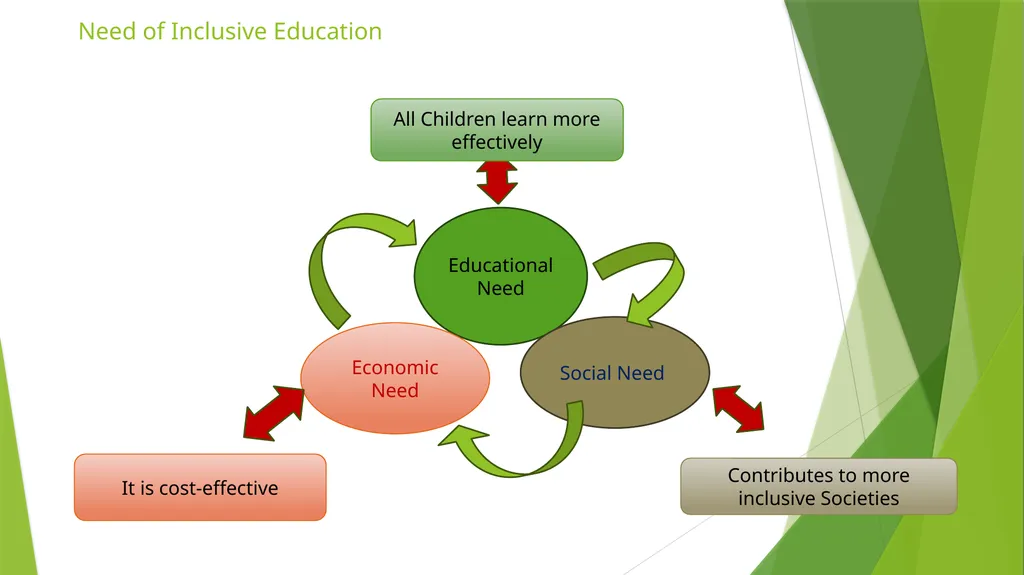
Need of Inclusive Education Educational Need Social Need Economic Need All Children learn more effectively Contributes to more inclusive Societies It is cost-effective<br>
06
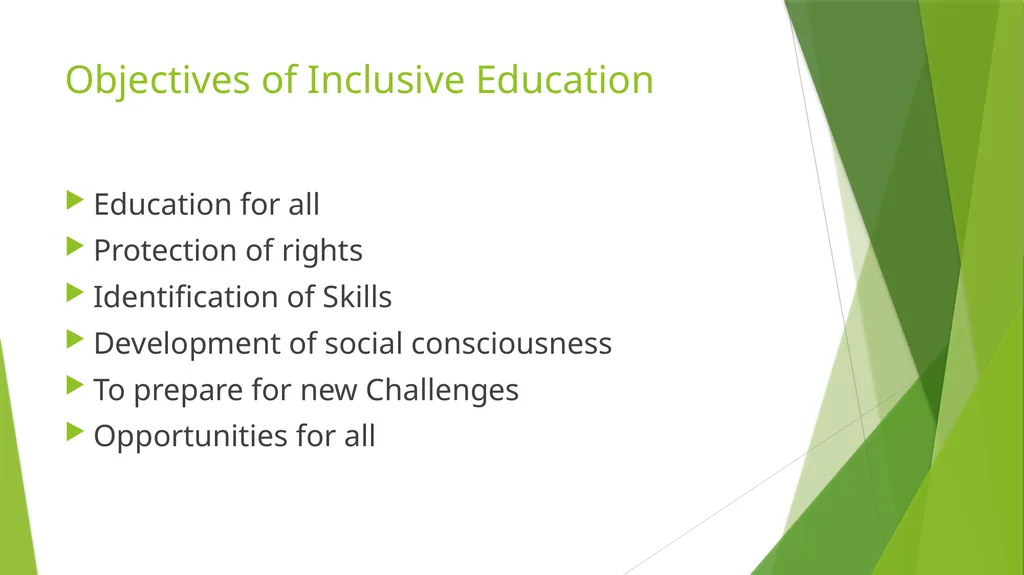
Objectives of Inclusive Education Education for all
Protection of rights
Identification of Skills
Development of social consciousness
To prepare for new Challenges
Opportunities for all<br>
07
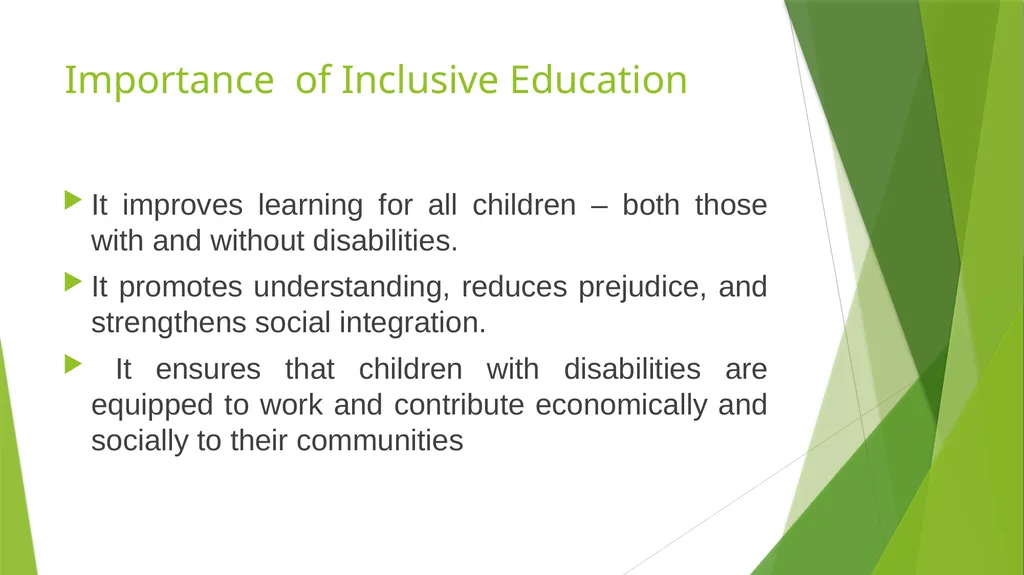
Importance of Inclusive Education It improves learning for all children – both those with and without disabilities.
It promotes understanding, reduces prejudice, and strengthens social integration.
It ensures that children with disabilities are equipped to work and contribute economically and socially to their communities<br>
08
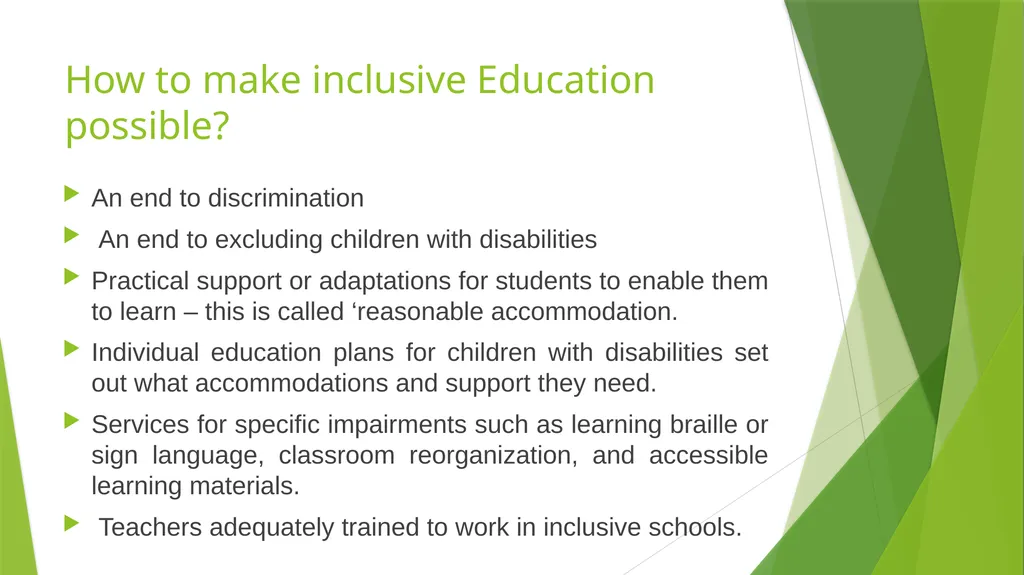
How to make inclusive Education possible? An end to discrimination
An end to excluding children with disabilities
Practical support or adaptations for students to enable them to learn – this is called ‘reasonable accommodation.
Individual education plans for children with disabilities set out what accommodations and support they need.
Services for specific impairments such as learning braille or sign language, classroom reorganization, and accessible learning materials.
Teachers adequately trained to work in inclusive schools.<br>
09
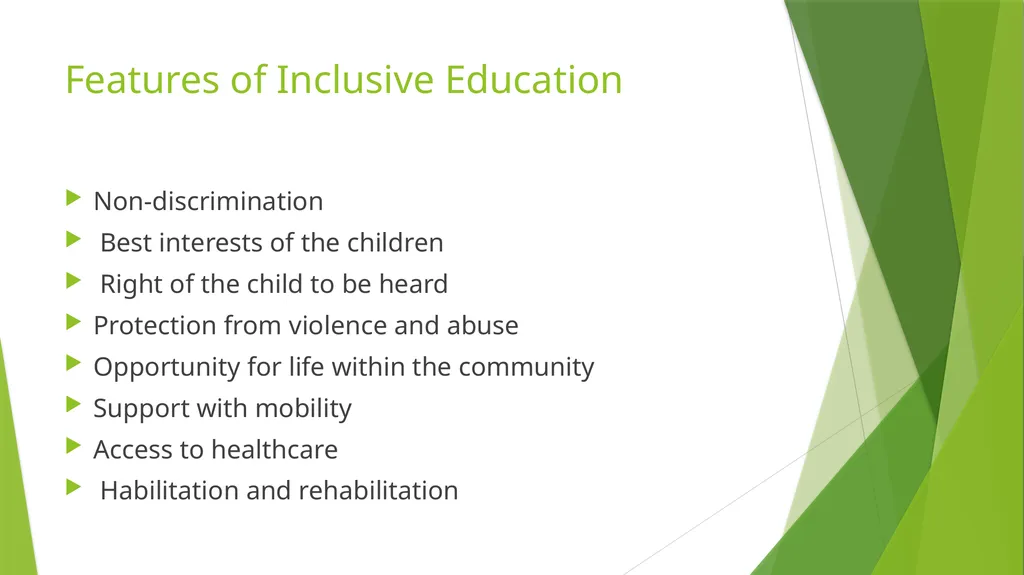
Features of Inclusive Education Non-discrimination
Best interests of the children
Right of the child to be heard
Protection from violence and abuse
Opportunity for life within the community
Support with mobility
Access to healthcare
Habilitation and rehabilitation<br>
10
Inclusive Education Promotes Participation in public life
Exercise of legal capacity
Work and employment
Adequate standard of living<br>