Indian Classical Drama Jatin Sharma Indian Classical Literature Divided into two ---- 1. What is capable of being seen or exhibited. 2. What can only be heard or chanted. Indian Classical Drama It is said that Indian classical drama emerged
"Indian Classical Drama Jatin Sharma Indian" is the property of its rightful owner. Permission is granted to
download and print the materials on this website for personal, non-commercial use only, and to display it
on your personal computer provided you do not modify the materials and that you retain all copyright
notices contained in the materials. By downloading content from our website, you accept the terms of this
agreement.
Presentation Transcript
01
Indian Classical Drama Jatin Sharma<br>
02
Indian Classical Literature Divided into two ----
1. What is capable of being seen or exhibited.
2. What can only be heard or chanted.<br>
03
Indian Classical Drama It is said that Indian classical drama emerged and developed in the city of Ujjain in Northern India during the Gupta period.
Natyashastra by Bharata is the most important source to understand Indian Classical Drama.
Natyashastra by Bharata: A dramaturgical treatise with about six thousand verses and divided into sixty-six chapters narrating in detail classical Indian theatre, its poetics and aesthetics.
‘Rupaka’ is the general term in Sanskrit for all dramatic compositions.<br>
04
‘Rupaka’ Falls under two categories ----
1. Dasarupaka: Major dramas
2. Uparupaka: Minor dramas<br>
05
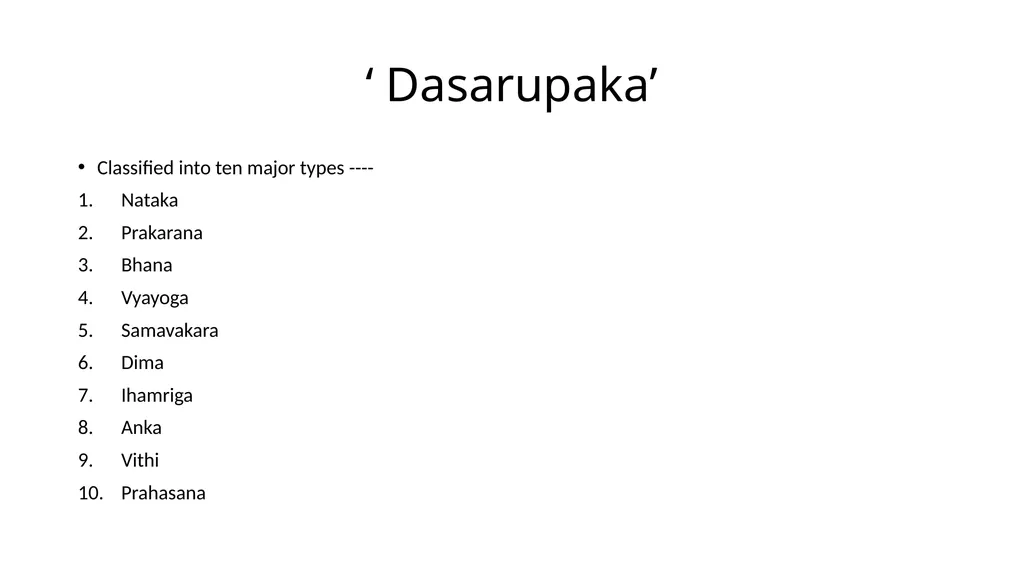
‘ Dasarupaka’ Classified into ten major types ----
Nataka
Prakarana
Bhana
Vyayoga
Samavakara
Dima
Ihamriga
Anka
Vithi
Prahasana<br>
06
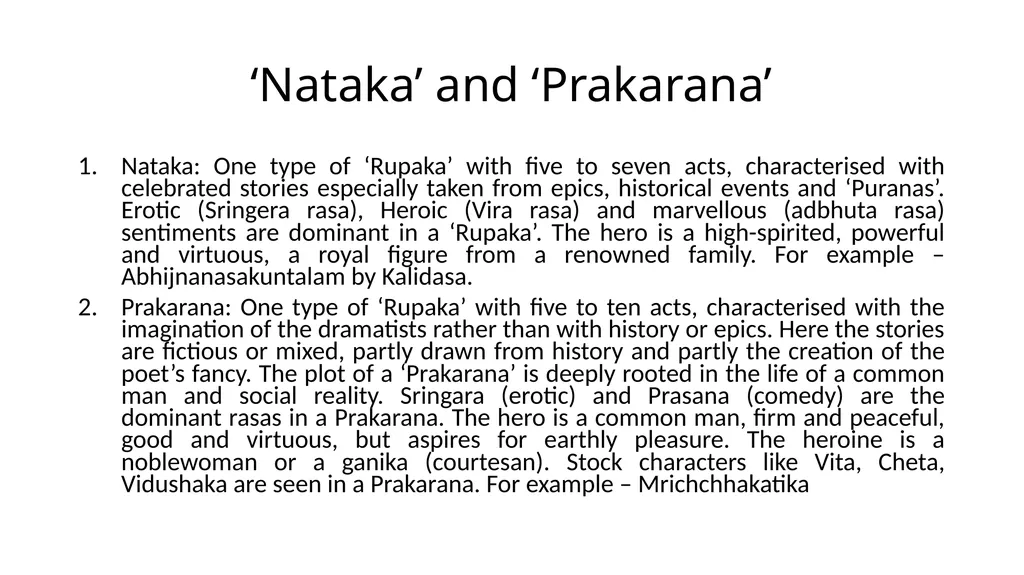
‘Nataka’ and ‘Prakarana’ Nataka: One type of ‘Rupaka’ with five to seven acts, characterised with celebrated stories especially taken from epics, historical events and ‘Puranas’. Erotic (Sringera rasa), Heroic (Vira rasa) and marvellous (adbhuta rasa) sentiments are dominant in a ‘Rupaka’. The hero is a high-spirited, powerful and virtuous, a royal figure from a renowned family. For example – Abhijnanasakuntalam by Kalidasa.
Prakarana: One type of ‘Rupaka’ with five to ten acts, characterised with the imagination of the dramatists rather than with history or epics. Here the stories are fictious or mixed, partly drawn from history and partly the creation of the poet’s fancy. The plot of a ‘Prakarana’ is deeply rooted in the life of a common man and social reality. Sringara (erotic) and Prasana (comedy) are the dominant rasas in a Prakarana. The hero is a common man, firm and peaceful, good and virtuous, but aspires for earthly pleasure. The heroine is a noblewoman or a ganika (courtesan). Stock characters like Vita, Cheta, Vidushaka are seen in a Prakarana. For example – Mrichchhakatika<br>
07
Uparupaka: Minor dramas There are 18 types of Uparupakas. For example ----
1. Natika, for example – Ratnavali.
2. Trotakas
3. Sattakas ……..<br>
08
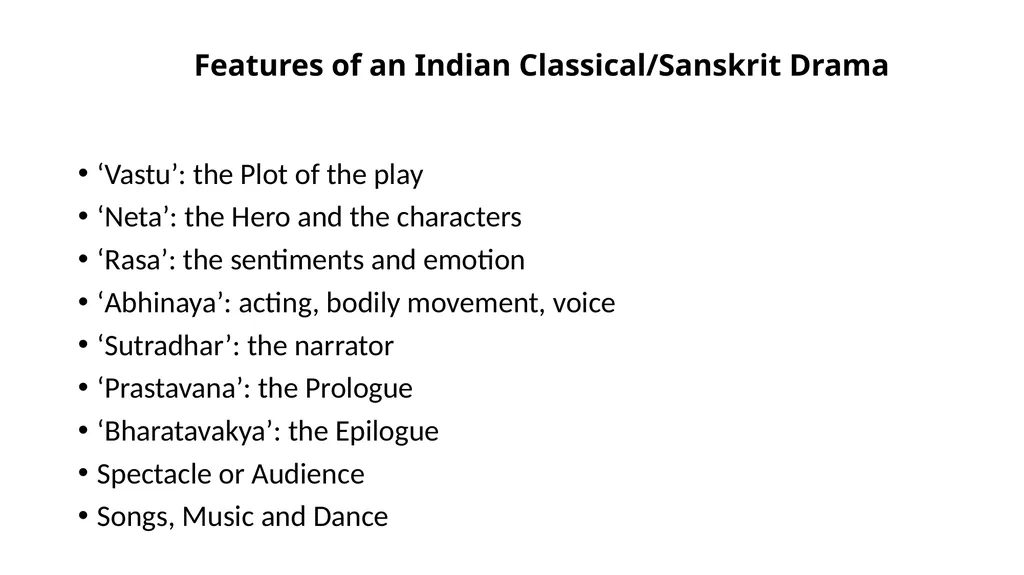
Features of an Indian Classical/Sanskrit Drama ‘Vastu’: the Plot of the play
‘Neta’: the Hero and the characters
‘Rasa’: the sentiments and emotion
‘Abhinaya’: acting, bodily movement, voice
‘Sutradhar’: the narrator
‘Prastavana’: the Prologue
‘Bharatavakya’: the Epilogue
Spectacle or Audience
Songs, Music and Dance<br>
09
Assignment Natyashastra by Bharata
Salient features of an Indian Classical Drama.<br>