INDUSTRIAL AERODYNAMICS AO465 Module 1 ATMOSPHERIC BOUNDARY LAYER The planetary boundary layer (PBL), also known as the atmospheric boundary layer (ABL), is the lowest part of the atmosphere and its behavior is directly influenced by its
"INDUSTRIAL AERODYNAMICS AO465 Module 1 ATMOSPHERIC" is the property of its rightful owner. Permission is granted to
download and print the materials on this website for personal, non-commercial use only, and to display it
on your personal computer provided you do not modify the materials and that you retain all copyright
notices contained in the materials. By downloading content from our website, you accept the terms of this
agreement.
Presentation Transcript
01
INDUSTRIAL AERODYNAMICS AO465 Module 1<br>
02
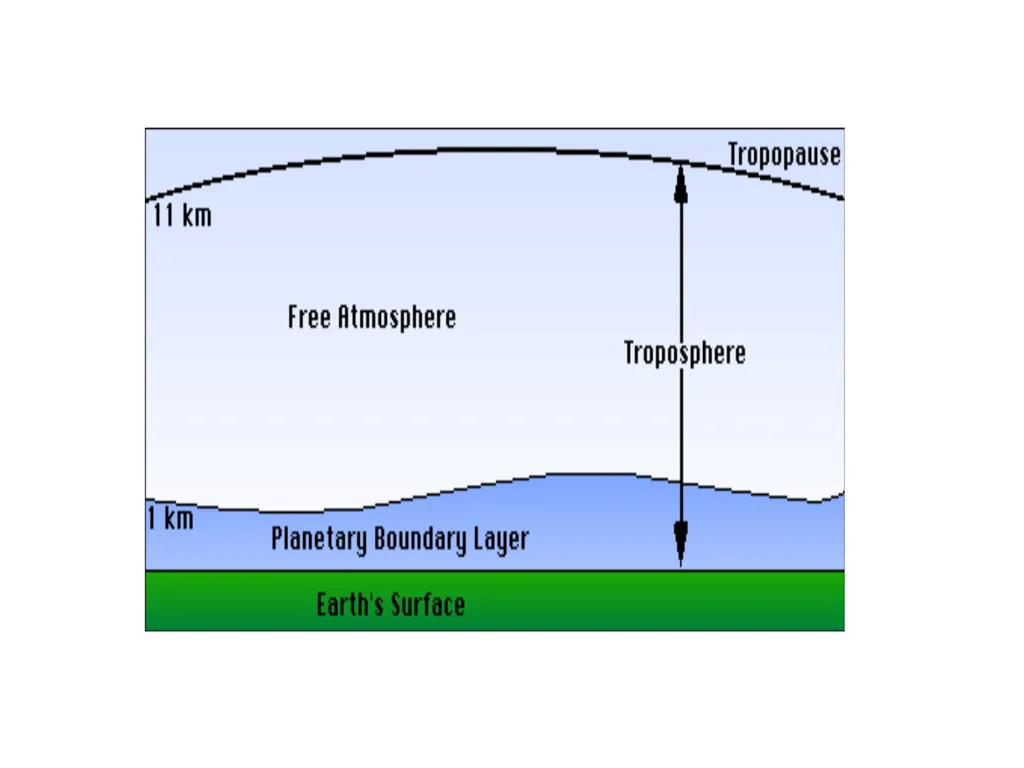
ATMOSPHERIC BOUNDARY LAYER The planetary boundary layer (PBL), also known as the atmospheric boundary layer (ABL), is the lowest part of the atmosphere and its behavior is directly influenced by its contact with a planetary surface.
Above the PBL is the "free atmosphere" where the wind is approximately geostrophic (parallel to the isobars) while within the PBL the wind is affected by surface drag.
The free atmosphere is usually non-turbulent.<br>
03
Structure of the Planetary Boundary Layer
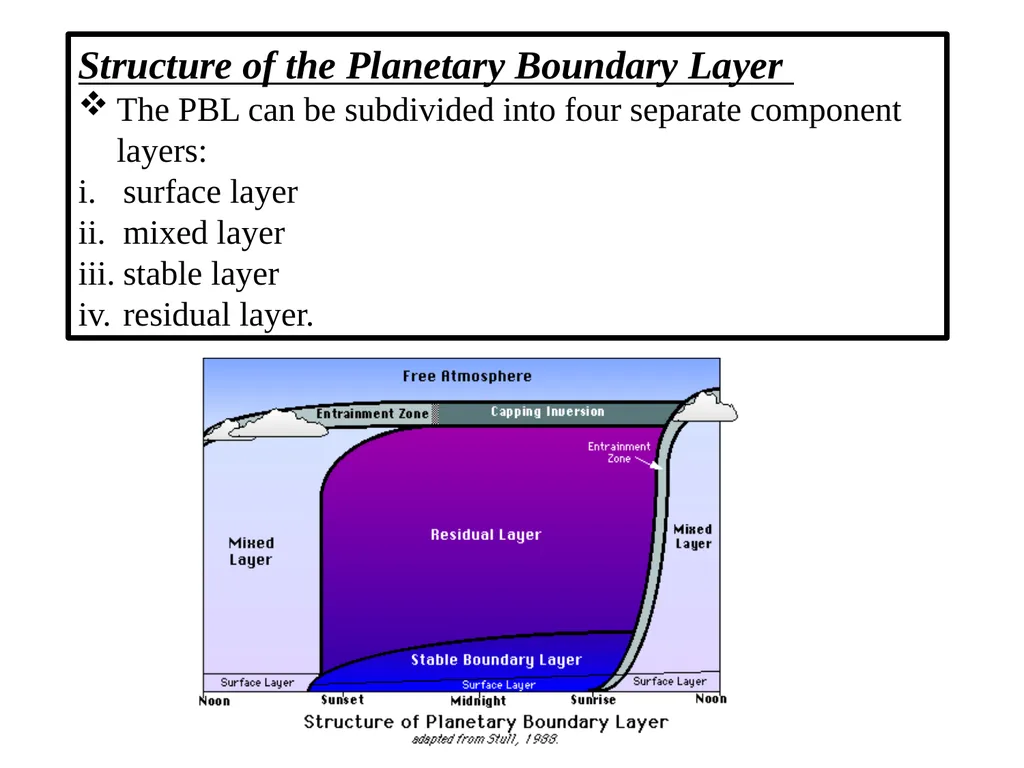
The PBL can be subdivided into four separate component layers:
surface layer
mixed layer
stable layer
residual layer.<br>
04
1. Mixed Layer(or) Convective Boundary Layer (CBL)
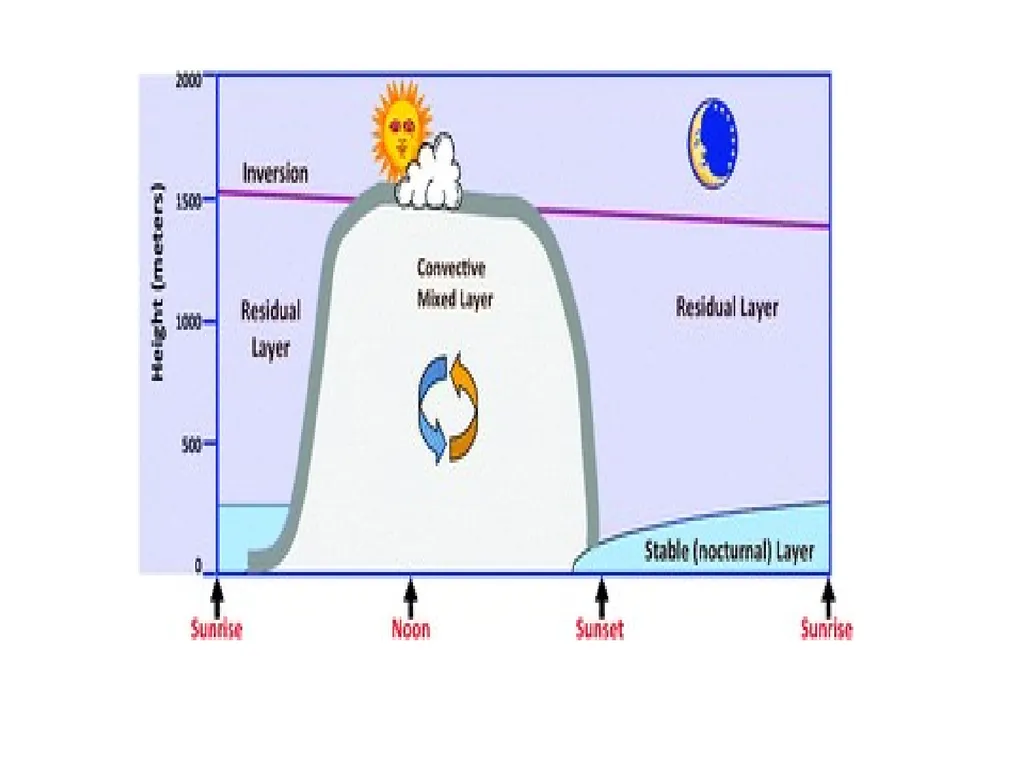
During the daytime, surface heating leads to convective motion in the PBL.
Heat transfer from the surface forms rising warm air. Radiative cooling from clouds forms sinking cooler air.
Convective motion also leads to significant turbulence which mixes the air within this layer.
Because of the convective motion and significant mixing of air, this sub-layer is called the convective layer or mixed layer.
Above the mixed layer is a stable layer which prevents the continued upward motion of thermals.
This stable layer also restricts turbulence, preventing frictional influences from reaching above the PBL.
This stable layer is called the entrainment zone, because it is here where air from above the PBL entrains into the mixed layer.<br>
05
During the day, the mixed layer reaches heights over 1 km and make up the entire layer of the PBL above the surface layer.
However, the mixed layer vanishes with the sun as the thermally driven convection ceases.<br>
06
2. Stable Layer(or) Nocturnal Boundary Layer (NBL)
After sunset, convective motion dramatically decreases. However, the earth's surface still affects the air, and a stable boundary layer forms (also called the nocturnal boundary layer).
This boundary layer is characterized by light winds and weaker, more sporadic turbulence than in the mixed layer.
The height of the PBL, therefore, decreases significantly during the night.
Though the height of the nocturnal layer varies, it is usually less than half that of the mixed layer
Unlike, the mixed layer, the stable boundary layer does not have a well-defined top. Instead, it slowly merges with the residual layer.<br>
07
3. Residual Layer
As turbulence and the mixed layer decay with sunset, the air maintains many of the state variables that the well-mixed air had.
This layer is called the residual layer (because its properties are residuals of the mixed layer) and forms above the stable boundary layer.
While the nocturnal boundary layer has a very stable profile, the residual layer tends to have more of a neutral profile.
The residual layer does not have contact with the earth's surface, and so is not influenced by turbulent stresses like the stable boundary layer below it.
The residual layer is bounded above by a capping inversion, which approximates the height of the daytime height of the mixed layer.
This inversion simply prevents entrainment from aloft.<br>
08
Because the residual layer is not influenced directly by the earth's surface (i.e. no turbulent stresses) it is not considered a boundary layer.
However, we include it in our discussion for descriptive purposes.
Only the mixed layer and stable layer are true boundary layers<br>
09
4. Mixing Height (or) Gradient Height (or) Height of the PBL
Because turbulent fluxes vary based on surface heating and other factors, the height of the PBL also varies.
At night, the height of the PBL decreases dramatically as the stable layer forms.
The height of the PBL is called the mixing height, because it is the height up to which the air is well-mixed.
The mixing height is very important to air quality experts when determining air pollution dispersion.
We will cover this more in the Focus on Air Quality section.
Meanwhile, we'll look at some of the factors which influence the PBL.<br>
10
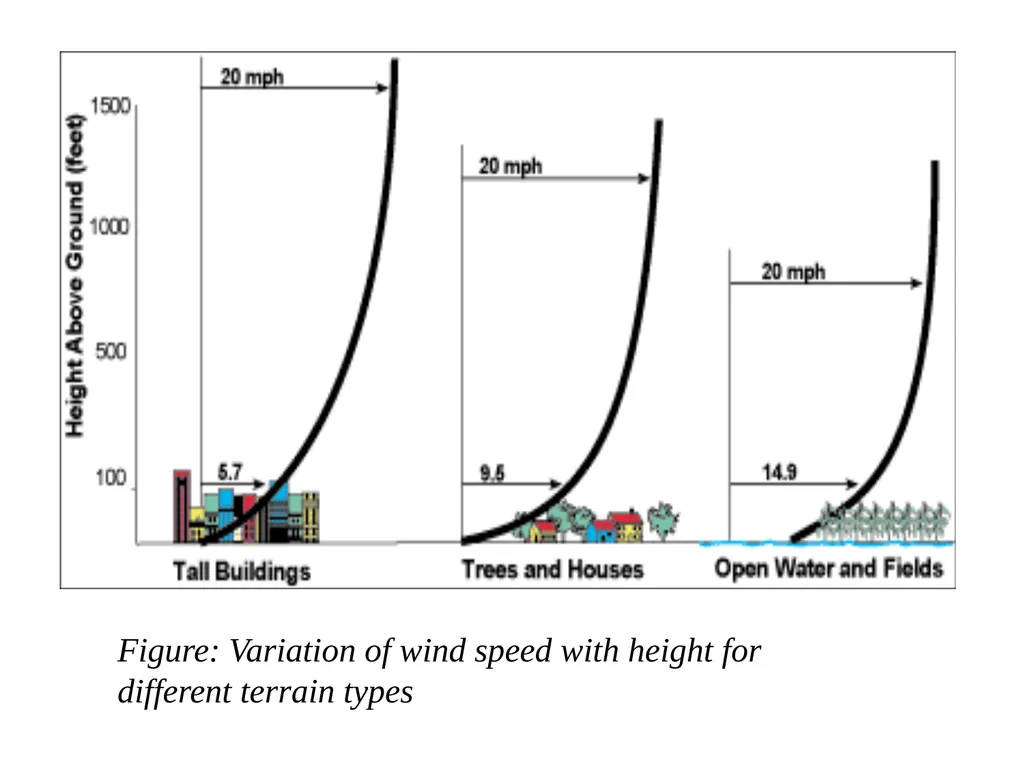
EFFECT OF TERRAIN ON GRADIENT HEIGHT For winds near ground surface, frictional effects play a significant role.
Ground obstruction retard the movement of air close to the ground surface, causing a reduction in wind speed.
At some height above ground, the movement of air is no longer affected by ground obstruction.
This height is called gradient height (ZG) which is a function of ground roughness.
The unobstructed wind speed is called gradient wind speed (VZg) and it is considered to be constant above gradient height.<br>
11
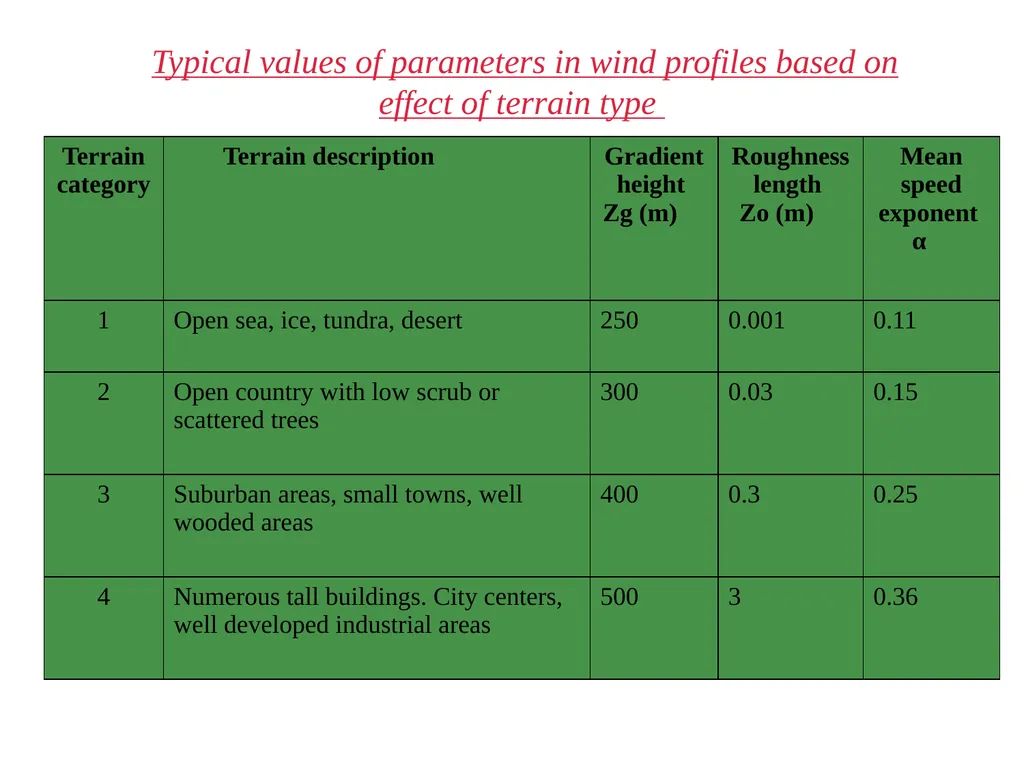
Typical values of parameters in wind profiles based on effect of terrain type<br>
12
Figure: Variation of wind speed with height for different terrain types<br>