
Information Systems Today: Managing in the Digital
MJ
Published · 47 slides · 0 views
1 / 1

Description
Information Systems Today: Managing in the Digital World Ninth Edition Chapter 7 Enhancing Business Processes Using Enterprise Information Systems Copyright 2015, 2012, 2009 Pearson Education, Inc. All Rights Reserved Learning Objectives
Related Topics
Share
Embed code
Download this presentation From Below
"Information Systems Today: Managing in the Digital" is the property of its rightful owner. Permission is granted to download and print the materials on this website for personal, non-commercial use only, and to display it on your personal computer provided you do not modify the materials and that you retain all copyright notices contained in the materials. By downloading content from our website, you accept the terms of this agreement.
Presentation Transcript
01
Information Systems Today: Managing in the Digital World Ninth Edition Chapter 7 Enhancing Business Processes Using Enterprise Information Systems Copyright © 2015, 2012, 2009 Pearson Education, Inc. All Rights Reserved<br>
02
Learning Objectives 7.1 Explain core business processes that are common in organizations
7.2 Describe what enterprise systems are and how they have evolved
7.3 Describe enterprise resource planning systems and how they help to improve internal business processes
7.4 Understand and utilize the keys to successfully implementing enterprise systems<br>
7.2 Describe what enterprise systems are and how they have evolved
7.3 Describe enterprise resource planning systems and how they help to improve internal business processes
7.4 Understand and utilize the keys to successfully implementing enterprise systems<br>
03
Learning Objective 7.1 Explain core business processes that are common in organizations<br>
04
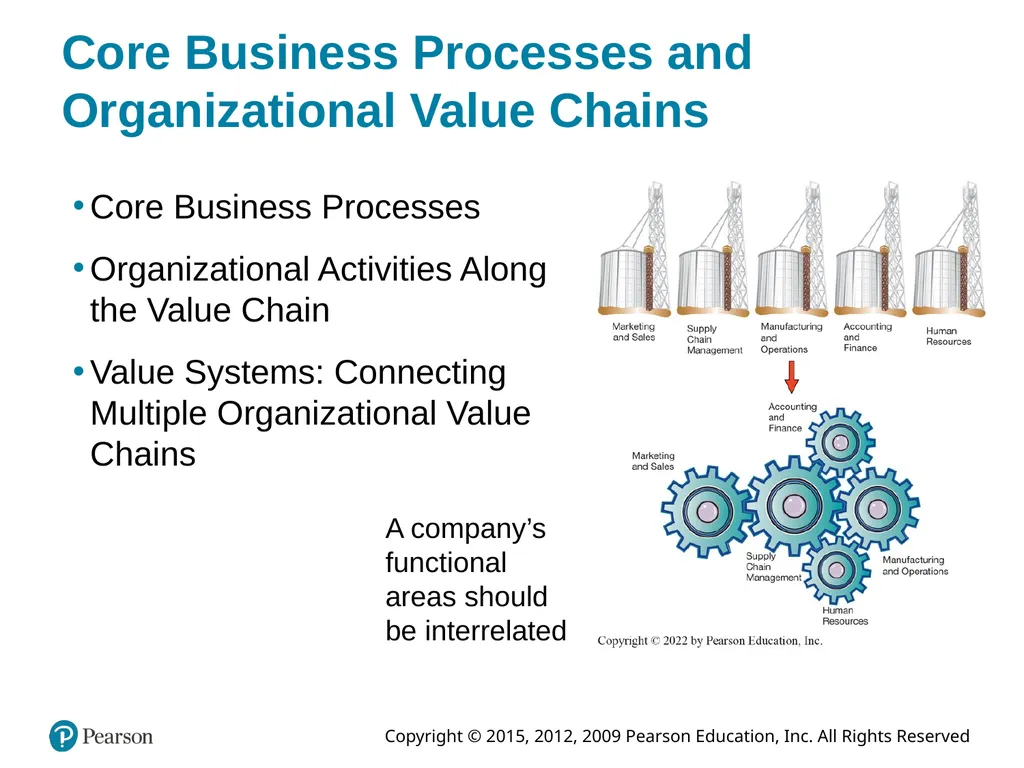
Core Business Processes and Organizational Value Chains Core Business Processes
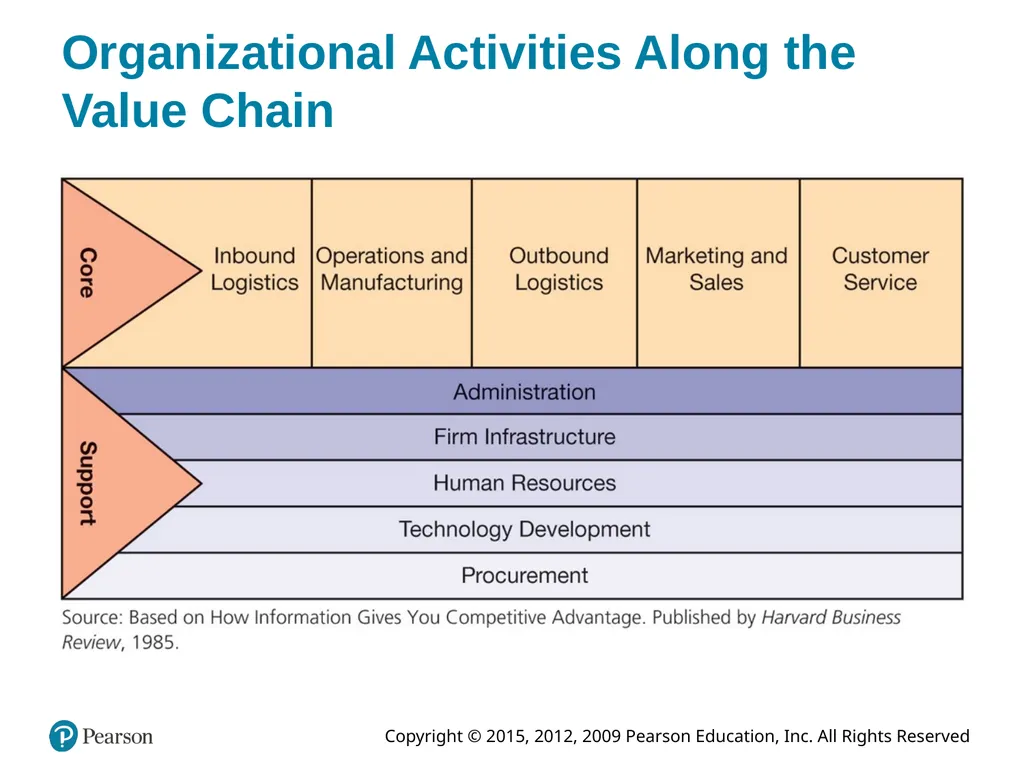
Organizational Activities Along the Value Chain
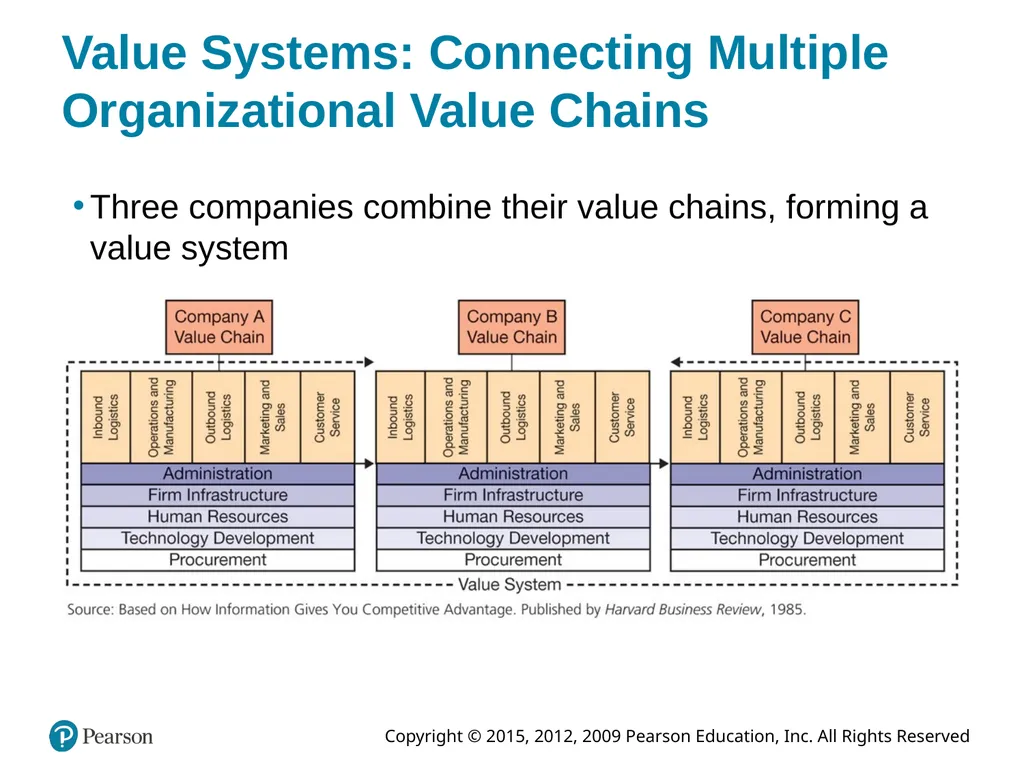
Value Systems: Connecting Multiple Organizational Value Chains A company’s functional areas should be interrelated<br>
Organizational Activities Along the Value Chain
Value Systems: Connecting Multiple Organizational Value Chains A company’s functional areas should be interrelated<br>
05
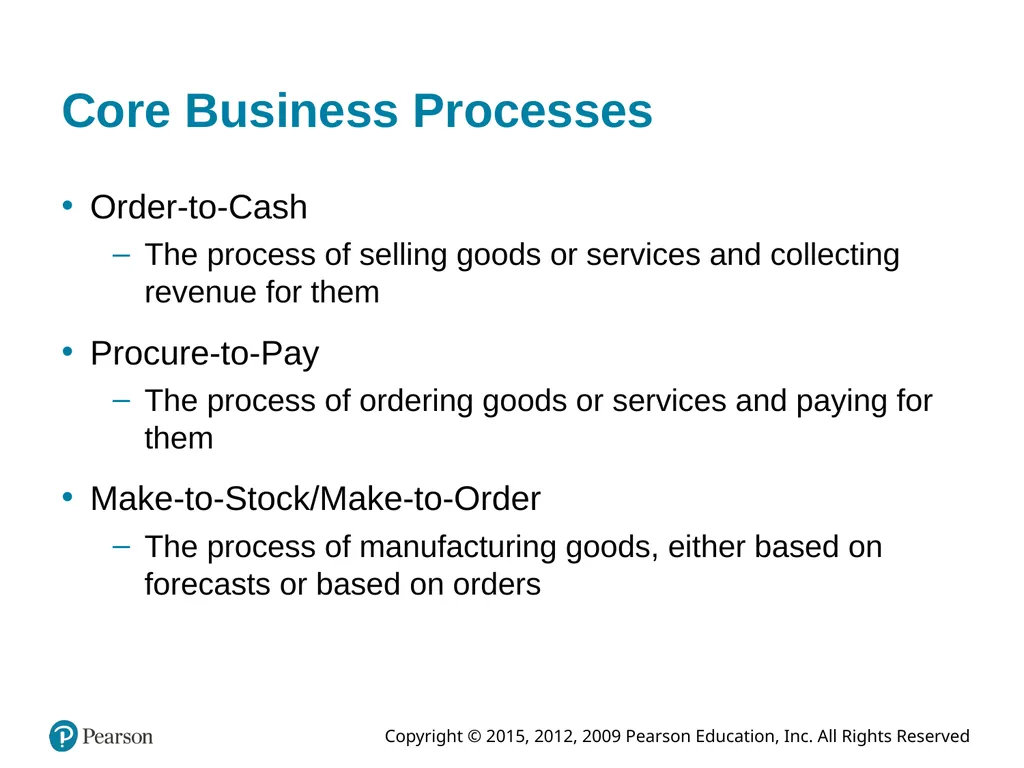
Core Business Processes Order-to-Cash
The process of selling goods or services and collecting revenue for them
Procure-to-Pay
The process of ordering goods or services and paying for them
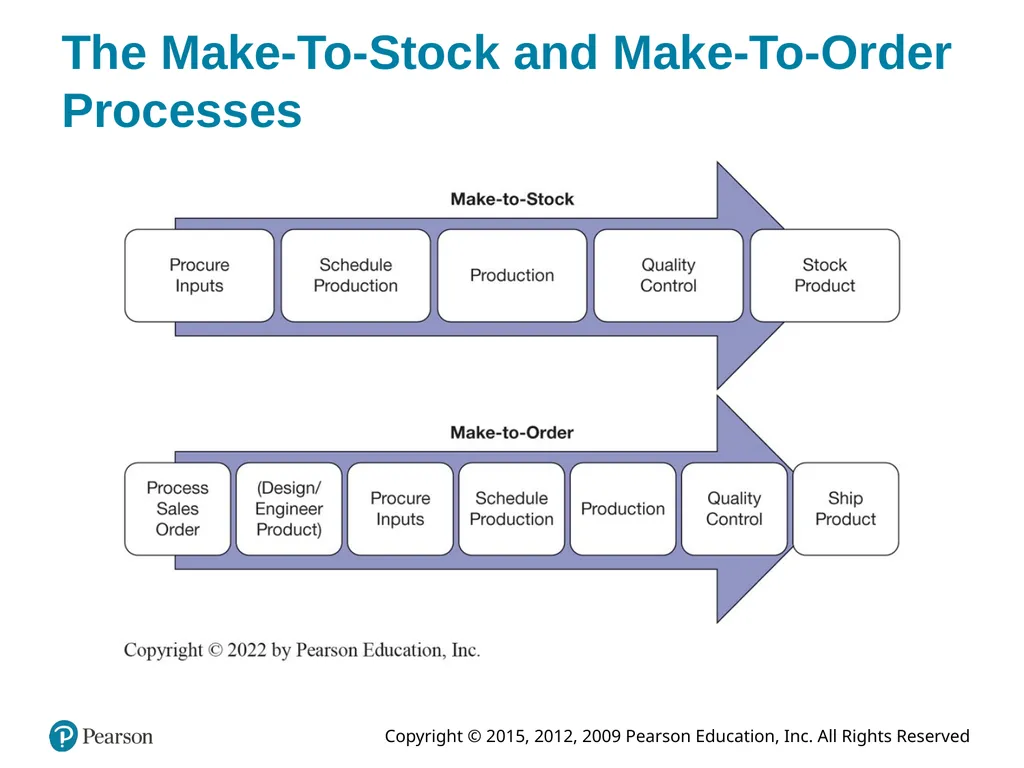
Make-to-Stock/Make-to-Order
The process of manufacturing goods, either based on forecasts or based on orders<br>
The process of selling goods or services and collecting revenue for them
Procure-to-Pay
The process of ordering goods or services and paying for them
Make-to-Stock/Make-to-Order
The process of manufacturing goods, either based on forecasts or based on orders<br>
06
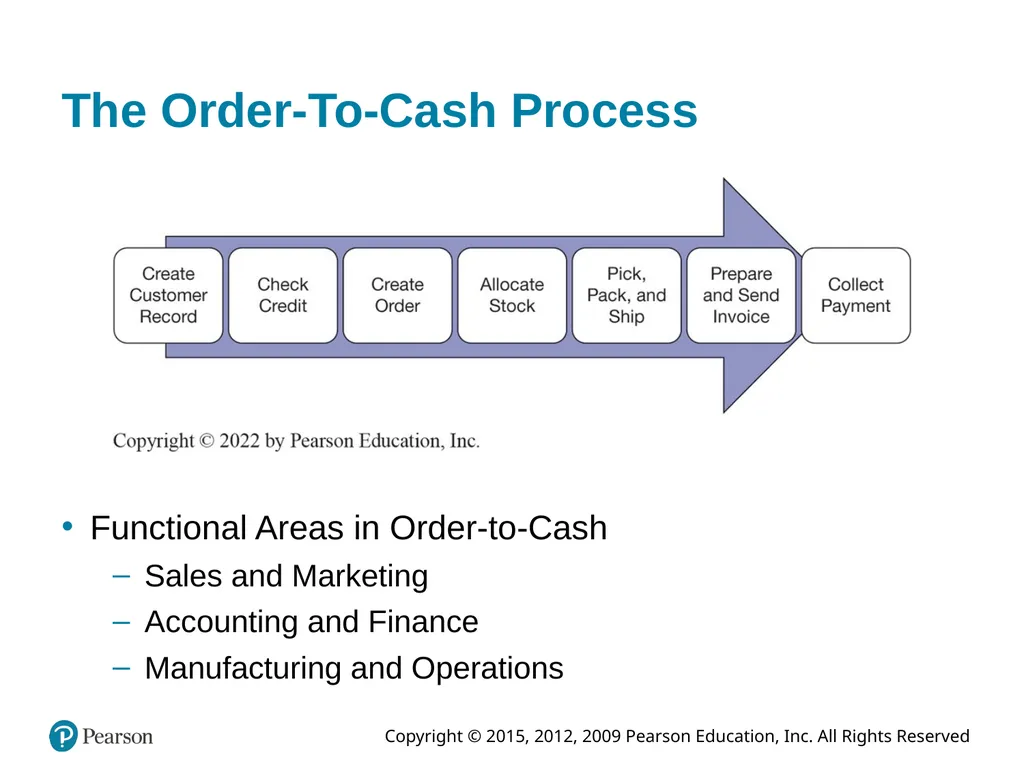
The Order-To-Cash Process Functional Areas in Order-to-Cash
Sales and Marketing
Accounting and Finance
Manufacturing and Operations<br>
Sales and Marketing
Accounting and Finance
Manufacturing and Operations<br>
07
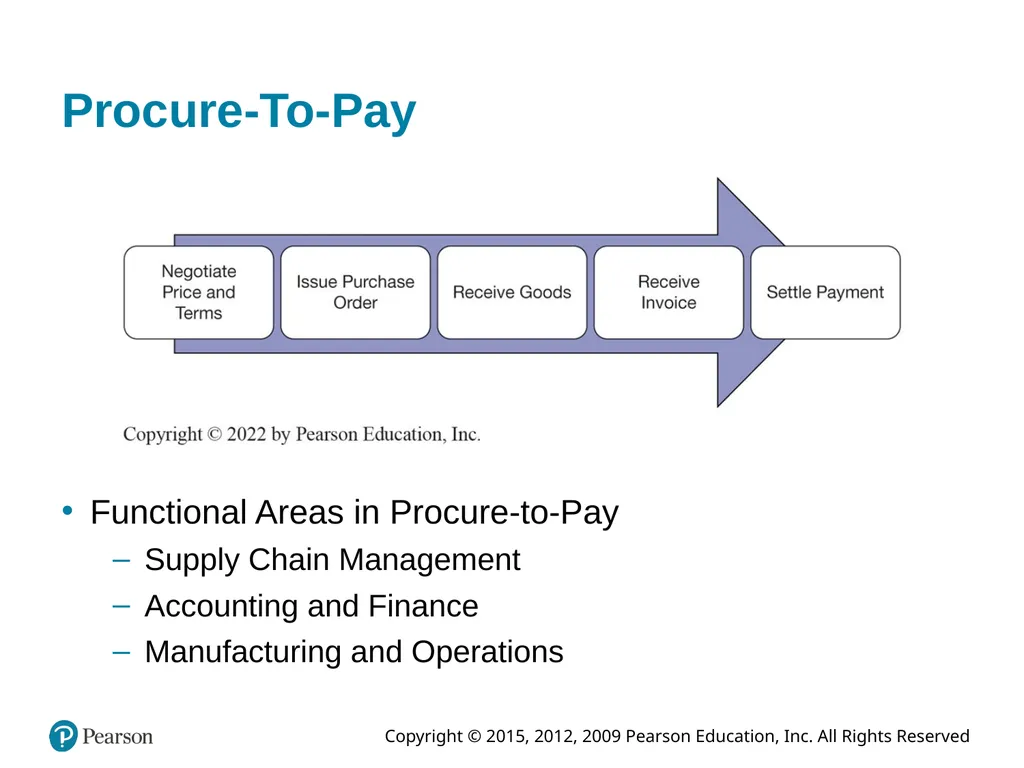
Procure-To-Pay Functional Areas in Procure-to-Pay
Supply Chain Management
Accounting and Finance
Manufacturing and Operations<br>
Supply Chain Management
Accounting and Finance
Manufacturing and Operations<br>
08
The Make-To-Stock and Make-To-Order
Processes<br>
09
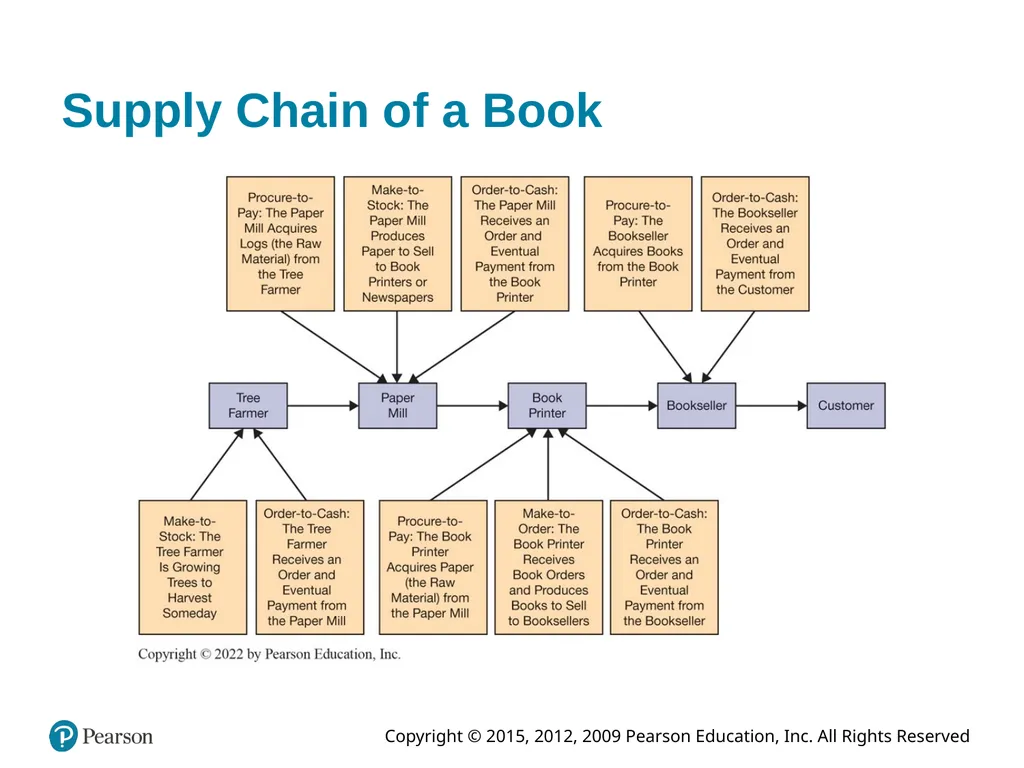
Supply Chain of a Book<br>
10
Organizational Activities Along the Value Chain<br>
11
Value Systems: Connecting Multiple Organizational Value Chains Three companies combine their value chains, forming a value system<br>
12
Learning Objective 7.2 Describe what enterprise systems are and how they have evolved<br>
13
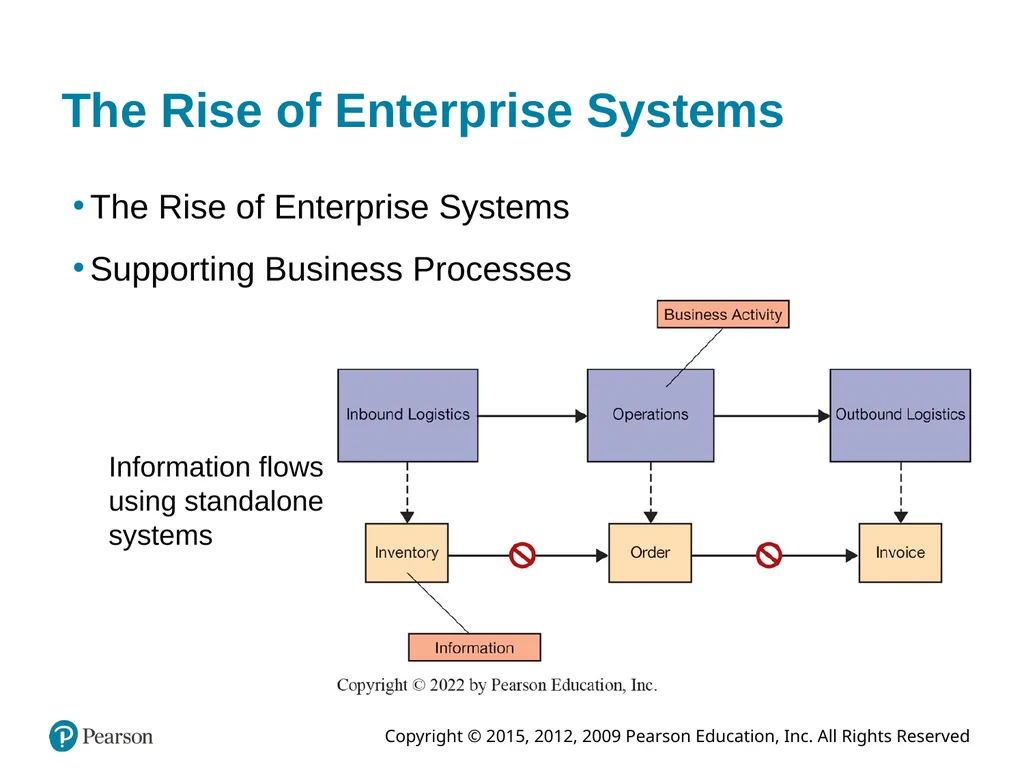
The Rise of Enterprise Systems The Rise of Enterprise Systems
Supporting Business Processes Information flows using standalone systems<br>
Supporting Business Processes Information flows using standalone systems<br>
14
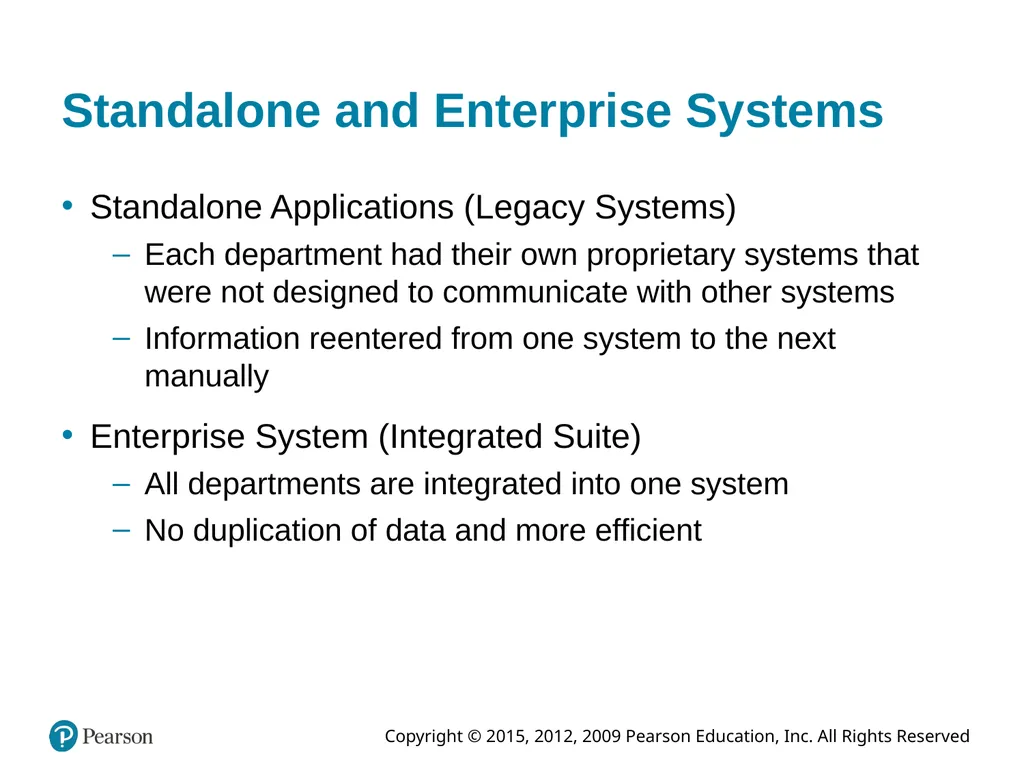
Standalone and Enterprise Systems Standalone Applications (Legacy Systems)
Each department had their own proprietary systems that were not designed to communicate with other systems
Information reentered from one system to the next manually
Enterprise System (Integrated Suite)
All departments are integrated into one system
No duplication of data and more efficient<br>
Each department had their own proprietary systems that were not designed to communicate with other systems
Information reentered from one system to the next manually
Enterprise System (Integrated Suite)
All departments are integrated into one system
No duplication of data and more efficient<br>
15
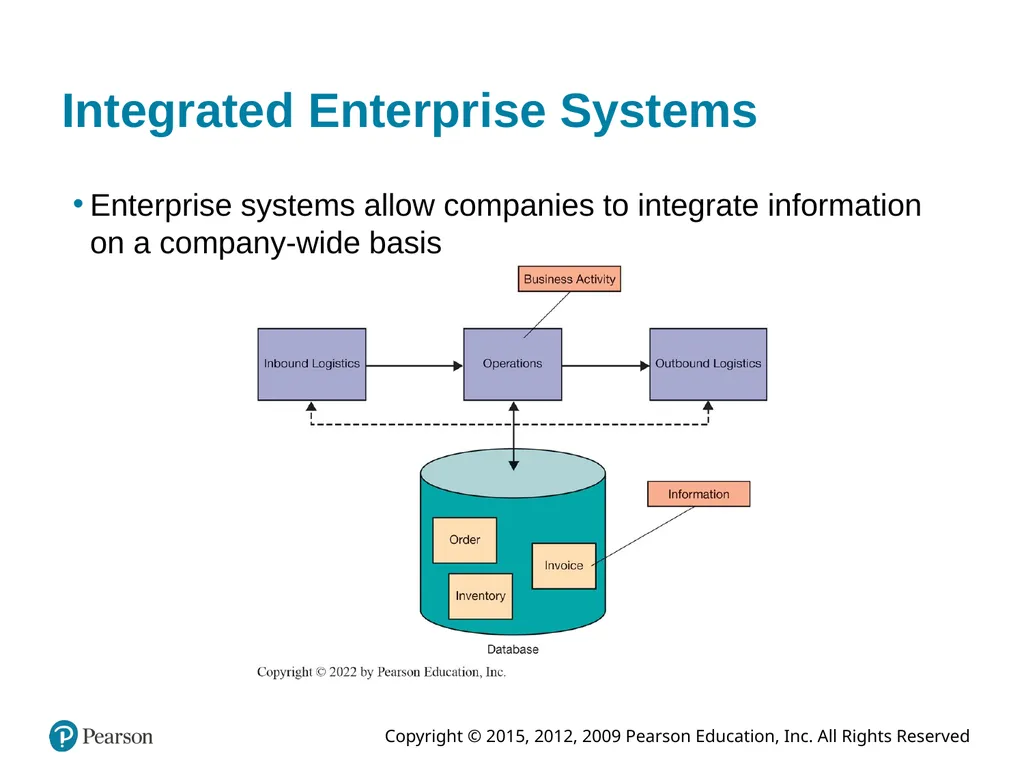
Integrated Enterprise Systems Enterprise systems allow companies to integrate information on a company-wide basis<br>
16
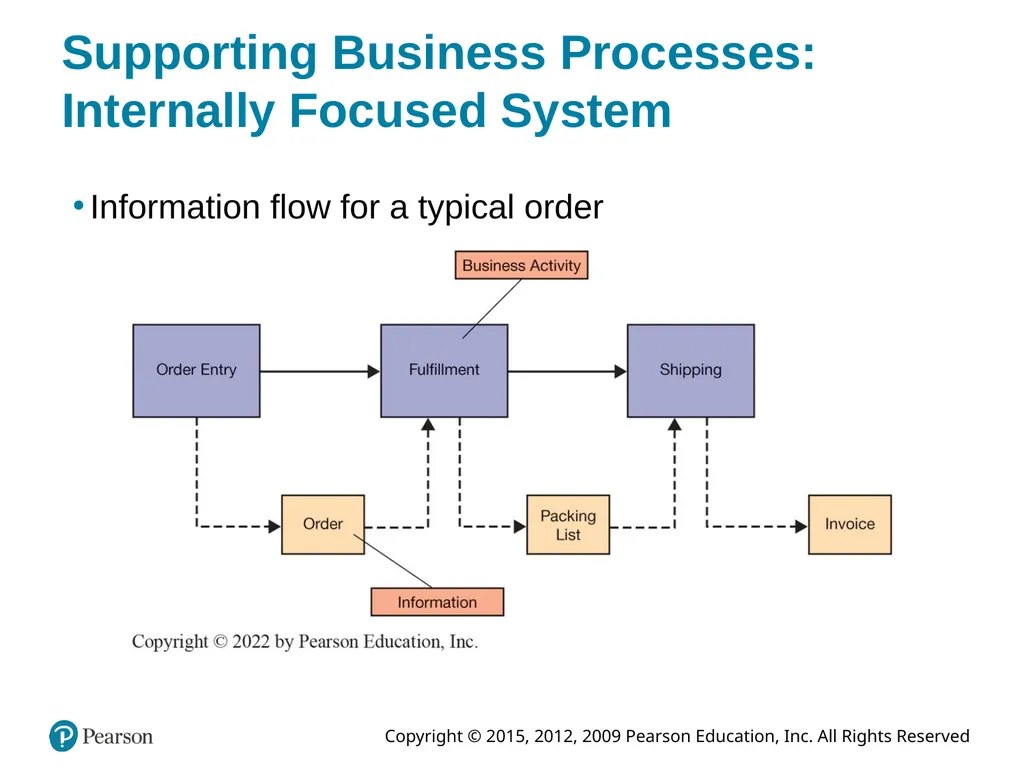
Supporting Business Processes: Internally Focused System Information flow for a typical order<br>
17
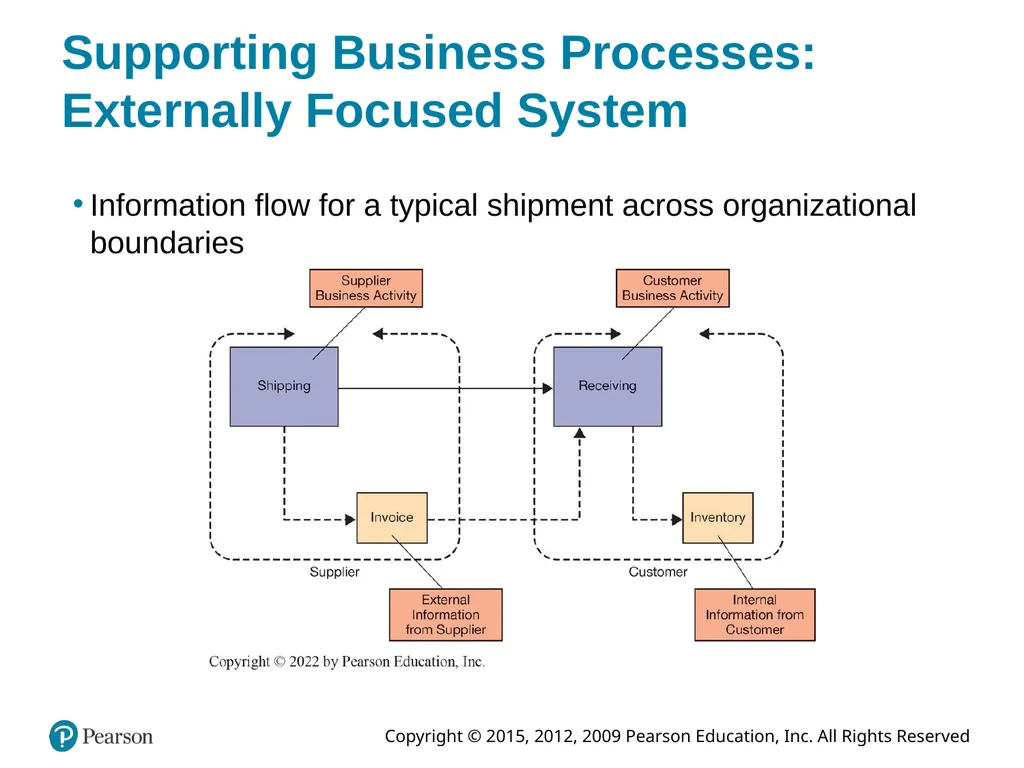
Supporting Business Processes: Externally Focused System Information flow for a typical shipment across organizational boundaries<br>
18
Improving Business Processes through Enterprise Systems Packaged software (off-the-shelf software) is written by third-party vendors for the needs of many users
Custom software (developed by contractors) is designed for a specific organization
Enterprise systems are designed in modules with components that can be selected as needed
Modules are designed around functional areas (e.g., accounting, human resources, etc.)<br>
Custom software (developed by contractors) is designed for a specific organization
Enterprise systems are designed in modules with components that can be selected as needed
Modules are designed around functional areas (e.g., accounting, human resources, etc.)<br>
19
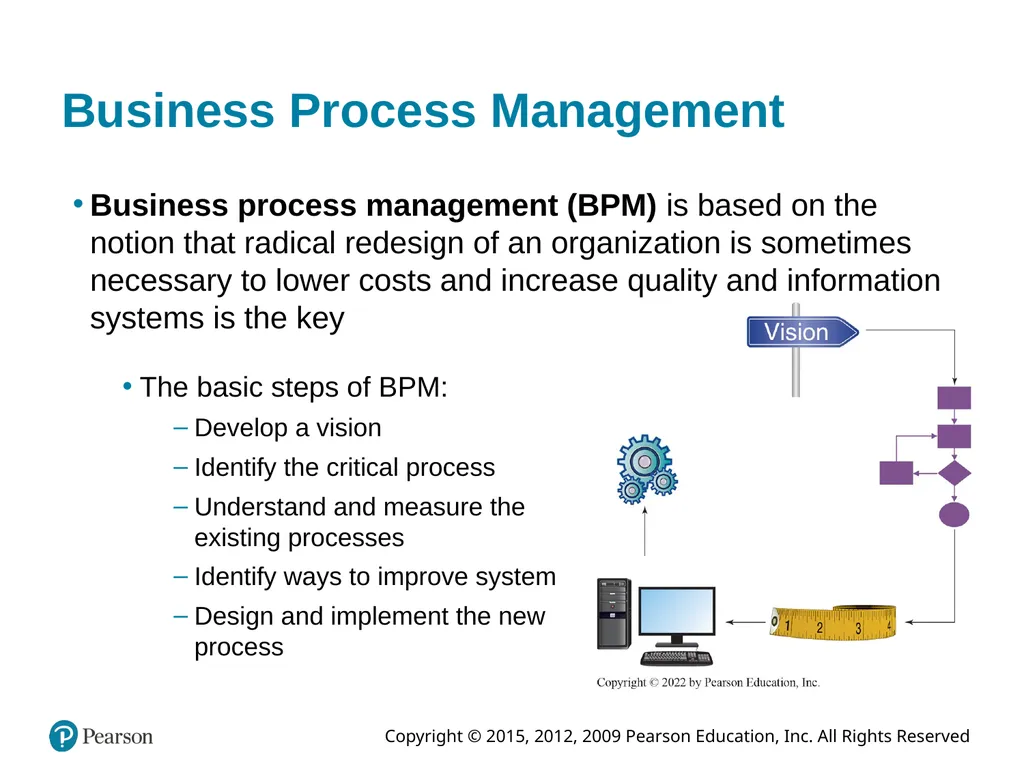
Business Process Management Business process management (BPM) is based on the notion that radical redesign of an organization is sometimes necessary to lower costs and increase quality and information systems is the key The basic steps of BPM:
Develop a vision
Identify the critical process
Understand and measure the existing processes
Identify ways to improve system
Design and implement the new process<br>
Develop a vision
Identify the critical process
Understand and measure the existing processes
Identify ways to improve system
Design and implement the new process<br>
20
Learning Objective 7.3 Describe enterprise resource planning systems and how they help to improve internal business processes<br>
21
Enterprise Resource Planning Responding to Compliance and Regulatory Demands
Choosing an ERP system
Enabling Business Processes Using ERP Core Components
ERP Installation
ERP Limitations<br>
Choosing an ERP system
Enabling Business Processes Using ERP Core Components
ERP Installation
ERP Limitations<br>
22
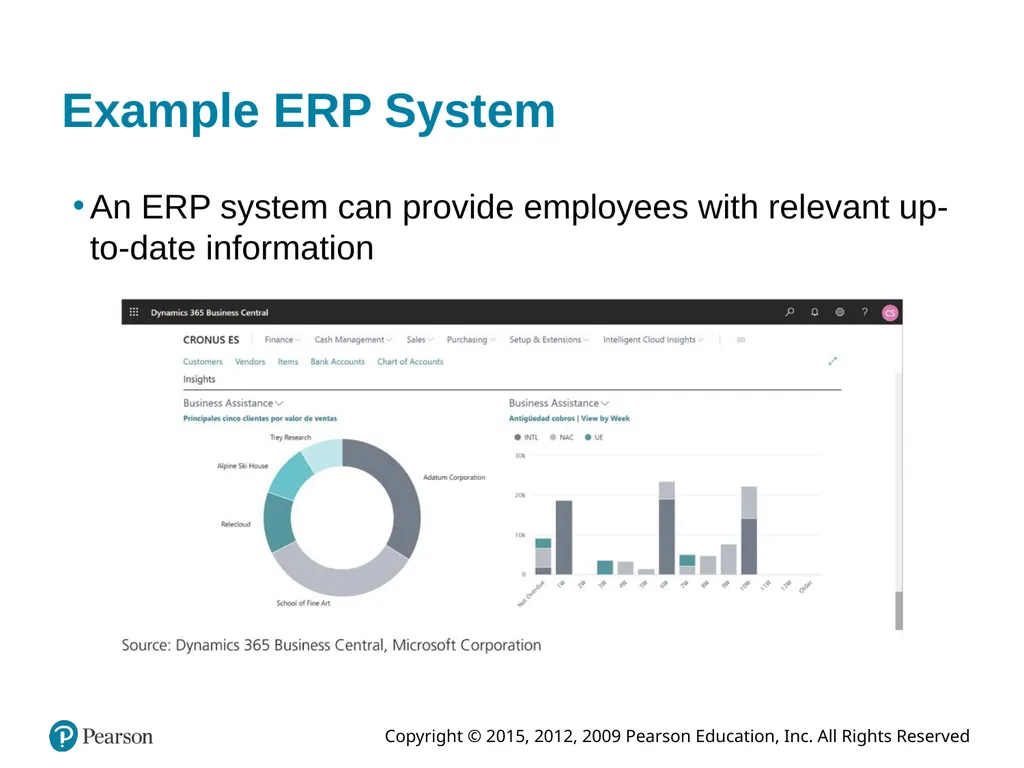
Example ERP System An ERP system can provide employees with relevant up-to-date information<br>
23
Responding to Compliance and Regulatory Demands ERP systems have built-in audit controls and comply with government regulations
Mirror organizational processes
Support segregation of duties
Monitor business activities
E R P systems don’t provide answers for all regulatory requirements<br>
Mirror organizational processes
Support segregation of duties
Monitor business activities
E R P systems don’t provide answers for all regulatory requirements<br>
24
Choosing an ERP System E R P Control
Centralized or decentralized across business units
Policies and procedures
Do they need to be flexible?
Do they need to be standardized?
E R P Business Requirements
What modules are available?
How well do they meet specific business needs?<br>
Centralized or decentralized across business units
Policies and procedures
Do they need to be flexible?
Do they need to be standardized?
E R P Business Requirements
What modules are available?
How well do they meet specific business needs?<br>
25
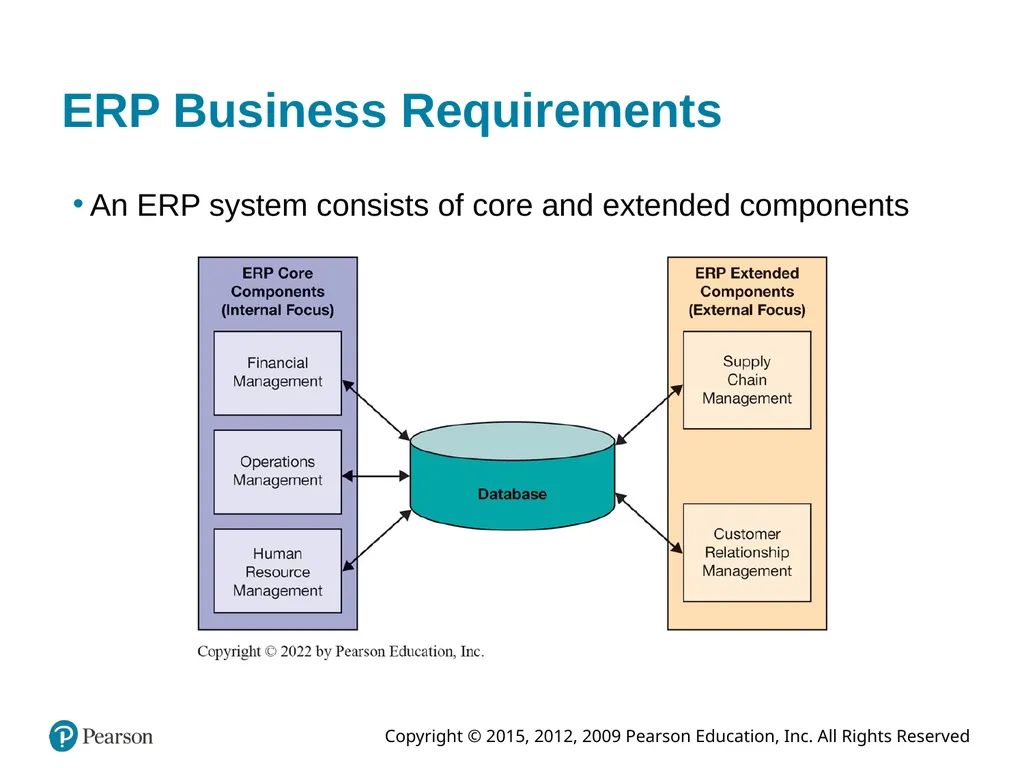
ERP Business Requirements An ERP system consists of core and extended components<br>
26
ERP Core Components ERP core components support important internal activities of the organization which are:
Financial Management
Operations Management
Human Resources Management
ERP extended components support the primary external components of the organization for dealing with suppliers and customers<br>
Financial Management
Operations Management
Human Resources Management
ERP extended components support the primary external components of the organization for dealing with suppliers and customers<br>
27
Enabling Business Processes Using ERP Core Components ERP systems support core business processes
Assist with:
Order-to-cash
Procure-to-pay
Make-to-stock/Make-to-order
Other business processes
Often packaged industry-specific ERP versions (core processes)
Health care
Automotive
Construction
Retail
Specialized manufacturing industries<br>
Assist with:
Order-to-cash
Procure-to-pay
Make-to-stock/Make-to-order
Other business processes
Often packaged industry-specific ERP versions (core processes)
Health care
Automotive
Construction
Retail
Specialized manufacturing industries<br>
28
ERP Installation Configuration is important
The underlying company-wide database
Thousands of decisions related to business processes
Companies need to understand how they do business to implement and configure their ERP systems<br>
The underlying company-wide database
Thousands of decisions related to business processes
Companies need to understand how they do business to implement and configure their ERP systems<br>
29
ERP Limitations E R P systems often require organizations to change their business processes
Once implemented, a company is locked in
Difficult and costly to make future changes
Modifications require extra costly programming<br>
Once implemented, a company is locked in
Difficult and costly to make future changes
Modifications require extra costly programming<br>
30
Learning Objective 7.4 Understand and utilize the keys to successfully implementing enterprise systems<br>
31
Achieving Enterprise System Success Secure Executive Sponsorship
Get Help form Outside Experts
Thoroughly Train Users
Take a Multidisciplinary Approach to Implementations
Evolve the Implementation<br>
Get Help form Outside Experts
Thoroughly Train Users
Take a Multidisciplinary Approach to Implementations
Evolve the Implementation<br>
32
ERP Recommendations Recommendations
Secure executive sponsorship
Get help from outside experts
Thoroughly train users
Take a multidisciplinary approach to implementations
Evolve the implementation<br>
Secure executive sponsorship
Get help from outside experts
Thoroughly train users
Take a multidisciplinary approach to implementations
Evolve the implementation<br>
33
Secure Executive Sponsorship Executive Sponsorship is Critical
Primary reason for ERP failure
Critical for buy-in
Dictates resource availability
Necessary to authorize business improvements
Key to removing obstacles<br>
Primary reason for ERP failure
Critical for buy-in
Dictates resource availability
Necessary to authorize business improvements
Key to removing obstacles<br>
34
Get Help from Outside Experts E R P systems are very complex
Typically, I S departments aren’t familiar with new systems
Experts can help
Specify needs
Select a suitable vendor
Manage the implementation project
Provide technical expertise<br>
Typically, I S departments aren’t familiar with new systems
Experts can help
Specify needs
Select a suitable vendor
Manage the implementation project
Provide technical expertise<br>
35
Thoroughly Train Users E R P systems are complex from the user perspective as well
Training costs are often poorly judged
When systems go live, it takes employees time to regain productivity
Proper training can:
Alleviate concerns
Mitigate productivity loss
Set expectations<br>
Training costs are often poorly judged
When systems go live, it takes employees time to regain productivity
Proper training can:
Alleviate concerns
Mitigate productivity loss
Set expectations<br>
36
Take a Multidisciplinary Approach to Implementation E R P systems often affect the entire organization
The entire organization is a stakeholder
The entire organization needs involvement
Failure to have representatives can result in unmet critical needs
The project team can’t be experts in every aspect of user needs
Departments may become hostile if left out of the implementation and needs assessment<br>
The entire organization is a stakeholder
The entire organization needs involvement
Failure to have representatives can result in unmet critical needs
The project team can’t be experts in every aspect of user needs
Departments may become hostile if left out of the implementation and needs assessment<br>
37
Evolve the Implementation Recent trend is to move away from large-scale E R P
Using cloud-based ERP allows scalability and agility
Another trend: managing businesses in real time
Take advantage of in-memory computing and mobile access<br>
Using cloud-based ERP allows scalability and agility
Another trend: managing businesses in real time
Take advantage of in-memory computing and mobile access<br>
38
End of Chapter Content<br>
39
Managing in the Digital World: Amazon Amazon has grown from an online bookstore to a complete marketplace
Almost any product can be purchased through Amazon
Amazon uses enterprise information systems to optimize processes, and it now provides this to others
Amazon Web Services (AWS) is an IS infrastructure rented to companies for their enterprise system needs
Amazon has 2 billion plus customer visits per month
Amazon posted net sales of US$280 billion
AWS provides cloud services and hosting for other companies<br>
Almost any product can be purchased through Amazon
Amazon uses enterprise information systems to optimize processes, and it now provides this to others
Amazon Web Services (AWS) is an IS infrastructure rented to companies for their enterprise system needs
Amazon has 2 billion plus customer visits per month
Amazon posted net sales of US$280 billion
AWS provides cloud services and hosting for other companies<br>
40
Green IT Green IT refers to using computers resources more efficiently and environmentally responsible
Big part of Green IT movement focuses on cloud computing
One benefit of moving IT to the cloud is that the organization will become known as a sustainable business
Benefits include:
Low capital outlays, lower operating costs, better I T resource utilization, increased security, and better ability to adjust to demand changes<br>
Big part of Green IT movement focuses on cloud computing
One benefit of moving IT to the cloud is that the organization will become known as a sustainable business
Benefits include:
Low capital outlays, lower operating costs, better I T resource utilization, increased security, and better ability to adjust to demand changes<br>
41
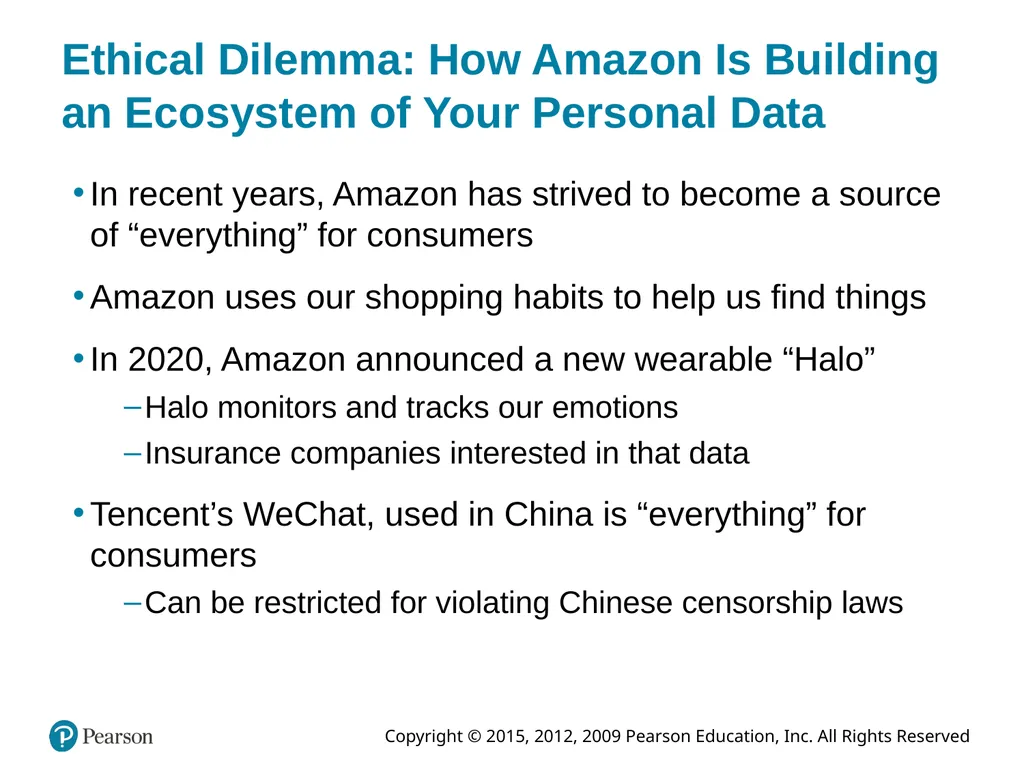
Ethical Dilemma: How Amazon Is Building an Ecosystem of Your Personal Data In recent years, Amazon has strived to become a source of “everything” for consumers
Amazon uses our shopping habits to help us find things
In 2020, Amazon announced a new wearable “Halo”
Halo monitors and tracks our emotions
Insurance companies interested in that data
Tencent’s WeChat, used in China is “everything” for consumers
Can be restricted for violating Chinese censorship laws<br>
Amazon uses our shopping habits to help us find things
In 2020, Amazon announced a new wearable “Halo”
Halo monitors and tracks our emotions
Insurance companies interested in that data
Tencent’s WeChat, used in China is “everything” for consumers
Can be restricted for violating Chinese censorship laws<br>
42
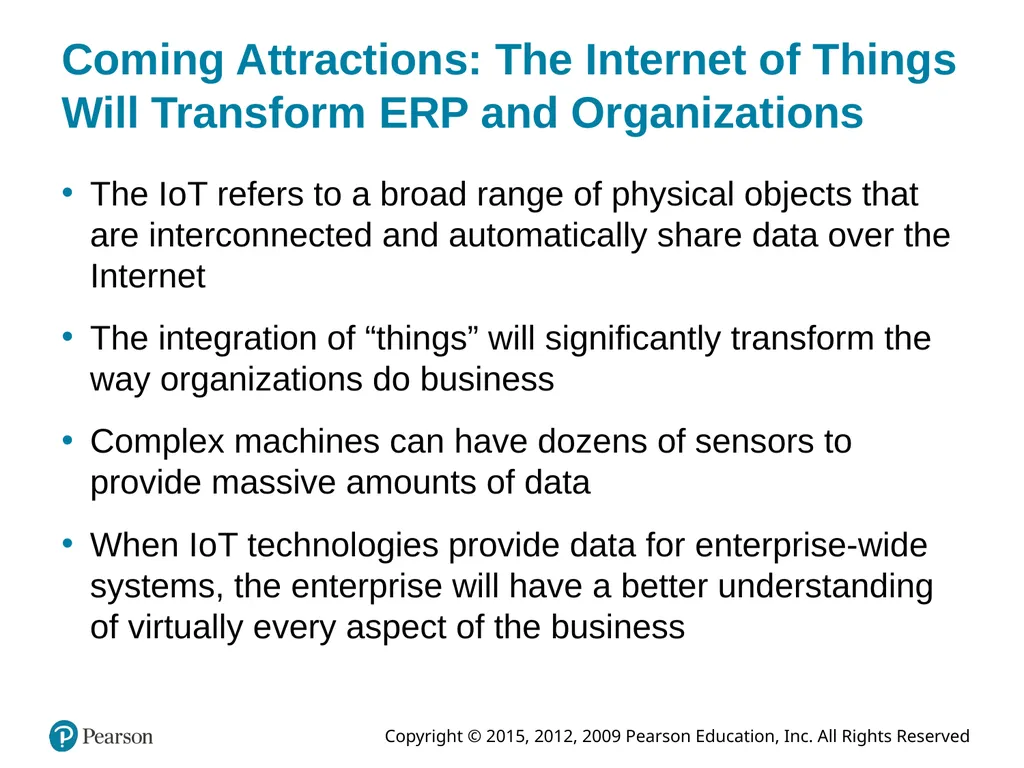
Coming Attractions: The Internet of Things Will Transform ERP and Organizations The I o T refers to a broad range of physical objects that are interconnected and automatically share data over the Internet
The integration of “things” will significantly transform the way organizations do business
Complex machines can have dozens of sensors to provide massive amounts of data
When I o T technologies provide data for enterprise-wide systems, the enterprise will have a better understanding of virtually every aspect of the business<br>
The integration of “things” will significantly transform the way organizations do business
Complex machines can have dozens of sensors to provide massive amounts of data
When I o T technologies provide data for enterprise-wide systems, the enterprise will have a better understanding of virtually every aspect of the business<br>
43
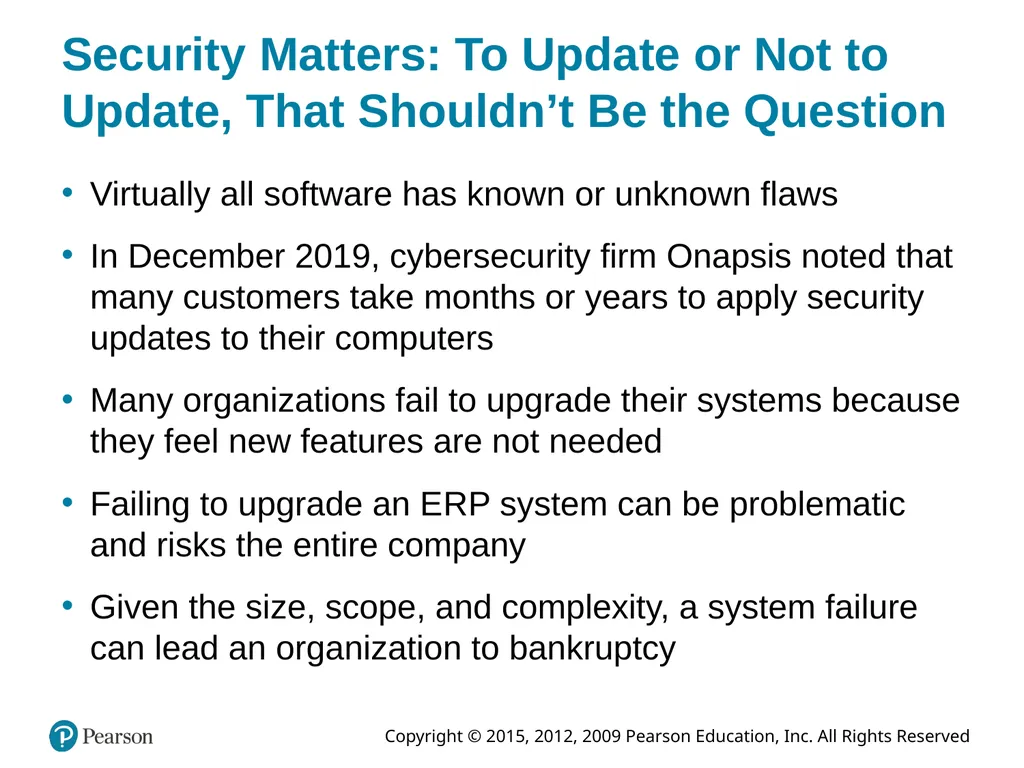
Security Matters: To Update or Not to Update, That Shouldn’t Be the Question Virtually all software has known or unknown flaws
In December 2019, cybersecurity firm Onapsis noted that many customers take months or years to apply security updates to their computers
Many organizations fail to upgrade their systems because they feel new features are not needed
Failing to upgrade an E R P system can be problematic and risks the entire company
Given the size, scope, and complexity, a system failure can lead an organization to bankruptcy<br>
In December 2019, cybersecurity firm Onapsis noted that many customers take months or years to apply security updates to their computers
Many organizations fail to upgrade their systems because they feel new features are not needed
Failing to upgrade an E R P system can be problematic and risks the entire company
Given the size, scope, and complexity, a system failure can lead an organization to bankruptcy<br>
44
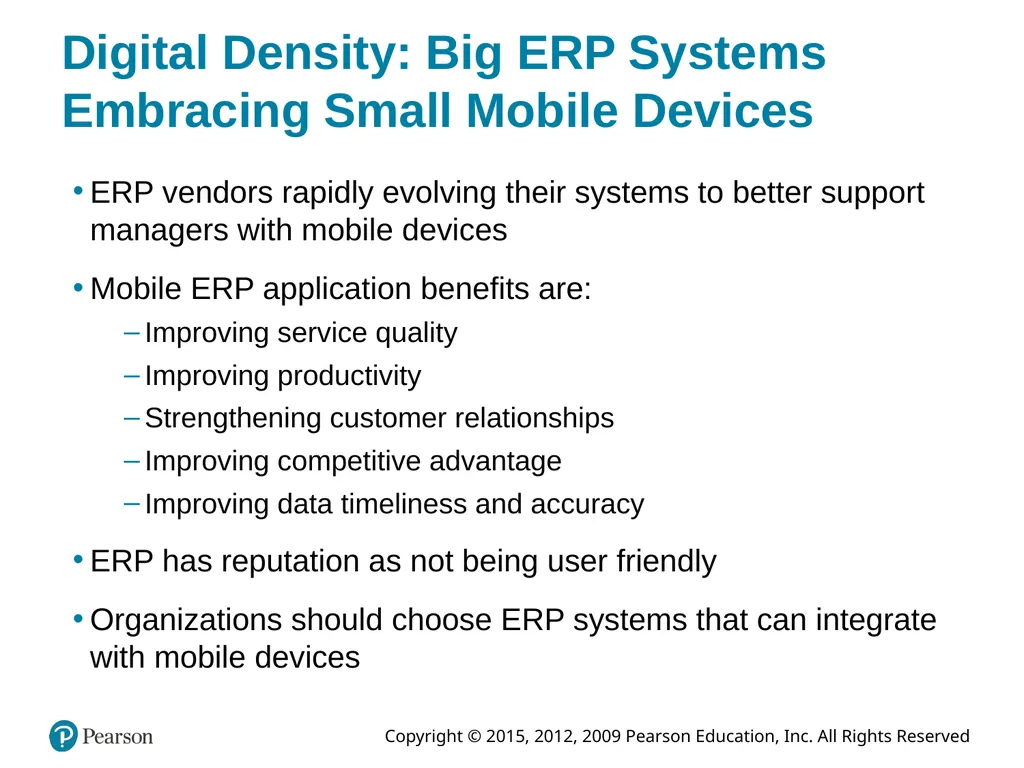
Digital Density: Big ERP Systems Embracing Small Mobile Devices ERP vendors rapidly evolving their systems to better support managers with mobile devices
Mobile ERP application benefits are:
Improving service quality
Improving productivity
Strengthening customer relationships
Improving competitive advantage
Improving data timeliness and accuracy
ERP has reputation as not being user friendly
Organizations should choose ERP systems that can integrate with mobile devices<br>
Mobile ERP application benefits are:
Improving service quality
Improving productivity
Strengthening customer relationships
Improving competitive advantage
Improving data timeliness and accuracy
ERP has reputation as not being user friendly
Organizations should choose ERP systems that can integrate with mobile devices<br>
45
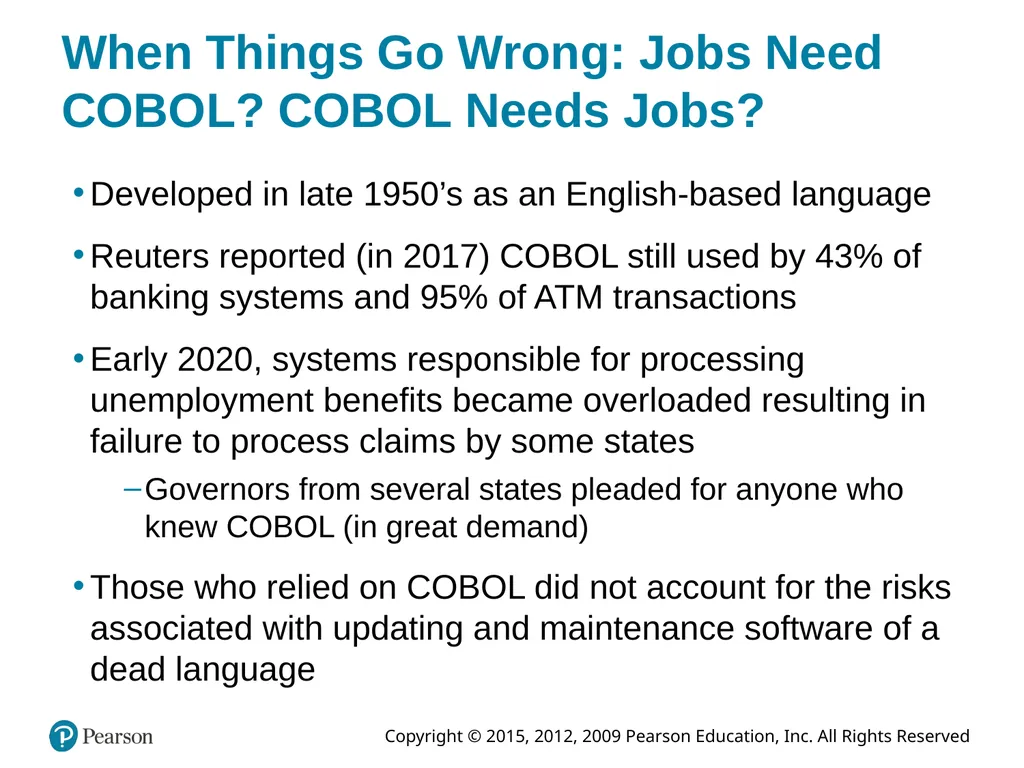
When Things Go Wrong: Jobs Need COBOL? COBOL Needs Jobs? Developed in late 1950’s as an English-based language
Reuters reported (in 2017) COBOL still used by 43% of banking systems and 95% of ATM transactions
Early 2020, systems responsible for processing unemployment benefits became overloaded resulting in failure to process claims by some states
Governors from several states pleaded for anyone who knew COBOL (in great demand)
Those who relied on COBOL did not account for the risks associated with updating and maintenance software of a dead language<br>
Reuters reported (in 2017) COBOL still used by 43% of banking systems and 95% of ATM transactions
Early 2020, systems responsible for processing unemployment benefits became overloaded resulting in failure to process claims by some states
Governors from several states pleaded for anyone who knew COBOL (in great demand)
Those who relied on COBOL did not account for the risks associated with updating and maintenance software of a dead language<br>
46
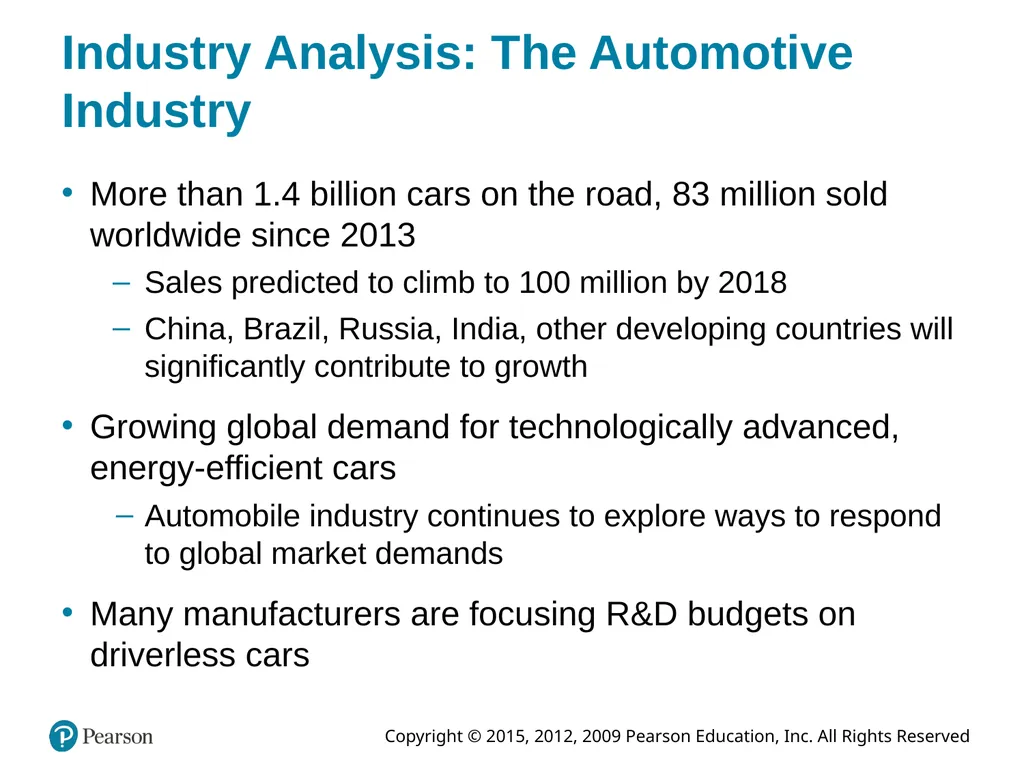
Industry Analysis: The Automotive Industry More than 1.4 billion cars on the road, 83 million sold worldwide since 2013
Sales predicted to climb to 100 million by 2018
China, Brazil, Russia, India, other developing countries will significantly contribute to growth
Growing global demand for technologically advanced, energy-efficient cars
Automobile industry continues to explore ways to respond to global market demands
Many manufacturers are focusing R&D budgets on driverless cars<br>
Sales predicted to climb to 100 million by 2018
China, Brazil, Russia, India, other developing countries will significantly contribute to growth
Growing global demand for technologically advanced, energy-efficient cars
Automobile industry continues to explore ways to respond to global market demands
Many manufacturers are focusing R&D budgets on driverless cars<br>
47
Copyright This work is protected by United States copyright laws and is provided solely for the use of instructors in teaching their courses and assessing student learning. Dissemination or sale of any part of this work (including on the World Wide Web) will destroy the integrity of the work and is not permitted. The work and materials from it should never be made available to students except by instructors using the accompanying text in their classes. All recipients of this work are expected to abide by these restrictions and to honor the intended pedagogical purposes and the needs of other instructors who rely on these materials.<br>