Infrastructure investment is fundamental for resilience food security Tom Reardon Saweda Liverpool-Tasie Talk for USAID, April 29, 2022 1. Infrastructure bones blood of food system hard infrastructure not specific to FSC (e.g.,
"Infrastructure investment is fundamental for" is the property of its rightful owner. Permission is granted to
download and print the materials on this website for personal, non-commercial use only, and to display it
on your personal computer provided you do not modify the materials and that you retain all copyright
notices contained in the materials. By downloading content from our website, you accept the terms of this
agreement.
Presentation Transcript
01
Infrastructure investment is fundamental for resilience & food security Tom Reardon & Saweda Liverpool-Tasie
Talk for USAID, April 29, 2022<br>
02
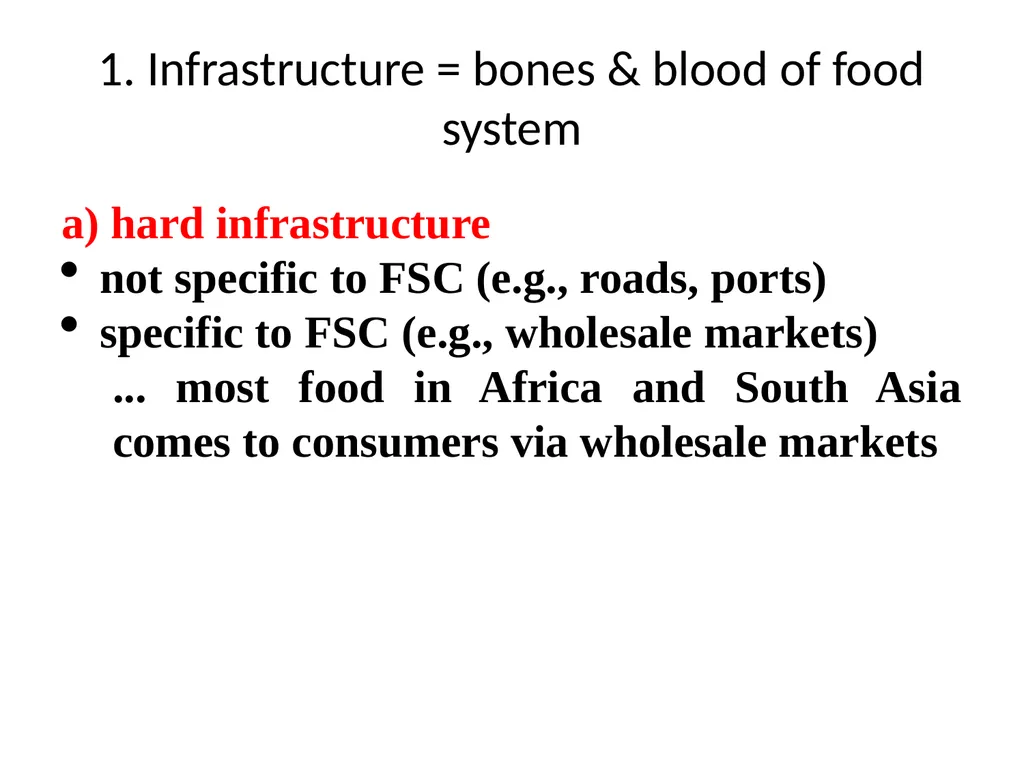
1. Infrastructure = bones & blood of food system hard infrastructure
not specific to FSC (e.g., roads, ports)
specific to FSC (e.g., wholesale markets)
... most food in Africa and South Asia comes to consumers via wholesale markets<br>
03
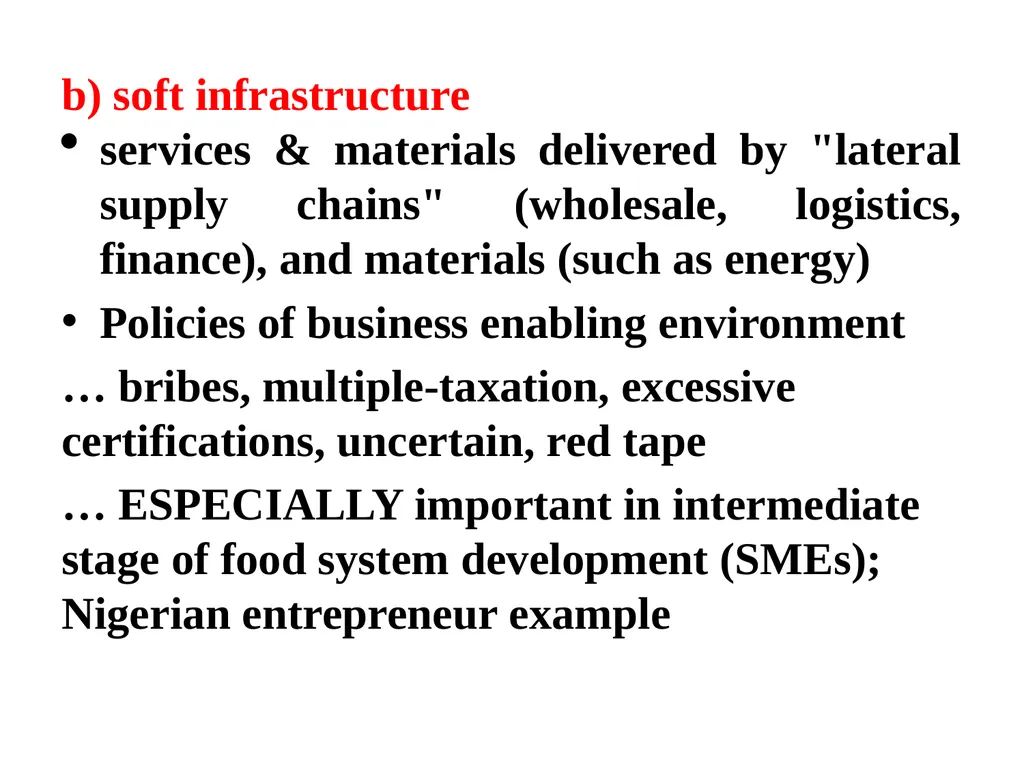
b) soft infrastructure
services & materials delivered by "lateral supply chains" (wholesale, logistics, finance), and materials (such as energy)
Policies of business enabling environment
… bribes, multiple-taxation, excessive certifications, uncertain, red tape
… ESPECIALLY important in intermediate stage of food system development (SMEs); Nigerian entrepreneur example<br>
04
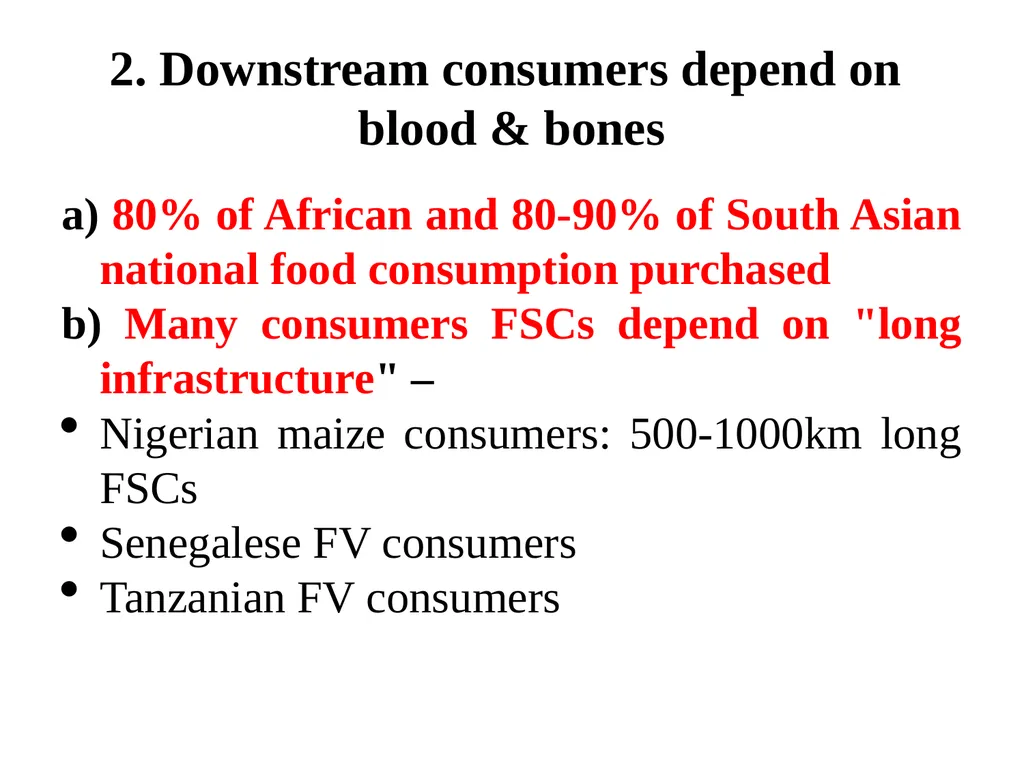
2. Downstream consumers depend on blood & bones 80% of African and 80-90% of South Asian national food consumption purchased
Many consumers FSCs depend on "long infrastructure" –
Nigerian maize consumers: 500-1000km long FSCs
Senegalese FV consumers
Tanzanian FV consumers<br>
05
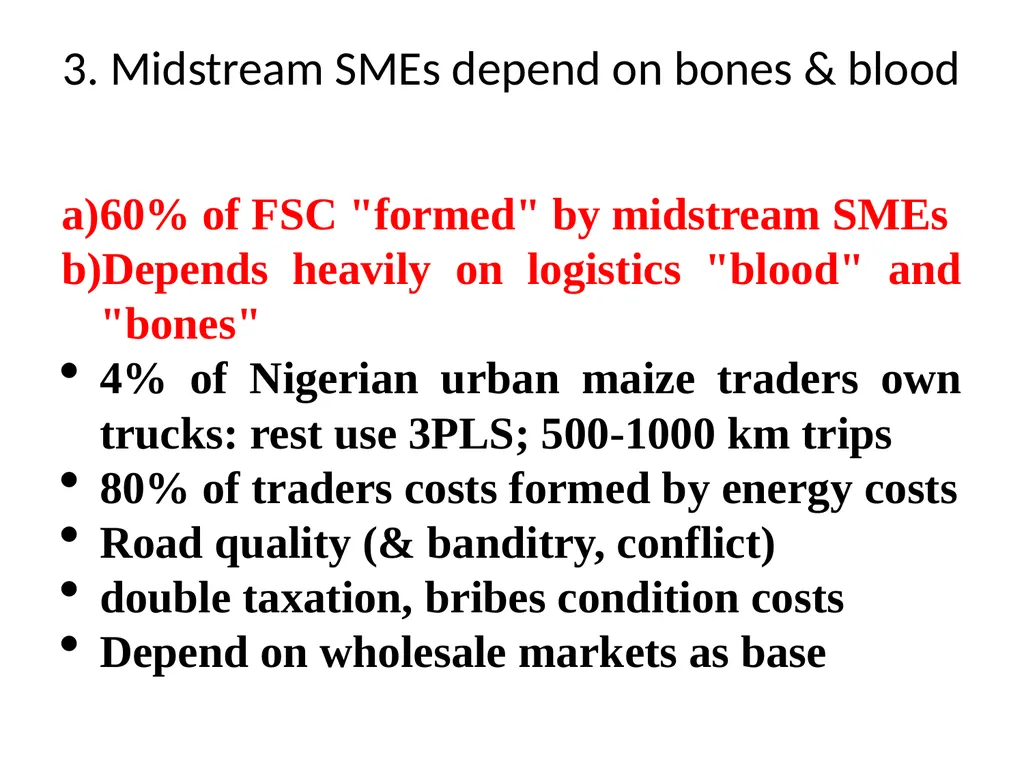
3. Midstream SMEs depend on bones & blood 60% of FSC "formed" by midstream SMEs
Depends heavily on logistics "blood" and "bones"
4% of Nigerian urban maize traders own trucks: rest use 3PLS; 500-1000 km trips
80% of traders costs formed by energy costs
Road quality (& banditry, conflict)
double taxation, bribes condition costs
Depend on wholesale markets as base<br>
06
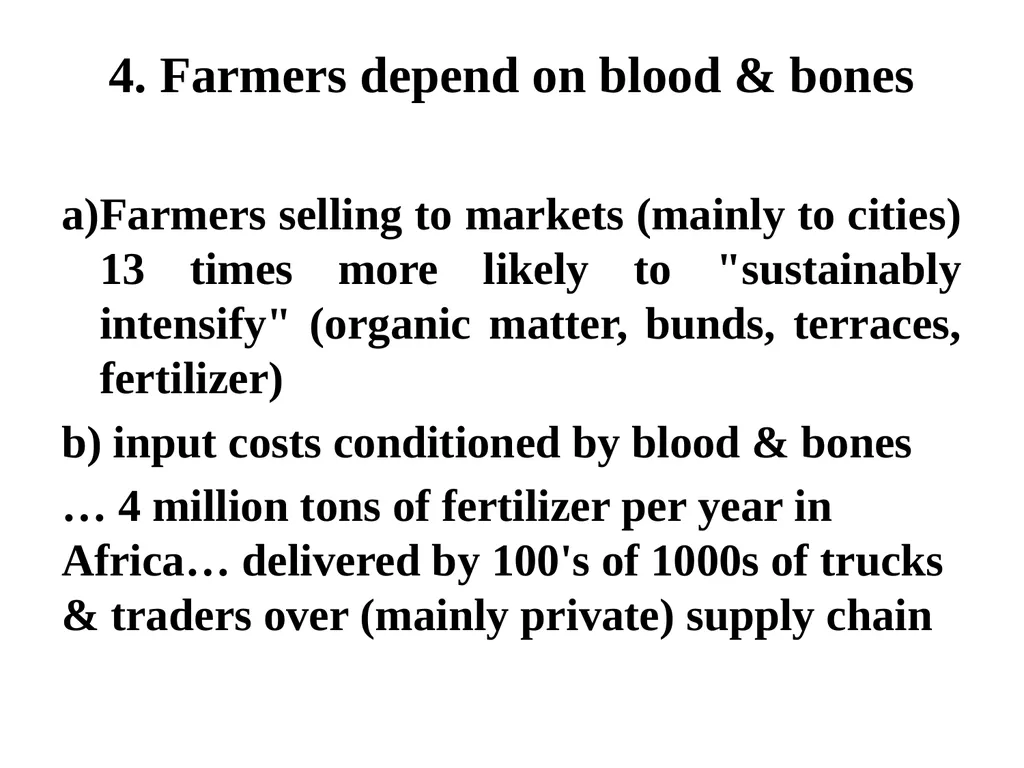
4. Farmers depend on blood & bones Farmers selling to markets (mainly to cities) 13 times more likely to "sustainably intensify" (organic matter, bunds, terraces, fertilizer)
b) input costs conditioned by blood & bones
… 4 million tons of fertilizer per year in Africa… delivered by 100's of 1000s of trucks & traders over (mainly private) supply chain<br>
07
5. Two big hopes current hopes depend for success on fundamentals (blood & bones) Big hope now to "leapfrog" with digitalization, e-commerce
… but debate glosses over need for blood & bones first in place<br>
08
b) Big hopes for farmers with diversification into high value crops and sustainable intensification & supply chains to be resilient
high-value products like chicken & horticulture: tomatoes in Tanzania, potatoes in Rwanda, aquaculture in Nigeria & Bangladesh
basic productivity: maize in Zambia
soil conservation: potatoes in Rwanda
climate resilience: irrigation for tomatoes in Tanzania & Senegal
traders resilience depend on blood & bones to be resilient: our work sustainable intensification lab during COVID: "non-essential essentials" in Nigeria<br>
09
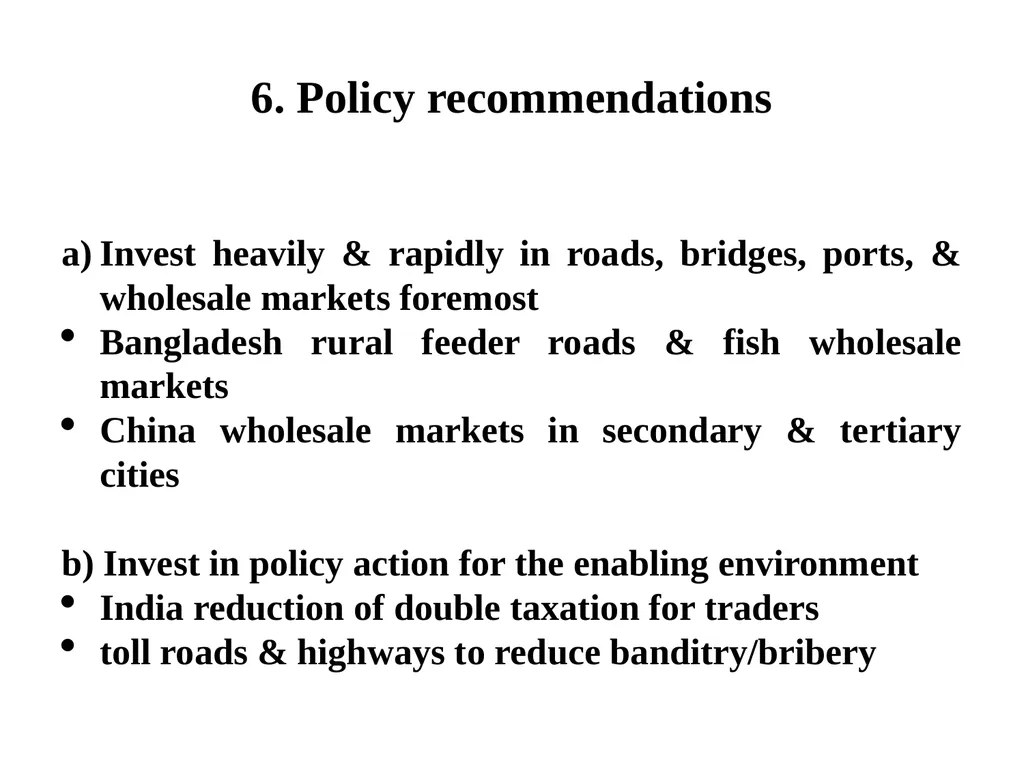
6. Policy recommendations Invest heavily & rapidly in roads, bridges, ports, & wholesale markets foremost
Bangladesh rural feeder roads & fish wholesale markets
China wholesale markets in secondary & tertiary cities
b) Invest in policy action for the enabling environment
India reduction of double taxation for traders
toll roads & highways to reduce banditry/bribery<br>
10
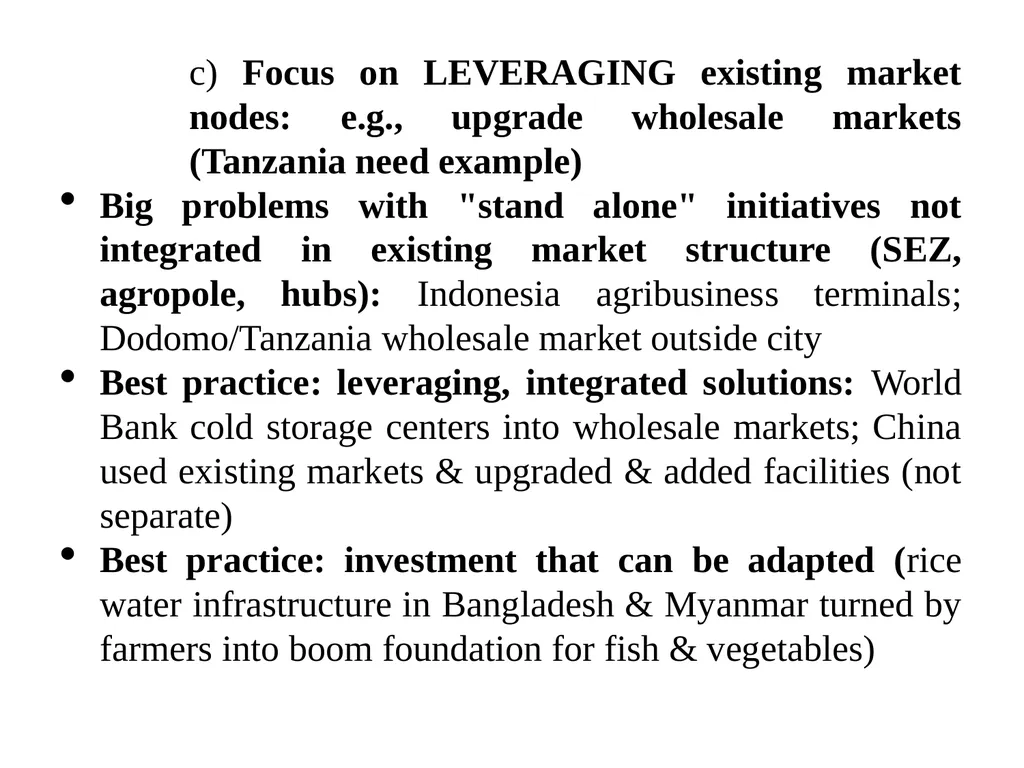
c) Focus on LEVERAGING existing market nodes: e.g., upgrade wholesale markets (Tanzania need example)
Big problems with "stand alone" initiatives not integrated in existing market structure (SEZ, agropole, hubs): Indonesia agribusiness terminals; Dodomo/Tanzania wholesale market outside city
Best practice: leveraging, integrated solutions: World Bank cold storage centers into wholesale markets; China used existing markets & upgraded & added facilities (not separate)
Best practice: investment that can be adapted (rice water infrastructure in Bangladesh & Myanmar turned by farmers into boom foundation for fish & vegetables)<br>
11
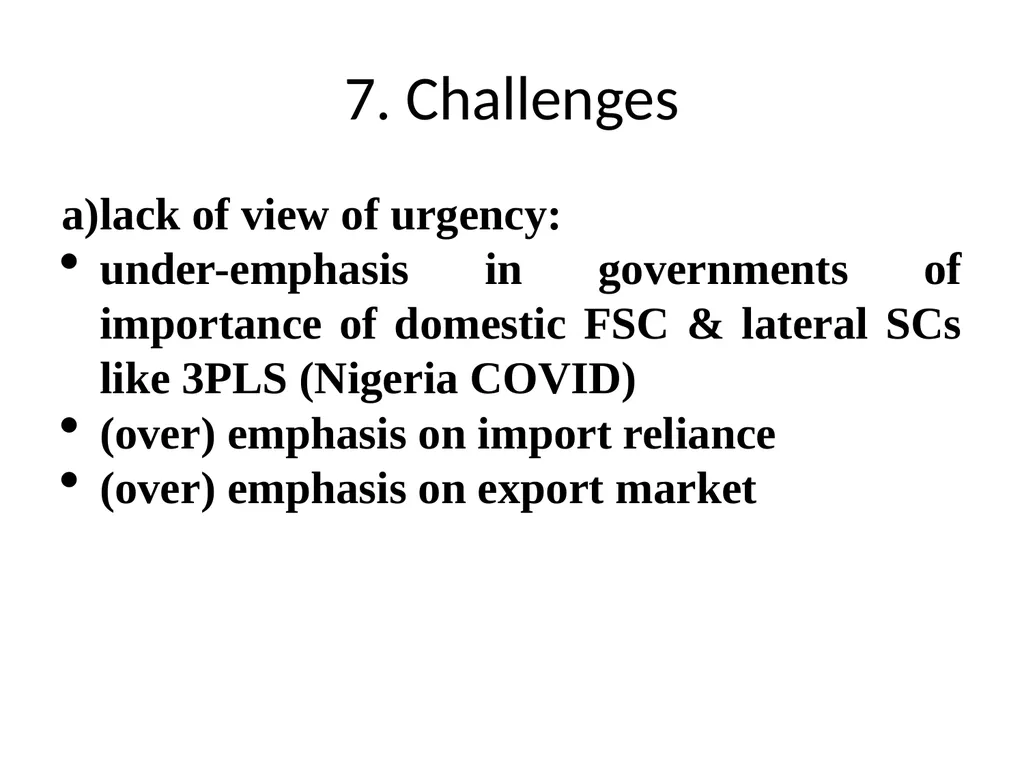
7. Challenges lack of view of urgency:
under-emphasis in governments of importance of domestic FSC & lateral SCs like 3PLS (Nigeria COVID)
(over) emphasis on import reliance
(over) emphasis on export market<br>
12
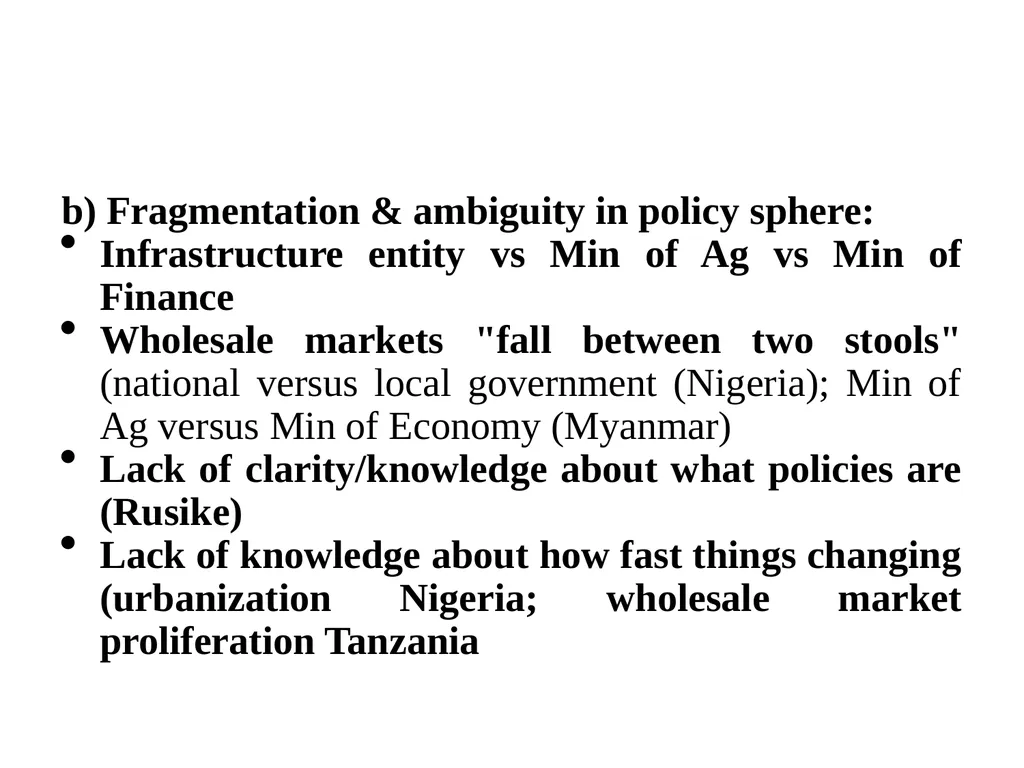
b) Fragmentation & ambiguity in policy sphere:
Infrastructure entity vs Min of Ag vs Min of Finance
Wholesale markets "fall between two stools" (national versus local government (Nigeria); Min of Ag versus Min of Economy (Myanmar)
Lack of clarity/knowledge about what policies are (Rusike)
Lack of knowledge about how fast things changing (urbanization Nigeria; wholesale market proliferation Tanzania<br>
13
c) Lure of "white elephants" (SEZs, agropoles) not reinforcing grass root transformation already occurring<br>