Integrating LDN targets in The national action programme and creating leverages with Climate Change Agenda in Lebanon Dr. Chadi Mohanna Director of natural resources Ministry of Agriculture Lebanon 1 NAP-LDN NAP Project Funded by GEF-UNEP
"Integrating LDN targets in The national action" is the property of its rightful owner. Permission is granted to
download and print the materials on this website for personal, non-commercial use only, and to display it
on your personal computer provided you do not modify the materials and that you retain all copyright
notices contained in the materials. By downloading content from our website, you accept the terms of this
agreement.
Presentation Transcript
01
Integrating LDN targets in The national action programme and creating leverages with Climate Change Agenda in Lebanon Dr. Chadi Mohanna
Director of natural resources
Ministry of Agriculture
Lebanon 1<br>
02
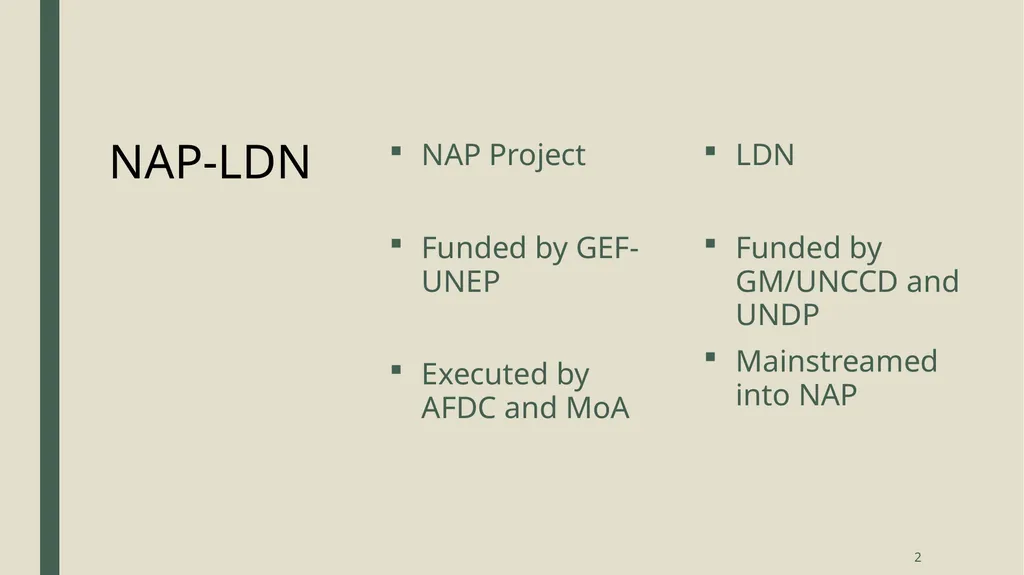
NAP-LDN NAP Project
Funded by GEF-UNEP
Executed by AFDC and MoA LDN
Funded by GM/UNCCD and UNDP
Mainstreamed into NAP 2<br>
03
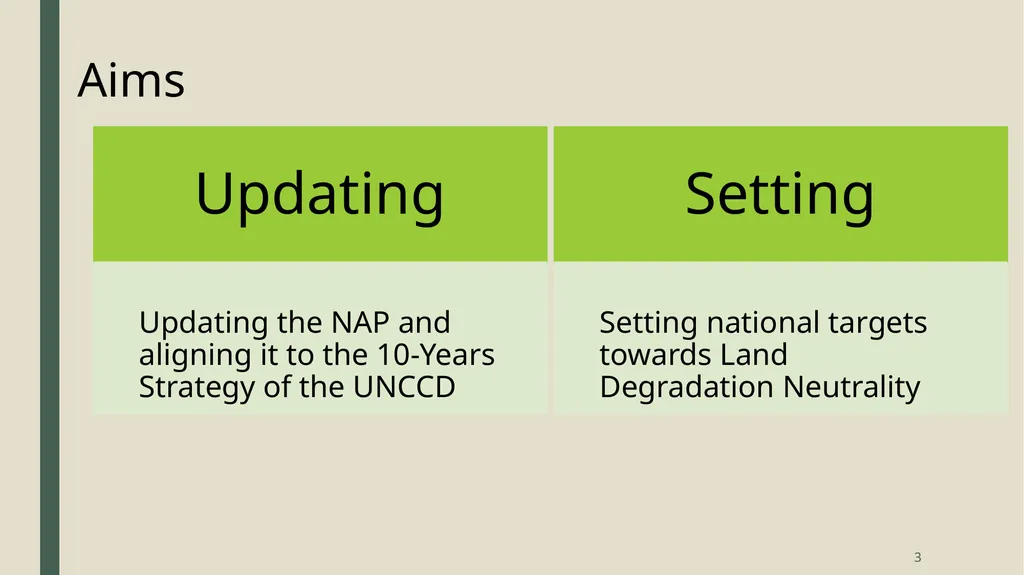
Aims 3<br>
04
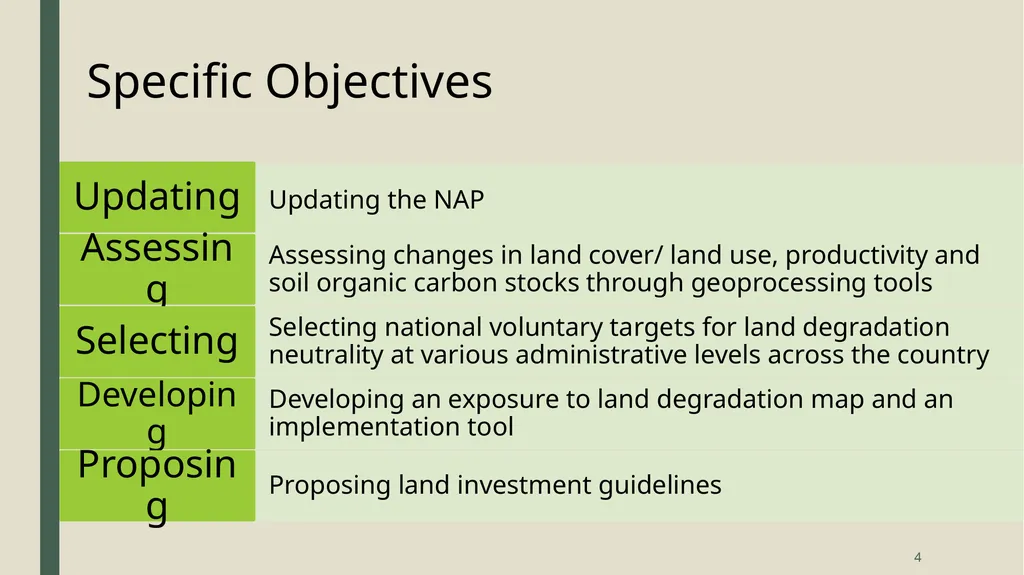
Specific Objectives 4<br>
05
New NAP/LDN At the time of the first NAP, very few projects were developed and implemented
Now many projects are dealing with SLM
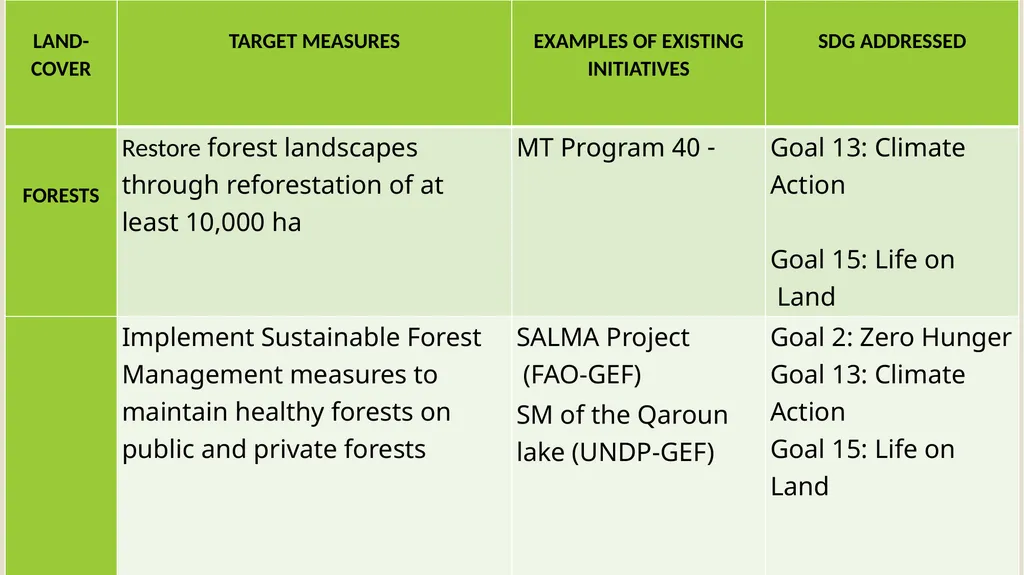
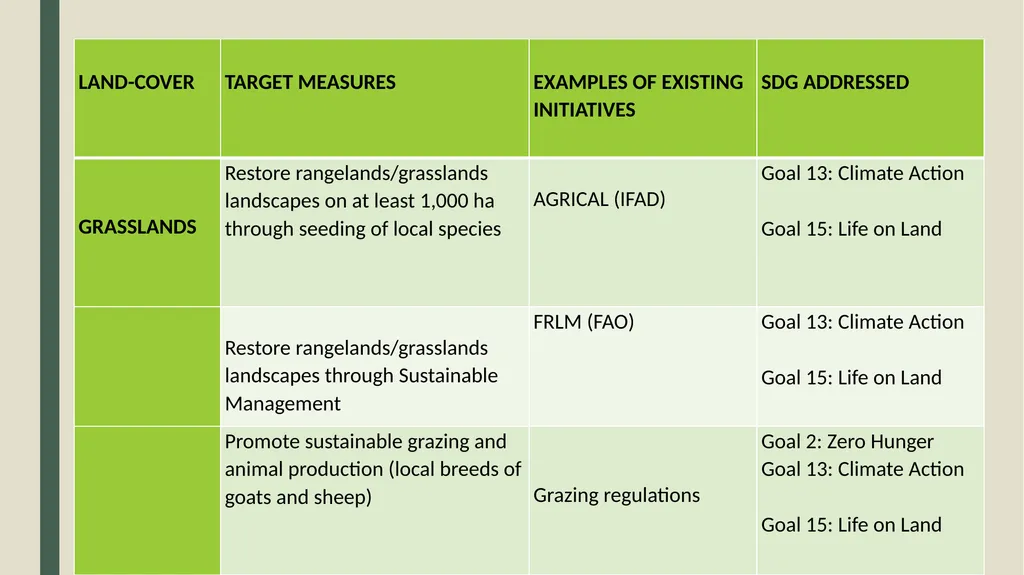
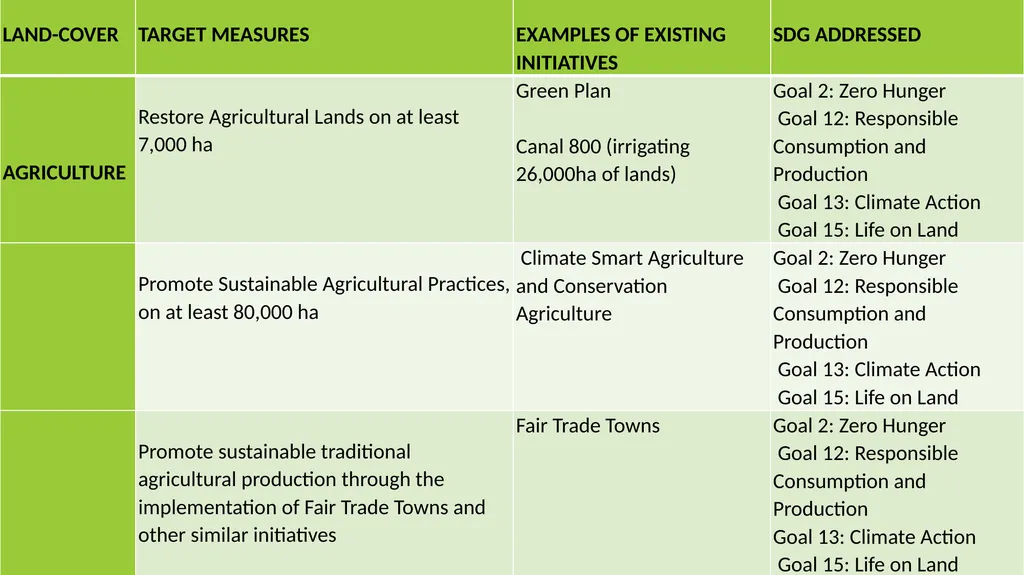
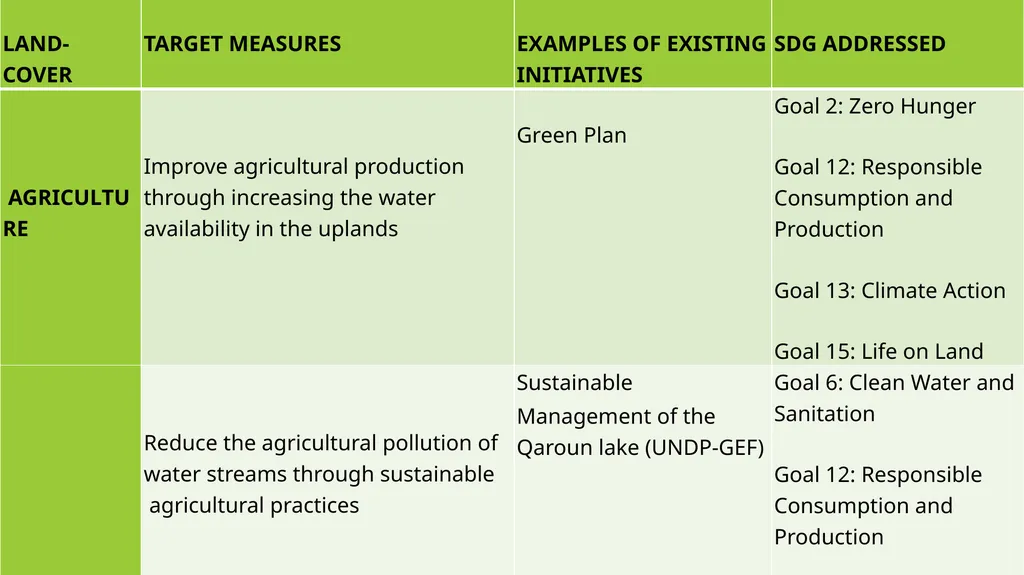
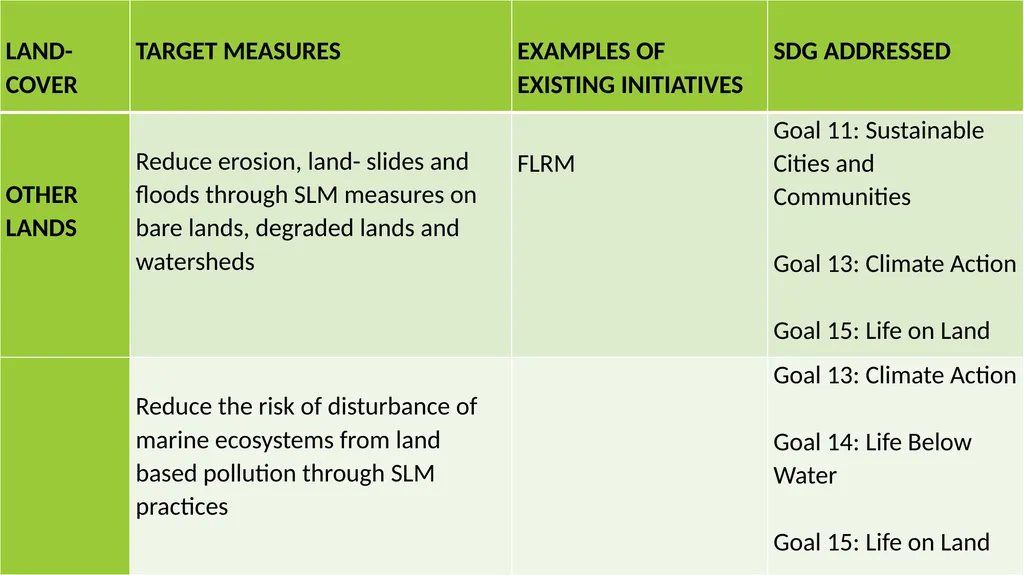
While LDN addresses directly SDG 15.3, implementing the national targets and their related measures will contribute to the implementation of other SDG 5<br>
06
Current Situation According to data from the 2015 Global FRA:
Forests cover 13.2%
“Other Wooded Lands” (OWL) cover 10.2%
23.4% of the Lebanese land area covered by forests, woodlands and schrubs.
Other lands with trees, including fruit trees, olive yards, highly degraded forest lands that do not fall under “Forests” or “OWL” cover 11% of the total land area.
These figures make Lebanon one of the most forested countries in the Middle East. 6<br>
07
LAND DEGRADATION AGGRAVATED BY CLIMATE CHANGE Fire
Pests and Diseases
Fragmentation/Urban Crawl/Quarries/ Roads/ Pollution/ Changes in Land-Uses
Rangeland mismanagement
Forest/Other wooded-lands mismanagement
Unsustainable agricultural practices 7<br>
08
ASSESSMENT AND MAPPING The aim of the work is to assist in setting national targets towards Land Degradation Neutrality. The specific objectives are:
1. Assessment of baseline trends in landcover/land-use, land productivity, and soil organic carbon stocks using geo-processing tools
2. Mapping exposure to land degradation
3. Setting national voluntary targets for land degradation neutrality 8<br>
09
Losses in landcover/land-use (2000-2010) 9<br>
10
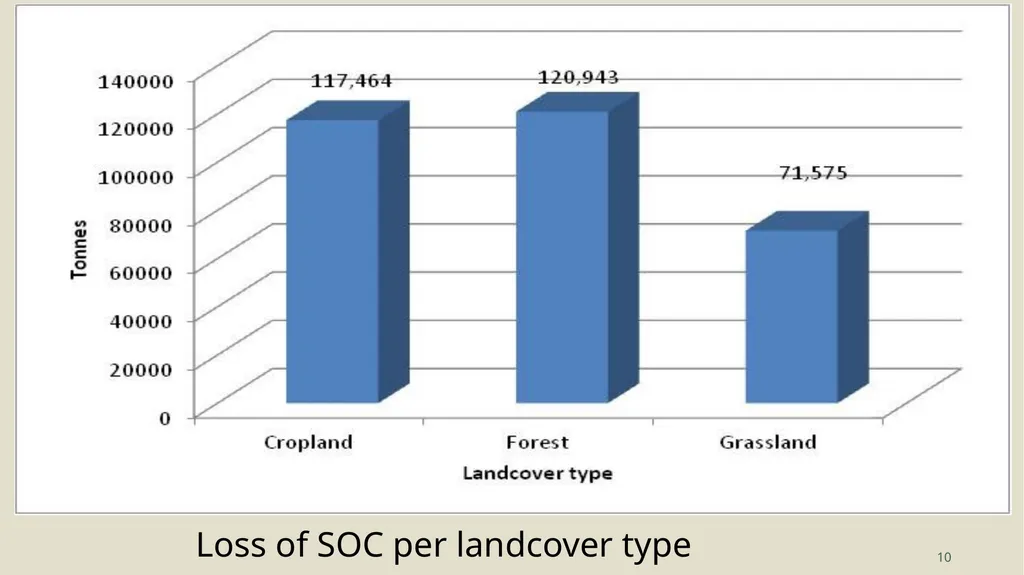
10 Loss of SOC per landcover type<br>
11
LDN - TARGET SETTING PROGRAMME UNCCD - GM 11<br>
12
12<br>
13
13<br>
14
14<br>
15
15<br>
16
16<br>
17
17<br>
18
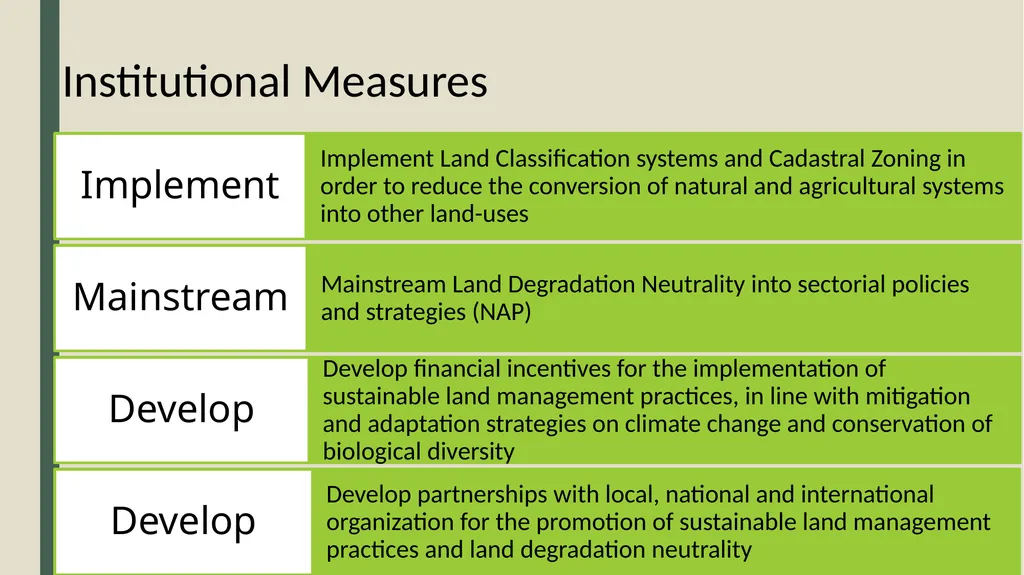
Institutional Measures 18<br>
19
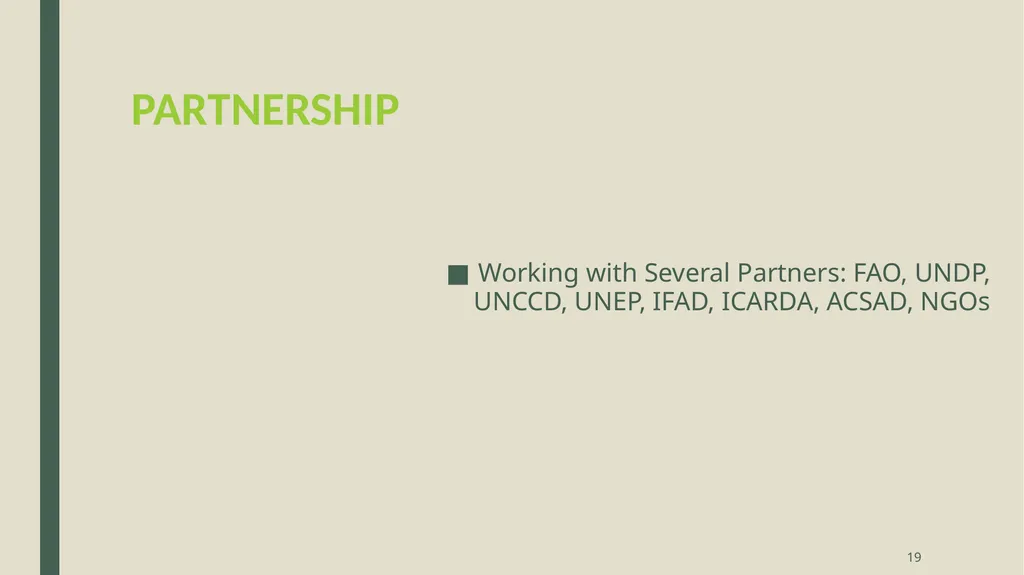
PARTNERSHIP Working with Several Partners: FAO, UNDP, UNCCD, UNEP, IFAD, ICARDA, ACSAD, NGOs 19<br>
20
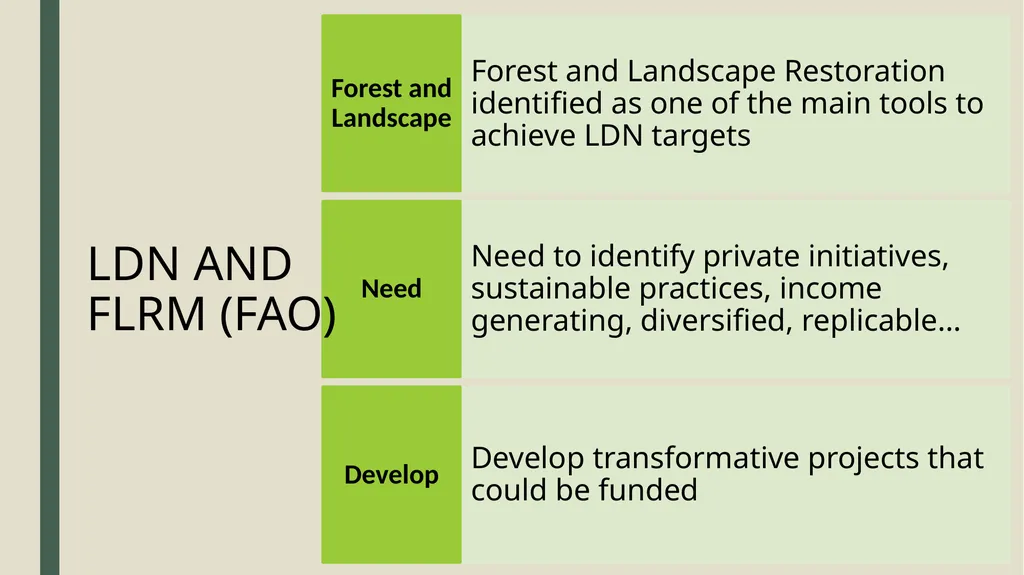
LDN AND FLRM (FAO)<br>
21
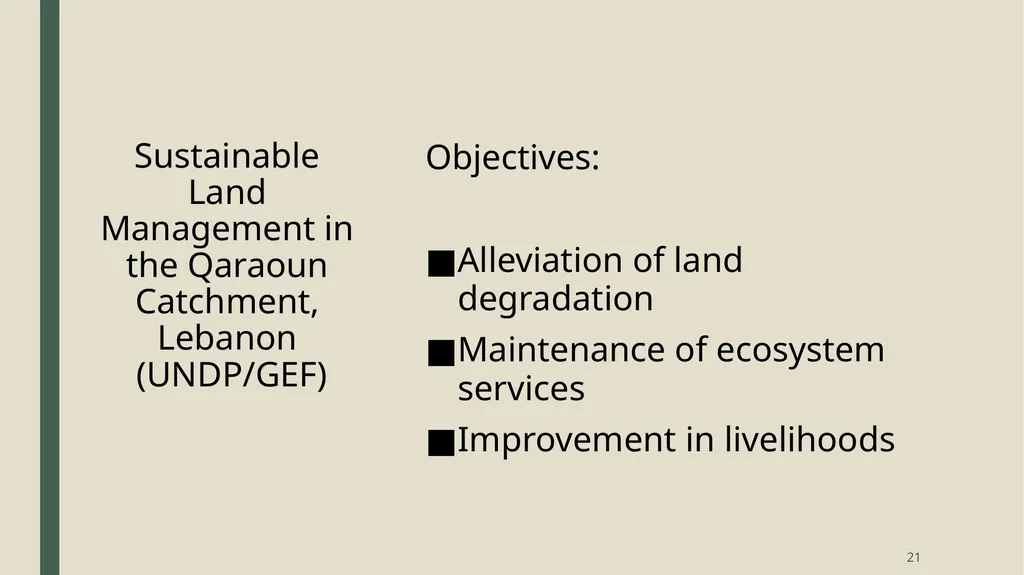
Sustainable Land Management in the Qaraoun Catchment, Lebanon (UNDP/GEF) Objectives:
Alleviation of land degradation
Maintenance of ecosystem services
Improvement in livelihoods 21<br>
22
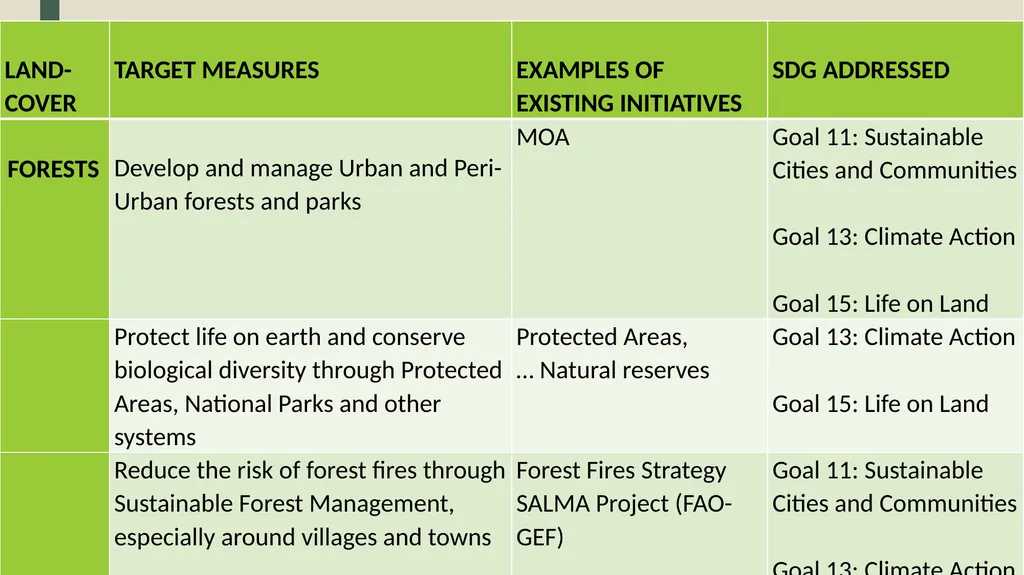
URBAN and PERI-URBAN FORESTS and TREES Several projects are addressing the forestry sector
Urban and peri-urban forests and trees play a major role in the livelihood systems
They could play a major role in the prevention of disasters
They could also increase the risk of certain disasters (mismanagement increases risk of forest fires) 22<br>