
Internal and Governmental Financial Auditing and
Description: Internal and Governmental Financial Auditing and Operational Auditing Chapter 25 Learning Objective 1 Explain the role of internal auditors in financial auditing. Internal Auditing It is an independent, objective assurance and consulting
Related Topics
Download Presentation
"Internal and Governmental Financial Auditing and" is the property of its rightful owner. Permission is granted to download and print the materials on this website for personal, non-commercial use only, and to display it on your personal computer provided you do not modify the materials and that you retain all copyright notices contained in the materials. By downloading content from our website, you accept the terms of this agreement.
Presentation Transcript
slide1. Internal and Governmental
Financial Auditing and
Operational Auditing Chapter 25<br>
slide2. Learning Objective 1 Explain the role of internal
auditors in financial auditing.<br>
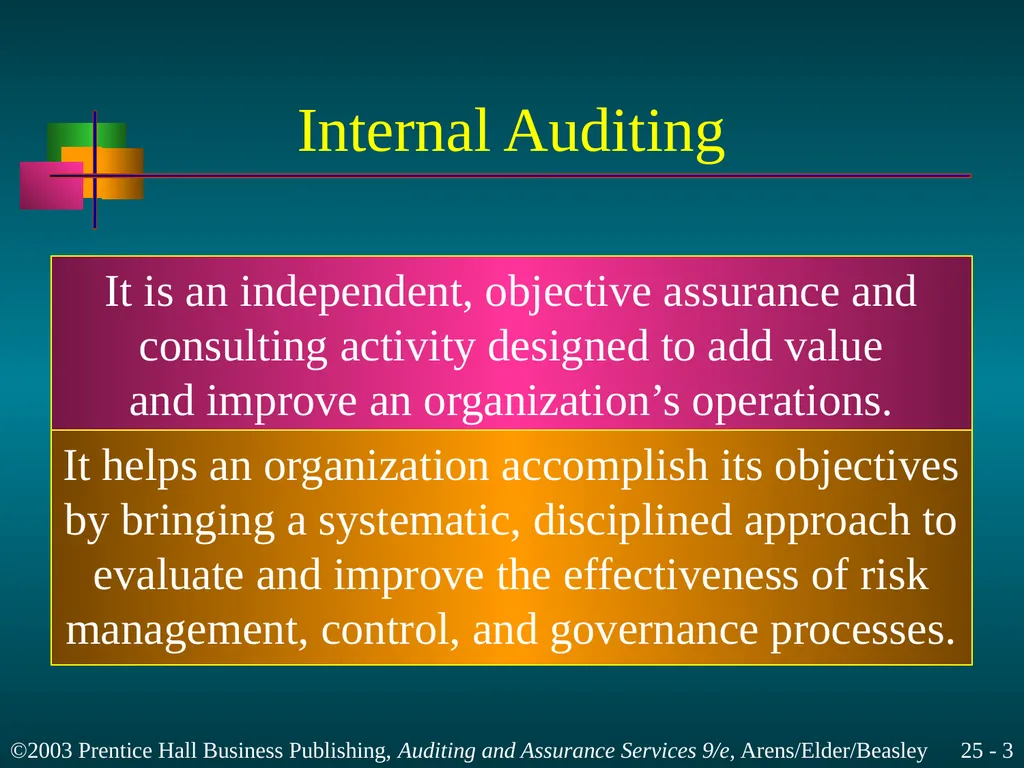
slide3. Internal Auditing It is an independent, objective assurance and
consulting activity designed to add value
and improve an organization’s operations. It helps an organization accomplish its objectives
by bringing a systematic, disciplined approach to
evaluate and improve the effectiveness of risk
management, control, and governance processes.<br>
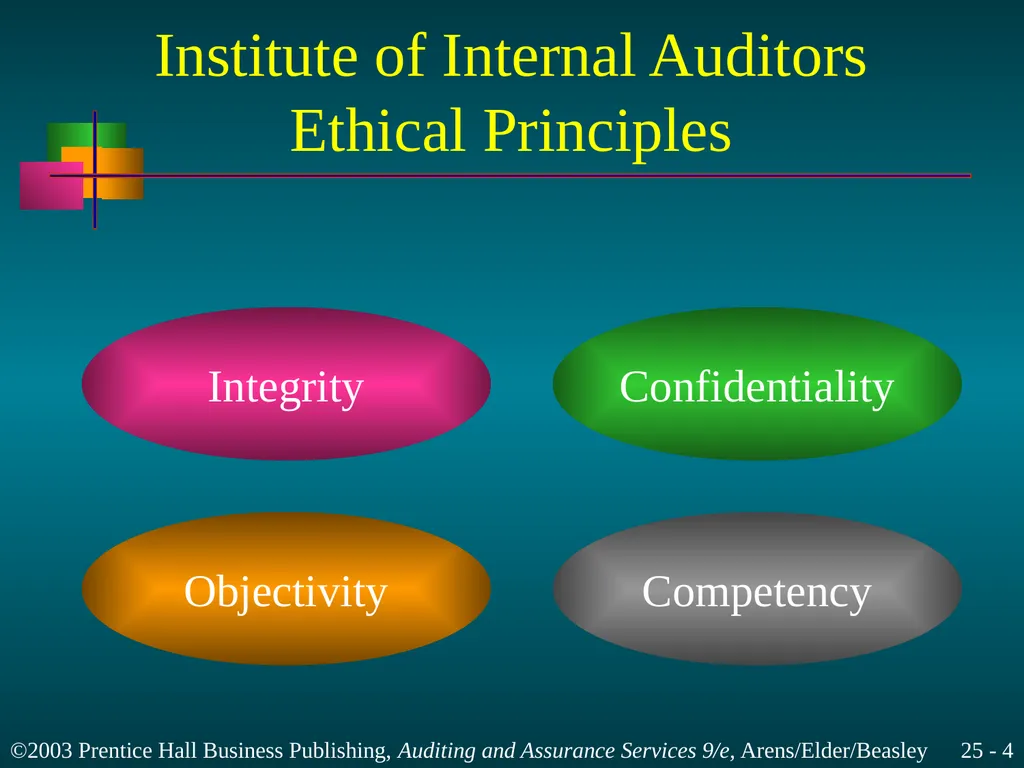
slide4. Institute of Internal Auditors Ethical Principles Integrity Objectivity Confidentiality Competency<br>
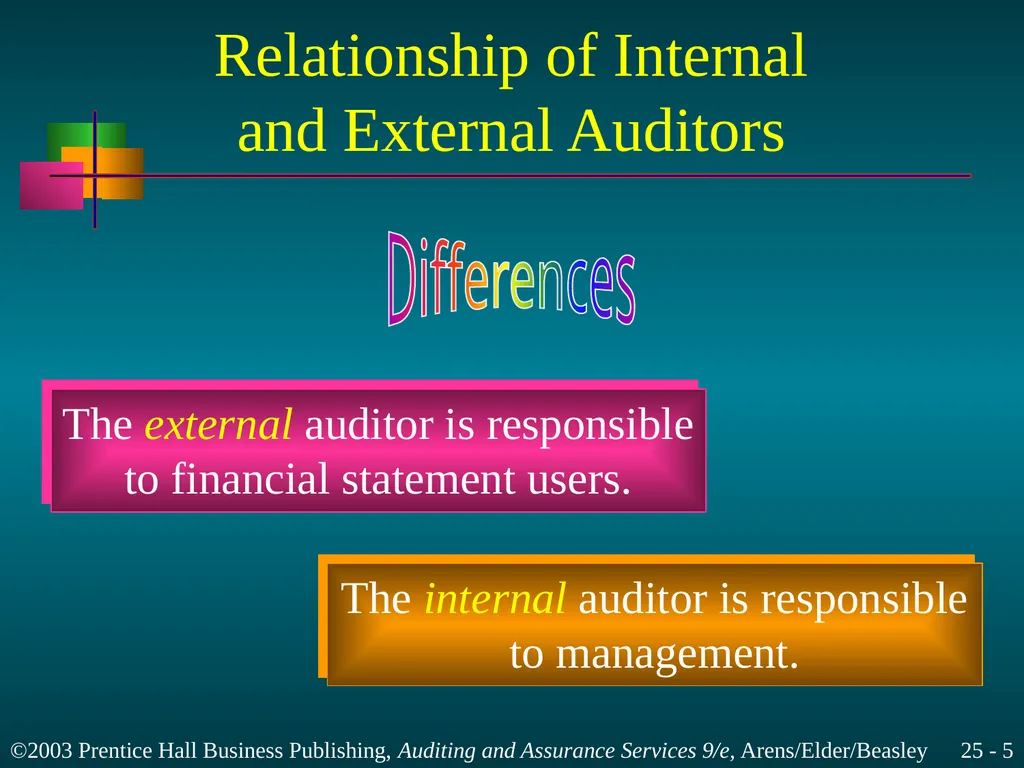
slide5. Relationship of Internal and External Auditors The external auditor is responsible
to financial statement users. The internal auditor is responsible
to management. Differences<br>
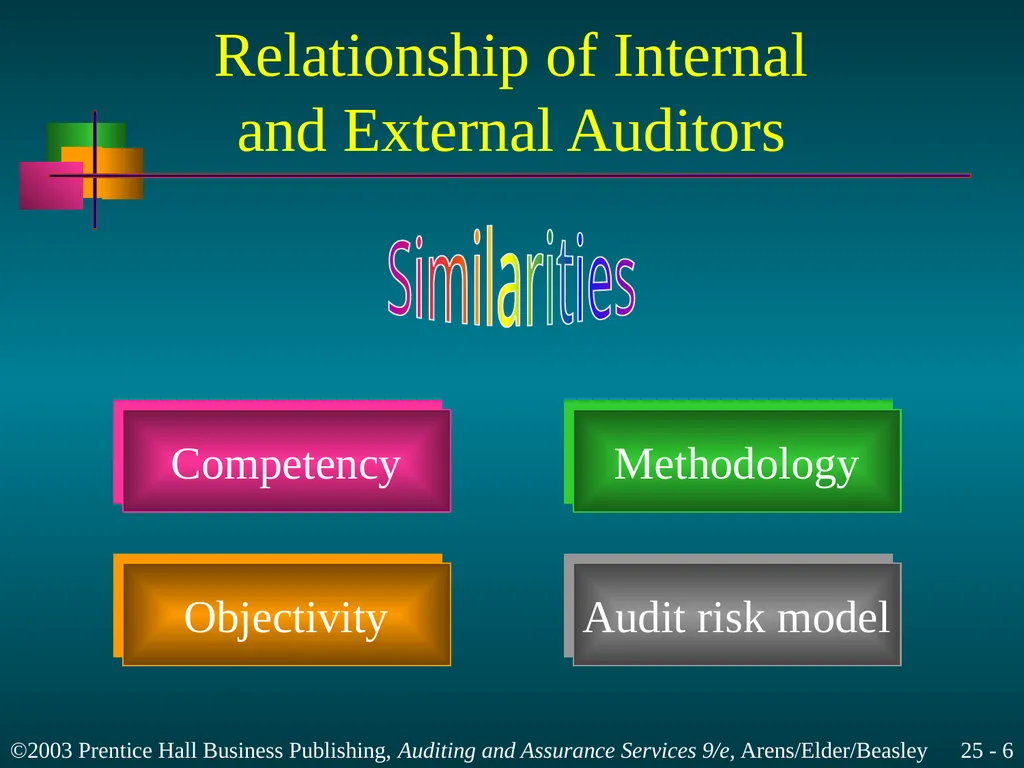
slide6. Relationship of Internal and External Auditors Competency Objectivity Methodology Audit risk model Similarities<br>
slide7. Learning Objective 2 Describe the auditing and reporting
requirements under Government
Auditing Standards and
the Single Audit Act.<br>
slide8. Governmental Financial Auditing The primary source of authoritative literature
for performance of government audits is
Government Auditing Standards,
which is issued by the GAO. Because of the color of the cover, it is
usually referred to as the “Yellow Book.”<br>
slide9. Governmental Financial Auditing The Yellow Book standards are often called
generally accepted government auditing
standards (GAGAS or GAS).<br>
slide10. Financial Audit and Reporting Requirements – Yellow Book Materiality and significance
Quality control
Compliance auditing
Reporting
Working papers<br>
slide11. Audit and Reporting – Single Audit Act and OMB Circular A-133 The threshold for requiring
a single audit was raised
from $100,000 to $300,000
to exempt many smaller
entities from single
audit requirements.<br>
slide12. Audit and Reporting – Single Audit Act and OMB Circular A-133 A risk-based approach is to be used in
selecting programs for testing. Statutory coverage of the single audit was
extended to not-for-profit organizations
as well as to state and local governments.<br>
slide13. Audit Requirements The audit should be in accordance with generally
accepted government auditing standards (GAGAS). The auditor must obtain an understanding of internal
control over federal programs sufficient to support a
low assessed level of control risk for major programs.<br>
slide14. Audit Requirements The auditor should determine whether the client
had complied with laws, regulations, and the
provisions of contracts or grant agreements
that may have a direct and material effect
on each of its major programs.<br>
slide15. Reporting Requirements an opinion on whether the financial statements
are in accordance with GAAP, and an opinion
as to whether the schedule of federal awards
is presented fairly in all material respects in
relation to the financial statements as a whole<br>
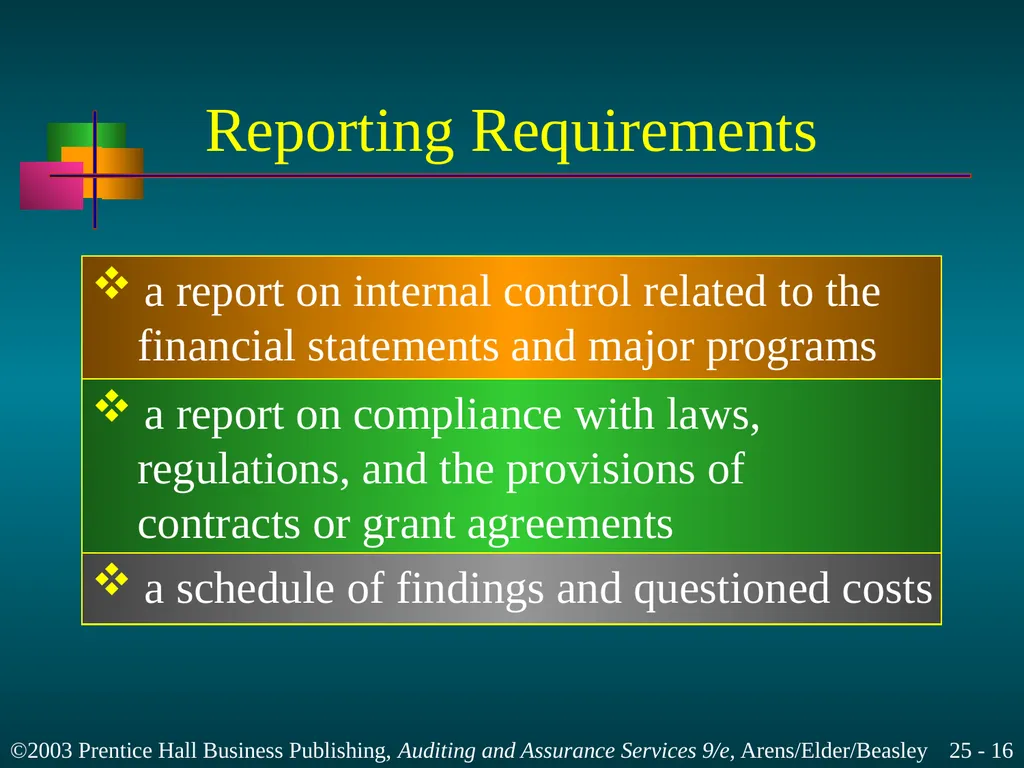
slide16. Reporting Requirements a report on internal control related to the
financial statements and major programs a report on compliance with laws,
regulations, and the provisions of
contracts or grant agreements a schedule of findings and questioned costs<br>
slide17. Operational Auditing The purpose of operational auditing is to
determine the efficiency and effectiveness
of any part of an organization.<br>
slide18. Learning Objective 3 Distinguish operational auditing
from financial auditing.<br>
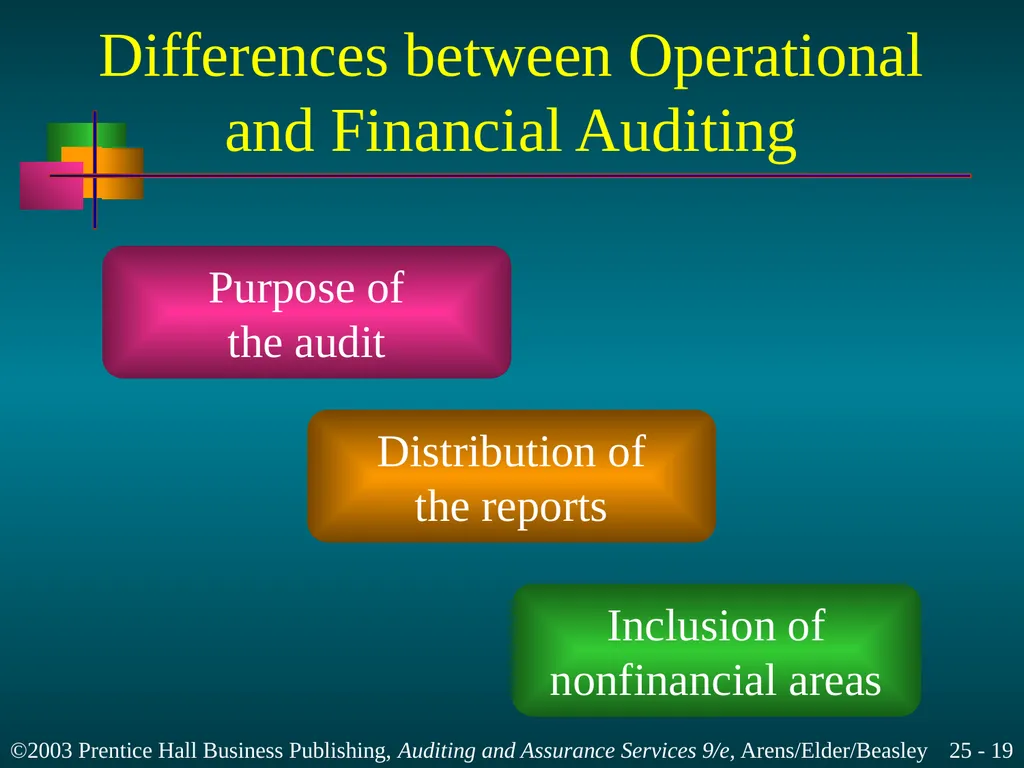
slide19. Differences between Operational and Financial Auditing Distribution of
the reports Inclusion of
nonfinancial areas Purpose of
the audit<br>
slide20. Learning Objective 4 Provide an overview of
operational audits.<br>
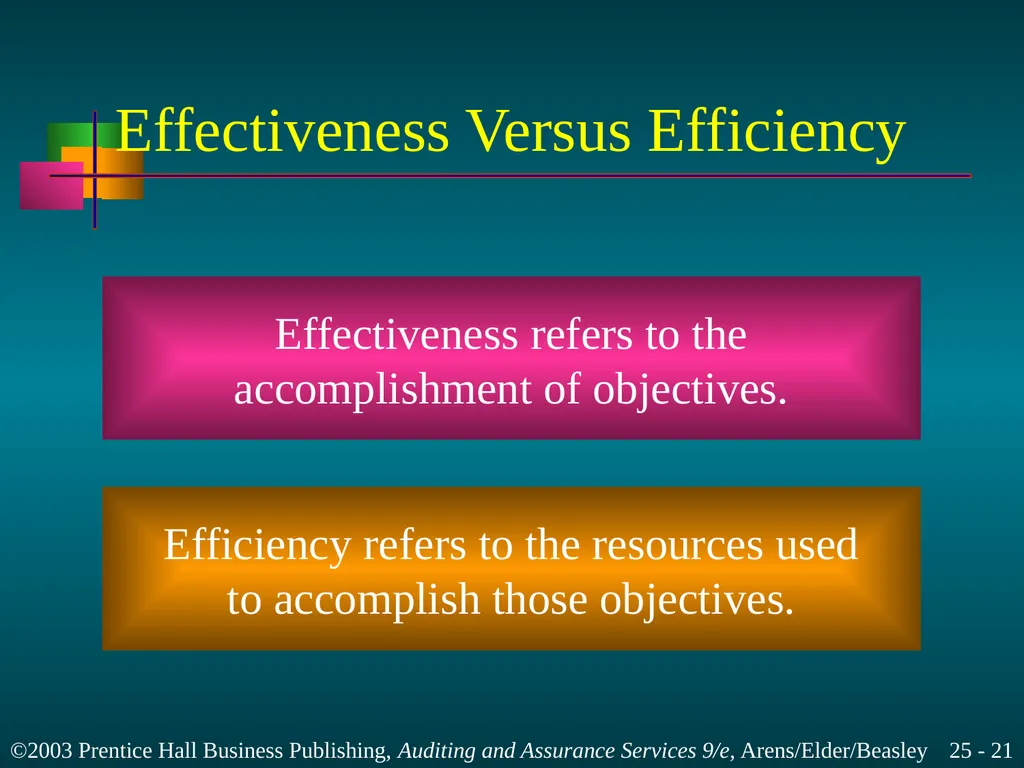
slide21. Effectiveness refers to the
accomplishment of objectives. Efficiency refers to the resources used
to accomplish those objectives. Effectiveness Versus Efficiency<br>
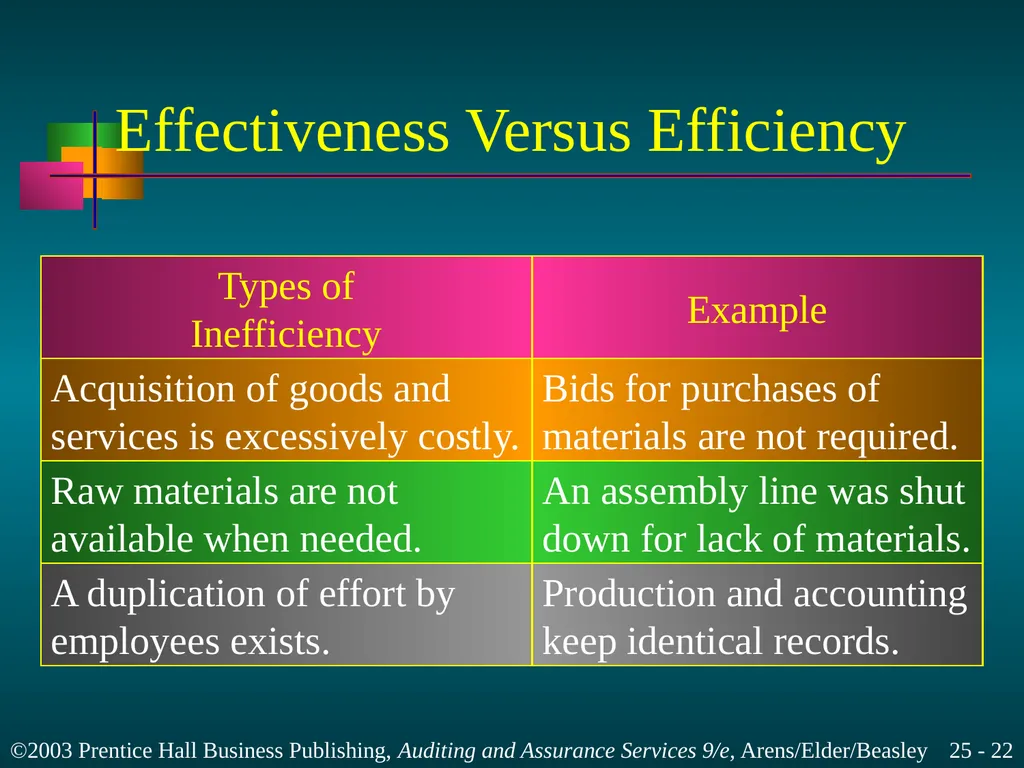
slide22. Types of
Inefficiency Example Acquisition of goods and
services is excessively costly. Raw materials are not
available when needed. A duplication of effort by
employees exists. Bids for purchases of
materials are not required. An assembly line was shut
down for lack of materials. Production and accounting
keep identical records. Effectiveness Versus Efficiency<br>
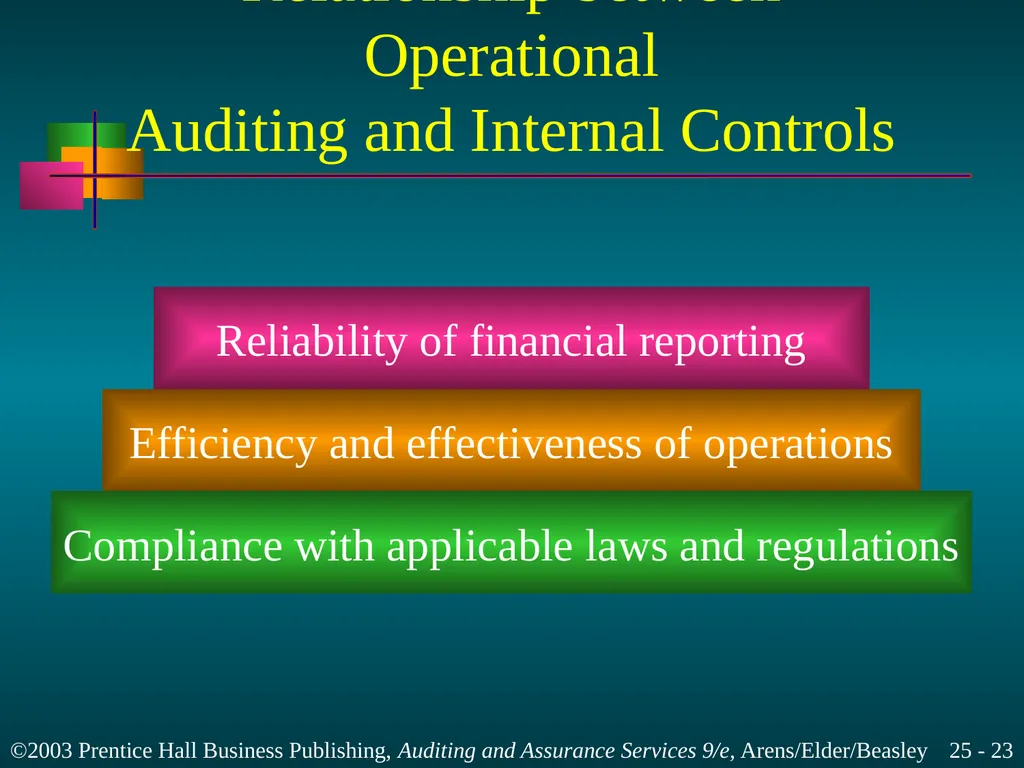
slide23. Relationship between Operational Auditing and Internal Controls Reliability of financial reporting Efficiency and effectiveness of operations Compliance with applicable laws and regulations<br>
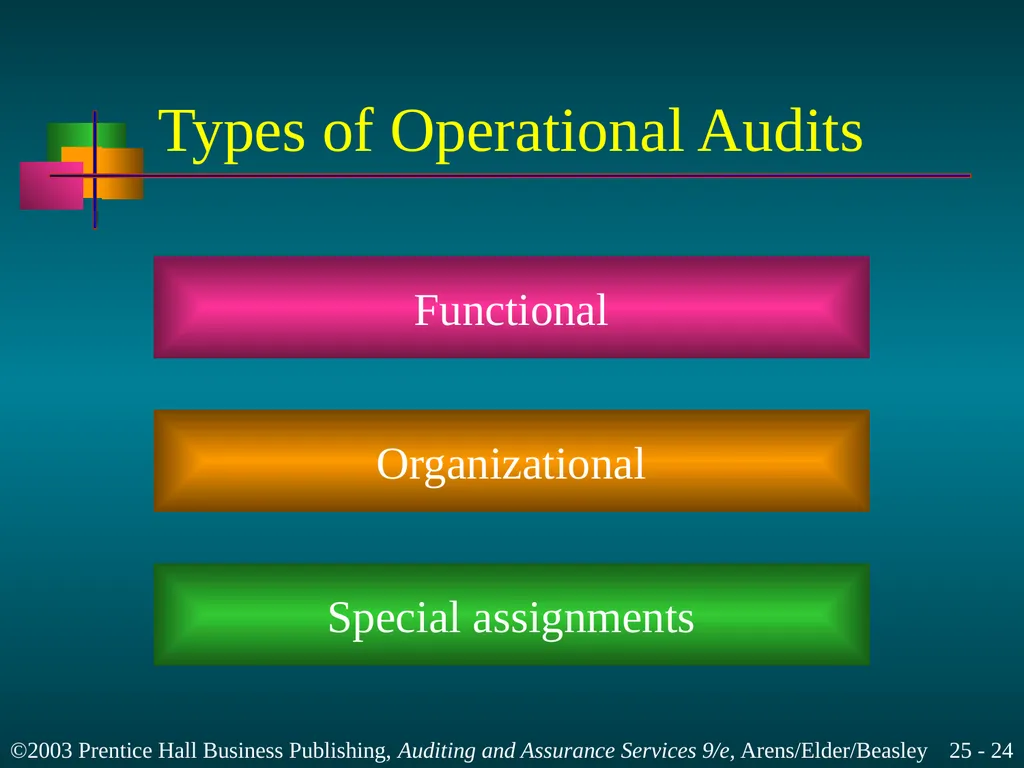
slide24. Types of Operational Audits Functional Organizational Special assignments<br>
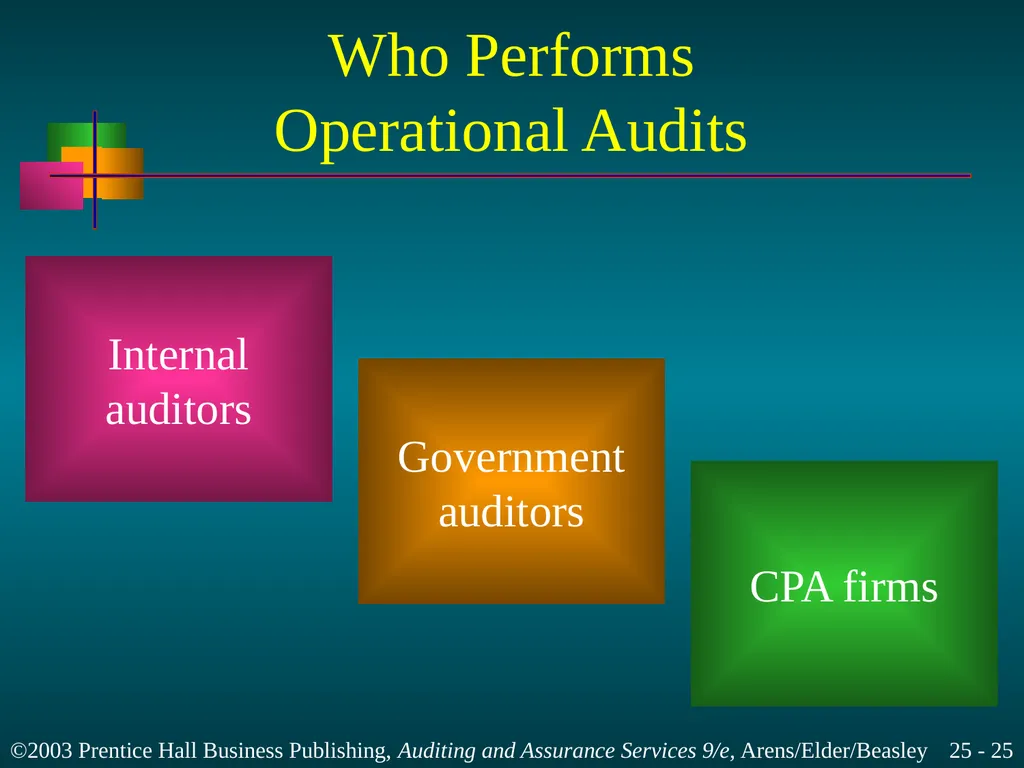
slide25. CPA firms Government
auditors Internal
auditors Who Performs Operational Audits<br>
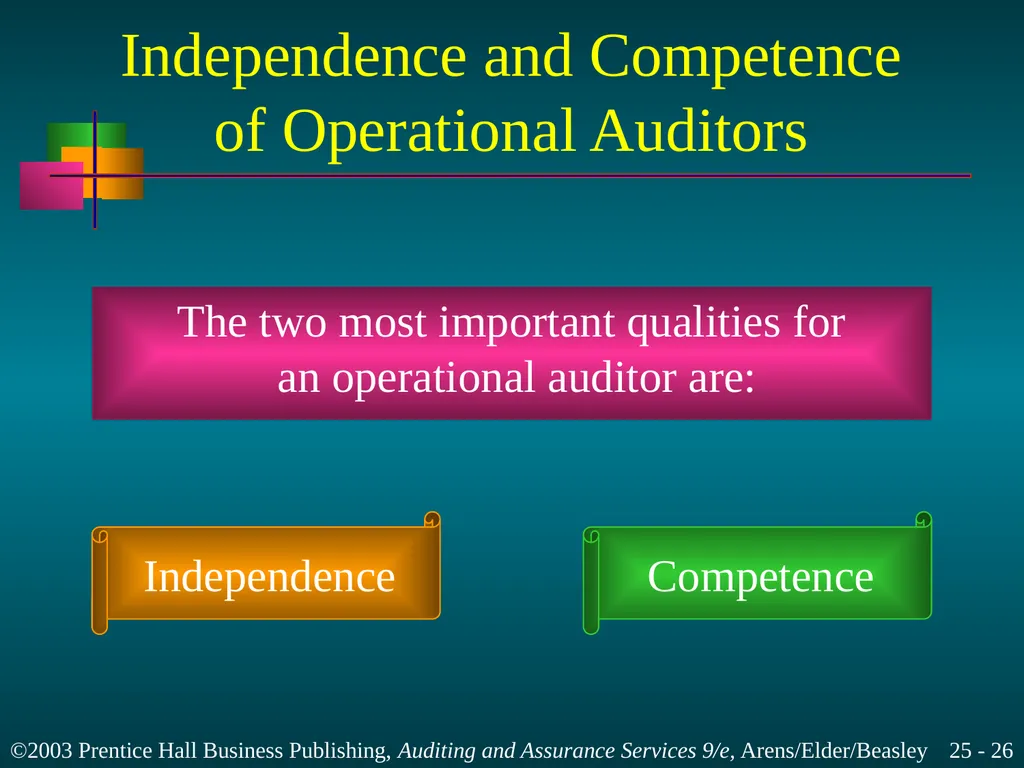
slide26. The two most important qualities for
an operational auditor are: Independence and Competence of Operational Auditors Independence Competence<br>
slide27. Learning Objective 5 Plan and perform an
operational audit.<br>
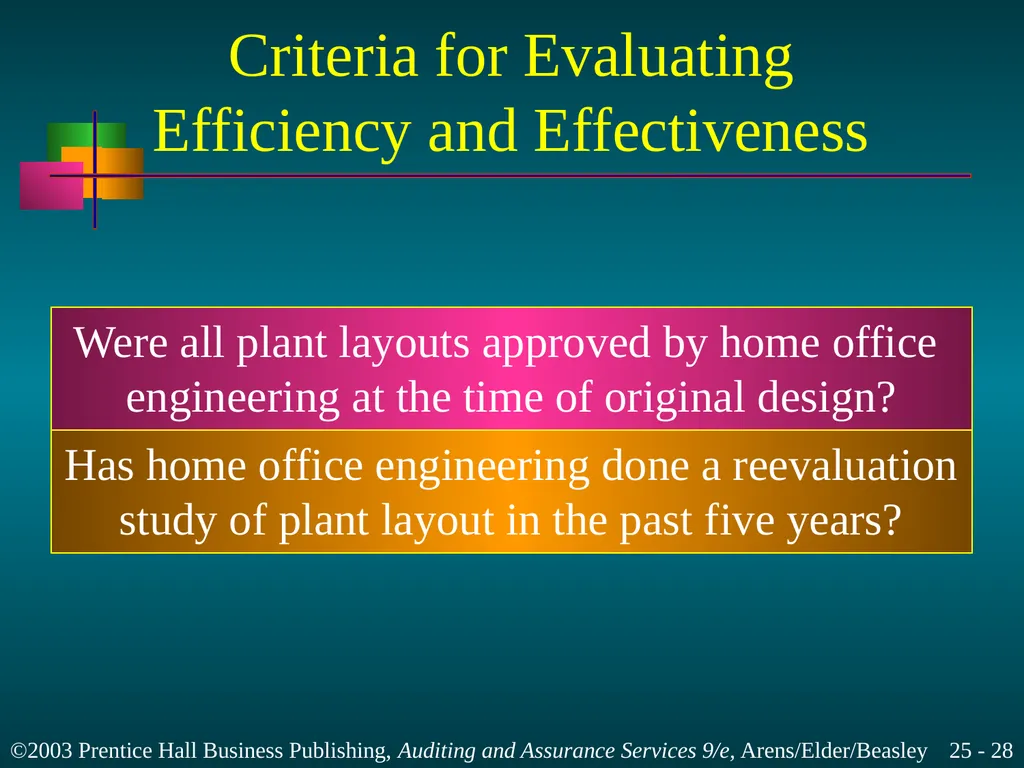
slide28. Criteria for Evaluating Efficiency and Effectiveness Were all plant layouts approved by home office
engineering at the time of original design? Has home office engineering done a reevaluation
study of plant layout in the past five years?<br>
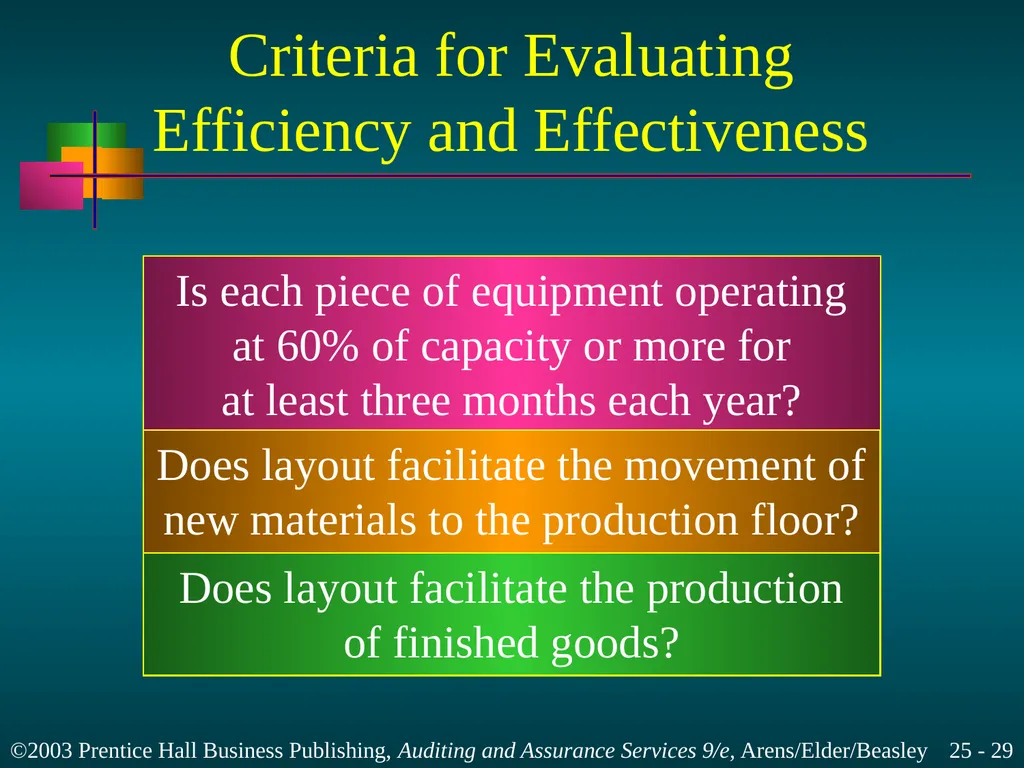
slide29. Criteria for Evaluating Efficiency and Effectiveness Is each piece of equipment operating
at 60% of capacity or more for
at least three months each year? Does layout facilitate the movement of
new materials to the production floor? Does layout facilitate the production
of finished goods?<br>
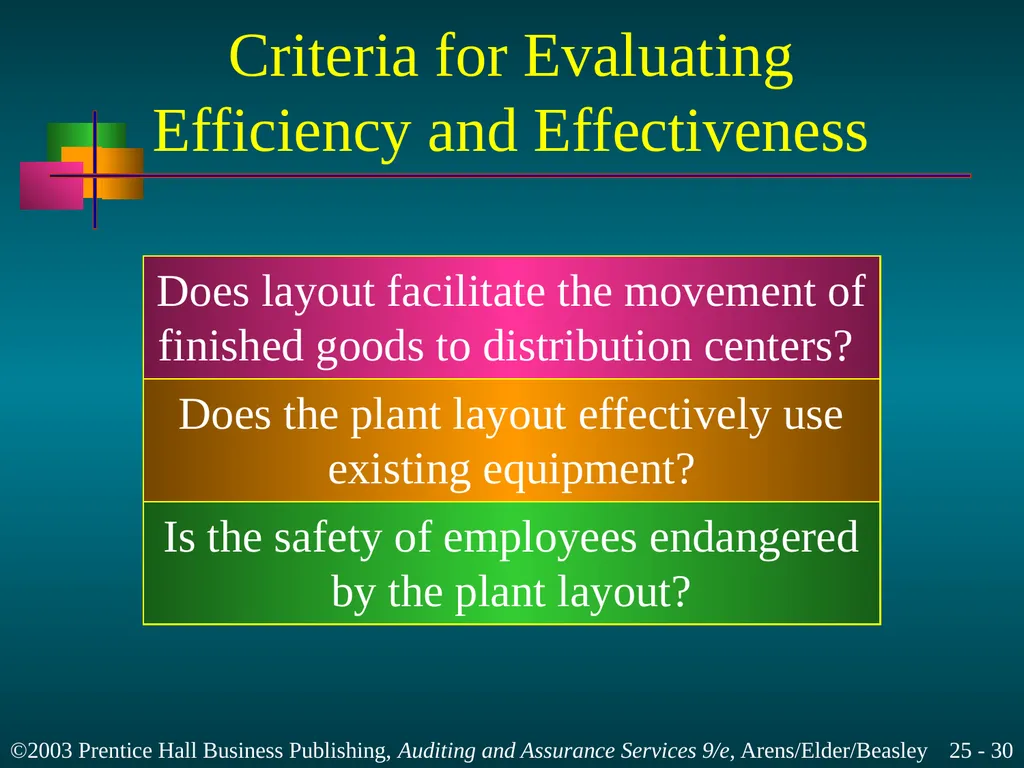
slide30. Criteria for Evaluating Efficiency and Effectiveness Does layout facilitate the movement of
finished goods to distribution centers? Does the plant layout effectively use
existing equipment? Is the safety of employees endangered
by the plant layout?<br>
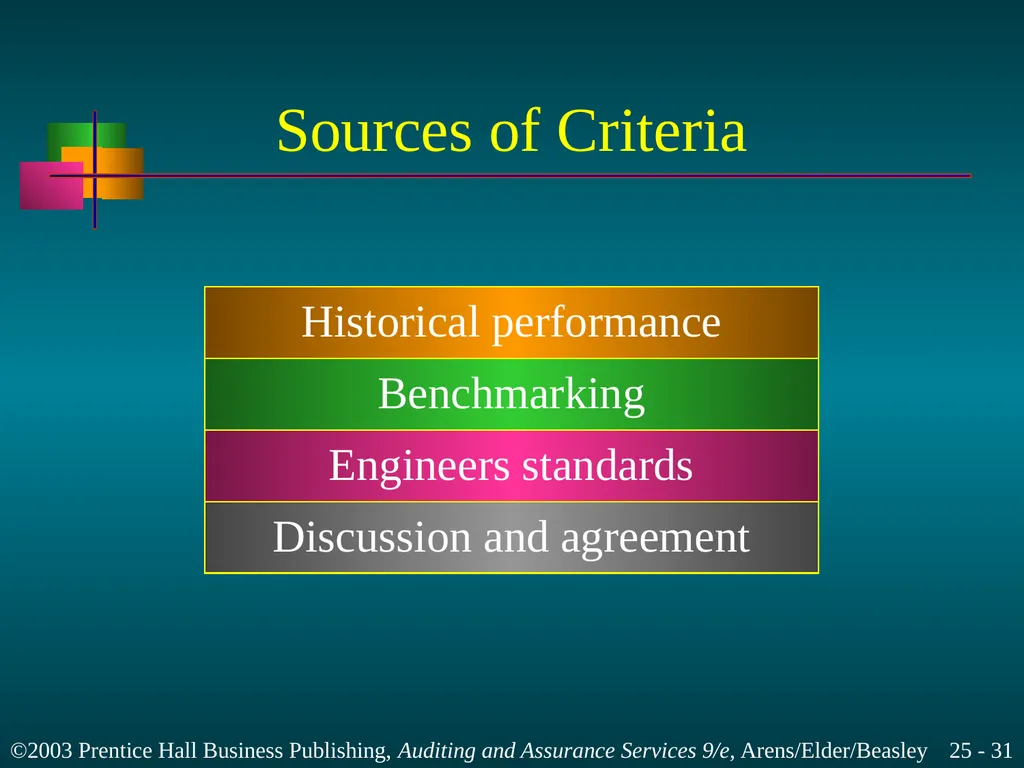
slide31. Sources of Criteria Historical performance Benchmarking Engineers standards Discussion and agreement<br>
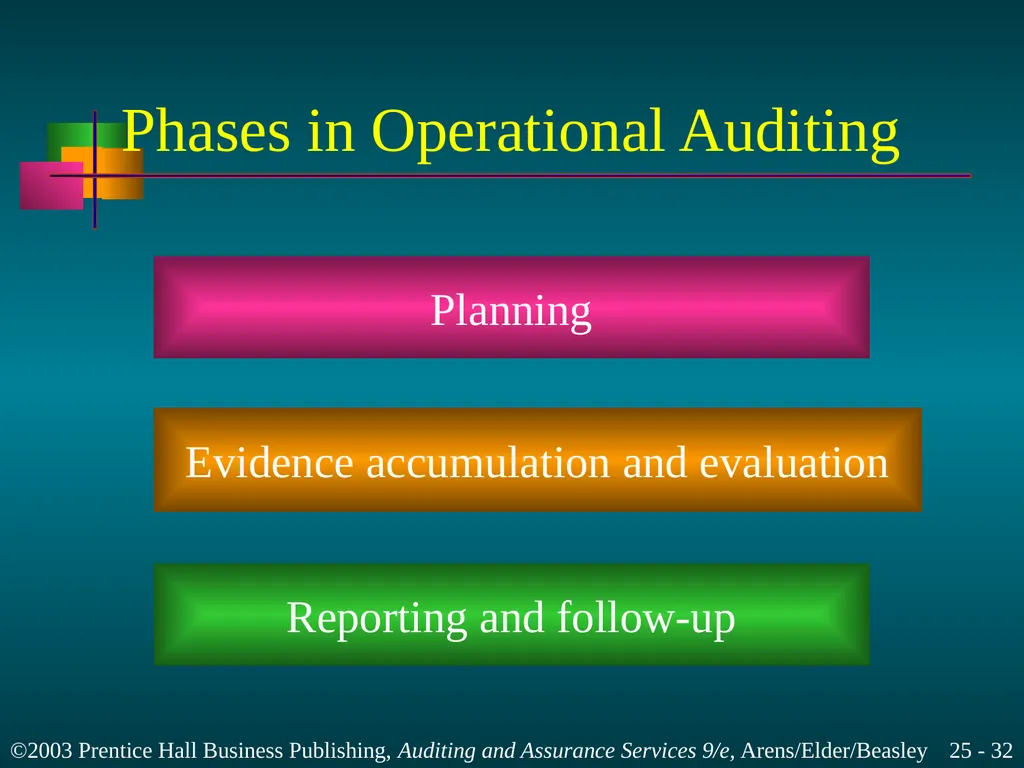
slide32. Phases in Operational Auditing Planning Evidence accumulation and evaluation Reporting and follow-up<br>
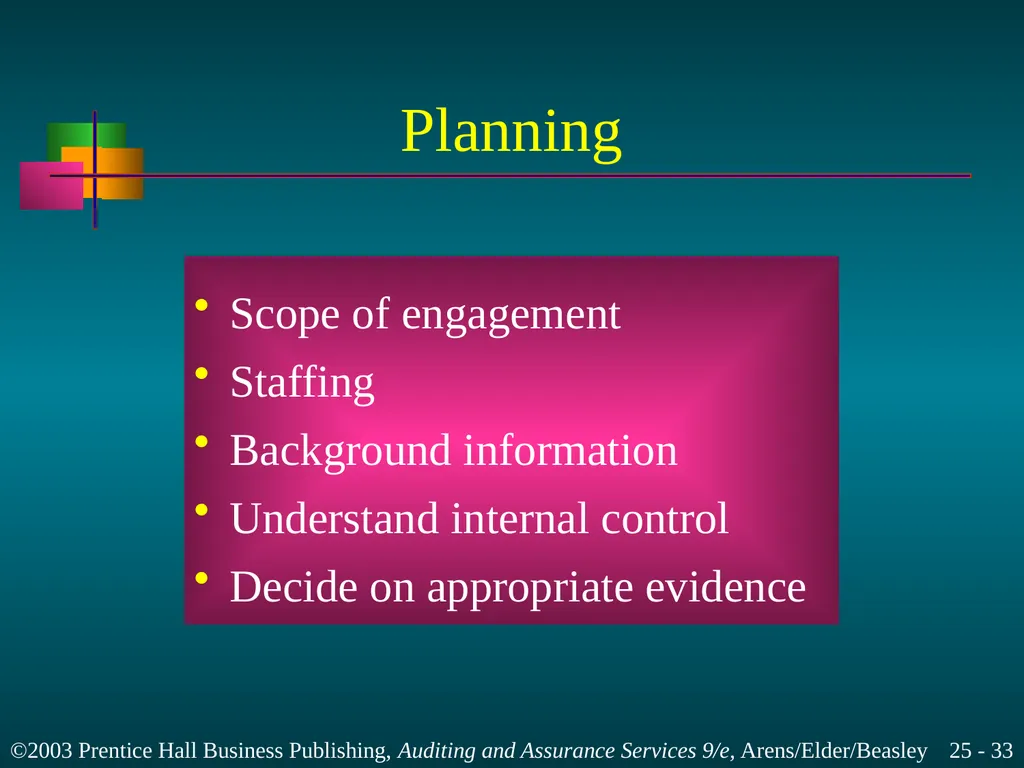
slide33. Planning Scope of engagement
Staffing
Background information
Understand internal control
Decide on appropriate evidence<br>
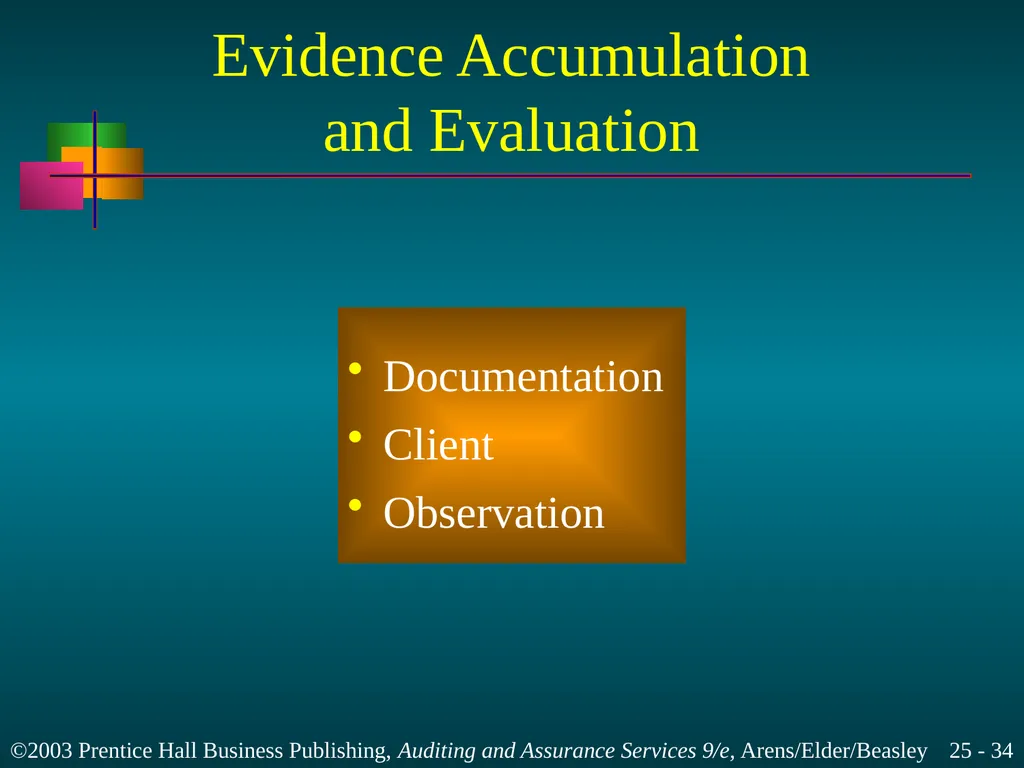
slide34. Evidence Accumulation and Evaluation Documentation
Client
Observation<br>
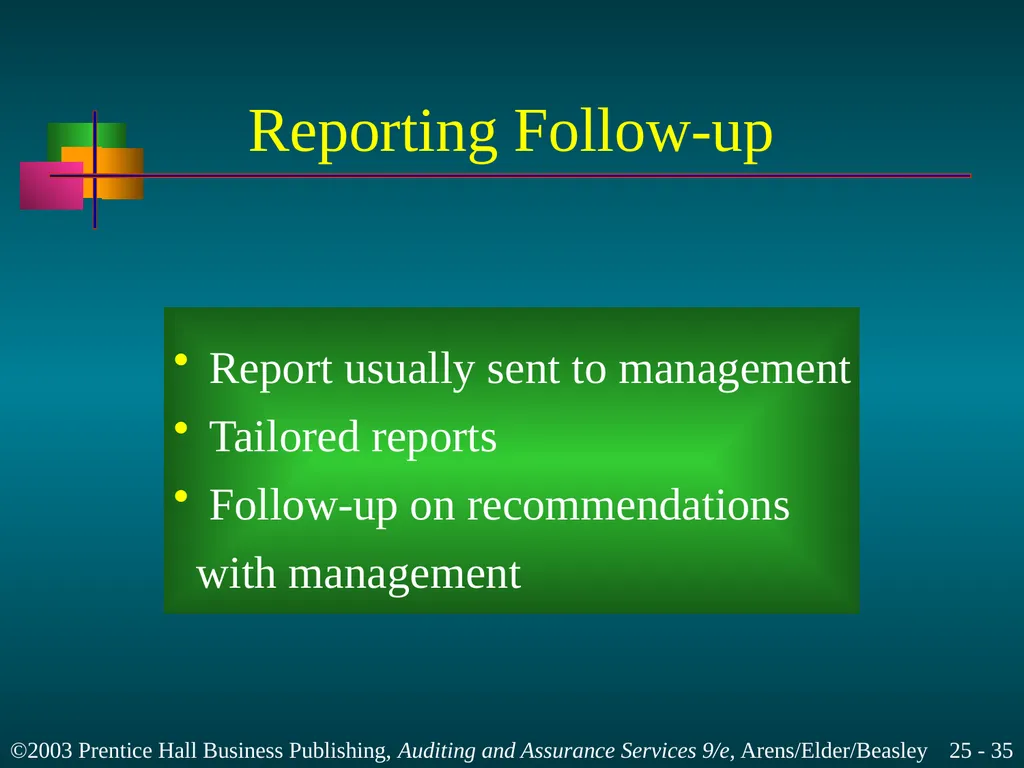
slide35. Reporting Follow-up Report usually sent to management
Tailored reports
Follow-up on recommendations
with management<br>
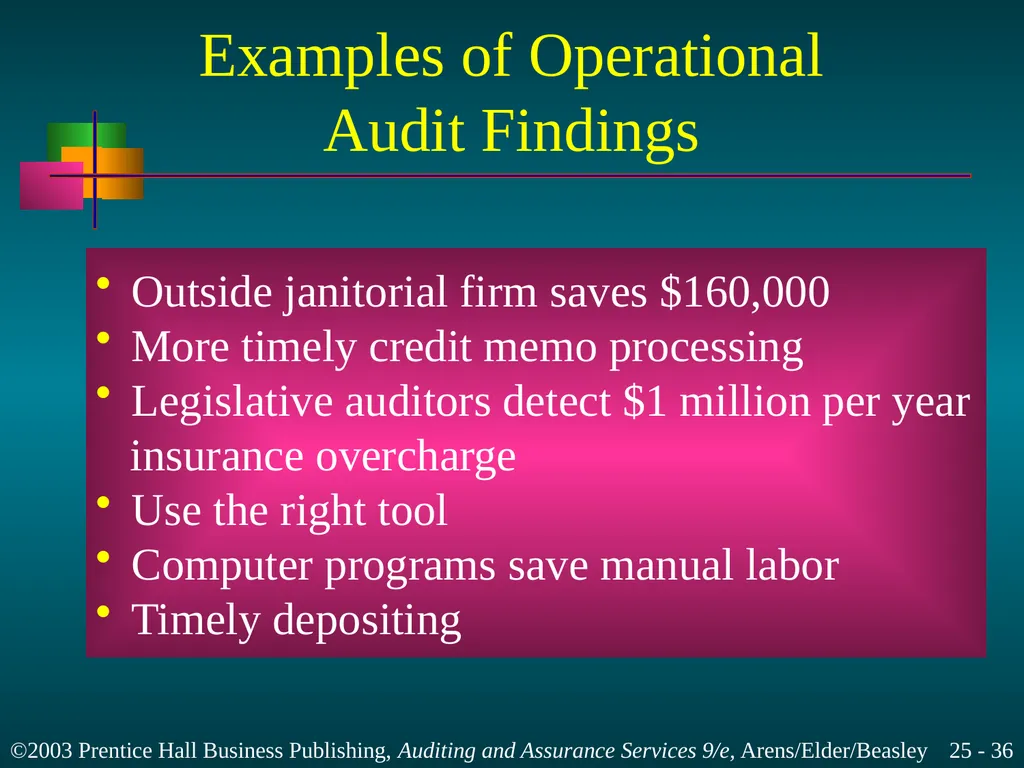
slide36. Examples of Operational Audit Findings Outside janitorial firm saves $160,000
More timely credit memo processing
Legislative auditors detect $1 million per year
insurance overcharge
Use the right tool
Computer programs save manual labor
Timely depositing<br>
slide37. End of Chapter 25<br>
slide2. Learning Objective 1 Explain the role of internal
auditors in financial auditing.<br>
slide3. Internal Auditing It is an independent, objective assurance and
consulting activity designed to add value
and improve an organization’s operations. It helps an organization accomplish its objectives
by bringing a systematic, disciplined approach to
evaluate and improve the effectiveness of risk
management, control, and governance processes.<br>
slide4. Institute of Internal Auditors Ethical Principles Integrity Objectivity Confidentiality Competency<br>
slide5. Relationship of Internal and External Auditors The external auditor is responsible
to financial statement users. The internal auditor is responsible
to management. Differences<br>
slide6. Relationship of Internal and External Auditors Competency Objectivity Methodology Audit risk model Similarities<br>
slide7. Learning Objective 2 Describe the auditing and reporting
requirements under Government
Auditing Standards and
the Single Audit Act.<br>
slide8. Governmental Financial Auditing The primary source of authoritative literature
for performance of government audits is
Government Auditing Standards,
which is issued by the GAO. Because of the color of the cover, it is
usually referred to as the “Yellow Book.”<br>
slide9. Governmental Financial Auditing The Yellow Book standards are often called
generally accepted government auditing
standards (GAGAS or GAS).<br>
slide10. Financial Audit and Reporting Requirements – Yellow Book Materiality and significance
Quality control
Compliance auditing
Reporting
Working papers<br>
slide11. Audit and Reporting – Single Audit Act and OMB Circular A-133 The threshold for requiring
a single audit was raised
from $100,000 to $300,000
to exempt many smaller
entities from single
audit requirements.<br>
slide12. Audit and Reporting – Single Audit Act and OMB Circular A-133 A risk-based approach is to be used in
selecting programs for testing. Statutory coverage of the single audit was
extended to not-for-profit organizations
as well as to state and local governments.<br>
slide13. Audit Requirements The audit should be in accordance with generally
accepted government auditing standards (GAGAS). The auditor must obtain an understanding of internal
control over federal programs sufficient to support a
low assessed level of control risk for major programs.<br>
slide14. Audit Requirements The auditor should determine whether the client
had complied with laws, regulations, and the
provisions of contracts or grant agreements
that may have a direct and material effect
on each of its major programs.<br>
slide15. Reporting Requirements an opinion on whether the financial statements
are in accordance with GAAP, and an opinion
as to whether the schedule of federal awards
is presented fairly in all material respects in
relation to the financial statements as a whole<br>
slide16. Reporting Requirements a report on internal control related to the
financial statements and major programs a report on compliance with laws,
regulations, and the provisions of
contracts or grant agreements a schedule of findings and questioned costs<br>
slide17. Operational Auditing The purpose of operational auditing is to
determine the efficiency and effectiveness
of any part of an organization.<br>
slide18. Learning Objective 3 Distinguish operational auditing
from financial auditing.<br>
slide19. Differences between Operational and Financial Auditing Distribution of
the reports Inclusion of
nonfinancial areas Purpose of
the audit<br>
slide20. Learning Objective 4 Provide an overview of
operational audits.<br>
slide21. Effectiveness refers to the
accomplishment of objectives. Efficiency refers to the resources used
to accomplish those objectives. Effectiveness Versus Efficiency<br>
slide22. Types of
Inefficiency Example Acquisition of goods and
services is excessively costly. Raw materials are not
available when needed. A duplication of effort by
employees exists. Bids for purchases of
materials are not required. An assembly line was shut
down for lack of materials. Production and accounting
keep identical records. Effectiveness Versus Efficiency<br>
slide23. Relationship between Operational Auditing and Internal Controls Reliability of financial reporting Efficiency and effectiveness of operations Compliance with applicable laws and regulations<br>
slide24. Types of Operational Audits Functional Organizational Special assignments<br>
slide25. CPA firms Government
auditors Internal
auditors Who Performs Operational Audits<br>
slide26. The two most important qualities for
an operational auditor are: Independence and Competence of Operational Auditors Independence Competence<br>
slide27. Learning Objective 5 Plan and perform an
operational audit.<br>
slide28. Criteria for Evaluating Efficiency and Effectiveness Were all plant layouts approved by home office
engineering at the time of original design? Has home office engineering done a reevaluation
study of plant layout in the past five years?<br>
slide29. Criteria for Evaluating Efficiency and Effectiveness Is each piece of equipment operating
at 60% of capacity or more for
at least three months each year? Does layout facilitate the movement of
new materials to the production floor? Does layout facilitate the production
of finished goods?<br>
slide30. Criteria for Evaluating Efficiency and Effectiveness Does layout facilitate the movement of
finished goods to distribution centers? Does the plant layout effectively use
existing equipment? Is the safety of employees endangered
by the plant layout?<br>
slide31. Sources of Criteria Historical performance Benchmarking Engineers standards Discussion and agreement<br>
slide32. Phases in Operational Auditing Planning Evidence accumulation and evaluation Reporting and follow-up<br>
slide33. Planning Scope of engagement
Staffing
Background information
Understand internal control
Decide on appropriate evidence<br>
slide34. Evidence Accumulation and Evaluation Documentation
Client
Observation<br>
slide35. Reporting Follow-up Report usually sent to management
Tailored reports
Follow-up on recommendations
with management<br>
slide36. Examples of Operational Audit Findings Outside janitorial firm saves $160,000
More timely credit memo processing
Legislative auditors detect $1 million per year
insurance overcharge
Use the right tool
Computer programs save manual labor
Timely depositing<br>
slide37. End of Chapter 25<br>