Introduction: a public health perspective on asbestos-related diseases Dr Matthew Soeberg, Epidemiologist, Asbestos Diseases Research Institute 10 July 2019 Four key concepts Asbestos exposure and cancer Asbestos-related diseases Latency
"Introduction: a public health perspective on" is the property of its rightful owner. Permission is granted to
download and print the materials on this website for personal, non-commercial use only, and to display it
on your personal computer provided you do not modify the materials and that you retain all copyright
notices contained in the materials. By downloading content from our website, you accept the terms of this
agreement.
Presentation Transcript
01
Introduction: a public health perspective on asbestos-related diseases Dr Matthew Soeberg, Epidemiologist, Asbestos Diseases Research Institute
10 July 2019<br>
02
Four key concepts Asbestos exposure and cancer
Asbestos-related diseases
Latency period between exposure and disease
Descriptive epidemiology of asbestos-related disease<br>
03
Asbestos exposure and cancer<br>
04
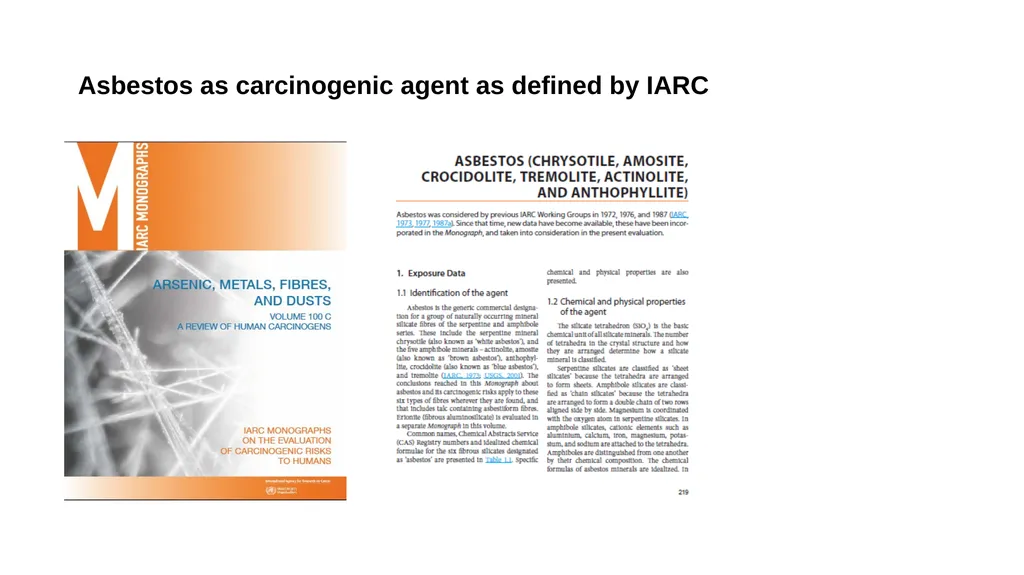
Asbestos as carcinogenic agent as defined by IARC<br>
05
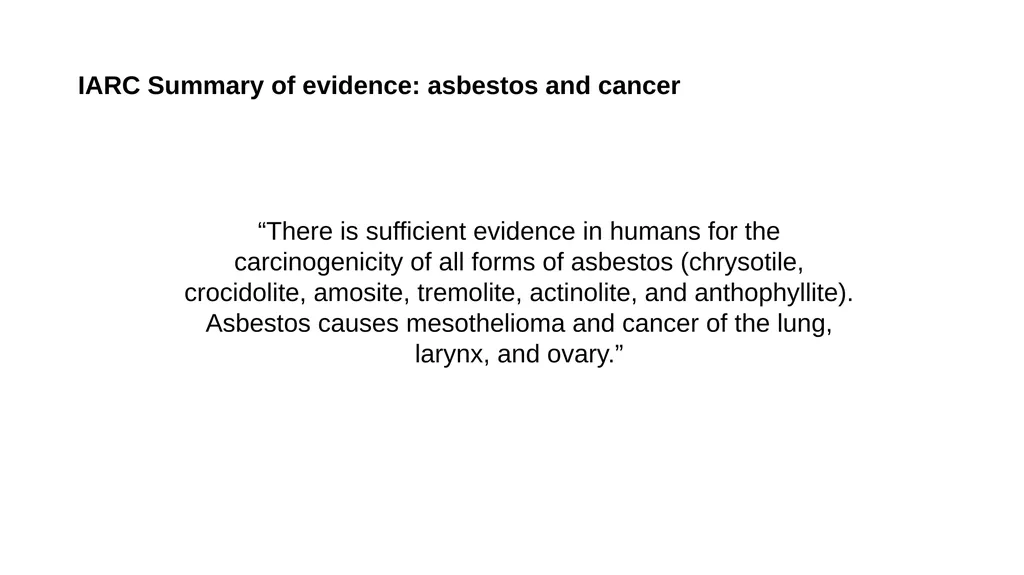
IARC Summary of evidence: asbestos and cancer “There is sufficient evidence in humans for the carcinogenicity of all forms of asbestos (chrysotile, crocidolite, amosite, tremolite, actinolite, and anthophyllite). Asbestos causes mesothelioma and cancer of the lung, larynx, and ovary.”<br>
06
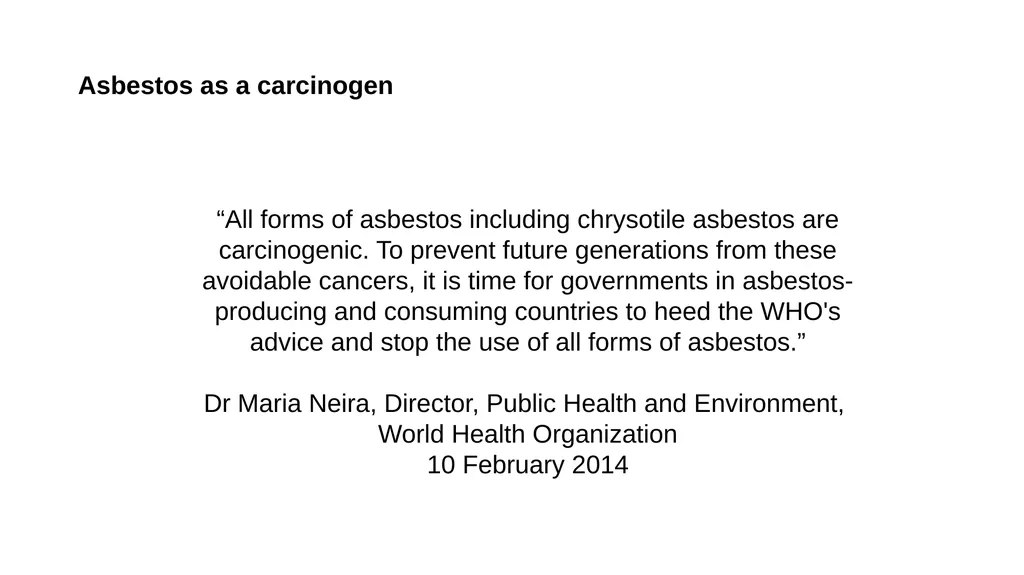
Asbestos as a carcinogen “All forms of asbestos including chrysotile asbestos are carcinogenic. To prevent future generations from these avoidable cancers, it is time for governments in asbestos-producing and consuming countries to heed the WHO's advice and stop the use of all forms of asbestos.”
Dr Maria Neira, Director, Public Health and Environment,
World Health Organization
10 February 2014<br>
07
Asbestos-related diseases<br>
08
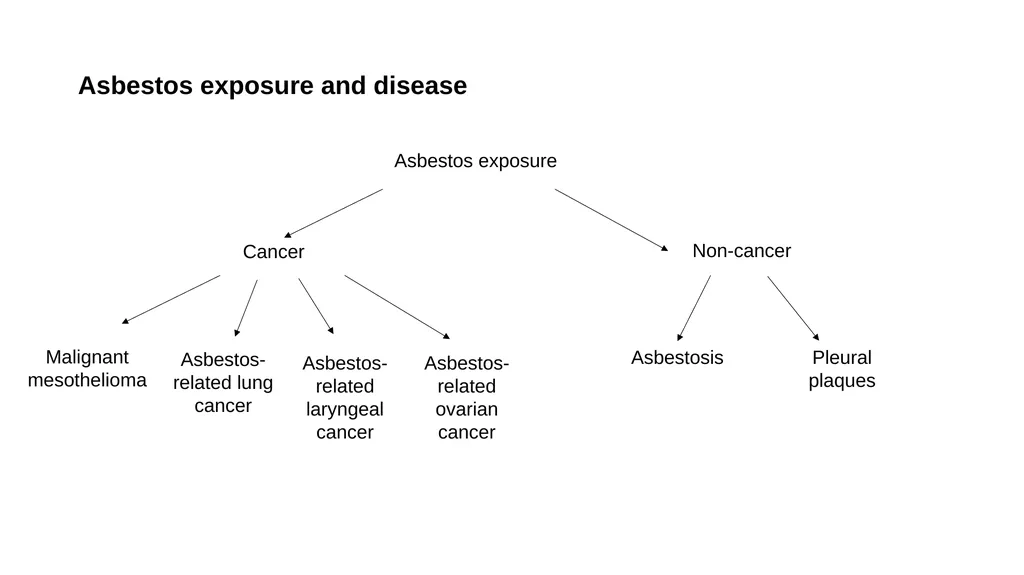
Asbestos exposure and disease Cancer Non-cancer Asbestos exposure Malignant mesothelioma Asbestos-related lung cancer Asbestosis Pleural plaques Asbestos-related laryngeal cancer Asbestos-related ovarian cancer<br>
09
Global burden of disease (GBD) data for Australia, 1990 to 2016<br>
10
Latency period<br>
11
The public health perspective of asbestos-related diseases Asbestos exposure Diagnosis of asbestos-related disease Death Latency period between exposure and disease
Up to 40-50 years for malignant mesothelioma
Around 20 years for asbestosis Survival time
9-12 month survival time between malignant mesothelioma and death<br>
12
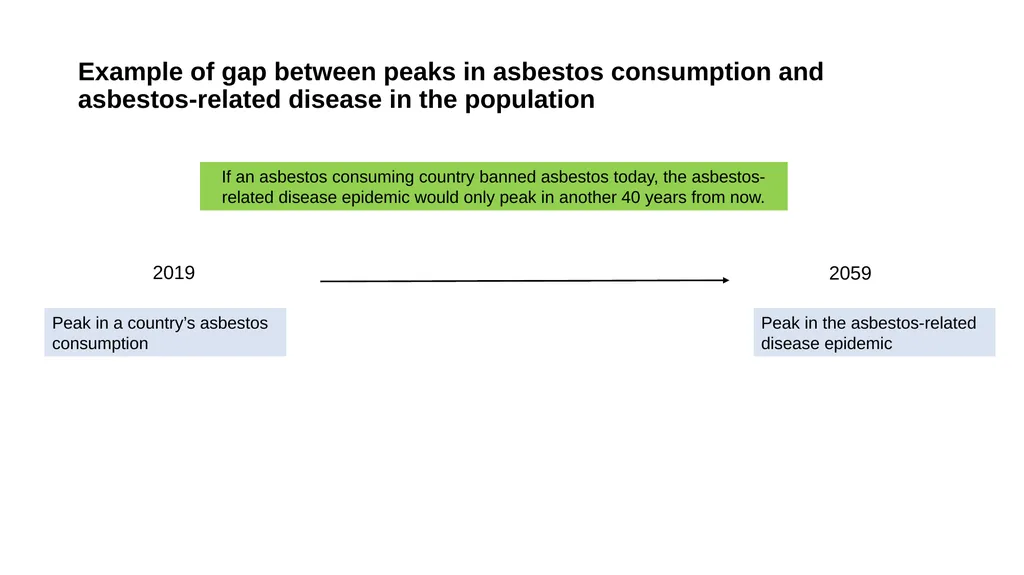
Example of gap between peaks in asbestos consumption and asbestos-related disease in the population Peak in a country’s asbestos consumption Peak in the asbestos-related disease epidemic 2019 2059 If an asbestos consuming country banned asbestos today, the asbestos-related disease epidemic would only peak in another 40 years from now.<br>
13
Descriptive epidemiology<br>
14
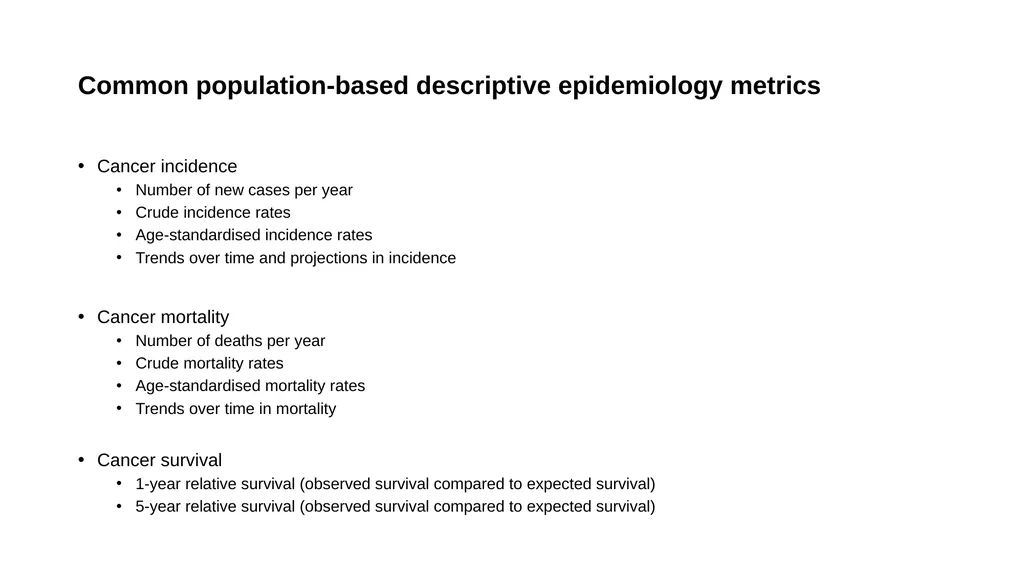
Common population-based descriptive epidemiology metrics Cancer incidence
Number of new cases per year
Crude incidence rates
Age-standardised incidence rates
Trends over time and projections in incidence
Cancer mortality
Number of deaths per year
Crude mortality rates
Age-standardised mortality rates
Trends over time in mortality
Cancer survival
1-year relative survival (observed survival compared to expected survival)
5-year relative survival (observed survival compared to expected survival)<br>
15
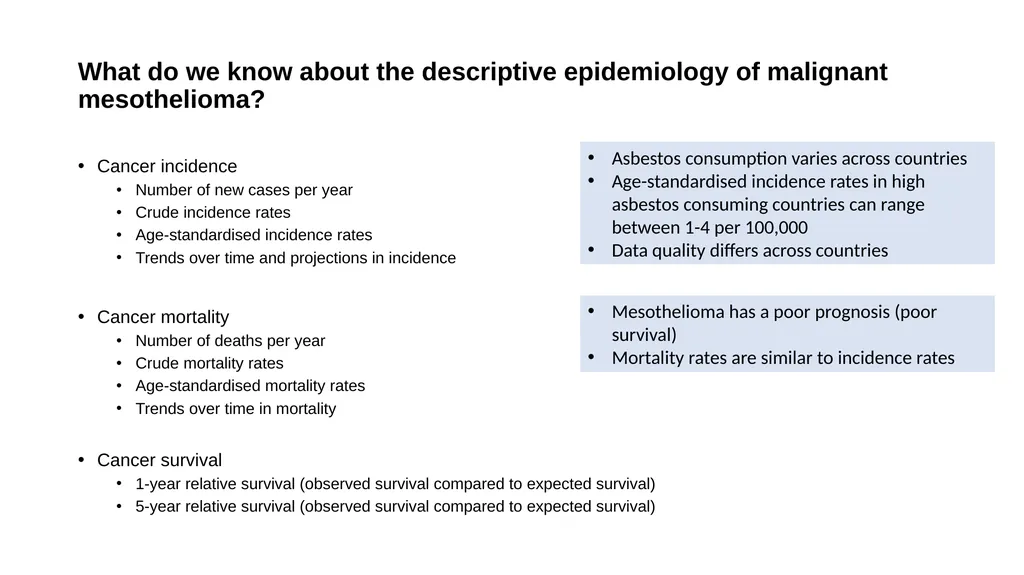
What do we know about the descriptive epidemiology of malignant mesothelioma? Cancer incidence
Number of new cases per year
Crude incidence rates
Age-standardised incidence rates
Trends over time and projections in incidence
Cancer mortality
Number of deaths per year
Crude mortality rates
Age-standardised mortality rates
Trends over time in mortality
Cancer survival
1-year relative survival (observed survival compared to expected survival)
5-year relative survival (observed survival compared to expected survival) Asbestos consumption varies across countries
Age-standardised incidence rates in high asbestos consuming countries can range between 1-4 per 100,000
Data quality differs across countries Mesothelioma has a poor prognosis (poor survival)
Mortality rates are similar to incidence rates<br>
16
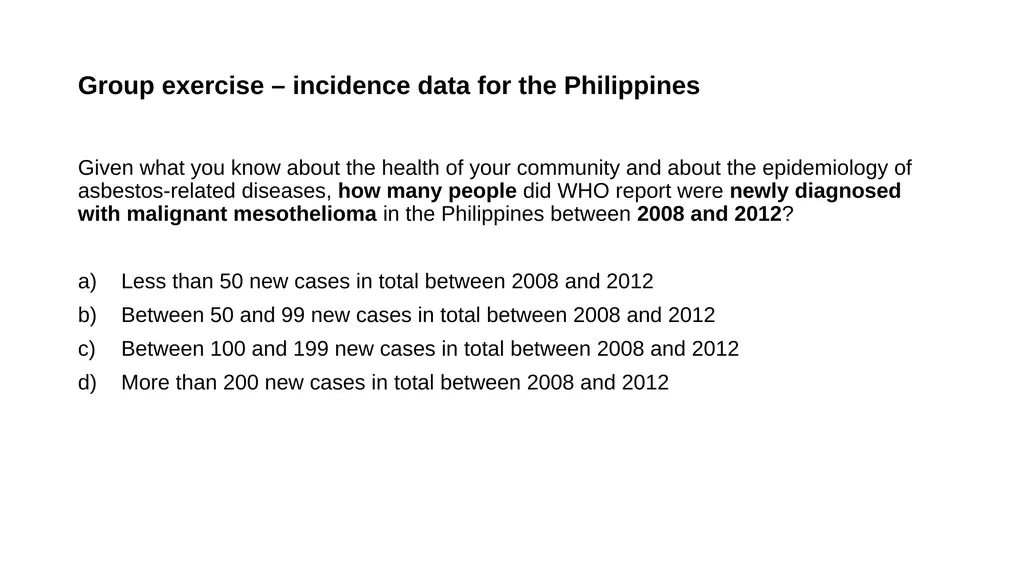
Group exercise – incidence data for the Philippines Given what you know about the health of your community and about the epidemiology of asbestos-related diseases, how many people did WHO report were newly diagnosed with malignant mesothelioma in the Philippines between 2008 and 2012?
Less than 50 new cases in total between 2008 and 2012
Between 50 and 99 new cases in total between 2008 and 2012
Between 100 and 199 new cases in total between 2008 and 2012
More than 200 new cases in total between 2008 and 2012<br>
17
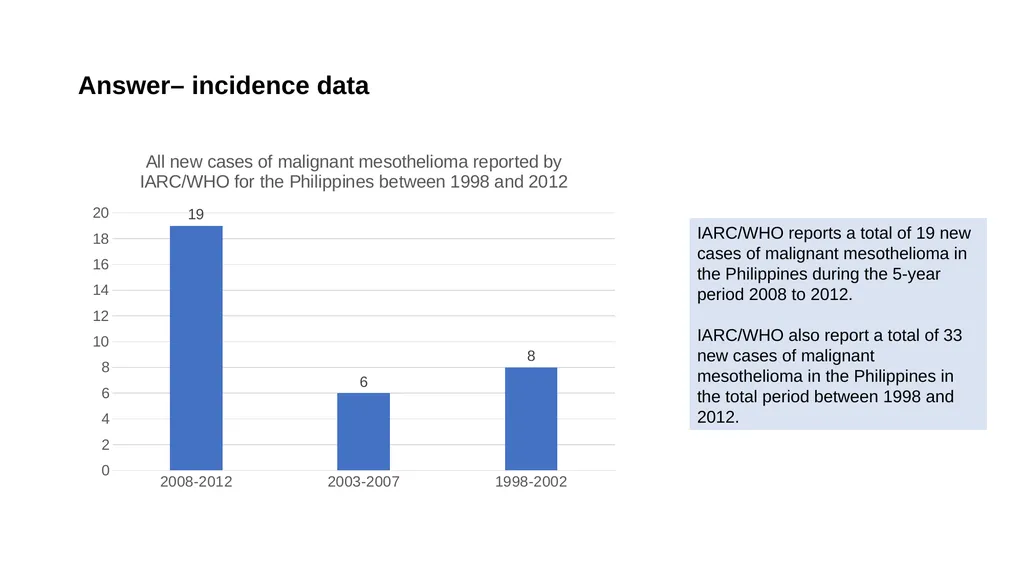
Answer– incidence data IARC/WHO reports a total of 19 new cases of malignant mesothelioma in the Philippines during the 5-year period 2008 to 2012.
IARC/WHO also report a total of 33 new cases of malignant mesothelioma in the Philippines in the total period between 1998 and 2012.<br>
18
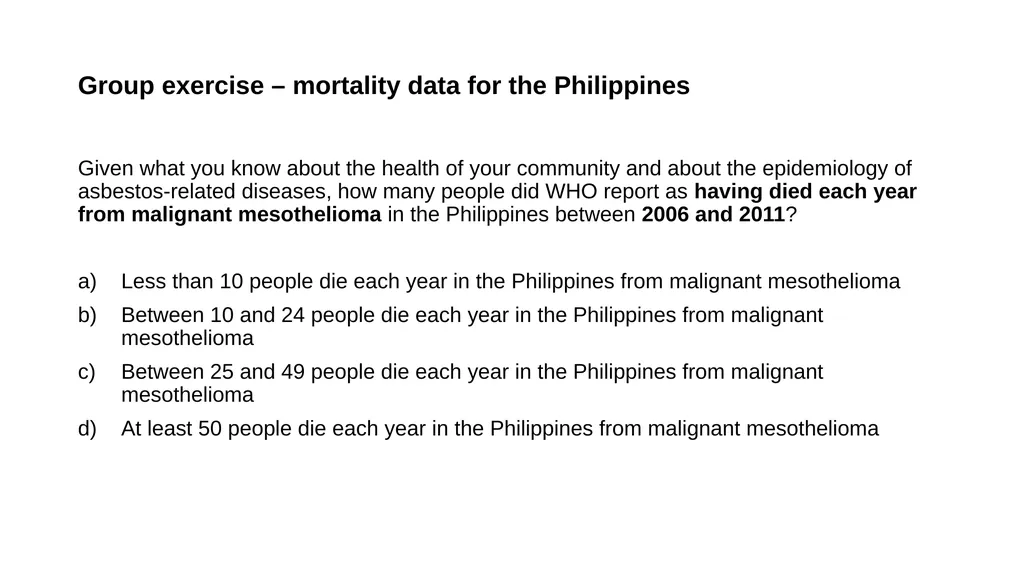
Group exercise – mortality data for the Philippines Given what you know about the health of your community and about the epidemiology of asbestos-related diseases, how many people did WHO report as having died each year from malignant mesothelioma in the Philippines between 2006 and 2011?
Less than 10 people die each year in the Philippines from malignant mesothelioma
Between 10 and 24 people die each year in the Philippines from malignant mesothelioma
Between 25 and 49 people die each year in the Philippines from malignant mesothelioma
At least 50 people die each year in the Philippines from malignant mesothelioma<br>
19
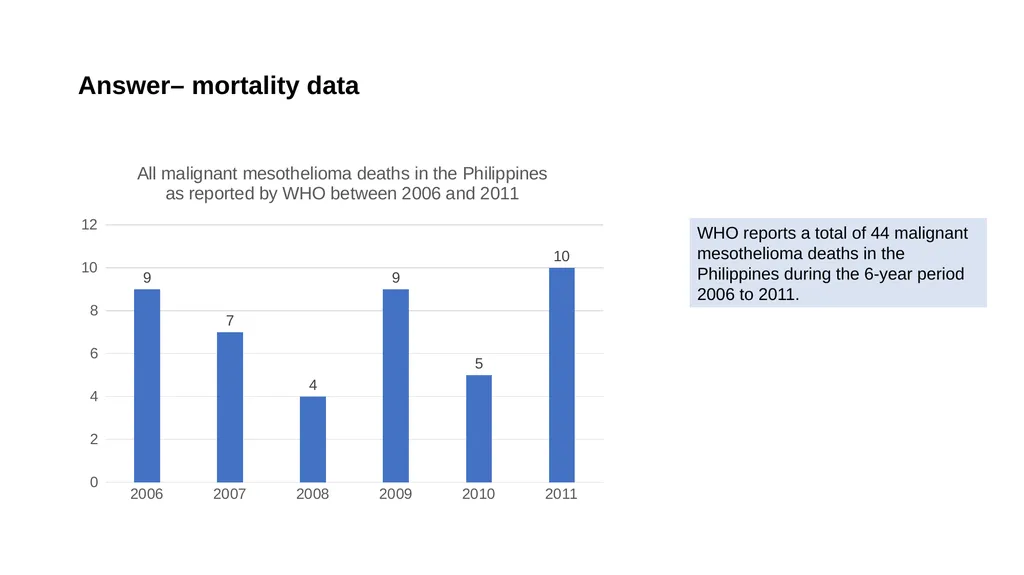
Answer– mortality data WHO reports a total of 44 malignant mesothelioma deaths in the Philippines during the 6-year period 2006 to 2011.<br>
20
Under reporting of malignant mesothelioma data Some food for thought….
Do you think these WHO incidence and mortality data under represent the ‘true’ burden of malignant mesothelioma in the Philippines?
If so, by how much?
What can you do to provide more accurate data from cancer registries and death certificates?<br>