04
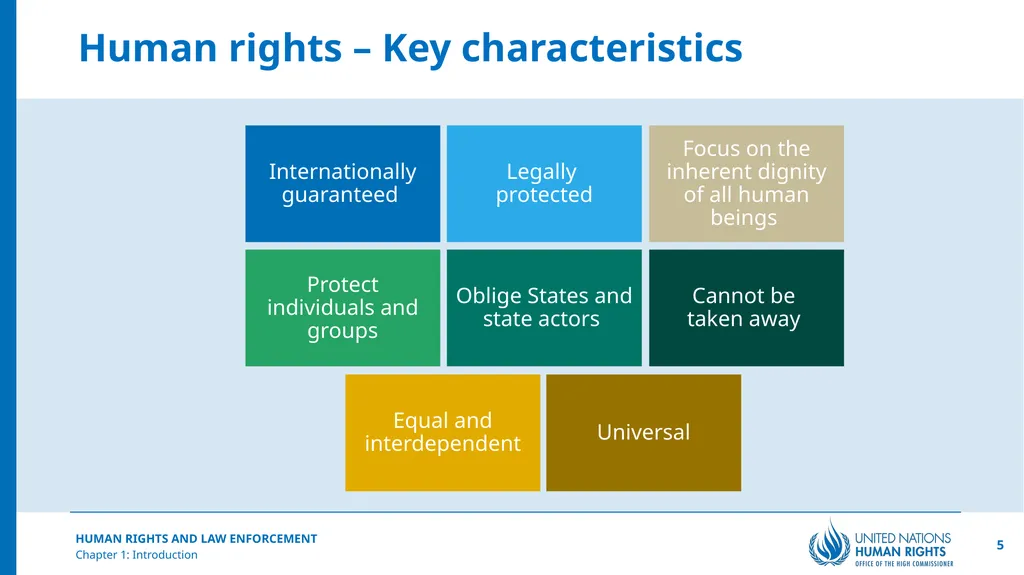
Human rights – Key characteristics Chapter 1: Introduction 5<br>
05
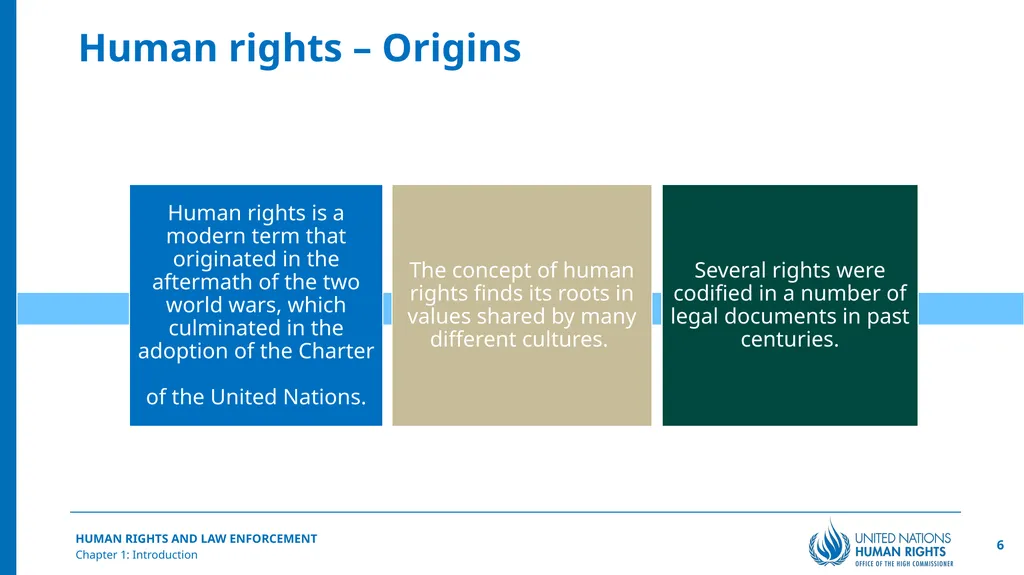
Human rights – Origins Chapter 1: Introduction 6<br>
06
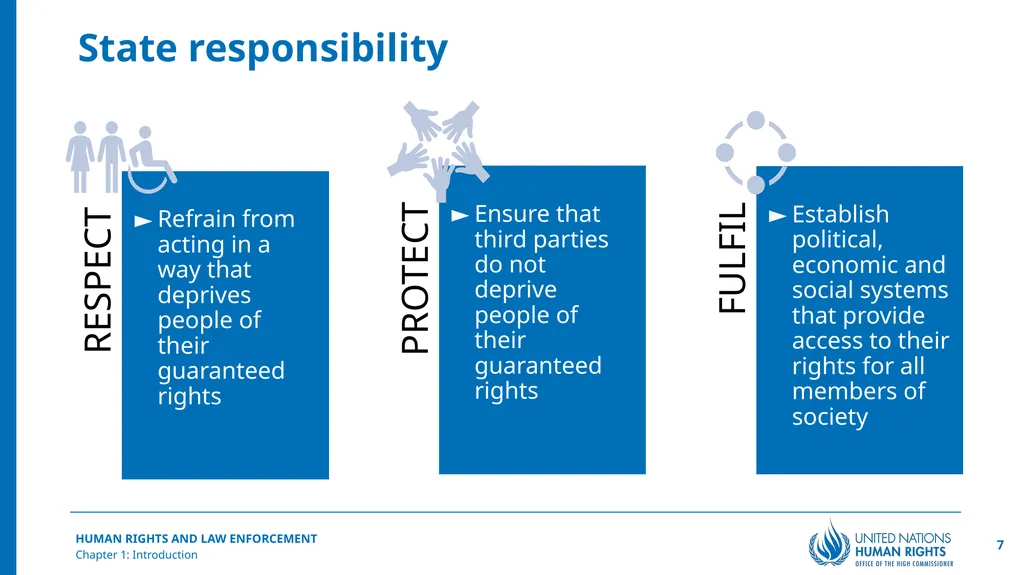
State responsibility Chapter 1: Introduction 7<br>
07
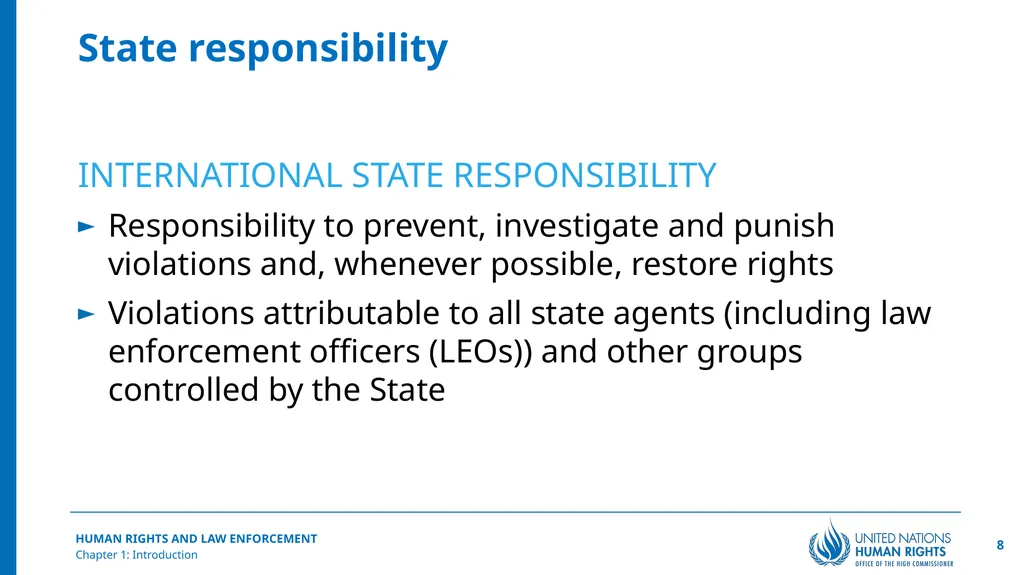
State responsibility INTERNATIONAL STATE RESPONSIBILITY
Responsibility to prevent, investigate and punish violations and, whenever possible, restore rights
Violations attributable to all state agents (including law enforcement officers (LEOs)) and other groups controlled by the State Chapter 1: Introduction 8<br>
08
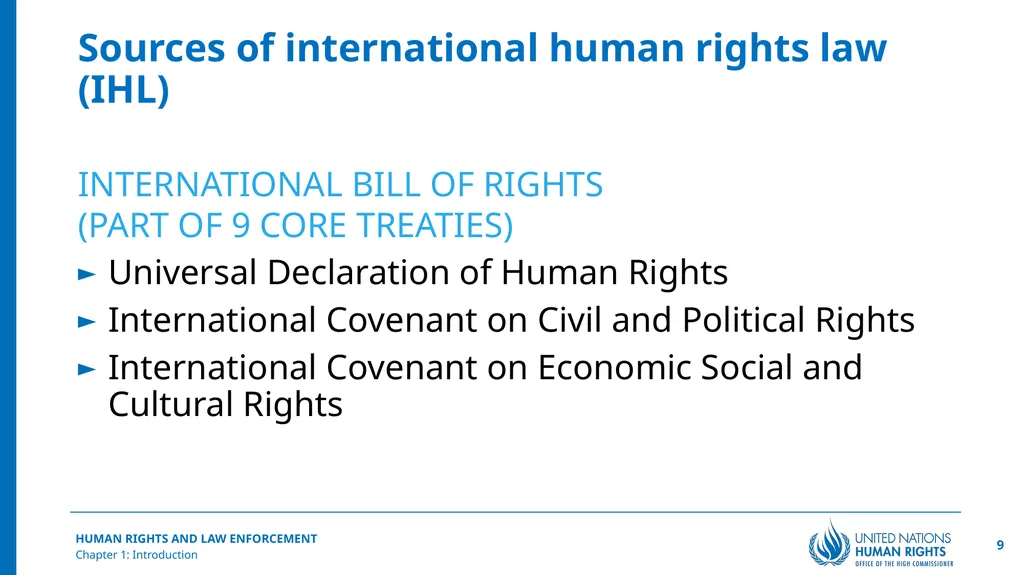
Sources of international human rights law (IHL) INTERNATIONAL BILL OF RIGHTS �(PART OF 9 CORE TREATIES)
Universal Declaration of Human Rights
International Covenant on Civil and Political Rights
International Covenant on Economic Social and Cultural Rights Chapter 1: Introduction 9<br>
09
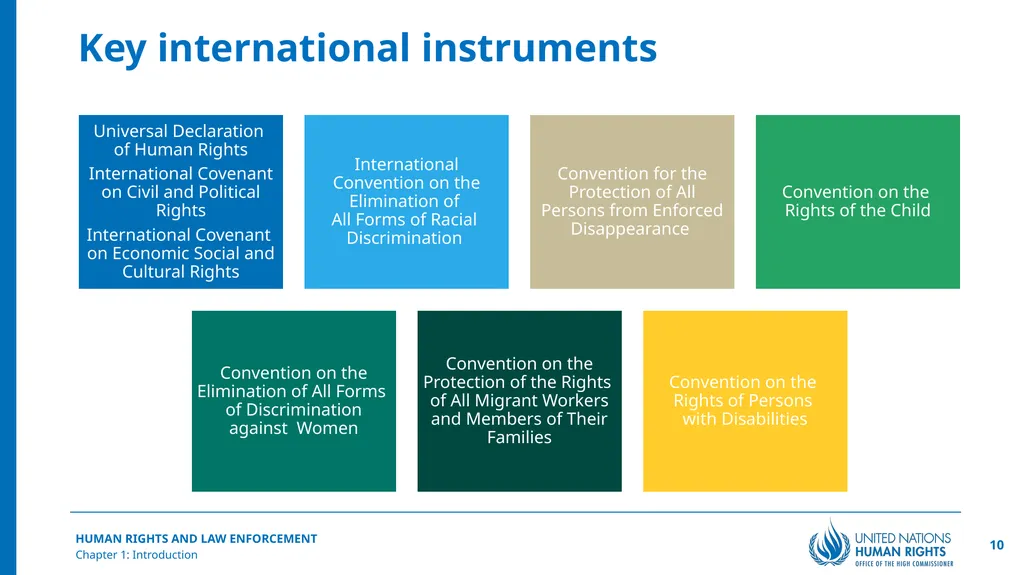
Key international instruments Chapter 1: Introduction 10<br>
10
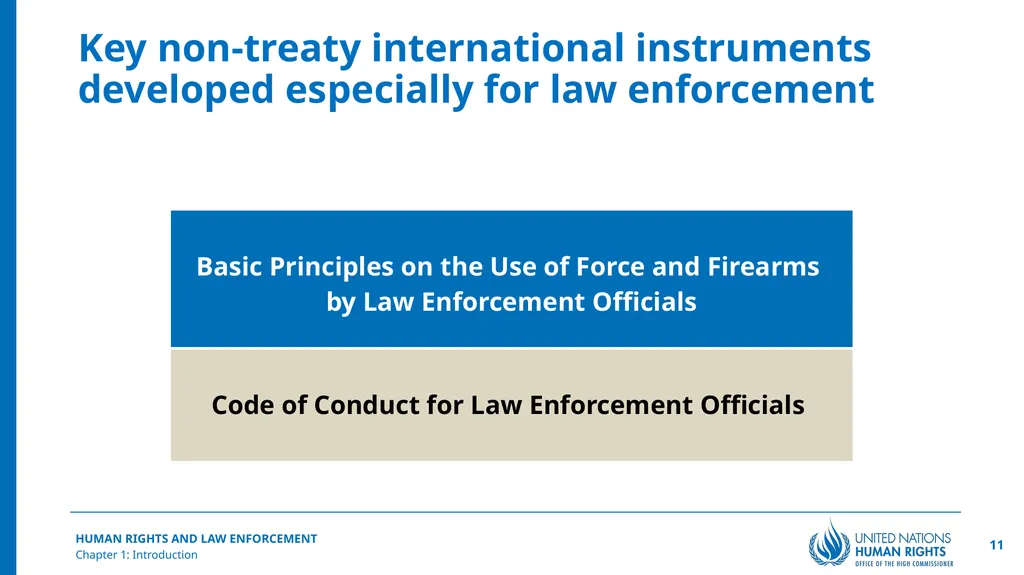
Chapter 1: Introduction 11 Key non-treaty international instruments developed especially for law enforcement<br>
11
Other key non-treaty international instruments relevant to human rights and law enforcement Chapter 1: Introduction 12<br>
12
Core and non-derogable human rights and obligations Human rights apply at all times, even in exceptional situations. States can derogate from some rights during emergencies. Other rights can be limited in specific circumstances.
‘Core’ civil and political rights may never be limited or subject to derogation.
Minimum core obligations of economic, social and cultural rights must be respected in all situations. Chapter 1: Introduction 13<br>
13
Core civil and political rights, which can never be limited or derogable The right to life
Prohibition of torture, cruel, inhuman and degrading treatment
Prohibition of medical or scientific experimentation without consent
Prohibition of slavery, slave trade and servitude Chapter 1: Introduction 14<br>
14
Core civil and political rights, which can never be limited or derogable Prohibition of imprisonment because of inability to fulfil contractual obligation
The principle of legality in criminal law
Recognition everywhere as a person before the law
Freedom of thought, conscience and religion Chapter 1: Introduction 15<br>
15
Chapter 1: Introduction 16 Derogations of civil and political rights<br>
16
Limitations of civil and political rights CIVIL AND POLITICAL RIGHTS WHICH ARE NOT CLASSIFIED AS “CORE” RIGHTS MAY IN SOME SITUATIONS BE LAWFULLY LIMITED BY STATES
Any lawful limitations of non-core rights must be:
Defined in national law;
Imposed for one or more specific legitimate purposes;
Necessary for one or more of those purposes in a democratic society. Chapter 1: Introduction 17<br>
17
Limitations of civil and political rights Chapter 1: Introduction 18 RIGHTS THAT MAY BE LIMITED UNDER THE ABOVE CONDITIONS INCLUDE:<br>
18
State obligation to ensure implementation of minimum core obligations of economic, social and cultural rights Minimum essential food that is sufficient, nutritionally adequate and safe to ensure freedom from hunger
Essential primary health care, including essential drugs under the World Health Organization’s Action Programme on Essential Drugs Chapter 1: Introduction 19<br>
19
State obligation to ensure implementation of minimum core obligations of economic, social and cultural rights Essential basic shelter and housing, including sanitation and the right not to be arbitrarily evicted from one’s housing
Access to the minimum essential amount of water that is sufficient and safe for personal and domestic uses to prevent disease
Non-discrimination in the exercise of each of the economic, social and cultural rights enshrined in the International Covenant on Economic, Social and Cultural Rights Chapter 1: Introduction 20<br>
20
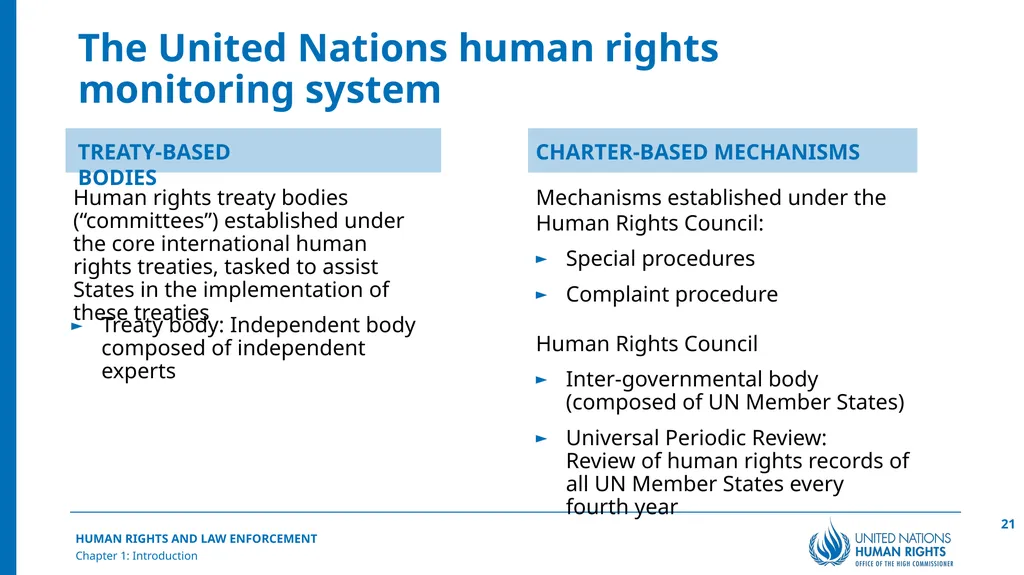
The United Nations human rights monitoring system 21 Human rights treaty bodies (“committees”) established under the core international human rights treaties, tasked to assist States in the implementation of these treaties TREATY-BASED BODIES Mechanisms established under the �Human Rights Council:
Special procedures
Complaint procedure
Human Rights Council
Inter-governmental body �(composed of UN Member States)
Universal Periodic Review:�Review of human rights records of all UN Member States every fourth year CHARTER-BASED MECHANISMS Treaty body: Independent body composed of independent experts Chapter 1: Introduction<br>
21
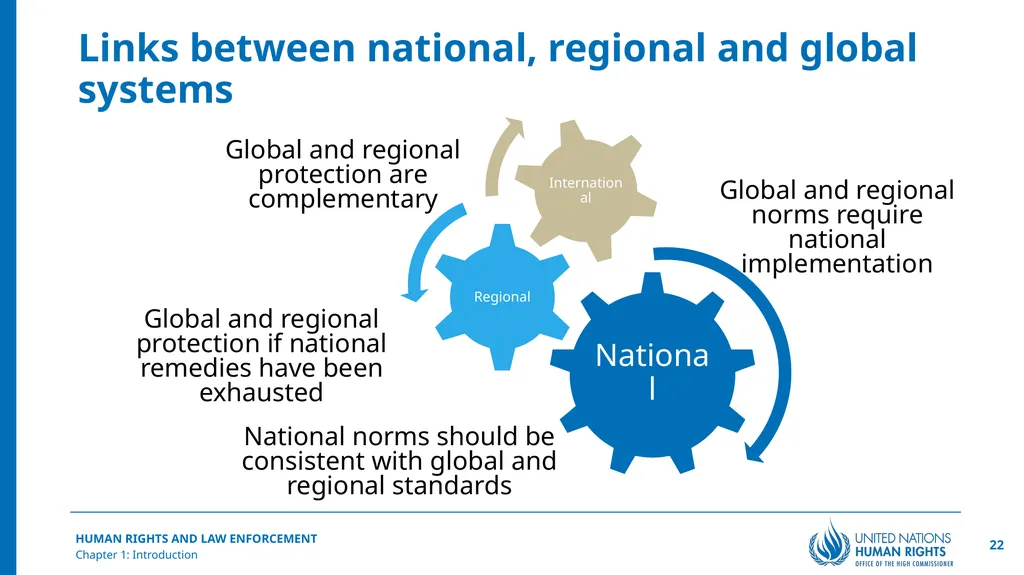
Links between national, regional and global systems Chapter 1: Introduction 22 Global and regional protection are complementary Global and regional protection if national remedies have been exhausted National norms should be consistent with global and regional standards Global and regional norms require national implementation<br>
22
Major regional human rights systems �and sources Chapter 1: Introduction 23<br>
23
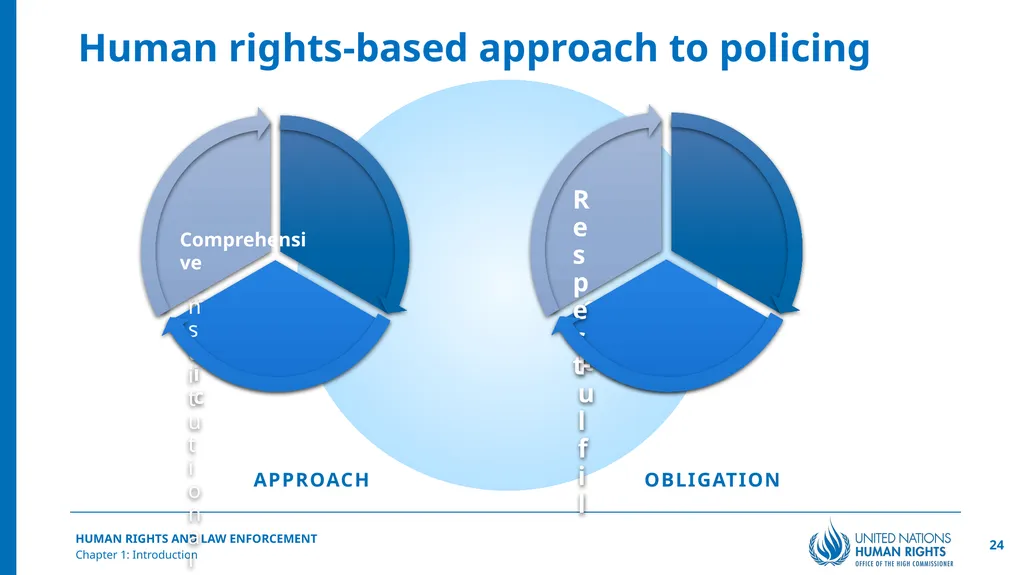
Human rights-based approach to policing Chapter 1: Introduction 24 Comprehensive<br>
24
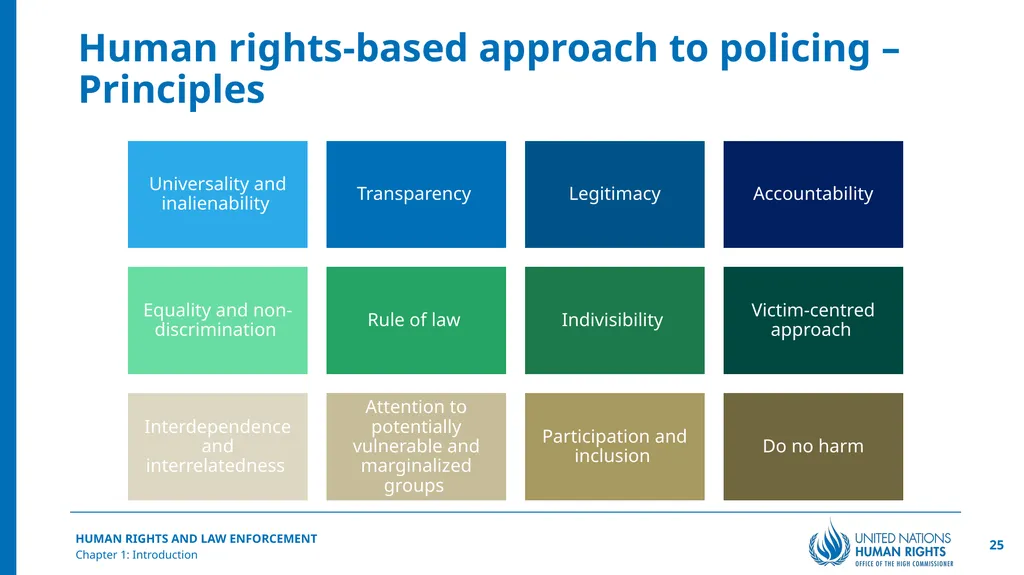
Human rights-based approach to policing – Principles Chapter 1: Introduction 25<br>
25
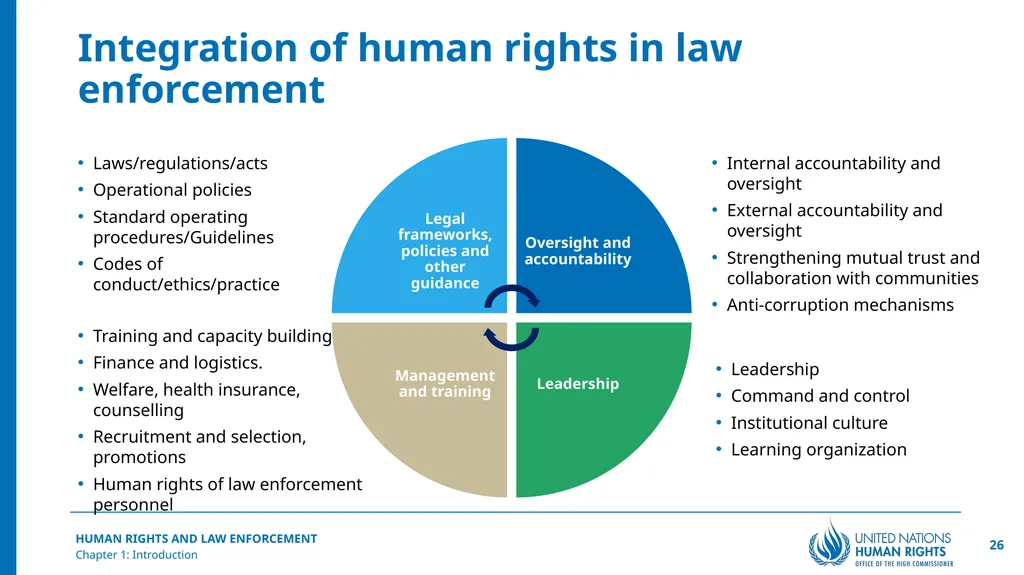
Integration of human rights in law�enforcement Chapter 1: Introduction 26 Laws/regulations/acts
Operational policies
Standard operating procedures/Guidelines
Codes of�conduct/ethics/practice Training and capacity building
Finance and logistics.
Welfare, health insurance, counselling
Recruitment and selection, promotions
Human rights of law enforcement personnel Leadership
Command and control
Institutional culture
Learning organization Internal accountability and oversight
External accountability and oversight
Strengthening mutual trust and collaboration with communities
Anti-corruption mechanisms<br>
26
From human rights standard to practice Chapter 1: Introduction 27<br>
27
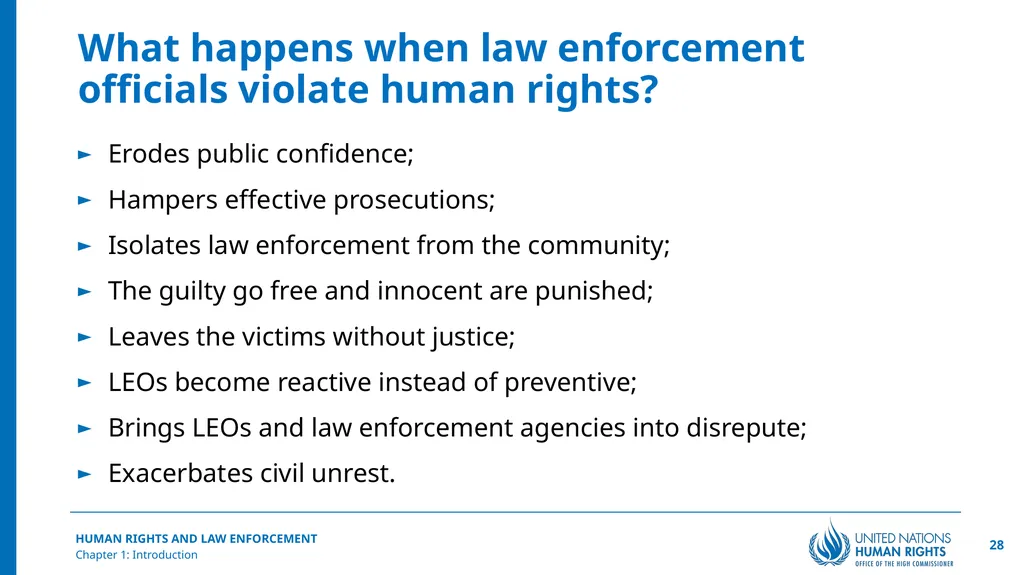
What happens when law enforcement officials violate human rights? Erodes public confidence;
Hampers effective prosecutions;
Isolates law enforcement from the community;
The guilty go free and innocent are punished;
Leaves the victims without justice;
LEOs become reactive instead of preventive;
Brings LEOs and law enforcement agencies into disrepute;
Exacerbates civil unrest. Chapter 1: Introduction 28<br>
28
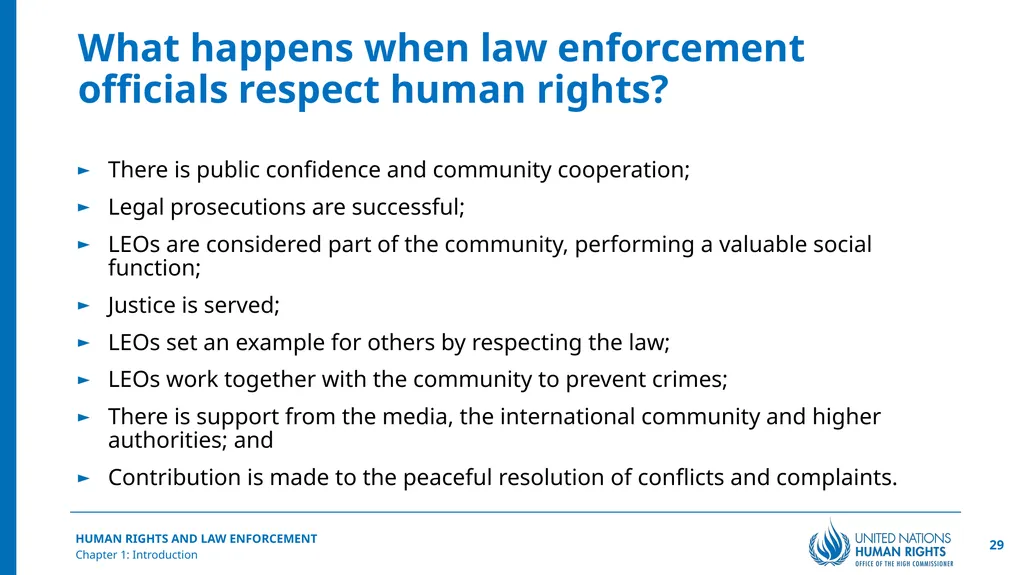
What happens when law enforcement officials respect human rights? There is public confidence and community cooperation;
Legal prosecutions are successful;
LEOs are considered part of the community, performing a valuable social function;
Justice is served;
LEOs set an example for others by respecting the law;
LEOs work together with the community to prevent crimes;
There is support from the media, the international community and higher authorities; and
Contribution is made to the peaceful resolution of conflicts and complaints. Chapter 1: Introduction 29<br>
29
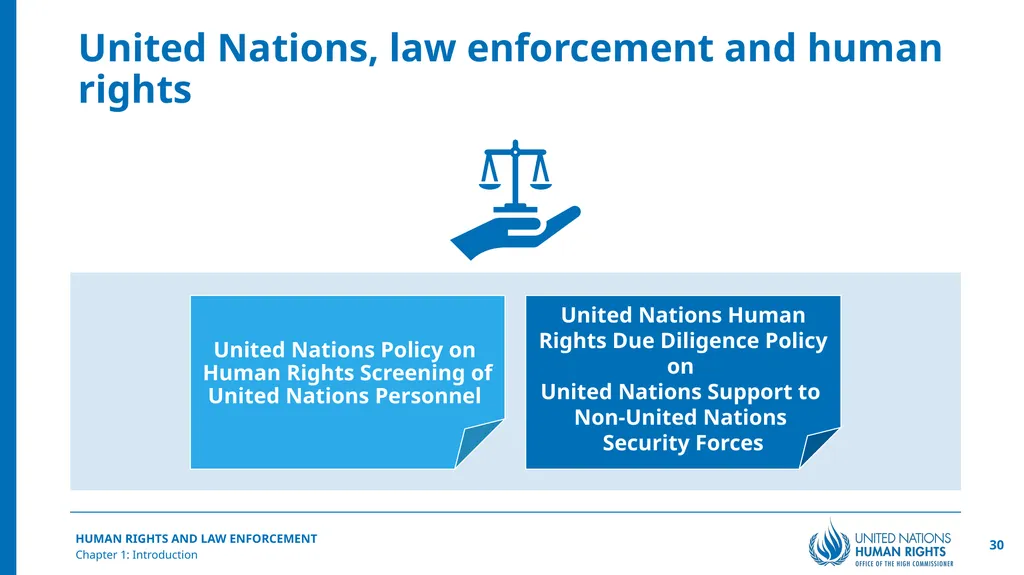
United Nations, law enforcement and human rights Chapter 1: Introduction 30<br>