04
What is Finance? The management of large amounts of money, especially by governments or large companies n.
Provide funding for (a person or enterprise) v.
How to raise and invest funds for business
Lies at the heart of business – investing funds productively<br>
05
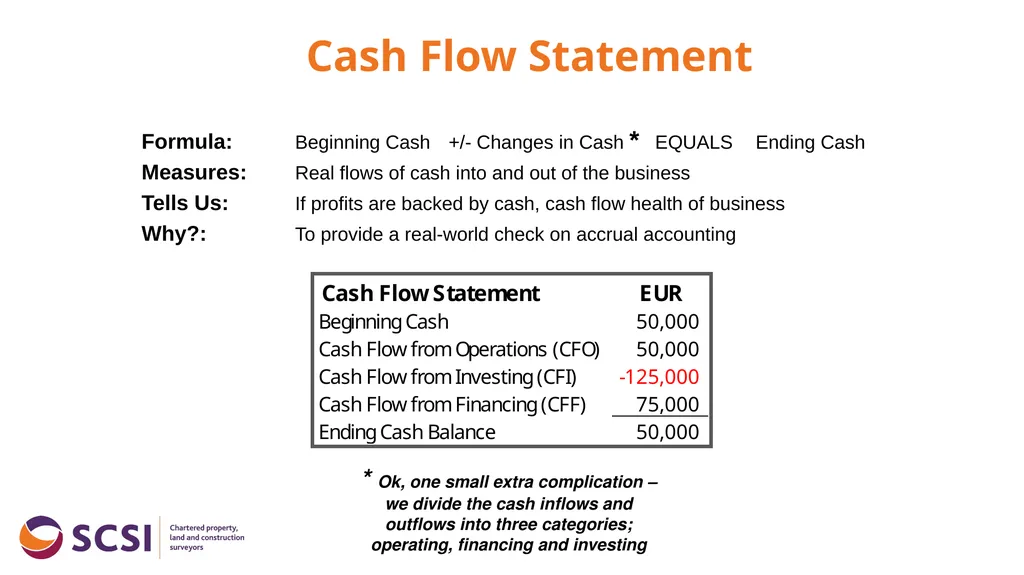
Cash Flow Statement Formula: Beginning Cash +/- Changes in Cash * EQUALS Ending Cash
Measures: Real flows of cash into and out of the business
Tells Us: If profits are backed by cash, cash flow health of business
Why?: To provide a real-world check on accrual accounting * Ok, one small extra complication – we divide the cash inflows and outflows into three categories; operating, financing and investing<br>
06
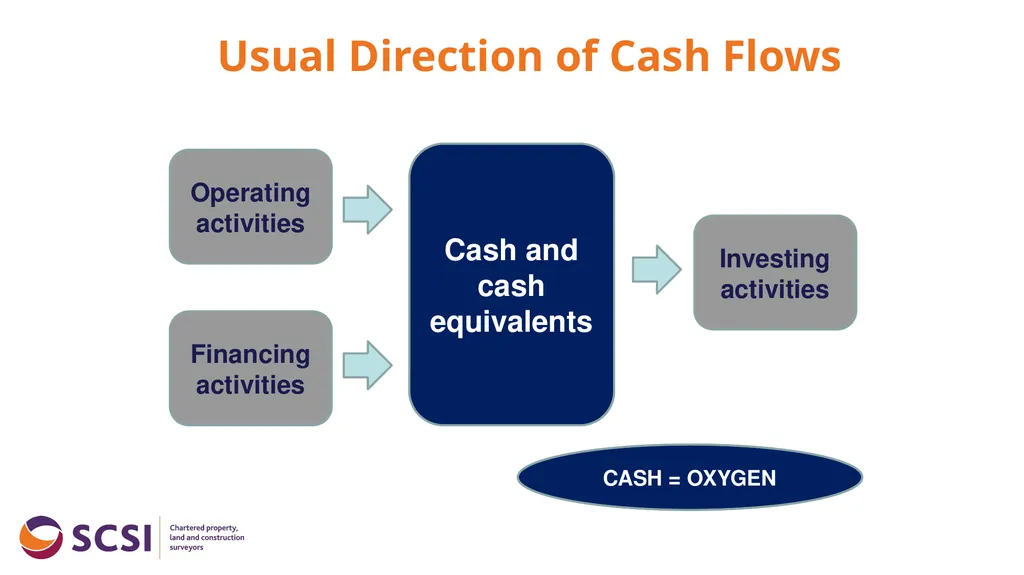
Usual Direction of Cash Flows Cash and cash equivalents Operating activities Financing activities Investing activities CASH = OXYGEN<br>
07
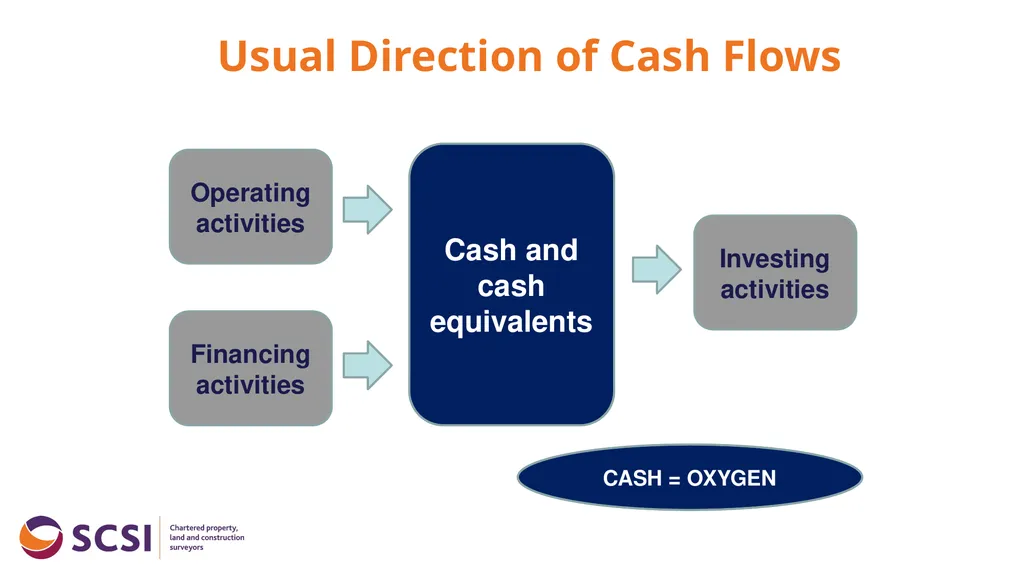
Usual Direction of Cash Flows Cash and cash equivalents Operating activities Financing activities Investing activities CASH = OXYGEN<br>
08
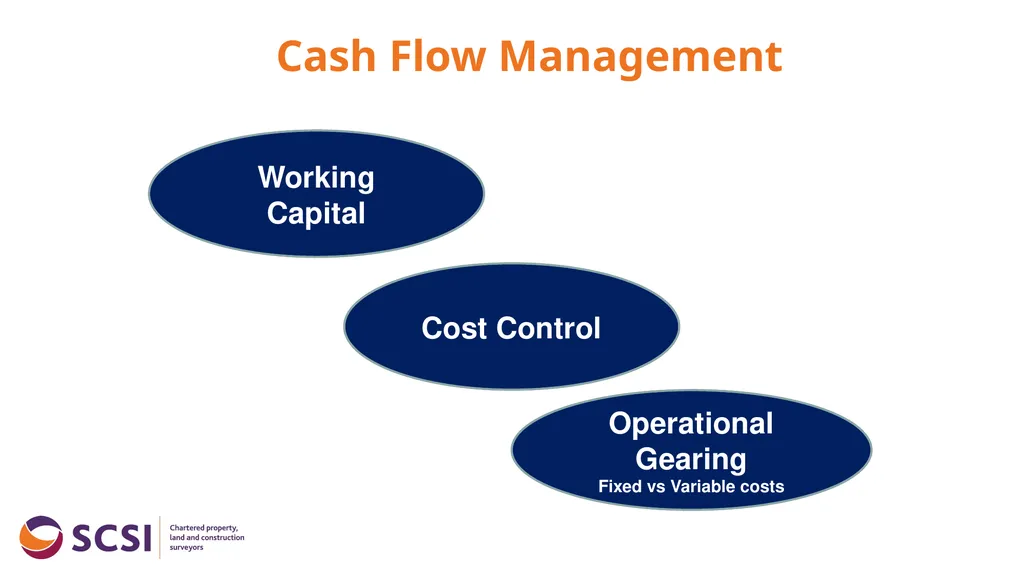
Cash Flow Management Cost Control Operational Gearing
Fixed vs Variable costs Working Capital<br>
09
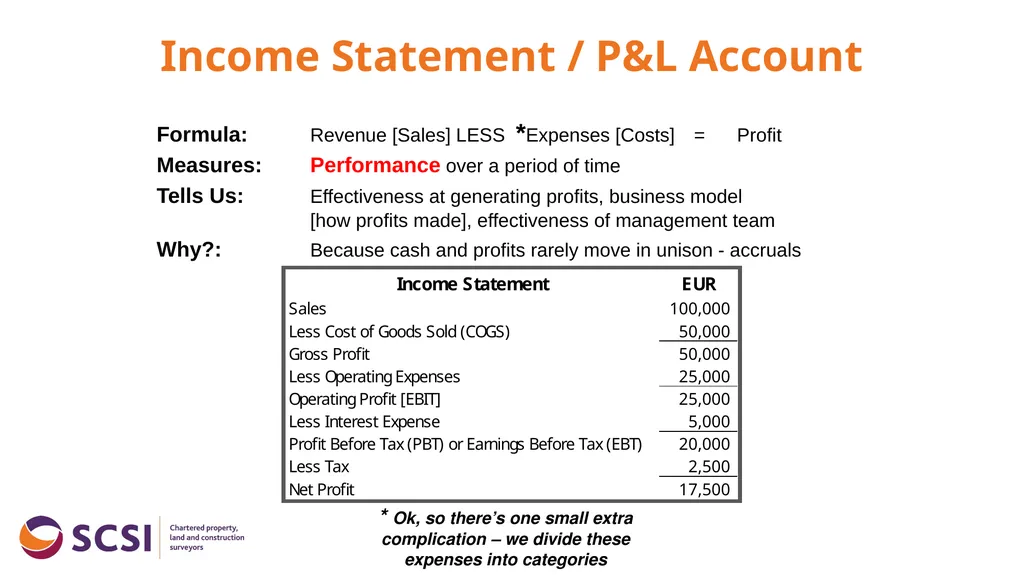
Income Statement / P&L Account Formula: Revenue [Sales] LESS *Expenses [Costs] = Profit
Measures: Performance over a period of time
Tells Us: Effectiveness at generating profits, business model
[how profits made], effectiveness of management team
Why?: Because cash and profits rarely move in unison - accruals * Ok, so there’s one small extra complication – we divide these expenses into categories<br>
10
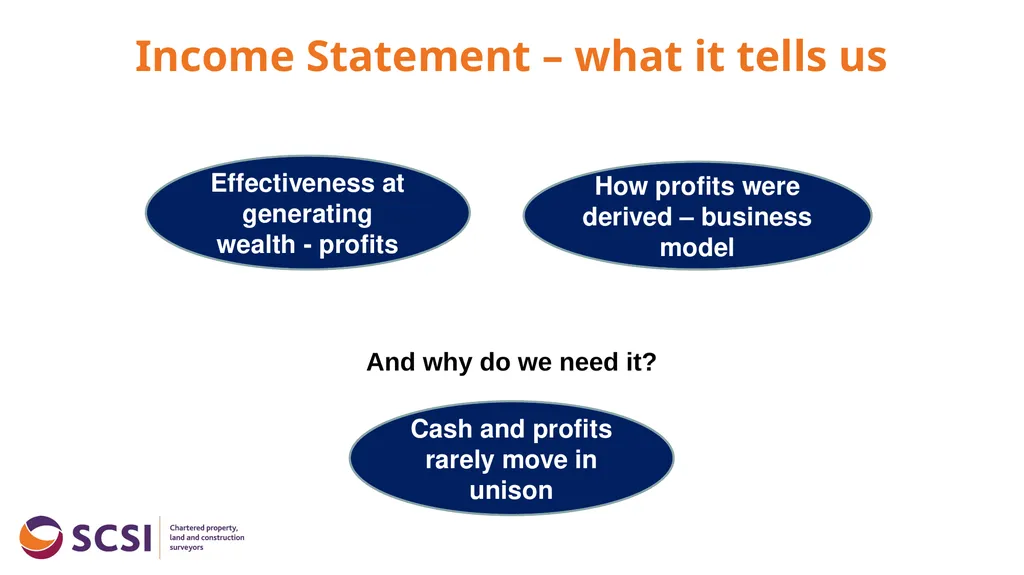
Income Statement – what it tells us Effectiveness at generating wealth - profits How profits were derived – business model And why do we need it? Cash and profits rarely move in unison<br>
11
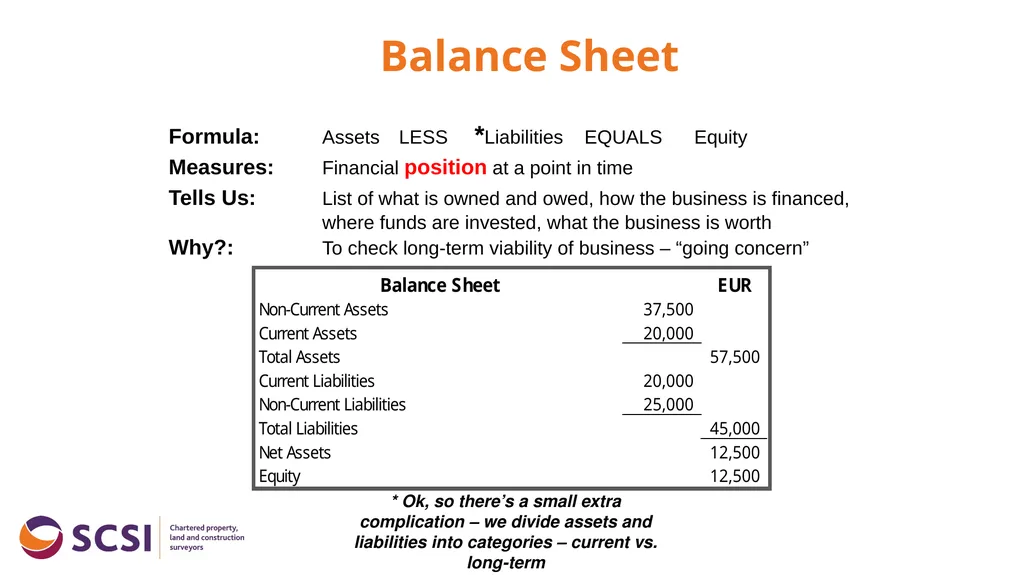
Balance Sheet Formula: Assets LESS *Liabilities EQUALS Equity
Measures: Financial position at a point in time
Tells Us: List of what is owned and owed, how the business is financed, where funds are invested, what the business is worth
Why?: To check long-term viability of business – “going concern” * Ok, so there’s a small extra complication – we divide assets and liabilities into categories – current vs. long-term<br>
12
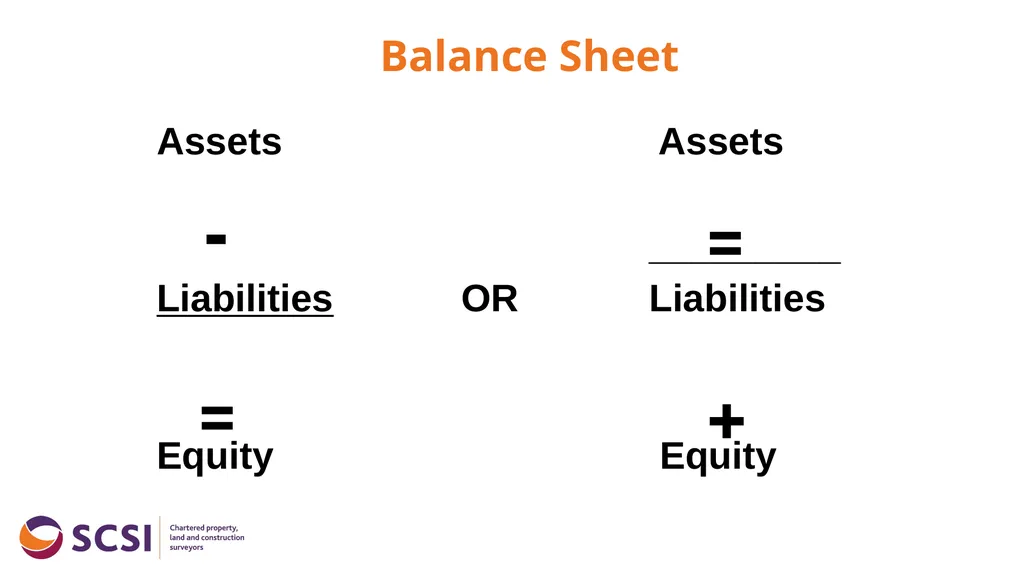
Balance Sheet Assets Assets
_________
Liabilities OR Liabilities
Equity Equity - = = +<br>
13
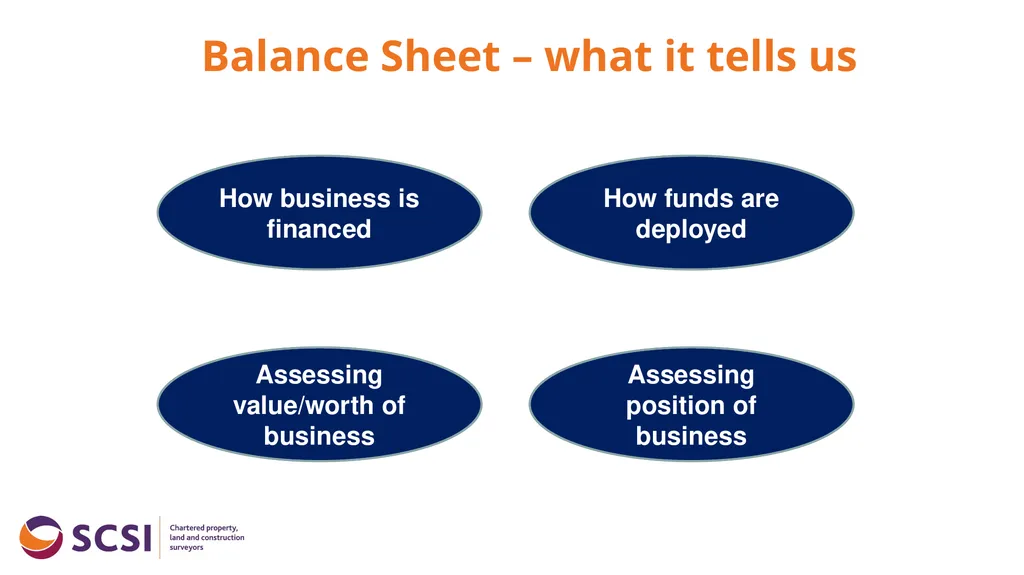
Balance Sheet – what it tells us How business is financed Assessing value/worth of business How funds are deployed Assessing position of business<br>
14
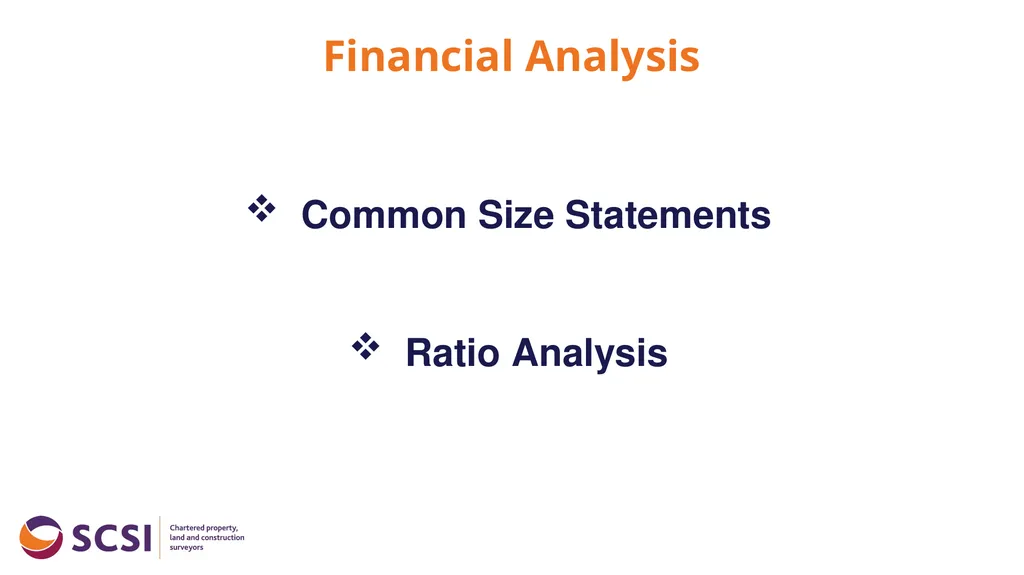
Financial Analysis Common Size Statements
Ratio Analysis<br>
15
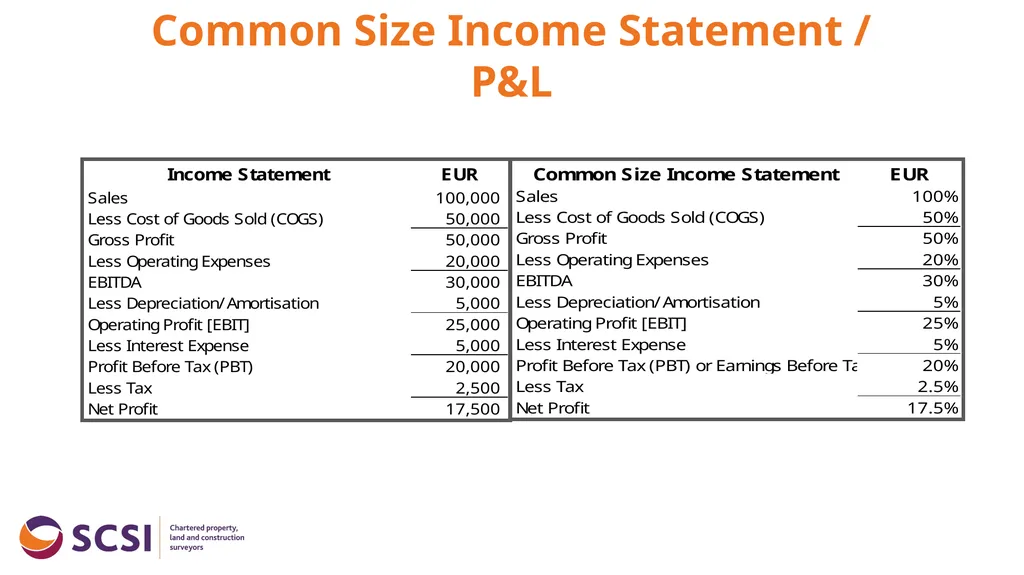
Common Size Income Statement / P&L<br>
16
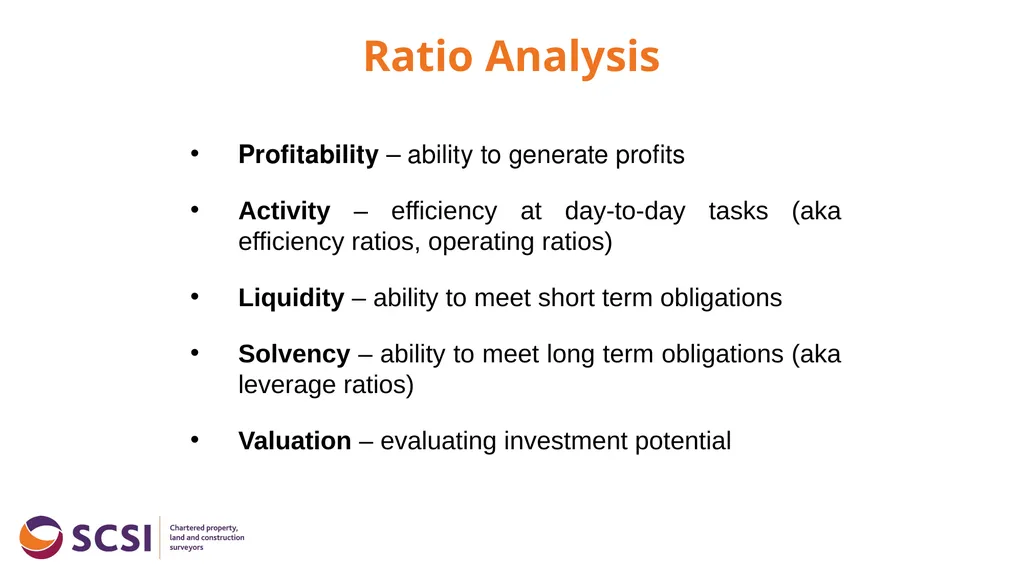
Ratio Analysis Profitability – ability to generate profits
Activity – efficiency at day-to-day tasks (aka efficiency ratios, operating ratios)
Liquidity – ability to meet short term obligations
Solvency – ability to meet long term obligations (aka leverage ratios)
Valuation – evaluating investment potential<br>
17
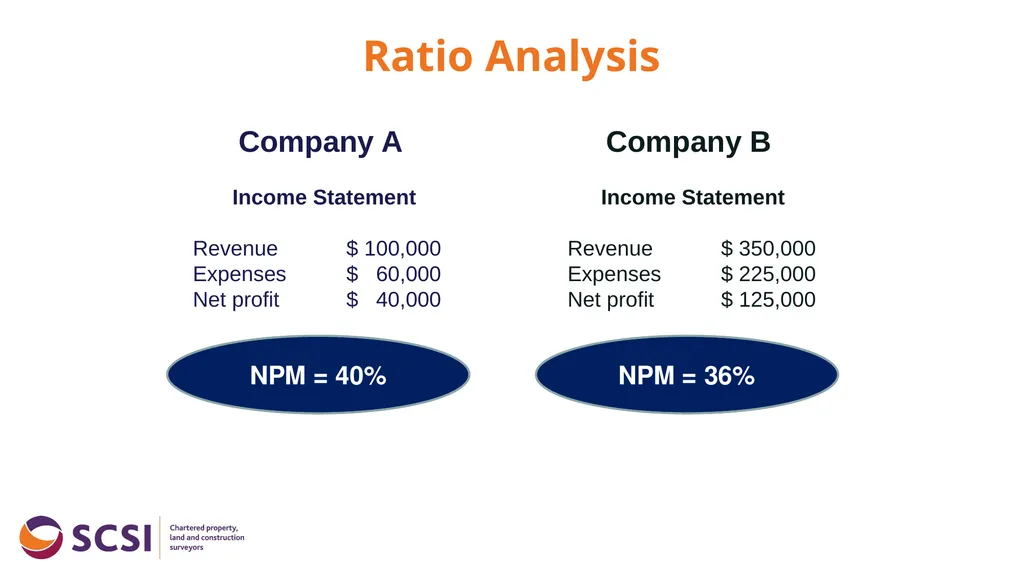
Ratio Analysis Company A
Income Statement
Revenue $ 100,000
Expenses $ 60,000
Net profit $ 40,000 Company B
Income Statement
Revenue $ 350,000
Expenses $ 225,000
Net profit $ 125,000 NPM = 40% NPM = 36%<br>
18
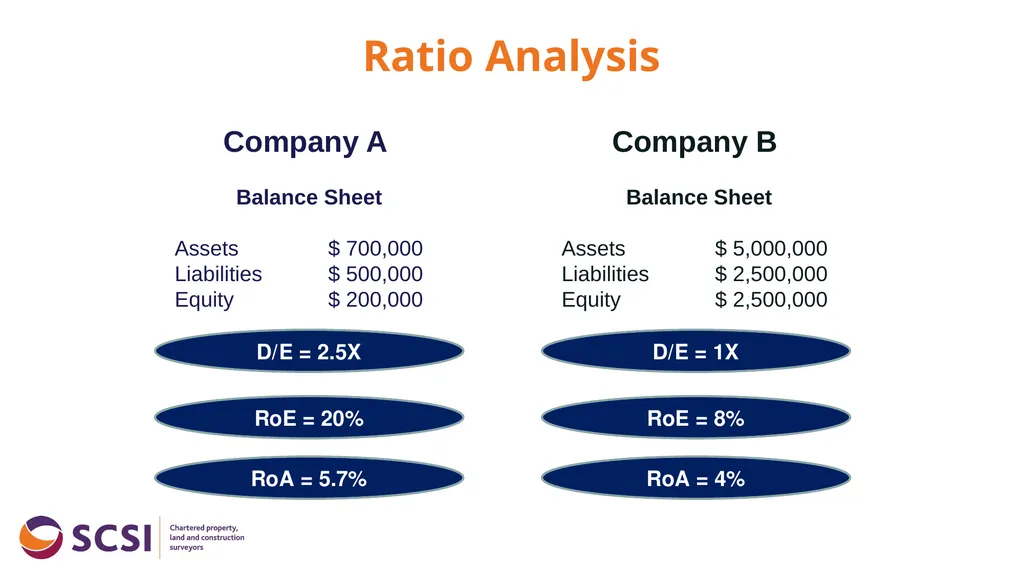
Ratio Analysis Company B
Balance Sheet
Assets $ 5,000,000
Liabilities $ 2,500,000
Equity $ 2,500,000 Company A
Balance Sheet
Assets $ 700,000
Liabilities $ 500,000
Equity $ 200,000 RoE = 20% RoA = 4% D/E = 2.5X D/E = 1X RoA = 5.7% RoE = 8%<br>
19
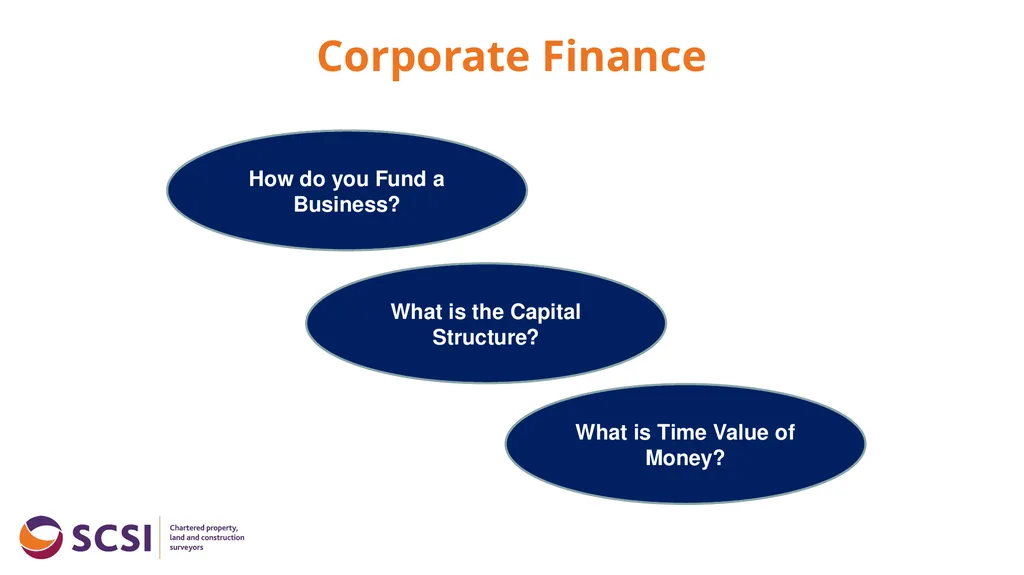
Corporate Finance How do you Fund a Business? What is the Capital Structure? What is Time Value of Money?<br>
21
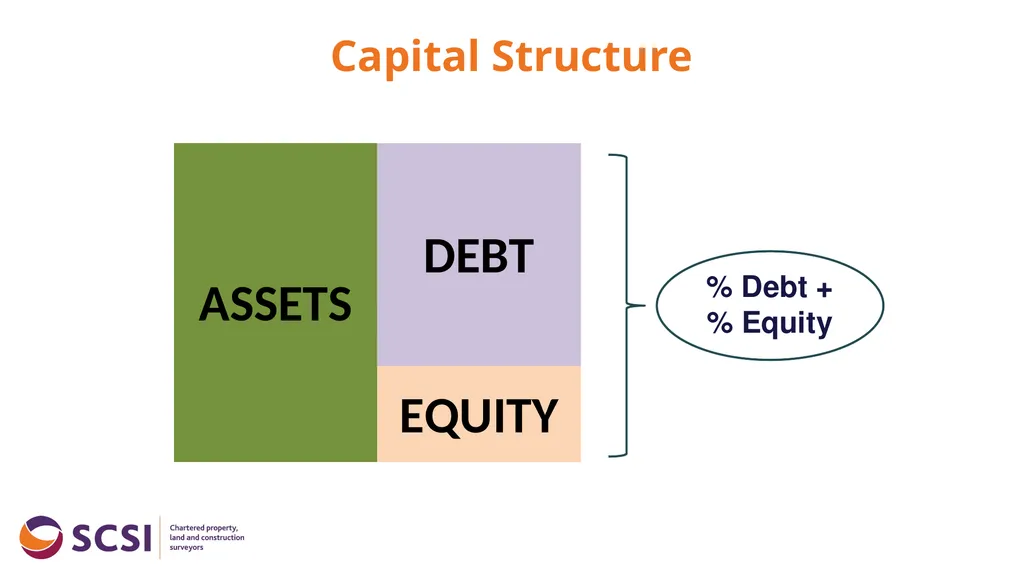
Capital Structure % Debt + % Equity<br>
22
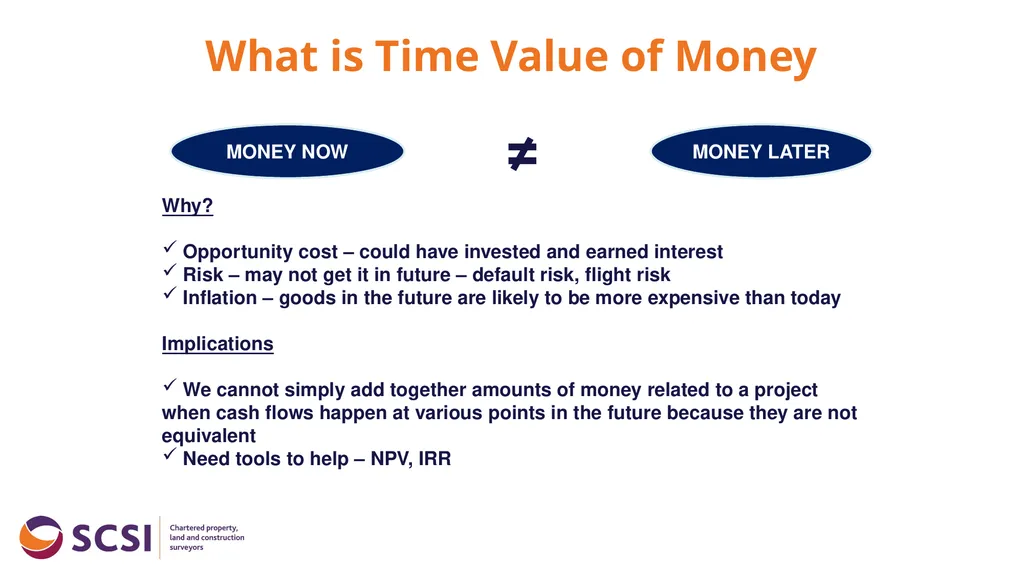
What is Time Value of Money MONEY NOW MONEY LATER ≠ Why?
Opportunity cost – could have invested and earned interest
Risk – may not get it in future – default risk, flight risk
Inflation – goods in the future are likely to be more expensive than today
Implications
We cannot simply add together amounts of money related to a project when cash flows happen at various points in the future because they are not equivalent
Need tools to help – NPV, IRR<br>
23
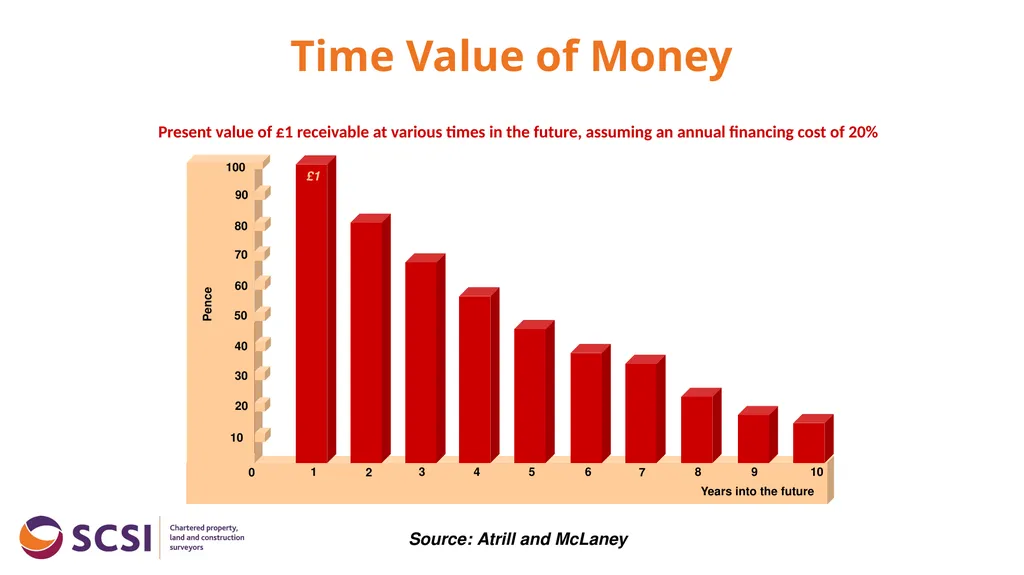
Time Value of Money Present value of £1 receivable at various times in the future, assuming an annual financing cost of 20% Source: Atrill and McLaney<br>
25
www.scsi.ie Society of �Chartered Surveyors Ireland�38 Merrion Square,�Dublin 2, Ireland�Tel: + 353 (0)1 644 5500�Email: info@scsi.ie Dating back to 1895, the Society of Chartered Surveyors Ireland is the independent professional body for Chartered Surveyors working and practicing in Ireland. ��Working in partnership with RICS, the pre-eminent Chartered professional body for the construction, land and property sectors around the world, the Society and RICS act in the public interest: setting and maintaining the highest standards of competence and integrity among the profession; and providing impartial, authoritative advice on key issues for business, society and governments worldwide. ��Advancing standards in construction, land and property, the Chartered Surveyor professional qualification is the world’s leading qualification when it comes to professional standards. In a world where more and more people, governments, banks and commercial organisations demand greater certainty of professional standards and ethics, attaining the Chartered Surveyor qualification is the recognised mark of property professionalism.��Members of the profession are typically employed in the construction, land and property markets through private practice, in central and local government, in state agencies, in academic institutions, �in business organisations and in non-governmental organisations.��Members’ services are diverse and can include offering strategic advice on the economics, valuation, law, technology, finance and management in all aspects of the construction, land and property industry.��All aspects of the profession, from education through to qualification and the continuing maintenance of the highest professional standards are regulated and overseen through the partnership of the Society of Chartered Surveyors Ireland and RICS, �in the public interest.��This valuable partnership with RICS enables access to a worldwide network of research, experience and advice.<br>