
Introduction to Data Science Unit 1 What is Data
Description: Introduction to Data Science Unit 1 What is Data Science Data science is the study of data to extract meaningful insights for business. It is a multidisciplinary approach that combines principles and practices from the fields of
Related Topics
Download Presentation
"Introduction to Data Science Unit 1 What is Data" is the property of its rightful owner. Permission is granted to download and print the materials on this website for personal, non-commercial use only, and to display it on your personal computer provided you do not modify the materials and that you retain all copyright notices contained in the materials. By downloading content from our website, you accept the terms of this agreement.
Presentation Transcript
slide1. Introduction to Data Science Unit 1<br>
slide2. What is Data Science Data science is the study of data to extract meaningful insights for business. It is a multidisciplinary approach that combines principles and practices from the fields of mathematics, statistics, artificial intelligence, and computer engineering to analyze large amounts of data. This analysis helps data scientists to ask and answer questions like what happened, why it happened, what will happen, and what can be done with the results.<br>
slide4. DATA SCIENCE TECHNOLOGY STACK RAPID INFORMATION FACTORY (RIF) ECOSYSTEM
Rapid Information Factory (RIF) System is a technique and tool which is used for processing the data in the development. The Rapid Information Factory is a massive parallel data processing platform capable of processing theoretical unlimited size data sets.<br>
slide5. The Rapid Information Factory (RIF) platform supports five high-level layers: Functional Layer: The functional layer is the core processing capability of the factory. Core functional data processing methodology is the R-A-P-T-O- R framework.
Retrieve Super Step. The retrieve super step supports the interaction between external data sources and the factory.
Assess Super Step. The assess super step supports the data quality clean-up in the factory.
Process Super Step. The process super step converts data into data vault.
Transform Super Step. The transform super step converts data vault via sun modeling into dimensional modeling to form a data warehouse.<br>
slide6. Organize Super Step. The organize super step sub-divides the data warehouse into data marts.
Report Super Step. The report super step is the Virtualization capacity of the factory.
Business Layer:
Utility Layer.
Operational Management Layer.
Audit, Balance and Control Layer.<br>
slide7. Data Science Storage Tools: Data Science ecosystem has a bunch of series of tools which are used to build your solution. By using this tools and techniques you will get rapid information in advanced for its better capability and new development will occur each day.
There are two basic data processing tools to perform the practical of data science as given below:<br>
slide8. Schema on write ecosystem: Traditional Relational Database Management System requires a schema before loading the data.
Schema is a single structure which represents logical view of entire database. It represents how the data is organized and related between them.
To Retrieve the data from the relational database system, you need to run the specific structure query language to perform these tasks.
It stores a dense of data and all the data are stored into the datastore and schema on write widely use methodology to store the dense data.<br>
slide9. Schema on write schemas are build with the purpose which makes them change and maintain the data into the database.
When there is a lot of raw data which are available for the processing, during, some of the data are lost and it makes them weak for future analysis.
If some important data are not stored into the database then you cannot process the data for further data analysis<br>
slide10. Schema on read ecosystem: Schema on read ecosystem does not need schema, without this you can load the data into the database.
It has the capabilities to store the structure, semi-structure, unstructured data and it has potential to apply most of the flexibilities when we request the query during the execution.
Schema on read generate the fresh and new data and increase the speed of data generation as well as reduce the cycle time of data availability of actionable information.
These types of ecosystem that means schema on read and schema on write are very useful and essential for data scientist and engineering personal for better understanding about data preparation, modeling, development, and deployment of data into the production.<br>
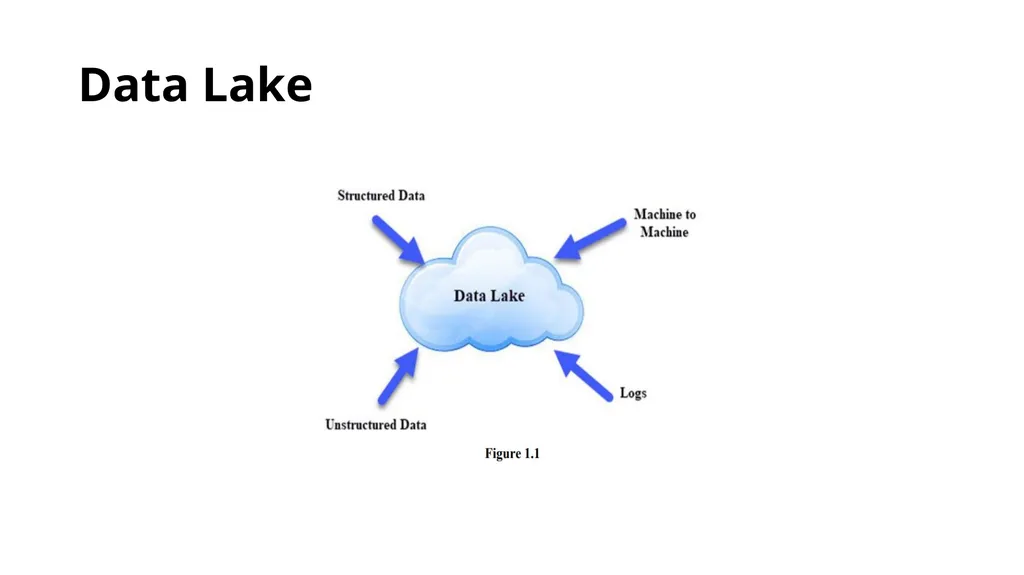
slide11. Data Lake<br>
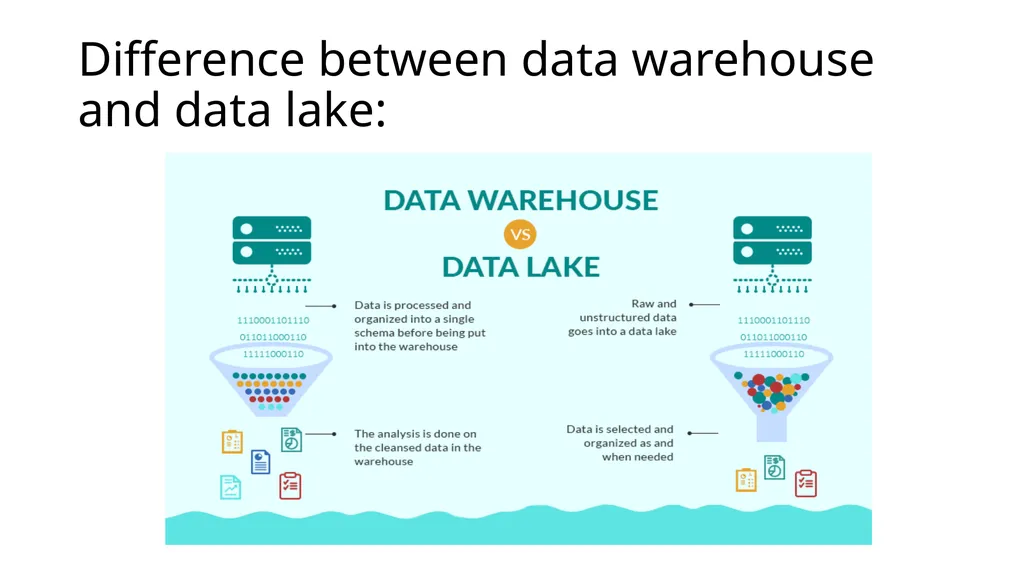
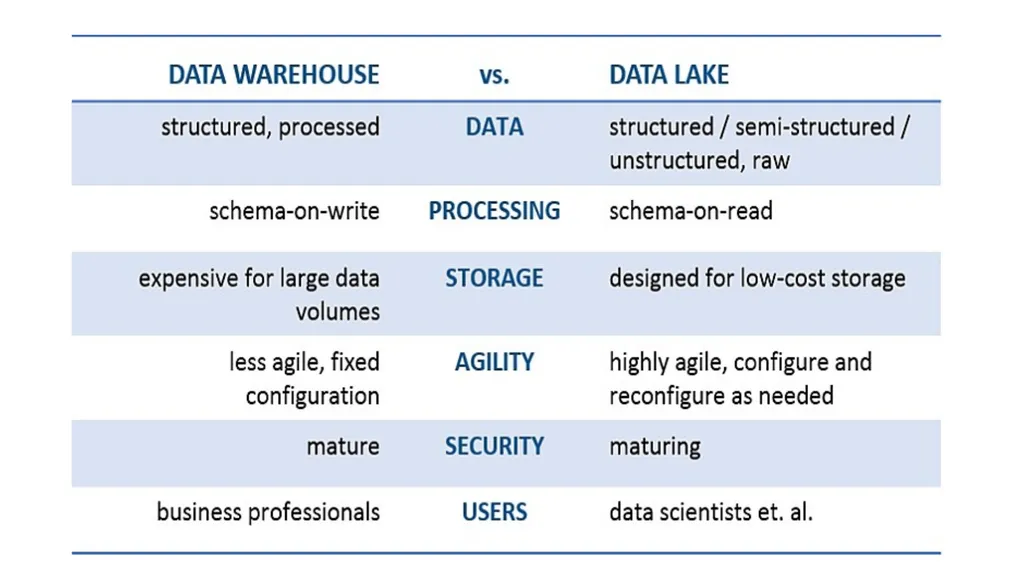
slide12. Difference between data warehouse and data lake:<br>
slide2. What is Data Science Data science is the study of data to extract meaningful insights for business. It is a multidisciplinary approach that combines principles and practices from the fields of mathematics, statistics, artificial intelligence, and computer engineering to analyze large amounts of data. This analysis helps data scientists to ask and answer questions like what happened, why it happened, what will happen, and what can be done with the results.<br>
slide4. DATA SCIENCE TECHNOLOGY STACK RAPID INFORMATION FACTORY (RIF) ECOSYSTEM
Rapid Information Factory (RIF) System is a technique and tool which is used for processing the data in the development. The Rapid Information Factory is a massive parallel data processing platform capable of processing theoretical unlimited size data sets.<br>
slide5. The Rapid Information Factory (RIF) platform supports five high-level layers: Functional Layer: The functional layer is the core processing capability of the factory. Core functional data processing methodology is the R-A-P-T-O- R framework.
Retrieve Super Step. The retrieve super step supports the interaction between external data sources and the factory.
Assess Super Step. The assess super step supports the data quality clean-up in the factory.
Process Super Step. The process super step converts data into data vault.
Transform Super Step. The transform super step converts data vault via sun modeling into dimensional modeling to form a data warehouse.<br>
slide6. Organize Super Step. The organize super step sub-divides the data warehouse into data marts.
Report Super Step. The report super step is the Virtualization capacity of the factory.
Business Layer:
Utility Layer.
Operational Management Layer.
Audit, Balance and Control Layer.<br>
slide7. Data Science Storage Tools: Data Science ecosystem has a bunch of series of tools which are used to build your solution. By using this tools and techniques you will get rapid information in advanced for its better capability and new development will occur each day.
There are two basic data processing tools to perform the practical of data science as given below:<br>
slide8. Schema on write ecosystem: Traditional Relational Database Management System requires a schema before loading the data.
Schema is a single structure which represents logical view of entire database. It represents how the data is organized and related between them.
To Retrieve the data from the relational database system, you need to run the specific structure query language to perform these tasks.
It stores a dense of data and all the data are stored into the datastore and schema on write widely use methodology to store the dense data.<br>
slide9. Schema on write schemas are build with the purpose which makes them change and maintain the data into the database.
When there is a lot of raw data which are available for the processing, during, some of the data are lost and it makes them weak for future analysis.
If some important data are not stored into the database then you cannot process the data for further data analysis<br>
slide10. Schema on read ecosystem: Schema on read ecosystem does not need schema, without this you can load the data into the database.
It has the capabilities to store the structure, semi-structure, unstructured data and it has potential to apply most of the flexibilities when we request the query during the execution.
Schema on read generate the fresh and new data and increase the speed of data generation as well as reduce the cycle time of data availability of actionable information.
These types of ecosystem that means schema on read and schema on write are very useful and essential for data scientist and engineering personal for better understanding about data preparation, modeling, development, and deployment of data into the production.<br>
slide11. Data Lake<br>
slide12. Difference between data warehouse and data lake:<br>