
Introduction to Palliative Care Intro to
SN
Published · 60 slides · 0 views

1 / 1





Description
Introduction to Palliative Care Intro to Palliative Care v4 7.14.2020 2 Welcome! House Keeping https:www.gend.coblogbest-practice-tips-for-using-zoom Virtual Etiquette Meeting participation: If youre connecting on your computer,
Related Topics
Share
Embed code
Download this presentation From Below
"Introduction to Palliative Care Intro to" is the property of its rightful owner. Permission is granted to download and print the materials on this website for personal, non-commercial use only, and to display it on your personal computer provided you do not modify the materials and that you retain all copyright notices contained in the materials. By downloading content from our website, you accept the terms of this agreement.
Presentation Transcript
01
Introduction to Palliative Care<br>
02
Intro to Palliative Care v4 7.14.2020 2 Welcome! House Keeping<br>
03
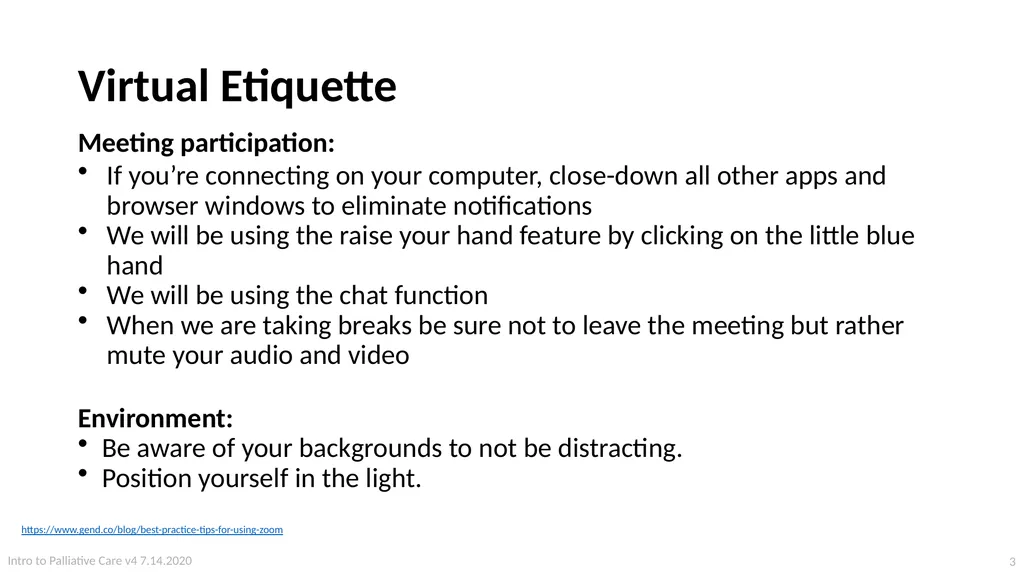
https://www.gend.co/blog/best-practice-tips-for-using-zoom Virtual Etiquette Meeting participation:
If you’re connecting on your computer, close-down all other apps and browser windows to eliminate notifications
We will be using the raise your hand feature by clicking on the little blue hand
We will be using the chat function
When we are taking breaks be sure not to leave the meeting but rather mute your audio and video
Environment:
Be aware of your backgrounds to not be distracting.
Position yourself in the light. Intro to Palliative Care v4 7.14.2020 3<br>
If you’re connecting on your computer, close-down all other apps and browser windows to eliminate notifications
We will be using the raise your hand feature by clicking on the little blue hand
We will be using the chat function
When we are taking breaks be sure not to leave the meeting but rather mute your audio and video
Environment:
Be aware of your backgrounds to not be distracting.
Position yourself in the light. Intro to Palliative Care v4 7.14.2020 3<br>
04
Expectations What do you want to get out of this training? Intro to Palliative Care v4 7.14.2020 4<br>
05
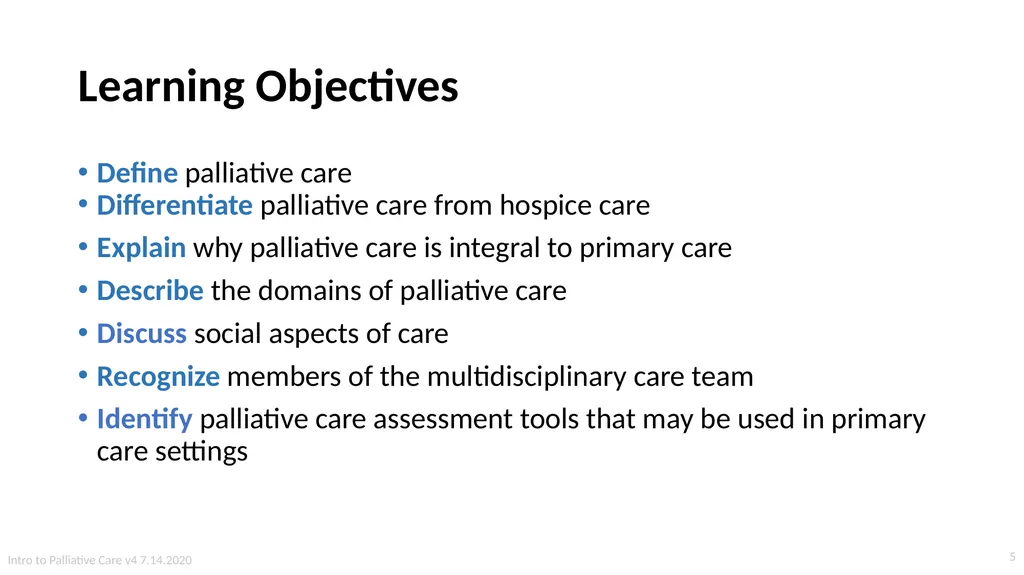
Learning Objectives Define palliative care
Differentiate palliative care from hospice care
Explain why palliative care is integral to primary care
Describe the domains of palliative care
Discuss social aspects of care
Recognize members of the multidisciplinary care team
Identify palliative care assessment tools that may be used in primary care settings Intro to Palliative Care v4 7.14.2020 5<br>
Differentiate palliative care from hospice care
Explain why palliative care is integral to primary care
Describe the domains of palliative care
Discuss social aspects of care
Recognize members of the multidisciplinary care team
Identify palliative care assessment tools that may be used in primary care settings Intro to Palliative Care v4 7.14.2020 5<br>
06
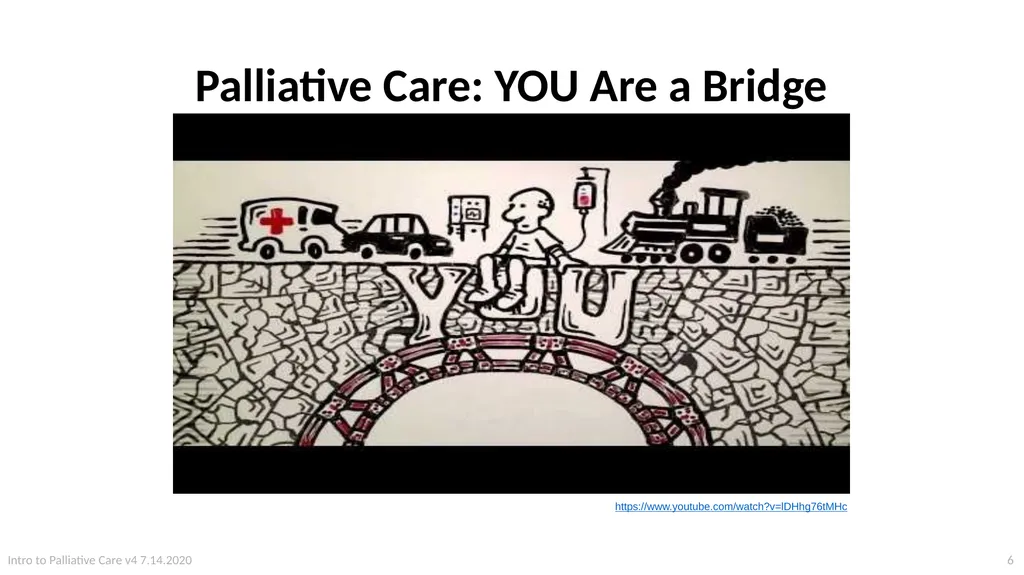
Palliative Care: YOU Are a Bridge Intro to Palliative Care v4 7.14.2020 6 https://www.youtube.com/watch?v=lDHhg76tMHc<br>
07
Palliative Care and Hospice Care A Population Health Approach Intro to Palliative Care v4 7.14.2020 7<br>
08
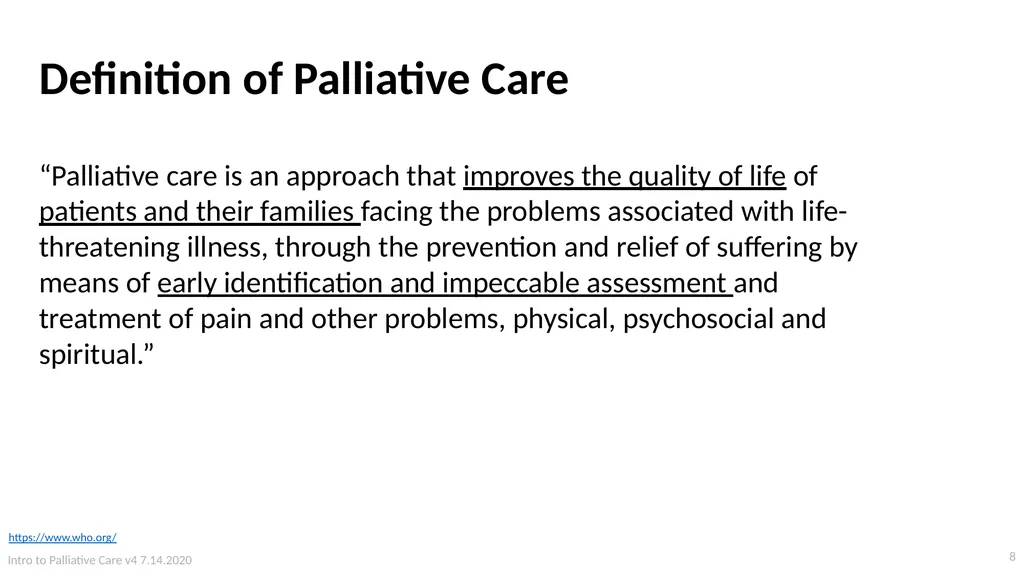
Intro to Palliative Care v4 7.14.2020 8 Definition of Palliative Care https://www.who.org/ “Palliative care is an approach that improves the quality of life of patients and their families facing the problems associated with life-threatening illness, through the prevention and relief of suffering by means of early identification and impeccable assessment and treatment of pain and other problems, physical, psychosocial and spiritual.”<br>
09
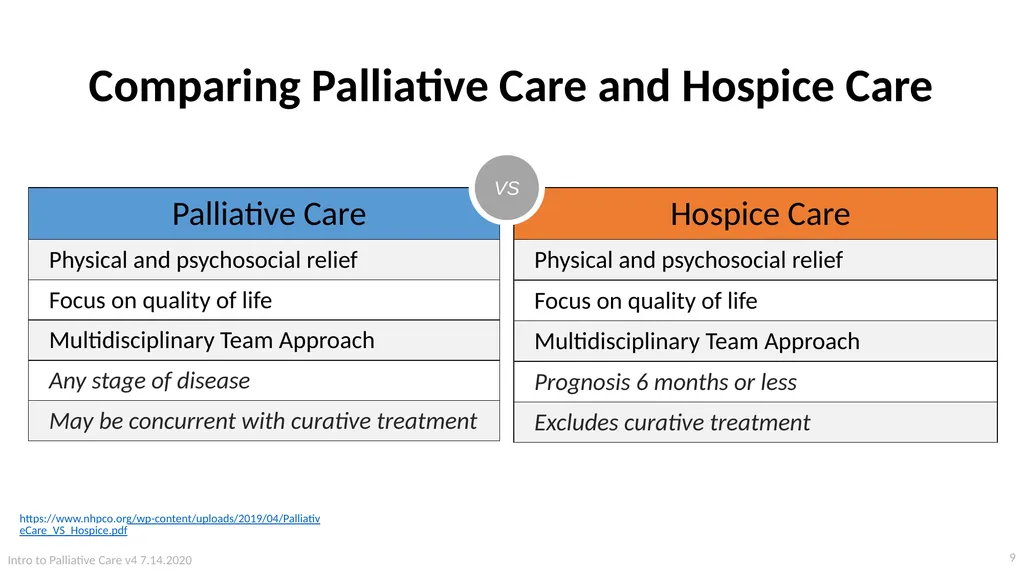
Comparing Palliative Care and Hospice Care Intro to Palliative Care v4 7.14.2020 9 https://www.nhpco.org/wp-content/uploads/2019/04/PalliativeCare_VS_Hospice.pdf<br>
10
Palliative Care is a
Primary Care Issue Intro to Palliative Care v4 7.14.2020 10<br>
11
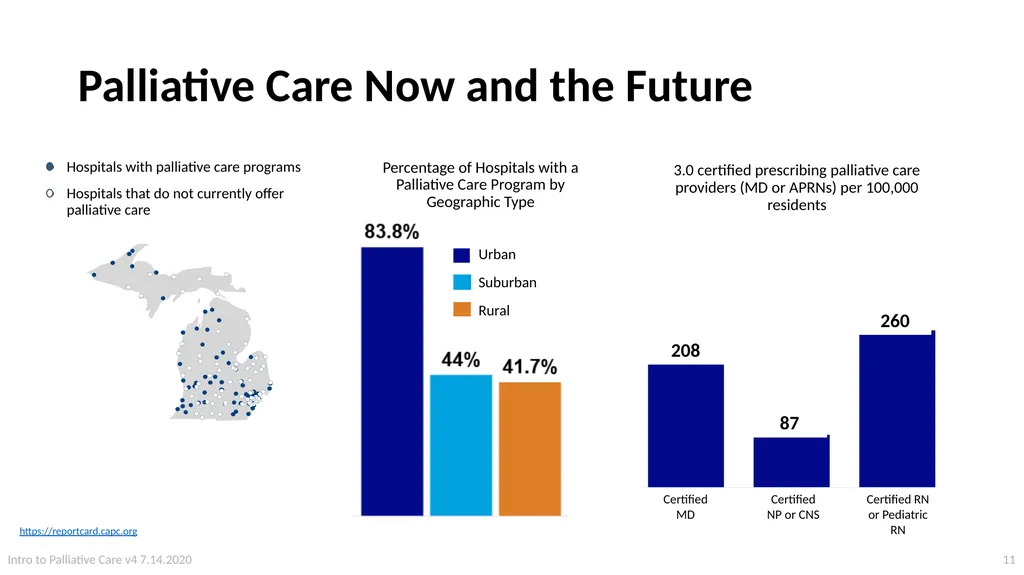
Palliative Care Now and the Future Intro to Palliative Care v4 7.14.2020 11 Percentage of Hospitals with a Palliative Care Program by Geographic Type https://reportcard.capc.org 3.0 certified prescribing palliative care providers (MD or APRNs) per 100,000 residents<br>
12
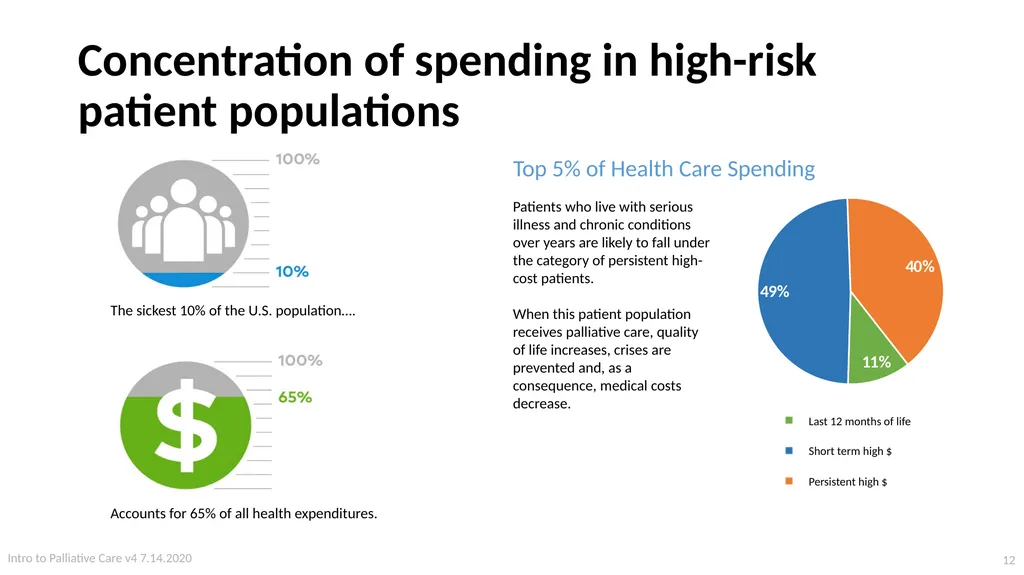
Concentration of spending in high-risk patient populations Intro to Palliative Care v4 7.14.2020 12 The sickest 10% of the U.S. population…. Accounts for 65% of all health expenditures. Top 5% of Health Care Spending Patients who live with serious illness and chronic conditions over years are likely to fall under the category of persistent high-cost patients.
When this patient population receives palliative care, quality of life increases, crises are prevented and, as a consequence, medical costs decrease.<br>
When this patient population receives palliative care, quality of life increases, crises are prevented and, as a consequence, medical costs decrease.<br>
13
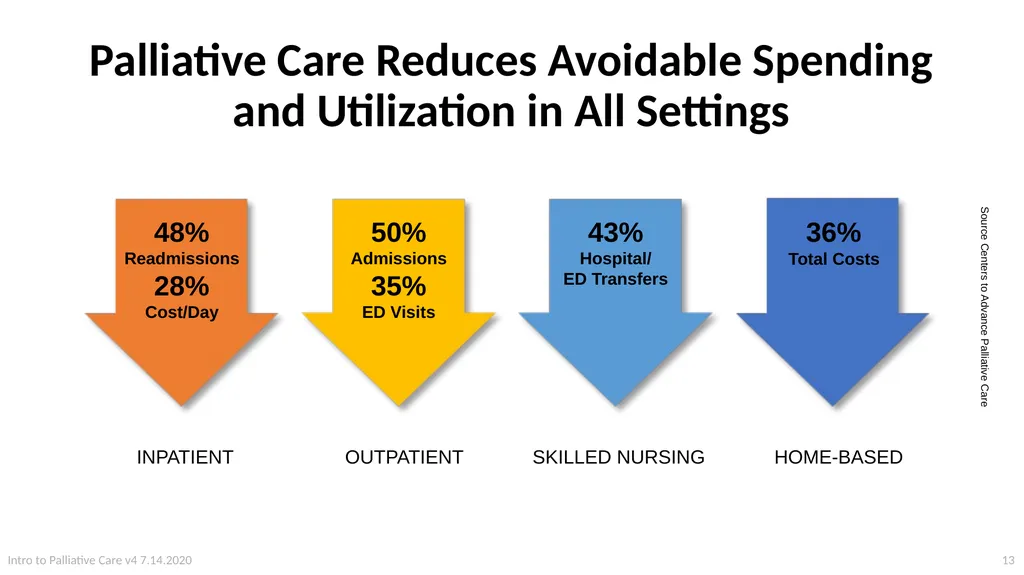
Palliative Care Reduces Avoidable Spending and Utilization in All Settings Intro to Palliative Care v4 7.14.2020 13 Source Centers to Advance Palliative Care INPATIENT OUTPATIENT SKILLED NURSING HOME-BASED<br>
14
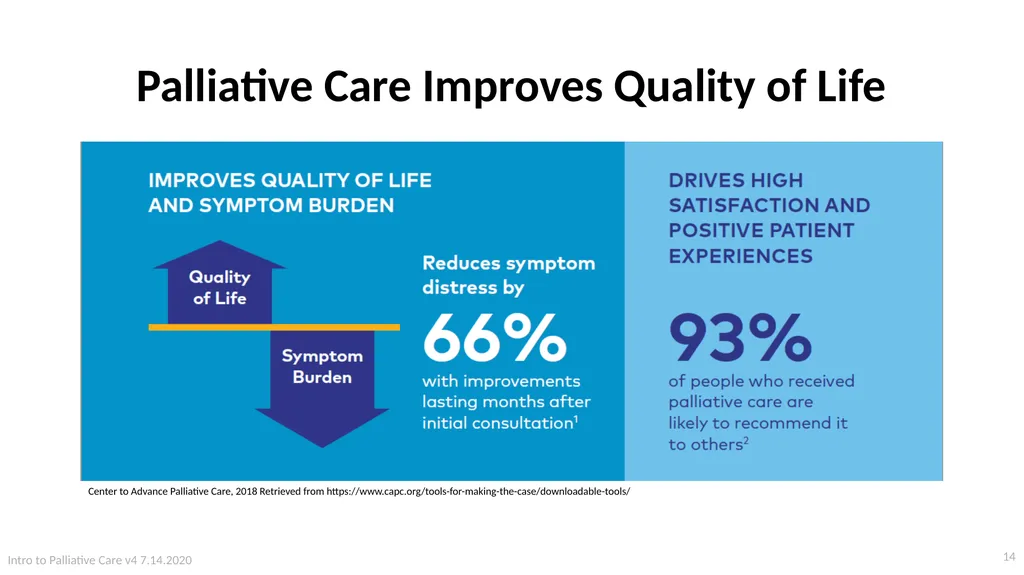
Palliative Care Improves Quality of Life Intro to Palliative Care v4 7.14.2020 14 Center to Advance Palliative Care, 2018 Retrieved from https://www.capc.org/tools-for-making-the-case/downloadable-tools/<br>
15
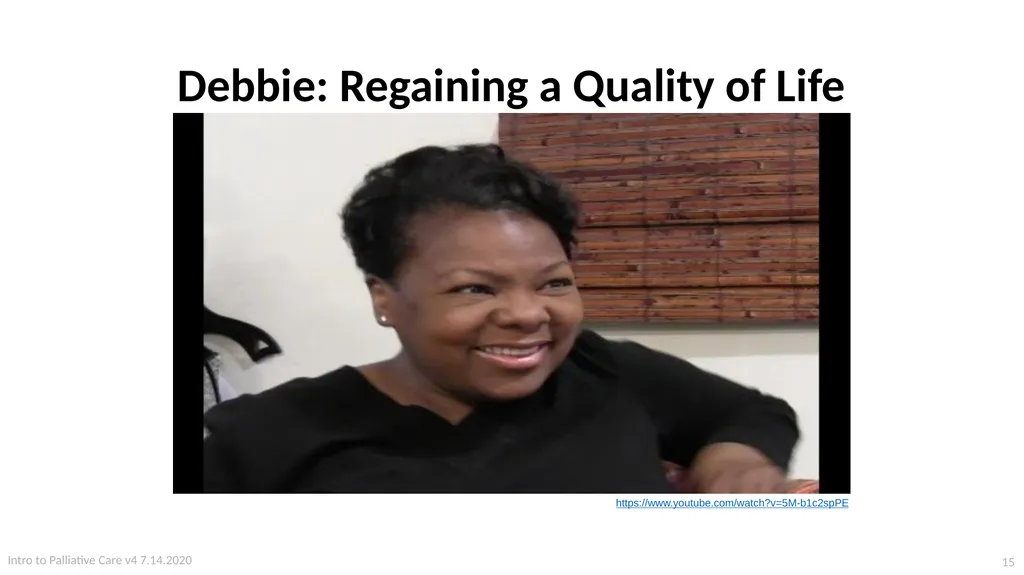
Debbie: Regaining a Quality of Life Intro to Palliative Care v4 7.14.2020 15 https://www.youtube.com/watch?v=5M-b1c2spPE<br>
16
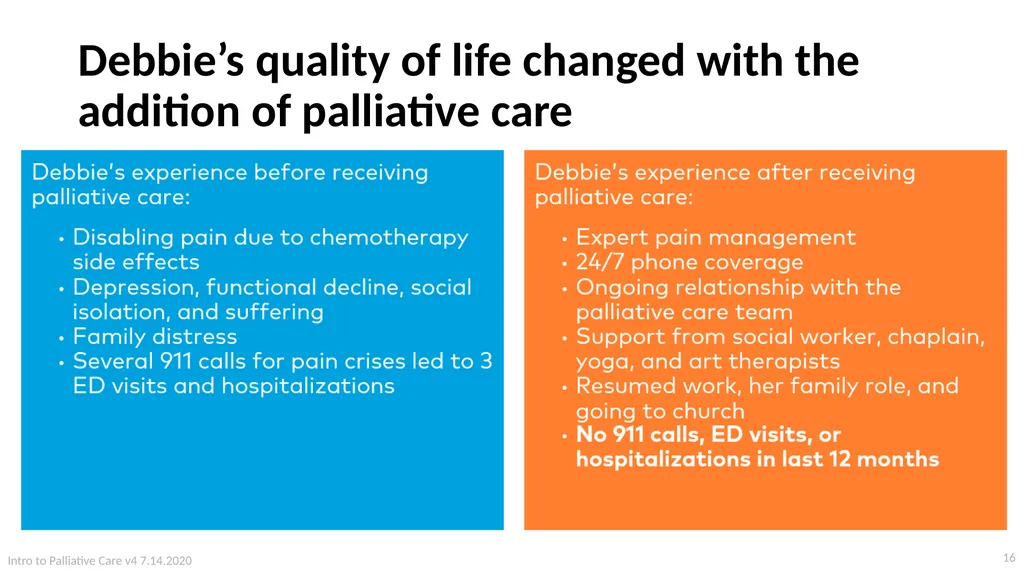
Debbie’s quality of life changed with the addition of palliative care Intro to Palliative Care v4 7.14.2020 16<br>
17
Break Intro to Palliative Care v4 7.14.2020 17 https://www.youtube.com/watch?v=5M-b1c2spPE<br>
18
Personal Perceptions of
Palliative Care Group Activity Intro to Palliative Care v4 7.14.2020 18<br>
19
“We are trained to see disease,
we are not trained to see suffering…” Intro to Palliative Care v4 7.14.2020 19 https://www.youtube.com/watch?v=WKSS9E2qy8A<br>
20
Domains of Palliative Care Intro to Palliative Care v4 7.14.2020 20<br>
21
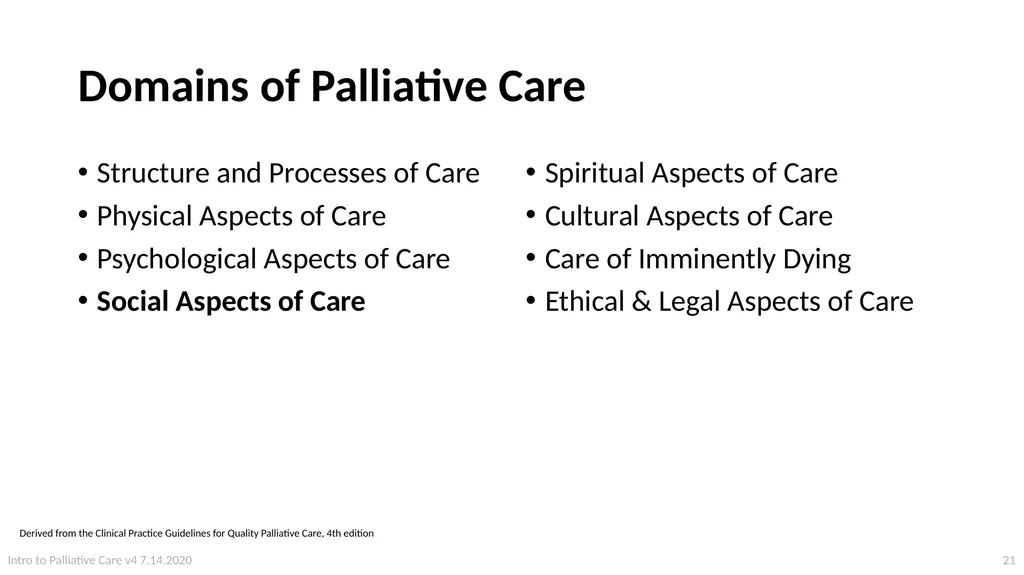
Domains of Palliative Care Structure and Processes of Care
Physical Aspects of Care
Psychological Aspects of Care
Social Aspects of Care Spiritual Aspects of Care
Cultural Aspects of Care
Care of Imminently Dying
Ethical & Legal Aspects of Care Intro to Palliative Care v4 7.14.2020 21 Derived from the Clinical Practice Guidelines for Quality Palliative Care, 4th edition<br>
Physical Aspects of Care
Psychological Aspects of Care
Social Aspects of Care Spiritual Aspects of Care
Cultural Aspects of Care
Care of Imminently Dying
Ethical & Legal Aspects of Care Intro to Palliative Care v4 7.14.2020 21 Derived from the Clinical Practice Guidelines for Quality Palliative Care, 4th edition<br>
22
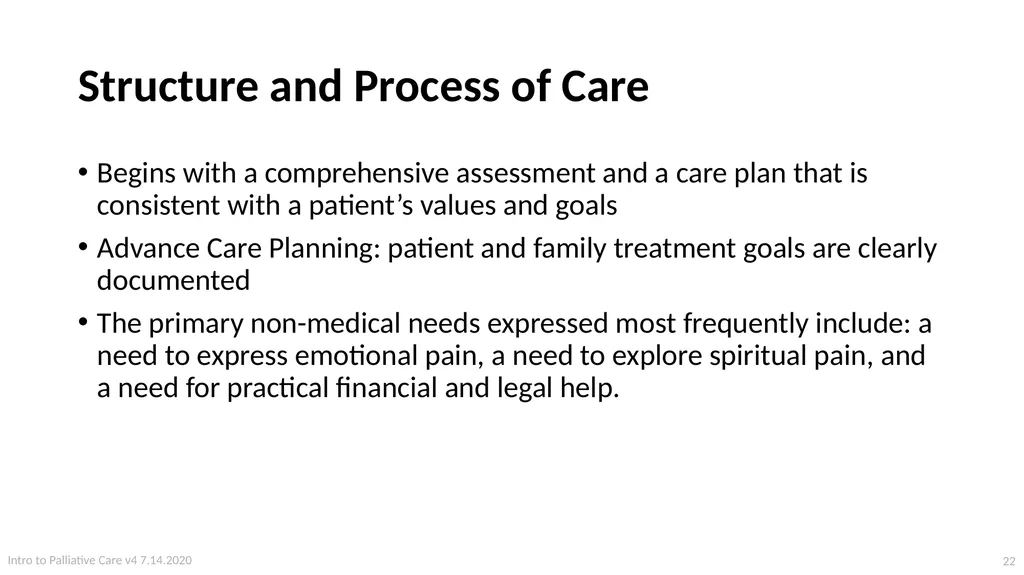
Structure and Process of Care Begins with a comprehensive assessment and a care plan that is consistent with a patient’s values and goals
Advance Care Planning: patient and family treatment goals are clearly documented
The primary non-medical needs expressed most frequently include: a need to express emotional pain, a need to explore spiritual pain, and a need for practical financial and legal help. Intro to Palliative Care v4 7.14.2020 22<br>
Advance Care Planning: patient and family treatment goals are clearly documented
The primary non-medical needs expressed most frequently include: a need to express emotional pain, a need to explore spiritual pain, and a need for practical financial and legal help. Intro to Palliative Care v4 7.14.2020 22<br>
23
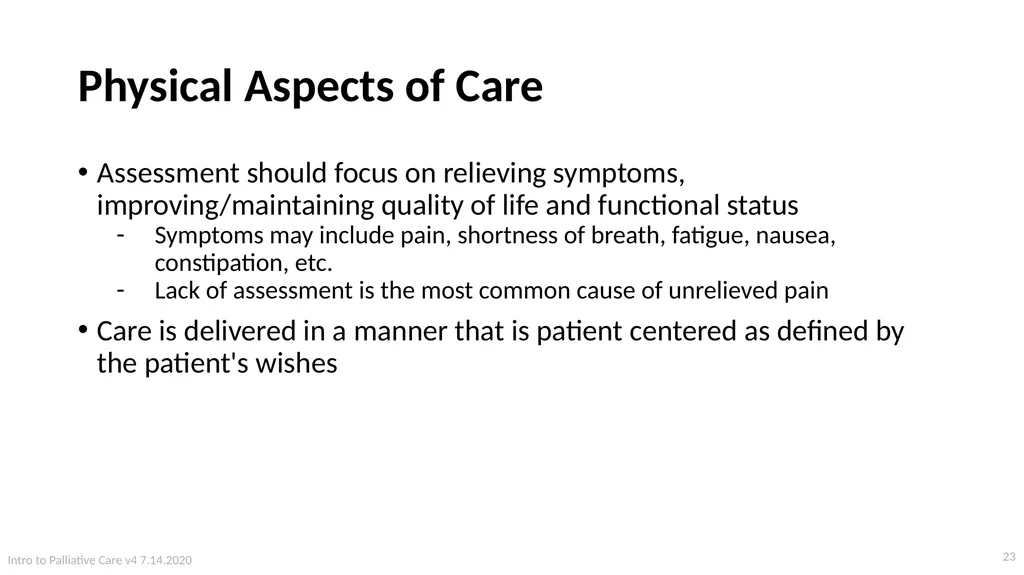
Physical Aspects of Care Assessment should focus on relieving symptoms, improving/maintaining quality of life and functional status
Symptoms may include pain, shortness of breath, fatigue, nausea, constipation, etc.
Lack of assessment is the most common cause of unrelieved pain
Care is delivered in a manner that is patient centered as defined by the patient's wishes Intro to Palliative Care v4 7.14.2020 23<br>
Symptoms may include pain, shortness of breath, fatigue, nausea, constipation, etc.
Lack of assessment is the most common cause of unrelieved pain
Care is delivered in a manner that is patient centered as defined by the patient's wishes Intro to Palliative Care v4 7.14.2020 23<br>
24
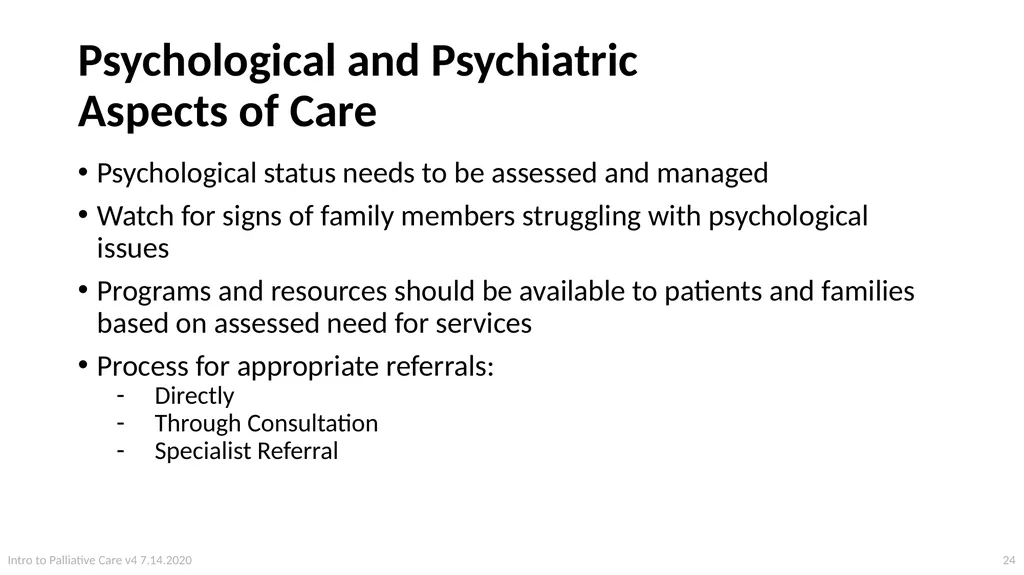
Psychological and Psychiatric
Aspects of Care Psychological status needs to be assessed and managed
Watch for signs of family members struggling with psychological issues
Programs and resources should be available to patients and families based on assessed need for services
Process for appropriate referrals:
Directly
Through Consultation
Specialist Referral Intro to Palliative Care v4 7.14.2020 24<br>
Watch for signs of family members struggling with psychological issues
Programs and resources should be available to patients and families based on assessed need for services
Process for appropriate referrals:
Directly
Through Consultation
Specialist Referral Intro to Palliative Care v4 7.14.2020 24<br>
25
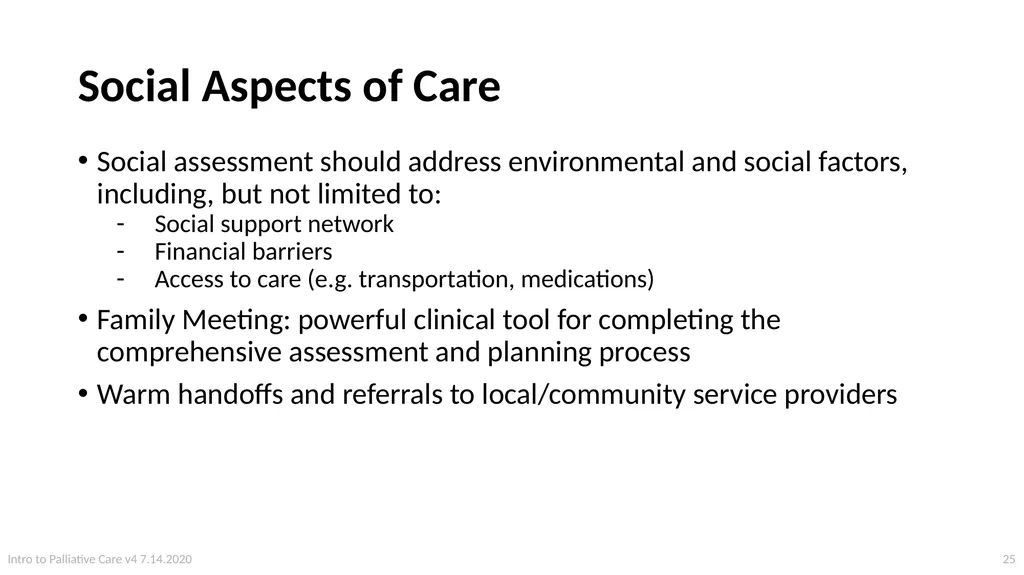
Social Aspects of Care Social assessment should address environmental and social factors, including, but not limited to:
Social support network
Financial barriers
Access to care (e.g. transportation, medications)
Family Meeting: powerful clinical tool for completing the comprehensive assessment and planning process
Warm handoffs and referrals to local/community service providers Intro to Palliative Care v4 7.14.2020 25<br>
Social support network
Financial barriers
Access to care (e.g. transportation, medications)
Family Meeting: powerful clinical tool for completing the comprehensive assessment and planning process
Warm handoffs and referrals to local/community service providers Intro to Palliative Care v4 7.14.2020 25<br>
26
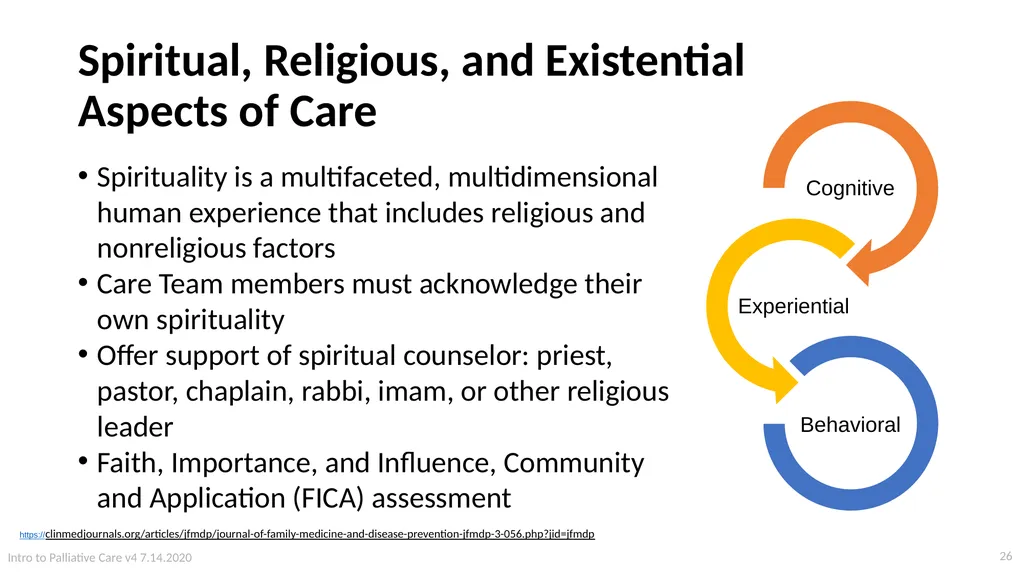
Spiritual, Religious, and Existential
Aspects of Care Spirituality is a multifaceted, multidimensional human experience that includes religious and nonreligious factors
Care Team members must acknowledge their own spirituality
Offer support of spiritual counselor: priest, pastor, chaplain, rabbi, imam, or other religious leader
Faith, Importance, and Influence, Community and Application (FICA) assessment Intro to Palliative Care v4 7.14.2020 26 https://clinmedjournals.org/articles/jfmdp/journal-of-family-medicine-and-disease-prevention-jfmdp-3-056.php?jid=jfmdp<br>
Care Team members must acknowledge their own spirituality
Offer support of spiritual counselor: priest, pastor, chaplain, rabbi, imam, or other religious leader
Faith, Importance, and Influence, Community and Application (FICA) assessment Intro to Palliative Care v4 7.14.2020 26 https://clinmedjournals.org/articles/jfmdp/journal-of-family-medicine-and-disease-prevention-jfmdp-3-056.php?jid=jfmdp<br>
27
Cultural Aspects of Care Racial and ethnic minorities experience persistent health care disparities
Cultural origins influence the way patients and health care providers think about palliative and end of life care
Respect values, beliefs, and traditions related to health, illness, family caregiver roles and decision making
Incorporate culturally sensitive resources and strategies into the plan of care
Remove barriers to communication by ensuring that linguistic needs are met Intro to Palliative Care v4 7.14.2020 27<br>
Cultural origins influence the way patients and health care providers think about palliative and end of life care
Respect values, beliefs, and traditions related to health, illness, family caregiver roles and decision making
Incorporate culturally sensitive resources and strategies into the plan of care
Remove barriers to communication by ensuring that linguistic needs are met Intro to Palliative Care v4 7.14.2020 27<br>
28
Care of Imminently Dying Whenever possible, early access to hospice care should be facilitated
Place particular emphasis on days leading up to and just after death of the patient
Ensure patient receives adequate management of pain and other symptoms
Avoid inappropriate prolongation of dying
Address spiritual and cultural needs
Signs and symptoms of impending death are recognized and communicated to patients and families
Provide support and education to the family
Assist in making critical decisions
Relieve possible burdens imposed on loved ones
Develop post-death care and bereavement follow up plan Intro to Palliative Care v4 7.14.2020 28<br>
Place particular emphasis on days leading up to and just after death of the patient
Ensure patient receives adequate management of pain and other symptoms
Avoid inappropriate prolongation of dying
Address spiritual and cultural needs
Signs and symptoms of impending death are recognized and communicated to patients and families
Provide support and education to the family
Assist in making critical decisions
Relieve possible burdens imposed on loved ones
Develop post-death care and bereavement follow up plan Intro to Palliative Care v4 7.14.2020 28<br>
29
Ethical and Legal Aspects of Care Address guardianship and goals of care
Identify the health proxy
Honor patient preferences or those made by legal proxies or surrogate decision makers
Maintain professional boundaries
Remain knowledgeable of organizational policies
Communicate prognosis essential for informed decision making Intro to Palliative Care v4 7.14.2020 29<br>
Identify the health proxy
Honor patient preferences or those made by legal proxies or surrogate decision makers
Maintain professional boundaries
Remain knowledgeable of organizational policies
Communicate prognosis essential for informed decision making Intro to Palliative Care v4 7.14.2020 29<br>
30
Identify Members of the Multidisciplinary Care Team Intro to Palliative Care v4 7.14.2020 30<br>
31
What patients do you think would benefit? Intro to Palliative Care v4 7.14.2020 31<br>
32
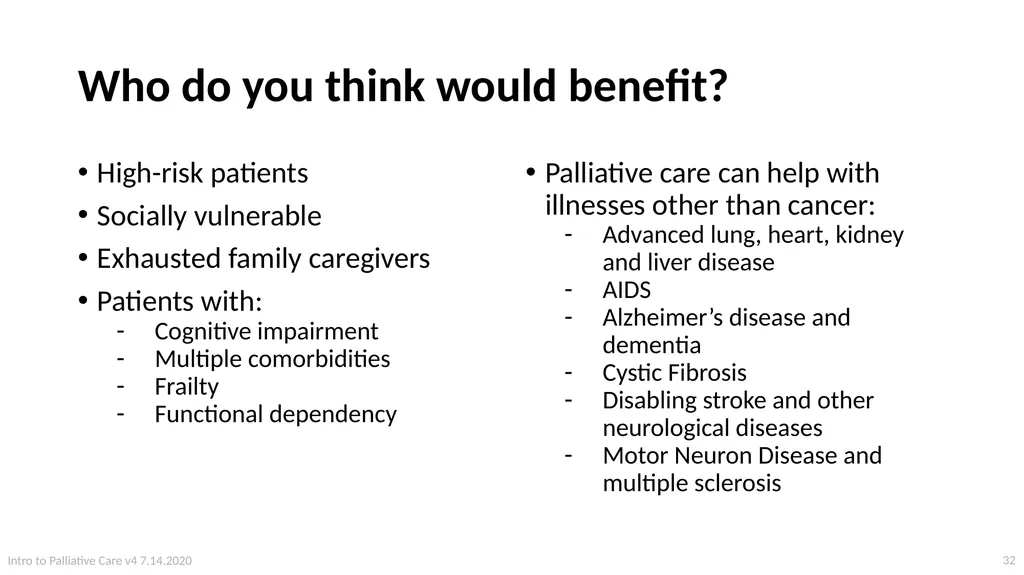
Who do you think would benefit? High-risk patients
Socially vulnerable
Exhausted family caregivers
Patients with:
Cognitive impairment
Multiple comorbidities
Frailty
Functional dependency Palliative care can help with illnesses other than cancer:
Advanced lung, heart, kidney and liver disease
AIDS
Alzheimer’s disease and dementia
Cystic Fibrosis
Disabling stroke and other neurological diseases
Motor Neuron Disease and multiple sclerosis Intro to Palliative Care v4 7.14.2020 32<br>
Socially vulnerable
Exhausted family caregivers
Patients with:
Cognitive impairment
Multiple comorbidities
Frailty
Functional dependency Palliative care can help with illnesses other than cancer:
Advanced lung, heart, kidney and liver disease
AIDS
Alzheimer’s disease and dementia
Cystic Fibrosis
Disabling stroke and other neurological diseases
Motor Neuron Disease and multiple sclerosis Intro to Palliative Care v4 7.14.2020 32<br>
33
Who provides palliative care? Intro to Palliative Care v4 7.14.2020 33<br>
34
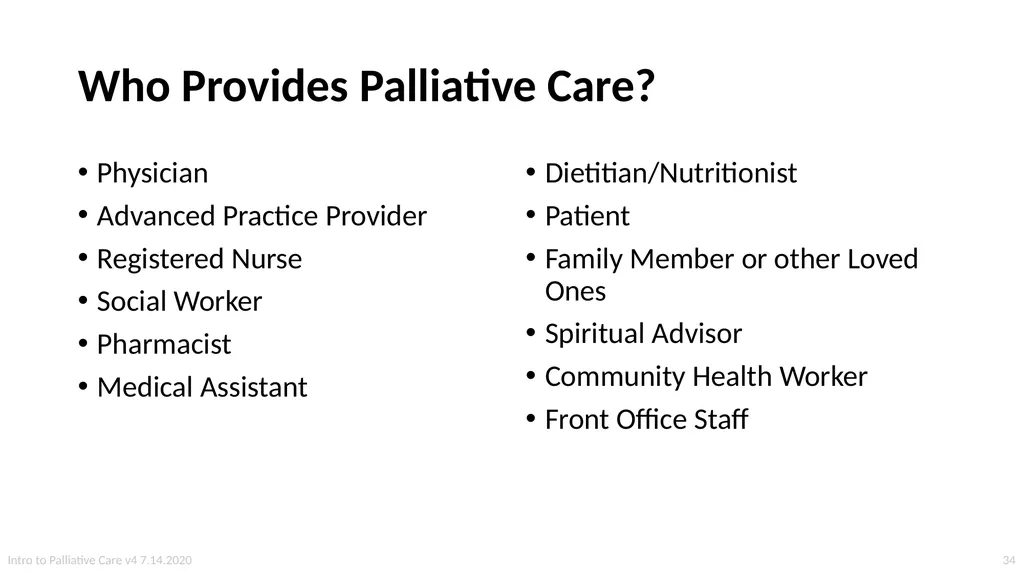
Who Provides Palliative Care? Dietitian/Nutritionist
Patient
Family Member or other Loved Ones
Spiritual Advisor
Community Health Worker
Front Office Staff Intro to Palliative Care v4 7.14.2020 34 Physician
Advanced Practice Provider
Registered Nurse
Social Worker
Pharmacist
Medical Assistant<br>
Patient
Family Member or other Loved Ones
Spiritual Advisor
Community Health Worker
Front Office Staff Intro to Palliative Care v4 7.14.2020 34 Physician
Advanced Practice Provider
Registered Nurse
Social Worker
Pharmacist
Medical Assistant<br>
35
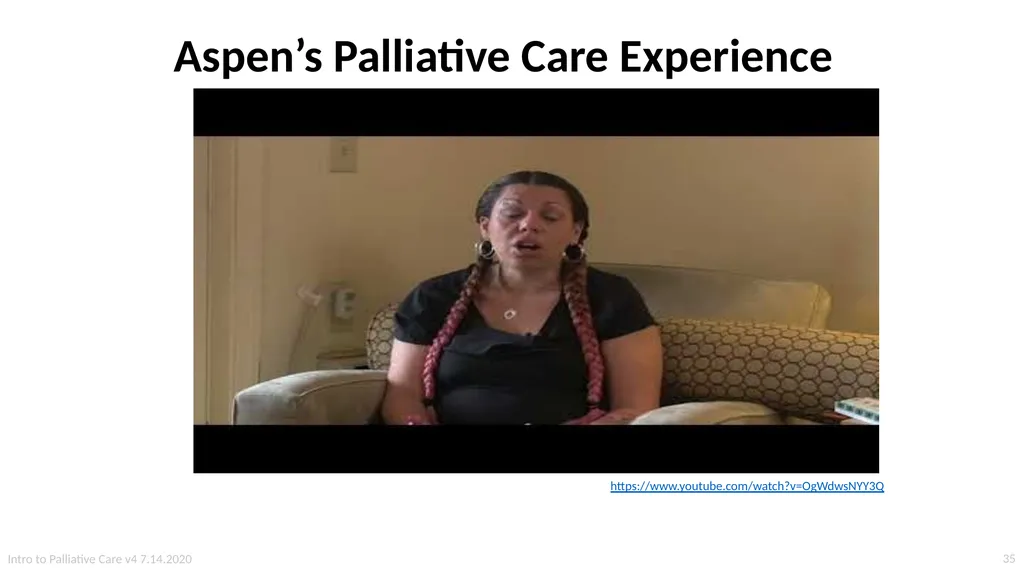
Aspen’s Palliative Care Experience Intro to Palliative Care v4 7.14.2020 35 https://www.youtube.com/watch?v=OgWdwsNYY3Q<br>
36
Patient Focused Approaches Decisions are driven by the patient's goals of care and wishes
Provide support to patient to express wishes
Provide support to family and caregivers so that patients may realize goals of care
Navigate, coordinate a complex/confusing healthcare system, understand the plan of care Intro to Palliative Care v4 7.14.2020 36<br>
Provide support to patient to express wishes
Provide support to family and caregivers so that patients may realize goals of care
Navigate, coordinate a complex/confusing healthcare system, understand the plan of care Intro to Palliative Care v4 7.14.2020 36<br>
37
Family: Members of the Care Team Central to the delivery of care are family members and/or caregivers: Provide insights into progression, improvement, and quality of life
May advocate for patient needs, wishes and desires
Source of emotional support and reliability for patients in ever-changing circumstances
Provide long-term, 24 hour care with minimal emotional and psychological support Family members benefit from the support of the palliative care team: Experience physical, emotional, and mental stress caring for family member or friend
Prone to social isolation and caregiver burden
Benefit from support of the overall palliative care team in the form of information, counselling, or practical assistance and training Intro to Palliative Care v4 7.14.2020 37<br>
May advocate for patient needs, wishes and desires
Source of emotional support and reliability for patients in ever-changing circumstances
Provide long-term, 24 hour care with minimal emotional and psychological support Family members benefit from the support of the palliative care team: Experience physical, emotional, and mental stress caring for family member or friend
Prone to social isolation and caregiver burden
Benefit from support of the overall palliative care team in the form of information, counselling, or practical assistance and training Intro to Palliative Care v4 7.14.2020 37<br>
38
Family Related Challenges Family Functioning
May have less than optimal relationships
Incongruent patient and family member needs
Communication process barriers
Impaired concentration
Timing and amount of information
Family members not wanting to bother the health care team
Family members’ rejection of support
Cultural issues and provider comfort level Intro to Palliative Care v4 7.14.2020 38<br>
May have less than optimal relationships
Incongruent patient and family member needs
Communication process barriers
Impaired concentration
Timing and amount of information
Family members not wanting to bother the health care team
Family members’ rejection of support
Cultural issues and provider comfort level Intro to Palliative Care v4 7.14.2020 38<br>
39
Family Meeting When possible, the patient should determine who they would like to be present
Identify the health proxy
Helpful to have members of the care team available to the patient to aid in decision making
Ensure an environment where patients and families feel comfortable sharing information Intro to Palliative Care v4 7.14.2020 39<br>
Identify the health proxy
Helpful to have members of the care team available to the patient to aid in decision making
Ensure an environment where patients and families feel comfortable sharing information Intro to Palliative Care v4 7.14.2020 39<br>
40
Shared Decision Making https://www.fairhealthconsumer.org/shared-decision-making Engages patients and families in decisions about their care
Increases their involvement and satisfaction
Helps patients and families clearly communicate their goals and needs
No “one right way” to intervene Intro to Palliative Care v4 7.14.2020 40<br>
Increases their involvement and satisfaction
Helps patients and families clearly communicate their goals and needs
No “one right way” to intervene Intro to Palliative Care v4 7.14.2020 40<br>
41
Integrating Palliative Care into the Primary Care Setting Intro to Palliative Care v4 7.14.2020 41<br>
42
Challenges and Opportunities Group Activity Intro to Palliative Care v4 7.14.2020 42<br>
43
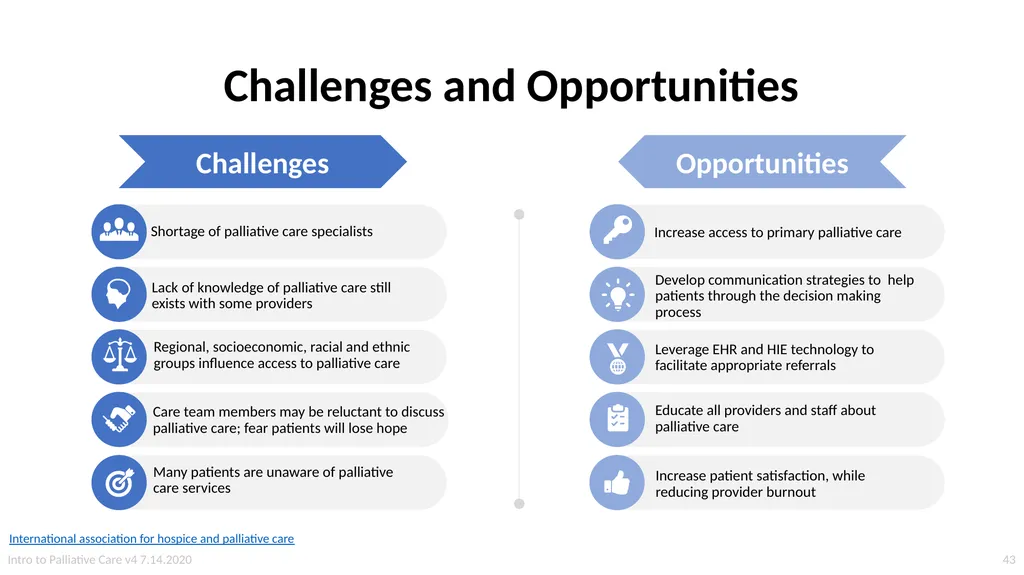
Challenges and Opportunities Challenges Opportunities Shortage of palliative care specialists Lack of knowledge of palliative care still exists with some providers Regional, socioeconomic, racial and ethnic groups influence access to palliative care Care team members may be reluctant to discuss palliative care; fear patients will lose hope Many patients are unaware of palliative care services Develop communication strategies to help patients through the decision making process Leverage EHR and HIE technology to facilitate appropriate referrals Educate all providers and staff about palliative care Increase patient satisfaction, while reducing provider burnout Increase access to primary palliative care Intro to Palliative Care v4 7.14.2020 43 International association for hospice and palliative care<br>
44
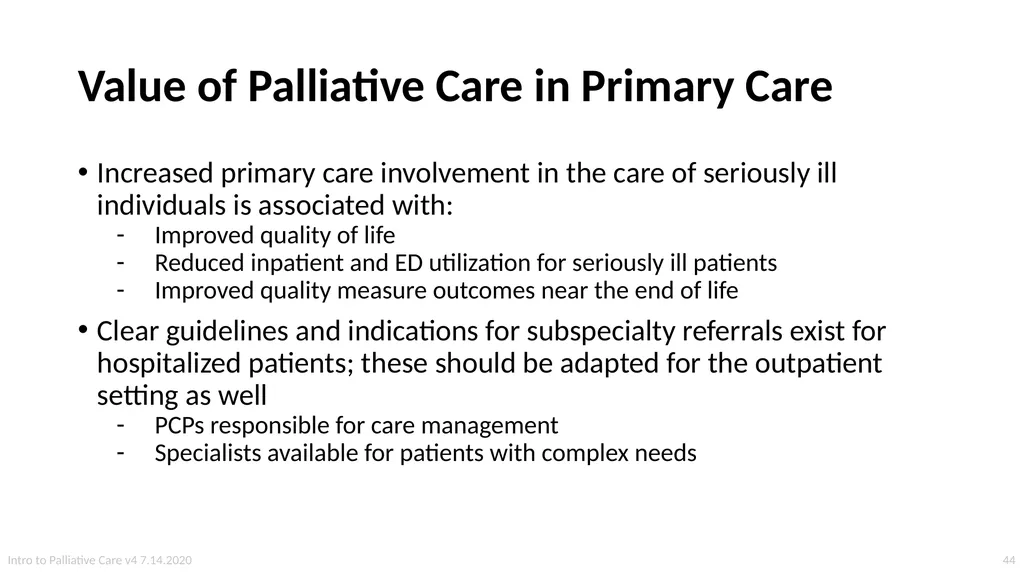
Value of Palliative Care in Primary Care Increased primary care involvement in the care of seriously ill individuals is associated with:
Improved quality of life
Reduced inpatient and ED utilization for seriously ill patients
Improved quality measure outcomes near the end of life
Clear guidelines and indications for subspecialty referrals exist for hospitalized patients; these should be adapted for the outpatient setting as well
PCPs responsible for care management
Specialists available for patients with complex needs Intro to Palliative Care v4 7.14.2020 44<br>
Improved quality of life
Reduced inpatient and ED utilization for seriously ill patients
Improved quality measure outcomes near the end of life
Clear guidelines and indications for subspecialty referrals exist for hospitalized patients; these should be adapted for the outpatient setting as well
PCPs responsible for care management
Specialists available for patients with complex needs Intro to Palliative Care v4 7.14.2020 44<br>
45
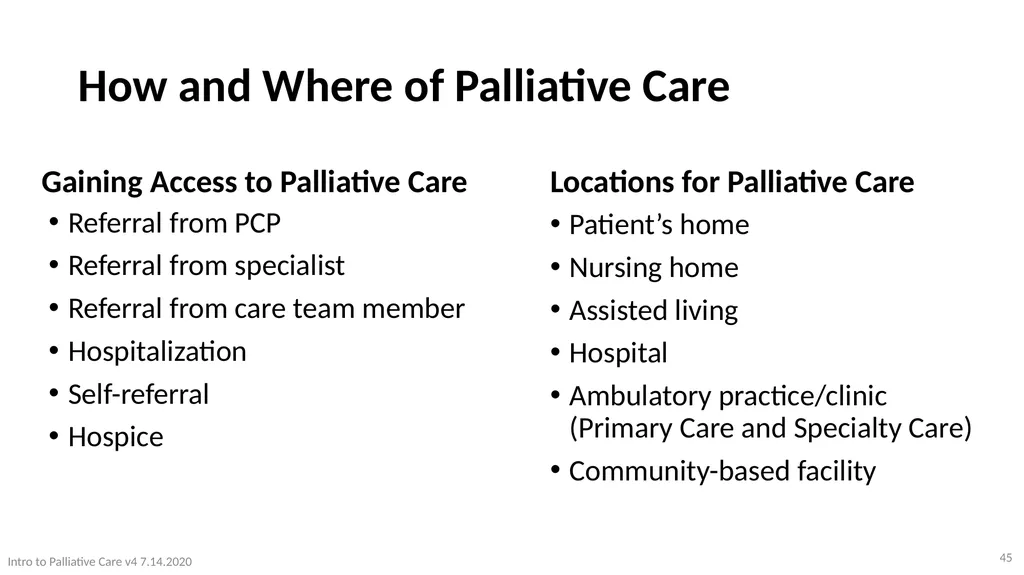
How and Where of Palliative Care Gaining Access to Palliative Care Referral from PCP
Referral from specialist
Referral from care team member
Hospitalization
Self-referral
Hospice Locations for Palliative Care Patient’s home
Nursing home
Assisted living
Hospital
Ambulatory practice/clinic (Primary Care and Specialty Care)
Community-based facility Intro to Palliative Care v4 7.14.2020 45<br>
Referral from specialist
Referral from care team member
Hospitalization
Self-referral
Hospice Locations for Palliative Care Patient’s home
Nursing home
Assisted living
Hospital
Ambulatory practice/clinic (Primary Care and Specialty Care)
Community-based facility Intro to Palliative Care v4 7.14.2020 45<br>
46
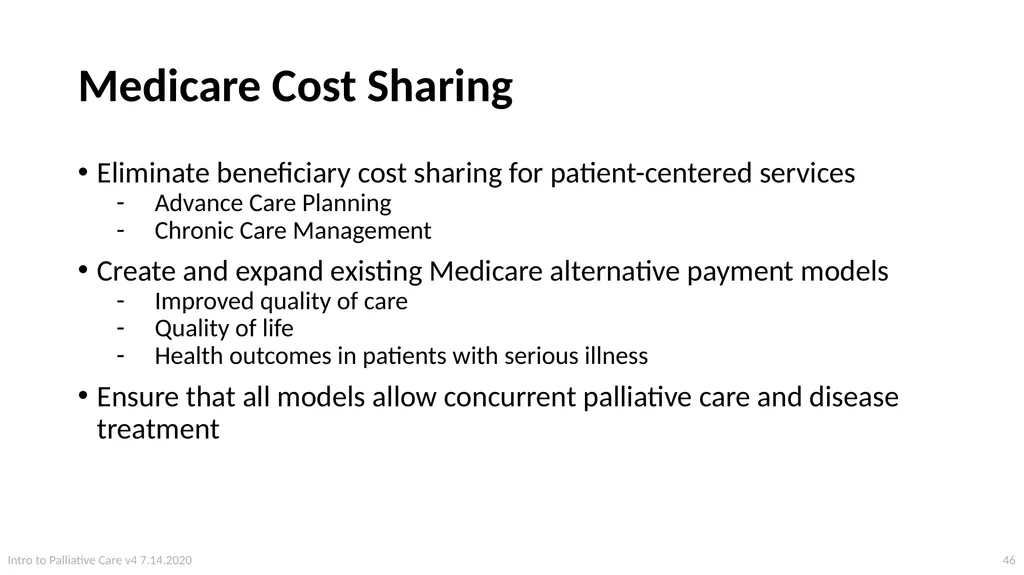
Medicare Cost Sharing Eliminate beneficiary cost sharing for patient-centered services
Advance Care Planning
Chronic Care Management
Create and expand existing Medicare alternative payment models
Improved quality of care
Quality of life
Health outcomes in patients with serious illness
Ensure that all models allow concurrent palliative care and disease treatment Intro to Palliative Care v4 7.14.2020 46<br>
Advance Care Planning
Chronic Care Management
Create and expand existing Medicare alternative payment models
Improved quality of care
Quality of life
Health outcomes in patients with serious illness
Ensure that all models allow concurrent palliative care and disease treatment Intro to Palliative Care v4 7.14.2020 46<br>
47
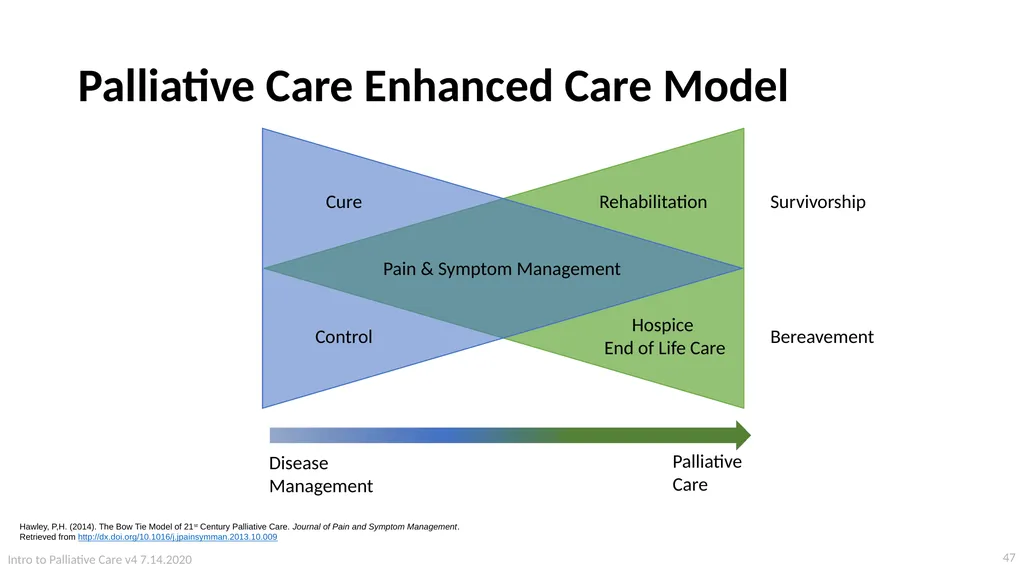
Palliative Care Enhanced Care Model Intro to Palliative Care v4 7.14.2020 47 Hawley, P,H. (2014). The Bow Tie Model of 21st Century Palliative Care. Journal of Pain and Symptom Management. Retrieved from http://dx.doi.org/10.1016/j.jpainsymman.2013.10.009<br>
48
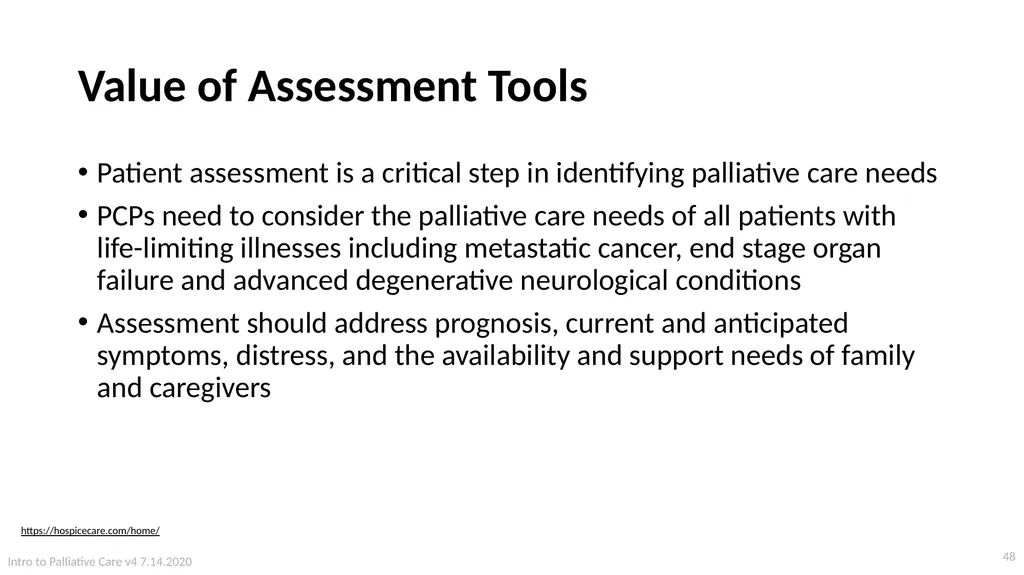
Value of Assessment Tools Patient assessment is a critical step in identifying palliative care needs
PCPs need to consider the palliative care needs of all patients with life-limiting illnesses including metastatic cancer, end stage organ failure and advanced degenerative neurological conditions
Assessment should address prognosis, current and anticipated symptoms, distress, and the availability and support needs of family and caregivers Intro to Palliative Care v4 7.14.2020 48 https://hospicecare.com/home/<br>
PCPs need to consider the palliative care needs of all patients with life-limiting illnesses including metastatic cancer, end stage organ failure and advanced degenerative neurological conditions
Assessment should address prognosis, current and anticipated symptoms, distress, and the availability and support needs of family and caregivers Intro to Palliative Care v4 7.14.2020 48 https://hospicecare.com/home/<br>
49
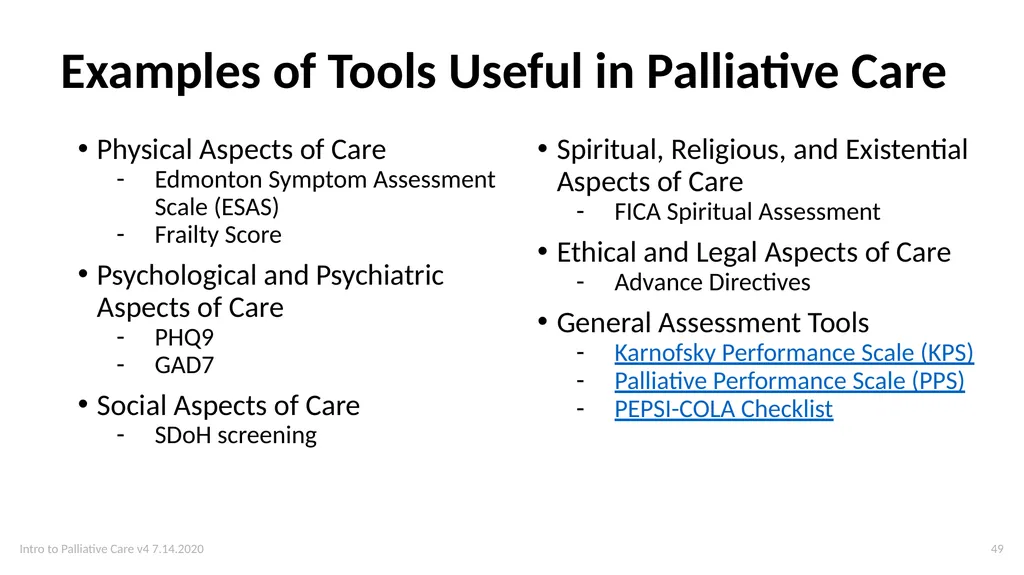
Examples of Tools Useful in Palliative Care Physical Aspects of Care
Edmonton Symptom Assessment Scale (ESAS)
Frailty Score
Psychological and Psychiatric Aspects of Care
PHQ9
GAD7
Social Aspects of Care
SDoH screening Spiritual, Religious, and Existential Aspects of Care
FICA Spiritual Assessment
Ethical and Legal Aspects of Care
Advance Directives
General Assessment Tools
Karnofsky Performance Scale (KPS)
Palliative Performance Scale (PPS)
PEPSI-COLA Checklist Intro to Palliative Care v4 7.14.2020 49<br>
Edmonton Symptom Assessment Scale (ESAS)
Frailty Score
Psychological and Psychiatric Aspects of Care
PHQ9
GAD7
Social Aspects of Care
SDoH screening Spiritual, Religious, and Existential Aspects of Care
FICA Spiritual Assessment
Ethical and Legal Aspects of Care
Advance Directives
General Assessment Tools
Karnofsky Performance Scale (KPS)
Palliative Performance Scale (PPS)
PEPSI-COLA Checklist Intro to Palliative Care v4 7.14.2020 49<br>
50
Questions Intro to Palliative Care v4 7.14.2020 50<br>
51
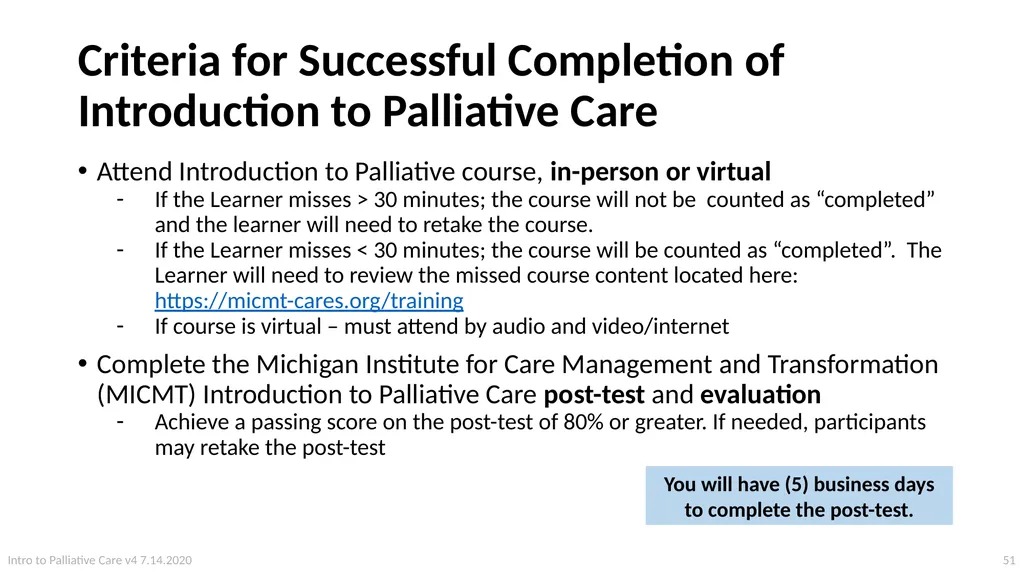
You will have (5) business days to complete the post-test. Criteria for Successful Completion of Introduction to Palliative Care Attend Introduction to Palliative course, in-person or virtual
If the Learner misses > 30 minutes; the course will not be counted as “completed” and the learner will need to retake the course.
If the Learner misses < 30 minutes; the course will be counted as “completed”. The Learner will need to review the missed course content located here: https://micmt-cares.org/training
If course is virtual – must attend by audio and video/internet
Complete the Michigan Institute for Care Management and Transformation (MICMT) Introduction to Palliative Care post-test and evaluation
Achieve a passing score on the post-test of 80% or greater. If needed, participants may retake the post-test Intro to Palliative Care v4 7.14.2020 51<br>
If the Learner misses > 30 minutes; the course will not be counted as “completed” and the learner will need to retake the course.
If the Learner misses < 30 minutes; the course will be counted as “completed”. The Learner will need to review the missed course content located here: https://micmt-cares.org/training
If course is virtual – must attend by audio and video/internet
Complete the Michigan Institute for Care Management and Transformation (MICMT) Introduction to Palliative Care post-test and evaluation
Achieve a passing score on the post-test of 80% or greater. If needed, participants may retake the post-test Intro to Palliative Care v4 7.14.2020 51<br>
52
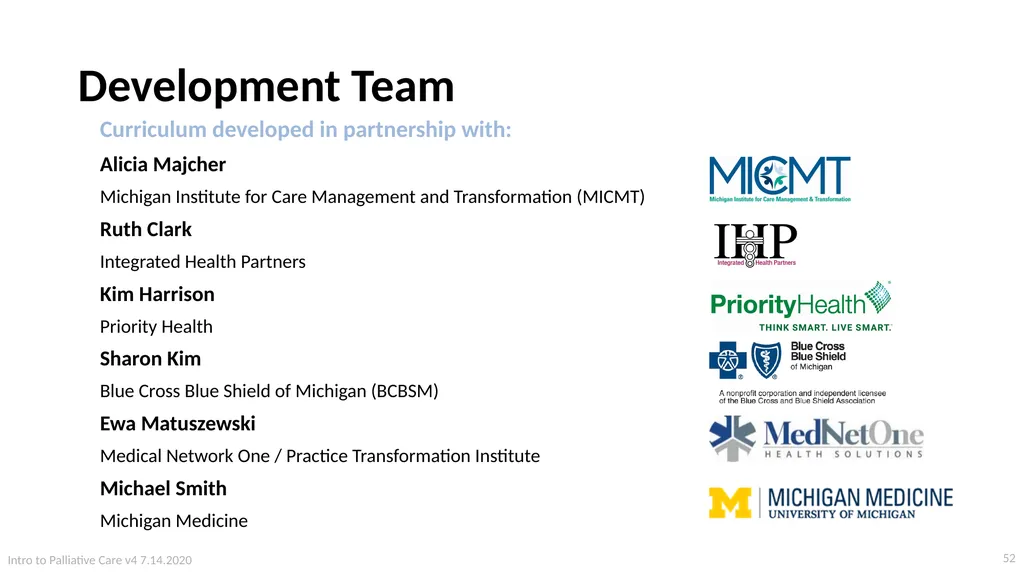
Development Team Intro to Palliative Care v4 7.14.2020 52<br>
53
Michigan Institute for Care Management and Transformation (MICMT) Partnership between University of Michigan and
BCBSM Physician Group Incentive Program (PGIP) To help expand the adoption of and access to multidisciplinary care teams providing care management to populations served by the physician community in order to improve care coordination and outcomes for patients with complex illness, emerging risk, and transitions of care. Who
We Are Goal of MICMT Intro to Palliative Care v4 7.14.2020 53<br>
BCBSM Physician Group Incentive Program (PGIP) To help expand the adoption of and access to multidisciplinary care teams providing care management to populations served by the physician community in order to improve care coordination and outcomes for patients with complex illness, emerging risk, and transitions of care. Who
We Are Goal of MICMT Intro to Palliative Care v4 7.14.2020 53<br>
54
Introduction to Palliative Care
Curriculum Development Please provide the following as an appropriate reference if you use this material:
“Material based on the Introduction to Palliative Care course developed through a collaborative effort by the following Michigan organizations: MICMT, PTI, IHP, Priority Health, BCBSM, and Michigan Medicine.”
Questions about using or replicating this curriculum should be sent to: micmt-requests@med.umich.edu
Please follow this link to apply to become an approved trainer for this curriculum: www.micmt-cares.org Intro to Palliative Care v4 7.14.2020 54<br>
“Material based on the Introduction to Palliative Care course developed through a collaborative effort by the following Michigan organizations: MICMT, PTI, IHP, Priority Health, BCBSM, and Michigan Medicine.”
Questions about using or replicating this curriculum should be sent to: micmt-requests@med.umich.edu
Please follow this link to apply to become an approved trainer for this curriculum: www.micmt-cares.org Intro to Palliative Care v4 7.14.2020 54<br>
55
Appendix Intro to Palliative Care v4 7.14.2020 55<br>
56
Resources Videos
Palliative Care, a Different Voice in Healthcare
Introducing the Palliative Care Team
Readings
Palliative Care Clinical Practice Guidelines (2018)
Implementation Tools and Resources
Advanced Care Planning
Awdish, R. (2018). In Shock: My Journey from Death to Recovery and the Redemptive Power of Hope
Ferrell, B.R., Twaddle, M.L., Melnick, A., and Meier, D. (2018). National Consensus Project Clinical Practice Guidelines for Quality Palliative Care Guidelines, 4th Edition. Journal of Palliative Medicine, Volume 21, Number 12.
Gawande, A. (2015). Being Mortal Intro to Palliative Care v4 7.14.2020 56<br>
Palliative Care, a Different Voice in Healthcare
Introducing the Palliative Care Team
Readings
Palliative Care Clinical Practice Guidelines (2018)
Implementation Tools and Resources
Advanced Care Planning
Awdish, R. (2018). In Shock: My Journey from Death to Recovery and the Redemptive Power of Hope
Ferrell, B.R., Twaddle, M.L., Melnick, A., and Meier, D. (2018). National Consensus Project Clinical Practice Guidelines for Quality Palliative Care Guidelines, 4th Edition. Journal of Palliative Medicine, Volume 21, Number 12.
Gawande, A. (2015). Being Mortal Intro to Palliative Care v4 7.14.2020 56<br>
57
Resources American Academy of Hospice and Palliative Medicine
http://aahpm.org/
Center to Advance Palliative Care
https://www.capc.org/
National Hospice and Palliative Care Organization
https://www.nhpco.org/
National Palliative Care Research Center
http://www.npcrc.org/ Intro to Palliative Care v4 7.14.2020 57<br>
http://aahpm.org/
Center to Advance Palliative Care
https://www.capc.org/
National Hospice and Palliative Care Organization
https://www.nhpco.org/
National Palliative Care Research Center
http://www.npcrc.org/ Intro to Palliative Care v4 7.14.2020 57<br>
58
Resources Cain, C., Surbone, A., Elk, R. & Kagawa-Singer, M. (2018). Culture and palliative care: Preferences, communication, meaning, and mutual decision making. Journal of Pain and Symptom Management. 55:5.
Center to Advance Palliative Care. https://www.capc.org/
Faulkner, A. (1998). ABC of Palliative Care: Communication with patients, families, and other professionals. British Medical Journal. 316:130.
Ferrell, B., Twaddle, M., Melnick, A., Meier, D. (2018). National consensus project clinical practice guidelines for quality palliative guidelines, 4th edition. Journal of Palliative Medicine. 21:12.
Hawley, P,H. (2014). The Bow Tie Model of 21st Century Palliative Care. Journal of Pain and Symptom Management. Retrieved from http://dx.doi.org/10.1016/j.jpainsymman.2013.10.009
Huddleston, P. (2004). Culture and quality: An anthropological perspective. International Journal for Quality in Health Care. 16:345-46. Retrieved from: https://academic.oup.com/intqhc/article/16/5/345/1822533
Hudson, P., Aranda, S., & Kristjanson, L. (2004). Meeting the supportive needs of family caregivers in palliative care: Challenges for health professionals. Journal of Palliative Medicine. 7(1). Intro to Palliative Care v4 7.14.2020 58<br>
Center to Advance Palliative Care. https://www.capc.org/
Faulkner, A. (1998). ABC of Palliative Care: Communication with patients, families, and other professionals. British Medical Journal. 316:130.
Ferrell, B., Twaddle, M., Melnick, A., Meier, D. (2018). National consensus project clinical practice guidelines for quality palliative guidelines, 4th edition. Journal of Palliative Medicine. 21:12.
Hawley, P,H. (2014). The Bow Tie Model of 21st Century Palliative Care. Journal of Pain and Symptom Management. Retrieved from http://dx.doi.org/10.1016/j.jpainsymman.2013.10.009
Huddleston, P. (2004). Culture and quality: An anthropological perspective. International Journal for Quality in Health Care. 16:345-46. Retrieved from: https://academic.oup.com/intqhc/article/16/5/345/1822533
Hudson, P., Aranda, S., & Kristjanson, L. (2004). Meeting the supportive needs of family caregivers in palliative care: Challenges for health professionals. Journal of Palliative Medicine. 7(1). Intro to Palliative Care v4 7.14.2020 58<br>
59
Resources Hudson, P., & Payne, S. (2011). Family caregivers and palliative care: Current status and agenda for the future. Journal of Palliative Medicine. 14(7).
Introduction to Palliative Care & Interprofessional education/Collaboration. U of M Palliative Care Education Committee.
Kelley, S., Morrison, S. (2015). Palliative care for the seriously ill. The New England Journal of Medicine. 373:8.
Luijkx, K. & Schols, J. (2009). Volunteers in palliative care make a difference. Journal of Palliative Care. 25(1):30-9.
McCormick, E., Chai, E., & Meier, D. (2012). Integrating palliative care into primary care. Mount Sinai Journal of Medicine. 79:579-585. Retrieved from https://onlinelibrary.wiley.com/doi/epdf/10.1002/msj.21338
McPherson, M., Walker, K. (2019). How to include a pharmacist in the palliative care mix. Centers to Advance Palliative Care. Retrieved from https://www.capc.org/blog/how-include-pharmacist-palliative-care-mix/
Middleton, A., Head, B., Remke, S. n.d. Role of the Hospice and Palliative Care Social Worker. Fast Facts. Palliative Care Network of Wisconsin. Retrieved from https://www.mypcnow.org/fast-fact/role-of-the-hospice-and-palliative-care-social-worker/
OneCity Health Services. (2017). Integration of Palliative Care into the PCMH Model: Implementation Toolkit.
Palliative Care Facts and Statistics. (2014). Center to Advance Palliative Care. Retrieved from https://media.capc.org/filer_public/68/bc/68bc93c7-14ad-4741-9830-8691729618d0/capc_press-kit.pdf
Schmidt, R. n.d. Role of chaplaincy in caring for the seriously ill. Fast Facts. Palliative Care Network of Wisconsin. Retrieved from https://www.mypcnow.org/fast-fact/the-role-of-chaplaincy-in-caring-for-the-seriously-ill/ Intro to Palliative Care v4 7.14.2020 59<br>
Introduction to Palliative Care & Interprofessional education/Collaboration. U of M Palliative Care Education Committee.
Kelley, S., Morrison, S. (2015). Palliative care for the seriously ill. The New England Journal of Medicine. 373:8.
Luijkx, K. & Schols, J. (2009). Volunteers in palliative care make a difference. Journal of Palliative Care. 25(1):30-9.
McCormick, E., Chai, E., & Meier, D. (2012). Integrating palliative care into primary care. Mount Sinai Journal of Medicine. 79:579-585. Retrieved from https://onlinelibrary.wiley.com/doi/epdf/10.1002/msj.21338
McPherson, M., Walker, K. (2019). How to include a pharmacist in the palliative care mix. Centers to Advance Palliative Care. Retrieved from https://www.capc.org/blog/how-include-pharmacist-palliative-care-mix/
Middleton, A., Head, B., Remke, S. n.d. Role of the Hospice and Palliative Care Social Worker. Fast Facts. Palliative Care Network of Wisconsin. Retrieved from https://www.mypcnow.org/fast-fact/role-of-the-hospice-and-palliative-care-social-worker/
OneCity Health Services. (2017). Integration of Palliative Care into the PCMH Model: Implementation Toolkit.
Palliative Care Facts and Statistics. (2014). Center to Advance Palliative Care. Retrieved from https://media.capc.org/filer_public/68/bc/68bc93c7-14ad-4741-9830-8691729618d0/capc_press-kit.pdf
Schmidt, R. n.d. Role of chaplaincy in caring for the seriously ill. Fast Facts. Palliative Care Network of Wisconsin. Retrieved from https://www.mypcnow.org/fast-fact/the-role-of-chaplaincy-in-caring-for-the-seriously-ill/ Intro to Palliative Care v4 7.14.2020 59<br>
60
Resources Sutton, S., & Grant, M. (2015). Effective public engagement to improve palliative care for Serious Illness. Health Affairs Retrieved from https://www.healthaffairs.org/do/10.1377/hblog20150310.044884/full/
The Case for Improving Communication and Symptom Management Skills. Center to Advance Palliative Care. Retrieved from https://www.capc.org/documents/699/
The National Consensus Project. (2018). Clinical Practice Guidelines for Quality Palliative Care. 4th edition
Twaddle MD,M. & McCormick MD, E.(2019). Palliative care delivery in the home. Retrieved from https://www.uptodate.com/contents/palliative-care-delivery-in-the-home
Wittenberg-Lyles E., Goldsmith, J., & Small Platt, C. (2014). Palliative care communication. Seminars in Oncology Nursing. 30:4. 280-286. Intro to Palliative Care v4 7.14.2020 60<br>
The Case for Improving Communication and Symptom Management Skills. Center to Advance Palliative Care. Retrieved from https://www.capc.org/documents/699/
The National Consensus Project. (2018). Clinical Practice Guidelines for Quality Palliative Care. 4th edition
Twaddle MD,M. & McCormick MD, E.(2019). Palliative care delivery in the home. Retrieved from https://www.uptodate.com/contents/palliative-care-delivery-in-the-home
Wittenberg-Lyles E., Goldsmith, J., & Small Platt, C. (2014). Palliative care communication. Seminars in Oncology Nursing. 30:4. 280-286. Intro to Palliative Care v4 7.14.2020 60<br>