
Introduction to Research Report Writing







Description: Introduction to Research Report Writing Understanding the Structure, Process, and Key Components Zione Salima Mtondera Munthali What is a Research Report? Definition: A formal document presenting the findings of a research study. Purpose:
Related Topics
Download Presentation
"Introduction to Research Report Writing" is the property of its rightful owner. Permission is granted to download and print the materials on this website for personal, non-commercial use only, and to display it on your personal computer provided you do not modify the materials and that you retain all copyright notices contained in the materials. By downloading content from our website, you accept the terms of this agreement.
Presentation Transcript
slide1. Introduction to Research Report Writing Understanding the Structure, Process, and Key Components
Zione Salima
Mtondera Munthali<br>
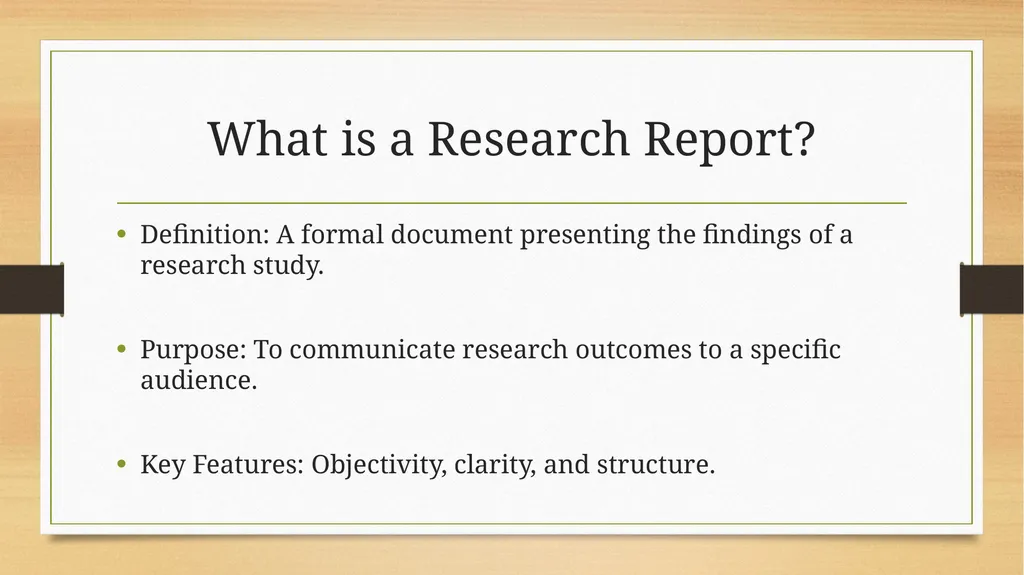
slide2. What is a Research Report? Definition: A formal document presenting the findings of a research study.
Purpose: To communicate research outcomes to a specific audience.
Key Features: Objectivity, clarity, and structure.<br>
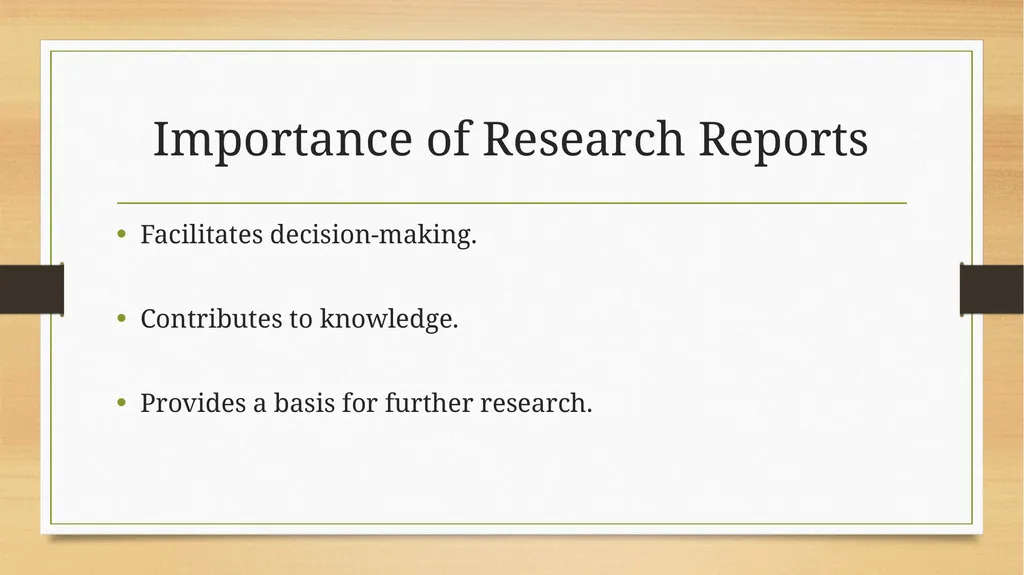
slide3. Importance of Research Reports Facilitates decision-making.
Contributes to knowledge.
Provides a basis for further research.<br>
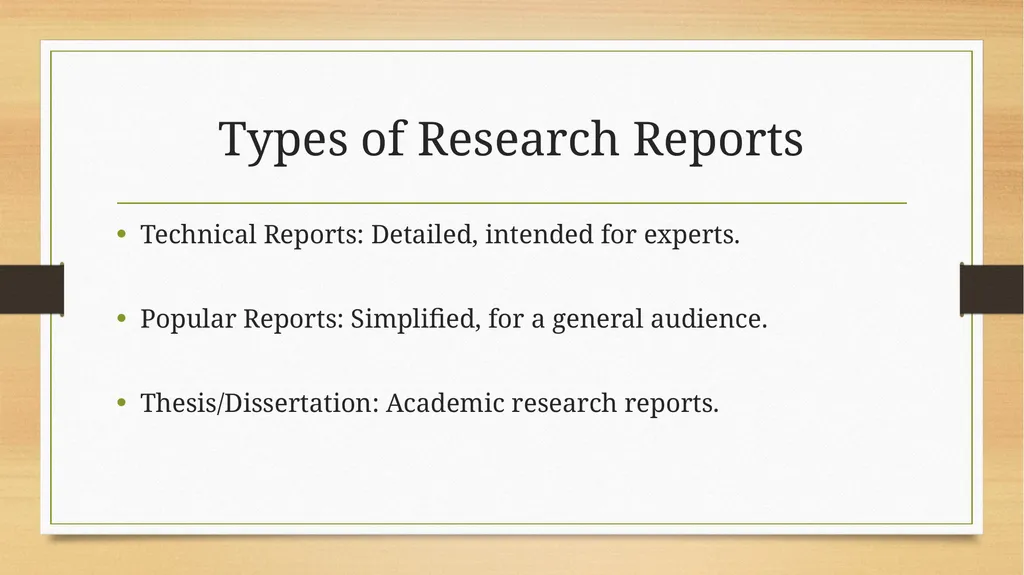
slide4. Types of Research Reports Technical Reports: Detailed, intended for experts.
Popular Reports: Simplified, for a general audience.
Thesis/Dissertation: Academic research reports.<br>
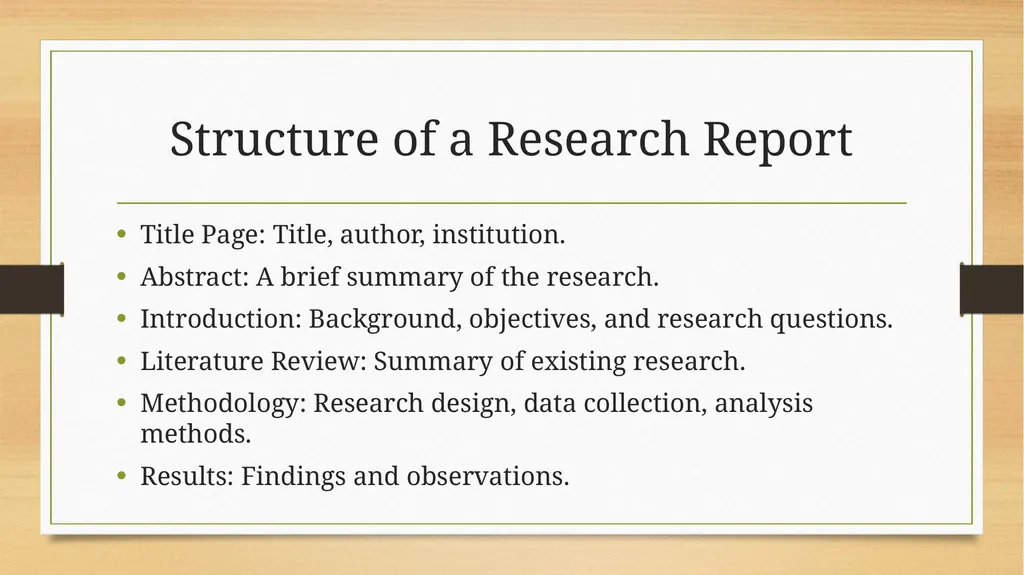
slide5. Structure of a Research Report Title Page: Title, author, institution.
Abstract: A brief summary of the research.
Introduction: Background, objectives, and research questions.
Literature Review: Summary of existing research.
Methodology: Research design, data collection, analysis methods.
Results: Findings and observations.<br>
slide6. Discussion: Interpretation and implications.
Conclusion: Summary of findings and future research.
References: Citing all sources.
Appendices (if needed).<br>
slide7. Key Components of a Research Report Clarity: Use clear, precise language.
Objectivity: Avoid bias, present facts.
Evidence: Back claims with data and references.
Logical Flow: Ensure coherence between sections.<br>
slide8. Writing the Introduction Context and background.
Define the research problem.
Outline the objectives and hypothesis.
Explain the significance of the study.<br>
slide9. Literature Review Purpose: To show how your research fits into existing knowledge.
Include key theories, concepts, and studies.
Identify gaps or areas of debate.<br>
slide10. Methodology Design: Qualitative, quantitative, or mixed methods.
Sampling: Population and sampling methods.
Data Collection: Surveys, interviews, experiments.
Data Analysis: Statistical tools or thematic analysis.<br>
slide11. Results and Discussion Results: Present data in tables, charts, or figures.
Discussion: Explain what the data means in relation to your research questions or hypotheses.<br>
slide12. Conclusion and Recommendations Restate key findings.
Highlight the implications of your research.
Suggest areas for further research or practical applications.<br>
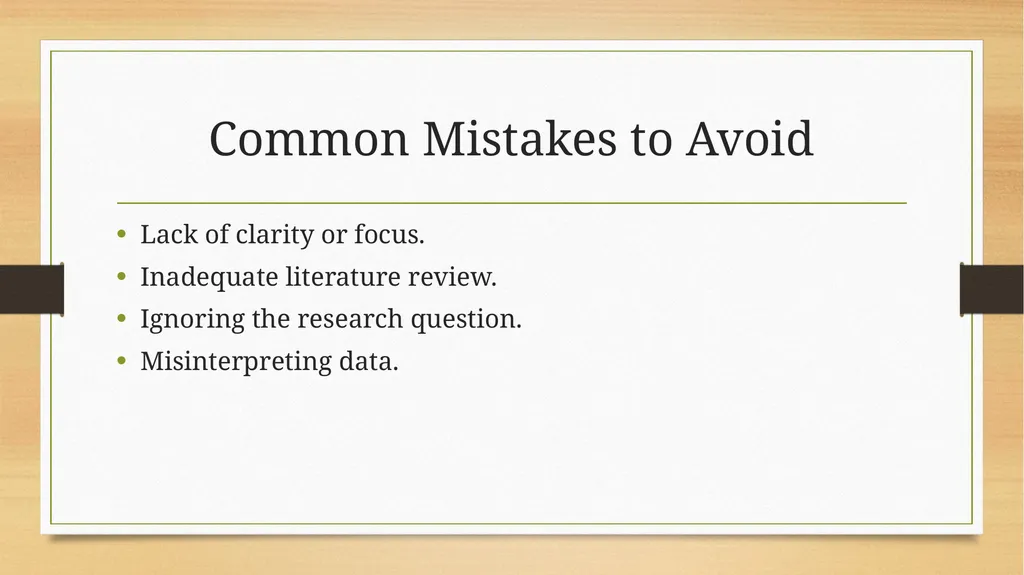
slide13. Common Mistakes to Avoid Lack of clarity or focus.
Inadequate literature review.
Ignoring the research question.
Misinterpreting data.<br>
slide14. Final Tips Proofread for errors.
Ensure all references are cited.
Follow formatting guidelines (APA, MLA, etc.).
Keep the audience in mind.<br>
slide15. Thank you
Q&As<br>
Zione Salima
Mtondera Munthali<br>
slide2. What is a Research Report? Definition: A formal document presenting the findings of a research study.
Purpose: To communicate research outcomes to a specific audience.
Key Features: Objectivity, clarity, and structure.<br>
slide3. Importance of Research Reports Facilitates decision-making.
Contributes to knowledge.
Provides a basis for further research.<br>
slide4. Types of Research Reports Technical Reports: Detailed, intended for experts.
Popular Reports: Simplified, for a general audience.
Thesis/Dissertation: Academic research reports.<br>
slide5. Structure of a Research Report Title Page: Title, author, institution.
Abstract: A brief summary of the research.
Introduction: Background, objectives, and research questions.
Literature Review: Summary of existing research.
Methodology: Research design, data collection, analysis methods.
Results: Findings and observations.<br>
slide6. Discussion: Interpretation and implications.
Conclusion: Summary of findings and future research.
References: Citing all sources.
Appendices (if needed).<br>
slide7. Key Components of a Research Report Clarity: Use clear, precise language.
Objectivity: Avoid bias, present facts.
Evidence: Back claims with data and references.
Logical Flow: Ensure coherence between sections.<br>
slide8. Writing the Introduction Context and background.
Define the research problem.
Outline the objectives and hypothesis.
Explain the significance of the study.<br>
slide9. Literature Review Purpose: To show how your research fits into existing knowledge.
Include key theories, concepts, and studies.
Identify gaps or areas of debate.<br>
slide10. Methodology Design: Qualitative, quantitative, or mixed methods.
Sampling: Population and sampling methods.
Data Collection: Surveys, interviews, experiments.
Data Analysis: Statistical tools or thematic analysis.<br>
slide11. Results and Discussion Results: Present data in tables, charts, or figures.
Discussion: Explain what the data means in relation to your research questions or hypotheses.<br>
slide12. Conclusion and Recommendations Restate key findings.
Highlight the implications of your research.
Suggest areas for further research or practical applications.<br>
slide13. Common Mistakes to Avoid Lack of clarity or focus.
Inadequate literature review.
Ignoring the research question.
Misinterpreting data.<br>
slide14. Final Tips Proofread for errors.
Ensure all references are cited.
Follow formatting guidelines (APA, MLA, etc.).
Keep the audience in mind.<br>
slide15. Thank you
Q&As<br>