
INTRODUCTION TO SCIENCE, TECHNOLOGY AND SOCIETY
MY
Published · 56 slides · 0 views

1 / 1








Description
INTRODUCTION TO SCIENCE, TECHNOLOGY AND SOCIETY Science comes from the Latin word scientia, meaning knowledge. It refers to the systematic and methodical activity of building and organizing knowledge about how the universe behaves through
Related Topics
Share
Embed code
Download this presentation From Below
"INTRODUCTION TO SCIENCE, TECHNOLOGY AND SOCIETY" is the property of its rightful owner. Permission is granted to download and print the materials on this website for personal, non-commercial use only, and to display it on your personal computer provided you do not modify the materials and that you retain all copyright notices contained in the materials. By downloading content from our website, you accept the terms of this agreement.
Presentation Transcript
01
INTRODUCTION TO SCIENCE, TECHNOLOGY AND SOCIETY<br>
02
Science comes from the Latin word scientia, meaning ‘knowledge’. It refers to the systematic and methodical activity of building and organizing knowledge about how the universe behaves through observation, experimentation or both.
Technology, for its part, is the application of scientific knowledge, laws and principles to produce services, materials, tools, and machines aimed at solving real-world problems.<br>
Technology, for its part, is the application of scientific knowledge, laws and principles to produce services, materials, tools, and machines aimed at solving real-world problems.<br>
03
Technology comes from the Greek root word techne, meaning ‘art, skill or cunning of hand.’
Society refers to the people in general thought of as living together in organized communities with shared laws, traditions and values.<br>
Society refers to the people in general thought of as living together in organized communities with shared laws, traditions and values.<br>
04
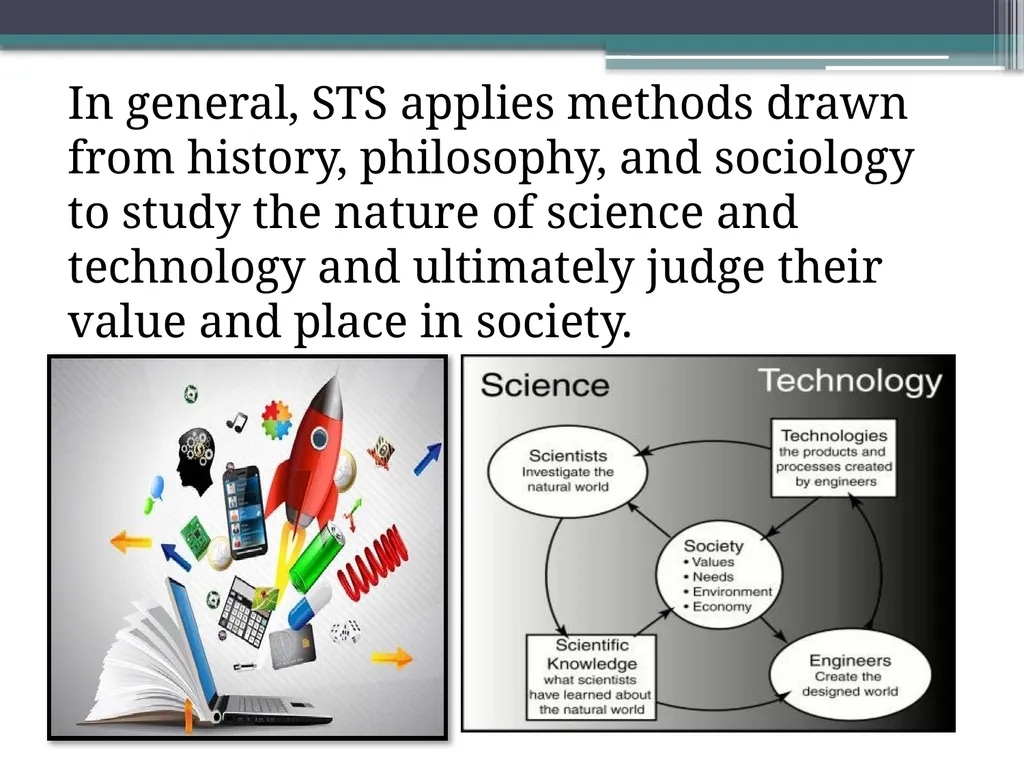
In general, STS applies methods drawn from history, philosophy, and sociology to study the nature of science and technology and ultimately judge their value and place in society.<br>
05
Chapter 1: Historical Antecedents of Science and Technology An antecedent is defined as a precursor to the unfolding or existence of something. Thus, historical antecedent in science and technology are factors that paved the way for the presence of advanced and sophisticated scientific and technological innovations today. Knowledge of the history of science and technology is useful of appraising these innovations today.<br>
06
By understanding how previous generation influenced by developments science and technology, today’s generation can come up with informed decisions on the proper application of science and technology to daily life.<br>
07
ANCIENT PERIOD The rise of ancient civilizations paved the way for advances in science and technology. These advances during the Ancient period allowed civilizations to flourish by finding better ways of communication, transportation, self-organization, and of living in general.<br>
08
Ancient Wheel
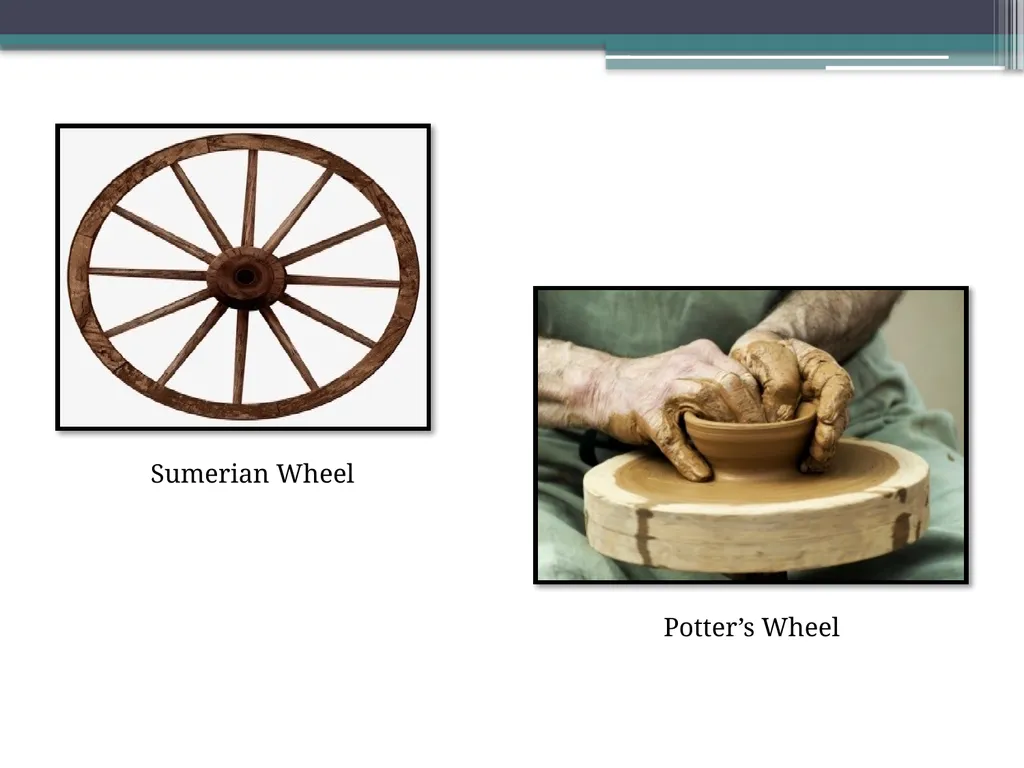
People from ancient civilizations used animals for transportation long before the invention of the wheel. No one knows exactly who invented the wheel and when. There is, however, a general agreement that the ancient wheel grew out of a mechanical device called the potter’s wheel – a heavy flat disc made of hardened clay which is spun horizontally on its axis.<br>
People from ancient civilizations used animals for transportation long before the invention of the wheel. No one knows exactly who invented the wheel and when. There is, however, a general agreement that the ancient wheel grew out of a mechanical device called the potter’s wheel – a heavy flat disc made of hardened clay which is spun horizontally on its axis.<br>
09
It is believed that the Sumerians invented the potter’s wheel shortly after 3500 BC.
It could be that a potter thought of shifting the potter’s wheel to a 90-degree angle for the purpose of transportation or the wheel was reinvented for this purpose. Nonetheless, it would not be until 1000 to 1500 years later that the wheel was first used on carts.<br>
It could be that a potter thought of shifting the potter’s wheel to a 90-degree angle for the purpose of transportation or the wheel was reinvented for this purpose. Nonetheless, it would not be until 1000 to 1500 years later that the wheel was first used on carts.<br>
10
Sumerian Wheel Potter’s Wheel<br>
11
Paper
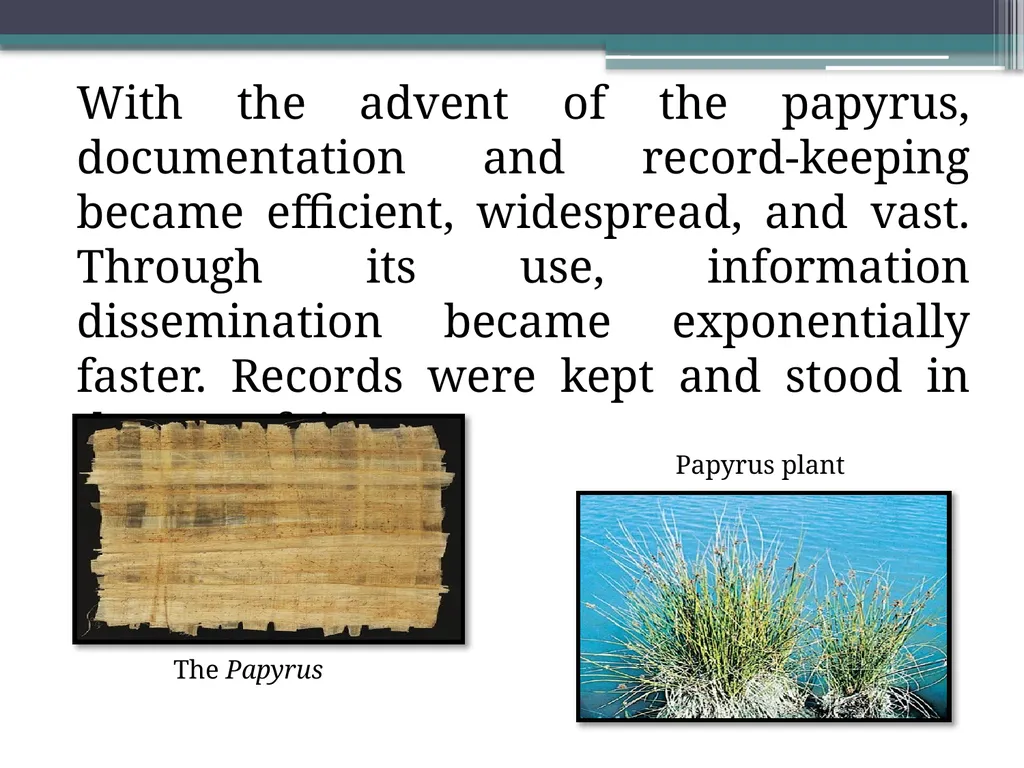
Roughly around 3000 BC, the ancient Egyptians began writing on papyrus, a material similar to thick paper. Papyrus is made from the pith of the papyrus plant cyperus papyrus. Before the Egyptians invented the papyrus, writing was done on stone. Because of the difficulty of writing on stone, writing was reserved only for very important occasions.<br>
Roughly around 3000 BC, the ancient Egyptians began writing on papyrus, a material similar to thick paper. Papyrus is made from the pith of the papyrus plant cyperus papyrus. Before the Egyptians invented the papyrus, writing was done on stone. Because of the difficulty of writing on stone, writing was reserved only for very important occasions.<br>
12
With the advent of the papyrus, documentation and record-keeping became efficient, widespread, and vast. Through its use, information dissemination became exponentially faster. Records were kept and stood in the test of time. The Papyrus Papyrus plant<br>
13
Shadoof
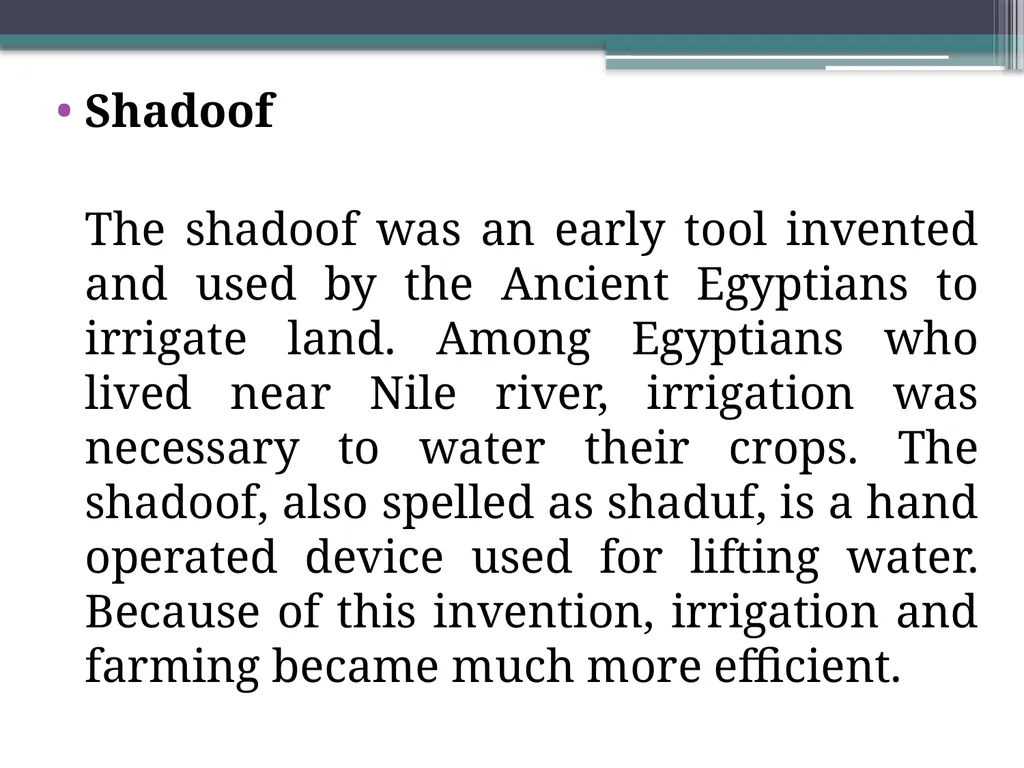
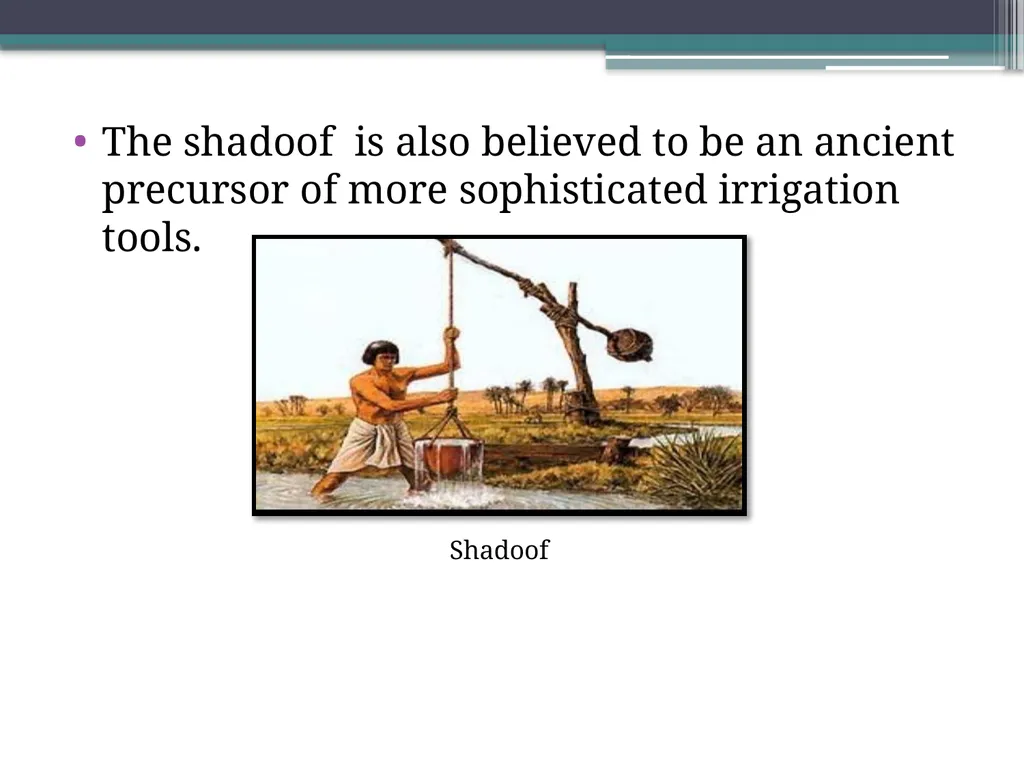
The shadoof was an early tool invented and used by the Ancient Egyptians to irrigate land. Among Egyptians who lived near Nile river, irrigation was necessary to water their crops. The shadoof, also spelled as shaduf, is a hand operated device used for lifting water. Because of this invention, irrigation and farming became much more efficient.<br>
The shadoof was an early tool invented and used by the Ancient Egyptians to irrigate land. Among Egyptians who lived near Nile river, irrigation was necessary to water their crops. The shadoof, also spelled as shaduf, is a hand operated device used for lifting water. Because of this invention, irrigation and farming became much more efficient.<br>
14
The shadoof is also believed to be an ancient precursor of more sophisticated irrigation tools. Shadoof<br>
15
Antikythera Mechanism
Even before the invention of the antecedents of the modern computer, the Greeks had already invented the ancient world’s analog computer orrery. The Antikythera mechanism is similar to a mantel clock. It is akin to a clock in the way that the case has a circular face and rotating hands. A knob on the side makes it possible for it to be wound forward or backward. As this knob moves forward or backward, its mechanism allows it to display celestial time.<br>
Even before the invention of the antecedents of the modern computer, the Greeks had already invented the ancient world’s analog computer orrery. The Antikythera mechanism is similar to a mantel clock. It is akin to a clock in the way that the case has a circular face and rotating hands. A knob on the side makes it possible for it to be wound forward or backward. As this knob moves forward or backward, its mechanism allows it to display celestial time.<br>
16
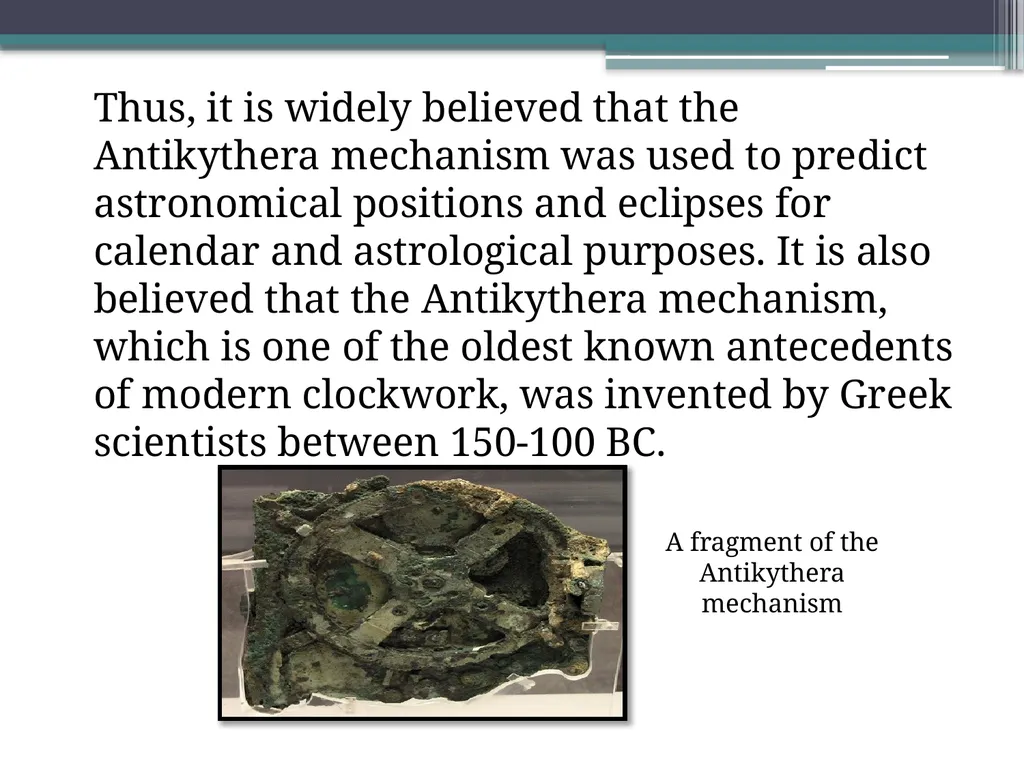
Thus, it is widely believed that the Antikythera mechanism was used to predict astronomical positions and eclipses for calendar and astrological purposes. It is also believed that the Antikythera mechanism, which is one of the oldest known antecedents of modern clockwork, was invented by Greek scientists between 150-100 BC. A fragment of the Antikythera mechanism<br>
17
Aeolipile
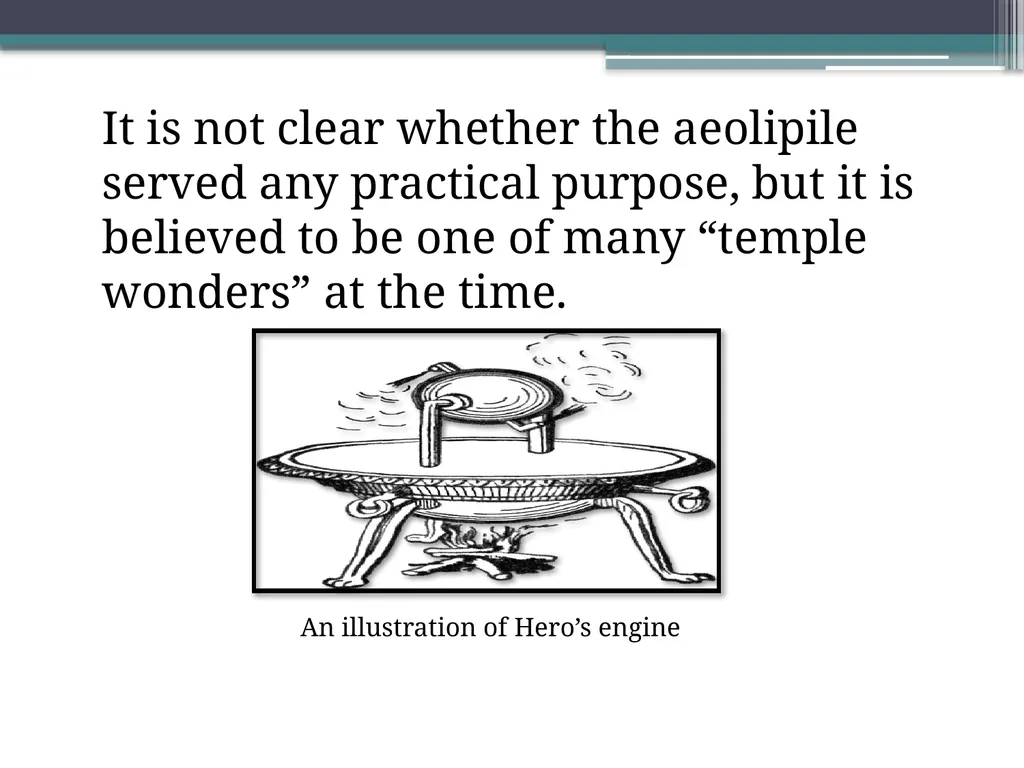
Also known as the Hero’s Engine, the aeolipile is widely believed to be the ancient precursor of the steam engine. The aeolipile is a steam-powered turbine which spun when the water container at its center was heated, thus making it practically the first rudimentary steam engine.<br>
Also known as the Hero’s Engine, the aeolipile is widely believed to be the ancient precursor of the steam engine. The aeolipile is a steam-powered turbine which spun when the water container at its center was heated, thus making it practically the first rudimentary steam engine.<br>
18
It is not clear whether the aeolipile served any practical purpose, but it is believed to be one of many “temple wonders” at the time. An illustration of Hero’s engine<br>
19
MIDDLE AGES Major advances in scientific and technological development, including a steady increase of new inventions, introduction of innovations in traditional production, and emergence of scientific thinking and method, had taken place.<br>
20
MIDDLE AGES Many medieval universities at the time stirred scientific thinking and provided infrastructure for scientific communities to flourish. Some of humanity’s most important, present-day technologies could be traced back to historical antecedents in the Middle Ages.<br>
21
Heavy Plough
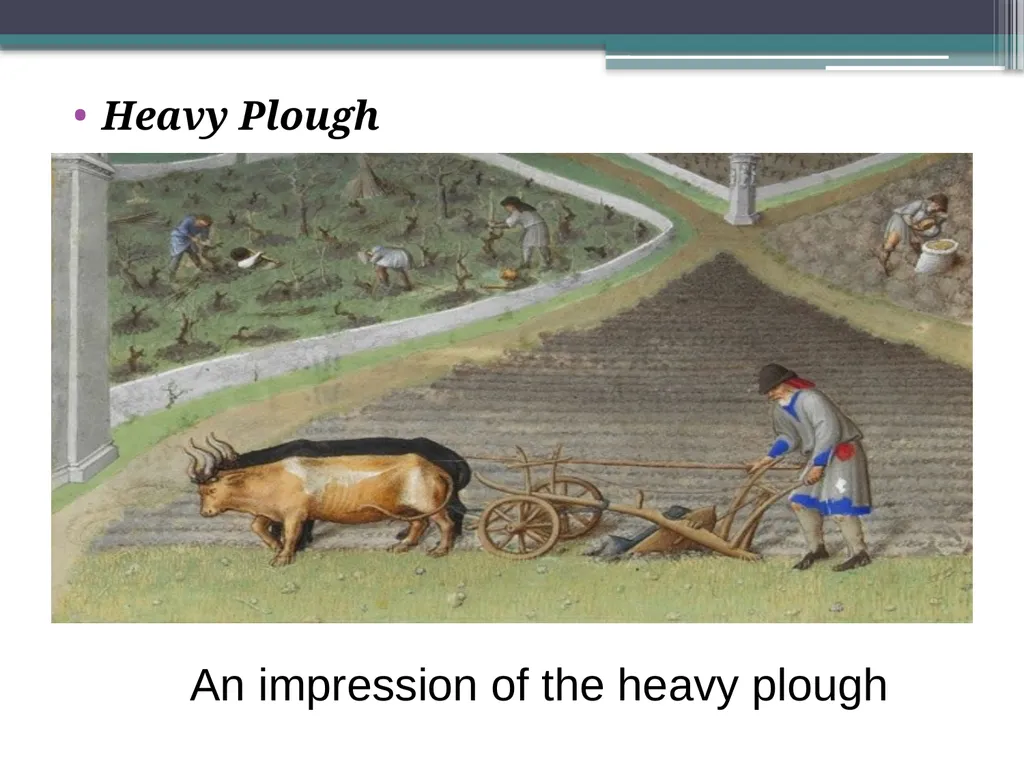
One of the most important technological innovations during the middle ages. “The heavy plough turned European agriculture and economy on its head. Suddenly the fields with the heavy, fatty and moist clay soils became those that gave the greatest yields.” -University of Southern Denmark professor Thomas Bernebeck Andersen<br>
One of the most important technological innovations during the middle ages. “The heavy plough turned European agriculture and economy on its head. Suddenly the fields with the heavy, fatty and moist clay soils became those that gave the greatest yields.” -University of Southern Denmark professor Thomas Bernebeck Andersen<br>
22
Heavy Plough An impression of the heavy plough<br>
23
Gunpowder
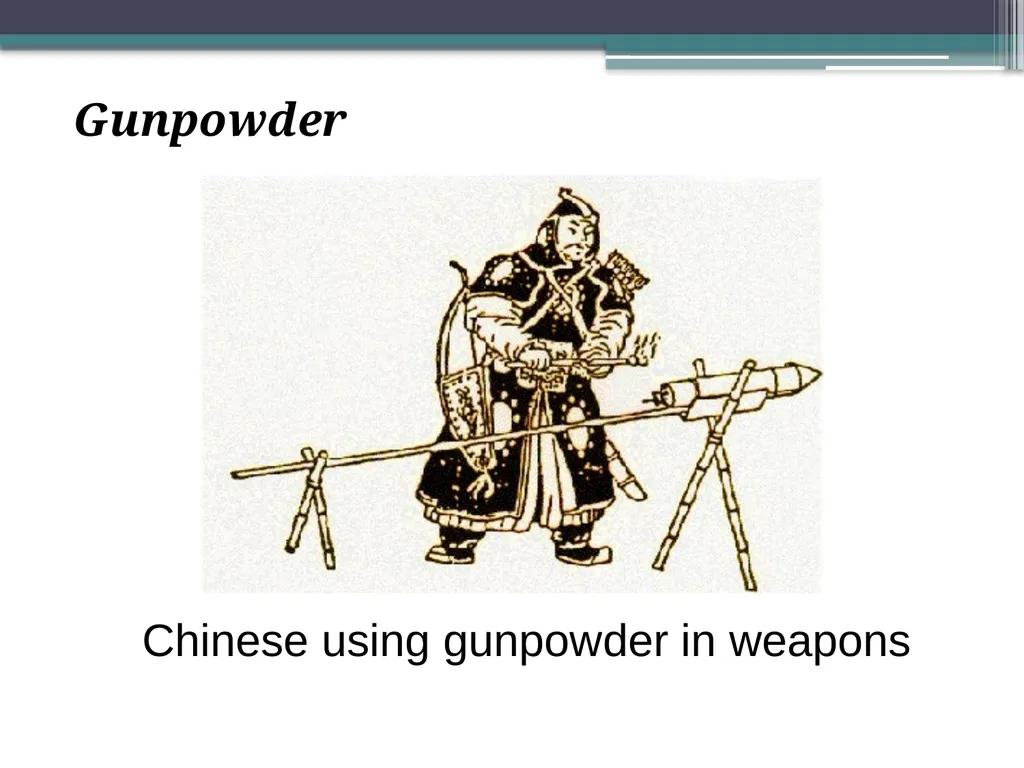
Around 850 AD, Chinese alchemists accidentally invented black powder or gunpowder. Multiple accounts suggest that the gunpowder might have been an unintended by product of attempts made by the Chinese to invent the elixir of life, which is why the Chinese called huoyao, roughly translated as “fire potion”<br>
Around 850 AD, Chinese alchemists accidentally invented black powder or gunpowder. Multiple accounts suggest that the gunpowder might have been an unintended by product of attempts made by the Chinese to invent the elixir of life, which is why the Chinese called huoyao, roughly translated as “fire potion”<br>
24
Gunpowder Chinese using gunpowder in weapons<br>
25
Paper Money
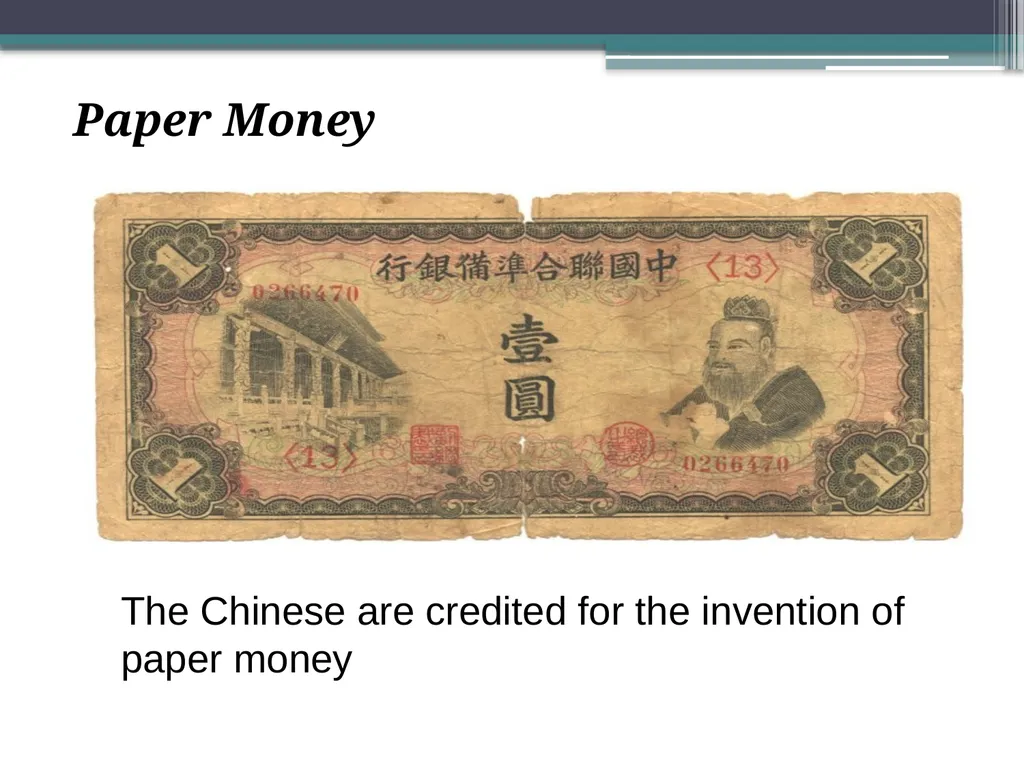
Although it was not until the 17th century that bank notes began to be used in the Europe, the first known versions of paper money could be traced back to the Chinese in the 17th century AD as an offshoot of the invention of block printing, which is similar to stamping. Before the introduction of paper money, precious metals such as gold and silver were used as currency.<br>
Although it was not until the 17th century that bank notes began to be used in the Europe, the first known versions of paper money could be traced back to the Chinese in the 17th century AD as an offshoot of the invention of block printing, which is similar to stamping. Before the introduction of paper money, precious metals such as gold and silver were used as currency.<br>
26
Paper Money The Chinese are credited for the invention of paper money<br>
27
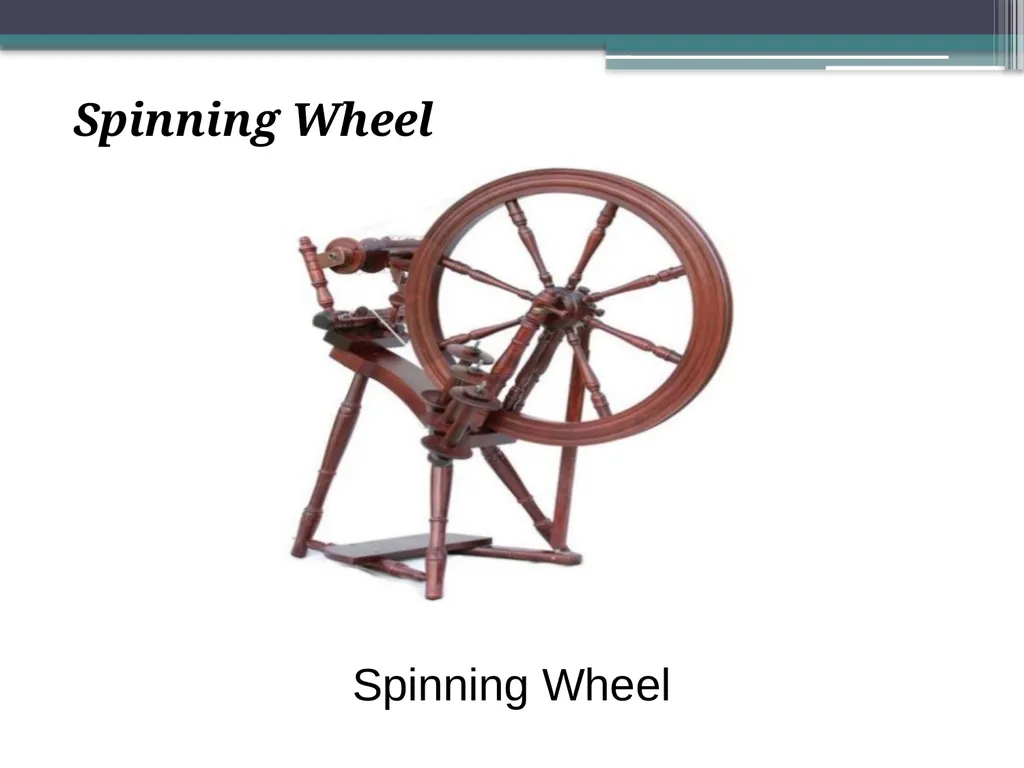
Spinning Wheel
Another important invention of the Middle age, it is a machine for transforming fiber into thread or yarn and eventually woven into cloth on a loom. According to White (1974), the invention of the spinning wheel sped up the rate at which fiber could be spun by a factor of 10-100 times.<br>
Another important invention of the Middle age, it is a machine for transforming fiber into thread or yarn and eventually woven into cloth on a loom. According to White (1974), the invention of the spinning wheel sped up the rate at which fiber could be spun by a factor of 10-100 times.<br>
28
Spinning Wheel Spinning Wheel<br>
29
MODERN AGES
As world population steadily increased, people of the modern age realized the utmost importance of increasing the efficiency of transportation, communication, and production. Industrialization took place, but greater risks in human health, food safety, and environment rose, which had to be simultaneously addressed as scientific and technological progress unfolded at an unimaginable speed.<br>
As world population steadily increased, people of the modern age realized the utmost importance of increasing the efficiency of transportation, communication, and production. Industrialization took place, but greater risks in human health, food safety, and environment rose, which had to be simultaneously addressed as scientific and technological progress unfolded at an unimaginable speed.<br>
30
Compound Microscope
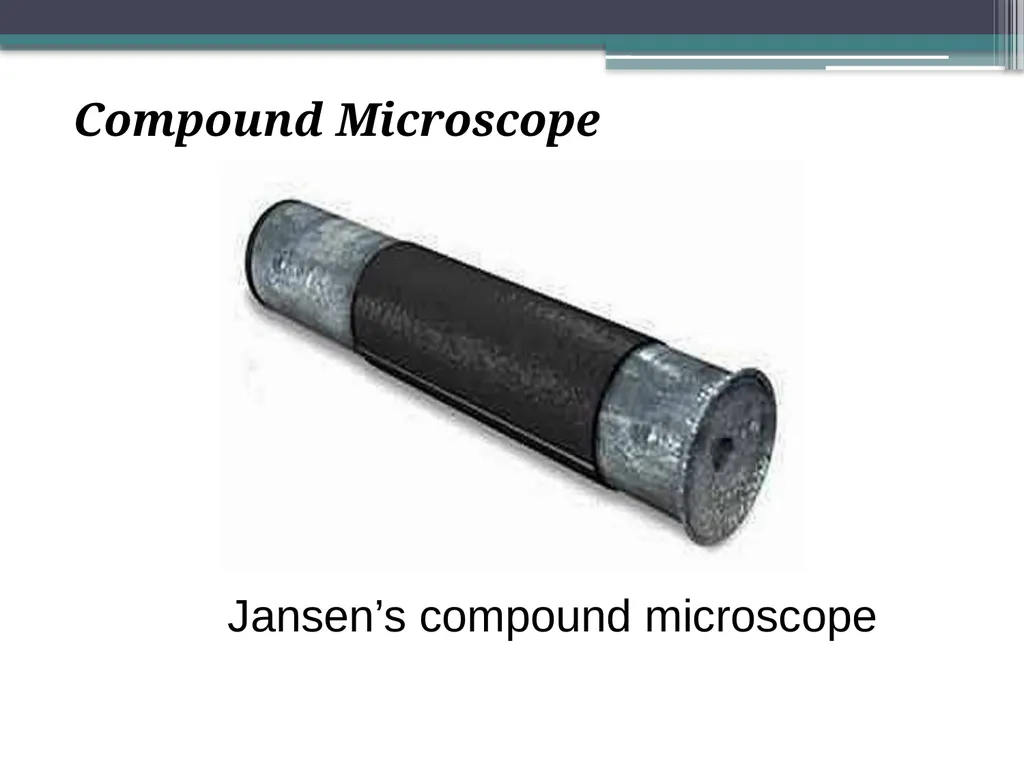
Zacharias Janssen invented the first compound microscope in 1590. Together with his father Hans, Zacharias began experimenting with lenses by putting together several lenses on a tube. This led to an amazing discovery that an object, when placed near the end of the tube, can be magnified far larger than what a simple magnifying lens can do.<br>
Zacharias Janssen invented the first compound microscope in 1590. Together with his father Hans, Zacharias began experimenting with lenses by putting together several lenses on a tube. This led to an amazing discovery that an object, when placed near the end of the tube, can be magnified far larger than what a simple magnifying lens can do.<br>
31
Compound Microscope Jansen’s compound microscope<br>
32
Telescope
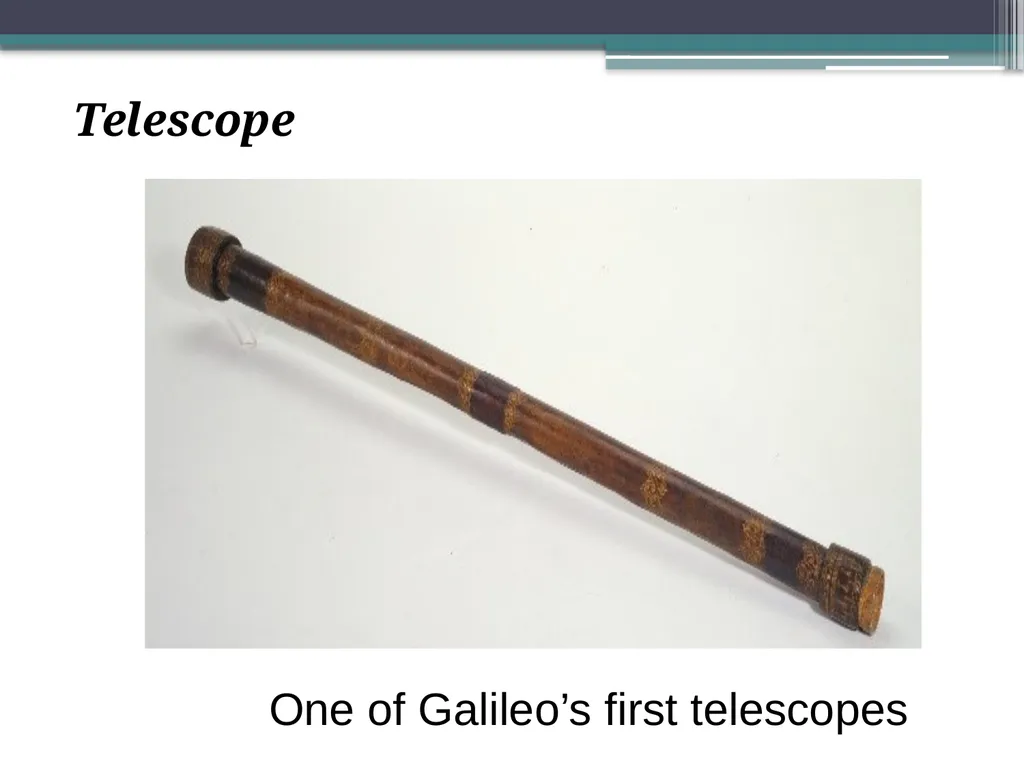
Invented by Galileo Galilei. This invention could magnify object 20 times larger than the Dutch perspective glasses.it was Galileo who first used the telescope skyward and made important astronomical discoveries and identified the presence of craters and mountains on the moon.<br>
Invented by Galileo Galilei. This invention could magnify object 20 times larger than the Dutch perspective glasses.it was Galileo who first used the telescope skyward and made important astronomical discoveries and identified the presence of craters and mountains on the moon.<br>
33
Telescope One of Galileo’s first telescopes<br>
34
Jacquard Loom
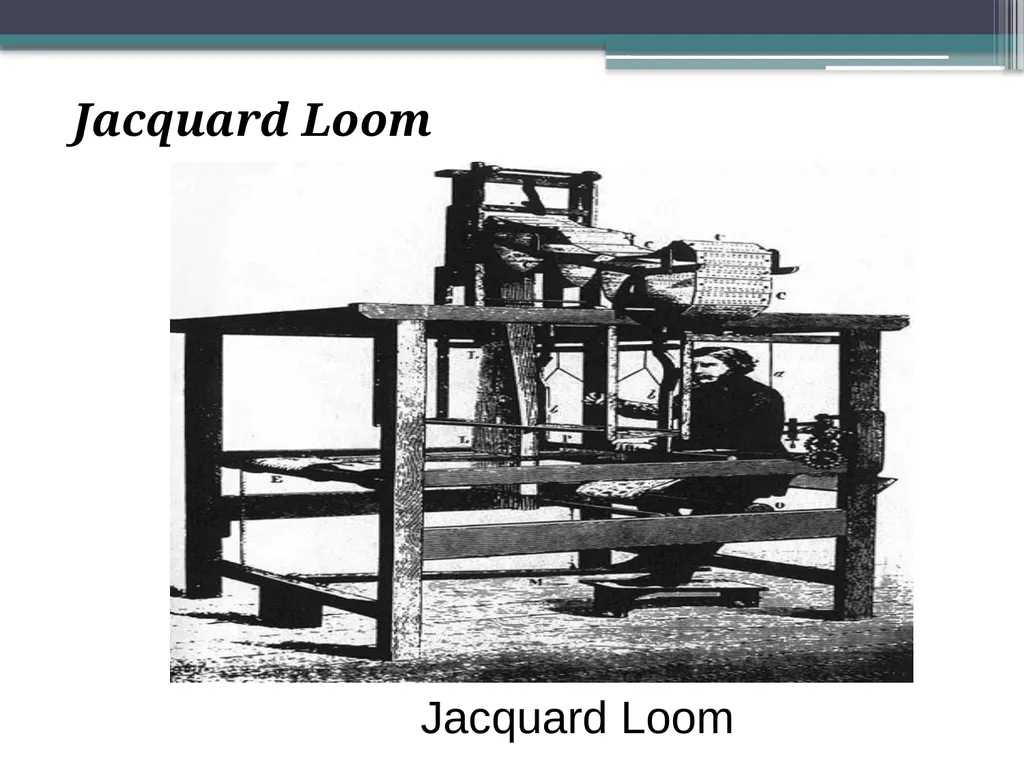
As the Industrial revolution reached full speed, the Jacquard Loom was considered as one of the most critical drivers of the revolution. Built by French weaver Joseph Marie Jacquard, the Jacquard loom simplifies textile manufacturing. Prior to the invention of Jacquard loom, a drawloom was used which required two individuals to operate – the weaver and a “drawboy” – it figured designs on textiles were needed.<br>
As the Industrial revolution reached full speed, the Jacquard Loom was considered as one of the most critical drivers of the revolution. Built by French weaver Joseph Marie Jacquard, the Jacquard loom simplifies textile manufacturing. Prior to the invention of Jacquard loom, a drawloom was used which required two individuals to operate – the weaver and a “drawboy” – it figured designs on textiles were needed.<br>
35
Jacquard Loom Jacquard Loom<br>
36
Engine-Powered Airplane
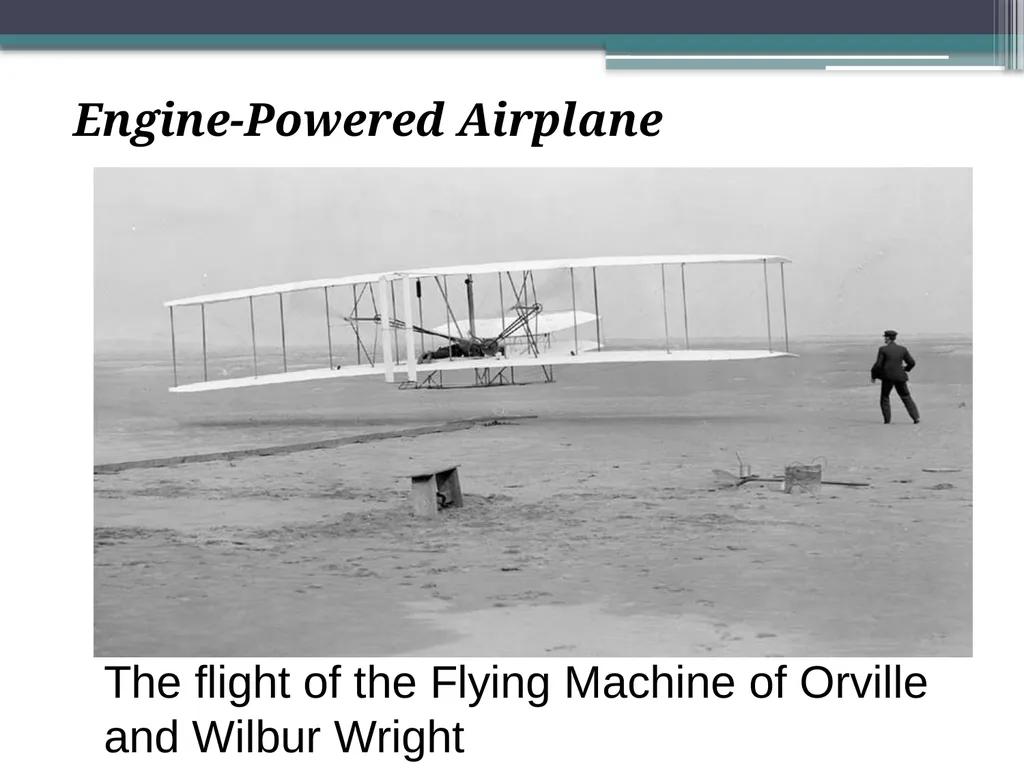
Orville Wright and Wilbur Wright are credited for designing and successfully operating the first engine powered aircraft. The Wright brothers approached the design of powered aircraft and flight scientifically. They proved that aircrafts could fly without airfoil-shaped wings. They demonstrated this in their original Flying machine patent (US patent #821393), showing that slightly-tilted wings, which they referred to as aeroplanes, were the key features of a powered aircraft.<br>
Orville Wright and Wilbur Wright are credited for designing and successfully operating the first engine powered aircraft. The Wright brothers approached the design of powered aircraft and flight scientifically. They proved that aircrafts could fly without airfoil-shaped wings. They demonstrated this in their original Flying machine patent (US patent #821393), showing that slightly-tilted wings, which they referred to as aeroplanes, were the key features of a powered aircraft.<br>
37
Engine-Powered Airplane The flight of the Flying Machine of Orville and Wilbur Wright<br>
38
Television
The Scottish engineerJohn Logie Baird is largely credited for the invention of modern television. Baird successfully televised objects in outline in 1924, recognizable human faces in 1925 and moving objects in 1926 and projected colored images in 1928.<br>
The Scottish engineerJohn Logie Baird is largely credited for the invention of modern television. Baird successfully televised objects in outline in 1924, recognizable human faces in 1925 and moving objects in 1926 and projected colored images in 1928.<br>
39
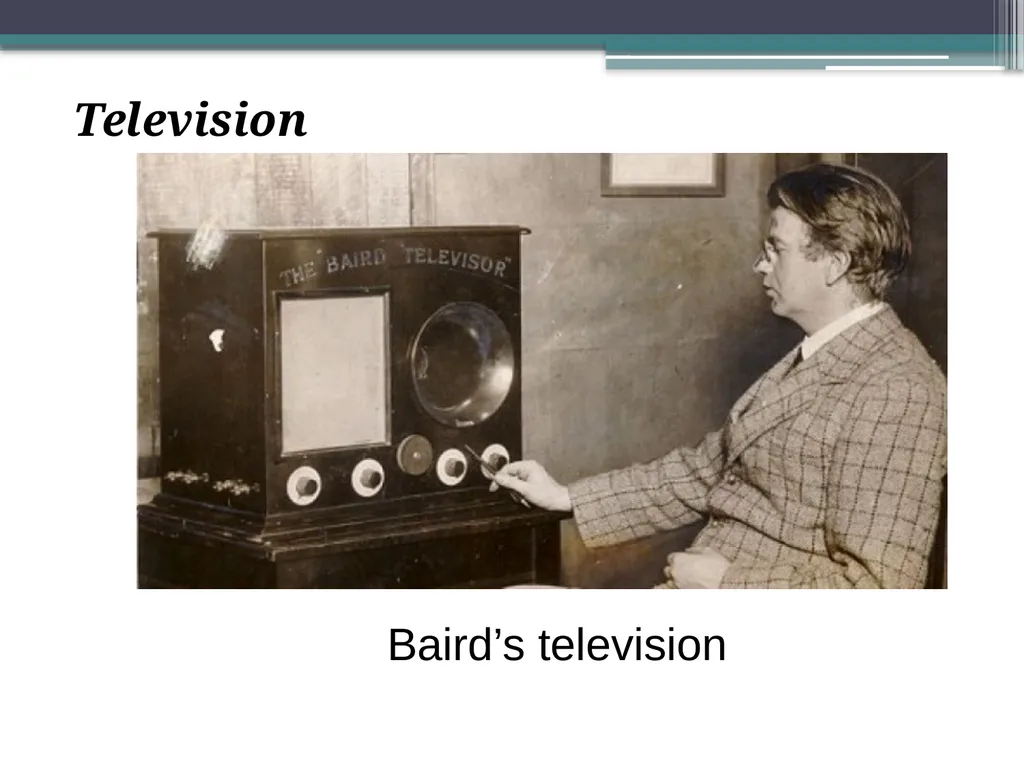
Television Baird’s television<br>
40
INVENTIONS OF FILIPINO SCIENTISTS
The Philippines boasts of its own history and tradition of scientific and technological innovation. Filipino scientists have long been known for their ingenuity. As with all other inventions, necessity has always been the mother of Philippine inventions.<br>
The Philippines boasts of its own history and tradition of scientific and technological innovation. Filipino scientists have long been known for their ingenuity. As with all other inventions, necessity has always been the mother of Philippine inventions.<br>
41
INVENTIONS OF FILIPINO SCIENTISTS
Most Filipino inventions appealed to the unique social and cultural context of the archipelagic nation. Even during the ancient period, our Filipino ancestors developed scientific and technological innovations focused on navigation, traditional shipbuilding, textiles, food processing, indigenous arts and techniques, and even cultural inventions.<br>
Most Filipino inventions appealed to the unique social and cultural context of the archipelagic nation. Even during the ancient period, our Filipino ancestors developed scientific and technological innovations focused on navigation, traditional shipbuilding, textiles, food processing, indigenous arts and techniques, and even cultural inventions.<br>
42
Electronic Jeepney (e-jeepney)
The jeepney is perhaps one of the most recognizable national symbols of the Philippines and the most popular mode of public transportation in the country. It is also one of the most enduring symbols of Filipino ingenuity. Jeepneys were designed and improvised from scratch out of military jeeps that the Americans left in the country after World War II.<br>
The jeepney is perhaps one of the most recognizable national symbols of the Philippines and the most popular mode of public transportation in the country. It is also one of the most enduring symbols of Filipino ingenuity. Jeepneys were designed and improvised from scratch out of military jeeps that the Americans left in the country after World War II.<br>
43
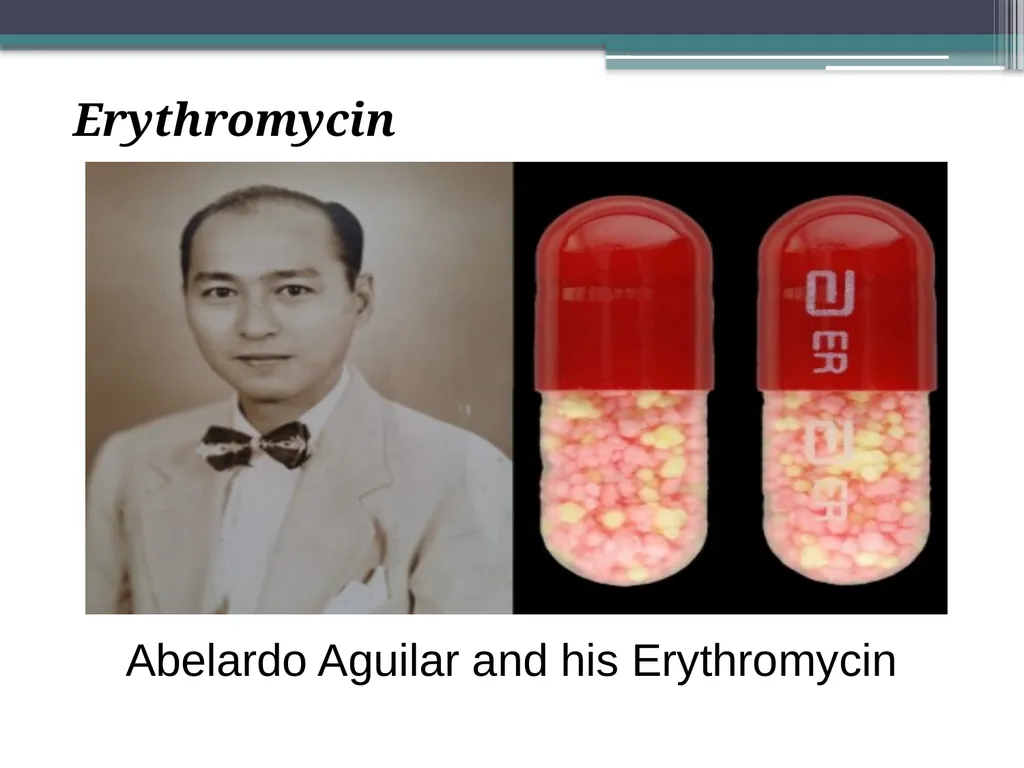
Erythromycin Abelardo Aguilar and his Erythromycin<br>
44
Electronic Jeepney (e-jeepney) E-jeepney<br>
45
Erythromycin
One of the most important medical inventions in the Philippines is the invention of erythromycin. Ilonggo scientists Abelardo Aguilar invented this antibiotic out of the strain of bacterium Streptomyces erythreus, from which this drug derived its name. As with the case of several other local scientists, however, Aguilar was not credited for this discovery by Eli Lilli Co., Aguilar’s US employer, to whom he sent the strain for separation. The US Company eventually owned the merits for this discovery.<br>
One of the most important medical inventions in the Philippines is the invention of erythromycin. Ilonggo scientists Abelardo Aguilar invented this antibiotic out of the strain of bacterium Streptomyces erythreus, from which this drug derived its name. As with the case of several other local scientists, however, Aguilar was not credited for this discovery by Eli Lilli Co., Aguilar’s US employer, to whom he sent the strain for separation. The US Company eventually owned the merits for this discovery.<br>
46
Medical Incubator
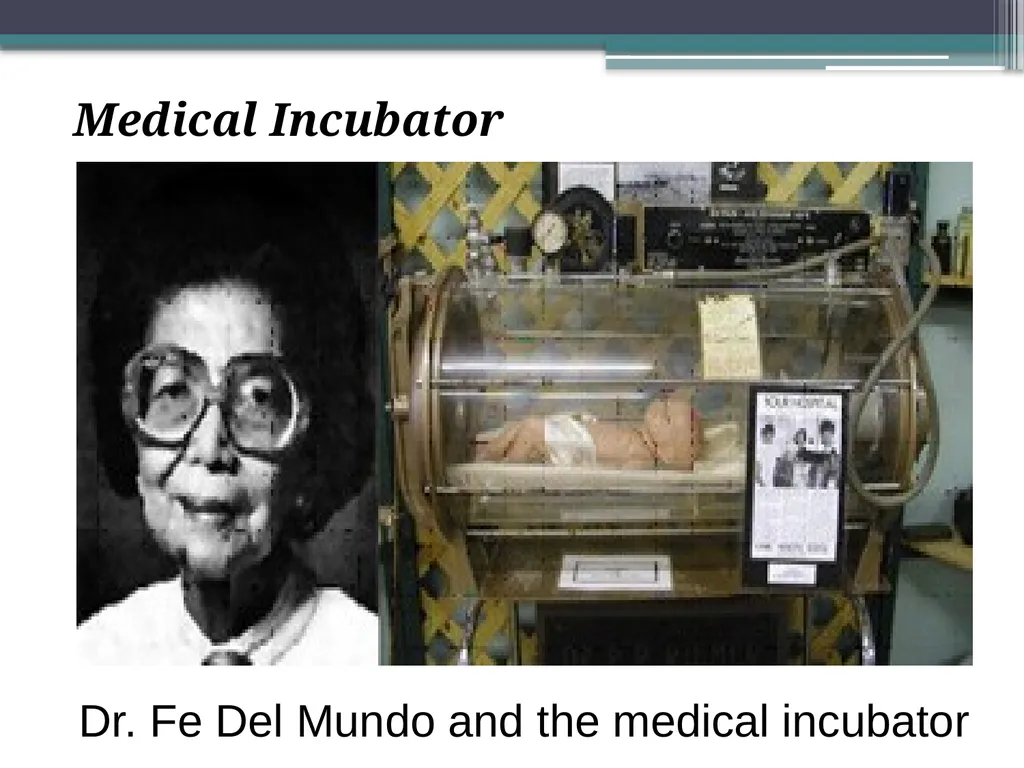
World-renowned Filipino pediatrician and national Scientists, Fe del Mundo invented the incubator and jaundice relieving device. Del Mundo was first was the first woman pediatrician to be admitted to the prestigious Harvard University’s School of Medicine. He is also the founder of the first pediatric hospital in the country.<br>
World-renowned Filipino pediatrician and national Scientists, Fe del Mundo invented the incubator and jaundice relieving device. Del Mundo was first was the first woman pediatrician to be admitted to the prestigious Harvard University’s School of Medicine. He is also the founder of the first pediatric hospital in the country.<br>
47
Medical Incubator Dr. Fe Del Mundo and the medical incubator<br>
48
Mole Remover
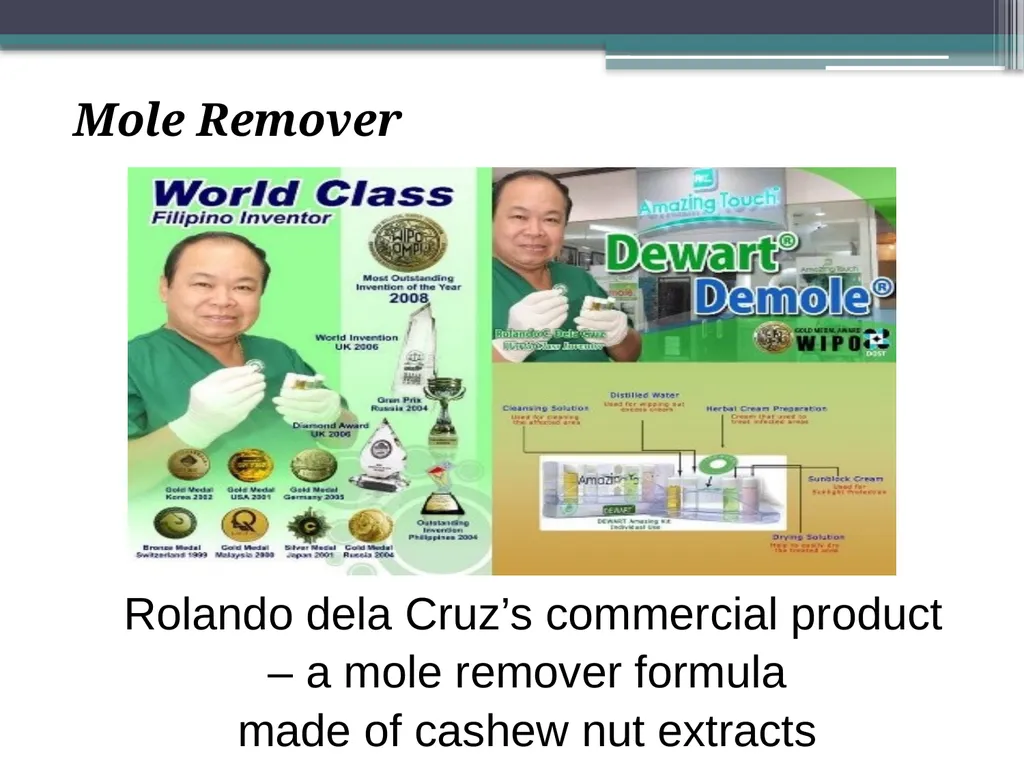
In 2000, a local invention that had the ability to easily removed moles and warts on the skin without the need of any surgical procedure shot to fame. Rolando Dela Cruz is credited for the invention of a local mole remover that made use of extracts of cashew nuts (Annacardium occidentale), which are very common in the Philippines.<br>
In 2000, a local invention that had the ability to easily removed moles and warts on the skin without the need of any surgical procedure shot to fame. Rolando Dela Cruz is credited for the invention of a local mole remover that made use of extracts of cashew nuts (Annacardium occidentale), which are very common in the Philippines.<br>
49
Mole Remover Rolando dela Cruz’s commercial product – a mole remover formula
made of cashew nut extracts<br>
made of cashew nut extracts<br>
50
Banana Ketchup
Filipino food technologist, Maria Orosa is credited for the invention of banana ketchup different from the commonly known tomato ketchup. Historical accounts posit that Orosa invented the banana ketchup at the backdrop of World War II when there was a huge shortage of tomatoes.<br>
Filipino food technologist, Maria Orosa is credited for the invention of banana ketchup different from the commonly known tomato ketchup. Historical accounts posit that Orosa invented the banana ketchup at the backdrop of World War II when there was a huge shortage of tomatoes.<br>
51
Banana Ketchup Orosa’s formula for Banana Ketsup is brownish-yellow in color.<br>
52
ACTIVITY #1. Poster Making (Group)
“If I were an Inventor”
Materials:
1/8 cardboard
Pencil with Eraser
Ballpen
Coloring material (crayons or oilpastel)<br>
“If I were an Inventor”
Materials:
1/8 cardboard
Pencil with Eraser
Ballpen
Coloring material (crayons or oilpastel)<br>
53
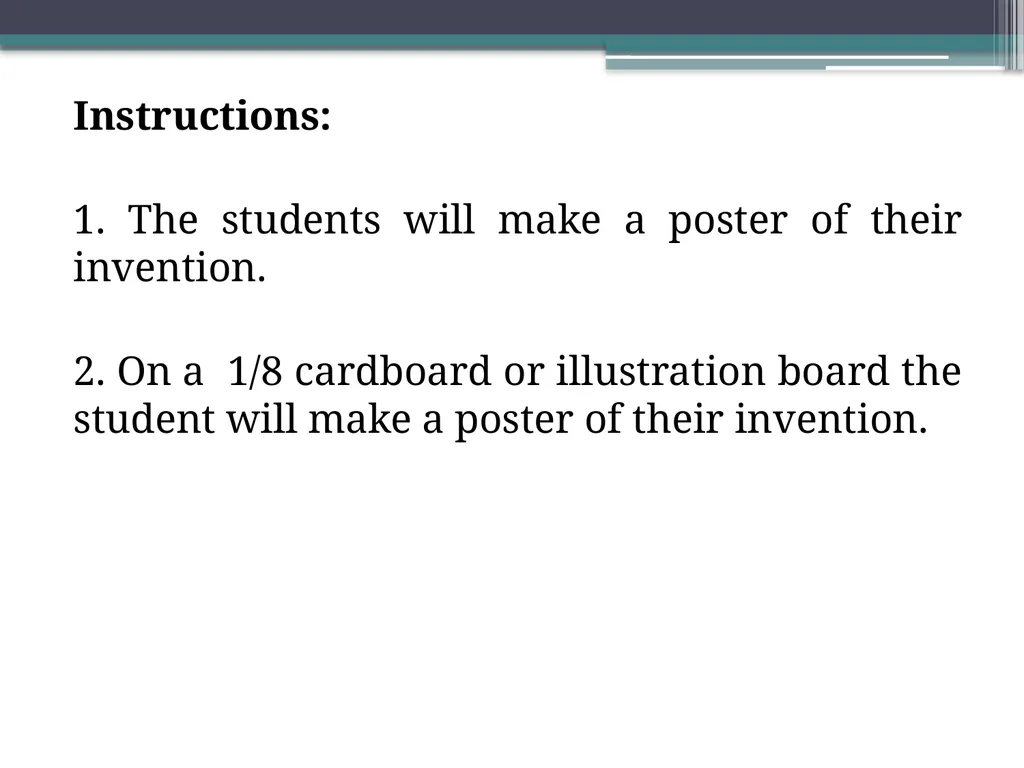
Instructions:
1. The students will make a poster of their invention.
2. On a 1/8 cardboard or illustration board the student will make a poster of their invention.<br>
1. The students will make a poster of their invention.
2. On a 1/8 cardboard or illustration board the student will make a poster of their invention.<br>
54
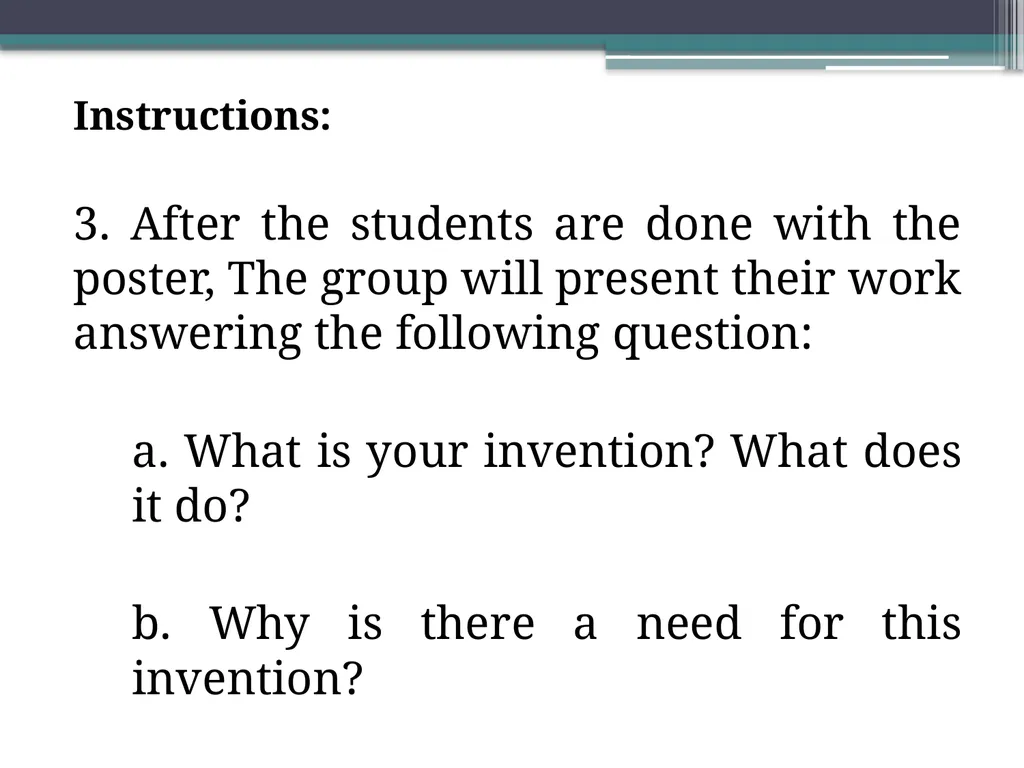
Instructions:
3. After the students are done with the poster, The group will present their work answering the following question:
a. What is your invention? What does it do?
b. Why is there a need for this invention?<br>
3. After the students are done with the poster, The group will present their work answering the following question:
a. What is your invention? What does it do?
b. Why is there a need for this invention?<br>
55
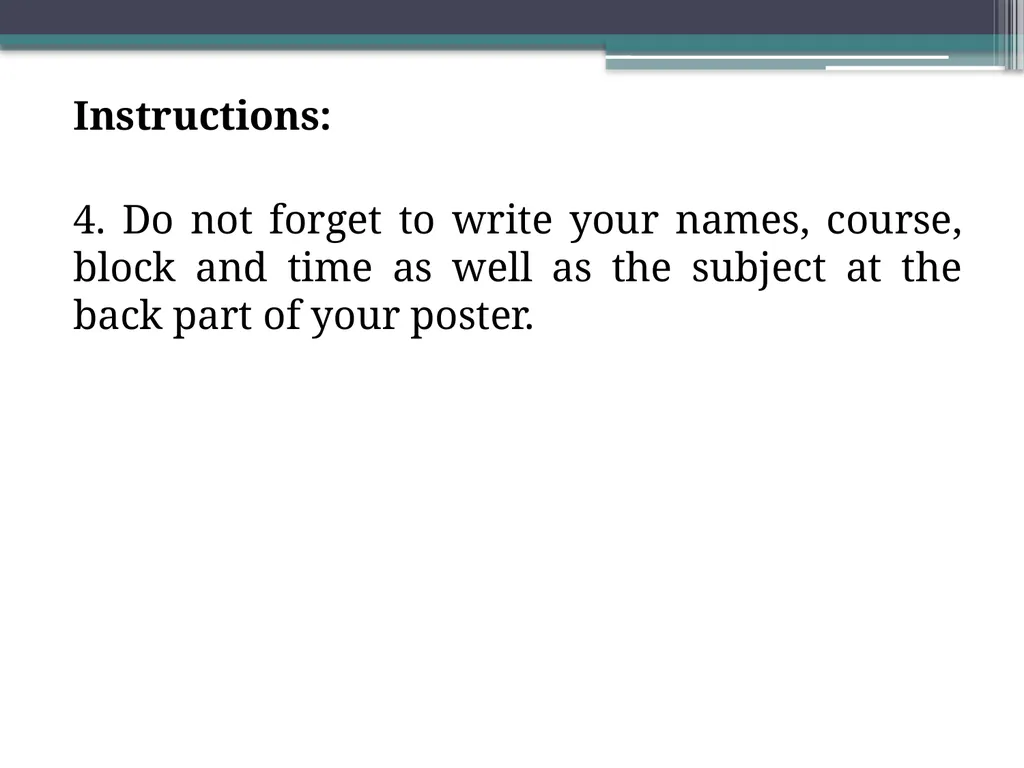
Instructions:
4. Do not forget to write your names, course, block and time as well as the subject at the back part of your poster.<br>
4. Do not forget to write your names, course, block and time as well as the subject at the back part of your poster.<br>
56
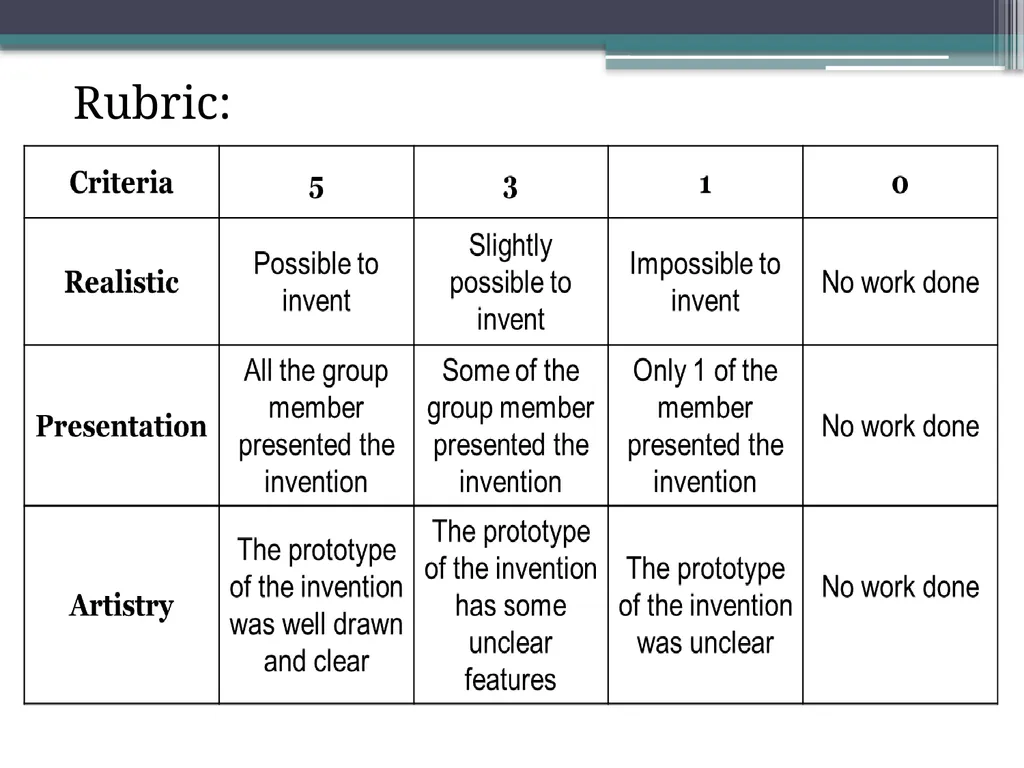
Rubric:<br>