
Introduction to Valuation Chris Young, Ph.D.
Description: Introduction to Valuation Chris Young, Ph.D. Agenda 2 Quick Introduction What is a Valuation? What are the major components of a Valuation? Simple exercise Mining Business (Opinion of Value) QA Economic, Strategic and Forensic Consulting
Related Topics
Download Presentation
"Introduction to Valuation Chris Young, Ph.D." is the property of its rightful owner. Permission is granted to download and print the materials on this website for personal, non-commercial use only, and to display it on your personal computer provided you do not modify the materials and that you retain all copyright notices contained in the materials. By downloading content from our website, you accept the terms of this agreement.
Presentation Transcript
slide1. Introduction to Valuation Chris Young, Ph.D.<br>
slide2. Agenda 2 Quick Introduction
What is a Valuation?
What are the major components of a Valuation?
Simple exercise – Mining Business (Opinion of Value)
Q&A<br>
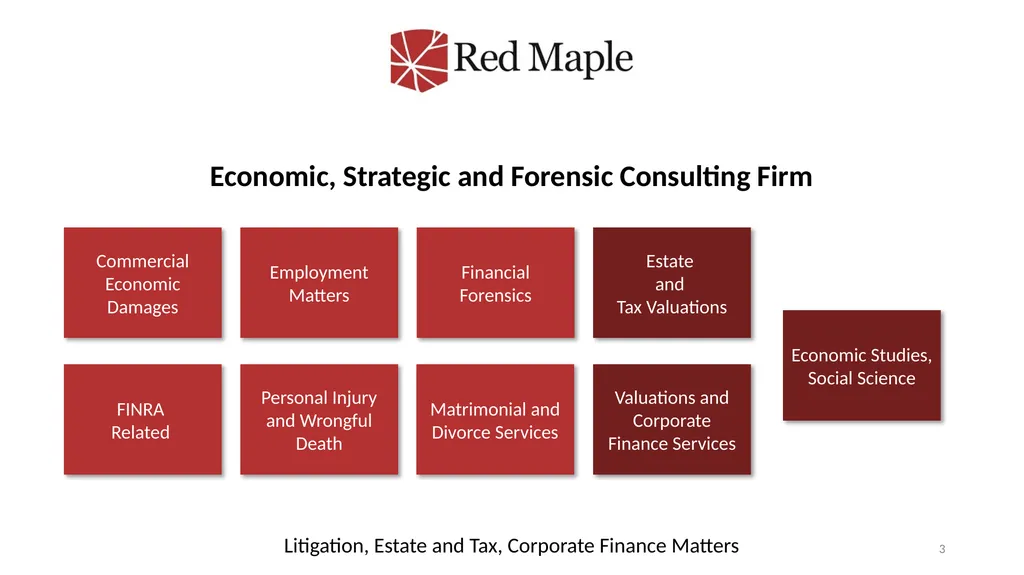
slide3. Economic, Strategic and Forensic Consulting Firm Commercial Economic Damages Employment Matters Financial Forensics Economic Studies, Social Science FINRA
Related Personal Injury and Wrongful Death Matrimonial and Divorce Services Valuations and Corporate Finance Services Litigation, Estate and Tax, Corporate Finance Matters 3 Estate
and
Tax Valuations<br>
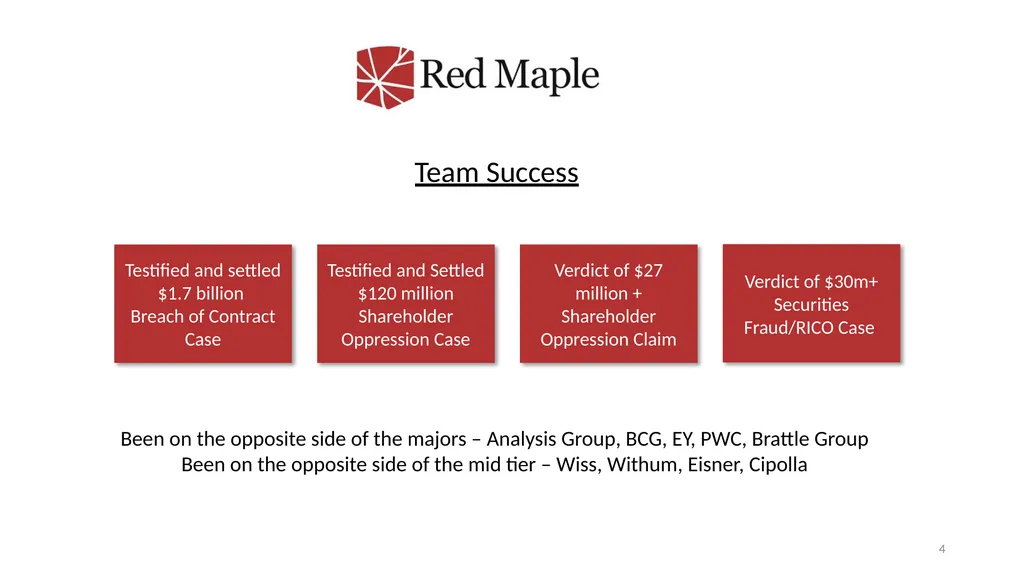
slide4. 4 Team Success Testified and settled $1.7 billion
Breach of Contract Case Testified and Settled $120 million Shareholder Oppression Case Verdict of $27 million + Shareholder Oppression Claim Verdict of $30m+ Securities Fraud/RICO Case Been on the opposite side of the majors – Analysis Group, BCG, EY, PWC, Brattle Group
Been on the opposite side of the mid tier – Wiss, Withum, Eisner, Cipolla<br>
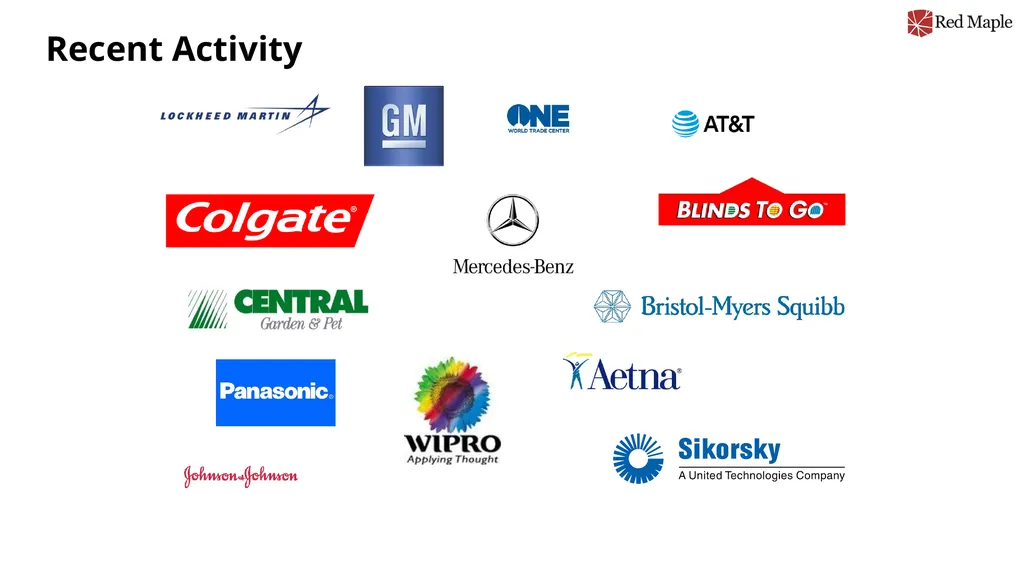
slide5. Recent Activity 5<br>
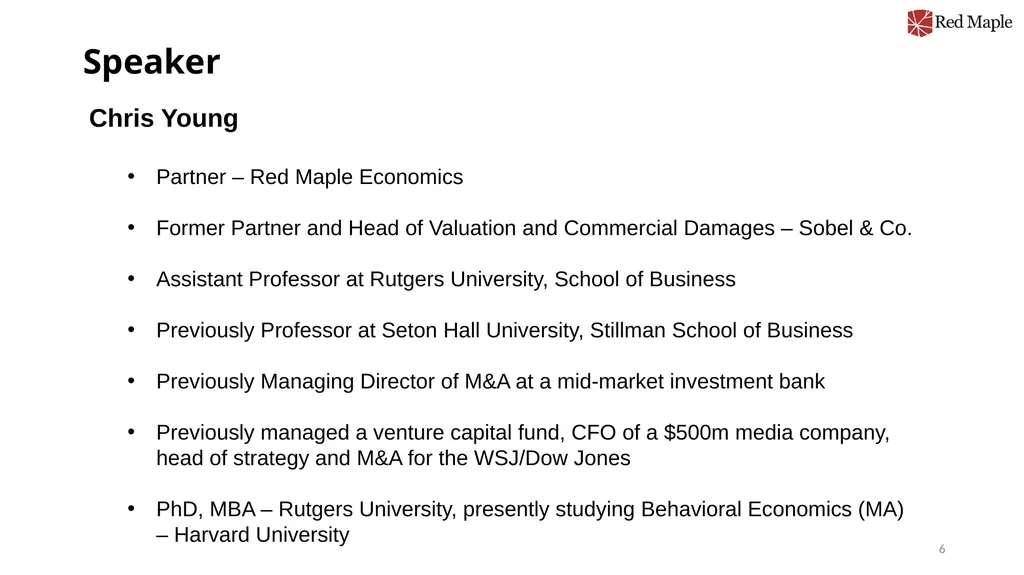
slide6. Speaker Chris Young
Partner – Red Maple Economics
Former Partner and Head of Valuation and Commercial Damages – Sobel & Co.
Assistant Professor at Rutgers University, School of Business
Previously Professor at Seton Hall University, Stillman School of Business
Previously Managing Director of M&A at a mid-market investment bank
Previously managed a venture capital fund, CFO of a $500m media company, head of strategy and M&A for the WSJ/Dow Jones
PhD, MBA – Rutgers University, presently studying Behavioral Economics (MA) – Harvard University 6<br>
slide7. What is a Valuation? 7<br>
slide8. Lets begin with a simple exercise On a piece of paper – write down what you value the most in the entire world
[1 min] 8<br>
slide9. Lets begin with a simple exercise On a piece of paper – now write down why you value this thing, object, person, etc…
[1 min] 9<br>
slide10. Lets begin with a simple exercise On a piece of paper – what did you give up to obtain that value?
[1 min] 10<br>
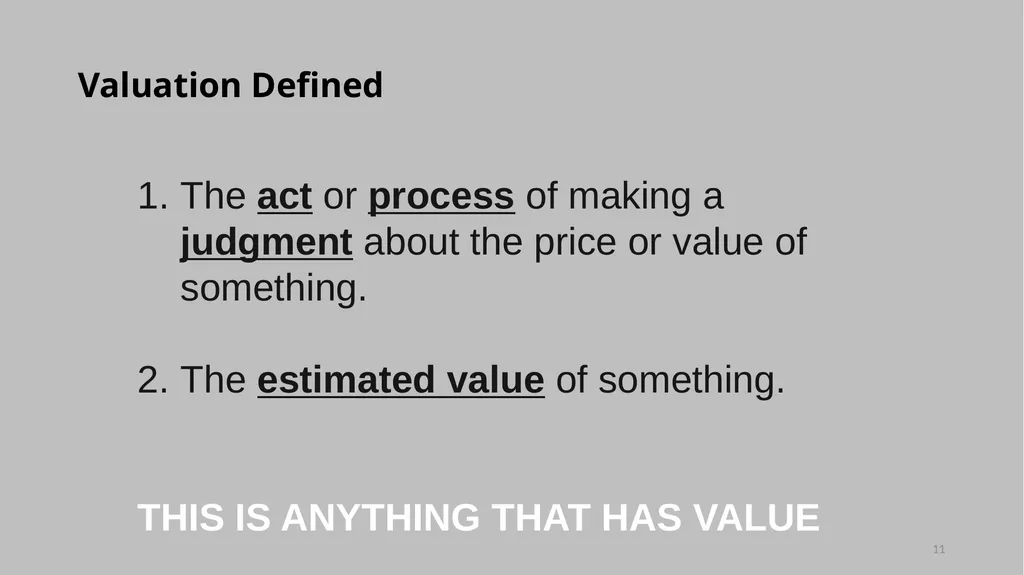
slide11. Valuation Defined The act or process of making a judgment about the price or value of something.
The estimated value of something.
THIS IS ANYTHING THAT HAS VALUE 11<br>
slide12. What is a valuation that is accepted by the Court, IRS, strategic partner? 12<br>
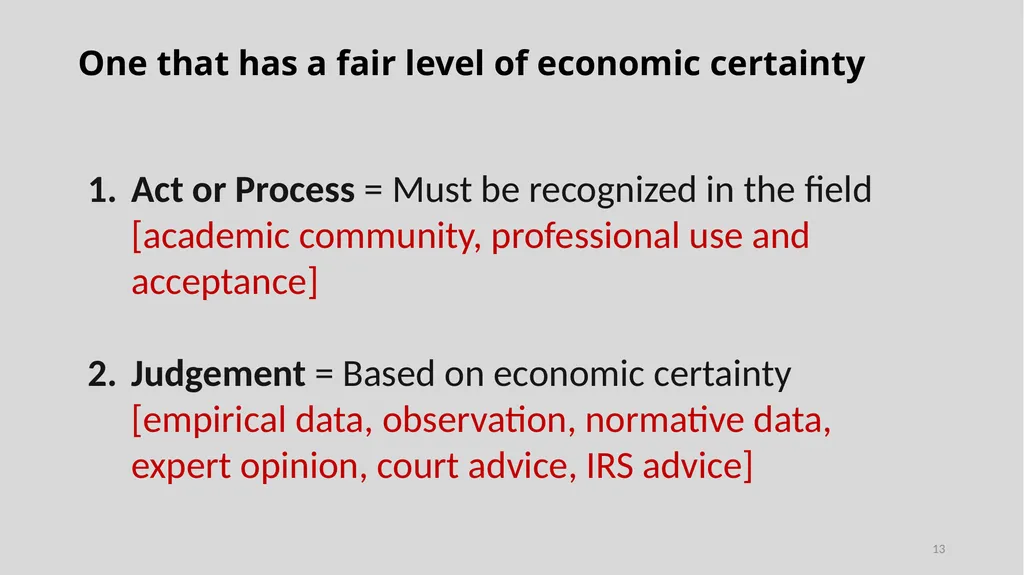
slide13. One that has a fair level of economic certainty Act or Process = Must be recognized in the field [academic community, professional use and acceptance]
Judgement = Based on economic certainty [empirical data, observation, normative data, expert opinion, court advice, IRS advice] 13<br>
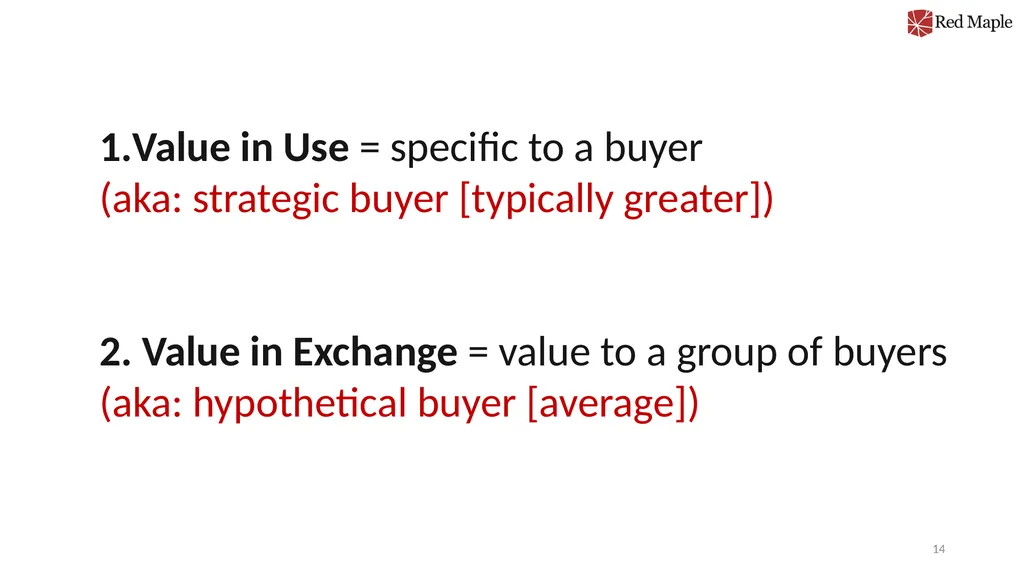
slide14. Value in Use = specific to a buyer
(aka: strategic buyer [typically greater])
2. Value in Exchange = value to a group of buyers (aka: hypothetical buyer [average]) 14<br>
slide15. Does anyone know of the two types of valuations that can be completed? 15<br>
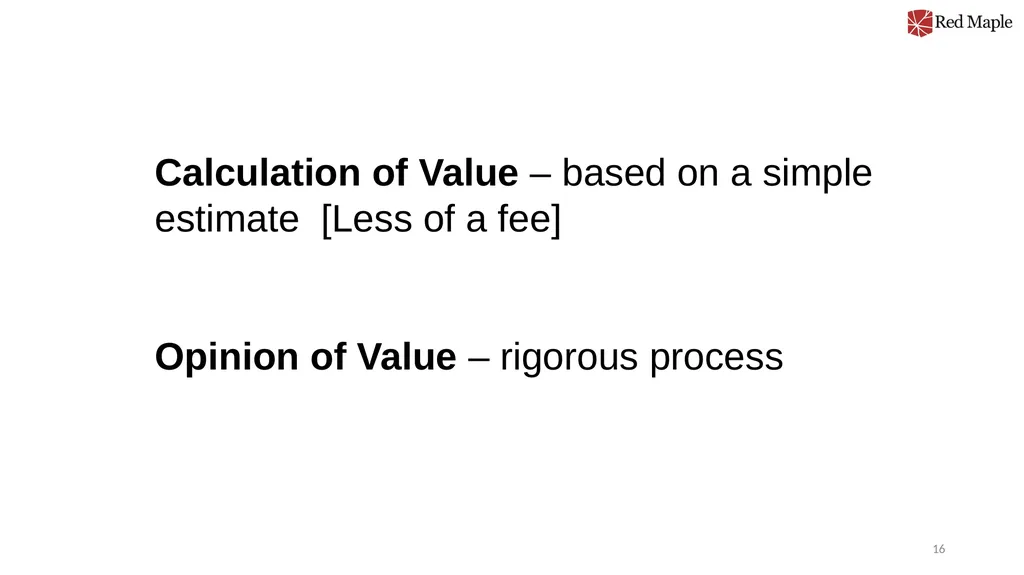
slide16. Calculation of Value – based on a simple estimate [Less of a fee]
Opinion of Value – rigorous process 16<br>
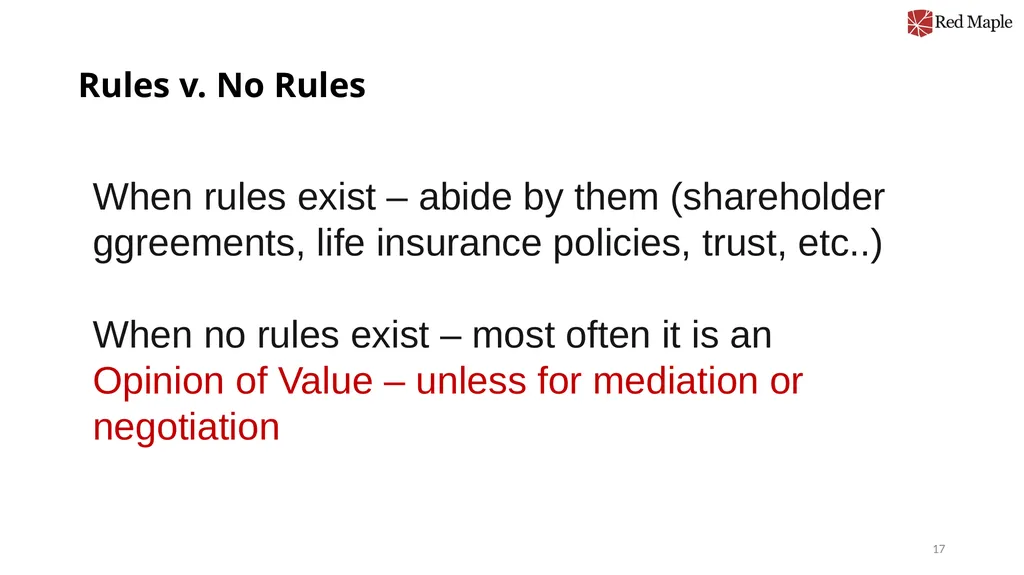
slide17. Rules v. No Rules When rules exist – abide by them (shareholder ggreements, life insurance policies, trust, etc..)
When no rules exist – most often it is an Opinion of Value – unless for mediation or negotiation 17<br>
slide18. Is a valuation always necessary? 18<br>
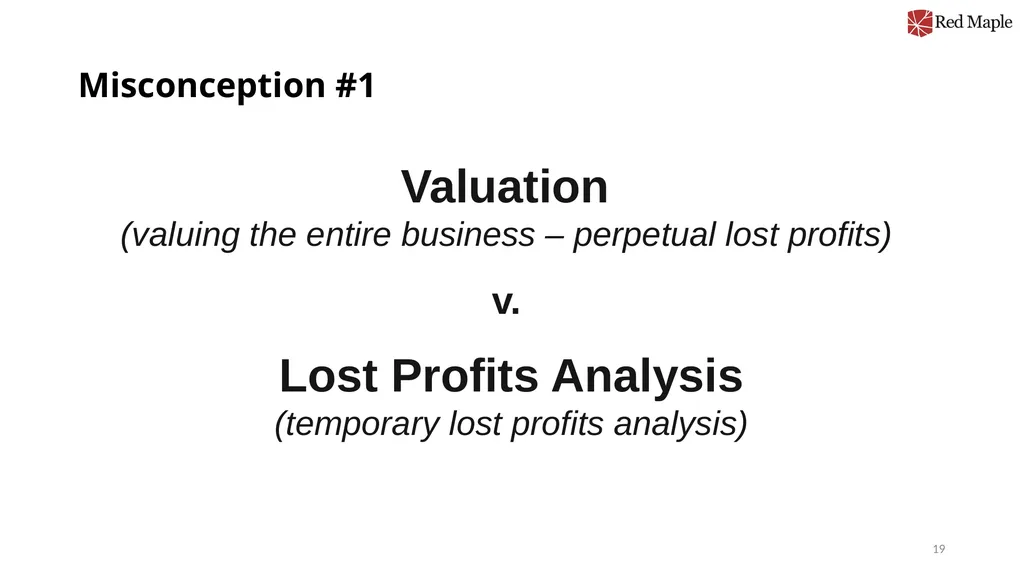
slide19. Misconception #1 Valuation
(valuing the entire business – perpetual lost profits)
v.
Lost Profits Analysis
(temporary lost profits analysis) 19<br>
slide20. The value of an asset is equal to its historical performance? 20<br>
slide21. Misconception #2 – History v. Future ABSOLUTELY NOT
The value of an asset is based on its expected future performance 21<br>
slide22. Opinion of Value
Valuation Analysts Choice
Valuation Date: December 31, 2014 22<br>
slide23. Most Common Approaches Income Approach
Market Approach
Asset Approach 23<br>
slide24. Income Approach 24<br>
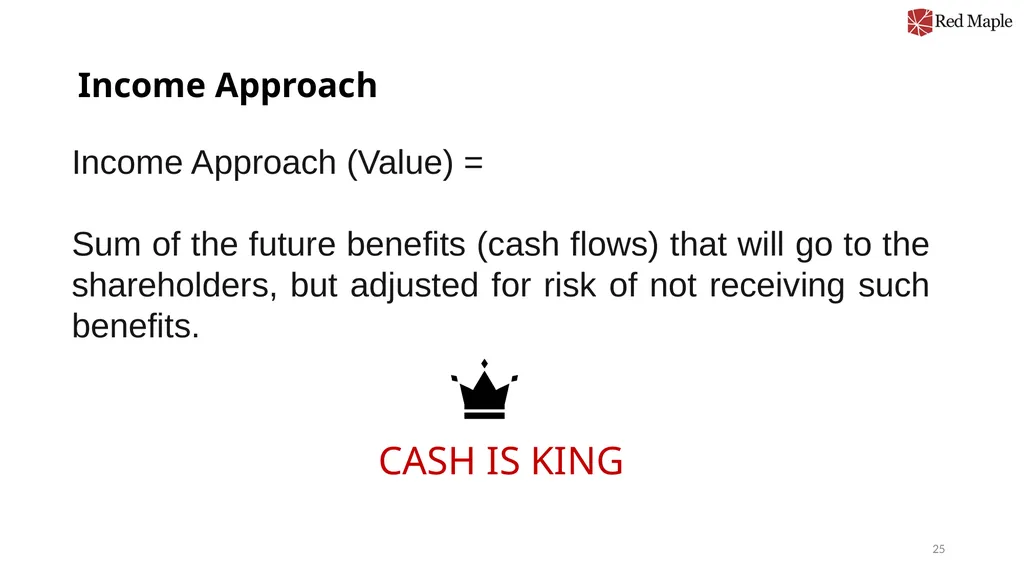
slide25. Income Approach Income Approach (Value) =
Sum of the future benefits (cash flows) that will go to the shareholders, but adjusted for risk of not receiving such benefits.
CASH IS KING 25<br>
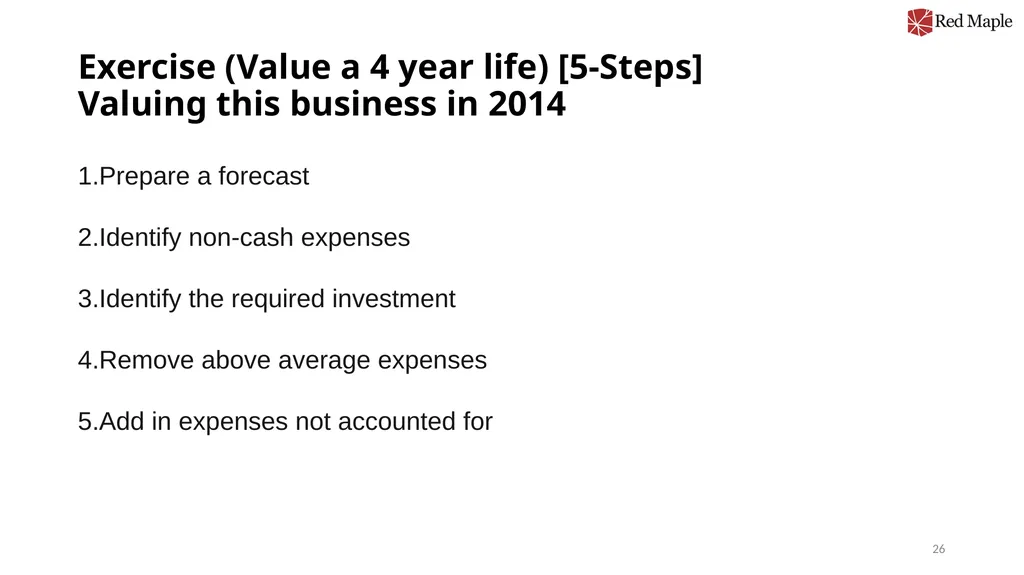
slide26. Exercise (Value a 4 year life) [5-Steps] Valuing this business in 2014 Prepare a forecast
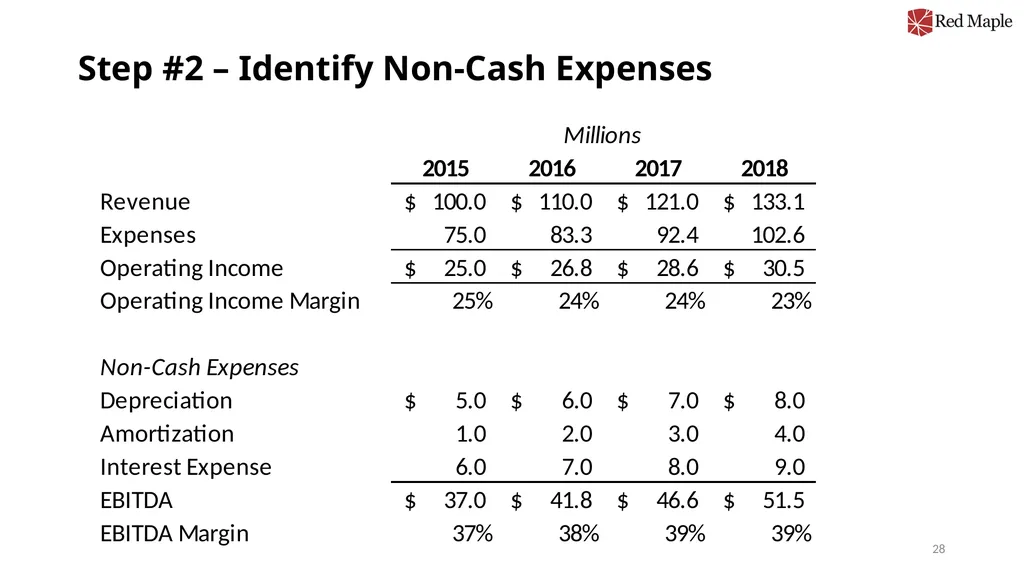
Identify non-cash expenses
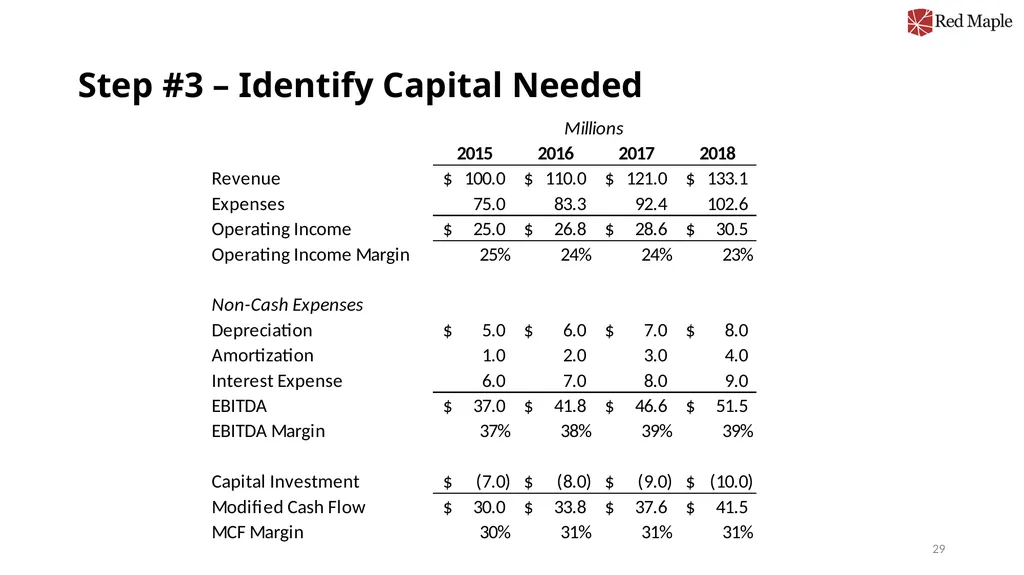
Identify the required investment
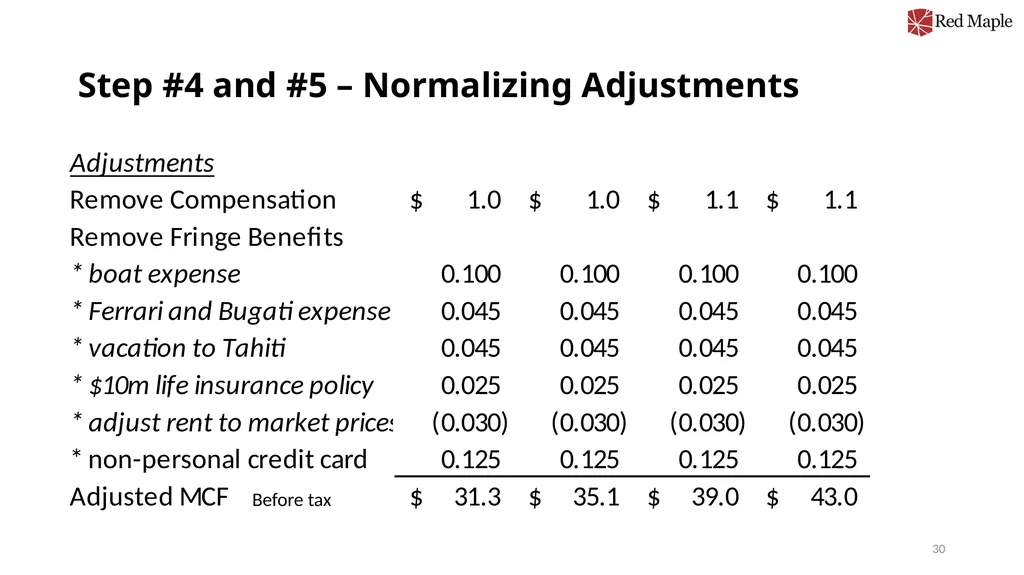
Remove above average expenses
Add in expenses not accounted for 26<br>
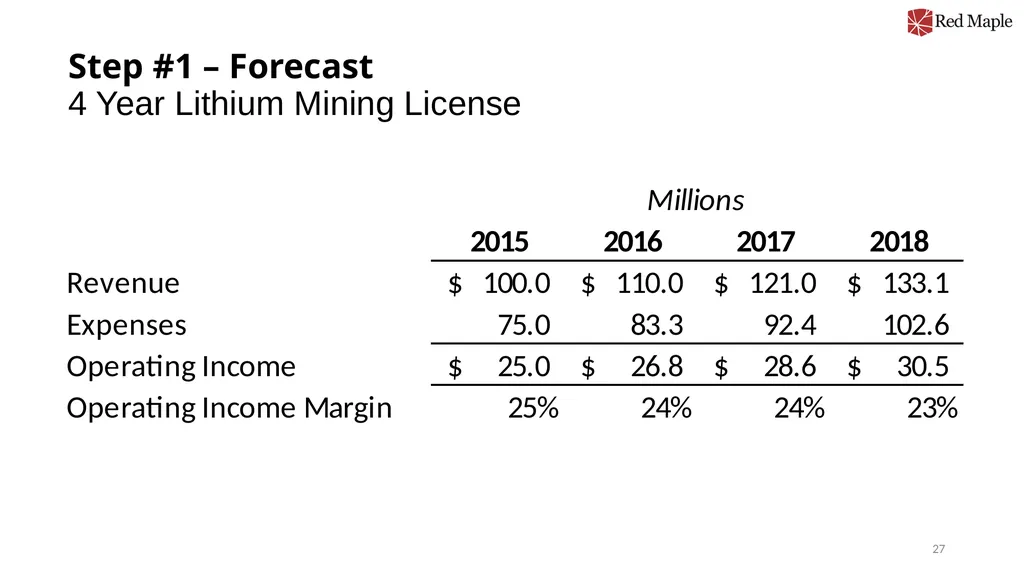
slide27. Step #1 – Forecast 4 Year Lithium Mining License 27<br>
slide28. Step #2 – Identify Non-Cash Expenses 28<br>
slide29. Step #3 – Identify Capital Needed 29<br>
slide30. Step #4 and #5 – Normalizing Adjustments 30 Before tax<br>
slide31. Is this a good company? 31<br>
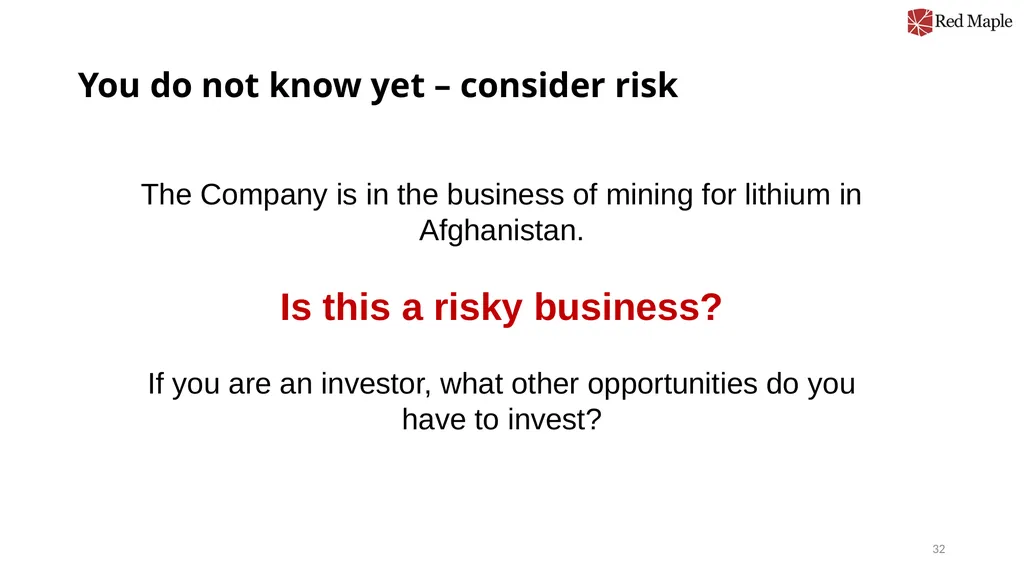
slide32. You do not know yet – consider risk The Company is in the business of mining for lithium in Afghanistan.
Is this a risky business?
If you are an investor, what other opportunities do you have to invest? 32<br>
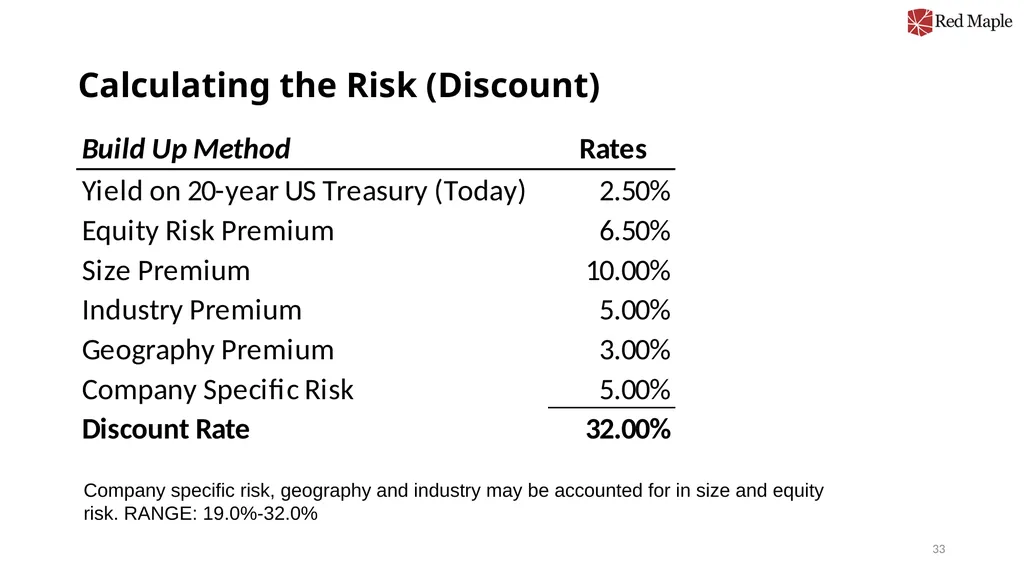
slide33. Calculating the Risk (Discount) Company specific risk, geography and industry may be accounted for in size and equity risk. RANGE: 19.0%-32.0% 33<br>
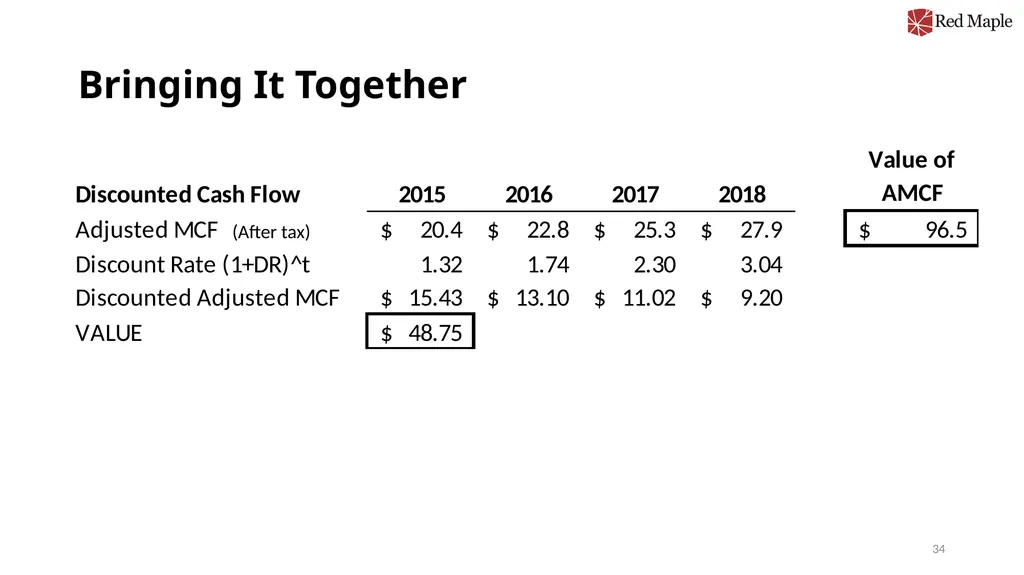
slide34. Bringing It Together 34 (After tax)<br>
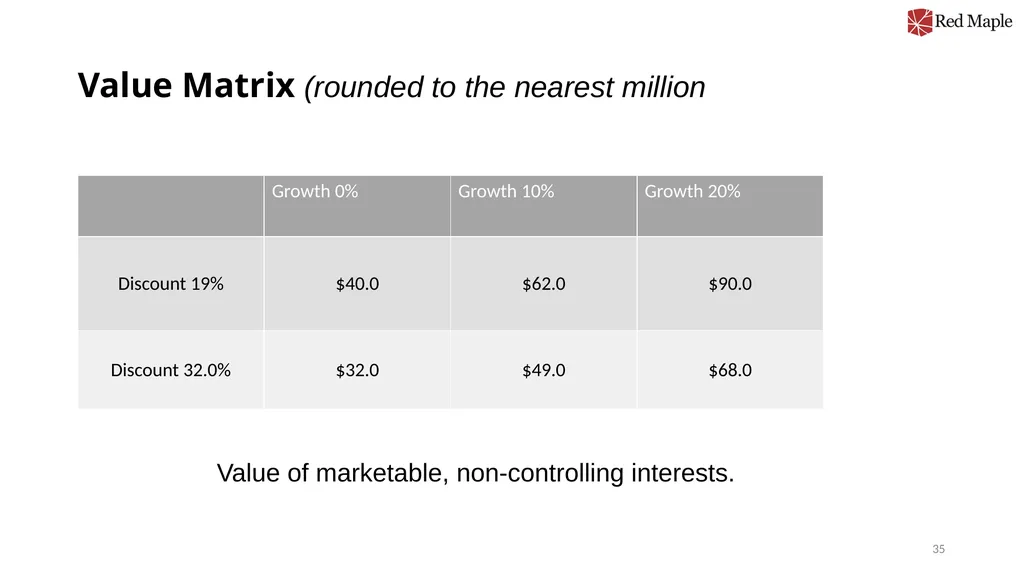
slide35. Value Matrix (rounded to the nearest million Value of marketable, non-controlling interests. 35<br>
slide36. Making Other Adjustments Discount for Lack of Marketability
Discount for Lack of Control
Discount for Voting v. Non Voting
Discount for Key Person
NOT FACTORED IN HERE – Discussed in subsequent sections 36<br>
slide37. Market
Approach 37<br>
slide38. Market Approach The Market Approach is a relatively straight forward exercise looking at historical private M&A transactions
And / Or
The value of publicly traded companies with similar characteristics of the company being valued 38<br>
slide39. Market Approach Typically we look to understand the value of similar companies which were sold in the market.
We look at:
Price (Value) to Sales
Price to Operating Income
Price to EBITDA 39<br>
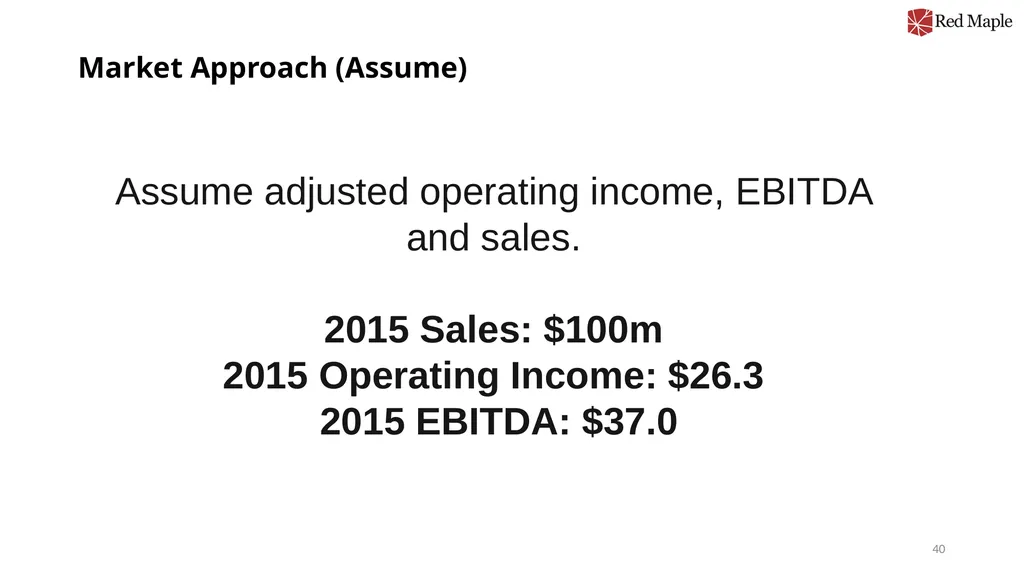
slide40. Market Approach (Assume) Assume adjusted operating income, EBITDA and sales.
2015 Sales: $100m
2015 Operating Income: $26.3
2015 EBITDA: $37.0 40<br>
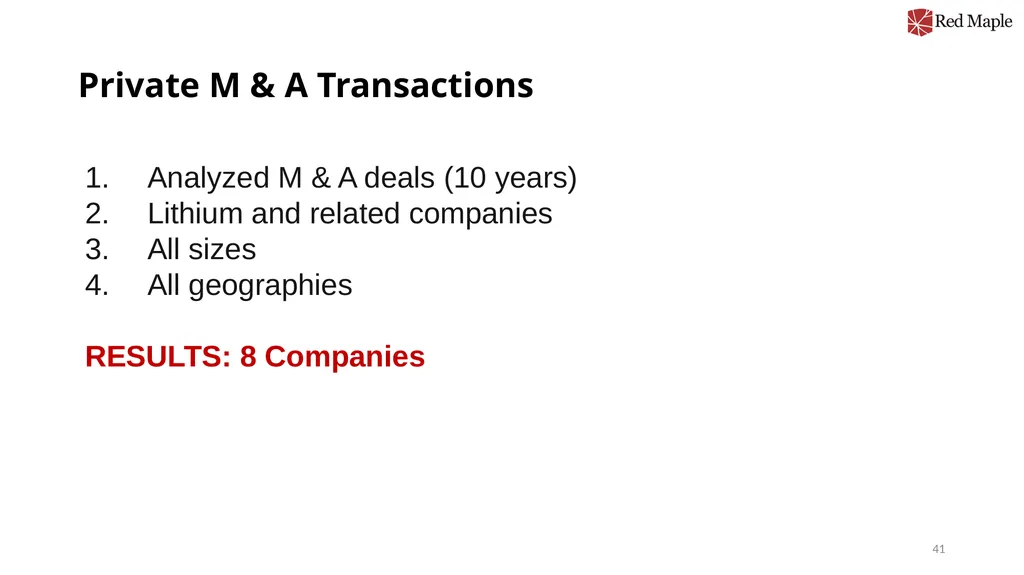
slide41. Private M & A Transactions Analyzed M & A deals (10 years)
Lithium and related companies
All sizes
All geographies
RESULTS: 8 Companies 41<br>
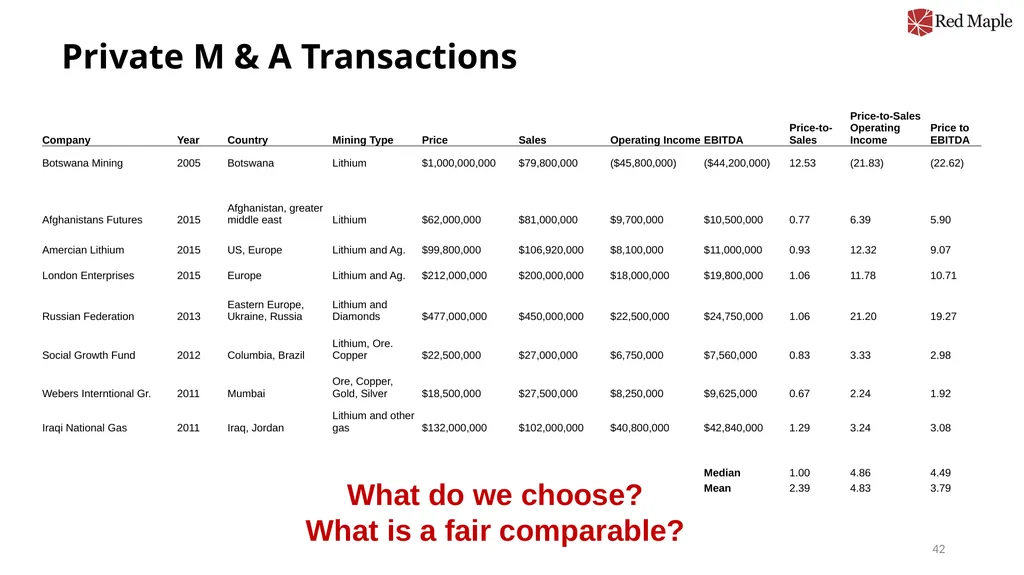
slide42. Private M & A Transactions What do we choose?
What is a fair comparable? 42<br>
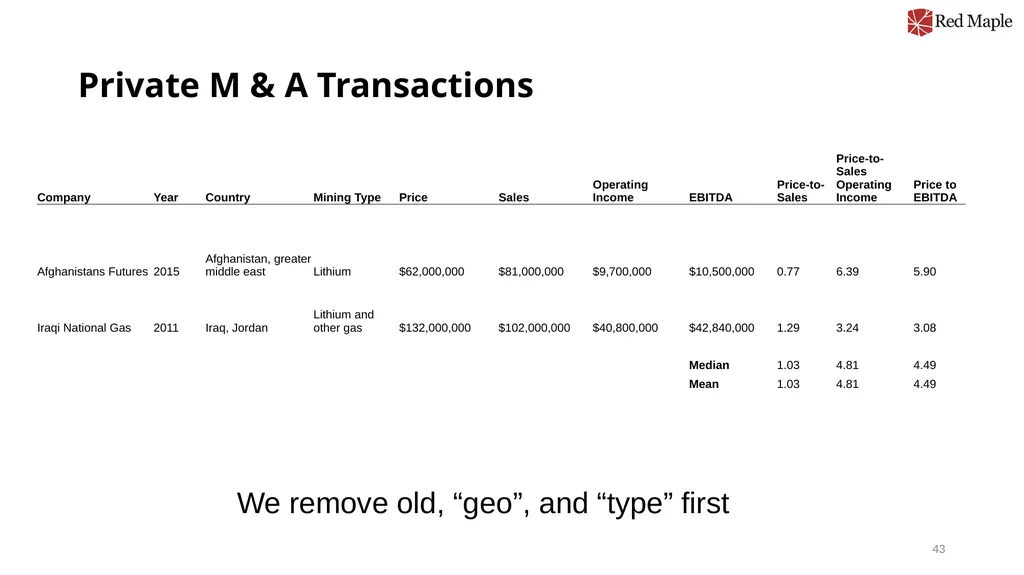
slide43. Private M & A Transactions We remove old, “geo”, and “type” first 43<br>
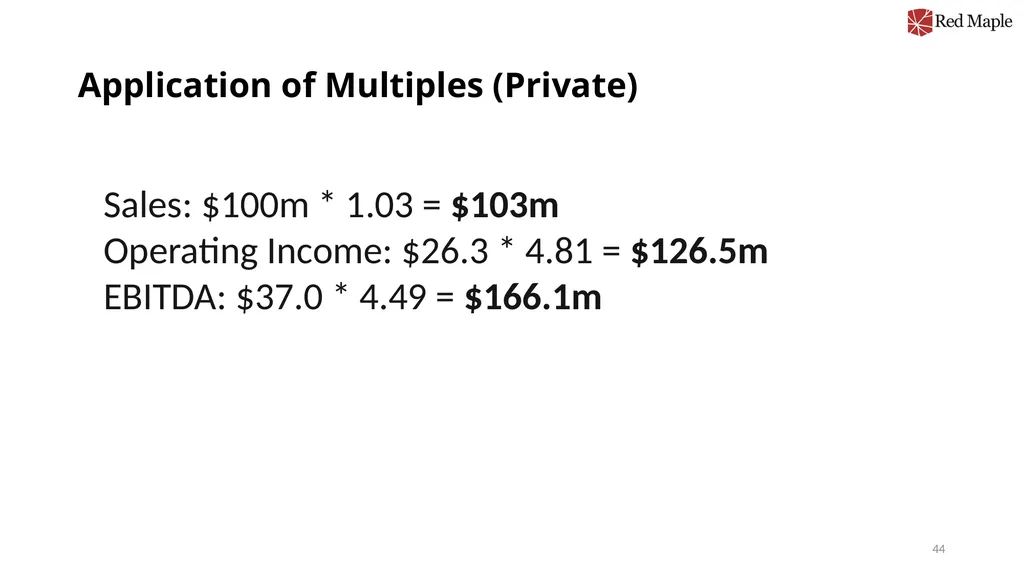
slide44. Application of Multiples (Private) Sales: $100m * 1.03 = $103m
Operating Income: $26.3 * 4.81 = $126.5m
EBITDA: $37.0 * 4.49 = $166.1m 44<br>
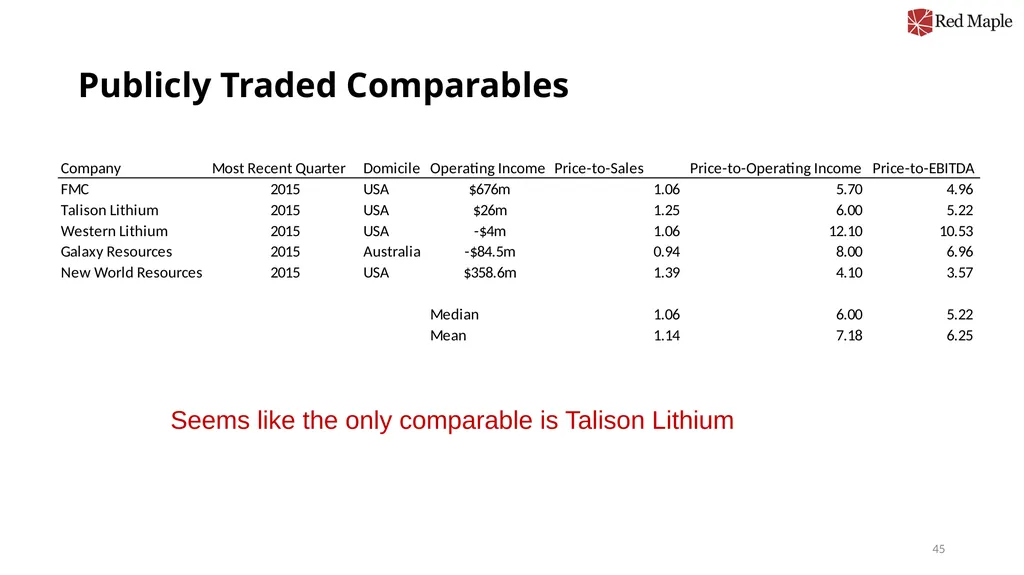
slide45. Publicly Traded Comparables Seems like the only comparable is Talison Lithium 45<br>
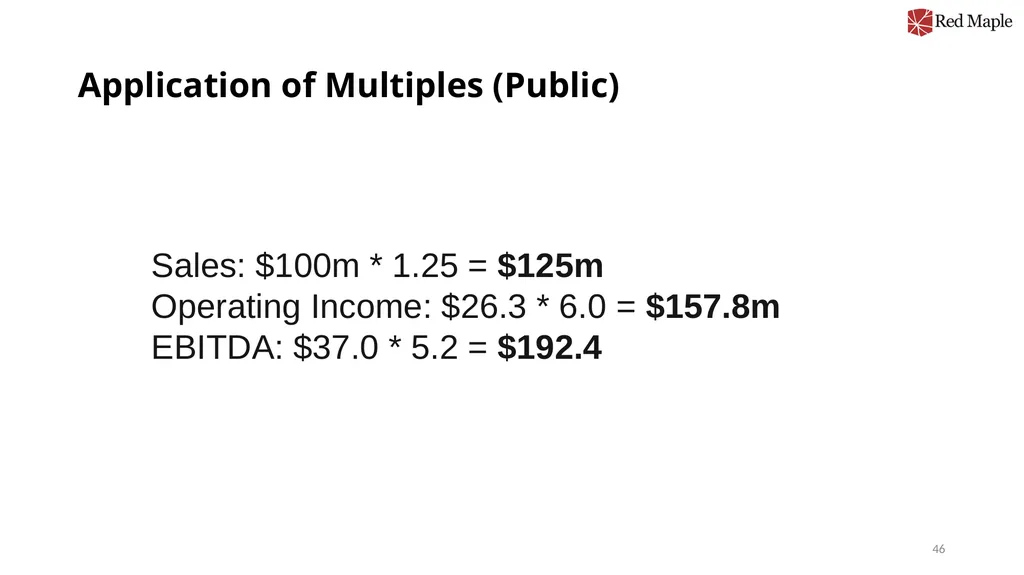
slide46. Application of Multiples (Public) Sales: $100m * 1.25 = $125m
Operating Income: $26.3 * 6.0 = $157.8m
EBITDA: $37.0 * 5.2 = $192.4 46<br>
slide47. Asset
Approach 47<br>
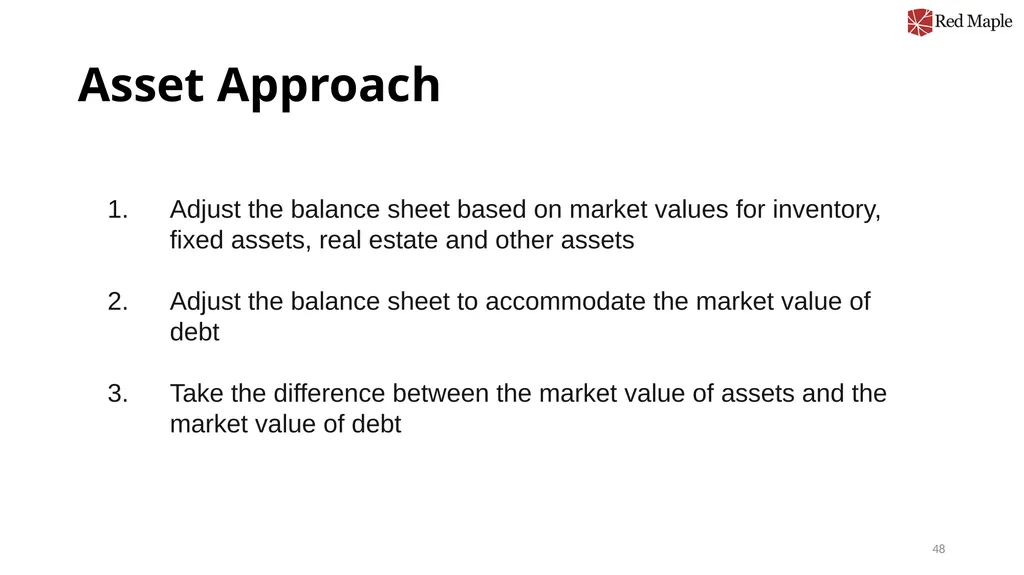
slide48. Asset Approach Adjust the balance sheet based on market values for inventory, fixed assets, real estate and other assets
Adjust the balance sheet to accommodate the market value of debt
Take the difference between the market value of assets and the market value of debt 48<br>
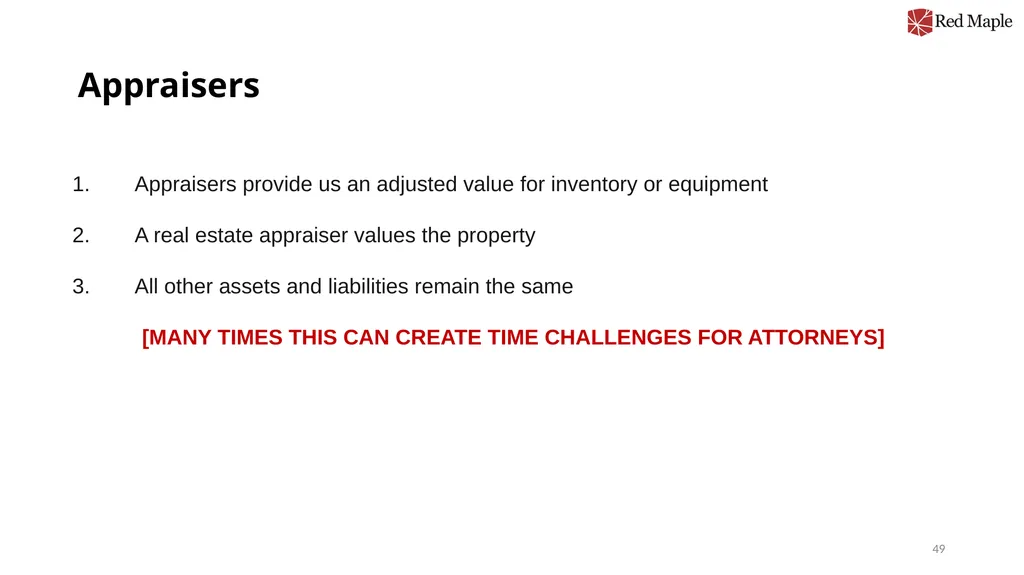
slide49. Appraisers Appraisers provide us an adjusted value for inventory or equipment
A real estate appraiser values the property
All other assets and liabilities remain the same
[MANY TIMES THIS CAN CREATE TIME CHALLENGES FOR ATTORNEYS] 49<br>
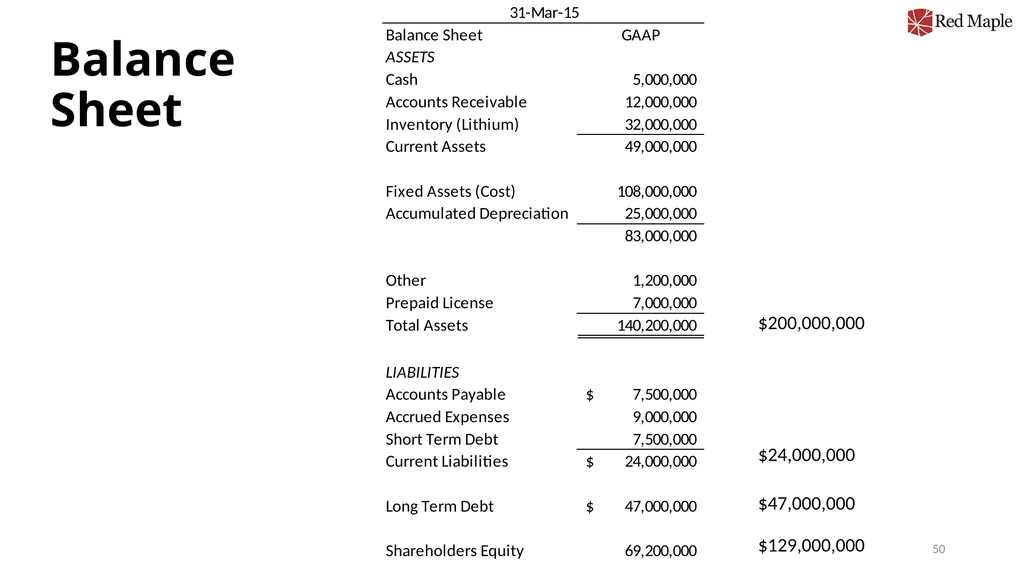
slide50. Balance Sheet 50 $200,000,000 $47,000,000 $129,000,000 $24,000,000<br>
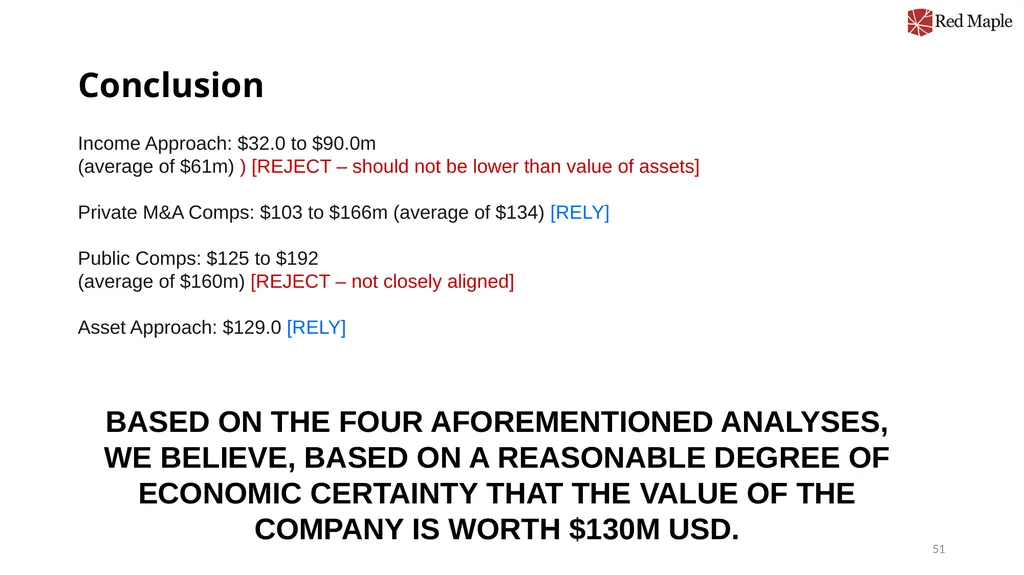
slide51. Conclusion Income Approach: $32.0 to $90.0m
(average of $61m) ) [REJECT – should not be lower than value of assets]
Private M&A Comps: $103 to $166m (average of $134) [RELY]
Public Comps: $125 to $192
(average of $160m) [REJECT – not closely aligned]
Asset Approach: $129.0 [RELY] BASED ON THE FOUR AFOREMENTIONED ANALYSES, WE BELIEVE, BASED ON A REASONABLE DEGREE OF ECONOMIC CERTAINTY THAT THE VALUE OF THE COMPANY IS WORTH $130M USD. 51<br>
slide52. Thank You! Christopher W. Young, Ph.D., CVA, MBA
www.RedMapEcon.com 52<br>
slide2. Agenda 2 Quick Introduction
What is a Valuation?
What are the major components of a Valuation?
Simple exercise – Mining Business (Opinion of Value)
Q&A<br>
slide3. Economic, Strategic and Forensic Consulting Firm Commercial Economic Damages Employment Matters Financial Forensics Economic Studies, Social Science FINRA
Related Personal Injury and Wrongful Death Matrimonial and Divorce Services Valuations and Corporate Finance Services Litigation, Estate and Tax, Corporate Finance Matters 3 Estate
and
Tax Valuations<br>
slide4. 4 Team Success Testified and settled $1.7 billion
Breach of Contract Case Testified and Settled $120 million Shareholder Oppression Case Verdict of $27 million + Shareholder Oppression Claim Verdict of $30m+ Securities Fraud/RICO Case Been on the opposite side of the majors – Analysis Group, BCG, EY, PWC, Brattle Group
Been on the opposite side of the mid tier – Wiss, Withum, Eisner, Cipolla<br>
slide5. Recent Activity 5<br>
slide6. Speaker Chris Young
Partner – Red Maple Economics
Former Partner and Head of Valuation and Commercial Damages – Sobel & Co.
Assistant Professor at Rutgers University, School of Business
Previously Professor at Seton Hall University, Stillman School of Business
Previously Managing Director of M&A at a mid-market investment bank
Previously managed a venture capital fund, CFO of a $500m media company, head of strategy and M&A for the WSJ/Dow Jones
PhD, MBA – Rutgers University, presently studying Behavioral Economics (MA) – Harvard University 6<br>
slide7. What is a Valuation? 7<br>
slide8. Lets begin with a simple exercise On a piece of paper – write down what you value the most in the entire world
[1 min] 8<br>
slide9. Lets begin with a simple exercise On a piece of paper – now write down why you value this thing, object, person, etc…
[1 min] 9<br>
slide10. Lets begin with a simple exercise On a piece of paper – what did you give up to obtain that value?
[1 min] 10<br>
slide11. Valuation Defined The act or process of making a judgment about the price or value of something.
The estimated value of something.
THIS IS ANYTHING THAT HAS VALUE 11<br>
slide12. What is a valuation that is accepted by the Court, IRS, strategic partner? 12<br>
slide13. One that has a fair level of economic certainty Act or Process = Must be recognized in the field [academic community, professional use and acceptance]
Judgement = Based on economic certainty [empirical data, observation, normative data, expert opinion, court advice, IRS advice] 13<br>
slide14. Value in Use = specific to a buyer
(aka: strategic buyer [typically greater])
2. Value in Exchange = value to a group of buyers (aka: hypothetical buyer [average]) 14<br>
slide15. Does anyone know of the two types of valuations that can be completed? 15<br>
slide16. Calculation of Value – based on a simple estimate [Less of a fee]
Opinion of Value – rigorous process 16<br>
slide17. Rules v. No Rules When rules exist – abide by them (shareholder ggreements, life insurance policies, trust, etc..)
When no rules exist – most often it is an Opinion of Value – unless for mediation or negotiation 17<br>
slide18. Is a valuation always necessary? 18<br>
slide19. Misconception #1 Valuation
(valuing the entire business – perpetual lost profits)
v.
Lost Profits Analysis
(temporary lost profits analysis) 19<br>
slide20. The value of an asset is equal to its historical performance? 20<br>
slide21. Misconception #2 – History v. Future ABSOLUTELY NOT
The value of an asset is based on its expected future performance 21<br>
slide22. Opinion of Value
Valuation Analysts Choice
Valuation Date: December 31, 2014 22<br>
slide23. Most Common Approaches Income Approach
Market Approach
Asset Approach 23<br>
slide24. Income Approach 24<br>
slide25. Income Approach Income Approach (Value) =
Sum of the future benefits (cash flows) that will go to the shareholders, but adjusted for risk of not receiving such benefits.
CASH IS KING 25<br>
slide26. Exercise (Value a 4 year life) [5-Steps] Valuing this business in 2014 Prepare a forecast
Identify non-cash expenses
Identify the required investment
Remove above average expenses
Add in expenses not accounted for 26<br>
slide27. Step #1 – Forecast 4 Year Lithium Mining License 27<br>
slide28. Step #2 – Identify Non-Cash Expenses 28<br>
slide29. Step #3 – Identify Capital Needed 29<br>
slide30. Step #4 and #5 – Normalizing Adjustments 30 Before tax<br>
slide31. Is this a good company? 31<br>
slide32. You do not know yet – consider risk The Company is in the business of mining for lithium in Afghanistan.
Is this a risky business?
If you are an investor, what other opportunities do you have to invest? 32<br>
slide33. Calculating the Risk (Discount) Company specific risk, geography and industry may be accounted for in size and equity risk. RANGE: 19.0%-32.0% 33<br>
slide34. Bringing It Together 34 (After tax)<br>
slide35. Value Matrix (rounded to the nearest million Value of marketable, non-controlling interests. 35<br>
slide36. Making Other Adjustments Discount for Lack of Marketability
Discount for Lack of Control
Discount for Voting v. Non Voting
Discount for Key Person
NOT FACTORED IN HERE – Discussed in subsequent sections 36<br>
slide37. Market
Approach 37<br>
slide38. Market Approach The Market Approach is a relatively straight forward exercise looking at historical private M&A transactions
And / Or
The value of publicly traded companies with similar characteristics of the company being valued 38<br>
slide39. Market Approach Typically we look to understand the value of similar companies which were sold in the market.
We look at:
Price (Value) to Sales
Price to Operating Income
Price to EBITDA 39<br>
slide40. Market Approach (Assume) Assume adjusted operating income, EBITDA and sales.
2015 Sales: $100m
2015 Operating Income: $26.3
2015 EBITDA: $37.0 40<br>
slide41. Private M & A Transactions Analyzed M & A deals (10 years)
Lithium and related companies
All sizes
All geographies
RESULTS: 8 Companies 41<br>
slide42. Private M & A Transactions What do we choose?
What is a fair comparable? 42<br>
slide43. Private M & A Transactions We remove old, “geo”, and “type” first 43<br>
slide44. Application of Multiples (Private) Sales: $100m * 1.03 = $103m
Operating Income: $26.3 * 4.81 = $126.5m
EBITDA: $37.0 * 4.49 = $166.1m 44<br>
slide45. Publicly Traded Comparables Seems like the only comparable is Talison Lithium 45<br>
slide46. Application of Multiples (Public) Sales: $100m * 1.25 = $125m
Operating Income: $26.3 * 6.0 = $157.8m
EBITDA: $37.0 * 5.2 = $192.4 46<br>
slide47. Asset
Approach 47<br>
slide48. Asset Approach Adjust the balance sheet based on market values for inventory, fixed assets, real estate and other assets
Adjust the balance sheet to accommodate the market value of debt
Take the difference between the market value of assets and the market value of debt 48<br>
slide49. Appraisers Appraisers provide us an adjusted value for inventory or equipment
A real estate appraiser values the property
All other assets and liabilities remain the same
[MANY TIMES THIS CAN CREATE TIME CHALLENGES FOR ATTORNEYS] 49<br>
slide50. Balance Sheet 50 $200,000,000 $47,000,000 $129,000,000 $24,000,000<br>
slide51. Conclusion Income Approach: $32.0 to $90.0m
(average of $61m) ) [REJECT – should not be lower than value of assets]
Private M&A Comps: $103 to $166m (average of $134) [RELY]
Public Comps: $125 to $192
(average of $160m) [REJECT – not closely aligned]
Asset Approach: $129.0 [RELY] BASED ON THE FOUR AFOREMENTIONED ANALYSES, WE BELIEVE, BASED ON A REASONABLE DEGREE OF ECONOMIC CERTAINTY THAT THE VALUE OF THE COMPANY IS WORTH $130M USD. 51<br>
slide52. Thank You! Christopher W. Young, Ph.D., CVA, MBA
www.RedMapEcon.com 52<br>