
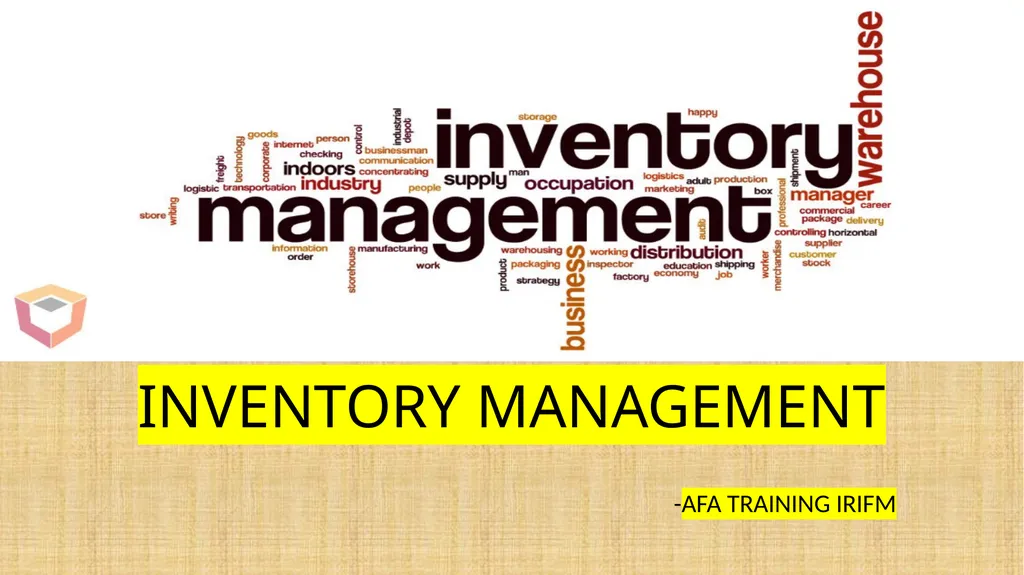
INVENTORY MANAGEMENT -AFA TRAINING IRIFM

Description: INVENTORY MANAGEMENT -AFA TRAINING IRIFM INTRODUCTION Inventory management is an art of management of stores. Stores comprise of materials which are held in stock The stocking of materials not only occupy space in the depot but also blocks
Related Topics
Download Presentation
"INVENTORY MANAGEMENT -AFA TRAINING IRIFM" is the property of its rightful owner. Permission is granted to download and print the materials on this website for personal, non-commercial use only, and to display it on your personal computer provided you do not modify the materials and that you retain all copyright notices contained in the materials. By downloading content from our website, you accept the terms of this agreement.
Presentation Transcript
slide1. INVENTORY MANAGEMENT -AFA TRAINING IRIFM<br>
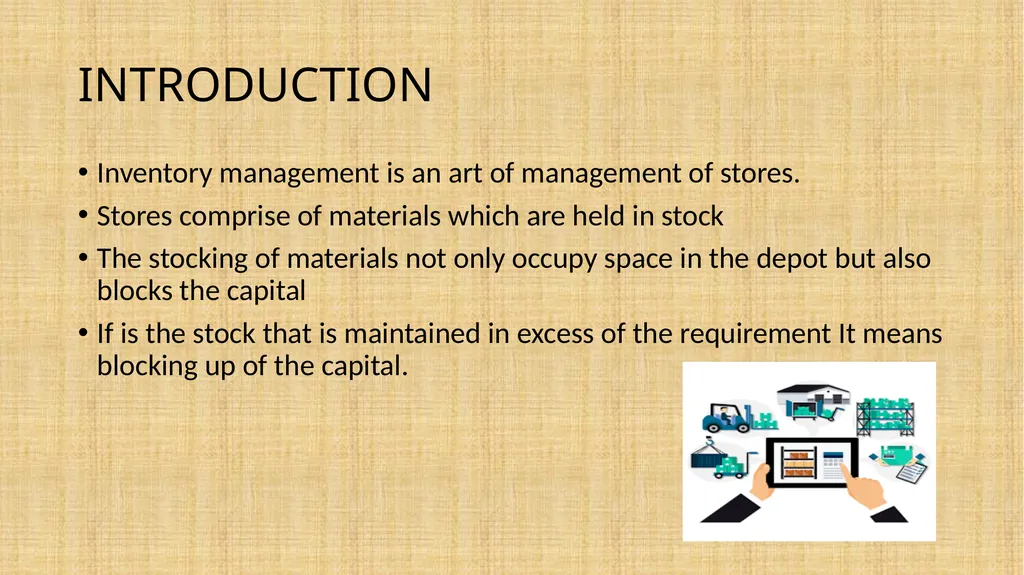
slide2. INTRODUCTION Inventory management is an art of management of stores.
Stores comprise of materials which are held in stock
The stocking of materials not only occupy space in the depot but also blocks the capital
If is the stock that is maintained in excess of the requirement It means blocking up of the capital.<br>
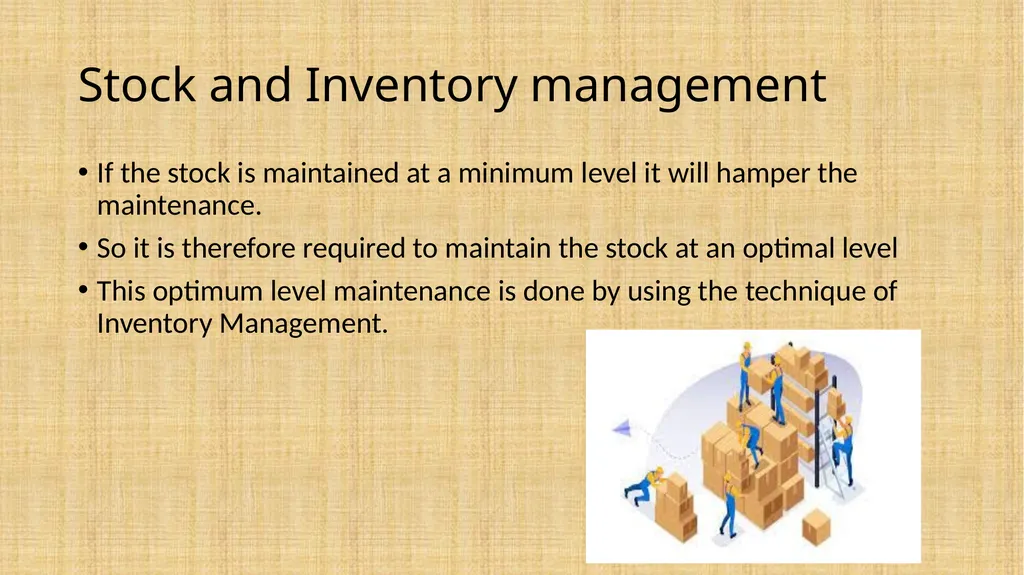
slide3. Stock and Inventory management If the stock is maintained at a minimum level it will hamper the maintenance.
So it is therefore required to maintain the stock at an optimal level
This optimum level maintenance is done by using the technique of Inventory Management.<br>
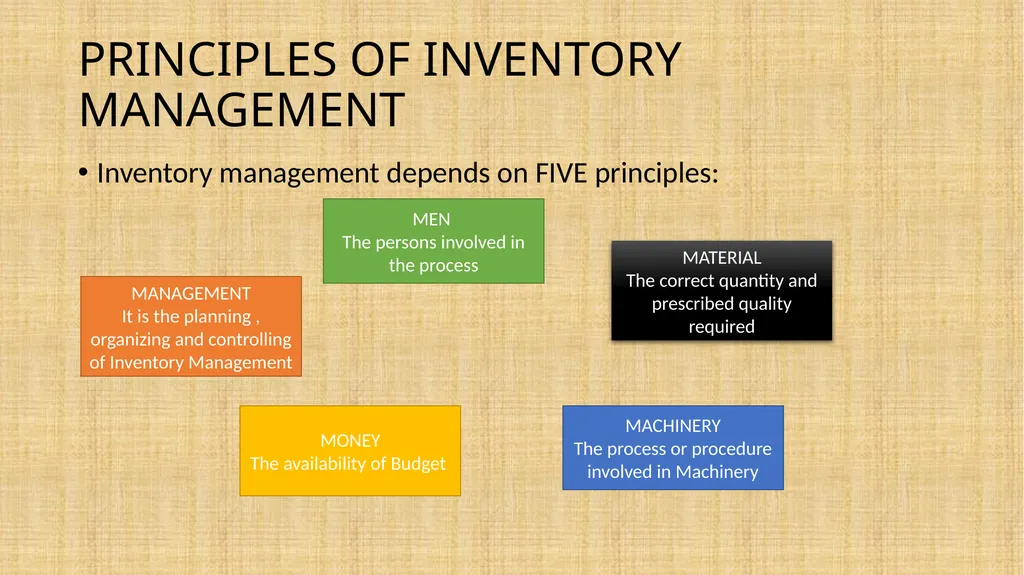
slide4. PRINCIPLES OF INVENTORY MANAGEMENT Inventory management depends on FIVE principles: MEN
The persons involved in the process MACHINERY
The process or procedure involved in Machinery MONEY
The availability of Budget MATERIAL
The correct quantity and prescribed quality required MANAGEMENT
It is the planning , organizing and controlling of Inventory Management<br>
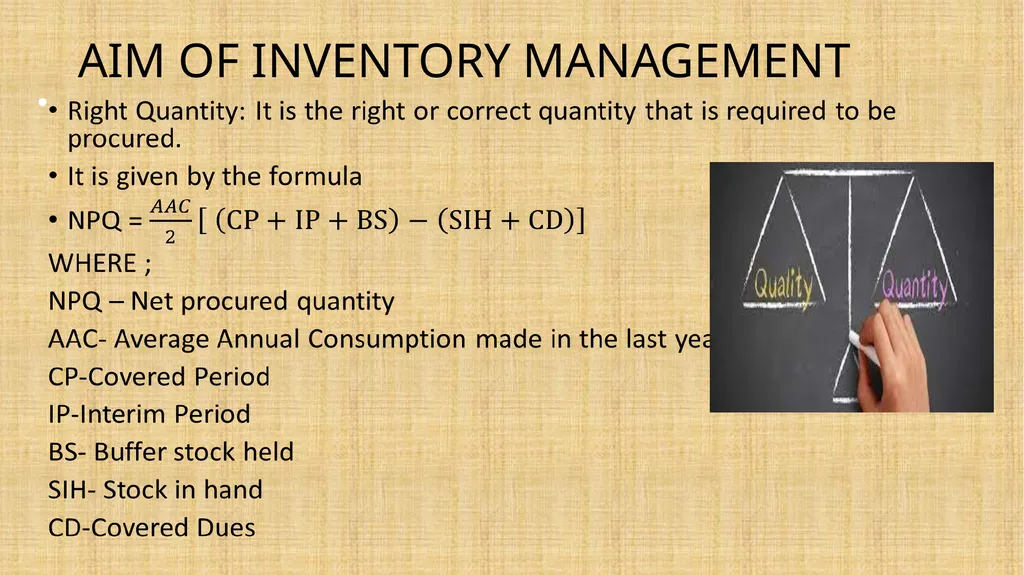
slide5. AIM OF INVENTORY MANAGEMENT<br>
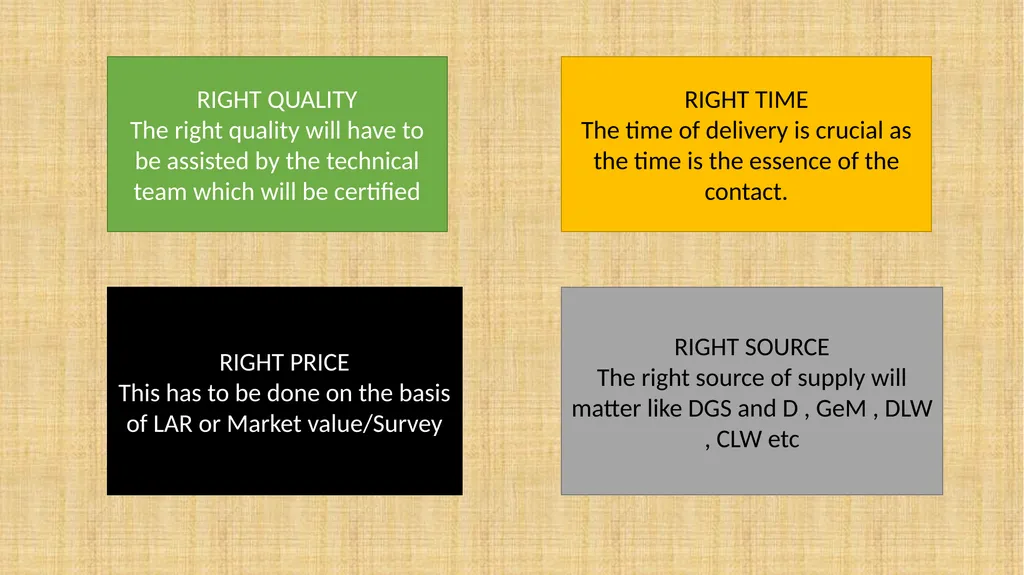
slide6. RIGHT QUALITY
The right quality will have to be assisted by the technical team which will be certified RIGHT TIME
The time of delivery is crucial as the time is the essence of the contact. RIGHT PRICE
This has to be done on the basis of LAR or Market value/Survey RIGHT SOURCE
The right source of supply will matter like DGS and D , GeM , DLW , CLW etc<br>
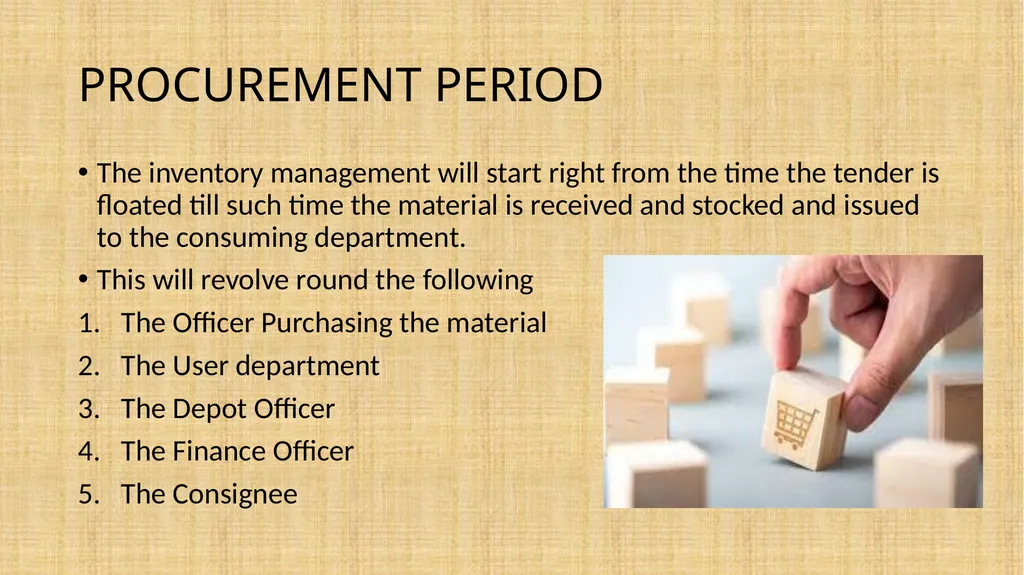
slide7. PROCUREMENT PERIOD The inventory management will start right from the time the tender is floated till such time the material is received and stocked and issued to the consuming department.
This will revolve round the following
The Officer Purchasing the material
The User department
The Depot Officer
The Finance Officer
The Consignee<br>
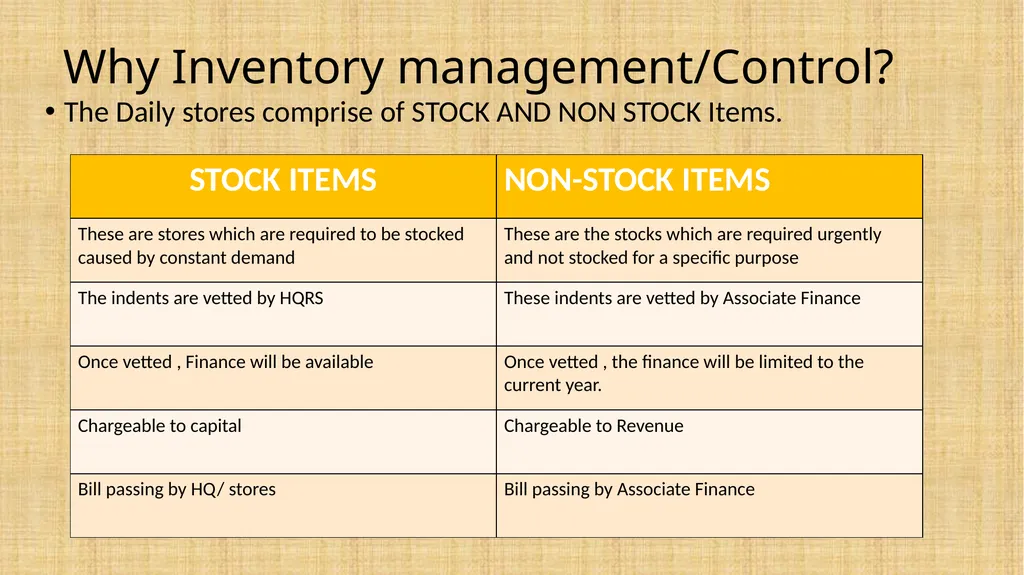
slide8. Why Inventory management/Control? The Daily stores comprise of STOCK AND NON STOCK Items.<br>
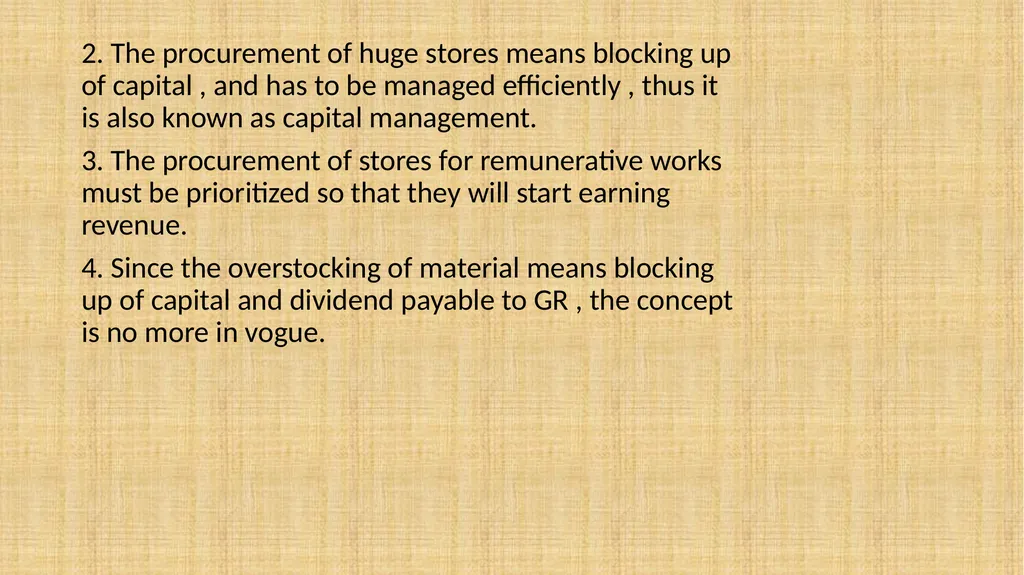
slide9. 2. The procurement of huge stores means blocking up of capital , and has to be managed efficiently , thus it is also known as capital management.
3. The procurement of stores for remunerative works must be prioritized so that they will start earning revenue.
4. Since the overstocking of material means blocking up of capital and dividend payable to GR , the concept is no more in vogue.<br>
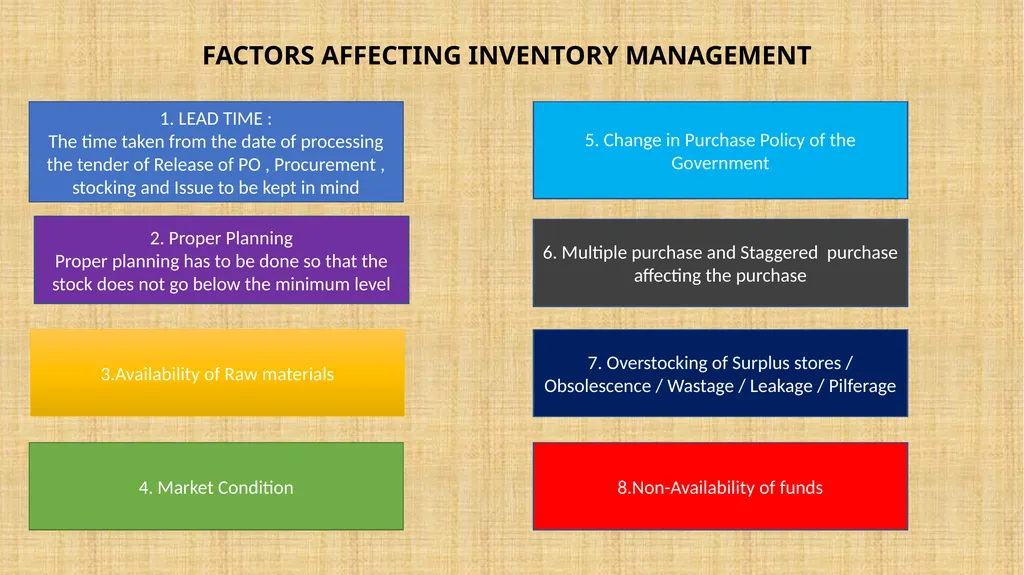
slide10. FACTORS AFFECTING INVENTORY MANAGEMENT 1. LEAD TIME :
The time taken from the date of processing the tender of Release of PO , Procurement , stocking and Issue to be kept in mind 2. Proper Planning
Proper planning has to be done so that the stock does not go below the minimum level 8.Non-Availability of funds 5. Change in Purchase Policy of the Government 3.Availability of Raw materials 7. Overstocking of Surplus stores / Obsolescence / Wastage / Leakage / Pilferage 4. Market Condition 6. Multiple purchase and Staggered purchase affecting the purchase<br>
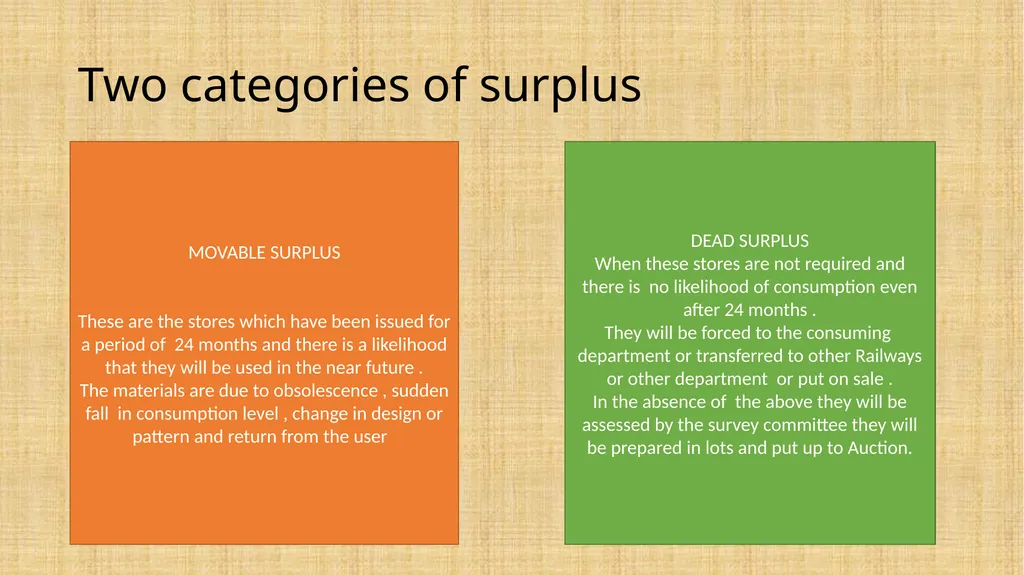
slide11. Two categories of surplus MOVABLE SURPLUS
These are the stores which have been issued for a period of 24 months and there is a likelihood that they will be used in the near future .
The materials are due to obsolescence , sudden fall in consumption level , change in design or pattern and return from the user DEAD SURPLUS
When these stores are not required and there is no likelihood of consumption even after 24 months .
They will be forced to the consuming department or transferred to other Railways or other department or put on sale .
In the absence of the above they will be assessed by the survey committee they will be prepared in lots and put up to Auction.<br>
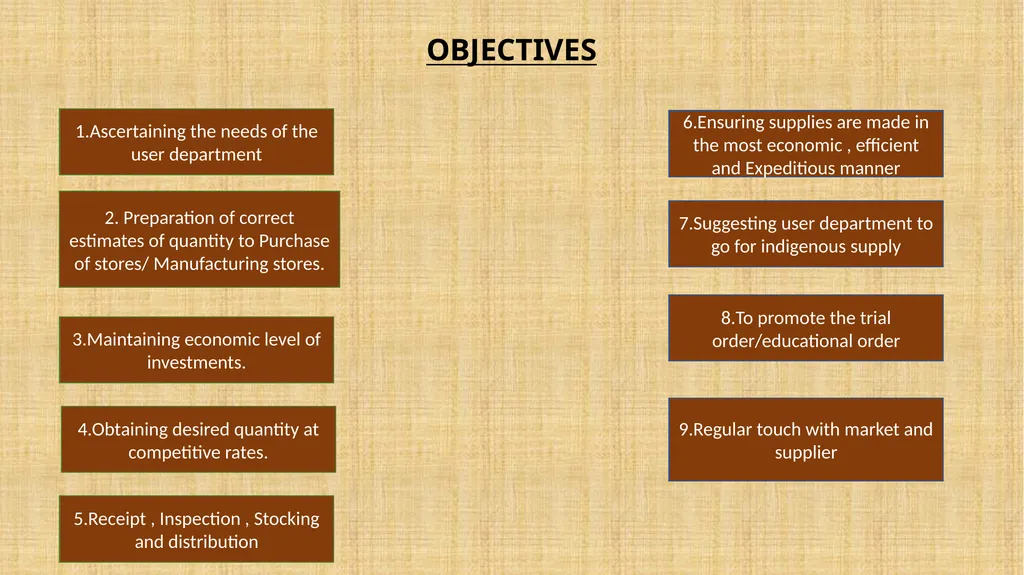
slide12. OBJECTIVES 1.Ascertaining the needs of the user department 6.Ensuring supplies are made in the most economic , efficient and Expeditious manner 7.Suggesting user department to go for indigenous supply 2. Preparation of correct estimates of quantity to Purchase of stores/ Manufacturing stores. 4.Obtaining desired quantity at competitive rates. 8.To promote the trial order/educational order 5.Receipt , Inspection , Stocking and distribution 3.Maintaining economic level of investments. 9.Regular touch with market and supplier<br>
slide13. INVENTORY MANAGEMENT ANALYSIS TECHNIQUES<br>
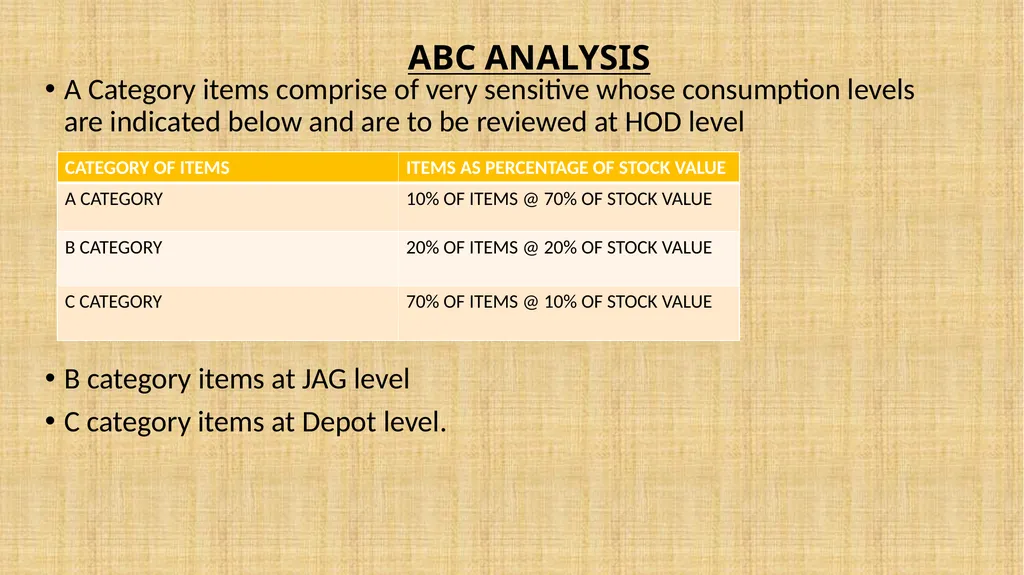
slide14. ABC ANALYSIS A Category items comprise of very sensitive whose consumption levels are indicated below and are to be reviewed at HOD level
B category items at JAG level
C category items at Depot level.<br>
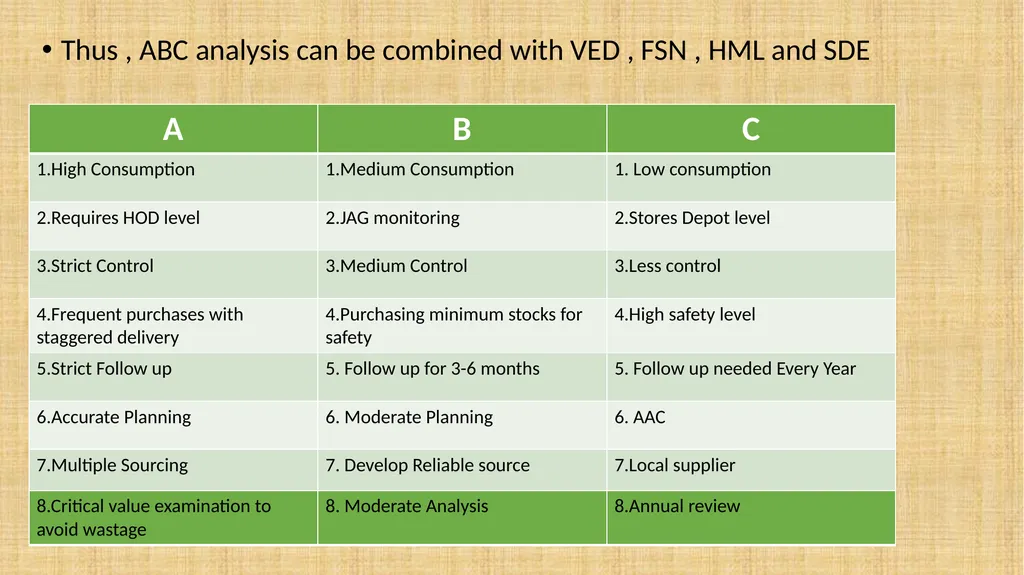
slide15. Thus , ABC analysis can be combined with VED , FSN , HML and SDE<br>
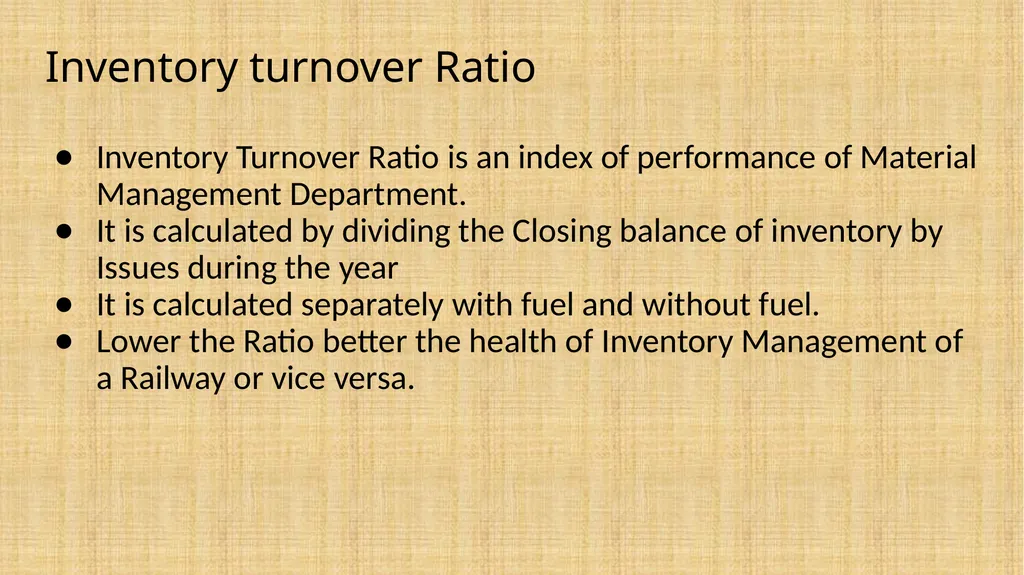
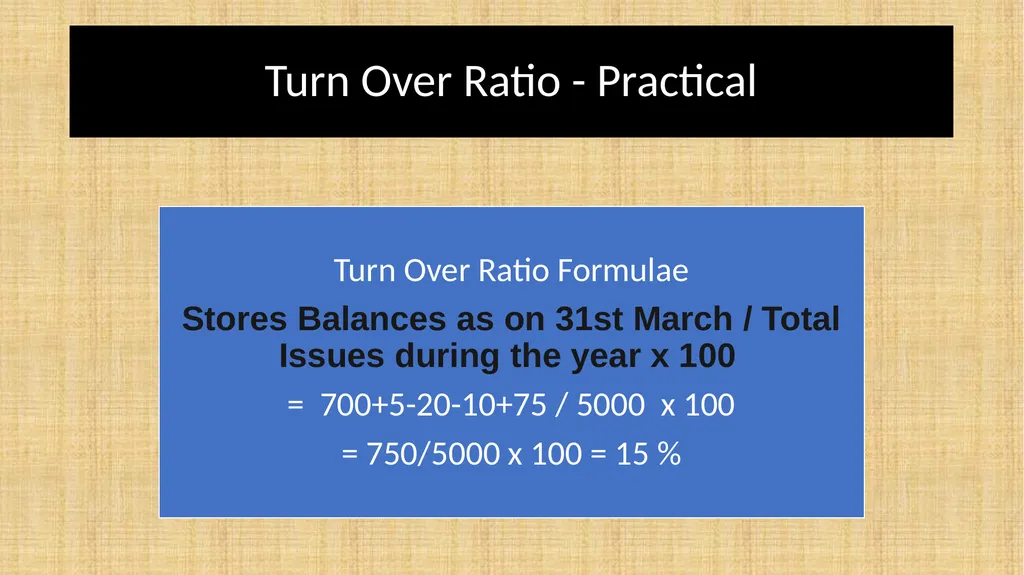
slide16. Inventory turnover Ratio Inventory Turnover Ratio is an index of performance of Material Management Department.
It is calculated by dividing the Closing balance of inventory by Issues during the year
It is calculated separately with fuel and without fuel.
Lower the Ratio better the health of Inventory Management of a Railway or vice versa.<br>
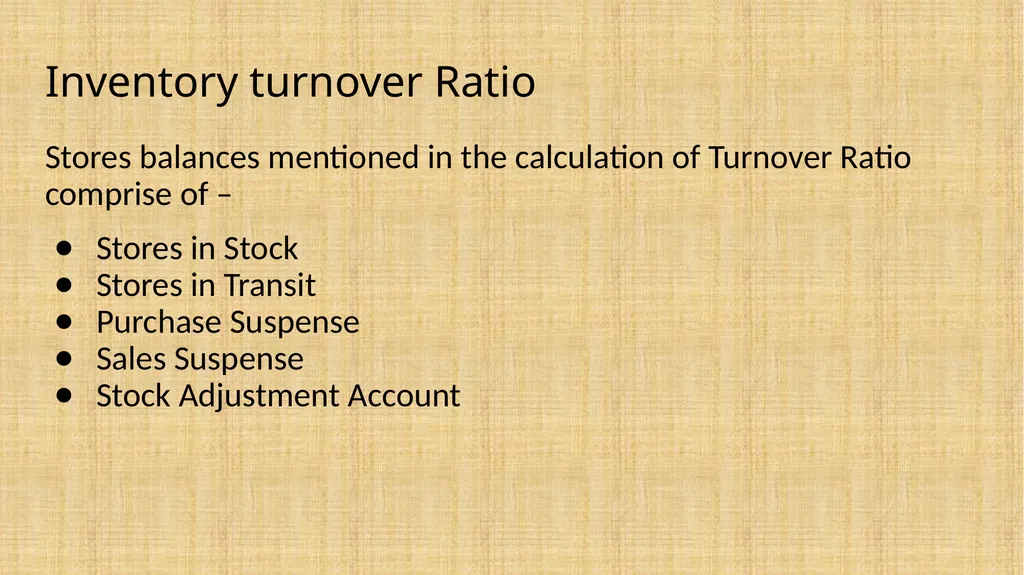
slide17. Inventory turnover Ratio Stores balances mentioned in the calculation of Turnover Ratio comprise of –
Stores in Stock
Stores in Transit
Purchase Suspense
Sales Suspense
Stock Adjustment Account<br>
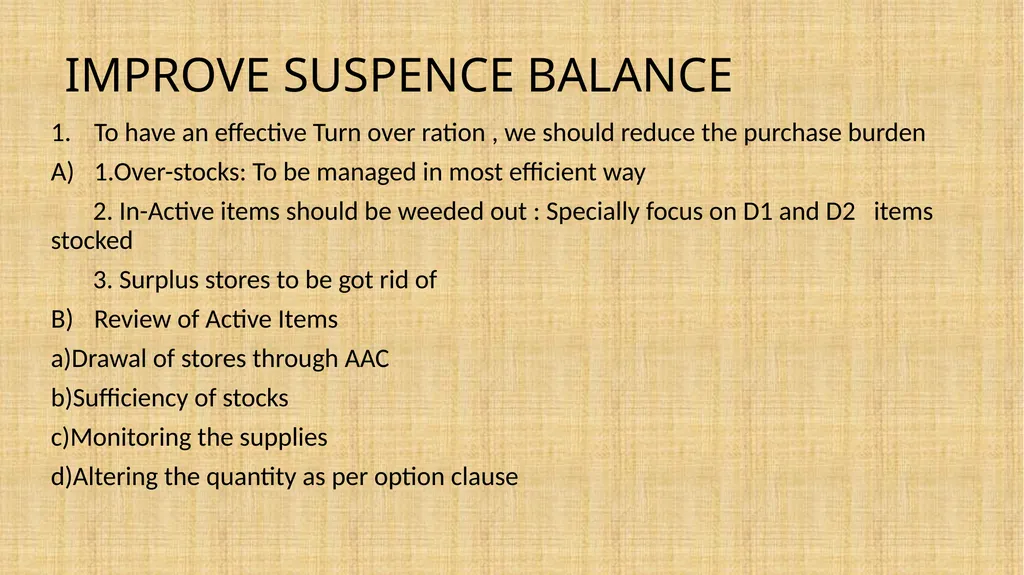
slide18. IMPROVE SUSPENCE BALANCE To have an effective Turn over ration , we should reduce the purchase burden
1.Over-stocks: To be managed in most efficient way
2. In-Active items should be weeded out : Specially focus on D1 and D2 items stocked
3. Surplus stores to be got rid of
Review of Active Items
a)Drawal of stores through AAC
b)Sufficiency of stocks
c)Monitoring the supplies
d)Altering the quantity as per option clause<br>
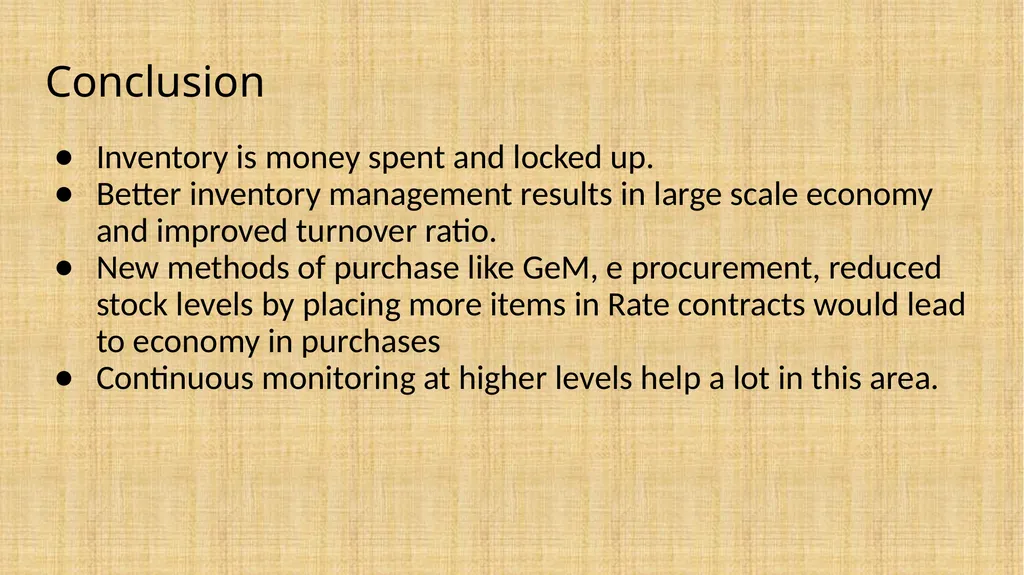
slide20. Conclusion Inventory is money spent and locked up.
Better inventory management results in large scale economy and improved turnover ratio.
New methods of purchase like GeM, e procurement, reduced stock levels by placing more items in Rate contracts would lead to economy in purchases
Continuous monitoring at higher levels help a lot in this area.<br>
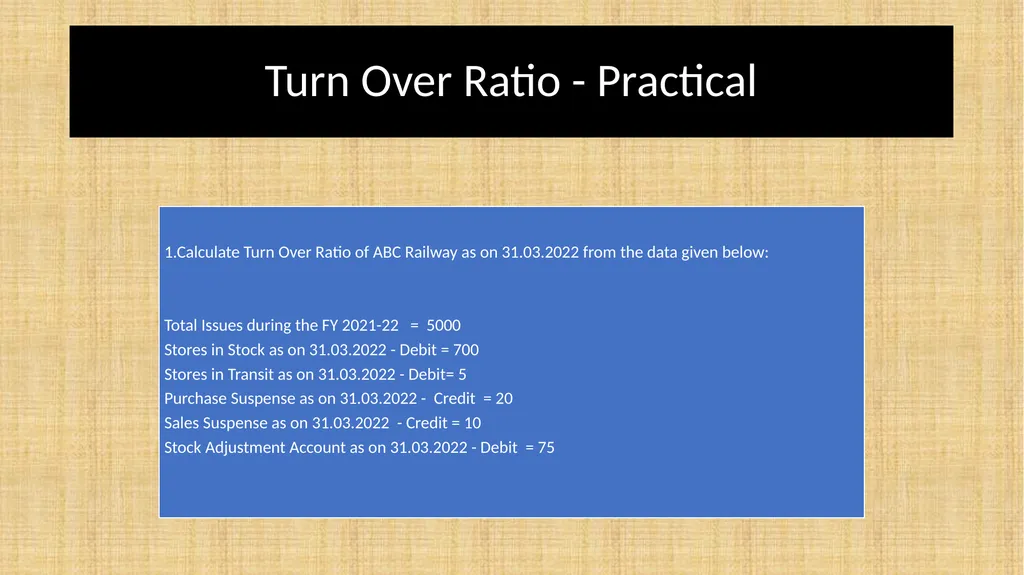
slide21. Turn Over Ratio - Practical<br>
slide22. Turn Over Ratio - Practical<br>
slide23. Thank You<br>
slide2. INTRODUCTION Inventory management is an art of management of stores.
Stores comprise of materials which are held in stock
The stocking of materials not only occupy space in the depot but also blocks the capital
If is the stock that is maintained in excess of the requirement It means blocking up of the capital.<br>
slide3. Stock and Inventory management If the stock is maintained at a minimum level it will hamper the maintenance.
So it is therefore required to maintain the stock at an optimal level
This optimum level maintenance is done by using the technique of Inventory Management.<br>
slide4. PRINCIPLES OF INVENTORY MANAGEMENT Inventory management depends on FIVE principles: MEN
The persons involved in the process MACHINERY
The process or procedure involved in Machinery MONEY
The availability of Budget MATERIAL
The correct quantity and prescribed quality required MANAGEMENT
It is the planning , organizing and controlling of Inventory Management<br>
slide5. AIM OF INVENTORY MANAGEMENT<br>
slide6. RIGHT QUALITY
The right quality will have to be assisted by the technical team which will be certified RIGHT TIME
The time of delivery is crucial as the time is the essence of the contact. RIGHT PRICE
This has to be done on the basis of LAR or Market value/Survey RIGHT SOURCE
The right source of supply will matter like DGS and D , GeM , DLW , CLW etc<br>
slide7. PROCUREMENT PERIOD The inventory management will start right from the time the tender is floated till such time the material is received and stocked and issued to the consuming department.
This will revolve round the following
The Officer Purchasing the material
The User department
The Depot Officer
The Finance Officer
The Consignee<br>
slide8. Why Inventory management/Control? The Daily stores comprise of STOCK AND NON STOCK Items.<br>
slide9. 2. The procurement of huge stores means blocking up of capital , and has to be managed efficiently , thus it is also known as capital management.
3. The procurement of stores for remunerative works must be prioritized so that they will start earning revenue.
4. Since the overstocking of material means blocking up of capital and dividend payable to GR , the concept is no more in vogue.<br>
slide10. FACTORS AFFECTING INVENTORY MANAGEMENT 1. LEAD TIME :
The time taken from the date of processing the tender of Release of PO , Procurement , stocking and Issue to be kept in mind 2. Proper Planning
Proper planning has to be done so that the stock does not go below the minimum level 8.Non-Availability of funds 5. Change in Purchase Policy of the Government 3.Availability of Raw materials 7. Overstocking of Surplus stores / Obsolescence / Wastage / Leakage / Pilferage 4. Market Condition 6. Multiple purchase and Staggered purchase affecting the purchase<br>
slide11. Two categories of surplus MOVABLE SURPLUS
These are the stores which have been issued for a period of 24 months and there is a likelihood that they will be used in the near future .
The materials are due to obsolescence , sudden fall in consumption level , change in design or pattern and return from the user DEAD SURPLUS
When these stores are not required and there is no likelihood of consumption even after 24 months .
They will be forced to the consuming department or transferred to other Railways or other department or put on sale .
In the absence of the above they will be assessed by the survey committee they will be prepared in lots and put up to Auction.<br>
slide12. OBJECTIVES 1.Ascertaining the needs of the user department 6.Ensuring supplies are made in the most economic , efficient and Expeditious manner 7.Suggesting user department to go for indigenous supply 2. Preparation of correct estimates of quantity to Purchase of stores/ Manufacturing stores. 4.Obtaining desired quantity at competitive rates. 8.To promote the trial order/educational order 5.Receipt , Inspection , Stocking and distribution 3.Maintaining economic level of investments. 9.Regular touch with market and supplier<br>
slide13. INVENTORY MANAGEMENT ANALYSIS TECHNIQUES<br>
slide14. ABC ANALYSIS A Category items comprise of very sensitive whose consumption levels are indicated below and are to be reviewed at HOD level
B category items at JAG level
C category items at Depot level.<br>
slide15. Thus , ABC analysis can be combined with VED , FSN , HML and SDE<br>
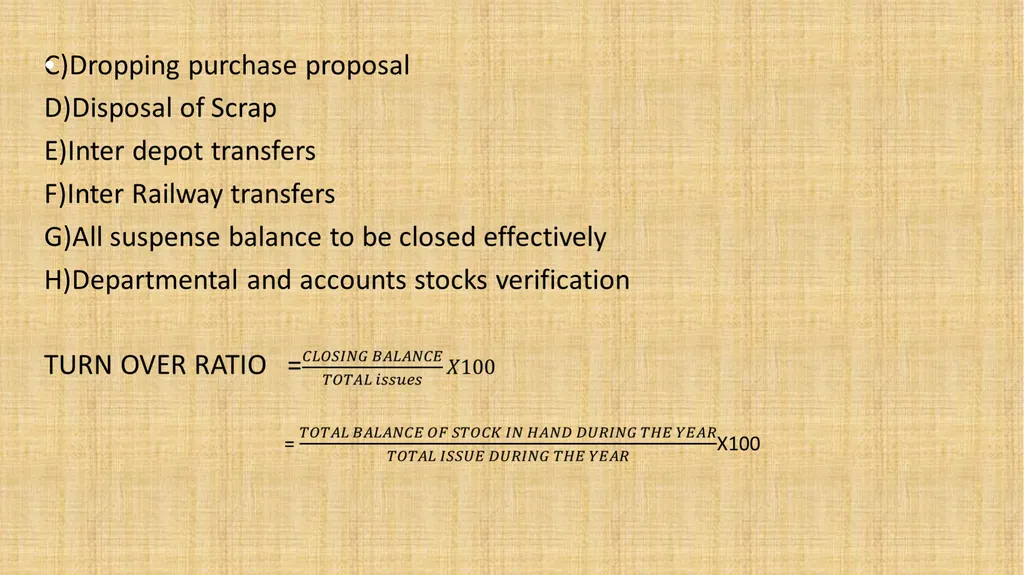
slide16. Inventory turnover Ratio Inventory Turnover Ratio is an index of performance of Material Management Department.
It is calculated by dividing the Closing balance of inventory by Issues during the year
It is calculated separately with fuel and without fuel.
Lower the Ratio better the health of Inventory Management of a Railway or vice versa.<br>
slide17. Inventory turnover Ratio Stores balances mentioned in the calculation of Turnover Ratio comprise of –
Stores in Stock
Stores in Transit
Purchase Suspense
Sales Suspense
Stock Adjustment Account<br>
slide18. IMPROVE SUSPENCE BALANCE To have an effective Turn over ration , we should reduce the purchase burden
1.Over-stocks: To be managed in most efficient way
2. In-Active items should be weeded out : Specially focus on D1 and D2 items stocked
3. Surplus stores to be got rid of
Review of Active Items
a)Drawal of stores through AAC
b)Sufficiency of stocks
c)Monitoring the supplies
d)Altering the quantity as per option clause<br>
slide20. Conclusion Inventory is money spent and locked up.
Better inventory management results in large scale economy and improved turnover ratio.
New methods of purchase like GeM, e procurement, reduced stock levels by placing more items in Rate contracts would lead to economy in purchases
Continuous monitoring at higher levels help a lot in this area.<br>
slide21. Turn Over Ratio - Practical<br>
slide22. Turn Over Ratio - Practical<br>
slide23. Thank You<br>