Jacob Cooper and Karin Schubert Hanover College 2009 The Relationship Between Implicit and Explicit Gender Introduction Gender Schema Theory (Bem, 1981): People internalize conceptions of gender as a means of organizing, processing, and
"Jacob Cooper and Karin Schubert Hanover College" is the property of its rightful owner. Permission is granted to
download and print the materials on this website for personal, non-commercial use only, and to display it
on your personal computer provided you do not modify the materials and that you retain all copyright
notices contained in the materials. By downloading content from our website, you accept the terms of this
agreement.
Presentation Transcript
01
Jacob Cooper and Karin Schubert
Hanover College
2009 The Relationship Between Implicit and Explicit Gender<br>
02
Introduction Gender Schema Theory (Bem, 1981): People internalize conceptions of gender as a means of organizing, processing, and interpreting information about their world or their selves.
Feminine: having qualities or attributes which are usually associated with females in this culture
Masculine: having qualities or attributes which are usually associated with males in this culture<br>
03
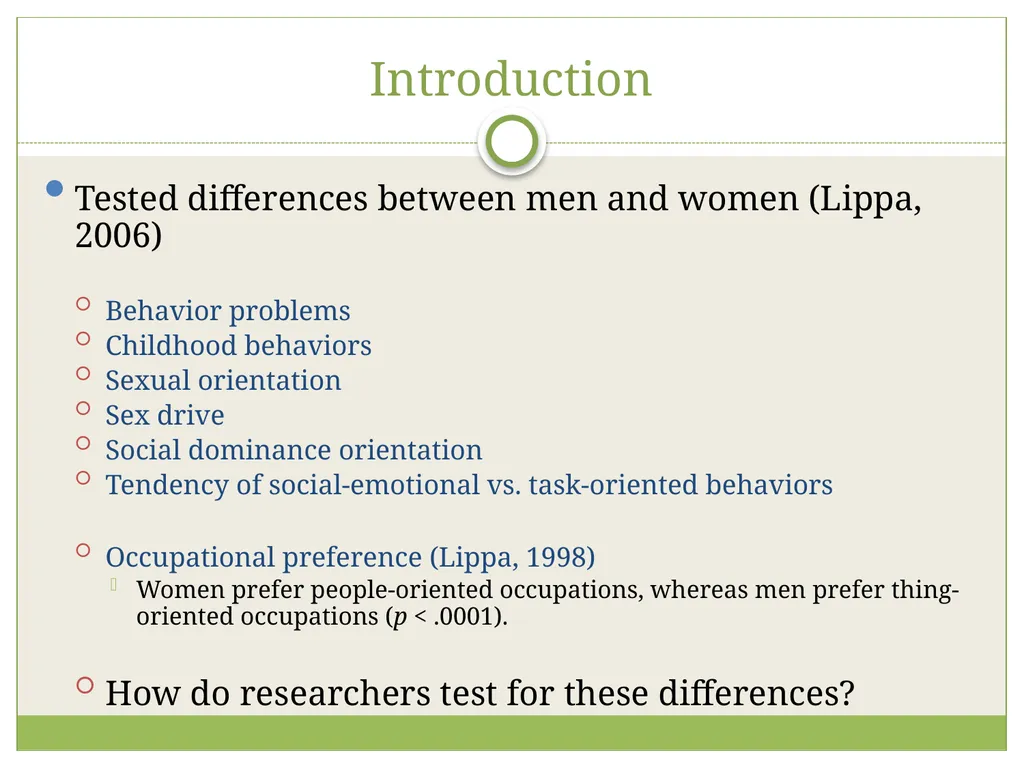
Introduction Tested differences between men and women (Lippa, 2006)
Behavior problems
Childhood behaviors
Sexual orientation
Sex drive
Social dominance orientation
Tendency of social-emotional vs. task-oriented behaviors
Occupational preference (Lippa, 1998)
Women prefer people-oriented occupations, whereas men prefer thing-oriented occupations (p < .0001).
How do researchers test for these differences?<br>
04
Explicit Measurement Surveys or questionnaires
Rely on a participant's conscious, "explicit" attitudes and beliefs
Most common way of measuring gender schema
Limitations
Participants may alter responses
Only detect attitudes of which people are aware
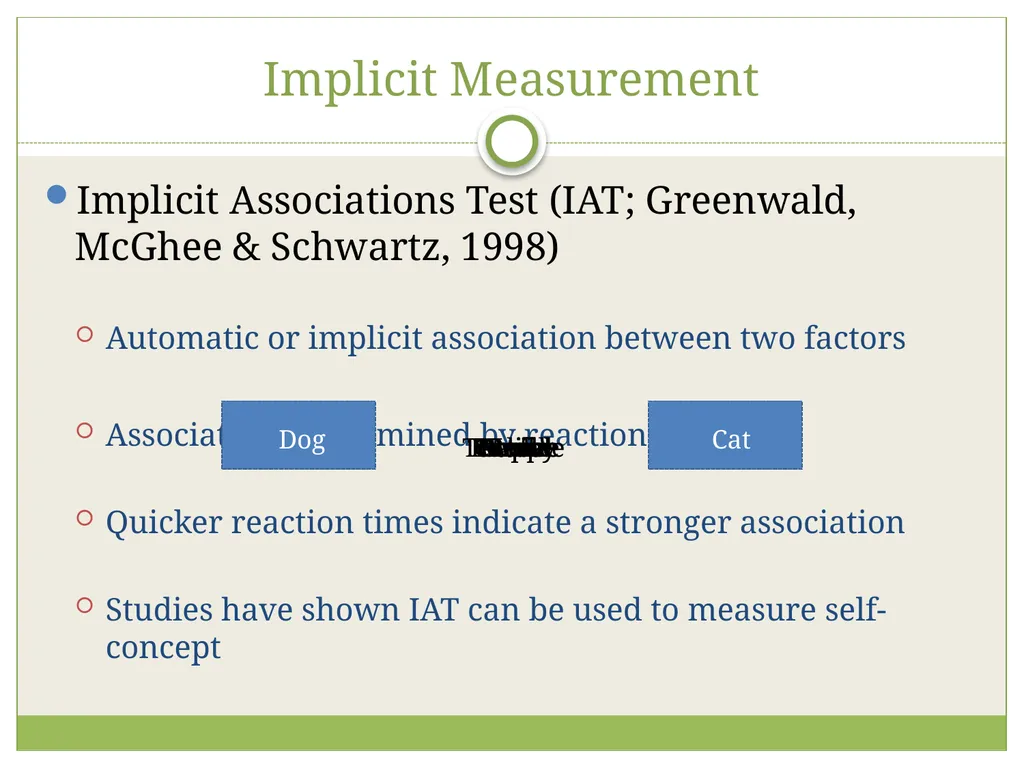
Automatic or implicit association between two factors Associations determined by reaction time
Quicker reaction times indicate a stronger association
Studies have shown IAT can be used to measure self-concept Happy Terrible Meow Bark Meow Happy Bark Terrible Canine Love Feline Awful Bark Meow<br>
06
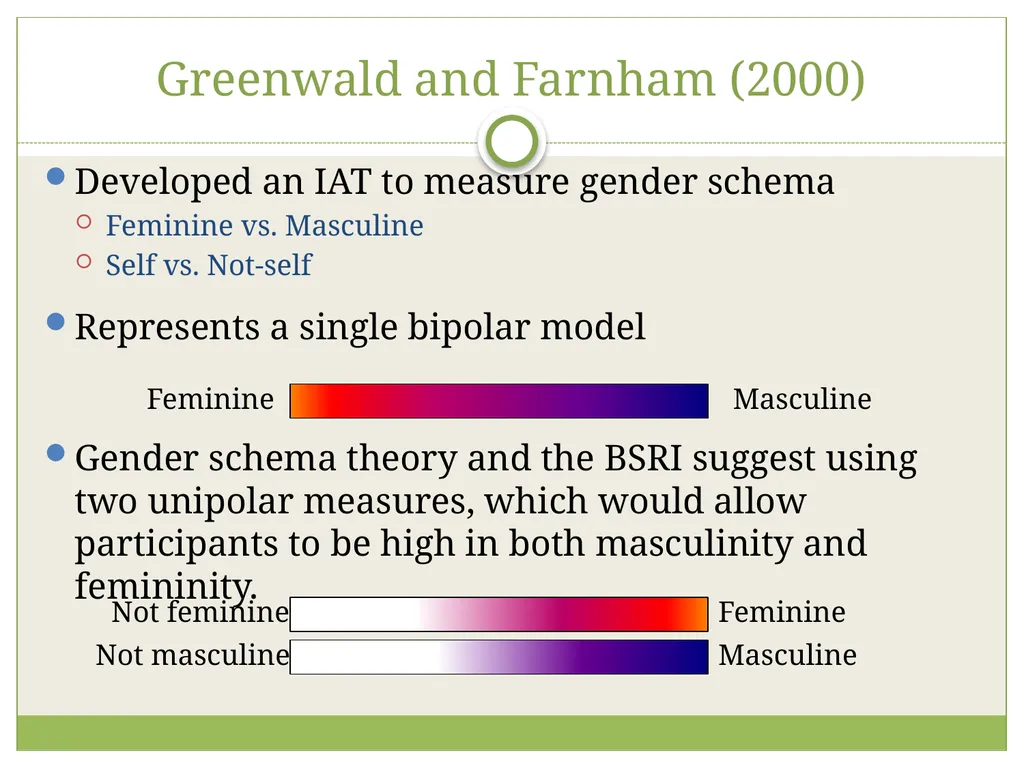
Greenwald and Farnham (2000) Developed an IAT to measure gender schema
Feminine vs. Masculine
Self vs. Not-self
Represents a single bipolar model
Gender schema theory and the BSRI suggest using two unipolar measures, which would allow participants to be high in both masculinity and femininity.<br>
07
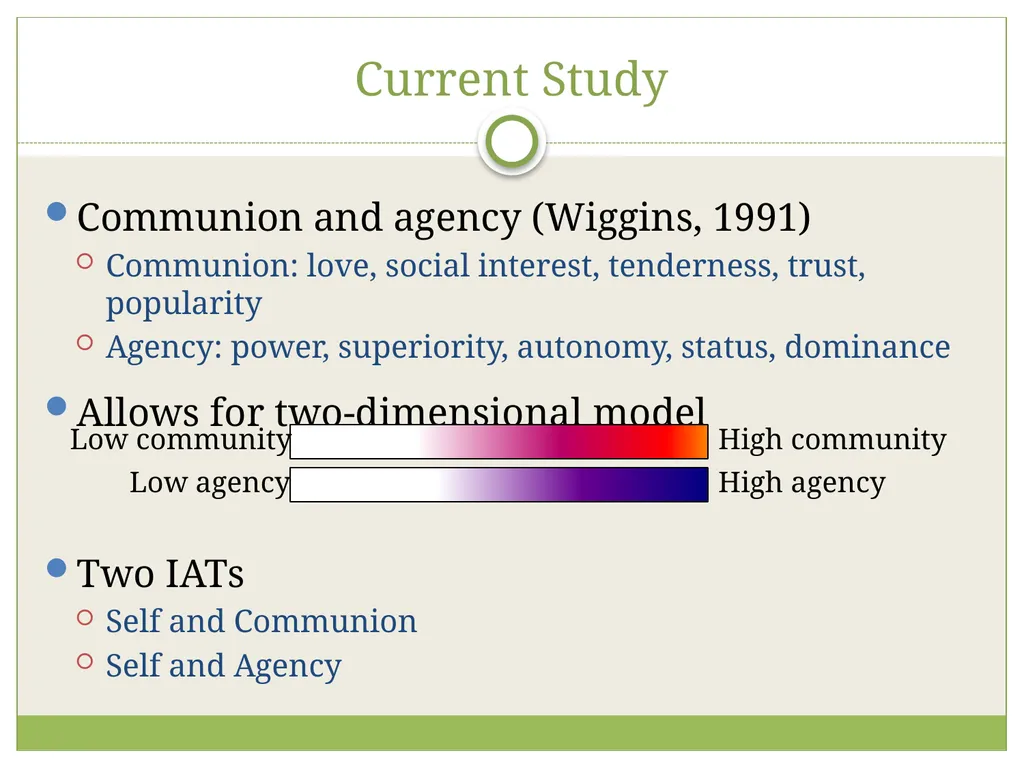
Current Study Communion and agency (Wiggins, 1991)
Communion: love, social interest, tenderness, trust, popularity
Agency: power, superiority, autonomy, status, dominance
Allows for two-dimensional model
Two IATs
Self and Communion
Self and Agency<br>
08
Hypothesis A two-dimensional model for measuring gender schemata will predict previously tested gender differences better than Greenwald and Farnham’s (2000) one-dimensional model.<br>
09
Method Participants
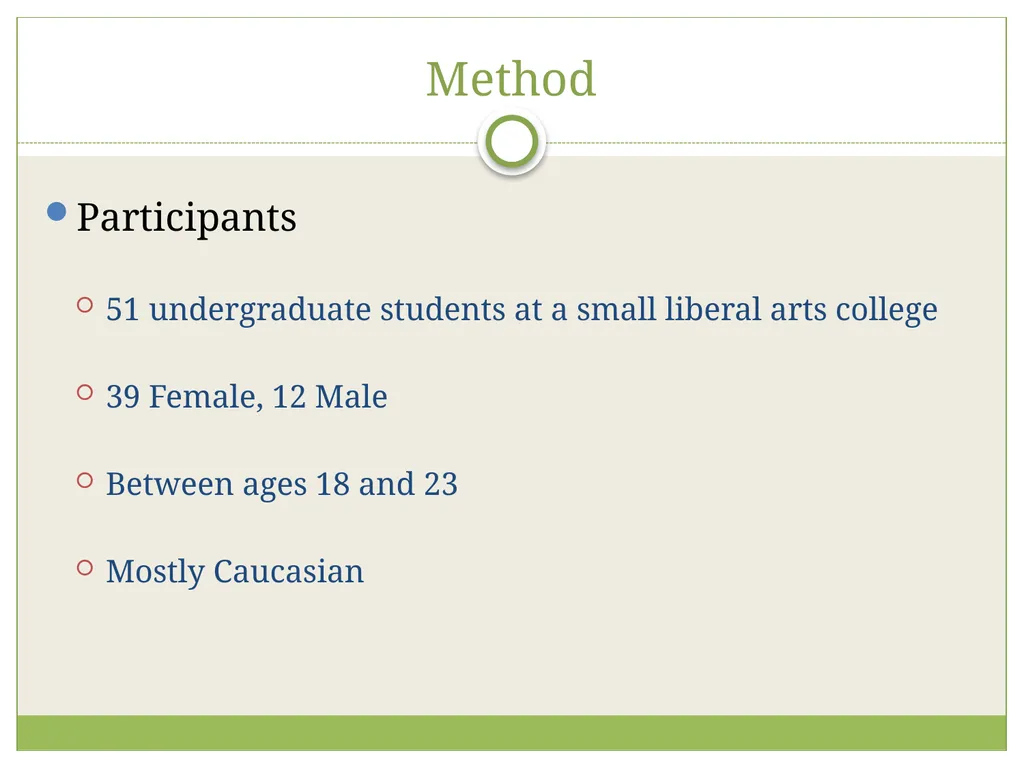
51 undergraduate students at a small liberal arts college
39 Female, 12 Male
Between ages 18 and 23
Mostly Caucasian<br>
10
Method cont. Materials
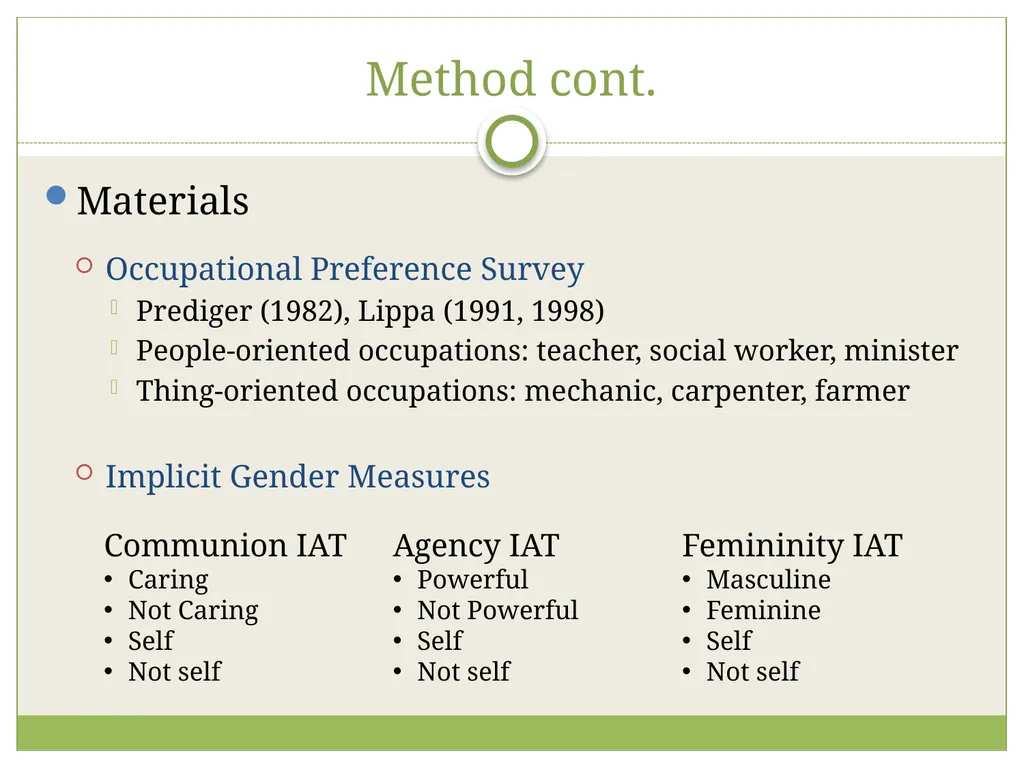
Occupational Preference Survey
Prediger (1982), Lippa (1991, 1998)
People-oriented occupations: teacher, social worker, minister
Thing-oriented occupations: mechanic, carpenter, farmer
Implicit Gender Measures Communion IAT
Caring
Not Caring
Self
Not self
Agency IAT
Powerful
Not Powerful
Self
Not self
Femininity IAT
Masculine
Feminine
Self
Not self<br>
11
Method cont. Procedure
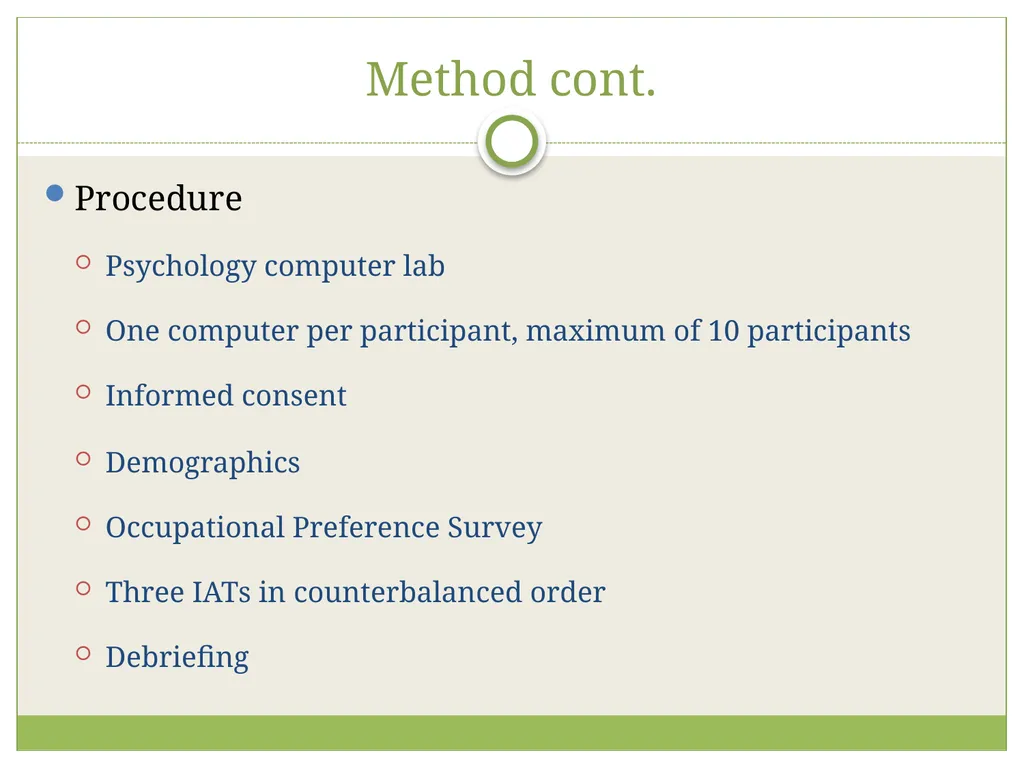
Psychology computer lab
One computer per participant, maximum of 10 participants
Informed consent
Demographics
Occupational Preference Survey
Three IATs in counterbalanced order
Debriefing<br>
12
Results Calculating variables
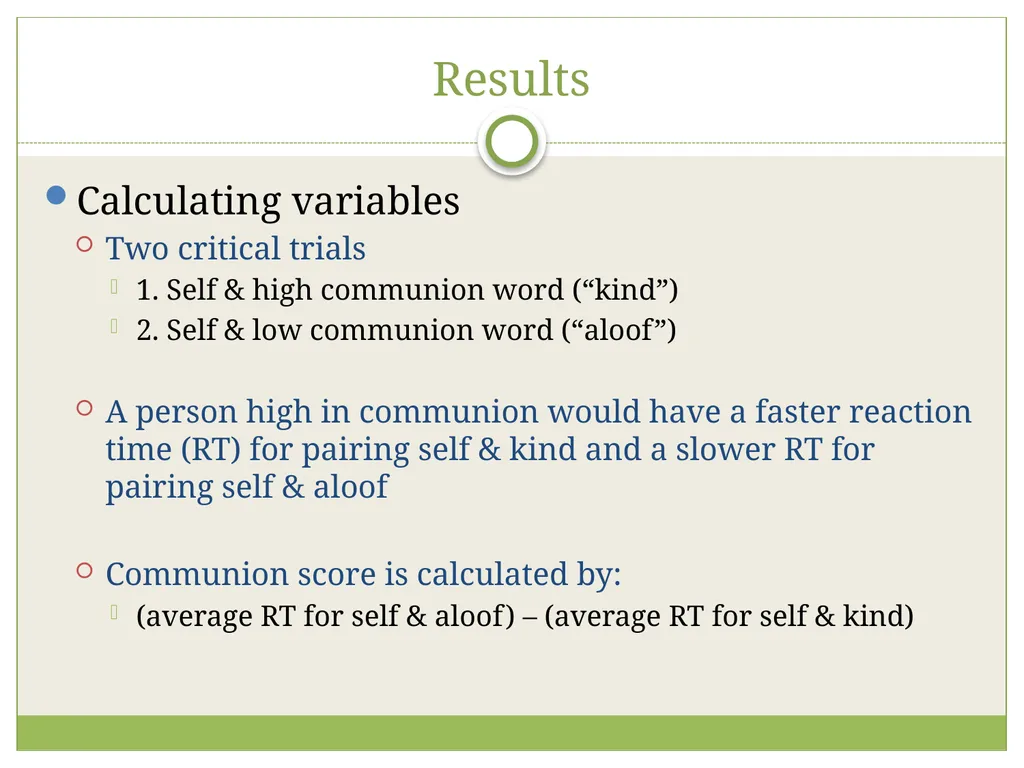
Two critical trials
1. Self & high communion word (“kind”)
2. Self & low communion word (“aloof”)
A person high in communion would have a faster reaction time (RT) for pairing self & kind and a slower RT for pairing self & aloof
Communion score is calculated by:
(average RT for self & aloof) – (average RT for self & kind)<br>
13
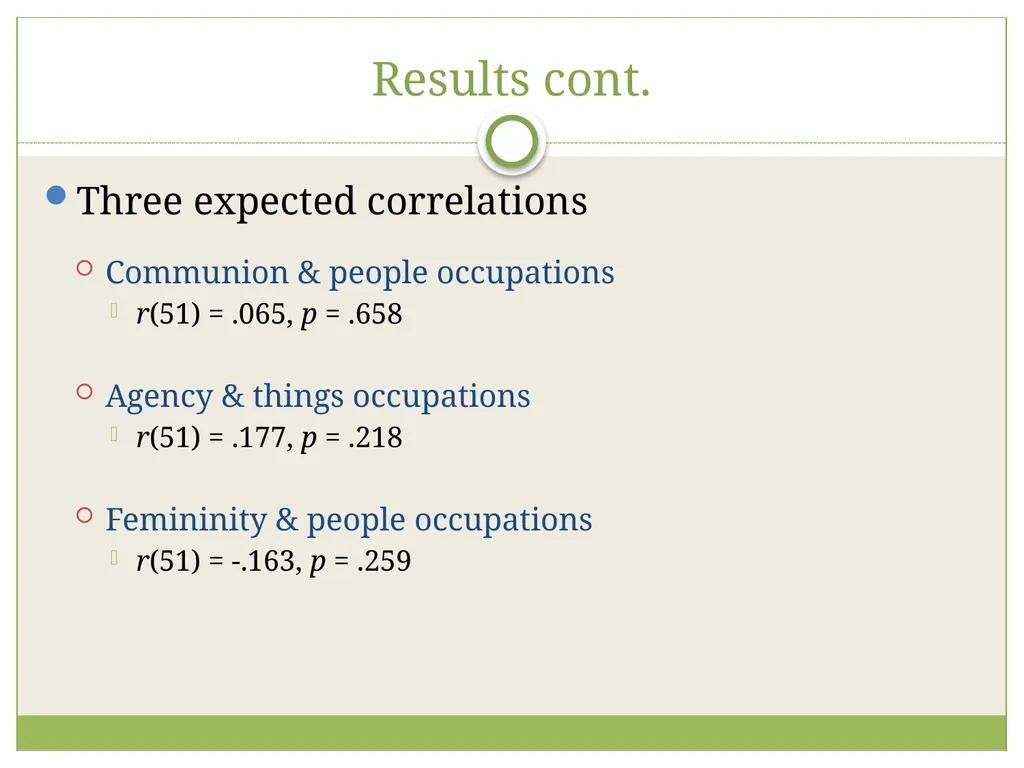
Results cont. Three expected correlations
Communion & people occupations
r(51) = .065, p = .658
Agency & things occupations
r(51) = .177, p = .218
Femininity & people occupations
r(51) = -.163, p = .259<br>
14
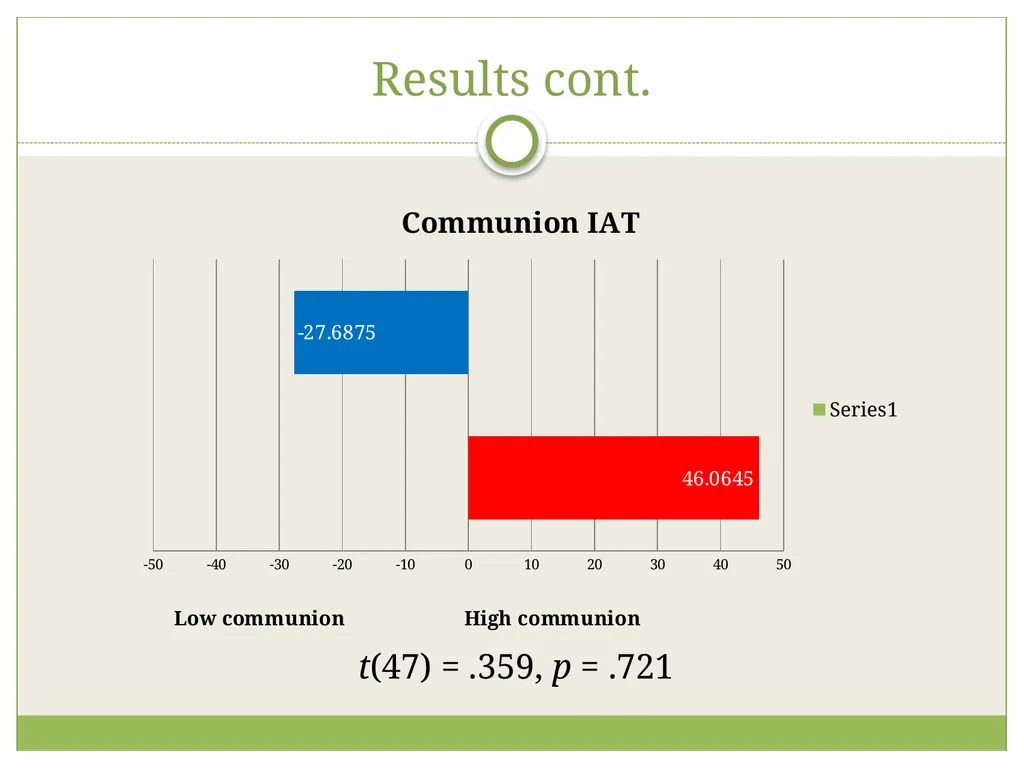
Results cont. t(47) = .359, p = .721<br>
15
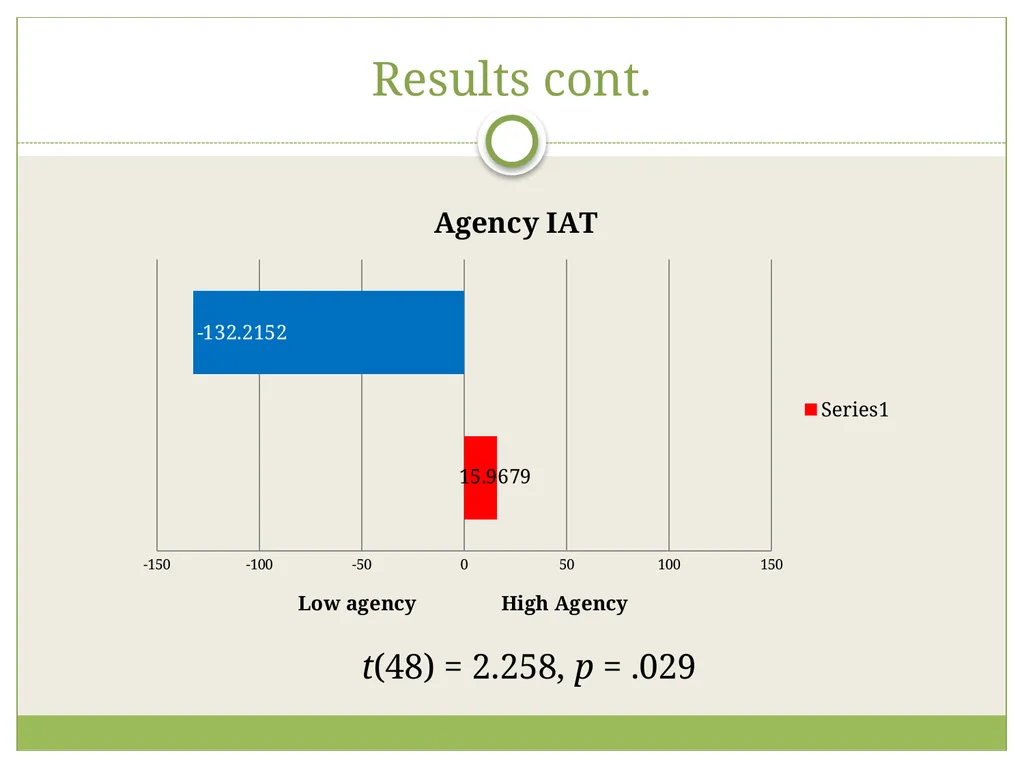
Results cont. t(48) = 2.258, p = .029<br>
16
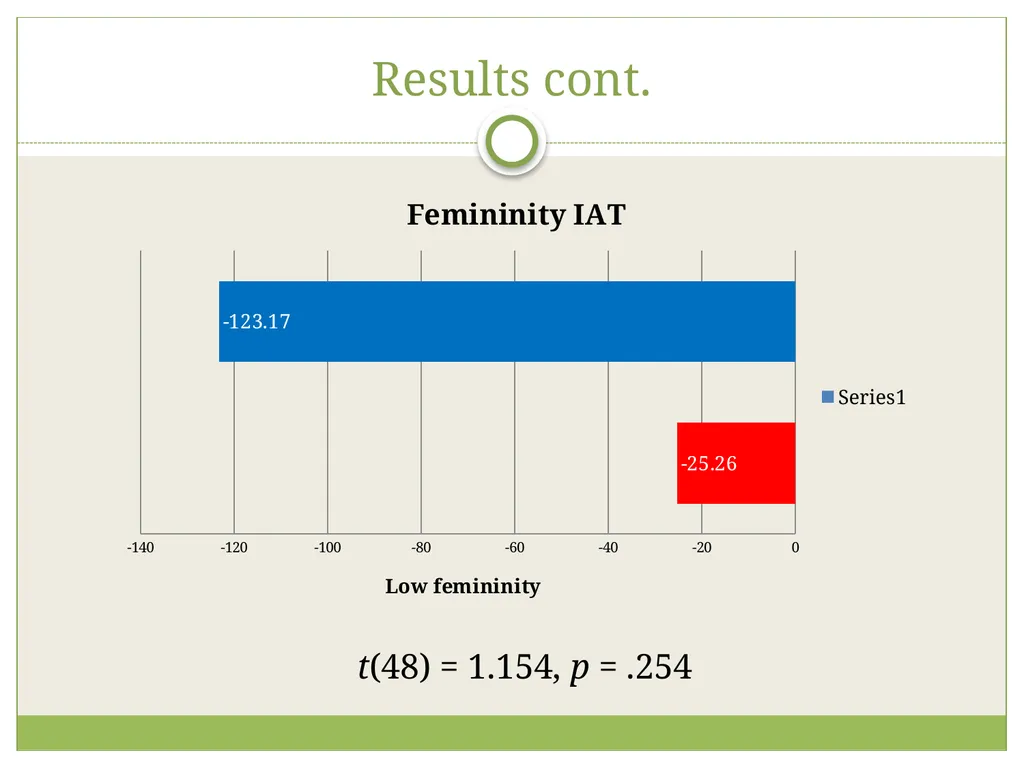
Results cont. t(48) = 1.154, p = .254<br>
17
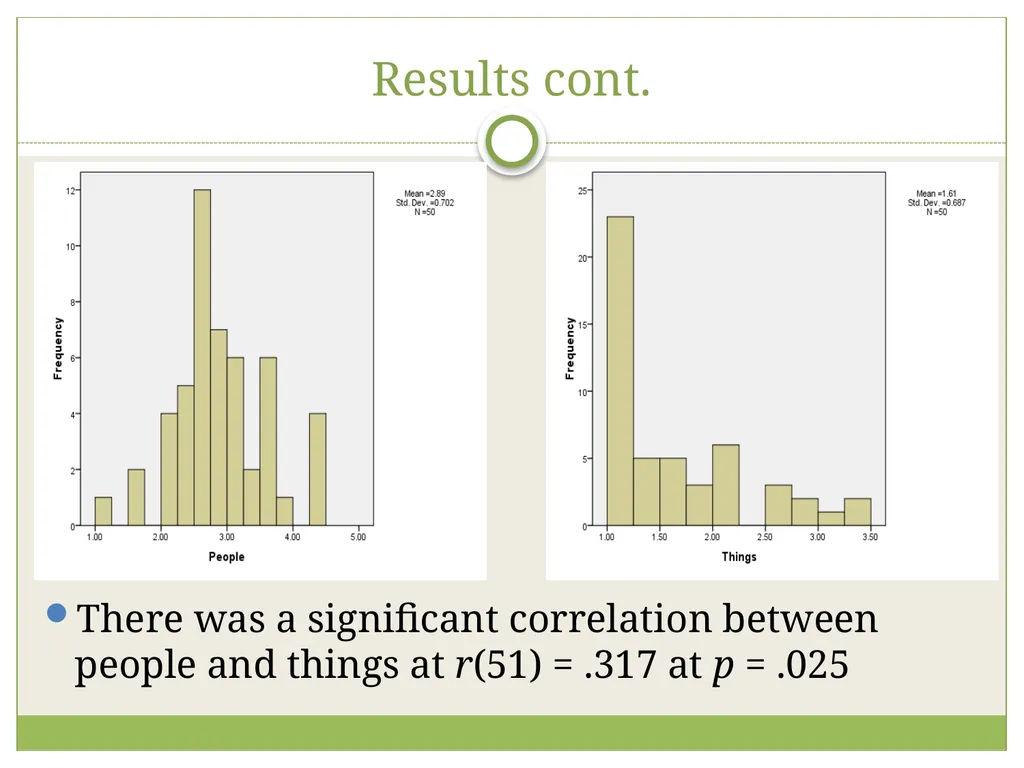
Results cont. There was a significant correlation between people and things at r(51) = .317 at p = .025<br>
18
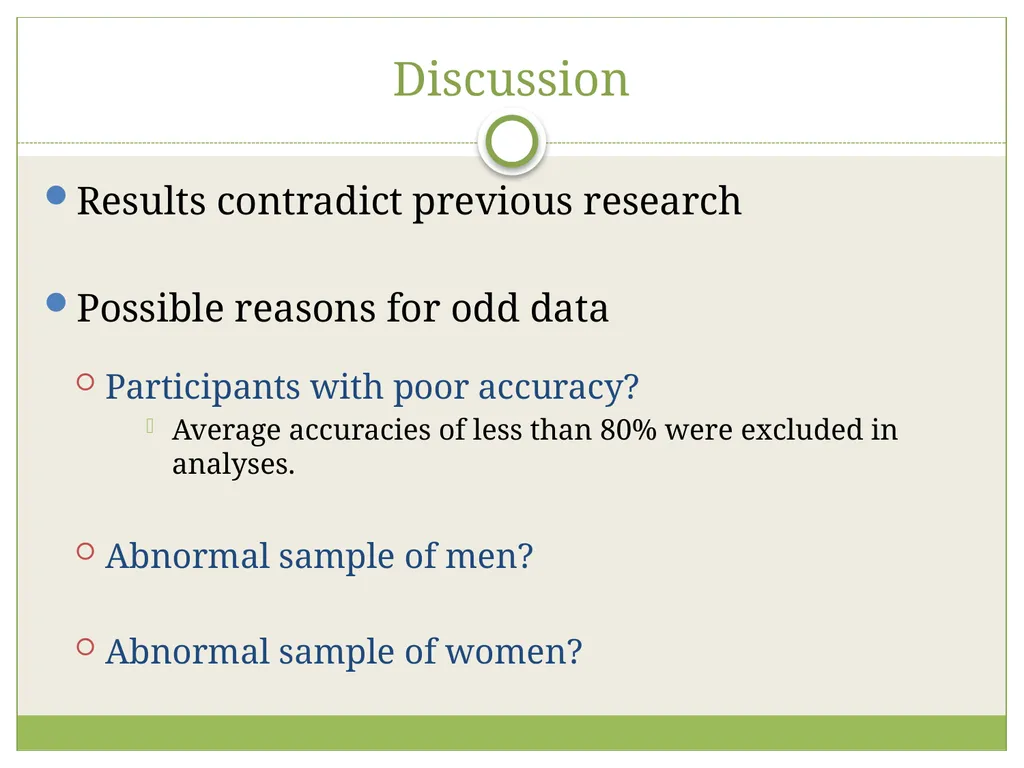
Discussion Results contradict previous research
Possible reasons for odd data
Participants with poor accuracy?
Average accuracies of less than 80% were excluded in analyses.
Abnormal sample of men?
Abnormal sample of women?<br>
19
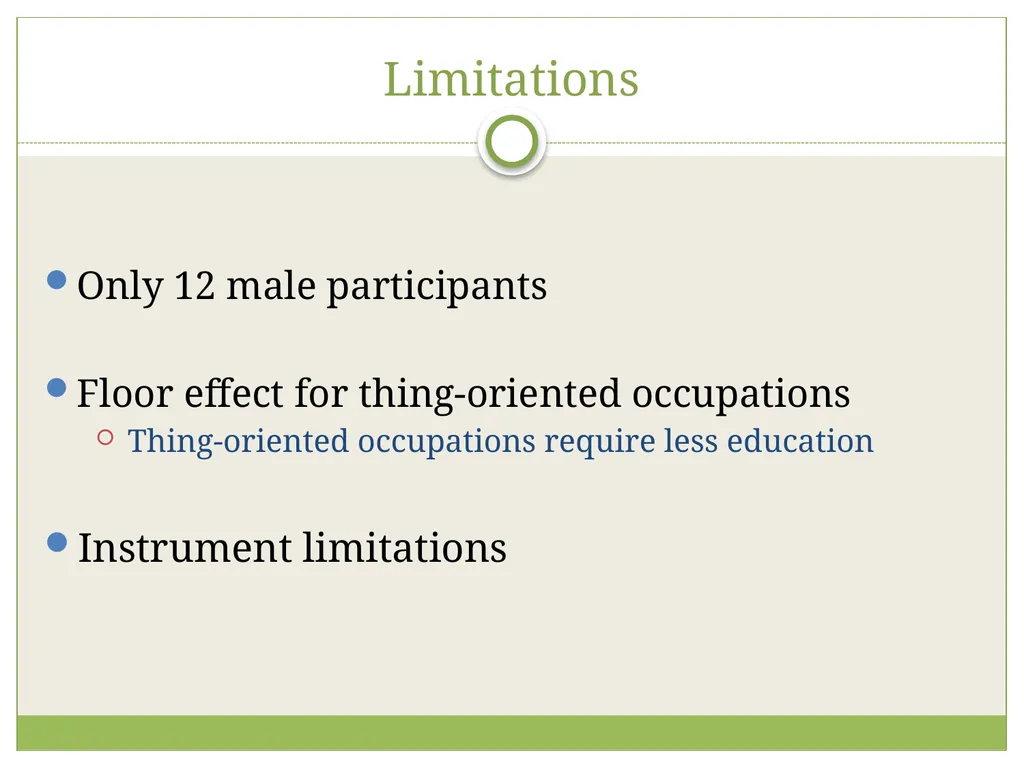
Limitations Only 12 male participants
Floor effect for thing-oriented occupations
Thing-oriented occupations require less education
Instrument limitations<br>
20
Future Directions More accurate measure of people-things occupation preference