04
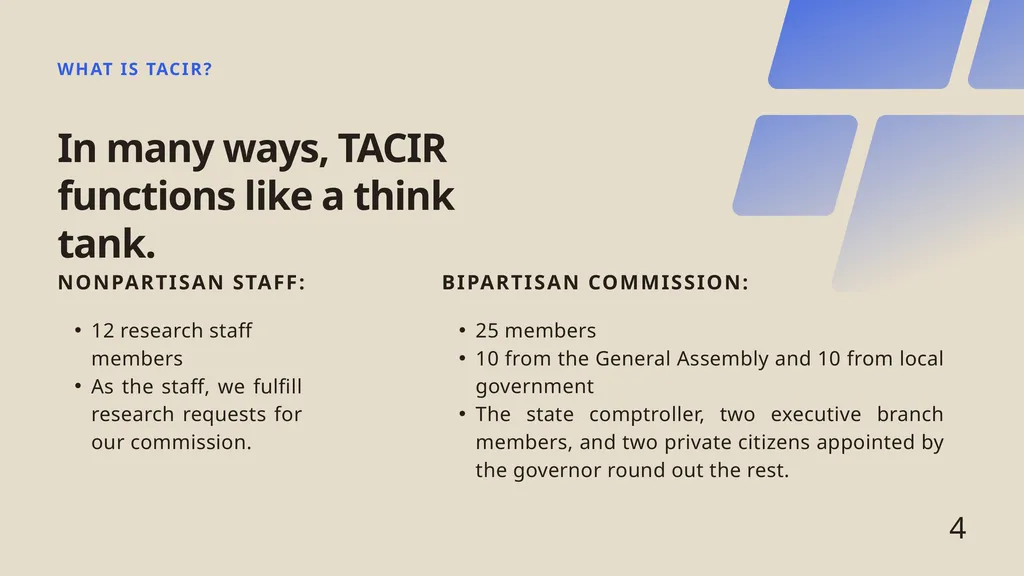
In many ways, TACIR functions like a think tank. WHAT IS TACIR? 12 research staff members
As the staff, we fulfill research requests for our commission. NONPARTISAN STAFF: 25 members
10 from the General Assembly and 10 from local government
The state comptroller, two executive branch members, and two private citizens appointed by the governor round out the rest. BIPARTISAN COMMISSION: 4<br>
05
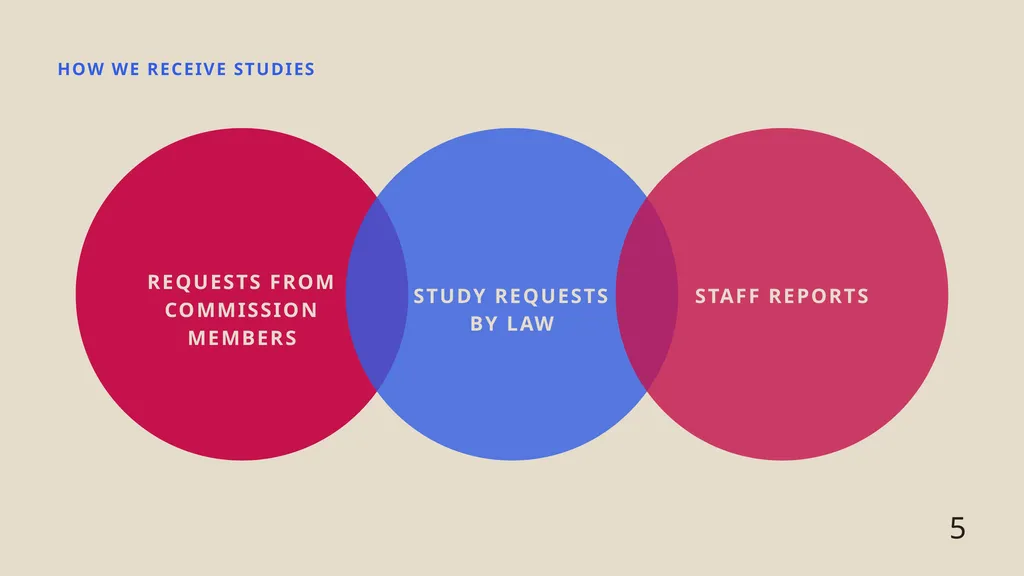
HOW WE RECEIVE STUDIES REQUESTS FROM COMMISSION MEMBERS STUDY REQUESTS BY LAW STAFF REPORTS 5<br>
06
In September of 2024, Representative Reedy received a letter from the City of Germantown, conveying concern over the “overwhelming capacity issues” of juvenile detention facilities throughout West Tennessee.
The city expressed a need for an additional rehabilitation and detention facility with a capacity exceeding 750 beds.
In response to these concerns Senate Bill 239 by Senator Taylor and House Bill 40 by Representative Reedy was introduced and passed in the 114th General Assembly as Public Chapter 418, Acts of 2025. 6 HOW WE RECEIVE STUDIES<br>
07
Directs TACIR to study:
the availability of facilities that house juvenile offenders who are adjudicated delinquent and in the custody of the Department of Children’s Services (DCS) or who have been detained by the juvenile courts and are awaiting their adjudicatory hearing, and
whether there is a need for additional housing, detention, and treatment facilities in the state of Tennessee. Public Chapter 418, Acts of 2025 7<br>
08
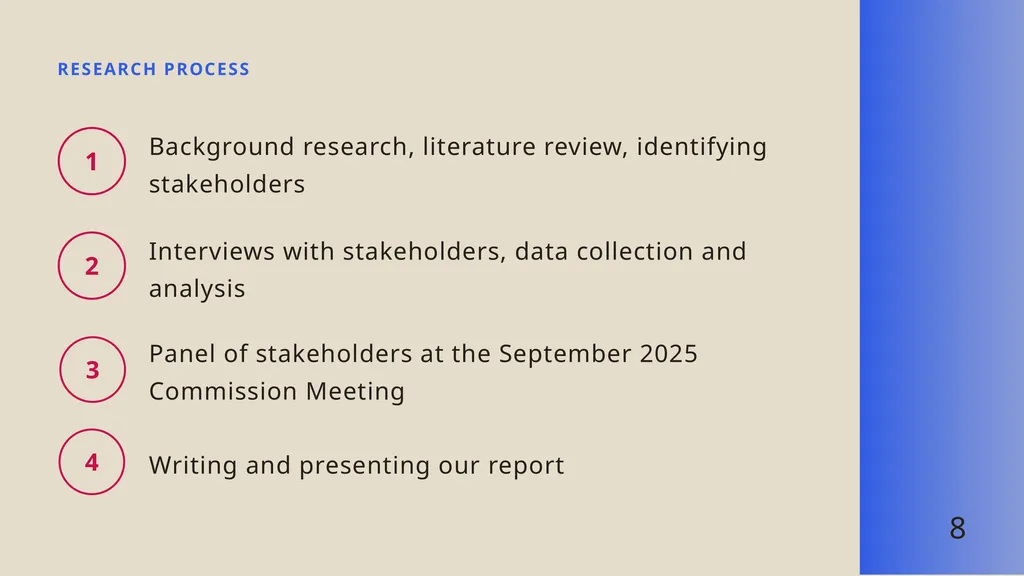
RESEARCH PROCESS Background research, literature review, identifying stakeholders Interviews with stakeholders, data collection and analysis Panel of stakeholders at the September 2025 Commission Meeting Writing and presenting our report 8<br>
09
In 2017 a Joint Ad-Hoc Blue Ribbon task force convened to review the state’s juvenile justice system, data, and national research, and meet with stakeholders.
The task force produced a report, which resulted in the Juvenile Justice Reform Act of 2018. This led to
changes about who is eligible for detention,
uniform data collection from the Administrative Office of the Courts, and
investment in evidence-based programming and community resources through a recurring, state-funded grant of $4.5 million administered by the Tennessee Department of Mental Health and Substance Abuse Services (TNDMHSAS). Setting the Scene 9<br>
10
Facilities for housing and treating juvenile offenders are important components of Tennessee’s juvenile justice system.
If available capacity doesn’t meet the need for placements, it could present risks to the welfare of youth in custody and the general public. WHAT WE’VE LEARNED SO FAR 10<br>
11
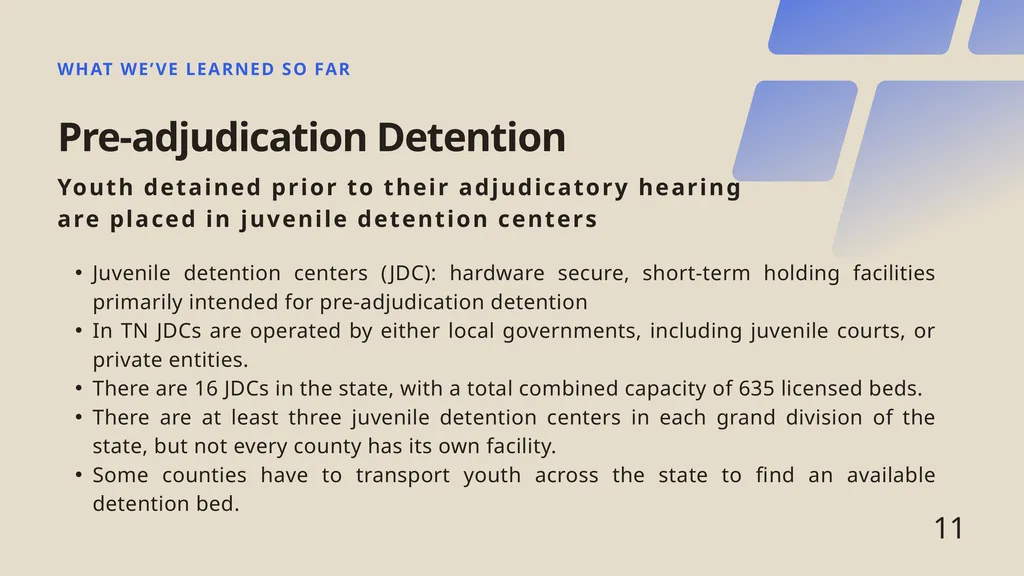
Pre-adjudication Detention WHAT WE’VE LEARNED SO FAR Juvenile detention centers (JDC): hardware secure, short-term holding facilities primarily intended for pre-adjudication detention
In TN JDCs are operated by either local governments, including juvenile courts, or private entities.
There are 16 JDCs in the state, with a total combined capacity of 635 licensed beds.
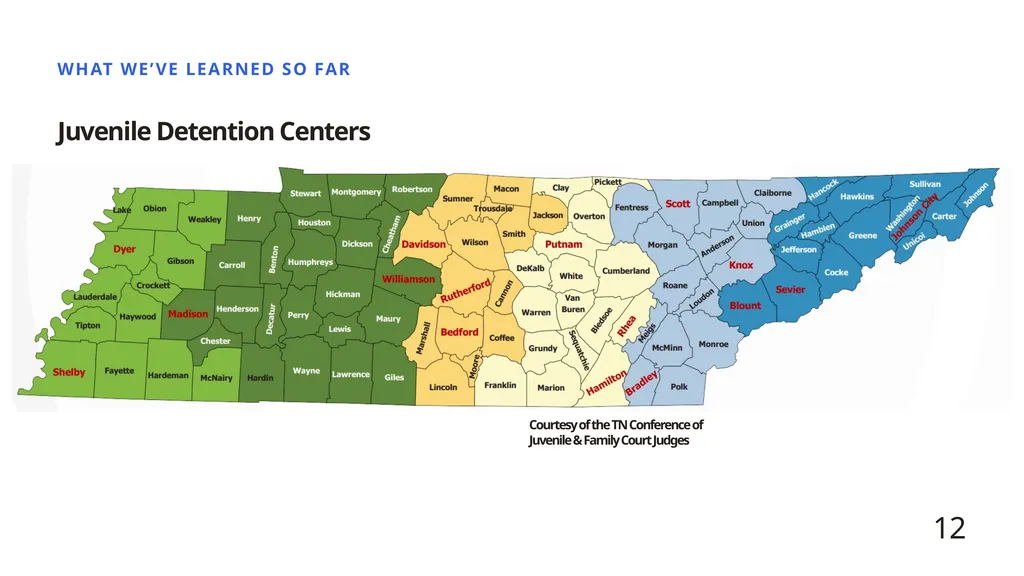
There are at least three juvenile detention centers in each grand division of the state, but not every county has its own facility.
Some counties have to transport youth across the state to find an available detention bed. Youth detained prior to their adjudicatory hearing are placed in juvenile detention centers 11<br>
12
WHAT WE’VE LEARNED SO FAR 12 Juvenile Detention Centers Courtesy of the TN Conference of Juvenile & Family Court Judges<br>
13
Pre-adjudication Detention WHAT WE’VE LEARNED SO FAR Temporary Holding Resources (THR): hardware secure, emphasis on temporary, 24-48 hours
There are 5 THRs in the state, with a total of 15 beds
Located in Cumberland, Hamblen, Loudon, Marion, and Sumner counties For children detained pre-trial while they await their hearing 13<br>
14
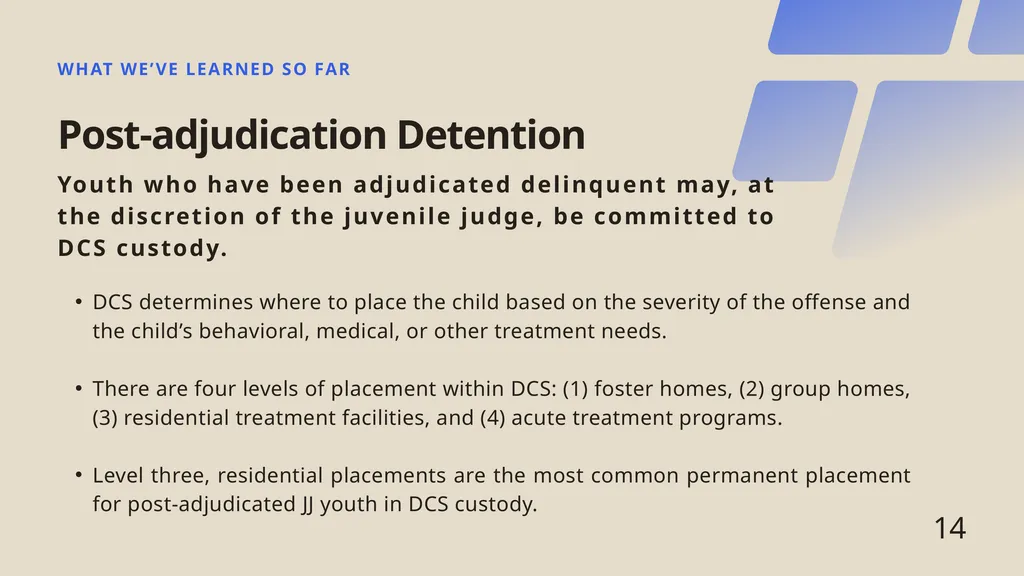
Post-adjudication Detention WHAT WE’VE LEARNED SO FAR DCS determines where to place the child based on the severity of the offense and the child’s behavioral, medical, or other treatment needs.
There are four levels of placement within DCS: (1) foster homes, (2) group homes, (3) residential treatment facilities, and (4) acute treatment programs.
Level three, residential placements are the most common permanent placement for post-adjudicated JJ youth in DCS custody. Youth who have been adjudicated delinquent may, at the discretion of the juvenile judge, be committed to DCS custody. 14<br>
15
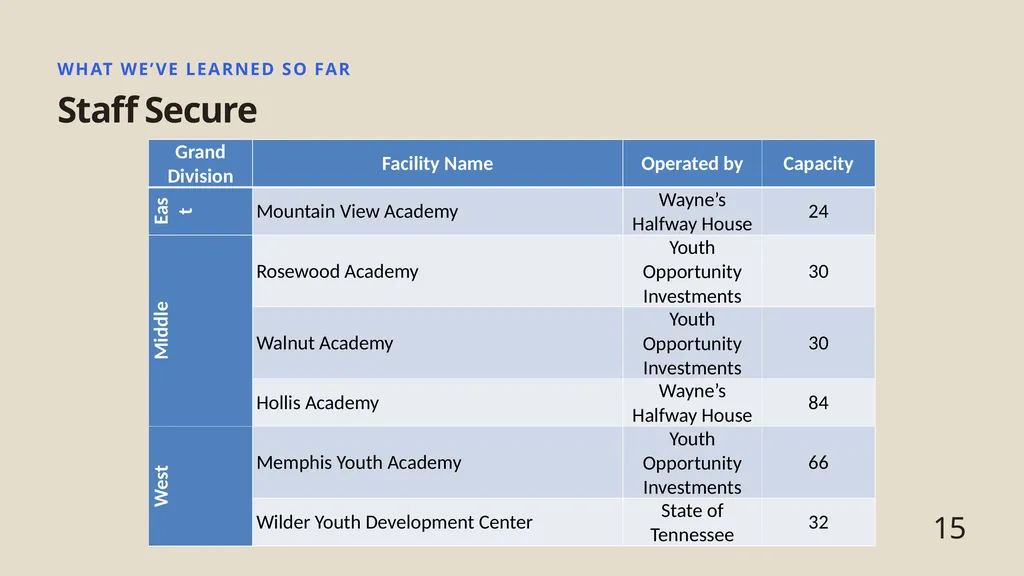
WHAT WE’VE LEARNED SO FAR Staff Secure 15<br>
16
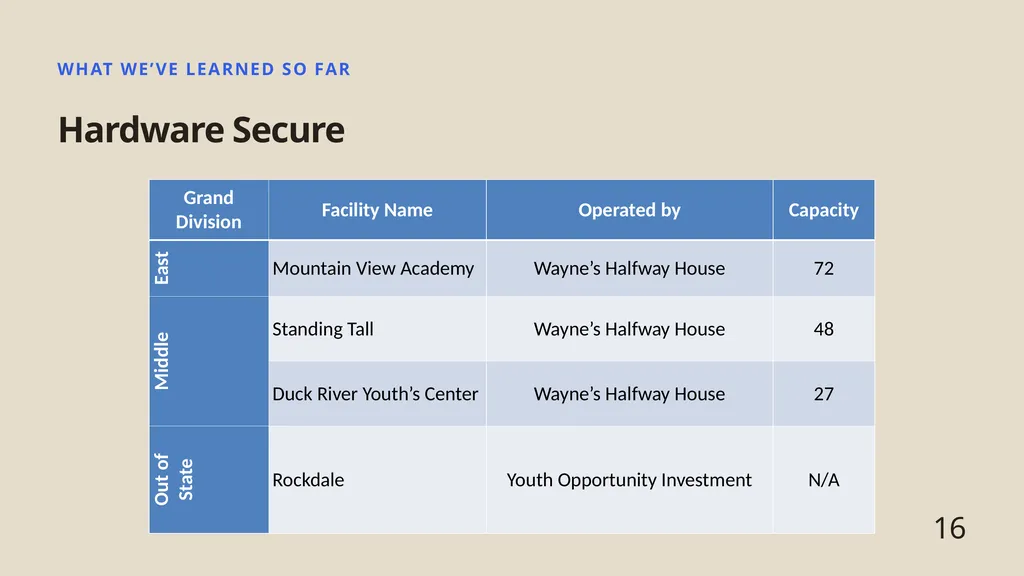
WHAT WE’VE LEARNED SO FAR Hardware Secure 16<br>
17
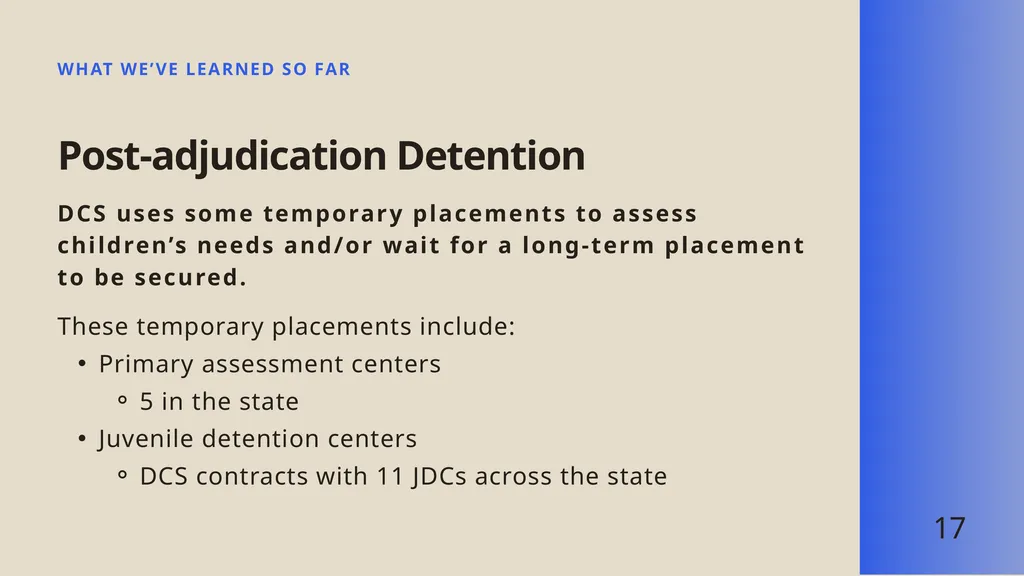
These temporary placements include:
Primary assessment centers
5 in the state
Juvenile detention centers
DCS contracts with 11 JDCs across the state WHAT WE’VE LEARNED SO FAR Post-adjudication Detention DCS uses some temporary placements to assess children’s needs and/or wait for a long-term placement to be secured. 17<br>
18
Do we have enough pre-adjudication capacity? WHAT WE’VE LEARNED SO FAR Data from the Tennessee Bureau of Investigation’s Tennessee Incident-Based Reporting System (TIBRS) shows that the number of offenses committed by juveniles, and the number of juvenile arrests, have in general decreased over the last decade.[1]
Overall, juvenile crime is down nationally and in Tennessee, but detention demand remains consistent and differs from county to county. 18<br>
19
Do we have enough pre-adjudication capacity? WHAT WE’VE LEARNED SO FAR According to data from the Administrative Office of the Courts, in FY2024-25 there were a total of 2,313 pre-adjudication detainment episodes across the state.
East: 477 Middle: 929 West: 907
Stakeholders have said that there is a great need for more JDC beds in West TN.
Many facilities, including the JDCs in Shelby, Madison, and Dyer counties, stay full consistently.
Reports of sheriffs in surrounding counties having to transport youth 5+ hours each way, to an available detention bed. 19<br>
20
In its 2022 audit of DCS, the TN Comptroller found that despite increasing numbers of children entering DCS custody, management had not anticipated or planned for “the risk of a shortage of foster homes, treatment facilities, or secure residential facilities.“
From April 22, 2022, to July 4, 2022, 33 juvenile justice youth stayed in office buildings overnight, and 13 juvenile justice youth stayed in transitional homes. WHAT WE’VE LEARNED SO FAR Do we have enough post-adjudication capacity? 20<br>
21
At the end of FY 2022-23, all hardware and staff secure facilities in the state had reached maximum capacity.
With the existing post-adjudication capacity that DCS has at its disposal, there is a strain on the system to find delinquent children the most appropriate, long-term placement in an effective and efficient amount of time. WHAT WE’VE LEARNED SO FAR Do we have enough post-adjudication capacity? 21<br>
22
WHAT WE’VE LEARNED SO FAR Following the growing challenges of more children in custody and strain on current capacity, DCS created a real estate plan in 2023 that demonstrated the need for more post-adjudication placements.
DCS has received appropriations for:
a new Woodland Hills staff secure center, including 72 beds
a new Wilder hardware secure center, including 72 beds, and
a new Wilder staff secure center, including 24 beds. 22 Do we have enough post-adjudication capacity?<br>
23
Taking what we’ve learned and putting it together for our report
The draft report will be presented at our December 2025 Commission Meeting
The final report will be presented at our January 2026 Commission Meeting WHAT’S NEXT? 23<br>
24
Thank You for Listening! LEARN MORE ABOUT TACIR, OUR WORK, AND THIS REPORT: TN.GOV/TACIR
QUESTIONS: HANNAH.NEWCOMB@TN.GOV<br>