KAMISHIBAI 紙芝居 mmm Kamishibai (紙芝居), literally
Description: KAMISHIBAI 紙芝居 mmm Kamishibai (紙芝居), literally paper drama: is a form of storytelling that originated in Japanese Buddhist Temples in the 12th century, where monks used emakimono (picture scrolls) to convey stories with moral lessons to a
Related Topics
Download Presentation
"KAMISHIBAI 紙芝居 mmm Kamishibai (紙芝居), literally" is the property of its rightful owner. Permission is granted to download and print the materials on this website for personal, non-commercial use only, and to display it on your personal computer provided you do not modify the materials and that you retain all copyright notices contained in the materials. By downloading content from our website, you accept the terms of this agreement.
Presentation Transcript
slide1. KAMISHIBAI紙芝居 mmm<br>
slide2. Kamishibai (紙芝居), literally "paper drama”:
is a form of storytelling that originated in Japanese
Buddhist Temples in the 12th century, where monks
used emakimono (picture scrolls) to convey stories
with moral lessons to a mostly illiterate audience.<br>
slide3. Kamishibai endured as a storytelling method for centuries,
but is perhaps best known for its revival in the 1920s through
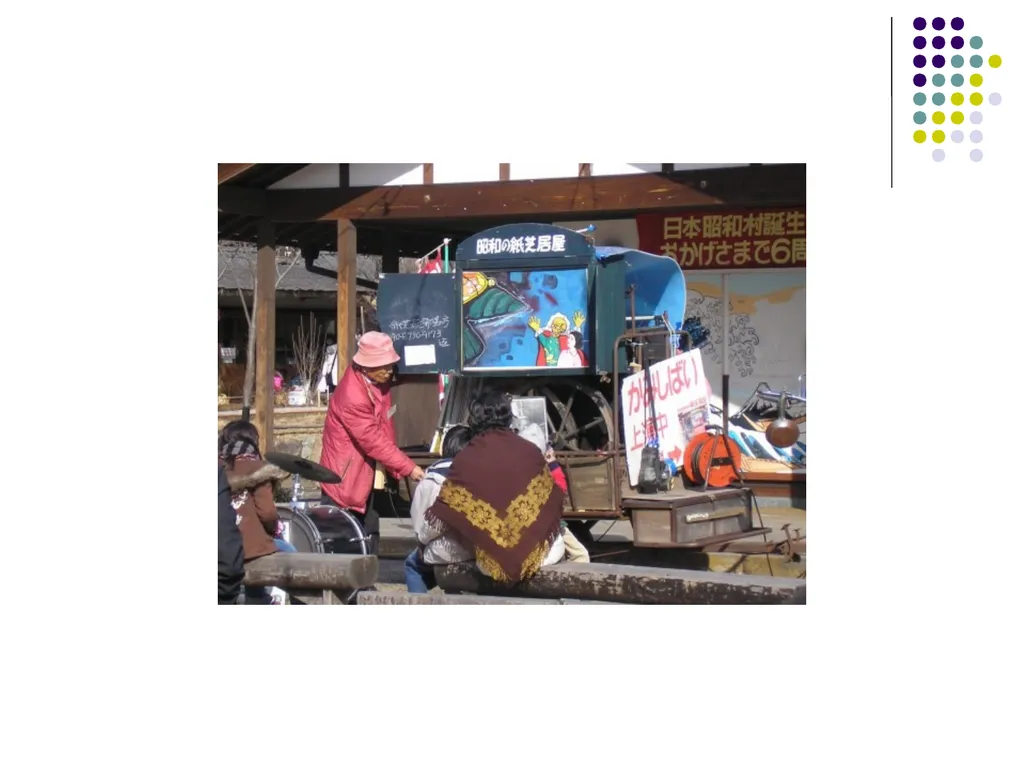
the 1950s. The gaito kamishibaiya, or kamishibai storyteller,
from village to village on a bicycle equipped with a small stage.
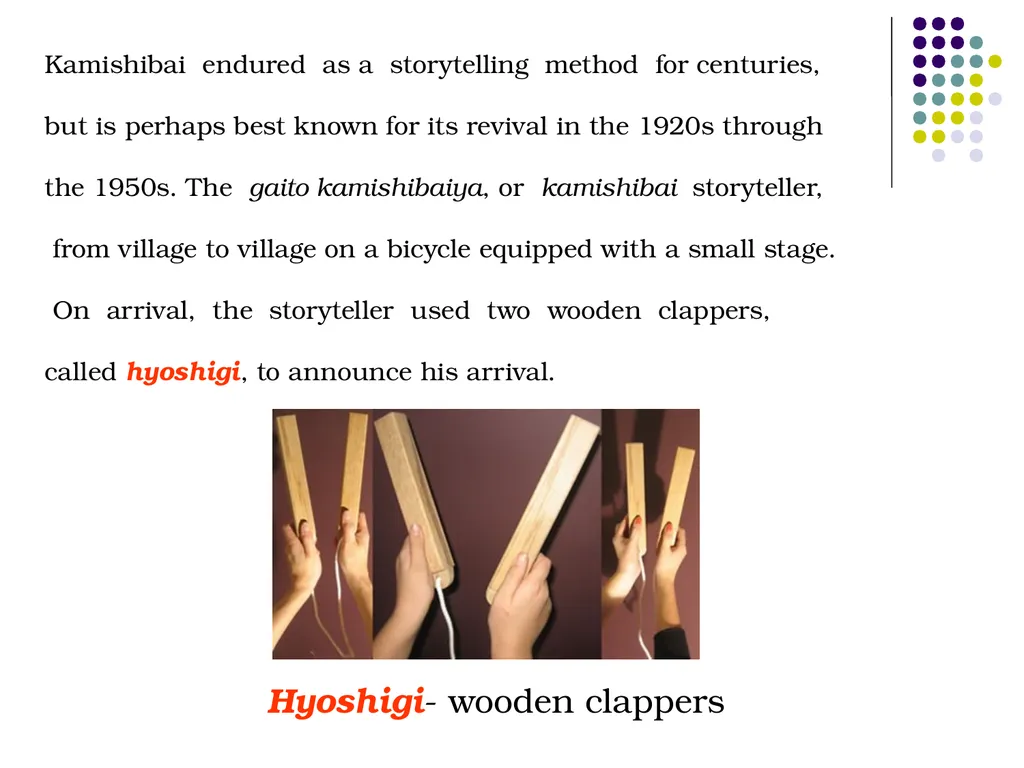
On arrival, the storyteller used two wooden clappers,
called hyoshigi, to announce his arrival. Hyoshigi- wooden clappers<br>
slide4. gaito kamishibaiya or kamishibai- a storyteller<br>
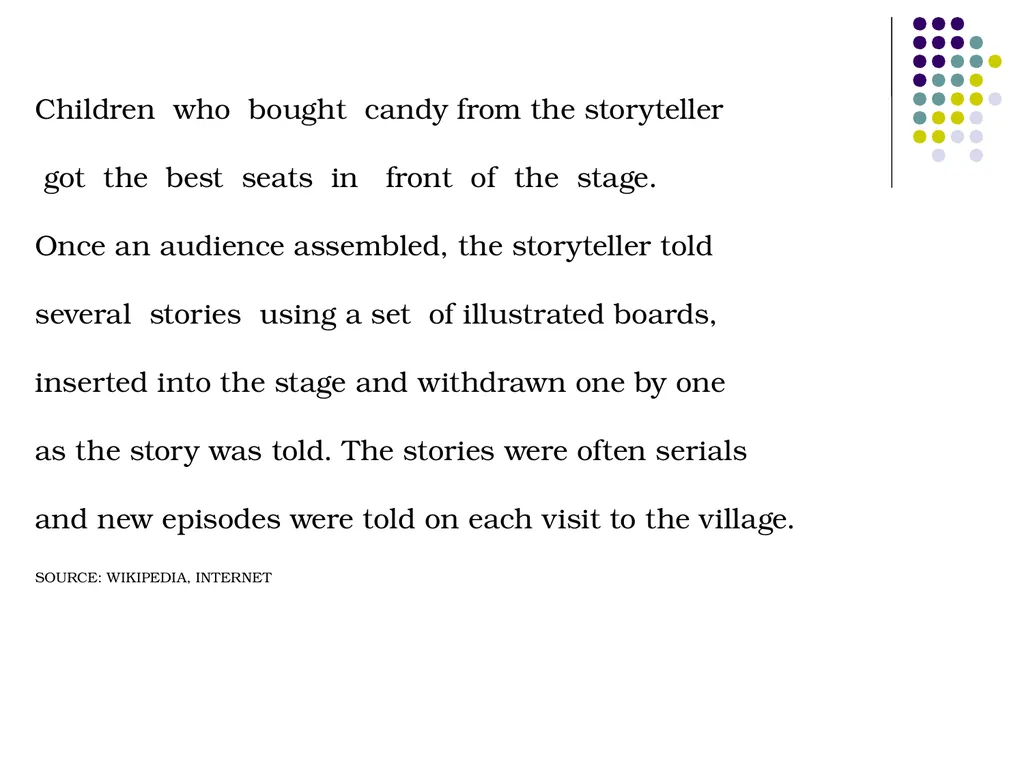
slide5. Children who bought candy from the storyteller
got the best seats in front of the stage.
Once an audience assembled, the storyteller told
several stories using a set of illustrated boards,
inserted into the stage and withdrawn one by one
as the story was told. The stories were often serials
and new episodes were told on each visit to the village.
SOURCE: WIKIPEDIA, INTERNET<br>
slide2. Kamishibai (紙芝居), literally "paper drama”:
is a form of storytelling that originated in Japanese
Buddhist Temples in the 12th century, where monks
used emakimono (picture scrolls) to convey stories
with moral lessons to a mostly illiterate audience.<br>
slide3. Kamishibai endured as a storytelling method for centuries,
but is perhaps best known for its revival in the 1920s through
the 1950s. The gaito kamishibaiya, or kamishibai storyteller,
from village to village on a bicycle equipped with a small stage.
On arrival, the storyteller used two wooden clappers,
called hyoshigi, to announce his arrival. Hyoshigi- wooden clappers<br>
slide4. gaito kamishibaiya or kamishibai- a storyteller<br>
slide5. Children who bought candy from the storyteller
got the best seats in front of the stage.
Once an audience assembled, the storyteller told
several stories using a set of illustrated boards,
inserted into the stage and withdrawn one by one
as the story was told. The stories were often serials
and new episodes were told on each visit to the village.
SOURCE: WIKIPEDIA, INTERNET<br>