
Kingdom: Protista Protists are unicellular



Description: Kingdom: Protista Protists are unicellular organisms that have a nucleus. Protists 2 PROTOZOA --- Distribution: These organisms include several forms that are commonly found in ponds, lakes, and streams. --- Importance: Among them are many
Related Topics
Download Presentation
"Kingdom: Protista Protists are unicellular" is the property of its rightful owner. Permission is granted to download and print the materials on this website for personal, non-commercial use only, and to display it on your personal computer provided you do not modify the materials and that you retain all copyright notices contained in the materials. By downloading content from our website, you accept the terms of this agreement.
Presentation Transcript
slide1. Kingdom: Protista Protists are unicellular organisms that have a nucleus. Protists<br>
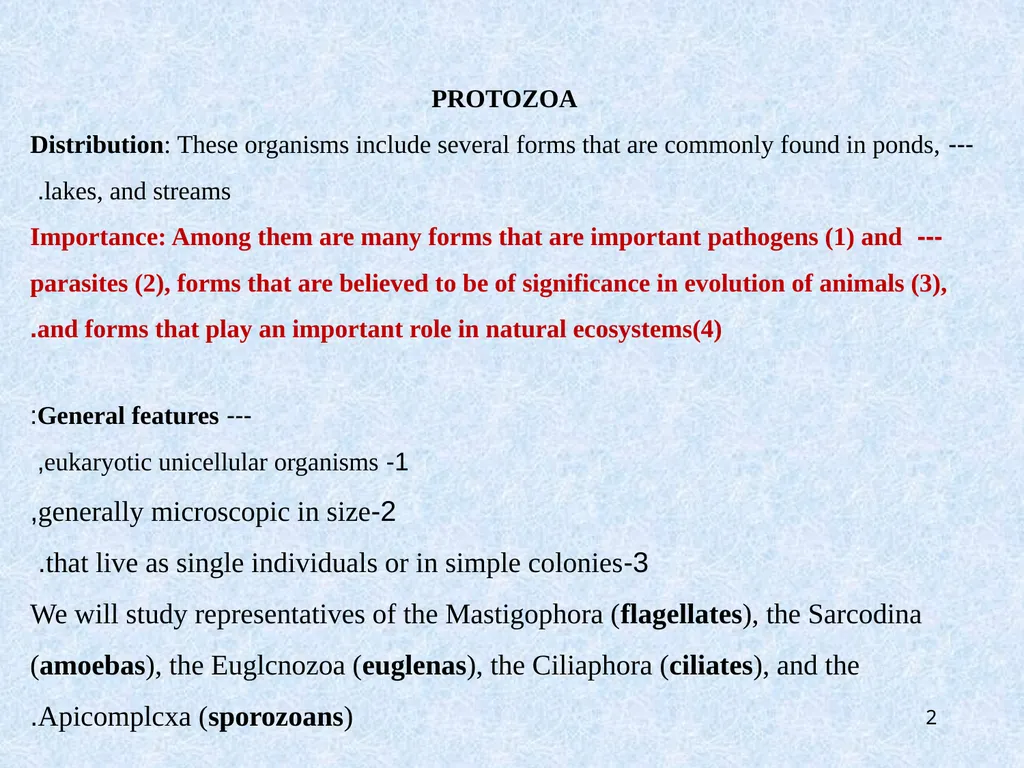
slide2. 2 PROTOZOA
--- Distribution: These organisms include several forms that are commonly found in ponds, lakes, and streams.
--- Importance: Among them are many forms that are important pathogens (1) and parasites (2), forms that are believed to be of significance in evolution of animals (3), and forms that play an important role in natural ecosystems(4). --- General features:
1- eukaryotic unicellular organisms,
2-generally microscopic in size,
3-that live as single individuals or in simple colonies.
We will study representatives of the Mastigophora (flagellates), the Sarcodina (amoebas), the Euglcnozoa (euglenas), the Ciliaphora (ciliates), and the Apicomplcxa (sporozoans).<br>
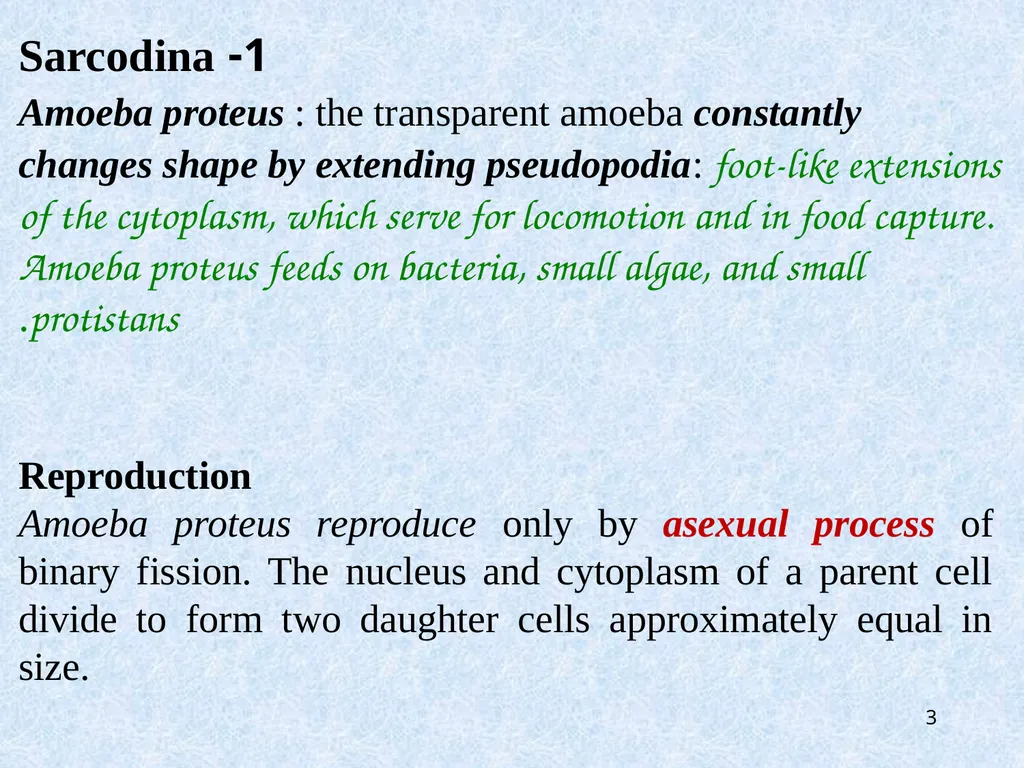
slide3. 3 1- Sarcodina
Amoeba proteus : the transparent amoeba constantly changes shape by extending pseudopodia: foot-like extensions of the cytoplasm, which serve for locomotion and in food capture. Amoeba proteus feeds on bacteria, small algae, and small protistans. Reproduction
Amoeba proteus reproduce only by asexual process of binary fission. The nucleus and cytoplasm of a parent cell divide to form two daughter cells approximately equal in size.<br>
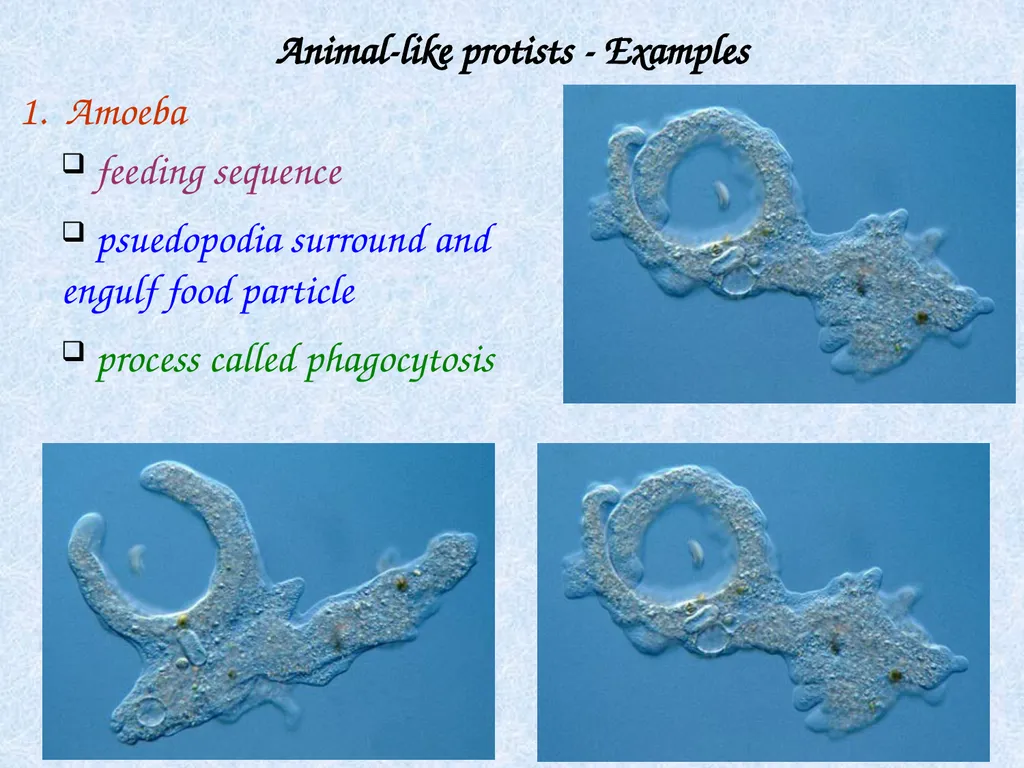
slide4. 4 1. Amoeba Animal-like protists - Examples feeding sequence psuedopodia surround and engulf food particle process called phagocytosis<br>
slide5. Other Sarcodina
1-Many amoeboid protozoa are more specialized than Amoeba. Pelamyxa carolinensis is a large multinucleate amoeba.
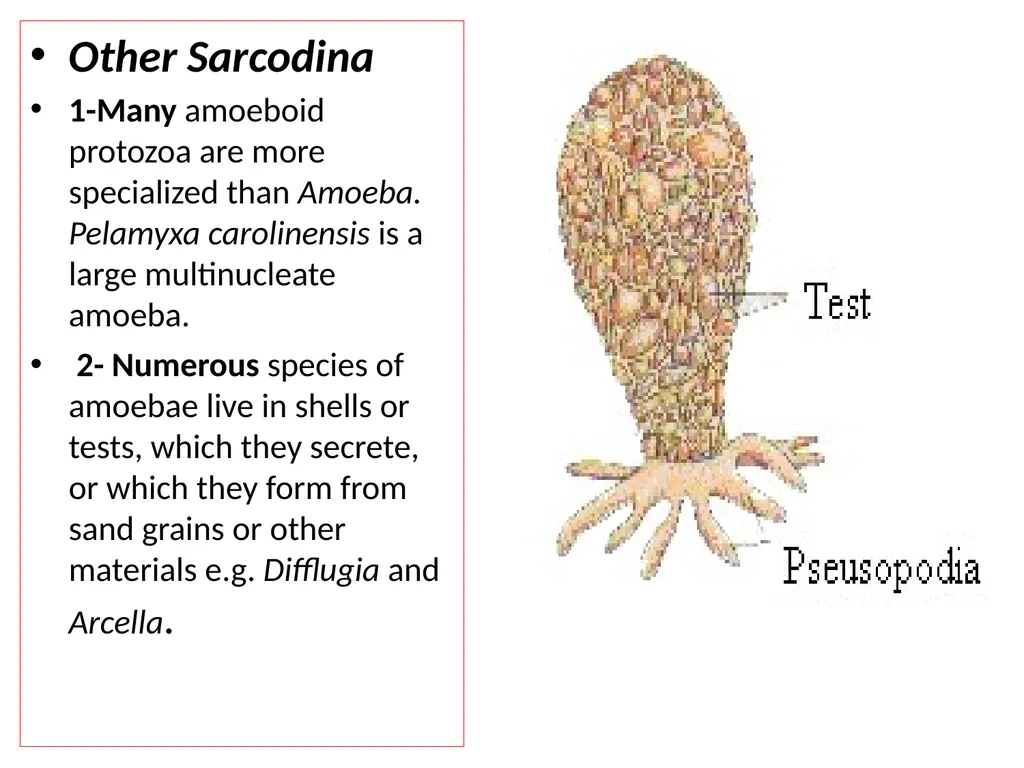
2- Numerous species of amoebae live in shells or tests, which they secrete, or which they form from sand grains or other materials e.g. Difflugia and Arcella.<br>
slide6. 3- Other species of amoebae are parasites or symbionts in the digestive tracts of various animals e.g. Entamoeba histolytica, an important intestinal parasite of humans, is the cause of amoebic dysentery, a disease often spread by drinking water or by eating raw vegetables contaminated by human wastes in parts of the world with poor sanitary facilities.<br>
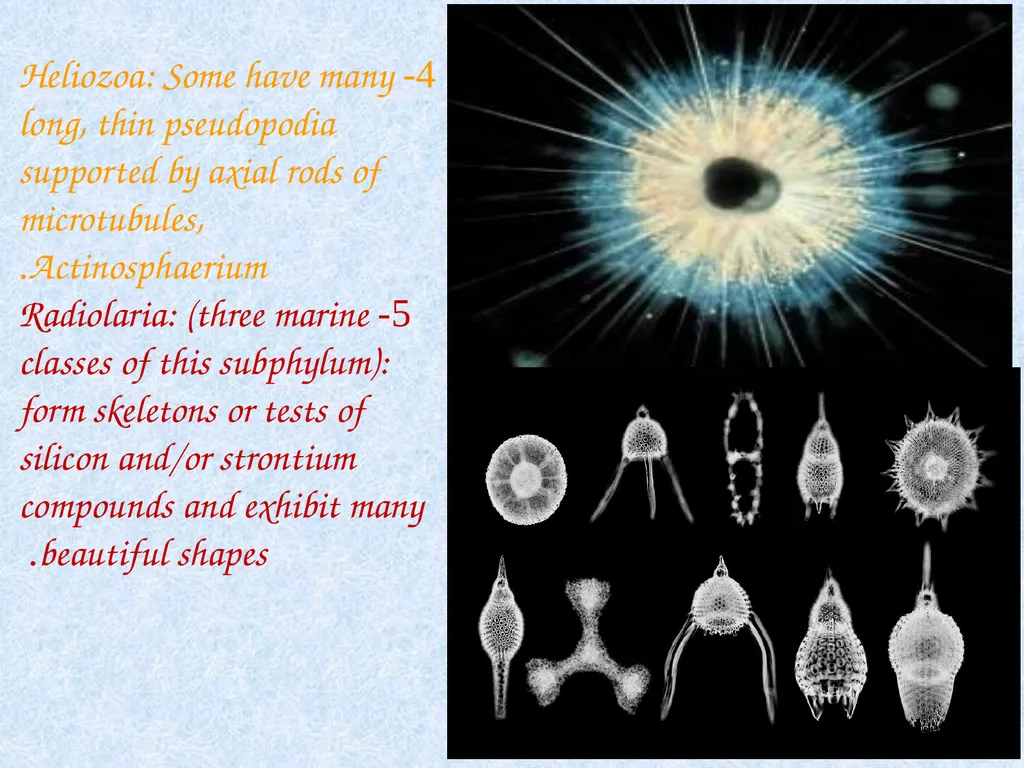
slide7. 4- Heliozoa: Some have many long, thin pseudopodia supported by axial rods of microtubules, Actinosphaerium.
5- Radiolaria: (three marine classes of this subphylum): form skeletons or tests of silicon and/or strontium compounds and exhibit many beautiful shapes.<br>
slide8. 6- Foraminifera: (marine sarcodines): form tests of calcium carbonate or other materials<br>
slide2. 2 PROTOZOA
--- Distribution: These organisms include several forms that are commonly found in ponds, lakes, and streams.
--- Importance: Among them are many forms that are important pathogens (1) and parasites (2), forms that are believed to be of significance in evolution of animals (3), and forms that play an important role in natural ecosystems(4). --- General features:
1- eukaryotic unicellular organisms,
2-generally microscopic in size,
3-that live as single individuals or in simple colonies.
We will study representatives of the Mastigophora (flagellates), the Sarcodina (amoebas), the Euglcnozoa (euglenas), the Ciliaphora (ciliates), and the Apicomplcxa (sporozoans).<br>
slide3. 3 1- Sarcodina
Amoeba proteus : the transparent amoeba constantly changes shape by extending pseudopodia: foot-like extensions of the cytoplasm, which serve for locomotion and in food capture. Amoeba proteus feeds on bacteria, small algae, and small protistans. Reproduction
Amoeba proteus reproduce only by asexual process of binary fission. The nucleus and cytoplasm of a parent cell divide to form two daughter cells approximately equal in size.<br>
slide4. 4 1. Amoeba Animal-like protists - Examples feeding sequence psuedopodia surround and engulf food particle process called phagocytosis<br>
slide5. Other Sarcodina
1-Many amoeboid protozoa are more specialized than Amoeba. Pelamyxa carolinensis is a large multinucleate amoeba.
2- Numerous species of amoebae live in shells or tests, which they secrete, or which they form from sand grains or other materials e.g. Difflugia and Arcella.<br>
slide6. 3- Other species of amoebae are parasites or symbionts in the digestive tracts of various animals e.g. Entamoeba histolytica, an important intestinal parasite of humans, is the cause of amoebic dysentery, a disease often spread by drinking water or by eating raw vegetables contaminated by human wastes in parts of the world with poor sanitary facilities.<br>
slide7. 4- Heliozoa: Some have many long, thin pseudopodia supported by axial rods of microtubules, Actinosphaerium.
5- Radiolaria: (three marine classes of this subphylum): form skeletons or tests of silicon and/or strontium compounds and exhibit many beautiful shapes.<br>
slide8. 6- Foraminifera: (marine sarcodines): form tests of calcium carbonate or other materials<br>