04
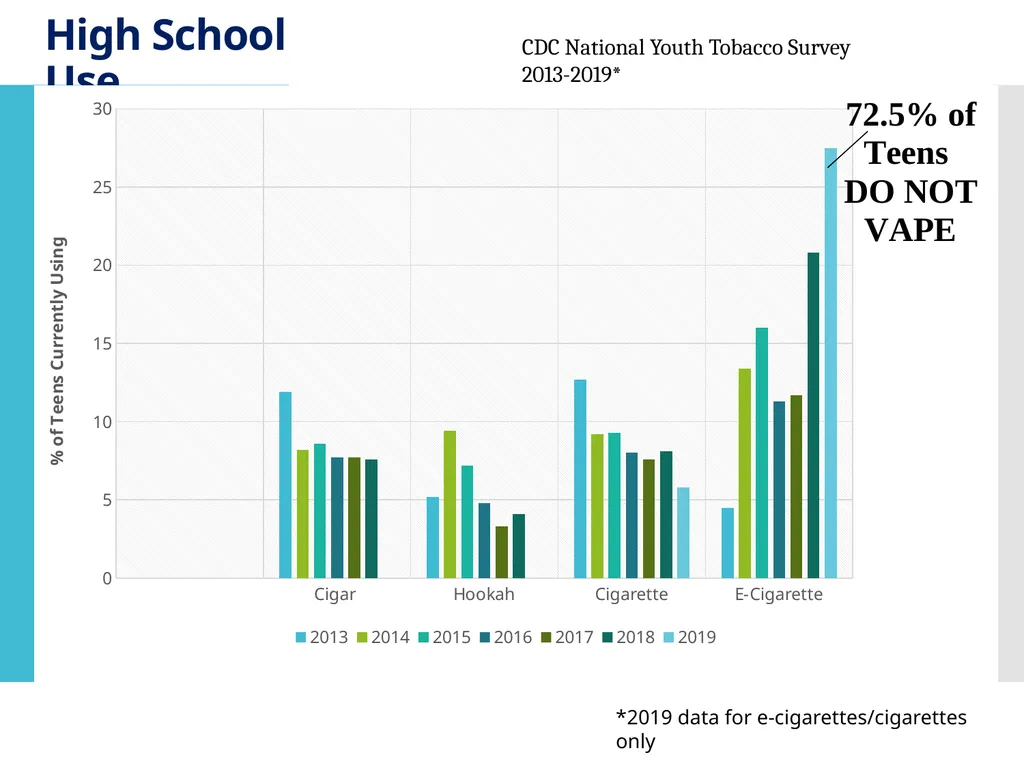
High School Use CDC National Youth Tobacco Survey 2013-2019* *2019 data for e-cigarettes/cigarettes only<br>
05
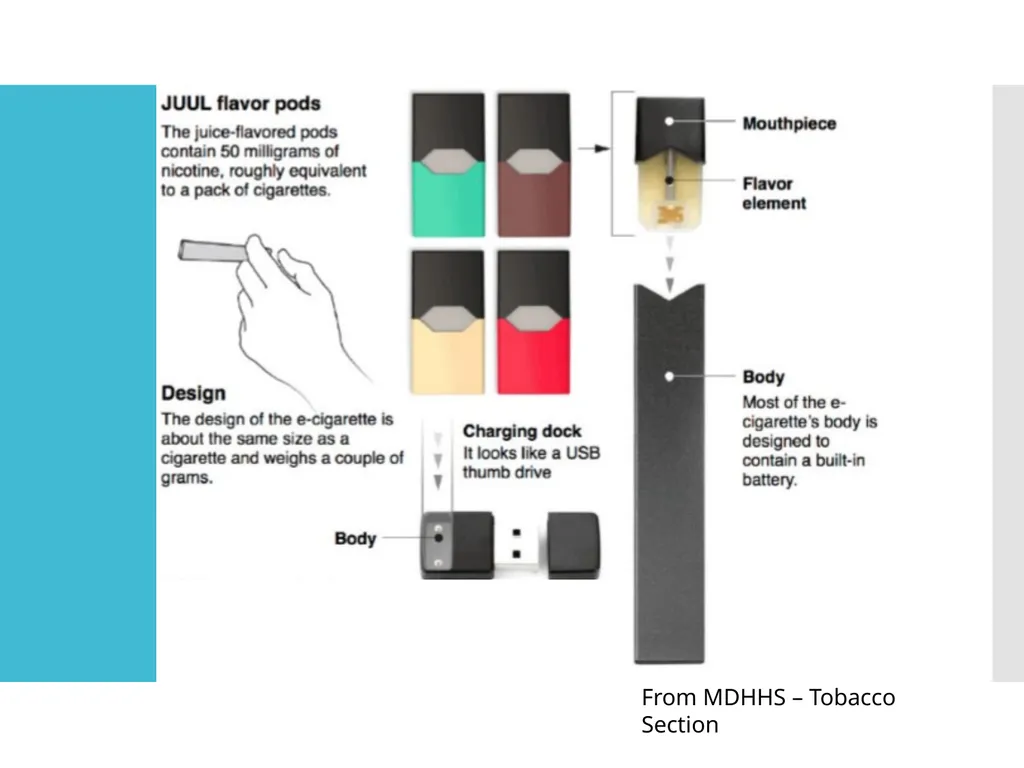
From MDHHS – Tobacco Section<br>
06
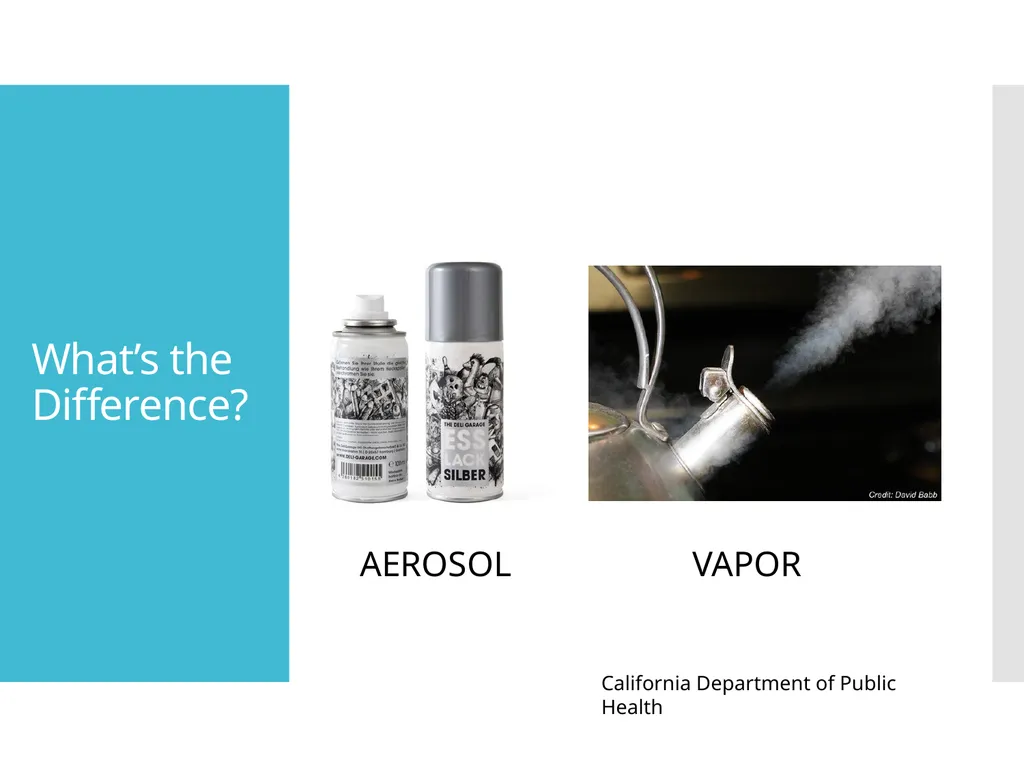
What’s the Difference? VAPOR AEROSOL California Department of Public Health<br>
07
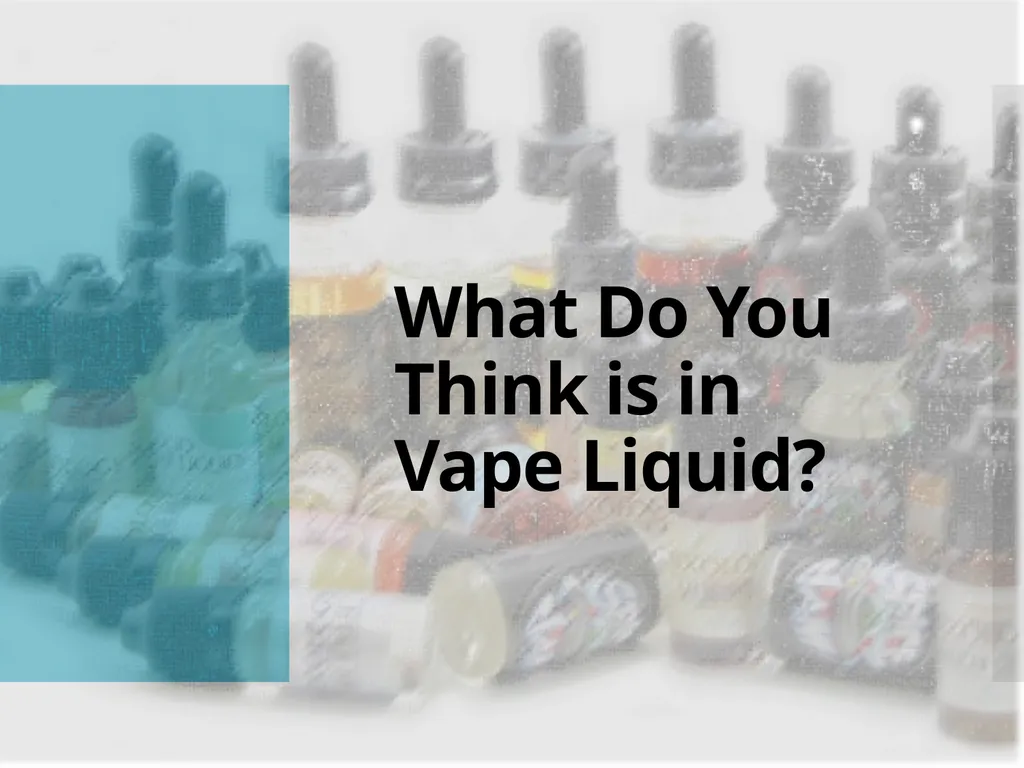
What Do You Think is in �Vape Liquid?<br>
08
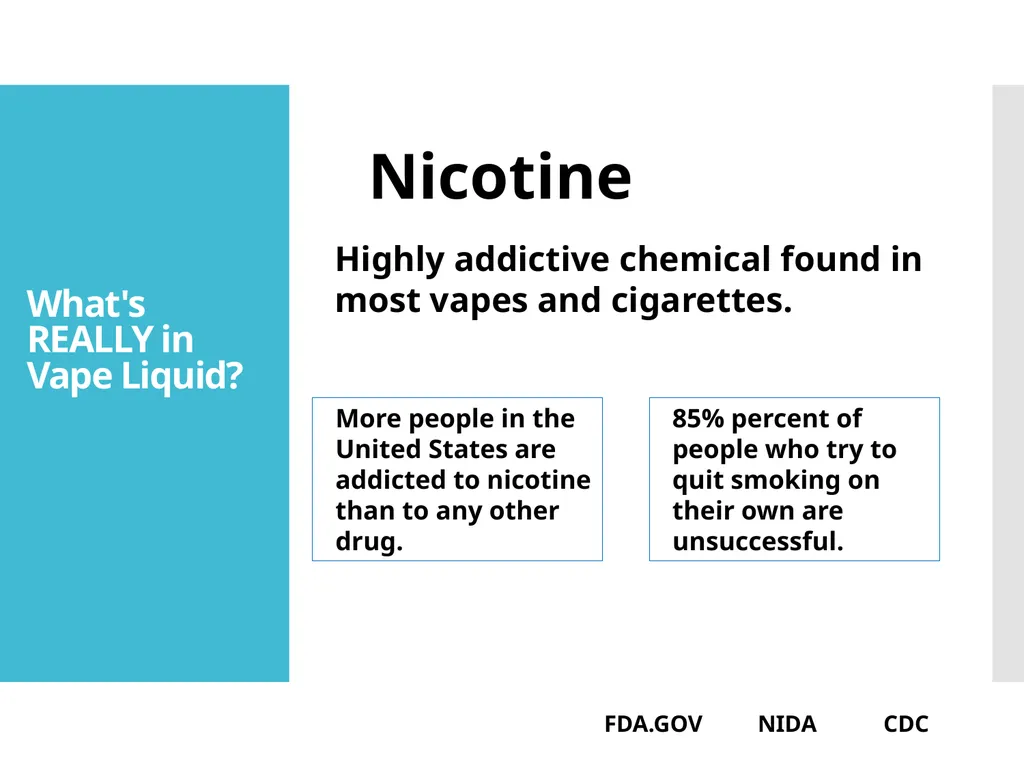
What's REALLY in Vape Liquid? FDA.GOV NIDA CDC Nicotine
Highly addictive chemical found in most vapes and cigarettes. 85% percent of people who try to quit smoking on their own are unsuccessful. More people in the United States are addicted to nicotine than to any other drug.<br>
09
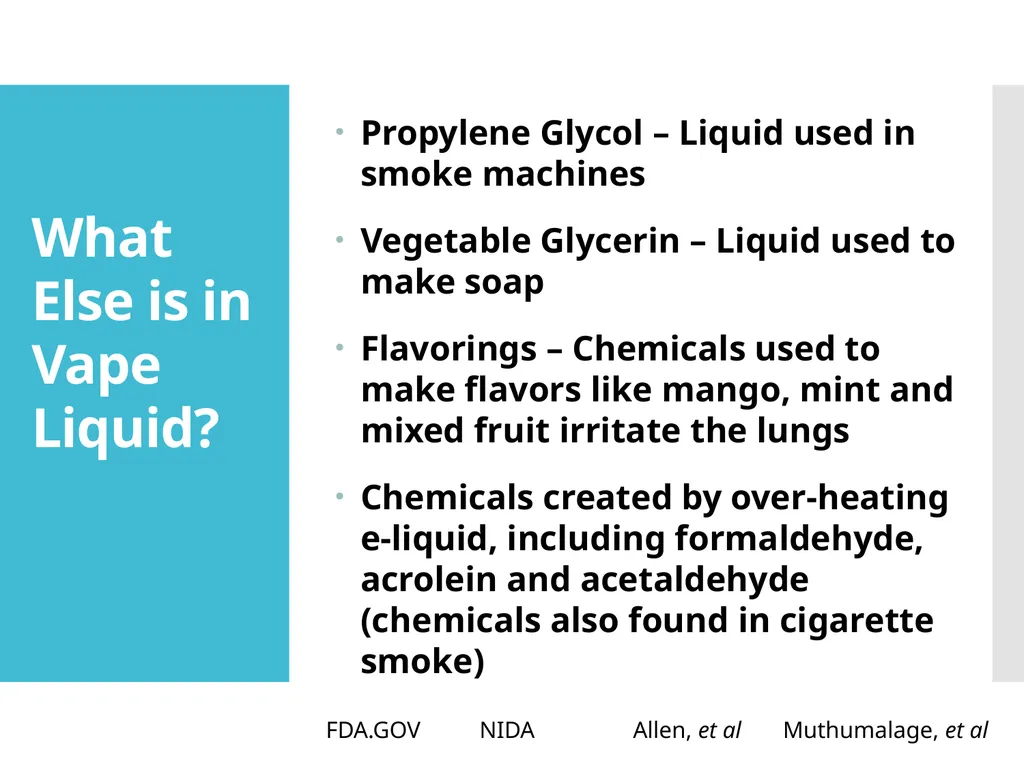
What Else is in Vape Liquid? Propylene Glycol – Liquid used in smoke machines
Vegetable Glycerin – Liquid used to make soap
Flavorings – Chemicals used to make flavors like mango, mint and mixed fruit irritate the lungs
Chemicals created by over-heating e-liquid, including formaldehyde, acrolein and acetaldehyde (chemicals also found in cigarette smoke) FDA.GOV NIDA Allen, et al Muthumalage, et al<br>
10
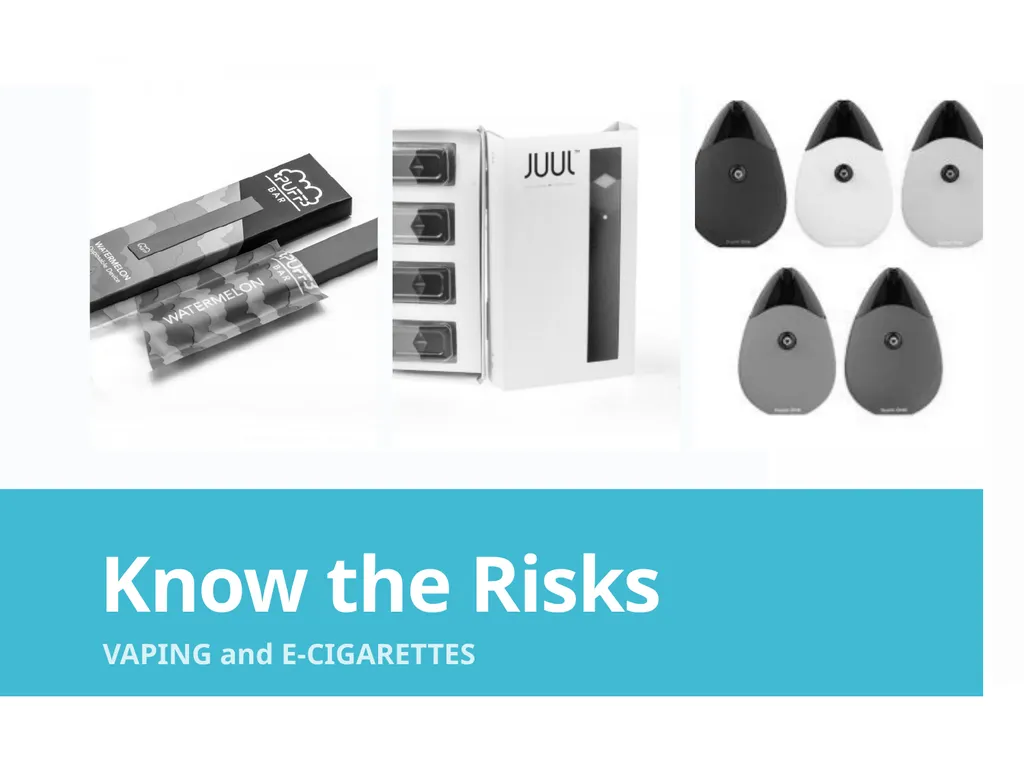
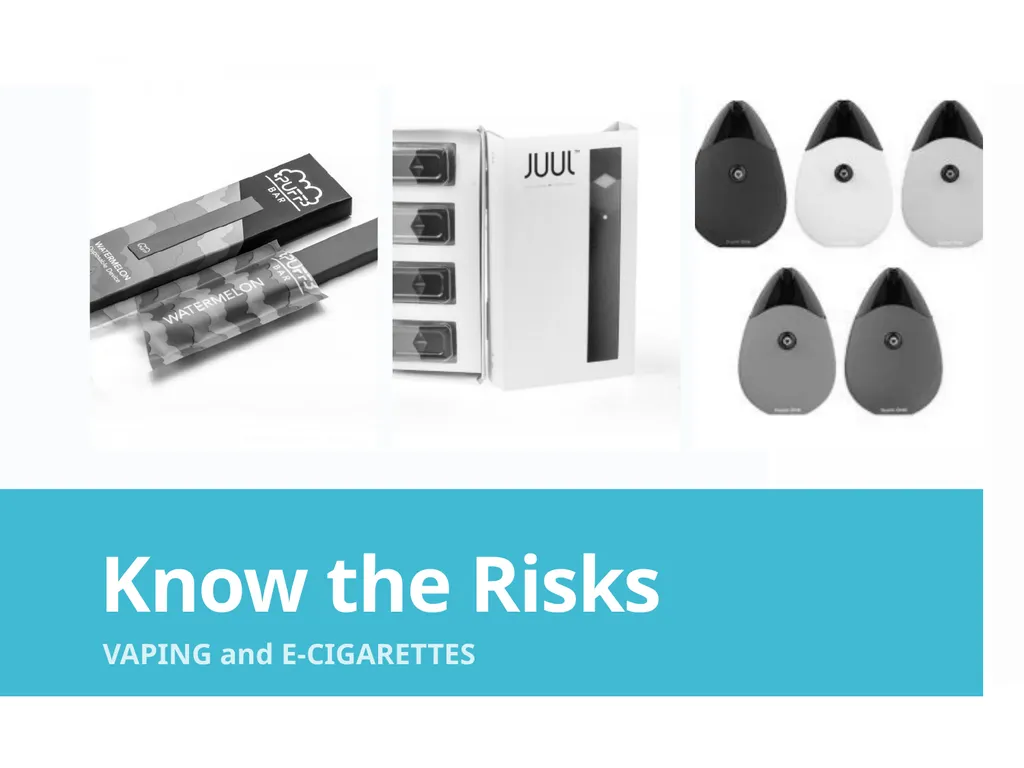
JUUL��JUUL is a commonly used nicotine vape device All JUUL pods contain nicotine.
63% of teen and young adult JUUL users do not know they are inhaling nicotine. Truth Initiative (2017)<br>
11
There’s an epidemic spreading<br>
12
Vaping and Your Health Research is just beginning to reveal the dangers of vape products
These dangers include addiction and negative health effects<br>
13
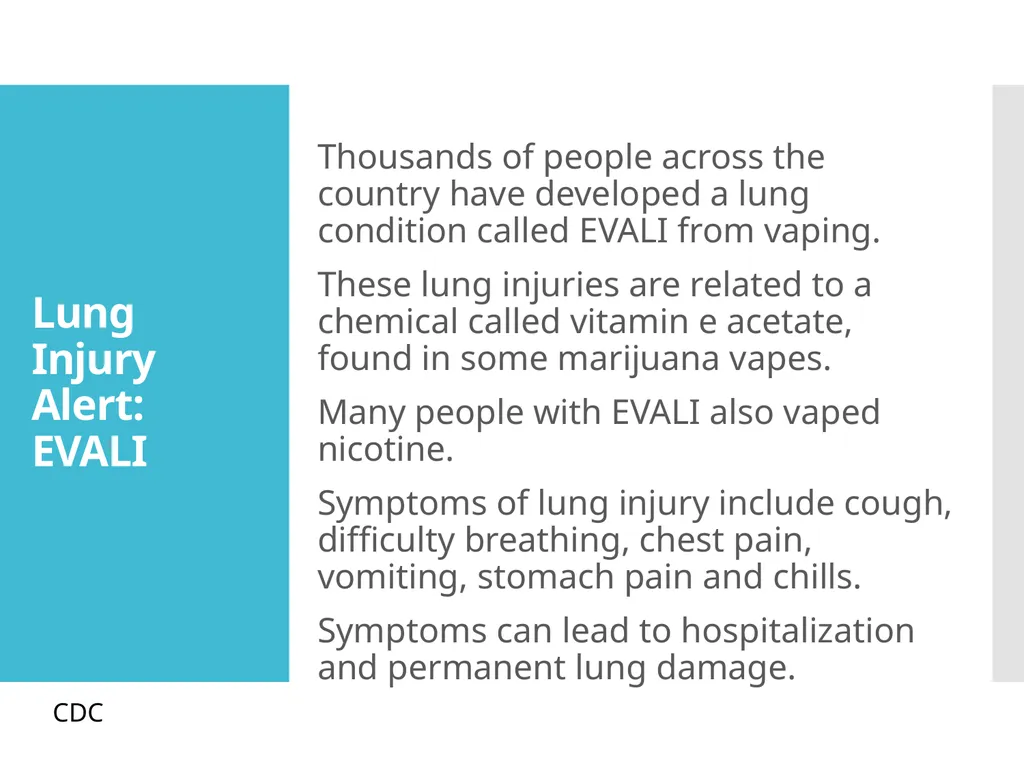
Lung Injury Alert: EVALI CDC Thousands of people across the country have developed a lung condition called EVALI from vaping.
These lung injuries are related to a chemical called vitamin e acetate, found in some marijuana vapes.
Many people with EVALI also vaped nicotine.
Symptoms of lung injury include cough, difficulty breathing, chest pain, vomiting, stomach pain and chills.
Symptoms can lead to hospitalization and permanent lung damage.<br>
14
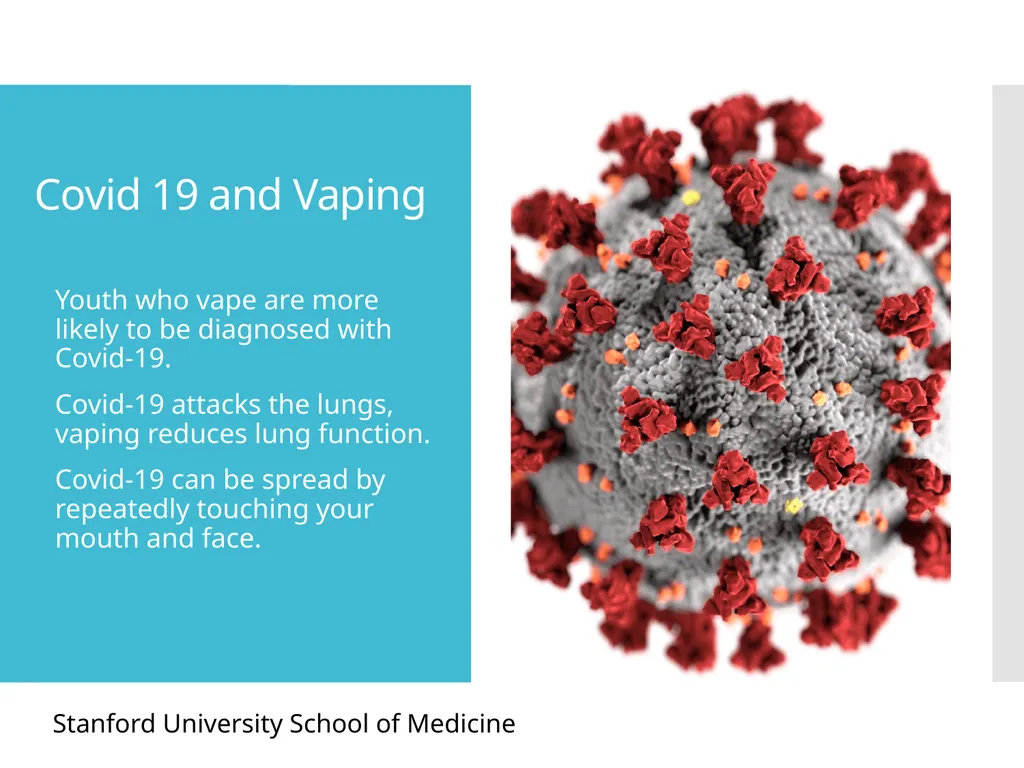
Covid 19 and Vaping Youth who vape are more likely to be diagnosed with Covid-19.
Covid-19 attacks the lungs, vaping reduces lung function.
Covid-19 can be spread by repeatedly touching your mouth and face. Stanford University School of Medicine<br>
15
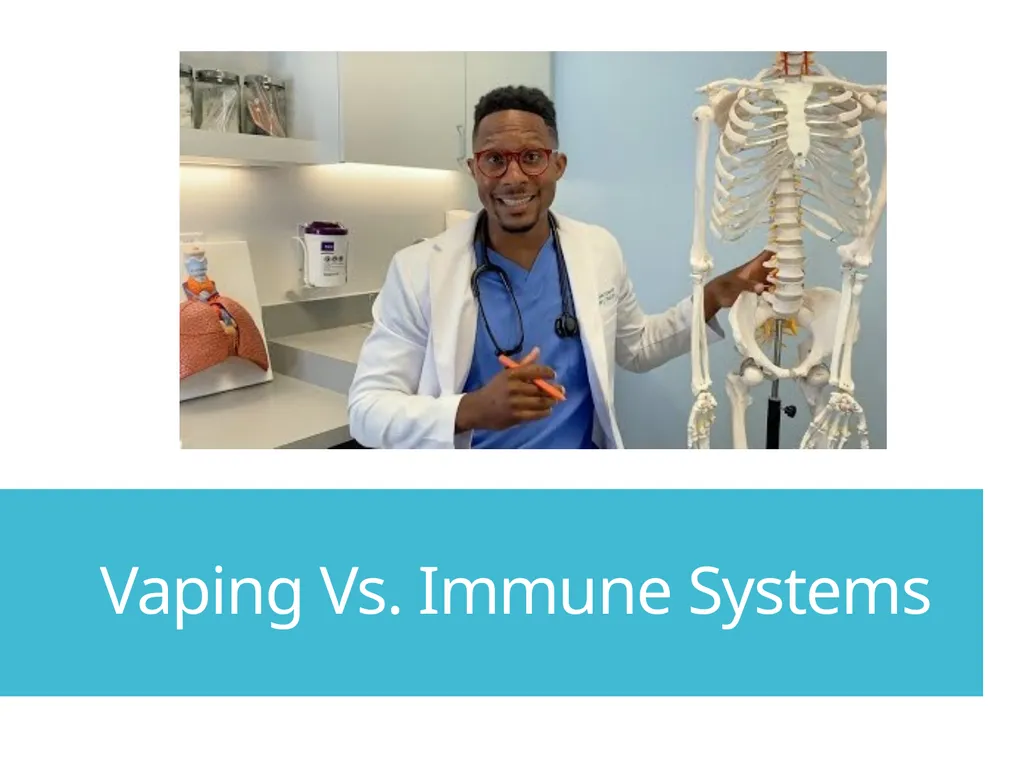
Vaping Vs. Immune Systems<br>
16
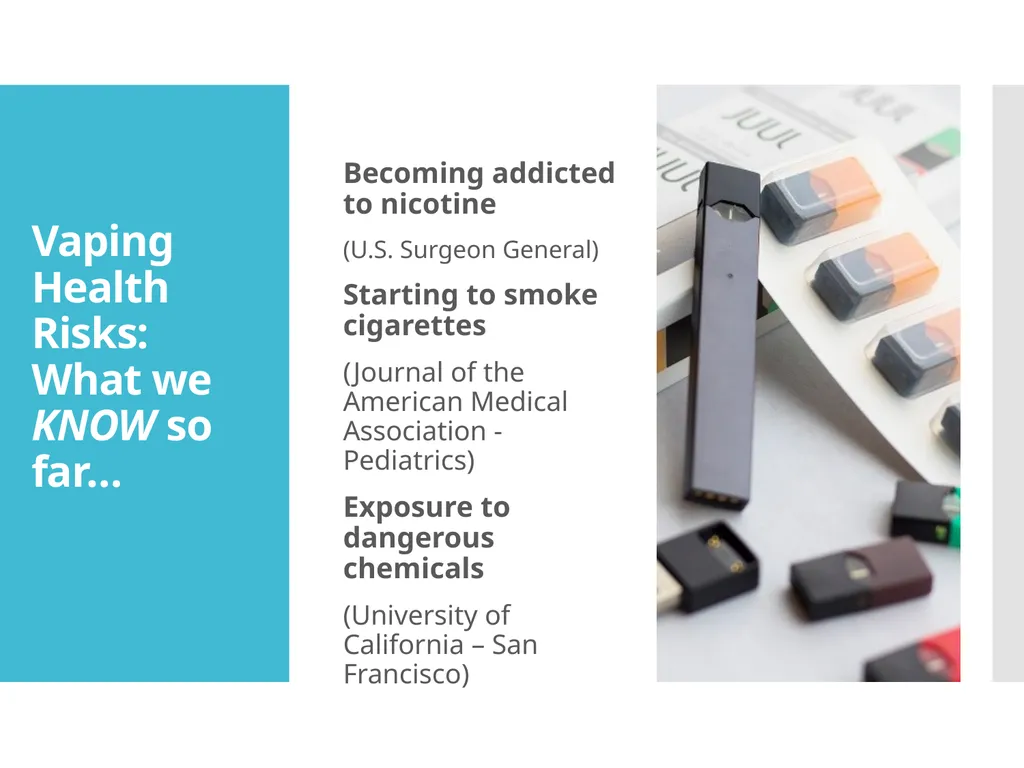
Vaping Health Risks:�What we KNOW so far… Becoming addicted to nicotine
(U.S. Surgeon General)
Starting to smoke cigarettes
(Journal of the American Medical Association - Pediatrics)
Exposure to dangerous chemicals
(University of California – San Francisco)<br>
17
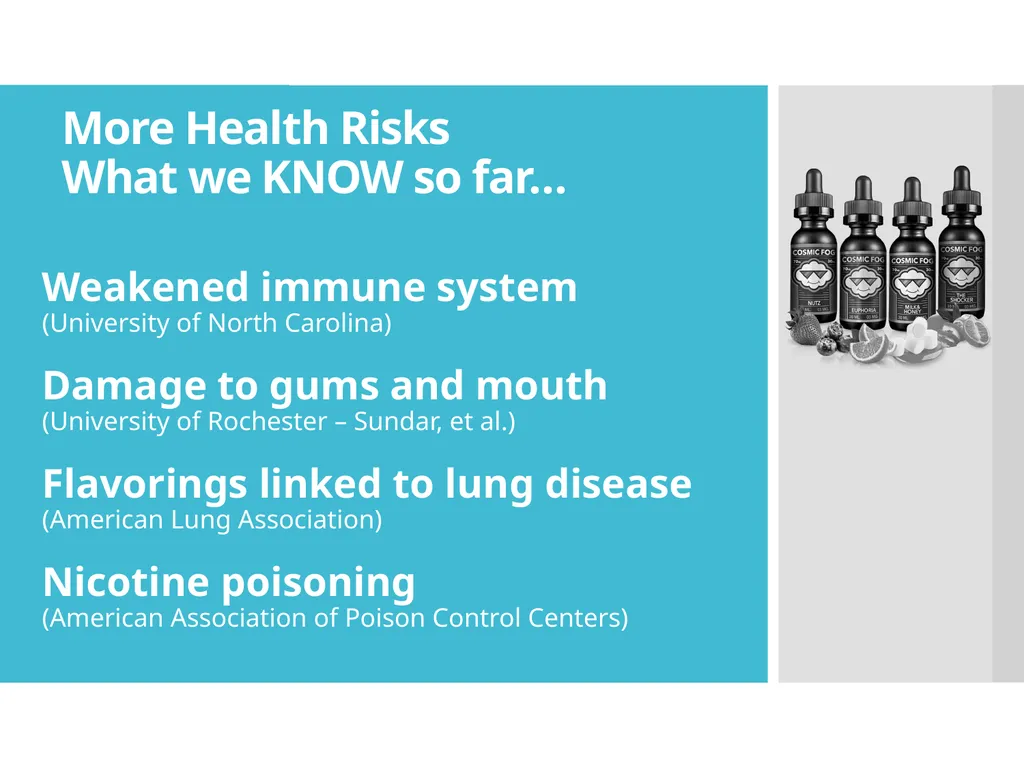
More Health Risks�What we KNOW so far… Weakened immune system
(University of North Carolina)
Damage to gums and mouth
(University of Rochester – Sundar, et al.)
Flavorings linked to lung disease
(American Lung Association)
Nicotine poisoning
(American Association of Poison Control Centers)<br>
18
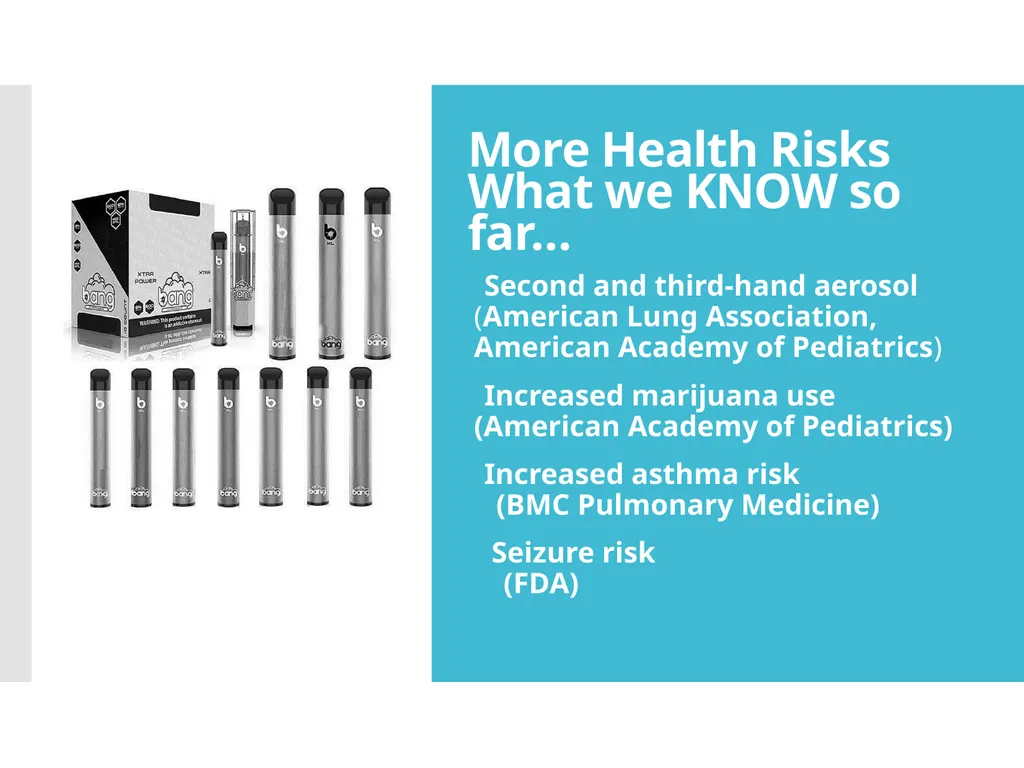
More Health Risks�What we KNOW so far… Second and third-hand aerosol (American Lung Association, American Academy of Pediatrics)
Increased marijuana use (American Academy of Pediatrics)
Increased asthma risk (BMC Pulmonary Medicine)
Seizure risk (FDA)<br>
19
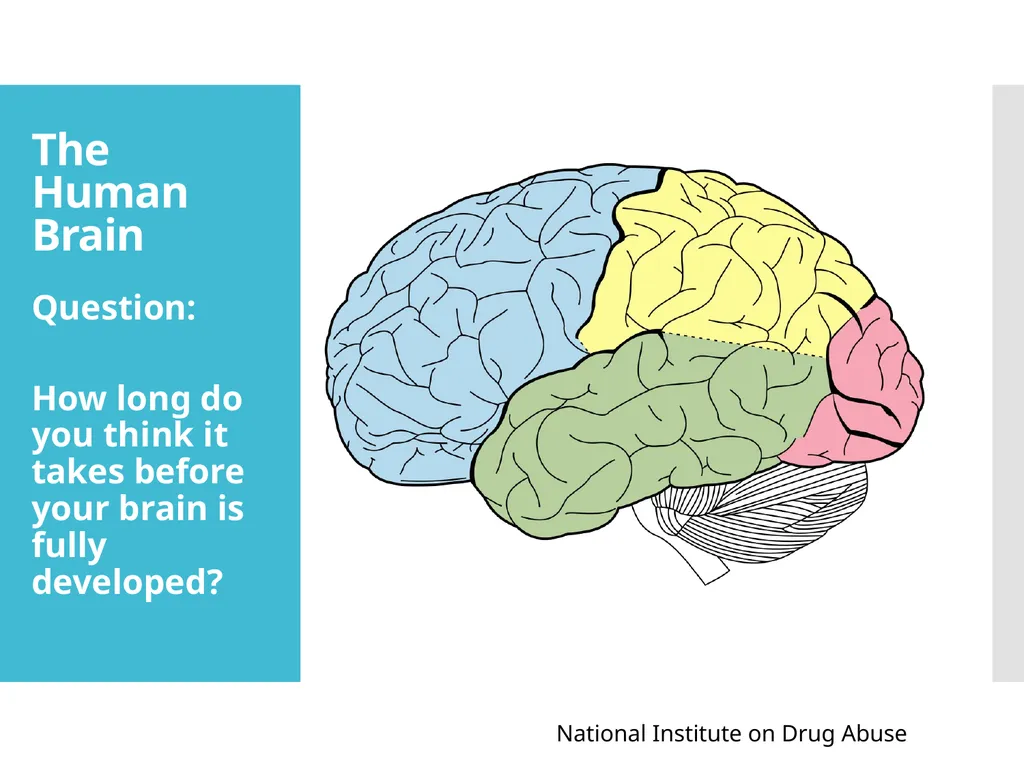
The Human Brain Question:
How long do you think it takes before your brain is fully developed? National Institute on Drug Abuse<br>
20
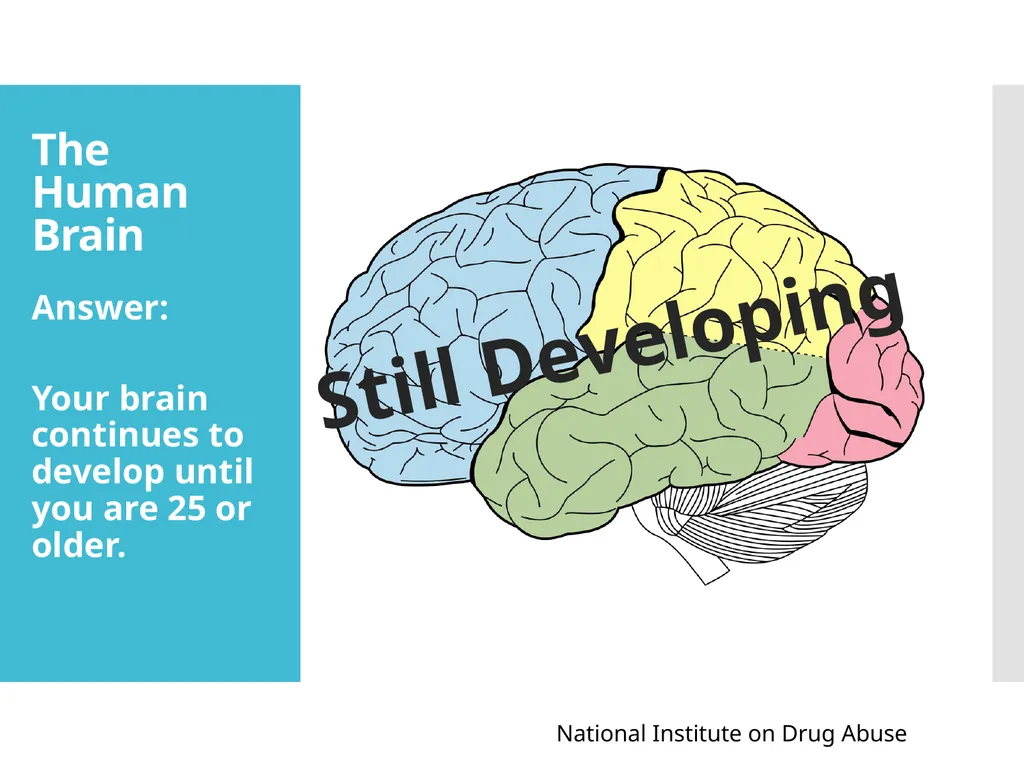
The Human Brain Answer:
Your brain continues to develop until you are 25 or older. National Institute on Drug Abuse Still Developing<br>
21
Vaping and Addiction National Institute on Drug Abuse<br>
22
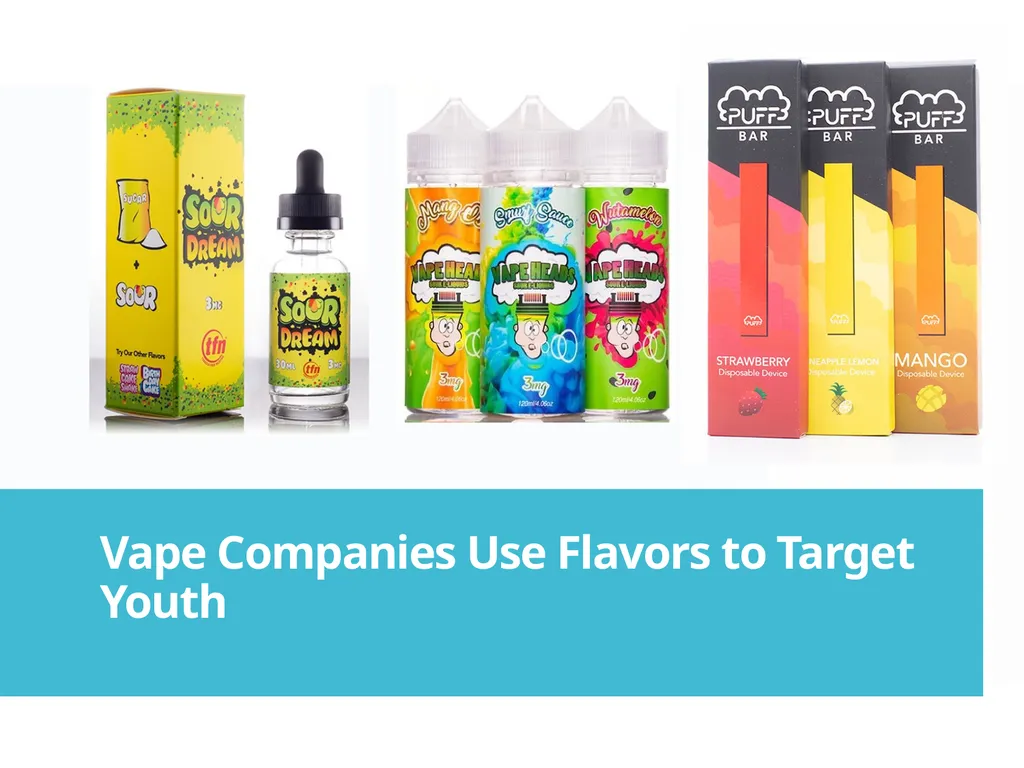
Vape Companies Use Flavors to Target Youth<br>
23
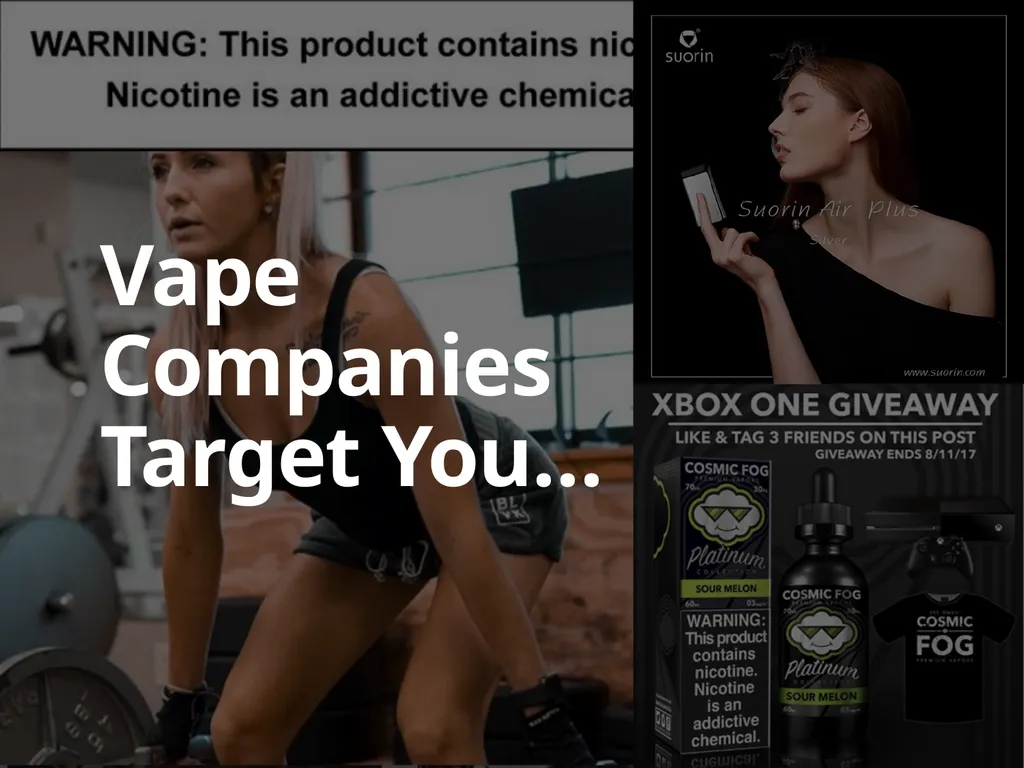
Vape Companies Target You…<br>
24
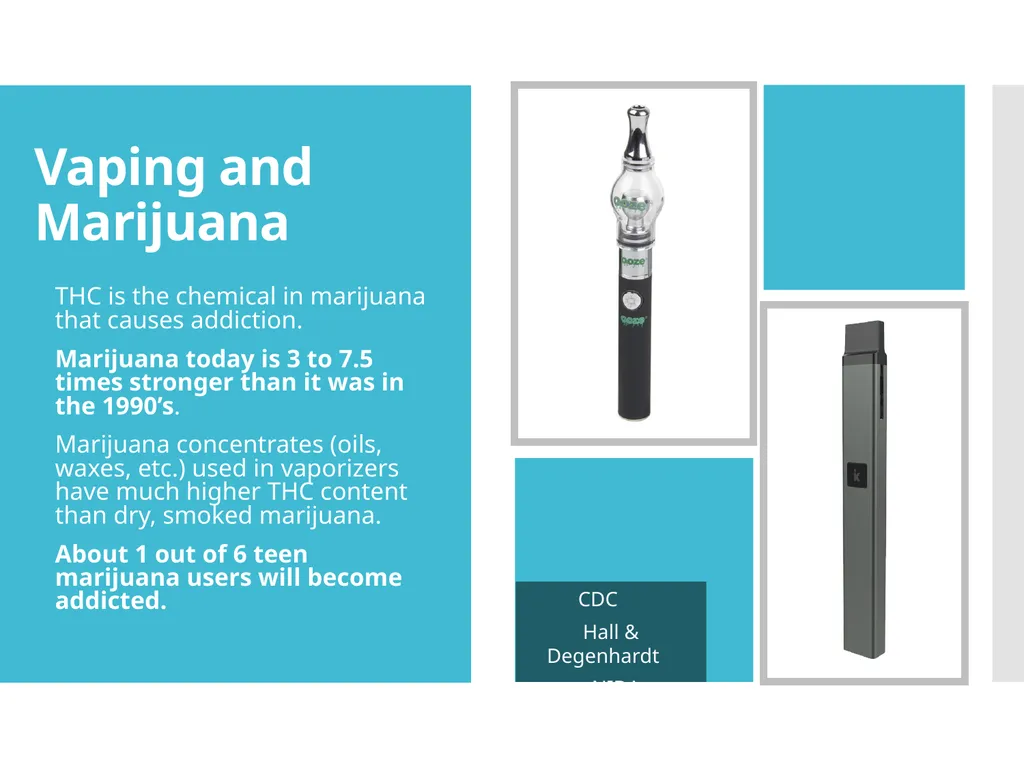
Vaping and Marijuana THC is the chemical in marijuana that causes addiction.
Marijuana today is 3 to 7.5 times stronger than it was in the 1990’s.
Marijuana concentrates (oils, waxes, etc.) used in vaporizers have much higher THC content than dry, smoked marijuana.
About 1 out of 6 teen marijuana users will become addicted. CDC
Hall & Degenhardt
NIDA<br>
25
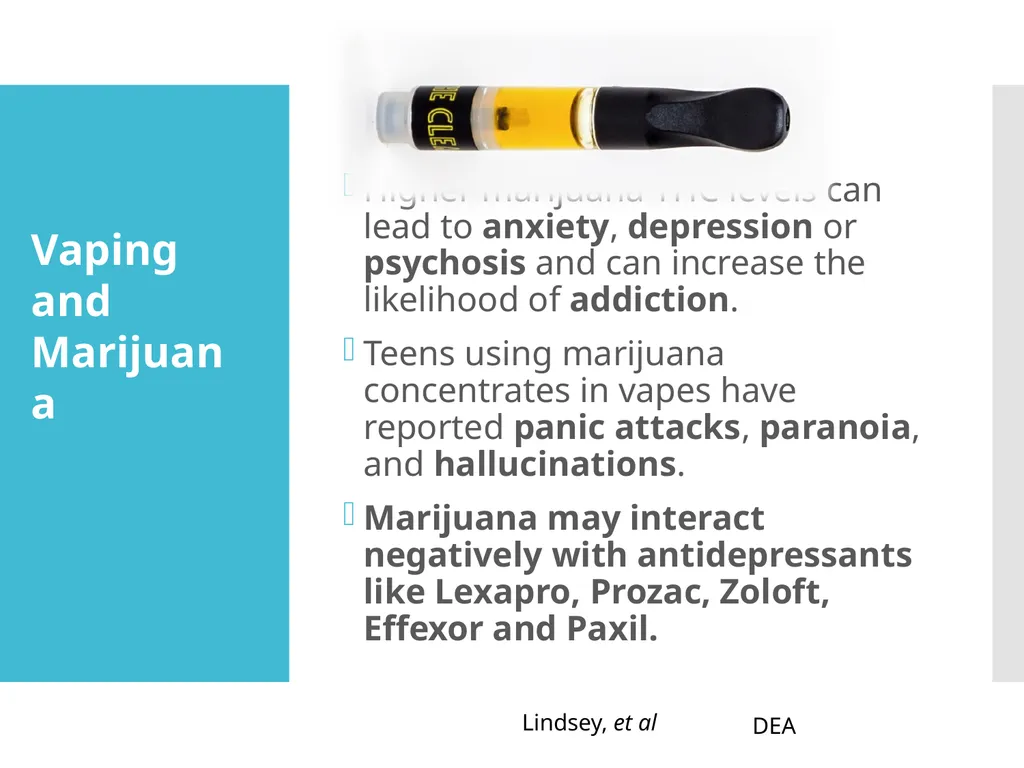
Higher marijuana THC levels can lead to anxiety, depression or psychosis and can increase the likelihood of addiction.
Teens using marijuana concentrates in vapes have reported panic attacks, paranoia, and hallucinations.
Marijuana may interact negatively with antidepressants like Lexapro, Prozac, Zoloft, Effexor and Paxil. DEA Lindsey, et al Vaping and Marijuana<br>
26
How Can I Get Help to Quit? Talk to Your
Student Assistance Specialist,
School Counselor,
or School Social Worker
Go to:
MyLifeMyQuit.com
Or:
Text “Start” to 855.891.9989<br>
27
Want More Information? National Institute on Drug Abuse (NIDA) (NIDA Teen)
Centers for Disease Control and Prevention (CDC)
Department of Health and Human Services (The Real Cost of Tobacco)
Food and Drug Administration (FDA)
Tobacco Free Kids (TFK)
Truth Initiative (Truth)<br>