
LABOR RELATIONS 101: Collective Bargaining Basics


Description: LABOR RELATIONS 101: Collective Bargaining Basics University of Washington By the end of todays training, you will have learned more about your collective bargaining responsibilities and explored ways to avoid grievances and unfair labor
Related Topics
Download Presentation
"LABOR RELATIONS 101: Collective Bargaining Basics" is the property of its rightful owner. Permission is granted to download and print the materials on this website for personal, non-commercial use only, and to display it on your personal computer provided you do not modify the materials and that you retain all copyright notices contained in the materials. By downloading content from our website, you accept the terms of this agreement.
Presentation Transcript
slide1. LABOR RELATIONS 101:
Collective Bargaining
Basics University of Washington<br>
slide2. By the end of today’s training, you will have learned more about your collective bargaining responsibilities and explored ways to avoid grievances and unfair labor practices. Objective<br>
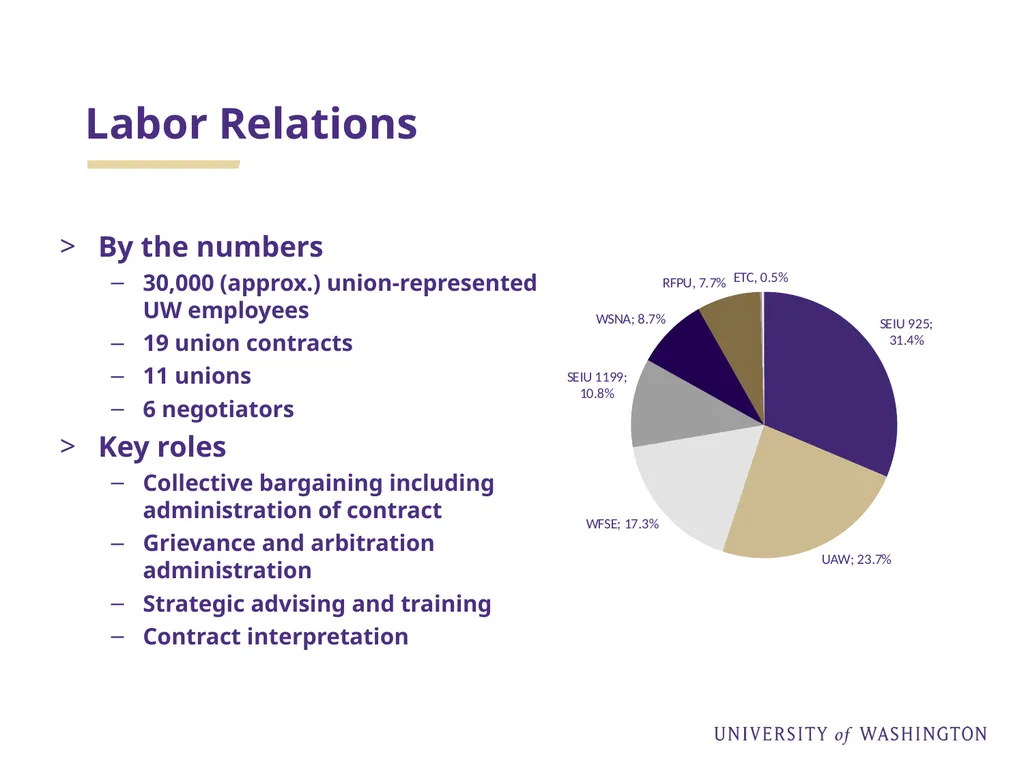
slide3. By the numbers
30,000 (approx.) union-represented UW employees
19 union contracts
11 unions
6 negotiators
Key roles
Collective bargaining including administration of contract
Grievance and arbitration administration
Strategic advising and training
Contract interpretation Labor Relations<br>
slide4. The Union and Employer negotiate terms and conditions of employment – Collective Bargaining Agreement (CBA).
The union acts as the employees’ representative in issues with the employer. What it Means for Employees to be Represented<br>
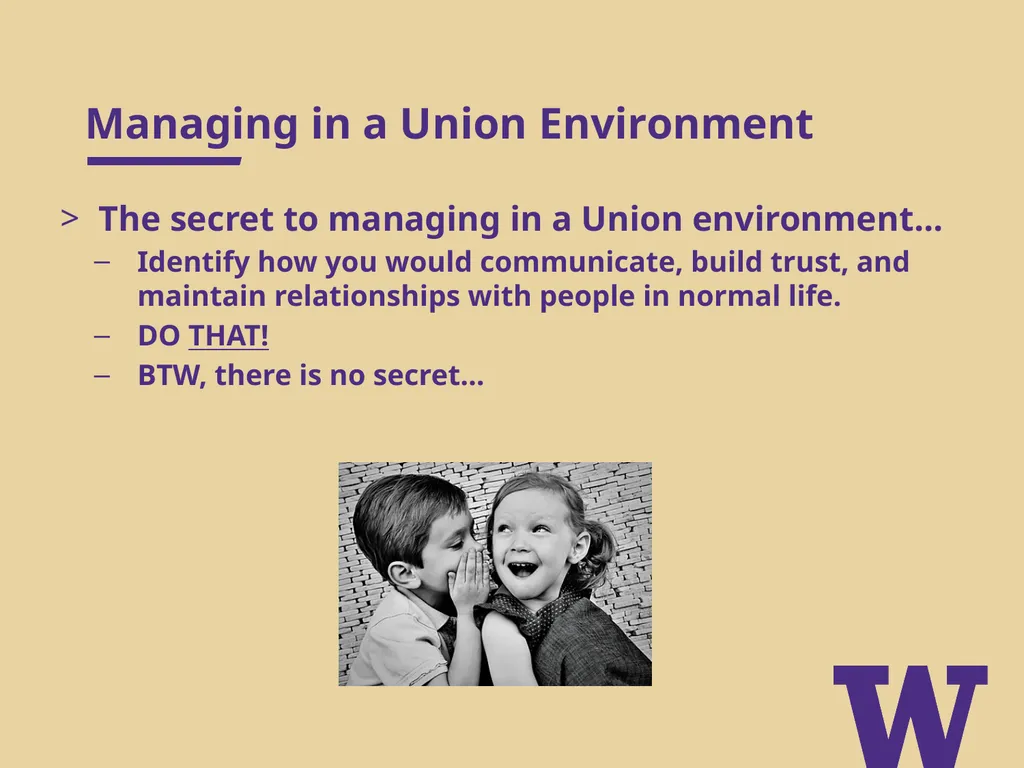
slide5. The secret to managing in a Union environment...
Identify how you would communicate, build trust, and maintain relationships with people in normal life.
DO THAT!
BTW, there is no secret... Managing in a Union Environment<br>
slide6. Knowing if your staff are represented by a Union.
Familiarizing yourself with the relevant Collective Bargaining Agreement/s.
Understanding employees' rights under their Collective Bargaining Agreement/s.
Working with your HRC or Labor Relations whenever there is a proposed change to an employee's wages, hours, or working conditions. Managers are responsible for:<br>
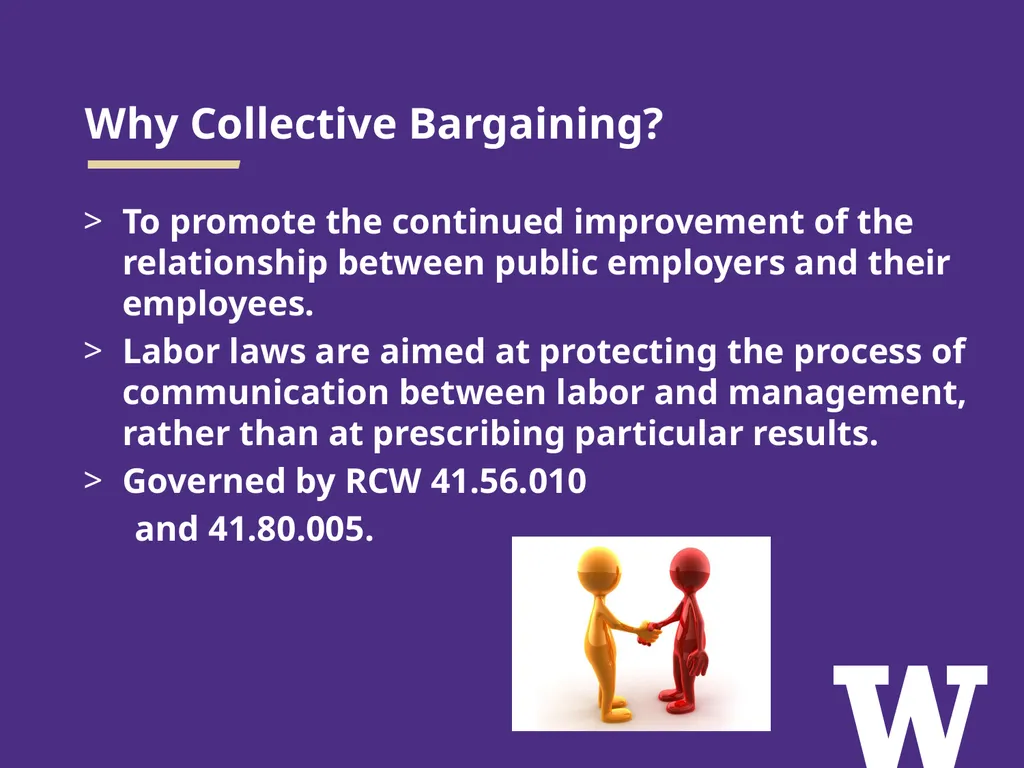
slide7. To promote the continued improvement of the relationship between public employers and their employees.
Labor laws are aimed at protecting the process of communication between labor and management, rather than at prescribing particular results.
Governed by RCW 41.56.010
and 41.80.005. Why Collective Bargaining?<br>
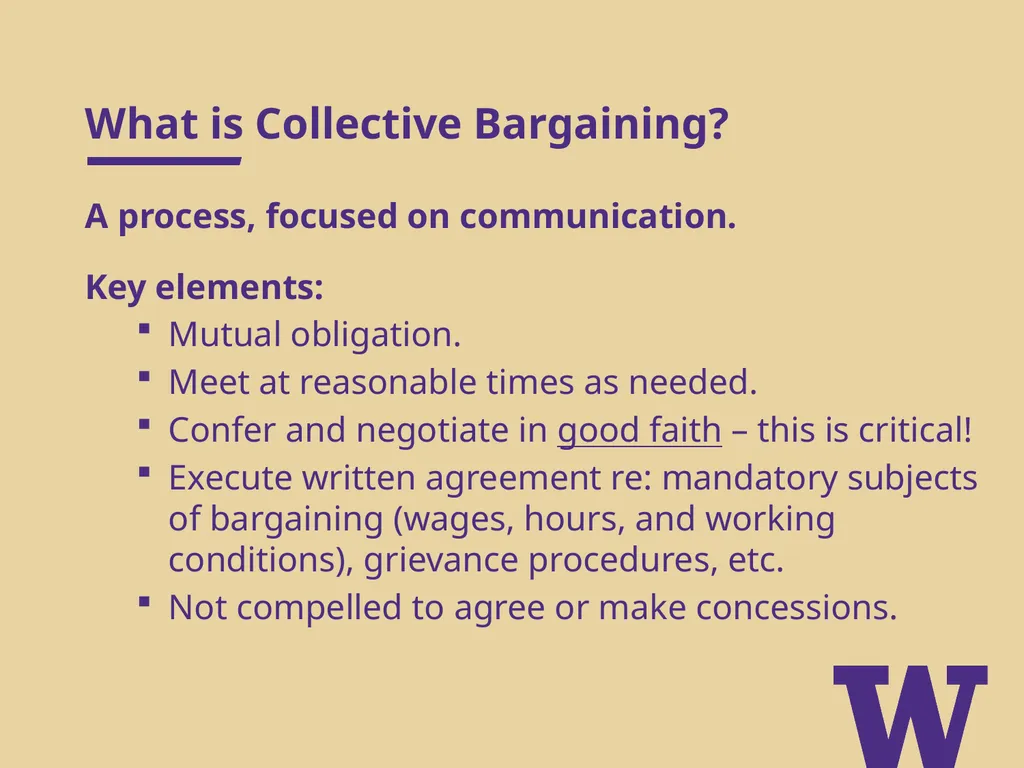
slide8. Key elements:
Mutual obligation.
Meet at reasonable times as needed.
Confer and negotiate in good faith – this is critical!
Execute written agreement re: mandatory subjects of bargaining (wages, hours, and working conditions), grievance procedures, etc.
Not compelled to agree or make concessions. A process, focused on communication. What is Collective Bargaining?<br>
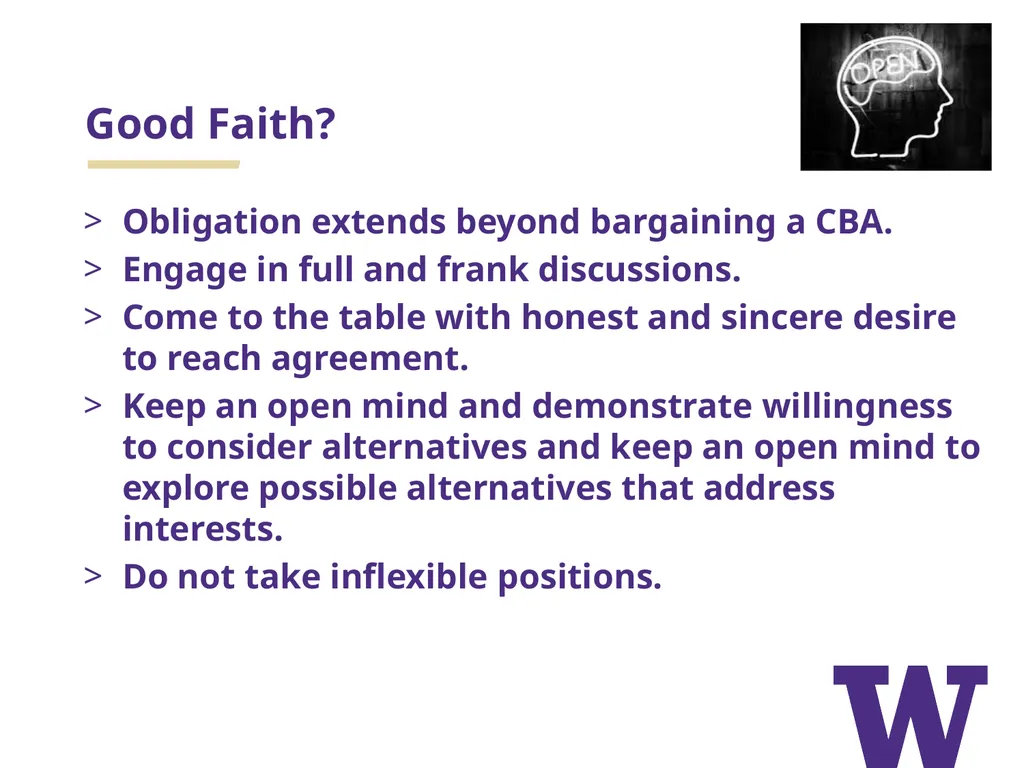
slide9. Obligation extends beyond bargaining a CBA.
Engage in full and frank discussions.
Come to the table with honest and sincere desire to reach agreement.
Keep an open mind and demonstrate willingness to consider alternatives and keep an open mind to explore possible alternatives that address interests.
Do not take inflexible positions. Good Faith?<br>
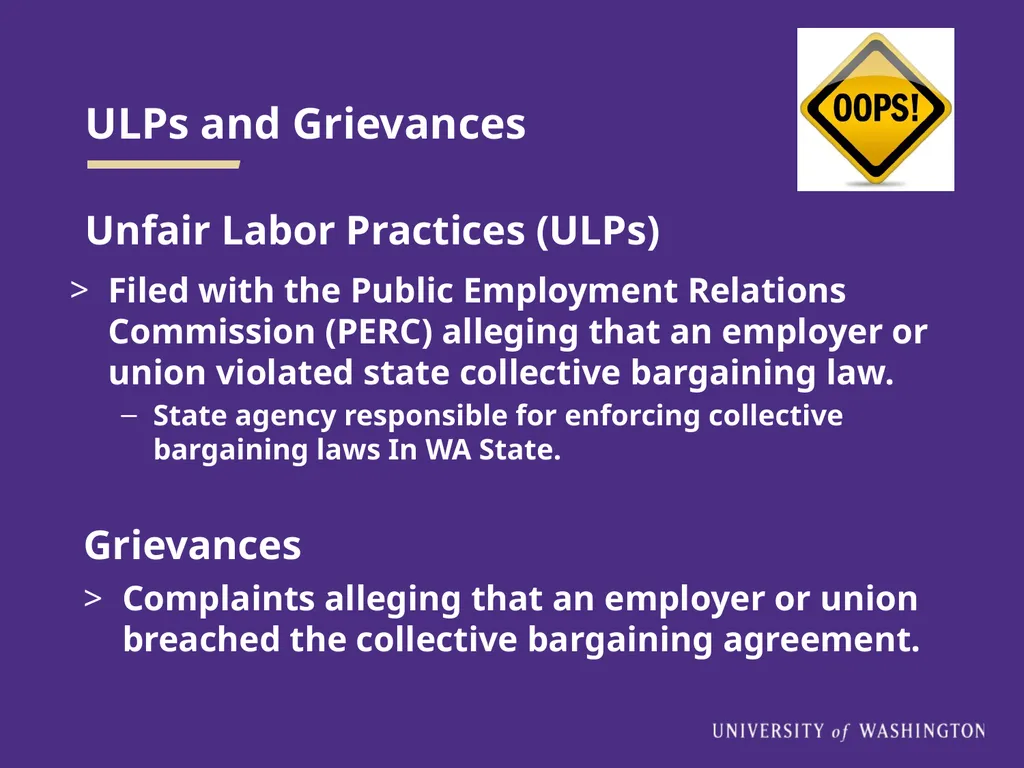
slide10. Filed with the Public Employment Relations Commission (PERC) alleging that an employer or union violated state collective bargaining law.
State agency responsible for enforcing collective bargaining laws In WA State. Unfair Labor Practices (ULPs) ULPs and Grievances Grievances Complaints alleging that an employer or union breached the collective bargaining agreement.<br>
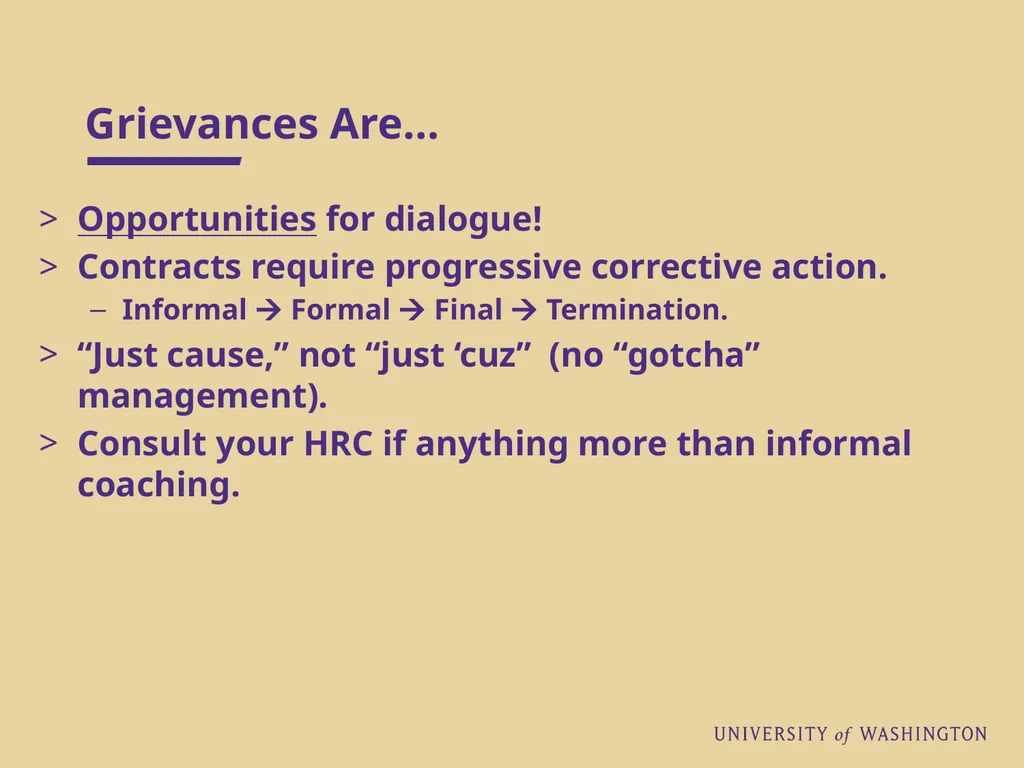
slide11. Opportunities for dialogue!
Contracts require progressive corrective action.
Informal Formal Final Termination.
“Just cause,” not “just ‘cuz” (no “gotcha” management).
Consult your HRC if anything more than informal coaching. Grievances Are…<br>
slide12. The legal answer to a dispute.
Rarely any bright line rules – lots of grey area
Fact specific analysis.
- Parties will present facts at a hearing.
Puts parties’ dispute in the hands of PERC.
Can be harmful to overall relationship. ULPs<br>
slide13. Employer is liable for actions taken by its managers or supervisors.
Persons in supervisory roles should understand employees’ rights.
Higher level management doesn’t have to sanction a lower level manager’s actions for the University to violate the labor laws. Liability for ULPs<br>
slide14. Interference
Weingarten violations
Discrimination
Refusal to bargain
Skimming
Contracting out Types of ULPs<br>
slide15. Analyzed based on how a typical employee would perceive the action.
Can be a statement, written communication, or action.
Intent to interfere not required. When an employee could reasonably perceive an employer or Union action as a threat of reprisal or force, or a promise of benefit, associated with the Union activity of an employee. Interference<br>
slide16. Supervisor suggesting they will give a bad job reference if an employee files a grievance on an issue.
Refusing to allow a union bulletin board to post union information OR refusing to allow union fliers in employees’ personal space if other things are allowed to be posted in that same space.
Refusing to allow an employee union representation at an investigatory interview the employee reasonably believes may result in discipline. Interference Examples<br>
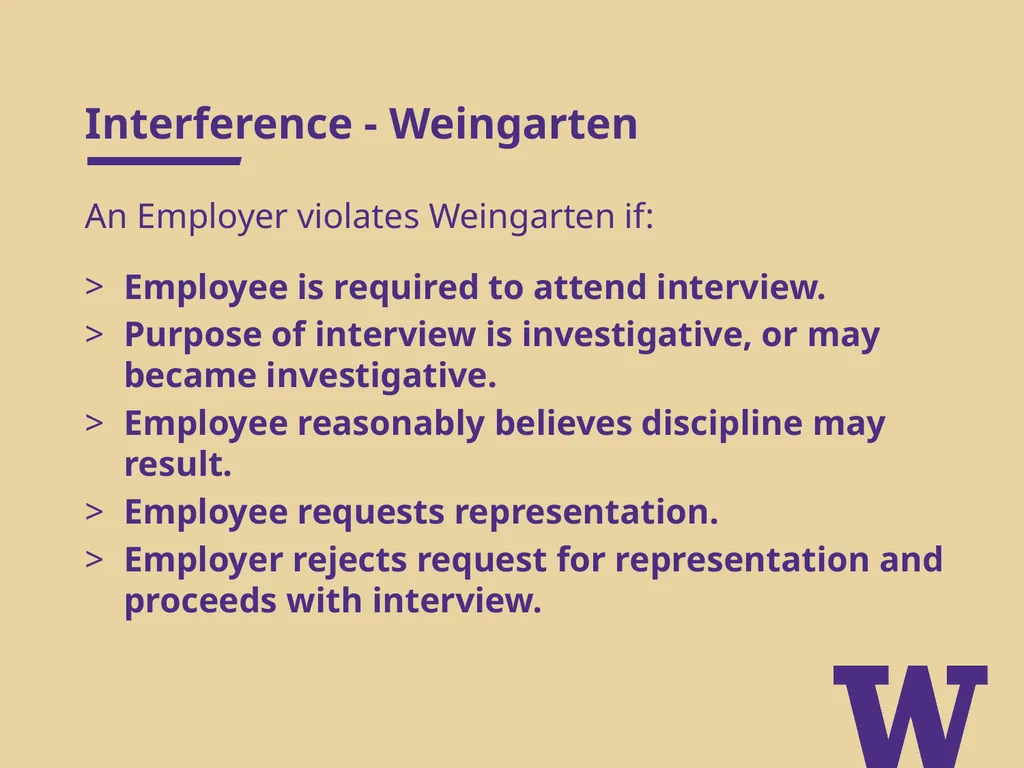
slide17. Employee is required to attend interview.
Purpose of interview is investigative, or may became investigative.
Employee reasonably believes discipline may result.
Employee requests representation.
Employer rejects request for representation and proceeds with interview. An Employer violates Weingarten if: Interference - Weingarten<br>
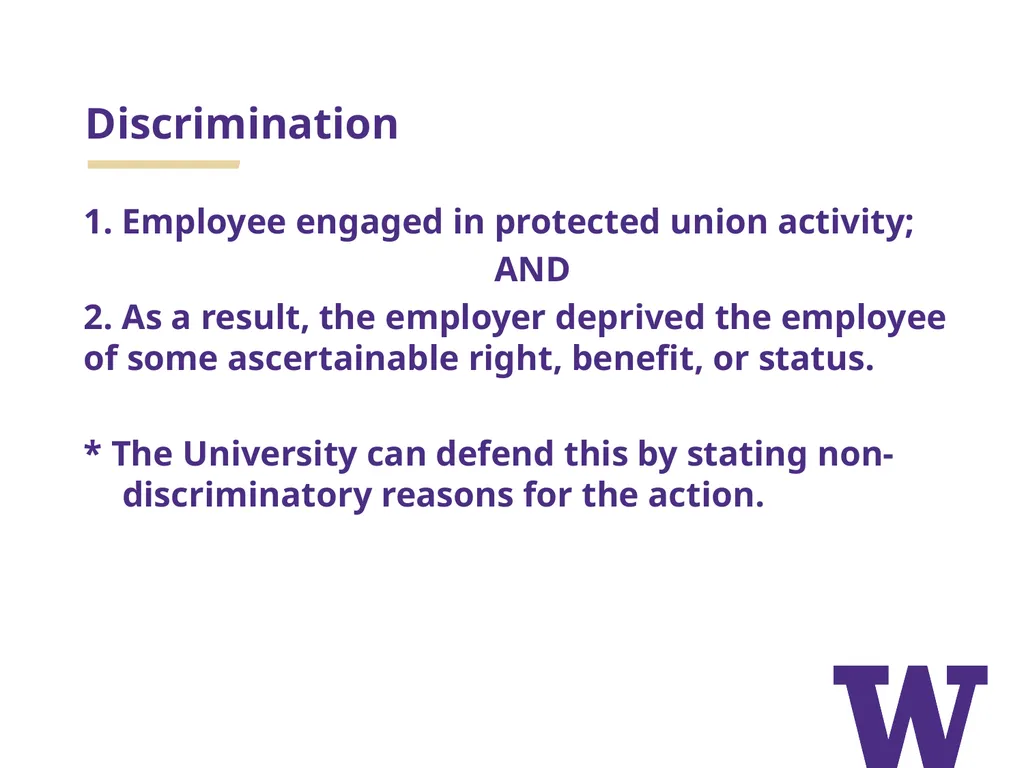
slide18. 1. Employee engaged in protected union activity;
AND
2. As a result, the employer deprived the employee of some ascertainable right, benefit, or status.
* The University can defend this by stating non-discriminatory reasons for the action. Discrimination<br>
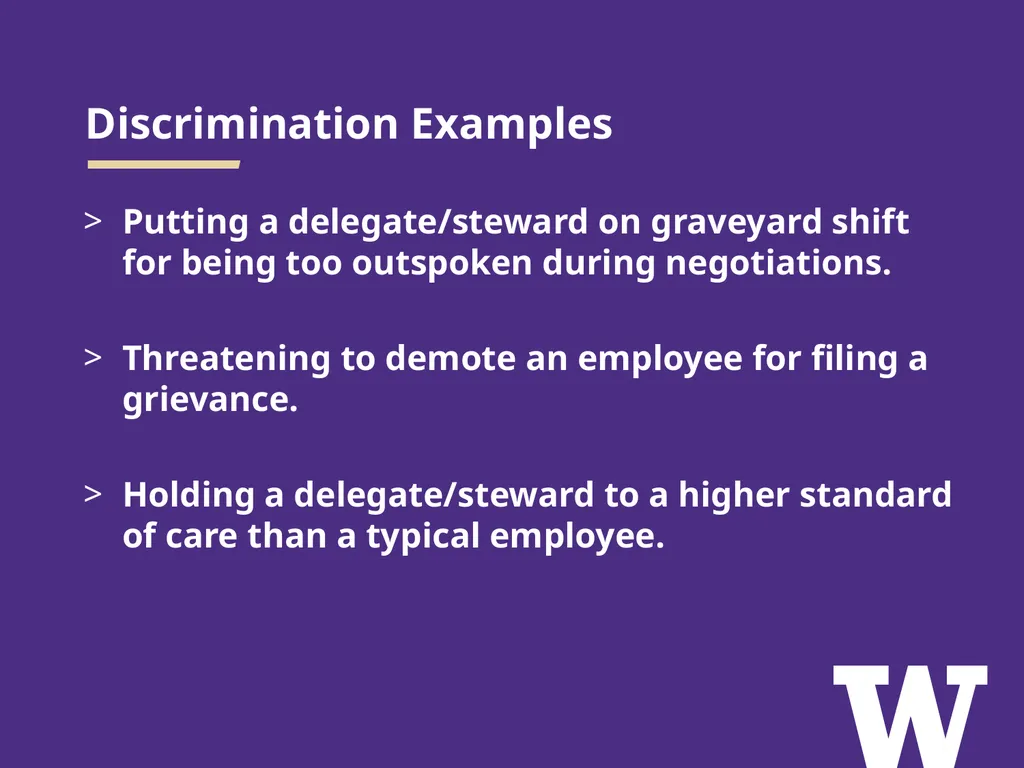
slide19. Putting a delegate/steward on graveyard shift for being too outspoken during negotiations.
Threatening to demote an employee for filing a grievance.
Holding a delegate/steward to a higher standard of care than a typical employee. Discrimination Examples<br>
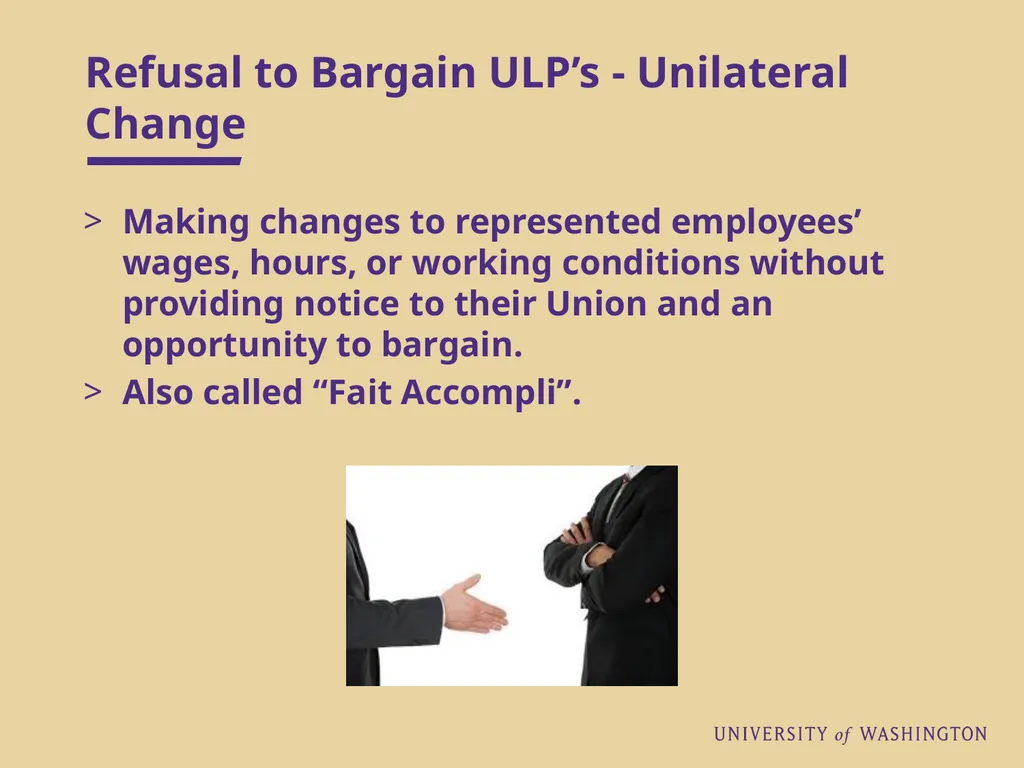
slide20. Making changes to represented employees’ wages, hours, or working conditions without providing notice to their Union and an opportunity to bargain.
Also called “Fait Accompli”. Refusal to Bargain ULP’s - Unilateral Change<br>
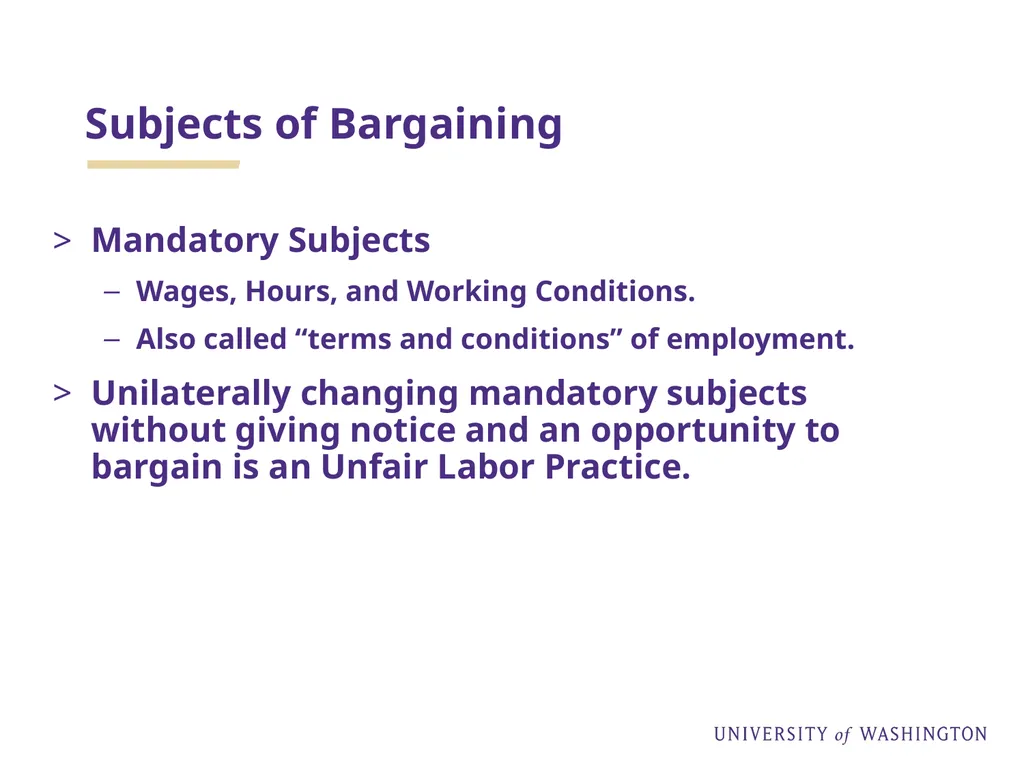
slide21. Mandatory Subjects
Wages, Hours, and Working Conditions.
Also called “terms and conditions” of employment.
Unilaterally changing mandatory subjects without giving notice and an opportunity to bargain is an Unfair Labor Practice. Subjects of Bargaining<br>
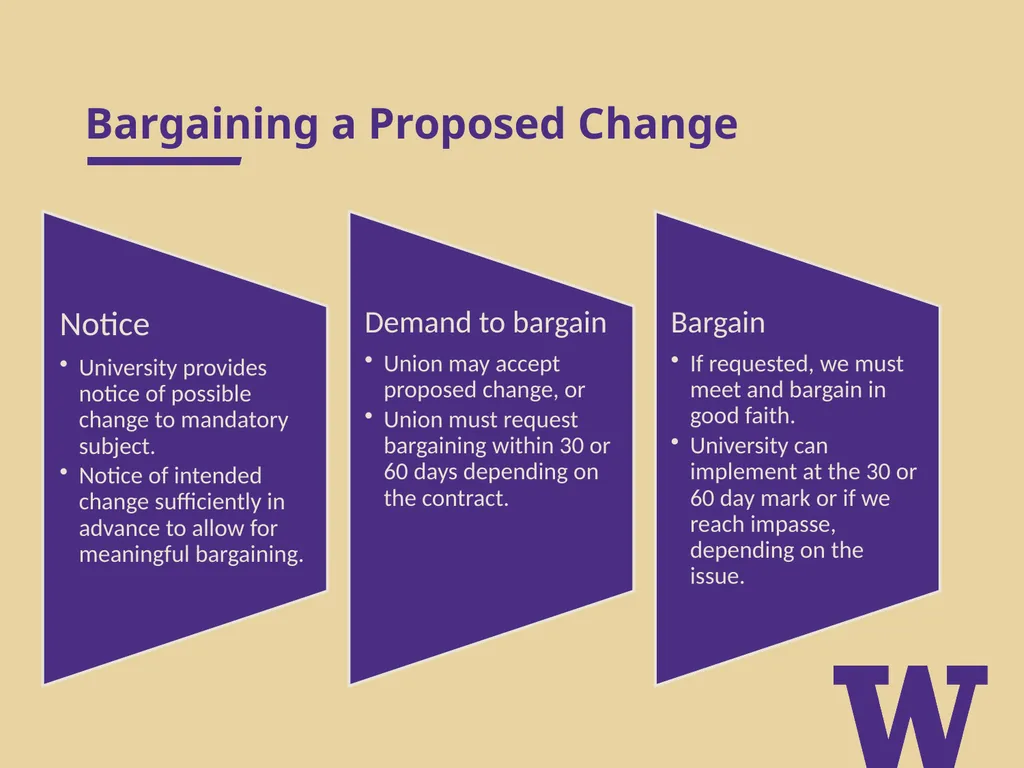
slide22. Bargaining a Proposed Change<br>
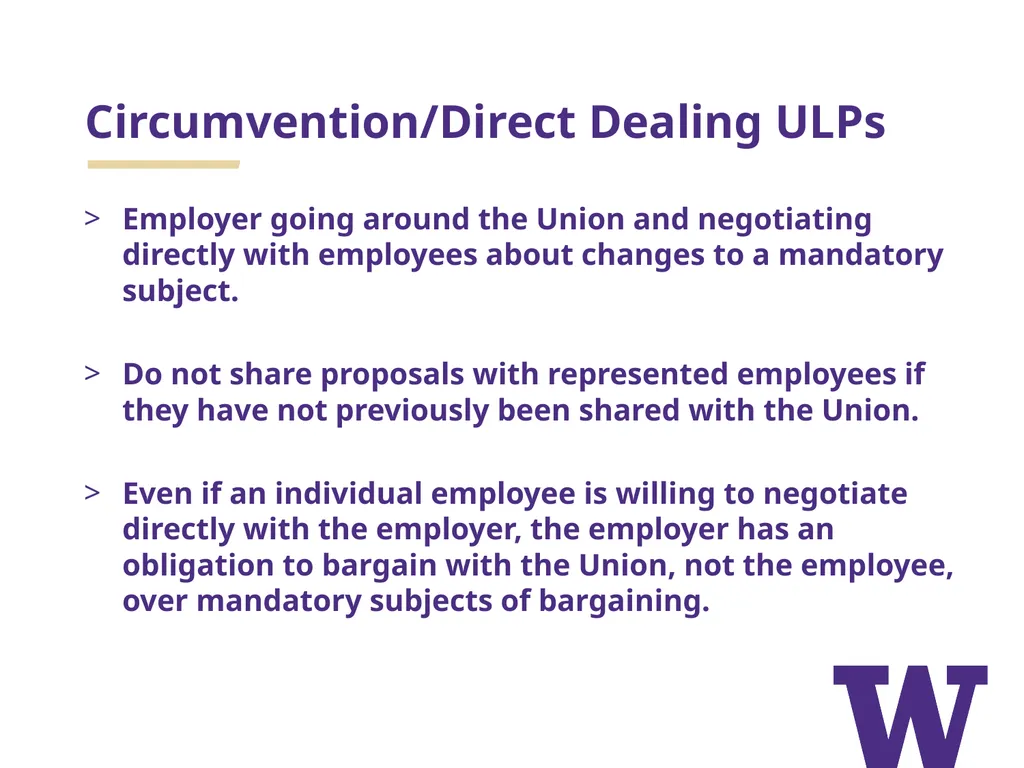
slide23. Employer going around the Union and negotiating directly with employees about changes to a mandatory subject.
Do not share proposals with represented employees if they have not previously been shared with the Union.
Even if an individual employee is willing to negotiate directly with the employer, the employer has an obligation to bargain with the Union, not the employee, over mandatory subjects of bargaining. Circumvention/Direct Dealing ULPs<br>
slide24. Applies to Unions and Employers.
Right to request and obtain information relevant to contract negotiations or representation of their members (i.e., grievance processing).
Important to respond promptly.
Failure/refusal to provide information is a type of refusal to bargain ULP. Information Request ULPs<br>
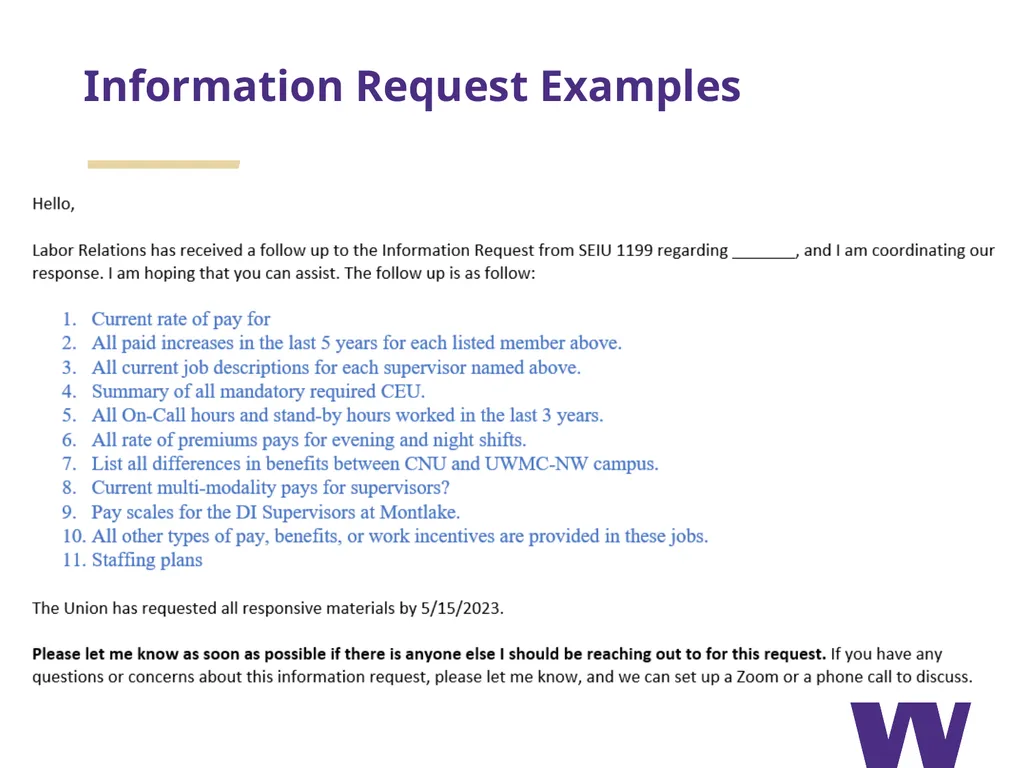
slide25. Information Request Examples<br>
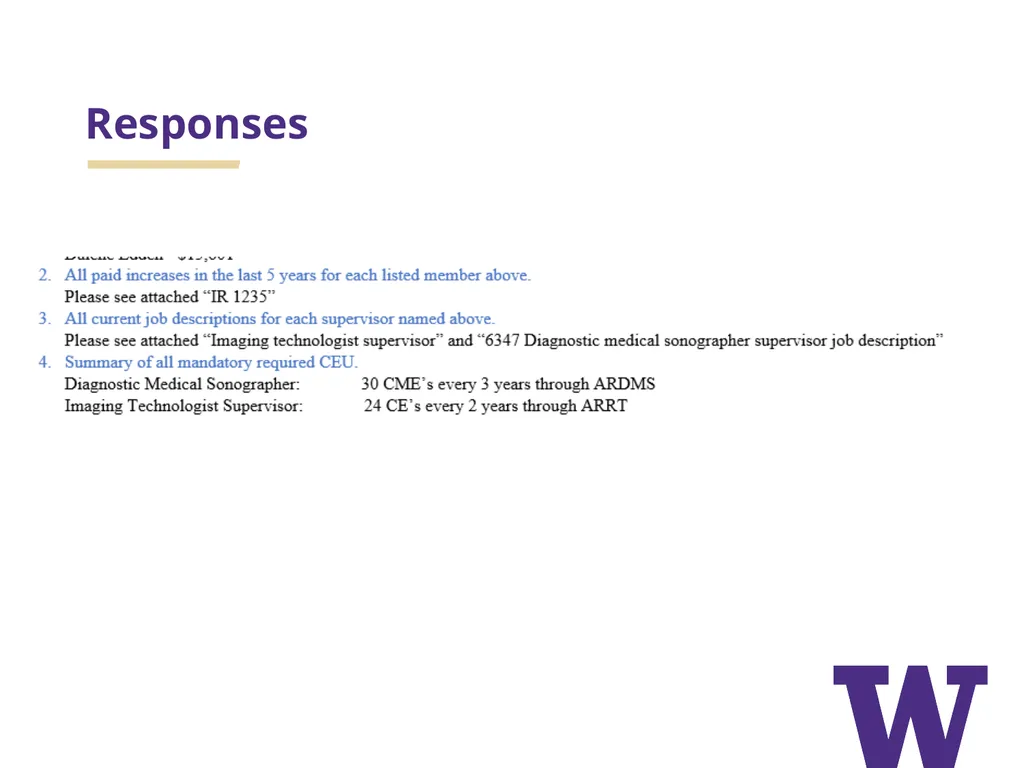
slide26. Responses<br>
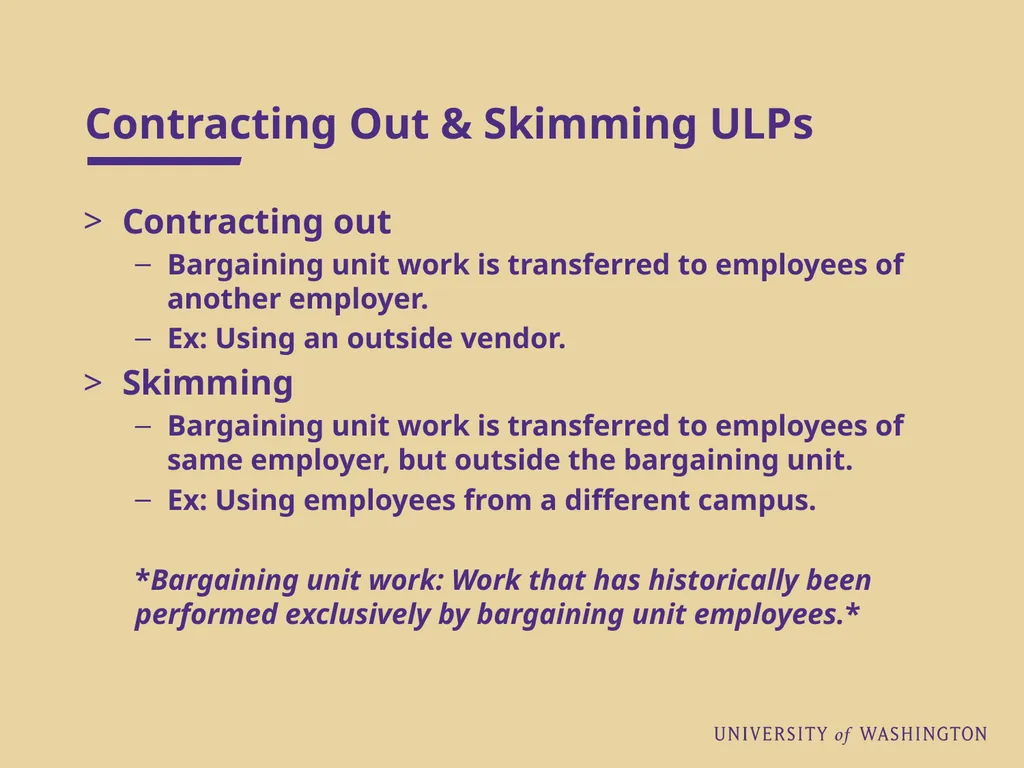
slide27. Contracting out
Bargaining unit work is transferred to employees of another employer.
Ex: Using an outside vendor.
Skimming
Bargaining unit work is transferred to employees of same employer, but outside the bargaining unit.
Ex: Using employees from a different campus.
*Bargaining unit work: Work that has historically been performed exclusively by bargaining unit employees.* Contracting Out & Skimming ULPs<br>
slide28. Communication, Communication, Communication!
Understand collective bargaining obligations.
Remember Good Faith.
Demonstrate honesty and own mistakes.
Show respect.
Seek advice from your HRC or LR. Ways to Prevent ULPs<br>
slide29. Questions? Contact Info -- Labor Relations Office:
laborrel@uw.edu
206-543-6236
Website: hr.uw.edu/labor<br>
slide2. By the end of today’s training, you will have learned more about your collective bargaining responsibilities and explored ways to avoid grievances and unfair labor practices. Objective<br>
slide3. By the numbers
30,000 (approx.) union-represented UW employees
19 union contracts
11 unions
6 negotiators
Key roles
Collective bargaining including administration of contract
Grievance and arbitration administration
Strategic advising and training
Contract interpretation Labor Relations<br>
slide4. The Union and Employer negotiate terms and conditions of employment – Collective Bargaining Agreement (CBA).
The union acts as the employees’ representative in issues with the employer. What it Means for Employees to be Represented<br>
slide5. The secret to managing in a Union environment...
Identify how you would communicate, build trust, and maintain relationships with people in normal life.
DO THAT!
BTW, there is no secret... Managing in a Union Environment<br>
slide6. Knowing if your staff are represented by a Union.
Familiarizing yourself with the relevant Collective Bargaining Agreement/s.
Understanding employees' rights under their Collective Bargaining Agreement/s.
Working with your HRC or Labor Relations whenever there is a proposed change to an employee's wages, hours, or working conditions. Managers are responsible for:<br>
slide7. To promote the continued improvement of the relationship between public employers and their employees.
Labor laws are aimed at protecting the process of communication between labor and management, rather than at prescribing particular results.
Governed by RCW 41.56.010
and 41.80.005. Why Collective Bargaining?<br>
slide8. Key elements:
Mutual obligation.
Meet at reasonable times as needed.
Confer and negotiate in good faith – this is critical!
Execute written agreement re: mandatory subjects of bargaining (wages, hours, and working conditions), grievance procedures, etc.
Not compelled to agree or make concessions. A process, focused on communication. What is Collective Bargaining?<br>
slide9. Obligation extends beyond bargaining a CBA.
Engage in full and frank discussions.
Come to the table with honest and sincere desire to reach agreement.
Keep an open mind and demonstrate willingness to consider alternatives and keep an open mind to explore possible alternatives that address interests.
Do not take inflexible positions. Good Faith?<br>
slide10. Filed with the Public Employment Relations Commission (PERC) alleging that an employer or union violated state collective bargaining law.
State agency responsible for enforcing collective bargaining laws In WA State. Unfair Labor Practices (ULPs) ULPs and Grievances Grievances Complaints alleging that an employer or union breached the collective bargaining agreement.<br>
slide11. Opportunities for dialogue!
Contracts require progressive corrective action.
Informal Formal Final Termination.
“Just cause,” not “just ‘cuz” (no “gotcha” management).
Consult your HRC if anything more than informal coaching. Grievances Are…<br>
slide12. The legal answer to a dispute.
Rarely any bright line rules – lots of grey area
Fact specific analysis.
- Parties will present facts at a hearing.
Puts parties’ dispute in the hands of PERC.
Can be harmful to overall relationship. ULPs<br>
slide13. Employer is liable for actions taken by its managers or supervisors.
Persons in supervisory roles should understand employees’ rights.
Higher level management doesn’t have to sanction a lower level manager’s actions for the University to violate the labor laws. Liability for ULPs<br>
slide14. Interference
Weingarten violations
Discrimination
Refusal to bargain
Skimming
Contracting out Types of ULPs<br>
slide15. Analyzed based on how a typical employee would perceive the action.
Can be a statement, written communication, or action.
Intent to interfere not required. When an employee could reasonably perceive an employer or Union action as a threat of reprisal or force, or a promise of benefit, associated with the Union activity of an employee. Interference<br>
slide16. Supervisor suggesting they will give a bad job reference if an employee files a grievance on an issue.
Refusing to allow a union bulletin board to post union information OR refusing to allow union fliers in employees’ personal space if other things are allowed to be posted in that same space.
Refusing to allow an employee union representation at an investigatory interview the employee reasonably believes may result in discipline. Interference Examples<br>
slide17. Employee is required to attend interview.
Purpose of interview is investigative, or may became investigative.
Employee reasonably believes discipline may result.
Employee requests representation.
Employer rejects request for representation and proceeds with interview. An Employer violates Weingarten if: Interference - Weingarten<br>
slide18. 1. Employee engaged in protected union activity;
AND
2. As a result, the employer deprived the employee of some ascertainable right, benefit, or status.
* The University can defend this by stating non-discriminatory reasons for the action. Discrimination<br>
slide19. Putting a delegate/steward on graveyard shift for being too outspoken during negotiations.
Threatening to demote an employee for filing a grievance.
Holding a delegate/steward to a higher standard of care than a typical employee. Discrimination Examples<br>
slide20. Making changes to represented employees’ wages, hours, or working conditions without providing notice to their Union and an opportunity to bargain.
Also called “Fait Accompli”. Refusal to Bargain ULP’s - Unilateral Change<br>
slide21. Mandatory Subjects
Wages, Hours, and Working Conditions.
Also called “terms and conditions” of employment.
Unilaterally changing mandatory subjects without giving notice and an opportunity to bargain is an Unfair Labor Practice. Subjects of Bargaining<br>
slide22. Bargaining a Proposed Change<br>
slide23. Employer going around the Union and negotiating directly with employees about changes to a mandatory subject.
Do not share proposals with represented employees if they have not previously been shared with the Union.
Even if an individual employee is willing to negotiate directly with the employer, the employer has an obligation to bargain with the Union, not the employee, over mandatory subjects of bargaining. Circumvention/Direct Dealing ULPs<br>
slide24. Applies to Unions and Employers.
Right to request and obtain information relevant to contract negotiations or representation of their members (i.e., grievance processing).
Important to respond promptly.
Failure/refusal to provide information is a type of refusal to bargain ULP. Information Request ULPs<br>
slide25. Information Request Examples<br>
slide26. Responses<br>
slide27. Contracting out
Bargaining unit work is transferred to employees of another employer.
Ex: Using an outside vendor.
Skimming
Bargaining unit work is transferred to employees of same employer, but outside the bargaining unit.
Ex: Using employees from a different campus.
*Bargaining unit work: Work that has historically been performed exclusively by bargaining unit employees.* Contracting Out & Skimming ULPs<br>
slide28. Communication, Communication, Communication!
Understand collective bargaining obligations.
Remember Good Faith.
Demonstrate honesty and own mistakes.
Show respect.
Seek advice from your HRC or LR. Ways to Prevent ULPs<br>
slide29. Questions? Contact Info -- Labor Relations Office:
laborrel@uw.edu
206-543-6236
Website: hr.uw.edu/labor<br>