Learn About Renewable Energy 2022 Climate Superstars Task 6 Learning Objectives After completing this task, you will be able to Explain the difference between renewable and non-renewable energy sources. State the main benefit of renewable
"Learn About Renewable Energy 2022 Climate" is the property of its rightful owner. Permission is granted to
download and print the materials on this website for personal, non-commercial use only, and to display it
on your personal computer provided you do not modify the materials and that you retain all copyright
notices contained in the materials. By downloading content from our website, you accept the terms of this
agreement.
Presentation Transcript
01
Learn About Renewable Energy 2022 Climate Superstars Task #6<br>
02
Learning Objectives After completing this task, you will be able to…
Explain the difference between renewable and non-renewable energy sources.
State the main benefit of renewable energy.
Explain why there are different mixes of renewables used in generating electricity based on location.<br>
03
Vocabulary Biomass – is burned directly in steam-electric power plants, or it can be converted to a gas that can be burned in steam generators, gas turbines, or internal combustion engine generators
Geothermal – uses steam turbines connected to a generator
Hydropower – uses flowing water to spin a turbine connected to a generator
Solar – two types: photovoltaic (PV) and solar-thermal power; PV conversion produces electricity directly from sunlight, a solar-thermal power system uses steam turbines connected to a generator
Wind – uses moving air to spin a turbine connected to a generator<br>
04
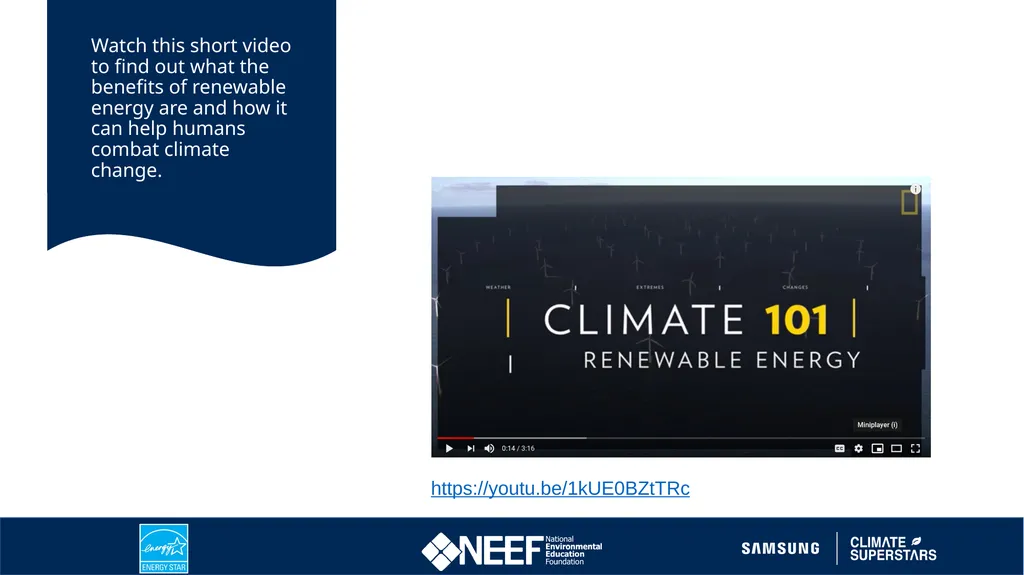
Watch this short video to find out what the benefits of renewable energy are and how it can help humans combat climate change. https://youtu.be/1kUE0BZtTRc<br>
05
Benefits of Renewable Energy Sources Wind, waves, tides, sunlight, geothermal heat, and biomass are sources of energy that are replenished without human intervention and on a human timescale. That is why energy derived from these sources is called renewable. Renewables can replace conventional fuels such as oil, coal, and natural gas in electricity generation, heating, transportation, and off-grid energy services.
Renewable energy sources play an important role in reducing greenhouse gas emissions. Using renewable energy to generate electricity can reduce the use of fossil fuels, a major source of greenhouse gas emissions.
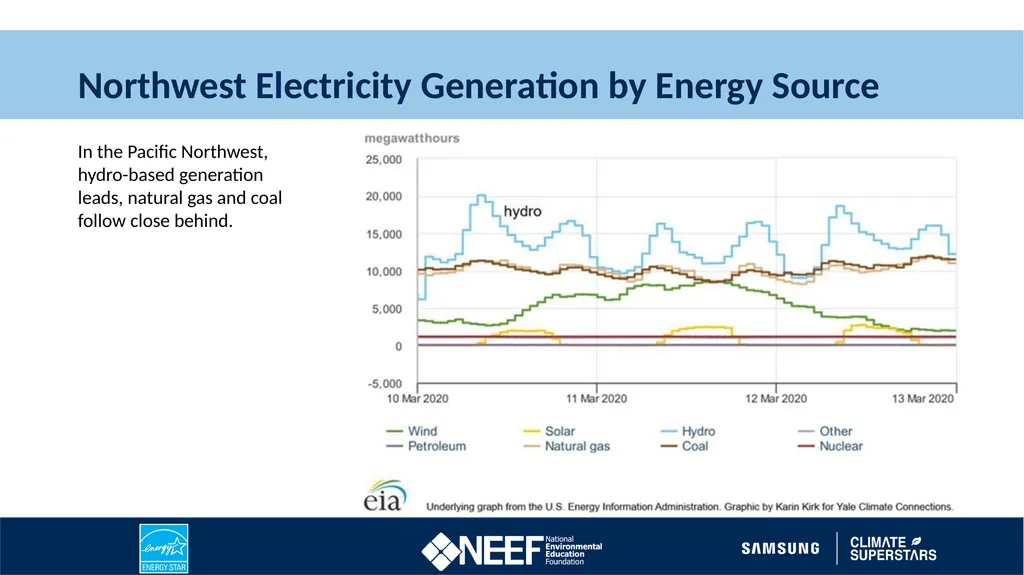
Use the following graphs to discover the mix of energy sources used to generate electricity in different regions of the country.<br>
06
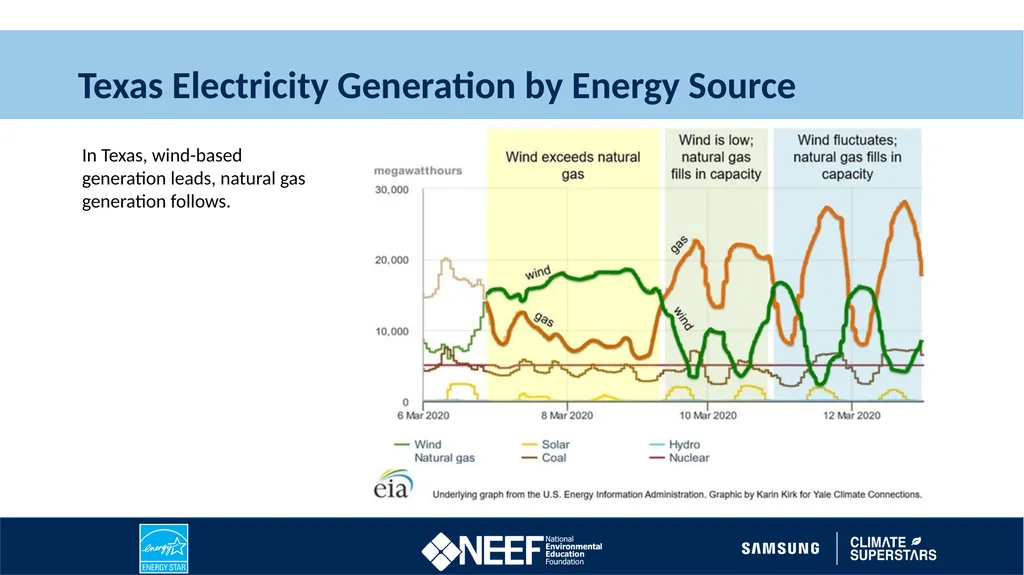
In Texas, wind-based generation leads, natural gas generation follows. Texas Electricity Generation by Energy Source<br>
07
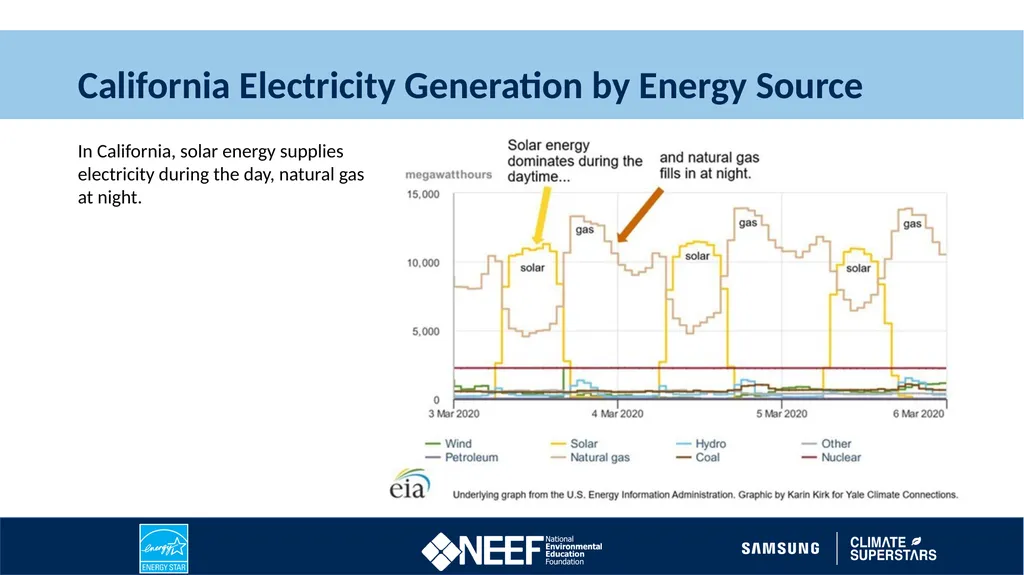
In California, solar energy supplies electricity during the day, natural gas at night. California Electricity Generation by Energy Source<br>
08
In the Pacific Northwest, hydro-based generation leads, natural gas and coal follow close behind. Northwest Electricity Generation by Energy Source<br>
09
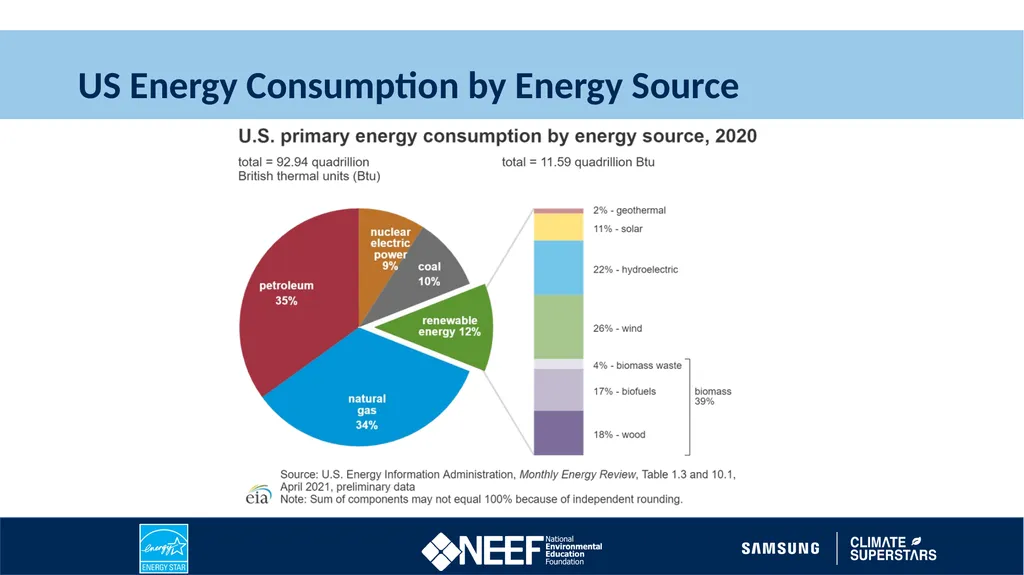
US Energy Consumption by Energy Source<br>
10
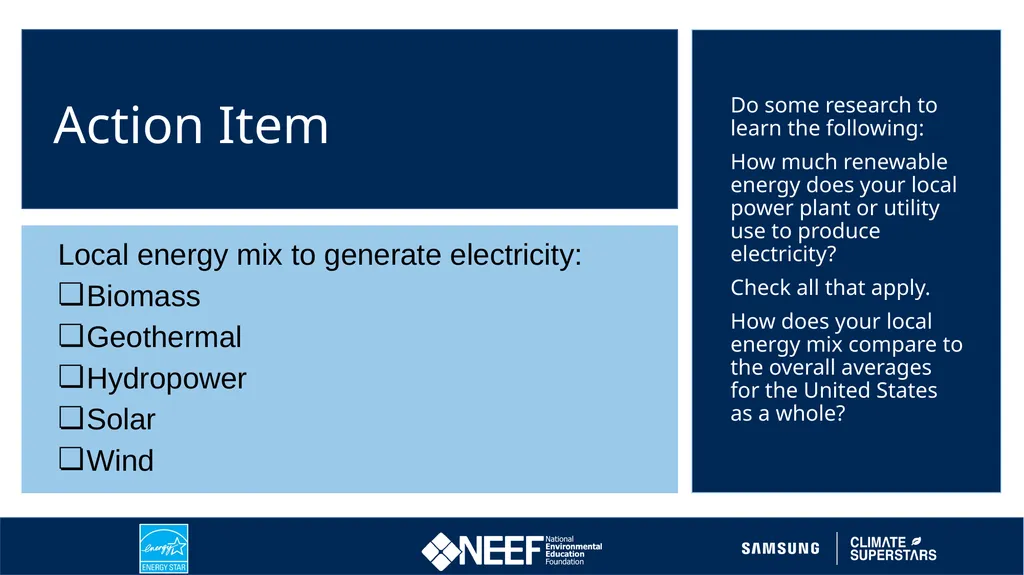
Action Item Do some research to learn the following:
How much renewable energy does your local power plant or utility use to produce electricity?
Check all that apply.
How does your local energy mix compare to the overall averages for the United States as a whole? Local energy mix to generate electricity:
Biomass
Geothermal
Hydropower
Solar
Wind<br>