
Learning Forum: Bereavement What we will cover:




Description: Learning Forum: Bereavement What we will cover: The 7 stages of grief Talking and supporting those going through grief Understanding empathy What might help Sources of support What is grief ? How clients may feel after a sudden bereavement
Related Topics
Download Presentation
"Learning Forum: Bereavement What we will cover:" is the property of its rightful owner. Permission is granted to download and print the materials on this website for personal, non-commercial use only, and to display it on your personal computer provided you do not modify the materials and that you retain all copyright notices contained in the materials. By downloading content from our website, you accept the terms of this agreement.
Presentation Transcript
slide1. Learning Forum:
Bereavement<br>
slide2. What we will cover: The 7 stages of grief
Talking and supporting those going through grief
Understanding empathy
What might help
Sources of support<br>
slide3. What is grief ?<br>
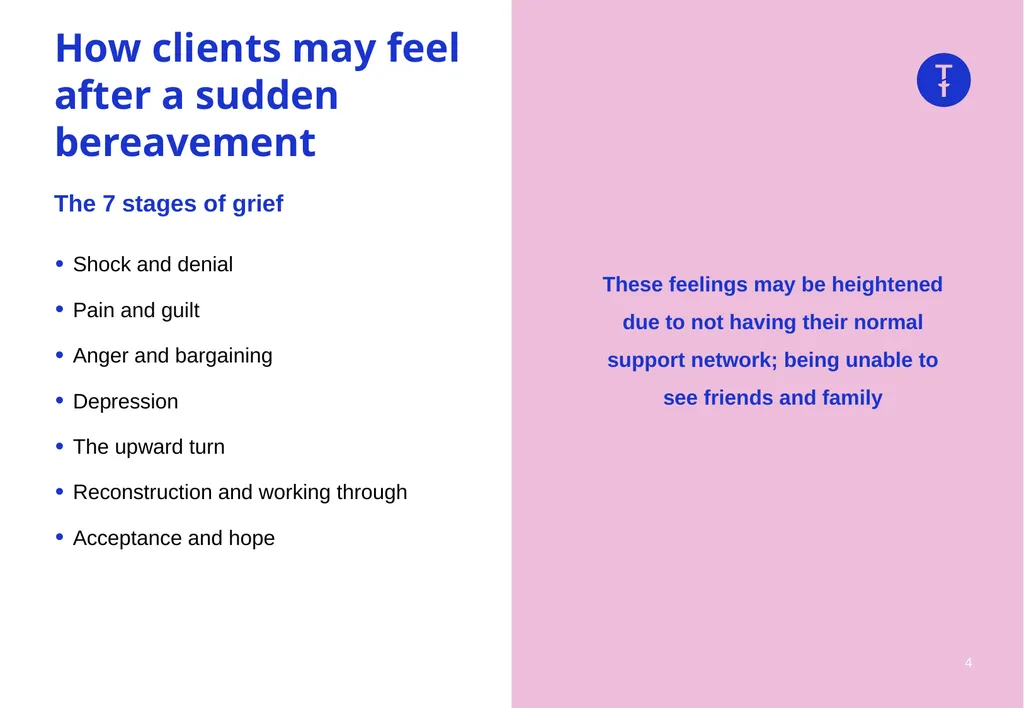
slide4. How clients may feel after a sudden bereavement The 7 stages of grief Shock and denial
Pain and guilt
Anger and bargaining
Depression
The upward turn
Reconstruction and working through
Acceptance and hope These feelings may be heightened due to not having their normal support network; being unable to see friends and family<br>
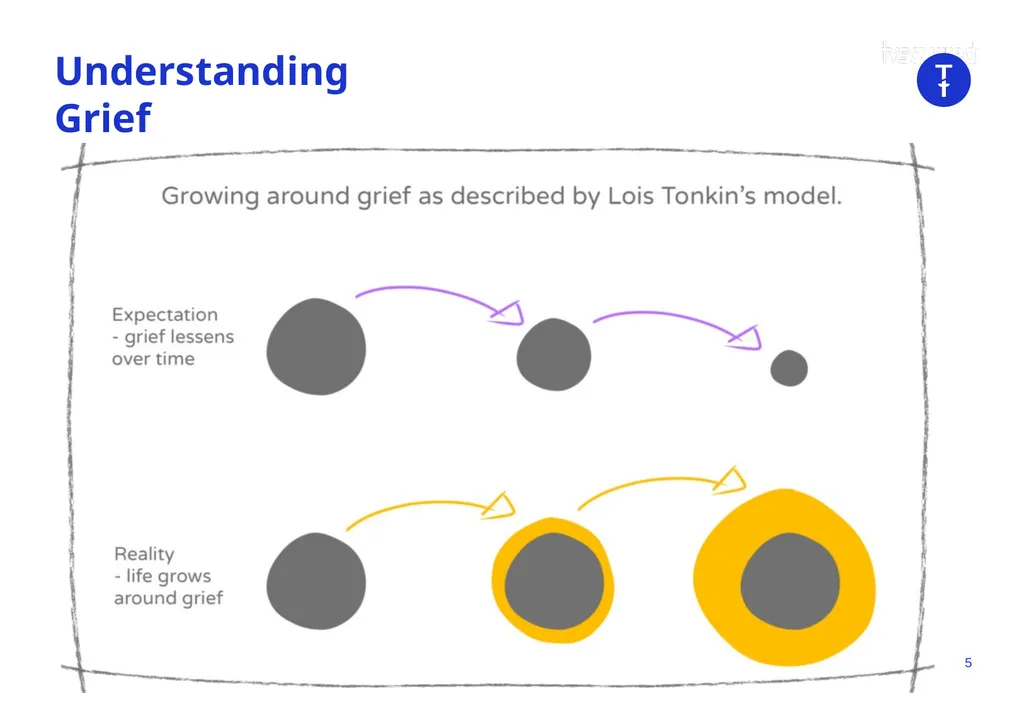
slide5. Understanding Grief<br>
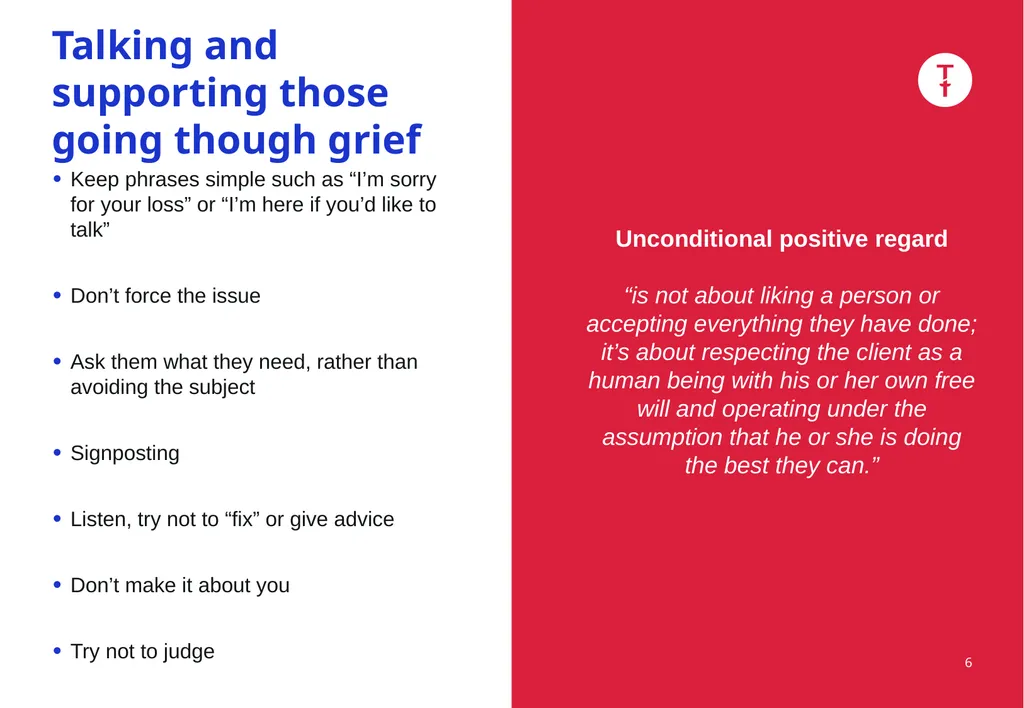
slide6. Talking and supporting those going though grief Keep phrases simple such as “I’m sorry for your loss” or “I’m here if you’d like to talk”
Don’t force the issue
Ask them what they need, rather than avoiding the subject
Signposting
Listen, try not to “fix” or give advice
Don’t make it about you
Try not to judge Unconditional positive regard
“is not about liking a person or accepting everything they have done; it’s about respecting the client as a human being with his or her own free will and operating under the assumption that he or she is doing the best they can.”<br>
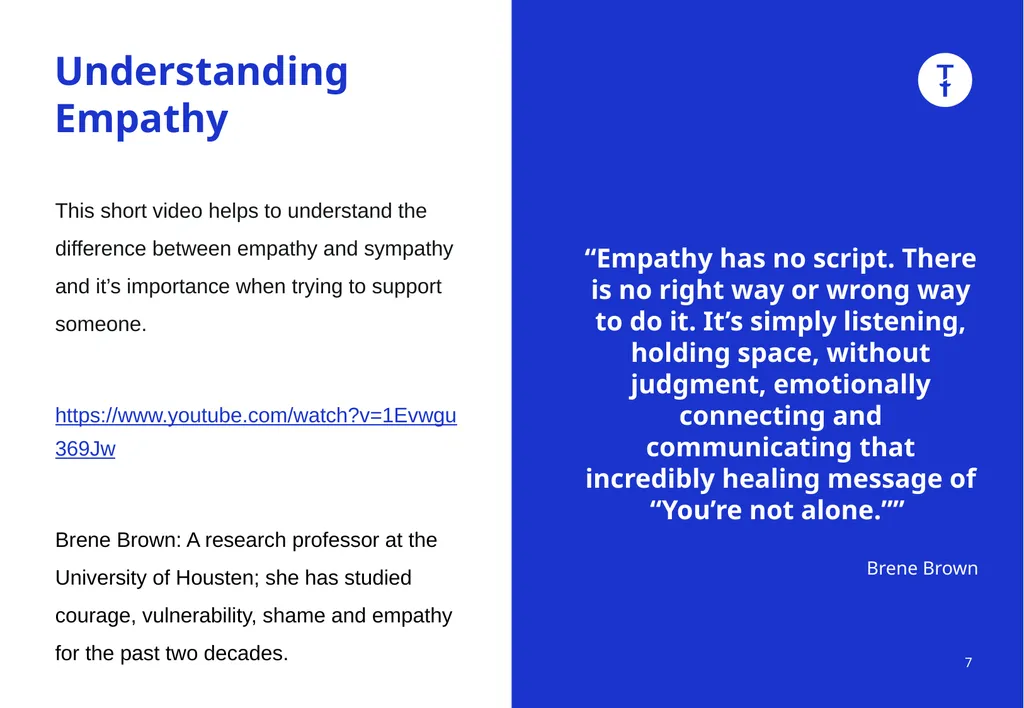
slide7. Understanding Empathy This short video helps to understand the difference between empathy and sympathy and it’s importance when trying to support someone.
https://www.youtube.com/watch?v=1Evwgu369Jw
Brene Brown: A research professor at the University of Housten; she has studied courage, vulnerability, shame and empathy for the past two decades. “Empathy has no script. There is no right way or wrong way to do it. It’s simply listening, holding space, without judgment, emotionally connecting and communicating that incredibly healing message of “You’re not alone.””
Brene Brown<br>
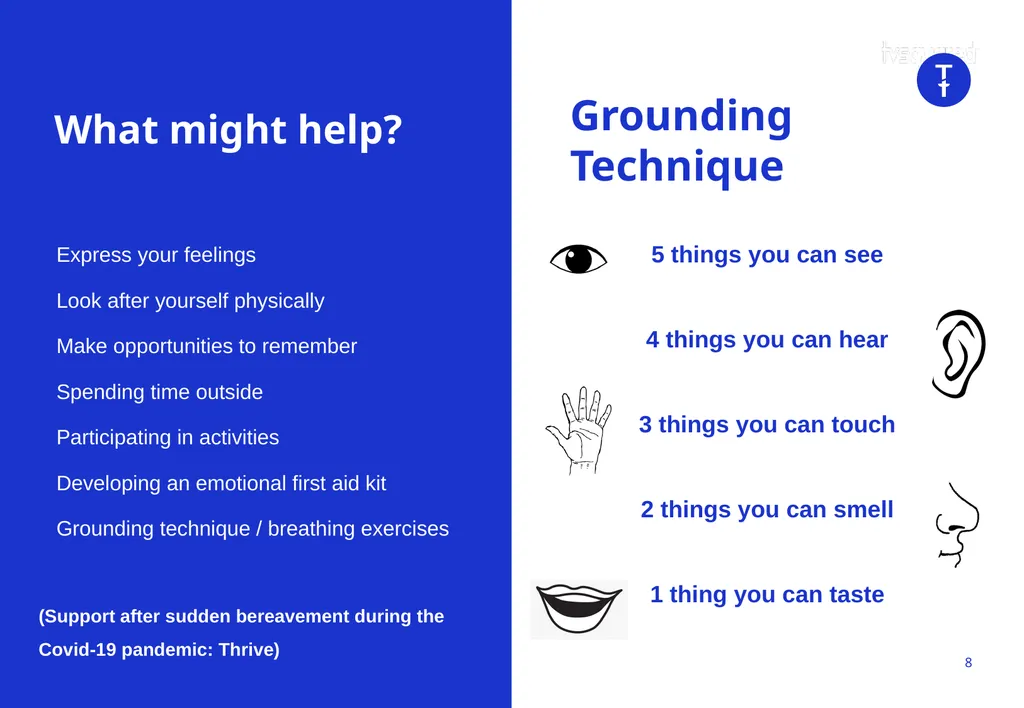
slide8. What might help? Express your feelings
Look after yourself physically
Make opportunities to remember
Spending time outside
Participating in activities
Developing an emotional first aid kit
Grounding technique / breathing exercises
(Support after sudden bereavement during the Covid-19 pandemic: Thrive) 5 things you can see
4 things you can hear
3 things you can touch
2 things you can smell
1 thing you can taste Grounding Technique<br>
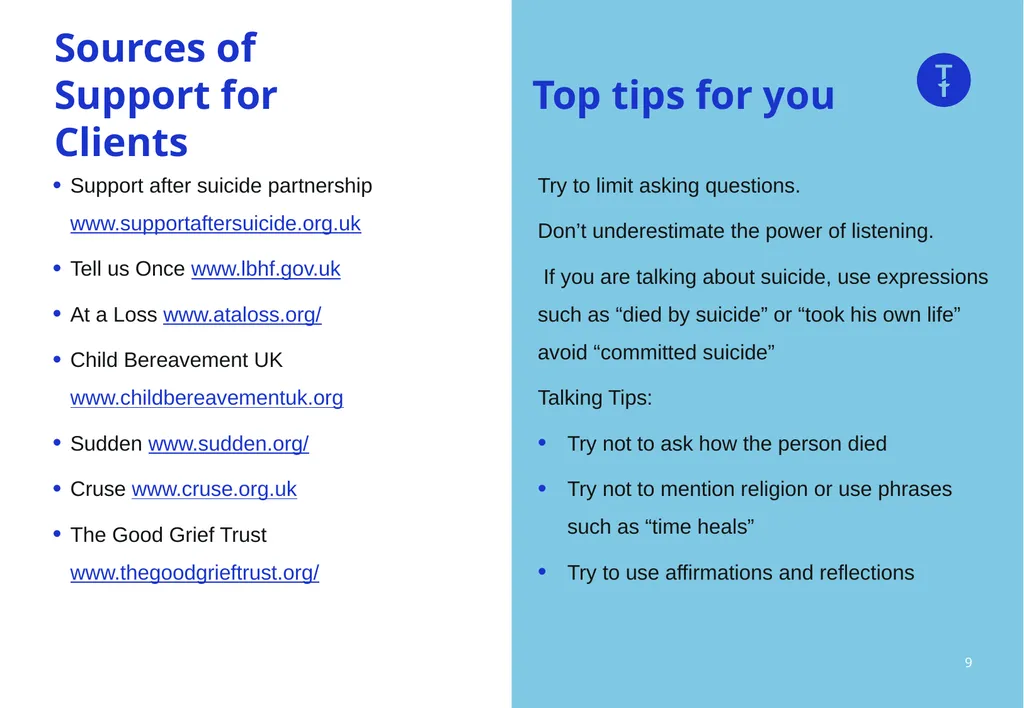
slide9. Sources of Support for Clients Support after suicide partnership www.supportaftersuicide.org.uk
Tell us Once www.lbhf.gov.uk
At a Loss www.ataloss.org/
Child Bereavement UK www.childbereavementuk.org
Sudden www.sudden.org/
Cruse www.cruse.org.uk
The Good Grief Trust www.thegoodgrieftrust.org/ Top tips for you Try to limit asking questions.
Don’t underestimate the power of listening.
If you are talking about suicide, use expressions such as “died by suicide” or “took his own life” avoid “committed suicide”
Talking Tips:
Try not to ask how the person died
Try not to mention religion or use phrases such as “time heals”
Try to use affirmations and reflections<br>
slide10. Questions?<br>
Bereavement<br>
slide2. What we will cover: The 7 stages of grief
Talking and supporting those going through grief
Understanding empathy
What might help
Sources of support<br>
slide3. What is grief ?<br>
slide4. How clients may feel after a sudden bereavement The 7 stages of grief Shock and denial
Pain and guilt
Anger and bargaining
Depression
The upward turn
Reconstruction and working through
Acceptance and hope These feelings may be heightened due to not having their normal support network; being unable to see friends and family<br>
slide5. Understanding Grief<br>
slide6. Talking and supporting those going though grief Keep phrases simple such as “I’m sorry for your loss” or “I’m here if you’d like to talk”
Don’t force the issue
Ask them what they need, rather than avoiding the subject
Signposting
Listen, try not to “fix” or give advice
Don’t make it about you
Try not to judge Unconditional positive regard
“is not about liking a person or accepting everything they have done; it’s about respecting the client as a human being with his or her own free will and operating under the assumption that he or she is doing the best they can.”<br>
slide7. Understanding Empathy This short video helps to understand the difference between empathy and sympathy and it’s importance when trying to support someone.
https://www.youtube.com/watch?v=1Evwgu369Jw
Brene Brown: A research professor at the University of Housten; she has studied courage, vulnerability, shame and empathy for the past two decades. “Empathy has no script. There is no right way or wrong way to do it. It’s simply listening, holding space, without judgment, emotionally connecting and communicating that incredibly healing message of “You’re not alone.””
Brene Brown<br>
slide8. What might help? Express your feelings
Look after yourself physically
Make opportunities to remember
Spending time outside
Participating in activities
Developing an emotional first aid kit
Grounding technique / breathing exercises
(Support after sudden bereavement during the Covid-19 pandemic: Thrive) 5 things you can see
4 things you can hear
3 things you can touch
2 things you can smell
1 thing you can taste Grounding Technique<br>
slide9. Sources of Support for Clients Support after suicide partnership www.supportaftersuicide.org.uk
Tell us Once www.lbhf.gov.uk
At a Loss www.ataloss.org/
Child Bereavement UK www.childbereavementuk.org
Sudden www.sudden.org/
Cruse www.cruse.org.uk
The Good Grief Trust www.thegoodgrieftrust.org/ Top tips for you Try to limit asking questions.
Don’t underestimate the power of listening.
If you are talking about suicide, use expressions such as “died by suicide” or “took his own life” avoid “committed suicide”
Talking Tips:
Try not to ask how the person died
Try not to mention religion or use phrases such as “time heals”
Try to use affirmations and reflections<br>
slide10. Questions?<br>