
LEARNING LESSONS FROM IMPROVEMENT OF MANAGEMENT OF



Description: LEARNING LESSONS FROM IMPROVEMENT OF MANAGEMENT OF HEALTHCARE ACQUIRED INFECTION GSAS Sponsored Seminar Workshop Professor Charles Egbu PhD University of Salford, UK Qatar National Convention Centre, Doha Qatar 14th June 2014 2 HAI in
Related Topics
Download Presentation
"LEARNING LESSONS FROM IMPROVEMENT OF MANAGEMENT OF" is the property of its rightful owner. Permission is granted to download and print the materials on this website for personal, non-commercial use only, and to display it on your personal computer provided you do not modify the materials and that you retain all copyright notices contained in the materials. By downloading content from our website, you accept the terms of this agreement.
Presentation Transcript
slide1. LEARNING LESSONS FROM IMPROVEMENT OF MANAGEMENT OF HEALTHCARE ACQUIRED INFECTION
GSAS Sponsored Seminar / Workshop Professor Charles Egbu PhD
University of Salford, UK Qatar National Convention Centre, Doha – Qatar
14th June 2014<br>
slide2. 2 HAI in Context
FM in Context
The Role of FM in the Control of HAI
The Role of Knowledge Management and Knowledge Mapping in Controlling HAI
Performance Management and FM in the Control of HAI Structure of Presentation<br>
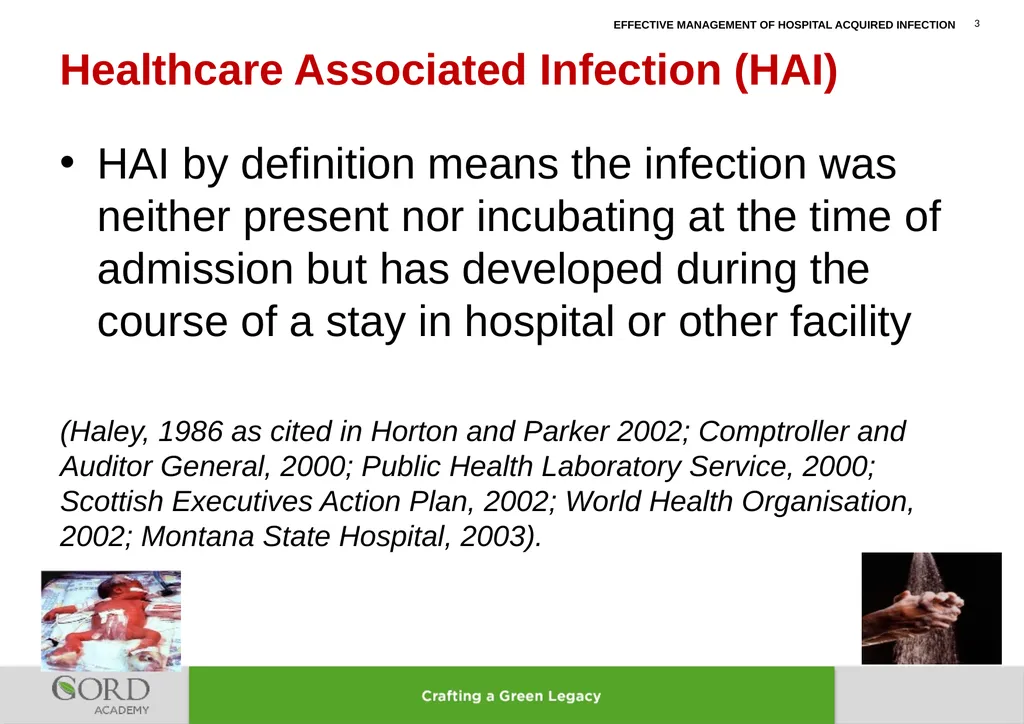
slide3. 3 HAI by definition means the infection was neither present nor incubating at the time of admission but has developed during the course of a stay in hospital or other facility
(Haley, 1986 as cited in Horton and Parker 2002; Comptroller and Auditor General, 2000; Public Health Laboratory Service, 2000; Scottish Executives Action Plan, 2002; World Health Organisation, 2002; Montana State Hospital, 2003). Healthcare Associated Infection (HAI)<br>
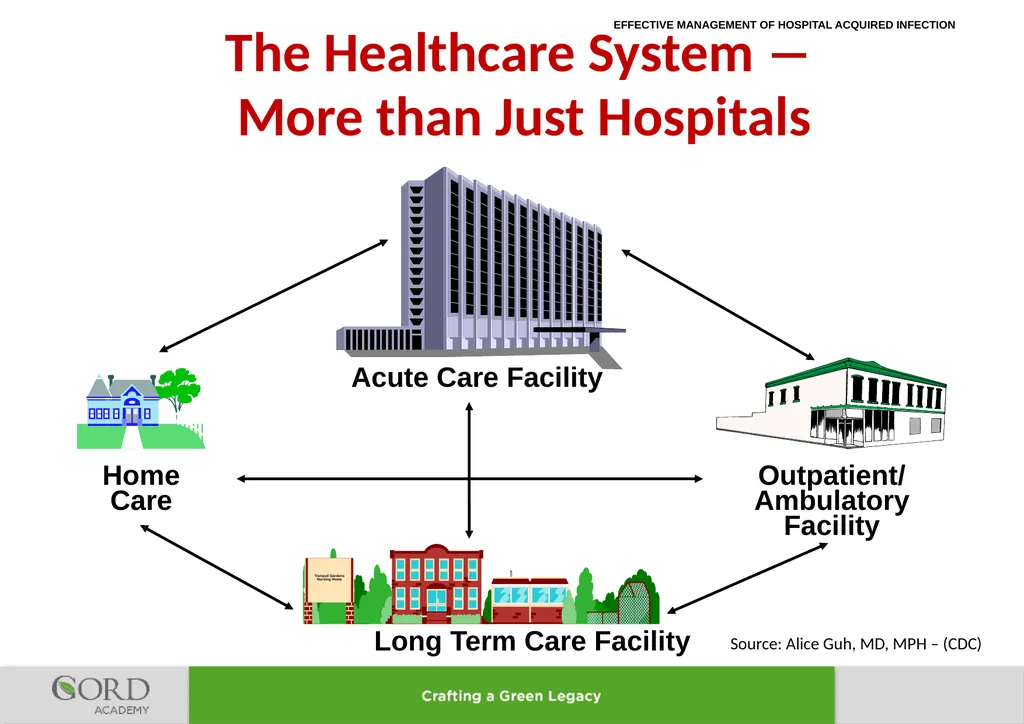
slide4. Home
Care Acute Care Facility Outpatient/
Ambulatory
Facility Long Term Care Facility The Healthcare System More than Just Hospitals Source: Alice Guh, MD, MPH – (CDC)<br>
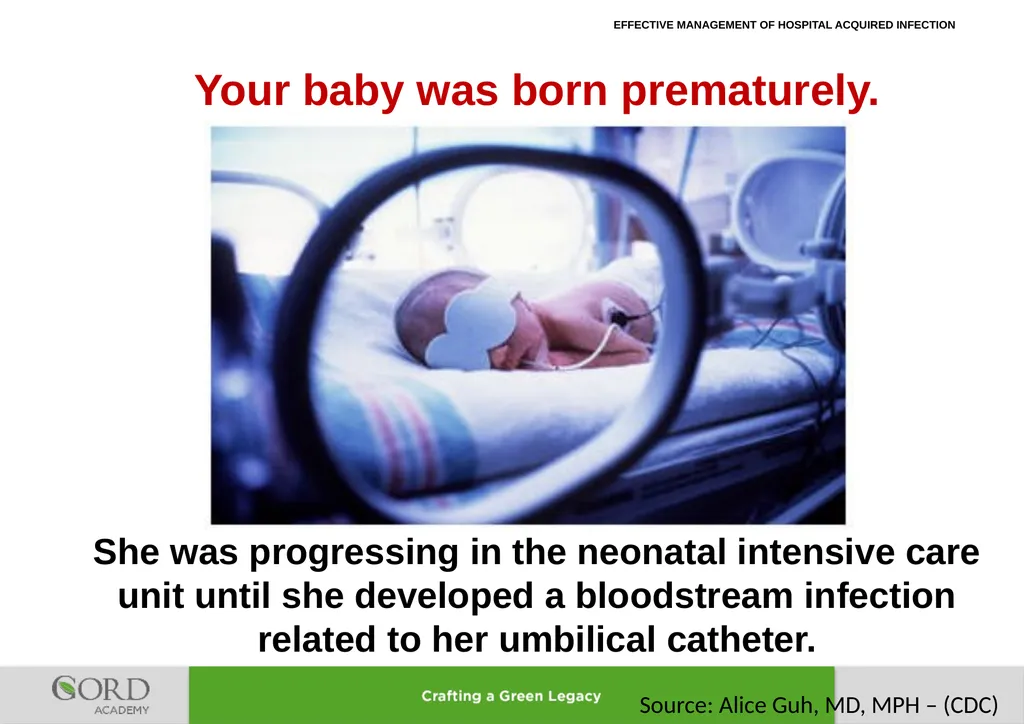
slide5. She was progressing in the neonatal intensive care unit until she developed a bloodstream infection related to her umbilical catheter. Your baby was born prematurely. Source: Alice Guh, MD, MPH – (CDC)<br>
slide6. The surgery goes well but he later dies in a nursing home of a MRSA wound infection that developed after surgery. Your father has open heart surgery. Source: Alice Guh, MD, MPH – (CDC)<br>
slide7. 7 HAI is recognised as presenting a significant problem in terms of quality of care and cost for hospitals, governments and consumers in most countries (Department of Human Services, 1998).
In prevalence surveys of hospital infection in the UK, and other developed countries, the acquired infection rate was approximately 10% (which means approximately 10% of patients in hospitals at any one time have acquired an infection from hospitals).
The control of HAI exists as a major concern, and the high frequency of HAI is seen as evidence of poor quality of health service delivery, which has significant cost implications (WHO, 2002). Healthcare Associated Infection (HAI)<br>
slide8. 8 The costs associated with HAI have medical and economic ramifications. HAI has ramifications for patients and healthcare facilities; and associated costs are exacerbated during an outbreak which also affects patients’ confidence in the service.
The economic consequences include lost bed days and increased work load with some estimates showing that 380,000 bed days per annum are lost to HAIs. This is equivalent to 1000 hospital beds and associated staffing input being wasted in dealing with HAI related delays in discharge.
There is also the social and personal burden that unnecessary illness and complications place upon patients and their families. Healthcare Associated Infection (HAI)<br>
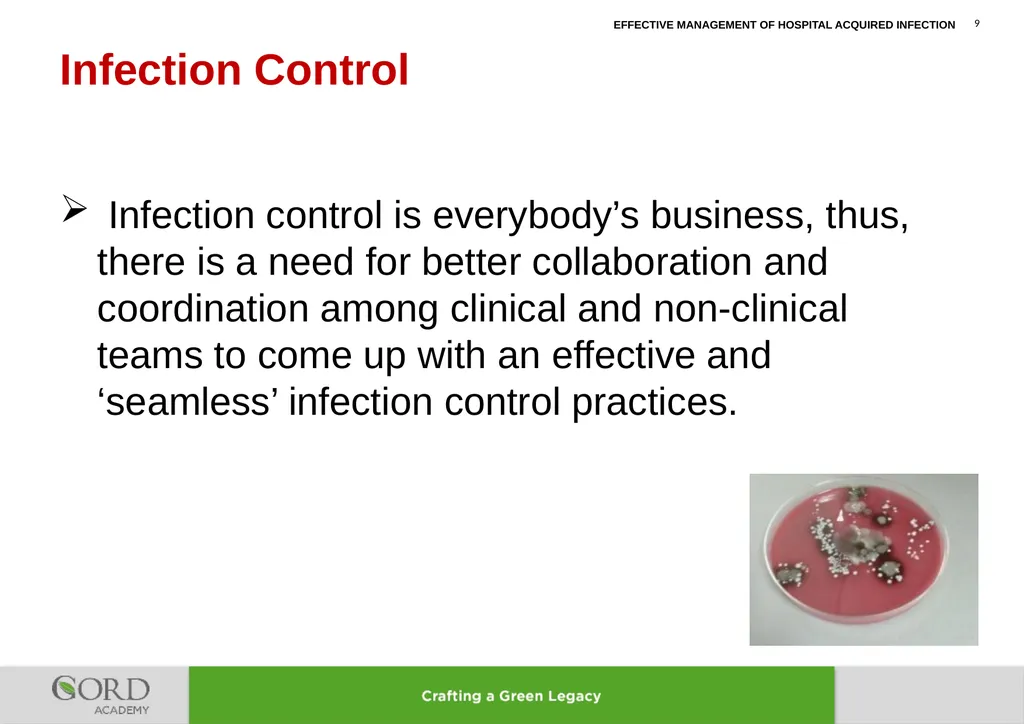
slide9. 9 Infection control is everybody’s business, thus, there is a need for better collaboration and coordination among clinical and non-clinical teams to come up with an effective and ‘seamless’ infection control practices. Infection Control<br>
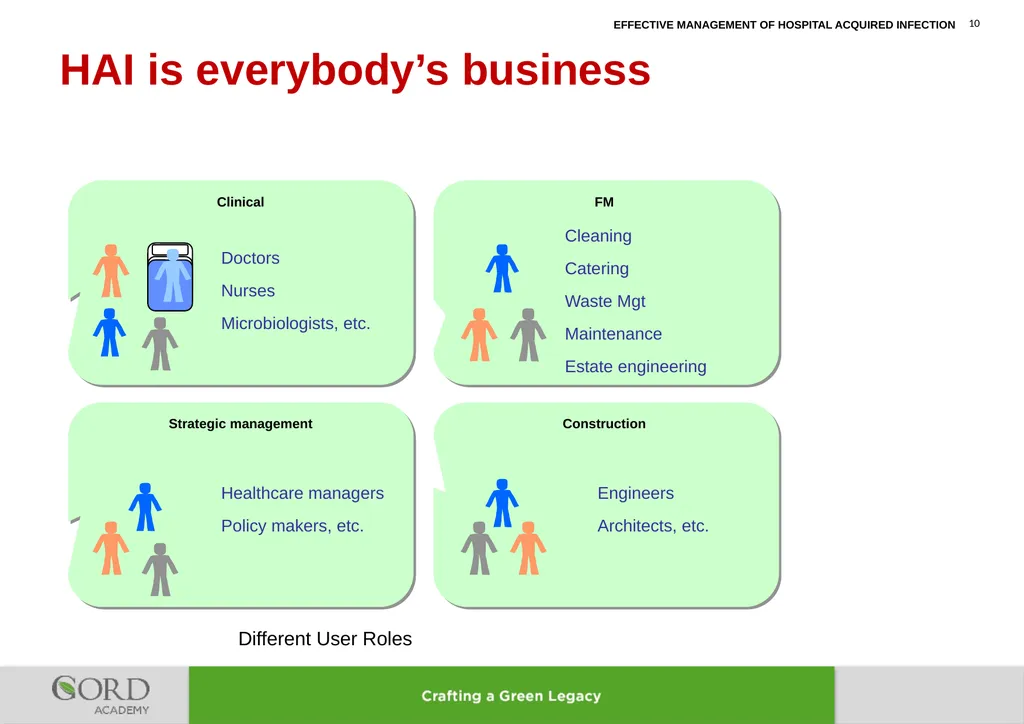
slide10. 10 HAI is everybody’s business Different User Roles<br>
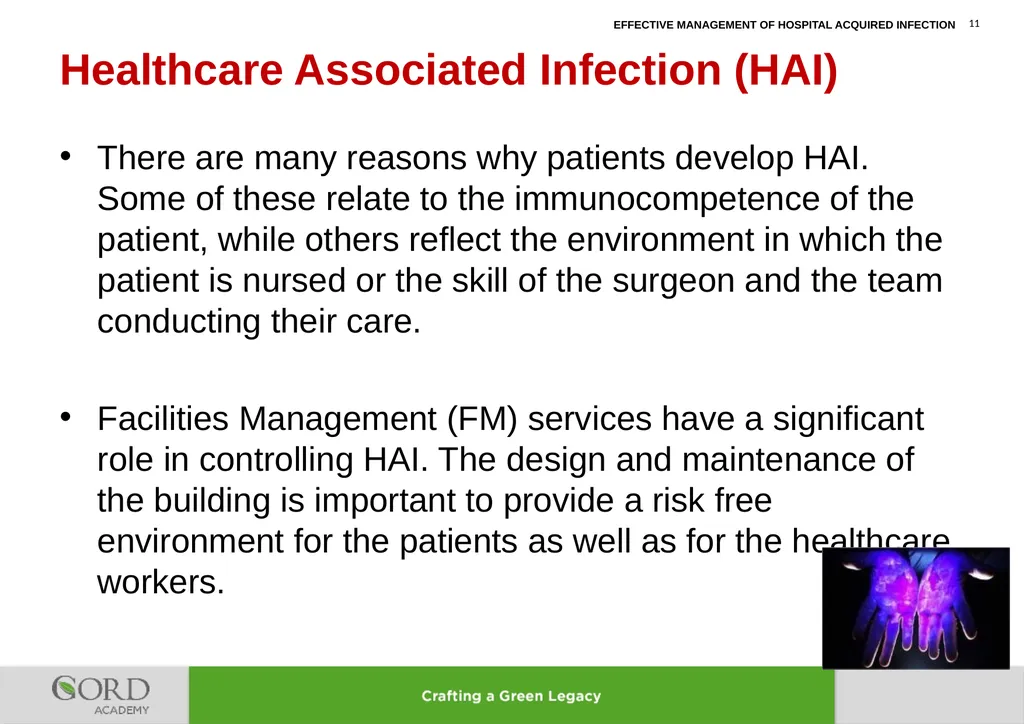
slide11. 11 There are many reasons why patients develop HAI. Some of these relate to the immunocompetence of the patient, while others reflect the environment in which the patient is nursed or the skill of the surgeon and the team conducting their care.
Facilities Management (FM) services have a significant role in controlling HAI. The design and maintenance of the building is important to provide a risk free environment for the patients as well as for the healthcare workers. Healthcare Associated Infection (HAI)<br>
slide12. 12 From a Facilities Management perspective, the Design and Maintenance of the building is important in providing a risk-free environment for the patients as well as for the healthcare workers.
Design considerations include ventilation requirements, patient accommodation, facilities such as hand wash basins and toilets and the materials to be used for the surfaces. FM and HAI<br>
slide13. 13 ‘Effective cleaning of hospital wards is essential for the health and safety of both patients and staff, and makes an important contribution to the quality of care patient’s experience. However, there is a growing perception that standards of cleanliness in hospitals have been declining. Domestic services play a key part in minimising the risk of hospital acquired infections, which have serious consequences for patients and lead to significant costs to the NHS’ (Auditor General, 2000). HAI AND CLEANING<br>
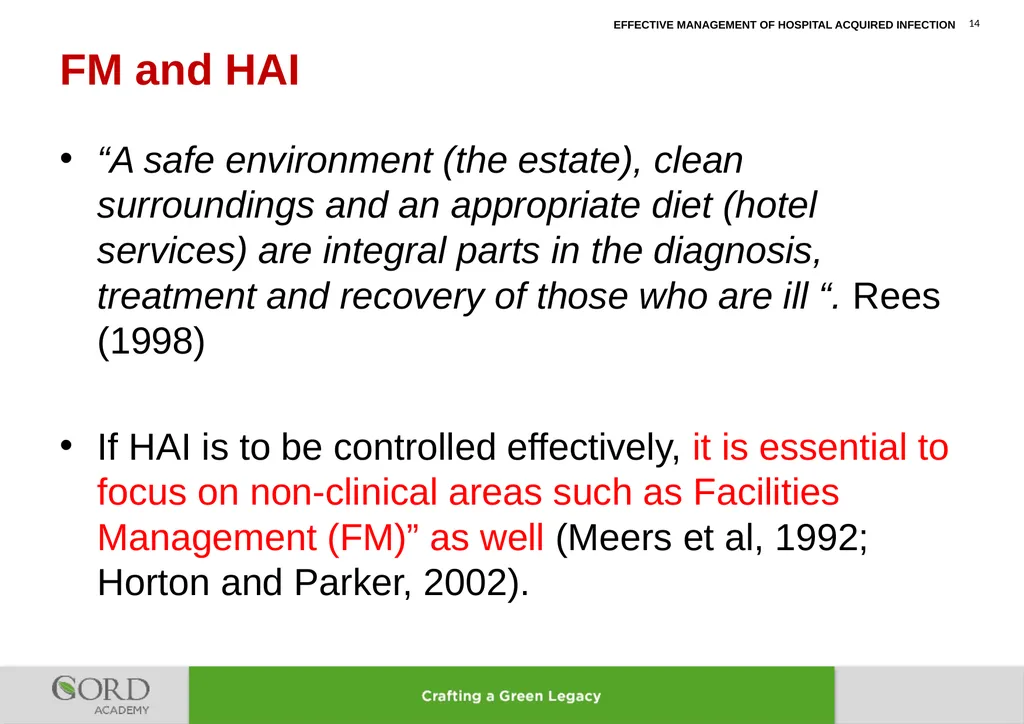
slide14. 14 “A safe environment (the estate), clean surroundings and an appropriate diet (hotel services) are integral parts in the diagnosis, treatment and recovery of those who are ill “. Rees (1998)
If HAI is to be controlled effectively, it is essential to focus on non-clinical areas such as Facilities Management (FM)” as well (Meers et al, 1992; Horton and Parker, 2002). FM and HAI<br>
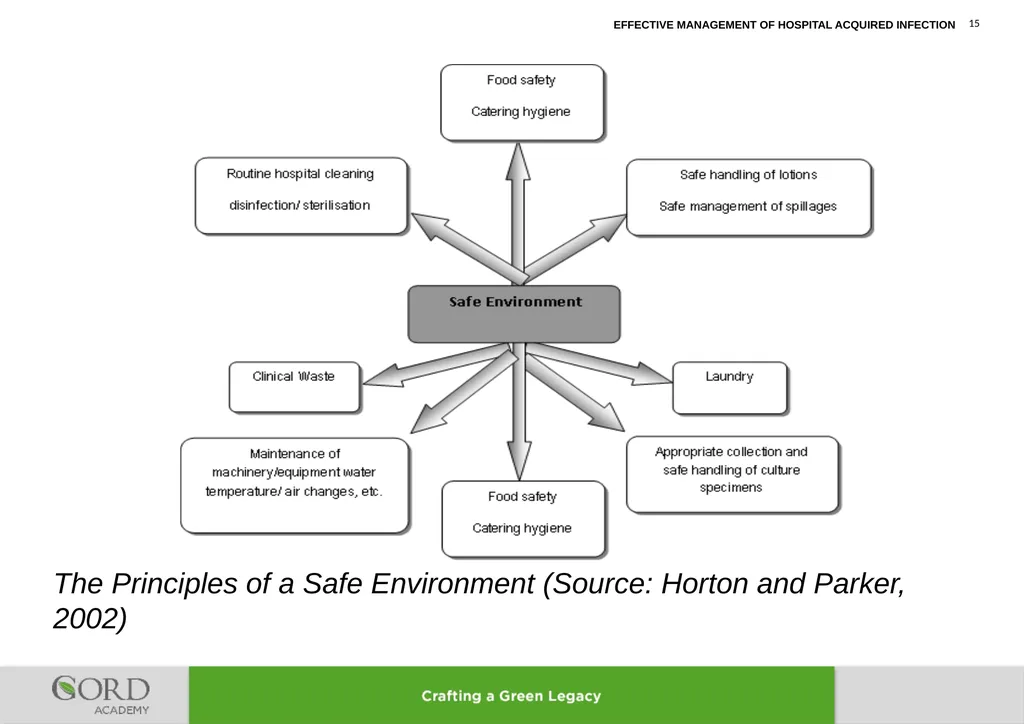
slide15. 15 The Principles of a Safe Environment (Source: Horton and Parker, 2002)<br>
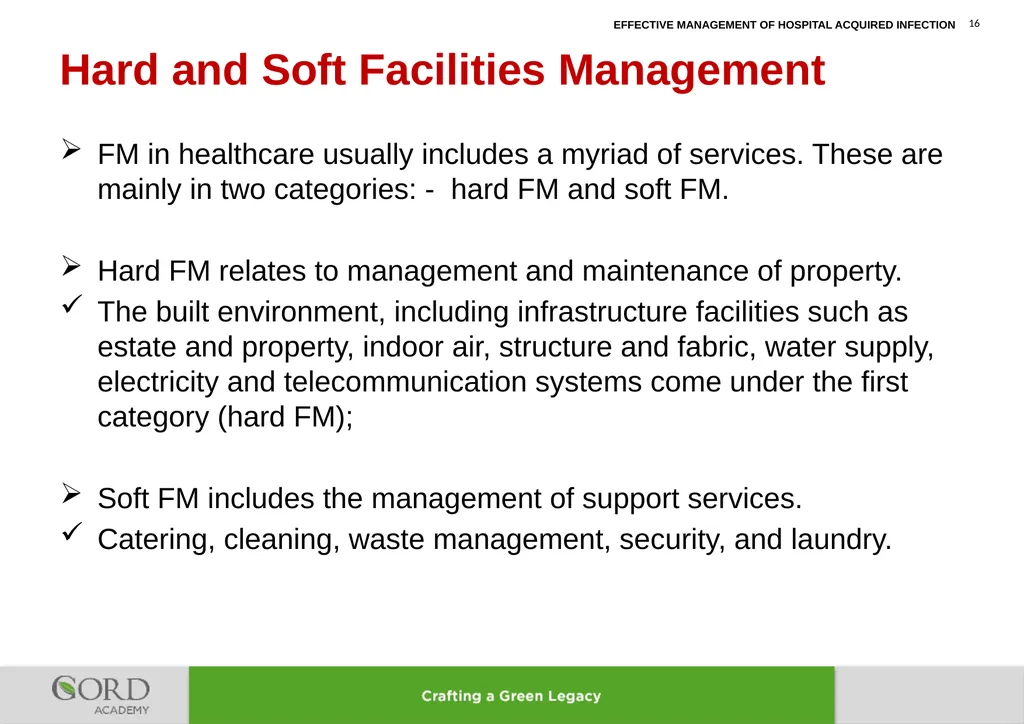
slide16. 16 FM in healthcare usually includes a myriad of services. These are mainly in two categories: - hard FM and soft FM.
Hard FM relates to management and maintenance of property.
The built environment, including infrastructure facilities such as estate and property, indoor air, structure and fabric, water supply, electricity and telecommunication systems come under the first category (hard FM);
Soft FM includes the management of support services.
Catering, cleaning, waste management, security, and laundry. Hard and Soft Facilities Management<br>
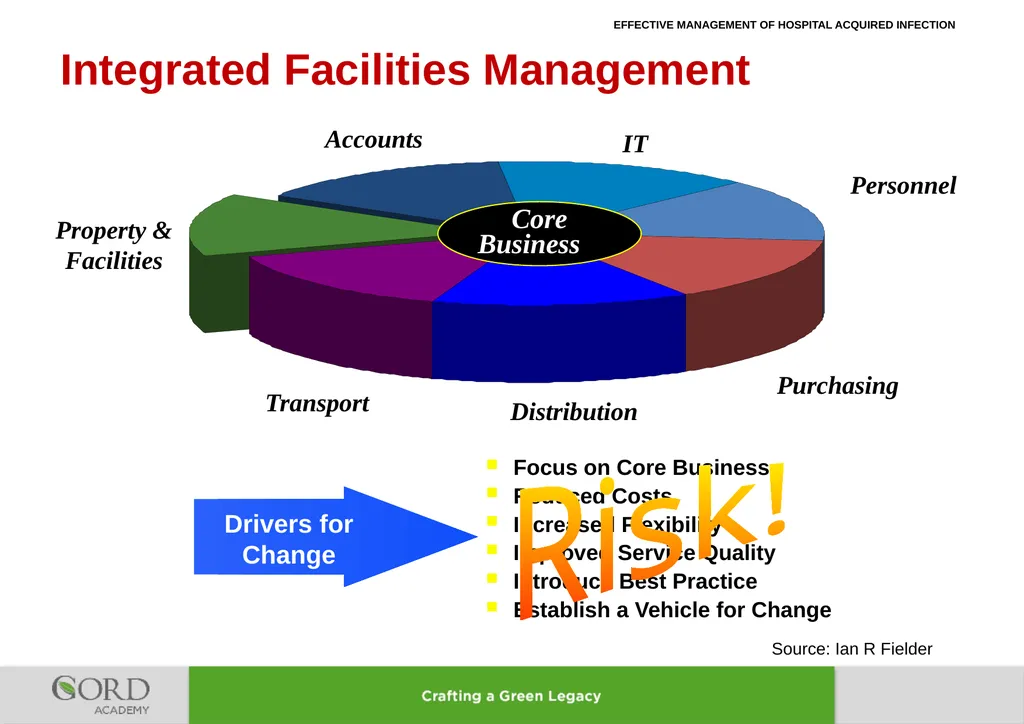
slide17. Integrated Facilities Management Core Business Accounts IT Personnel Purchasing Distribution Transport Property & Facilities Focus on Core Business
Reduced Costs
Increased Flexibility
Improved Service Quality
Introduce Best Practice
Establish a Vehicle for Change Drivers for Change Risk! Source: Ian R Fielder<br>
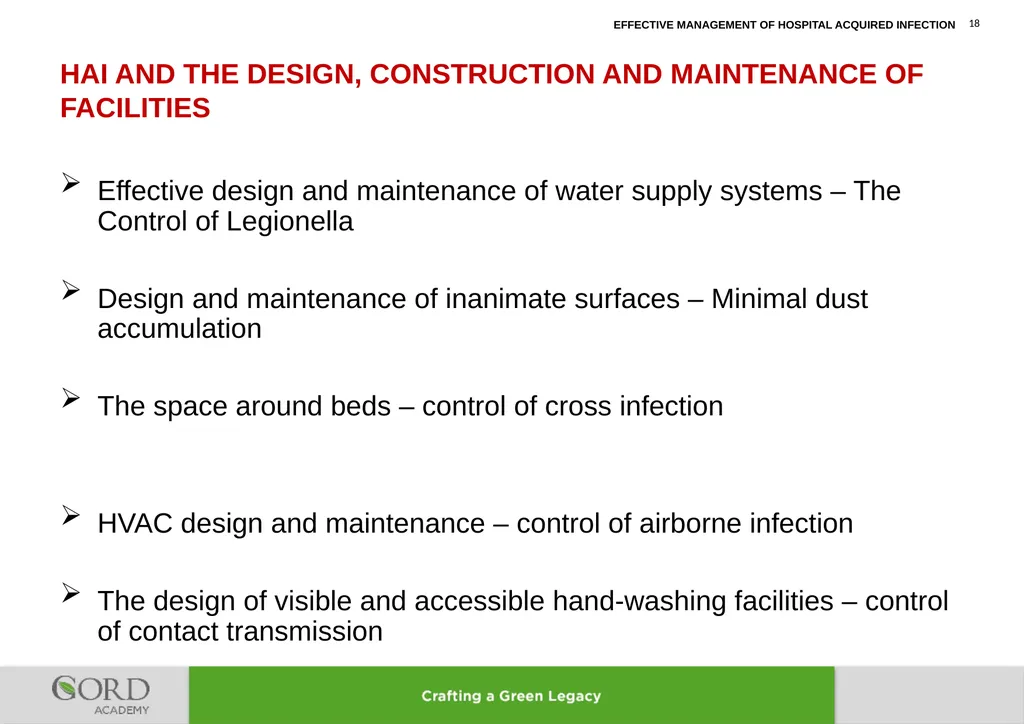
slide18. 18 Effective design and maintenance of water supply systems – The Control of Legionella
Design and maintenance of inanimate surfaces – Minimal dust accumulation
The space around beds – control of cross infection
HVAC design and maintenance – control of airborne infection
The design of visible and accessible hand-washing facilities – control of contact transmission HAI AND THE DESIGN, CONSTRUCTION AND MAINTENANCE OF FACILITIES<br>
slide19. KNOWLEDGE MANAGEMENT
AND
KNOWLEDGE MAPPING 19<br>
slide20. 20 “Around 15% of HAI could be avoided through strengthened arrangements for prevention and control, and better application of existing knowledge and good practice”.
Department of Health. (2001). NHS Performance Indicators: A Consultation http://www.doh.gov.uk/piconsultation/haicar.htm HAI and Knowledge Management<br>
slide21. 21 A lack of co-ordination and integration of knowledge sources exist for the control of HAI. There is also paucity of literature for facilities management professionals/staff in infection control, even though they have an important role to play in the control of HAI. HAI and Knowledge Management<br>
slide22. Knowledge Management The management of any process of mapping, creating, acquiring, capturing, transferring, sharing and using knowledge wherever it resides in order to meet existing and emerging needs, to identify and exploit existing and acquired assets and to develop new opportunities.<br>
slide23. Knowledge Mapping and Maps Knowledge mapping is defined as the process, methods and tools for analysing knowledge areas in order to discover features or meaning and to visualise these in a comprehensive, transparent form, such that the business-relevant features are clearly highlighted.
Speel et al.(1999)
Knowledge mapping techniques aim to track the acquisition and loss of information and knowledge.
It explores personal and group competencies and illustrates how knowledge flows throughout an organisation or ‘network’.<br>
slide24. Knowledge Maps A knowledge map describes what knowledge is used in a process, and how it flows around the process.
It describes:
who has what knowledge (e.g. tacit/explicit),
where the knowledge resides (e.g. individuals, infrastructure), and
how the knowledge is transferred or disseminated (social)
IBM Global Services- Technique Paper 2000
Knowledge maps are created by transferring certain aspects of knowledge into a graphical form that is easily understandable.<br>
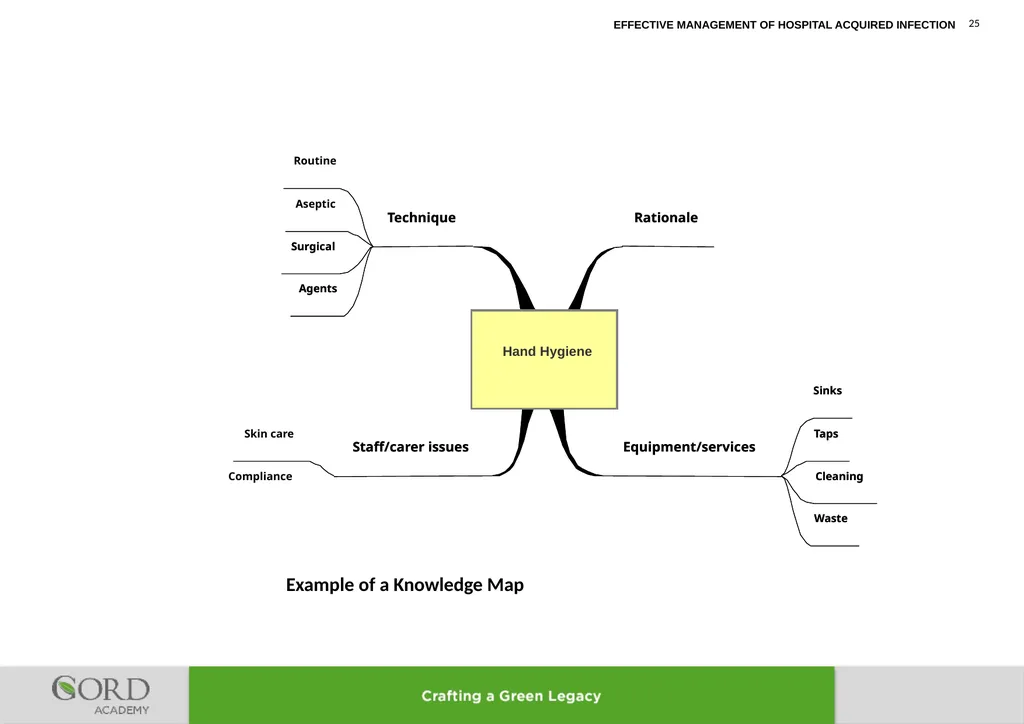
slide25. 25 Example of a Knowledge Map<br>
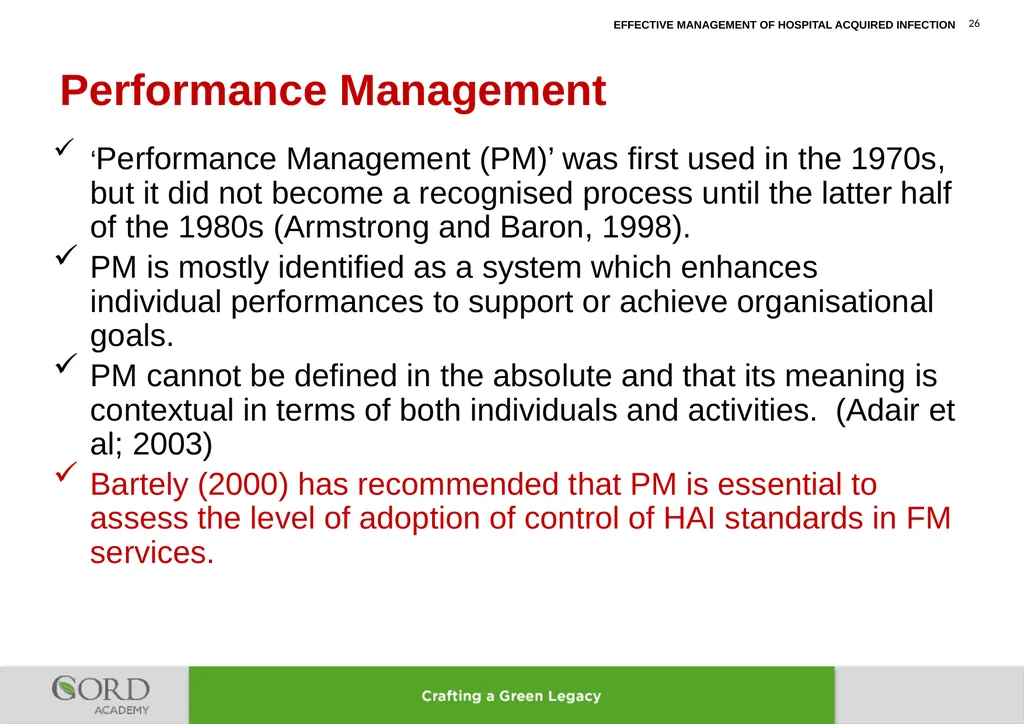
slide26. 26 ‘Performance Management (PM)’ was first used in the 1970s, but it did not become a recognised process until the latter half of the 1980s (Armstrong and Baron, 1998).
PM is mostly identified as a system which enhances individual performances to support or achieve organisational goals.
PM cannot be defined in the absolute and that its meaning is contextual in terms of both individuals and activities. (Adair et al; 2003)
Bartely (2000) has recommended that PM is essential to assess the level of adoption of control of HAI standards in FM services. Performance Management<br>
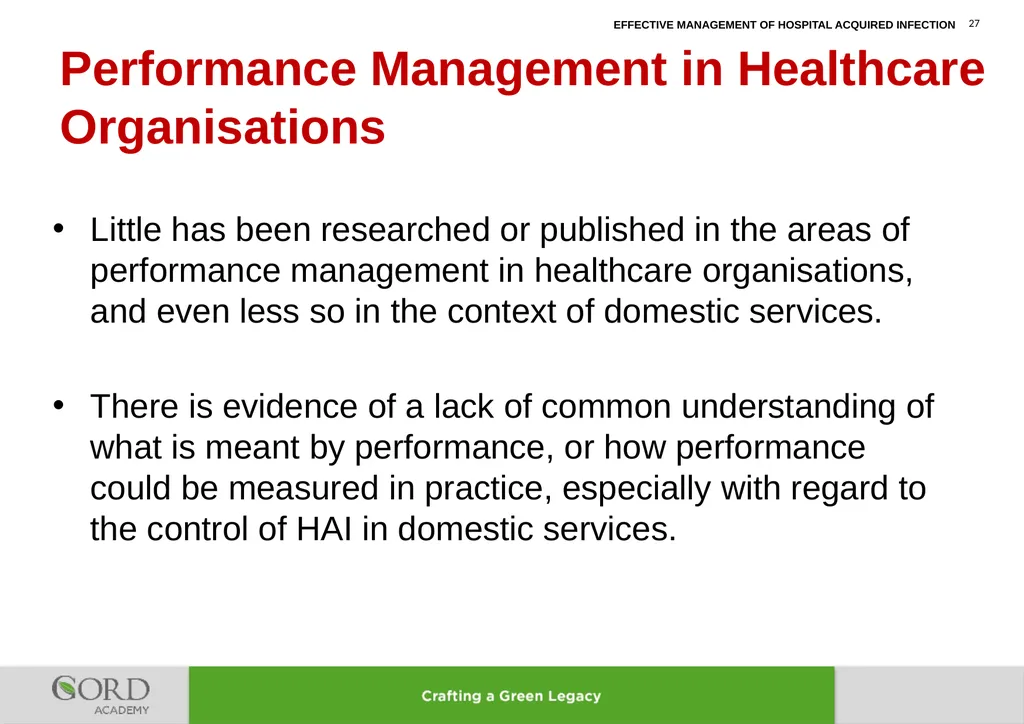
slide27. 27 Little has been researched or published in the areas of performance management in healthcare organisations, and even less so in the context of domestic services.
There is evidence of a lack of common understanding of what is meant by performance, or how performance could be measured in practice, especially with regard to the control of HAI in domestic services. Performance Management in Healthcare Organisations<br>
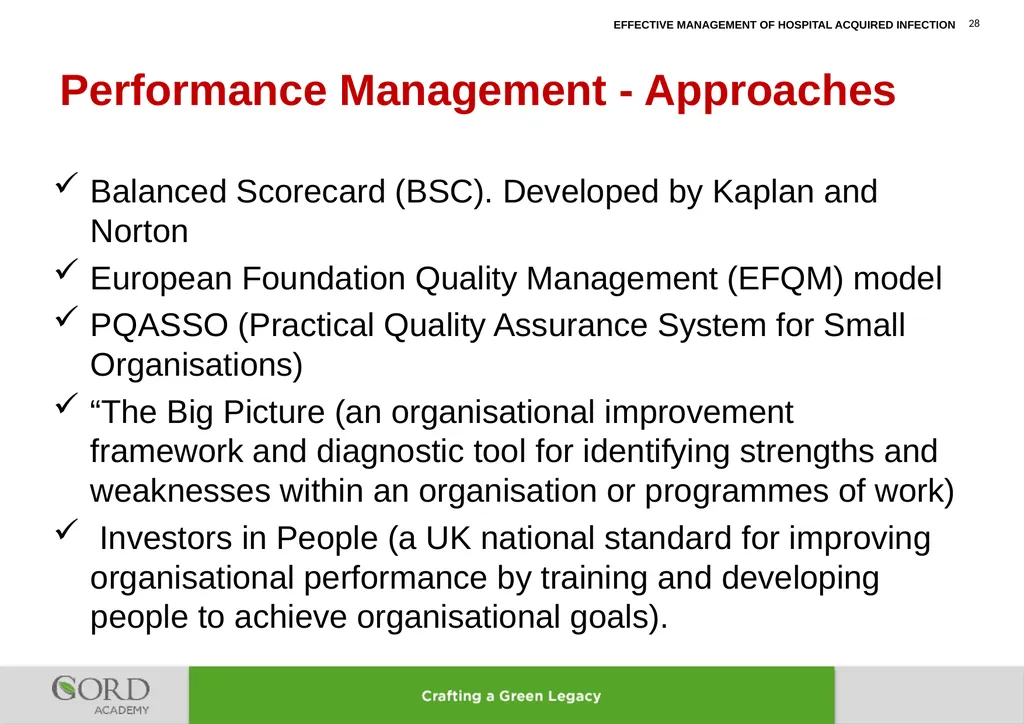
slide28. 28 Balanced Scorecard (BSC). Developed by Kaplan and Norton
European Foundation Quality Management (EFQM) model
PQASSO (Practical Quality Assurance System for Small Organisations)
“The Big Picture (an organisational improvement framework and diagnostic tool for identifying strengths and weaknesses within an organisation or programmes of work)
Investors in People (a UK national standard for improving organisational performance by training and developing people to achieve organisational goals). Performance Management - Approaches<br>
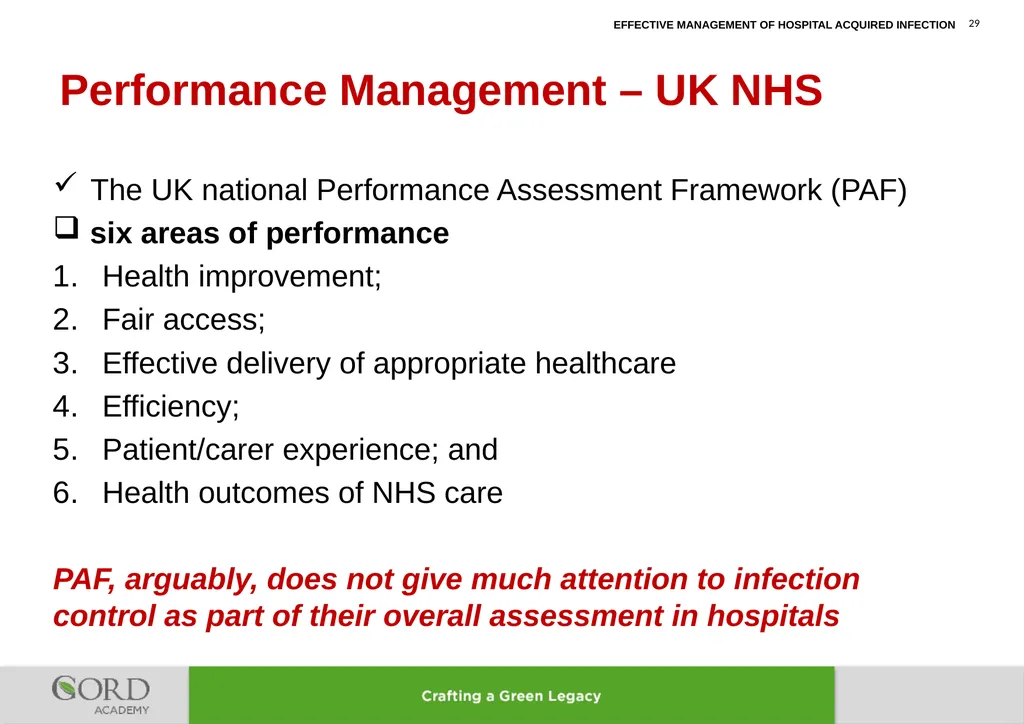
slide29. 29 The UK national Performance Assessment Framework (PAF)
six areas of performance
Health improvement;
Fair access;
Effective delivery of appropriate healthcare
Efficiency;
Patient/carer experience; and
Health outcomes of NHS care
PAF, arguably, does not give much attention to infection control as part of their overall assessment in hospitals Performance Management – UK NHS<br>
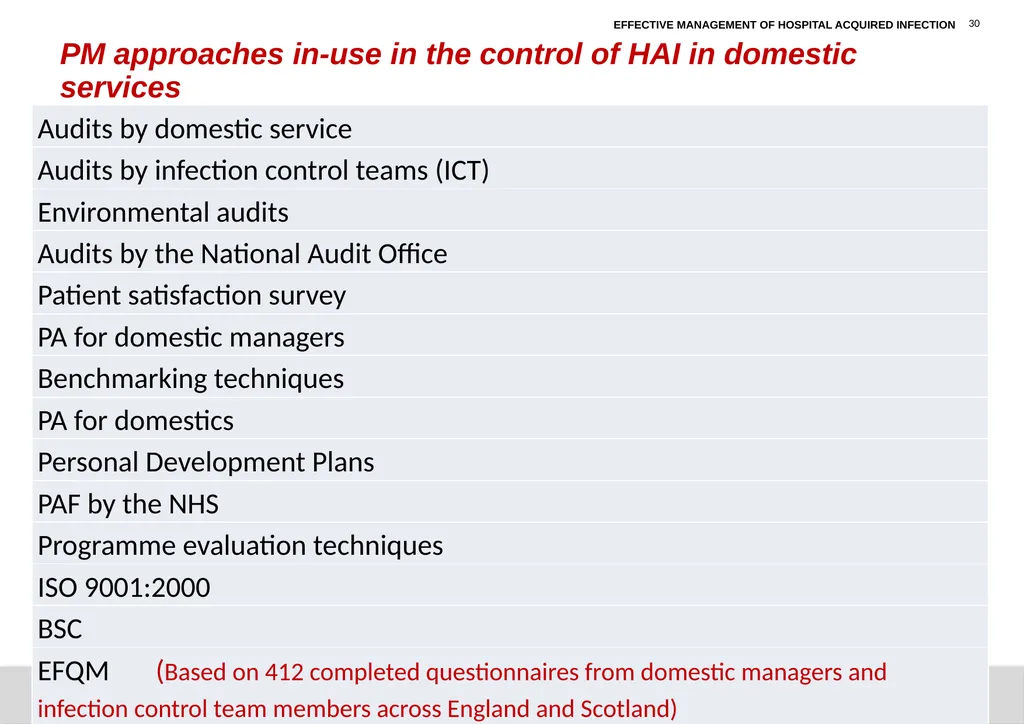
slide30. 30 PM approaches in-use in the control of HAI in domestic services<br>
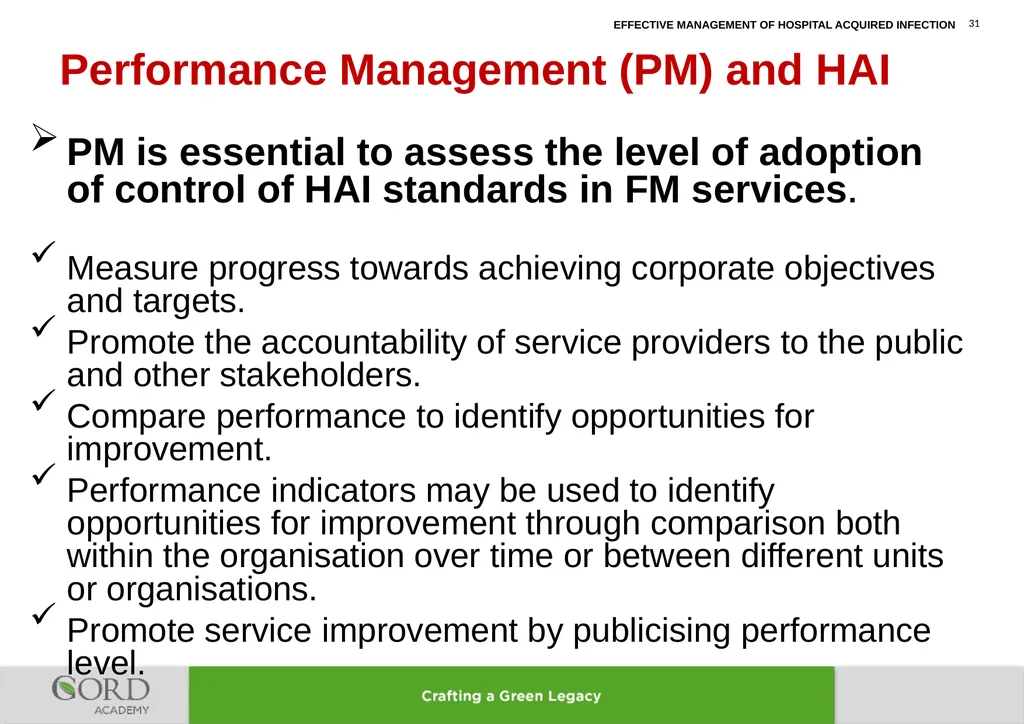
slide31. 31 PM is essential to assess the level of adoption of control of HAI standards in FM services.
Measure progress towards achieving corporate objectives and targets.
Promote the accountability of service providers to the public and other stakeholders.
Compare performance to identify opportunities for improvement.
Performance indicators may be used to identify opportunities for improvement through comparison both within the organisation over time or between different units or organisations.
Promote service improvement by publicising performance level. Performance Management (PM) and HAI<br>
GSAS Sponsored Seminar / Workshop Professor Charles Egbu PhD
University of Salford, UK Qatar National Convention Centre, Doha – Qatar
14th June 2014<br>
slide2. 2 HAI in Context
FM in Context
The Role of FM in the Control of HAI
The Role of Knowledge Management and Knowledge Mapping in Controlling HAI
Performance Management and FM in the Control of HAI Structure of Presentation<br>
slide3. 3 HAI by definition means the infection was neither present nor incubating at the time of admission but has developed during the course of a stay in hospital or other facility
(Haley, 1986 as cited in Horton and Parker 2002; Comptroller and Auditor General, 2000; Public Health Laboratory Service, 2000; Scottish Executives Action Plan, 2002; World Health Organisation, 2002; Montana State Hospital, 2003). Healthcare Associated Infection (HAI)<br>
slide4. Home
Care Acute Care Facility Outpatient/
Ambulatory
Facility Long Term Care Facility The Healthcare System More than Just Hospitals Source: Alice Guh, MD, MPH – (CDC)<br>
slide5. She was progressing in the neonatal intensive care unit until she developed a bloodstream infection related to her umbilical catheter. Your baby was born prematurely. Source: Alice Guh, MD, MPH – (CDC)<br>
slide6. The surgery goes well but he later dies in a nursing home of a MRSA wound infection that developed after surgery. Your father has open heart surgery. Source: Alice Guh, MD, MPH – (CDC)<br>
slide7. 7 HAI is recognised as presenting a significant problem in terms of quality of care and cost for hospitals, governments and consumers in most countries (Department of Human Services, 1998).
In prevalence surveys of hospital infection in the UK, and other developed countries, the acquired infection rate was approximately 10% (which means approximately 10% of patients in hospitals at any one time have acquired an infection from hospitals).
The control of HAI exists as a major concern, and the high frequency of HAI is seen as evidence of poor quality of health service delivery, which has significant cost implications (WHO, 2002). Healthcare Associated Infection (HAI)<br>
slide8. 8 The costs associated with HAI have medical and economic ramifications. HAI has ramifications for patients and healthcare facilities; and associated costs are exacerbated during an outbreak which also affects patients’ confidence in the service.
The economic consequences include lost bed days and increased work load with some estimates showing that 380,000 bed days per annum are lost to HAIs. This is equivalent to 1000 hospital beds and associated staffing input being wasted in dealing with HAI related delays in discharge.
There is also the social and personal burden that unnecessary illness and complications place upon patients and their families. Healthcare Associated Infection (HAI)<br>
slide9. 9 Infection control is everybody’s business, thus, there is a need for better collaboration and coordination among clinical and non-clinical teams to come up with an effective and ‘seamless’ infection control practices. Infection Control<br>
slide10. 10 HAI is everybody’s business Different User Roles<br>
slide11. 11 There are many reasons why patients develop HAI. Some of these relate to the immunocompetence of the patient, while others reflect the environment in which the patient is nursed or the skill of the surgeon and the team conducting their care.
Facilities Management (FM) services have a significant role in controlling HAI. The design and maintenance of the building is important to provide a risk free environment for the patients as well as for the healthcare workers. Healthcare Associated Infection (HAI)<br>
slide12. 12 From a Facilities Management perspective, the Design and Maintenance of the building is important in providing a risk-free environment for the patients as well as for the healthcare workers.
Design considerations include ventilation requirements, patient accommodation, facilities such as hand wash basins and toilets and the materials to be used for the surfaces. FM and HAI<br>
slide13. 13 ‘Effective cleaning of hospital wards is essential for the health and safety of both patients and staff, and makes an important contribution to the quality of care patient’s experience. However, there is a growing perception that standards of cleanliness in hospitals have been declining. Domestic services play a key part in minimising the risk of hospital acquired infections, which have serious consequences for patients and lead to significant costs to the NHS’ (Auditor General, 2000). HAI AND CLEANING<br>
slide14. 14 “A safe environment (the estate), clean surroundings and an appropriate diet (hotel services) are integral parts in the diagnosis, treatment and recovery of those who are ill “. Rees (1998)
If HAI is to be controlled effectively, it is essential to focus on non-clinical areas such as Facilities Management (FM)” as well (Meers et al, 1992; Horton and Parker, 2002). FM and HAI<br>
slide15. 15 The Principles of a Safe Environment (Source: Horton and Parker, 2002)<br>
slide16. 16 FM in healthcare usually includes a myriad of services. These are mainly in two categories: - hard FM and soft FM.
Hard FM relates to management and maintenance of property.
The built environment, including infrastructure facilities such as estate and property, indoor air, structure and fabric, water supply, electricity and telecommunication systems come under the first category (hard FM);
Soft FM includes the management of support services.
Catering, cleaning, waste management, security, and laundry. Hard and Soft Facilities Management<br>
slide17. Integrated Facilities Management Core Business Accounts IT Personnel Purchasing Distribution Transport Property & Facilities Focus on Core Business
Reduced Costs
Increased Flexibility
Improved Service Quality
Introduce Best Practice
Establish a Vehicle for Change Drivers for Change Risk! Source: Ian R Fielder<br>
slide18. 18 Effective design and maintenance of water supply systems – The Control of Legionella
Design and maintenance of inanimate surfaces – Minimal dust accumulation
The space around beds – control of cross infection
HVAC design and maintenance – control of airborne infection
The design of visible and accessible hand-washing facilities – control of contact transmission HAI AND THE DESIGN, CONSTRUCTION AND MAINTENANCE OF FACILITIES<br>
slide19. KNOWLEDGE MANAGEMENT
AND
KNOWLEDGE MAPPING 19<br>
slide20. 20 “Around 15% of HAI could be avoided through strengthened arrangements for prevention and control, and better application of existing knowledge and good practice”.
Department of Health. (2001). NHS Performance Indicators: A Consultation http://www.doh.gov.uk/piconsultation/haicar.htm HAI and Knowledge Management<br>
slide21. 21 A lack of co-ordination and integration of knowledge sources exist for the control of HAI. There is also paucity of literature for facilities management professionals/staff in infection control, even though they have an important role to play in the control of HAI. HAI and Knowledge Management<br>
slide22. Knowledge Management The management of any process of mapping, creating, acquiring, capturing, transferring, sharing and using knowledge wherever it resides in order to meet existing and emerging needs, to identify and exploit existing and acquired assets and to develop new opportunities.<br>
slide23. Knowledge Mapping and Maps Knowledge mapping is defined as the process, methods and tools for analysing knowledge areas in order to discover features or meaning and to visualise these in a comprehensive, transparent form, such that the business-relevant features are clearly highlighted.
Speel et al.(1999)
Knowledge mapping techniques aim to track the acquisition and loss of information and knowledge.
It explores personal and group competencies and illustrates how knowledge flows throughout an organisation or ‘network’.<br>
slide24. Knowledge Maps A knowledge map describes what knowledge is used in a process, and how it flows around the process.
It describes:
who has what knowledge (e.g. tacit/explicit),
where the knowledge resides (e.g. individuals, infrastructure), and
how the knowledge is transferred or disseminated (social)
IBM Global Services- Technique Paper 2000
Knowledge maps are created by transferring certain aspects of knowledge into a graphical form that is easily understandable.<br>
slide25. 25 Example of a Knowledge Map<br>
slide26. 26 ‘Performance Management (PM)’ was first used in the 1970s, but it did not become a recognised process until the latter half of the 1980s (Armstrong and Baron, 1998).
PM is mostly identified as a system which enhances individual performances to support or achieve organisational goals.
PM cannot be defined in the absolute and that its meaning is contextual in terms of both individuals and activities. (Adair et al; 2003)
Bartely (2000) has recommended that PM is essential to assess the level of adoption of control of HAI standards in FM services. Performance Management<br>
slide27. 27 Little has been researched or published in the areas of performance management in healthcare organisations, and even less so in the context of domestic services.
There is evidence of a lack of common understanding of what is meant by performance, or how performance could be measured in practice, especially with regard to the control of HAI in domestic services. Performance Management in Healthcare Organisations<br>
slide28. 28 Balanced Scorecard (BSC). Developed by Kaplan and Norton
European Foundation Quality Management (EFQM) model
PQASSO (Practical Quality Assurance System for Small Organisations)
“The Big Picture (an organisational improvement framework and diagnostic tool for identifying strengths and weaknesses within an organisation or programmes of work)
Investors in People (a UK national standard for improving organisational performance by training and developing people to achieve organisational goals). Performance Management - Approaches<br>
slide29. 29 The UK national Performance Assessment Framework (PAF)
six areas of performance
Health improvement;
Fair access;
Effective delivery of appropriate healthcare
Efficiency;
Patient/carer experience; and
Health outcomes of NHS care
PAF, arguably, does not give much attention to infection control as part of their overall assessment in hospitals Performance Management – UK NHS<br>
slide30. 30 PM approaches in-use in the control of HAI in domestic services<br>
slide31. 31 PM is essential to assess the level of adoption of control of HAI standards in FM services.
Measure progress towards achieving corporate objectives and targets.
Promote the accountability of service providers to the public and other stakeholders.
Compare performance to identify opportunities for improvement.
Performance indicators may be used to identify opportunities for improvement through comparison both within the organisation over time or between different units or organisations.
Promote service improvement by publicising performance level. Performance Management (PM) and HAI<br>